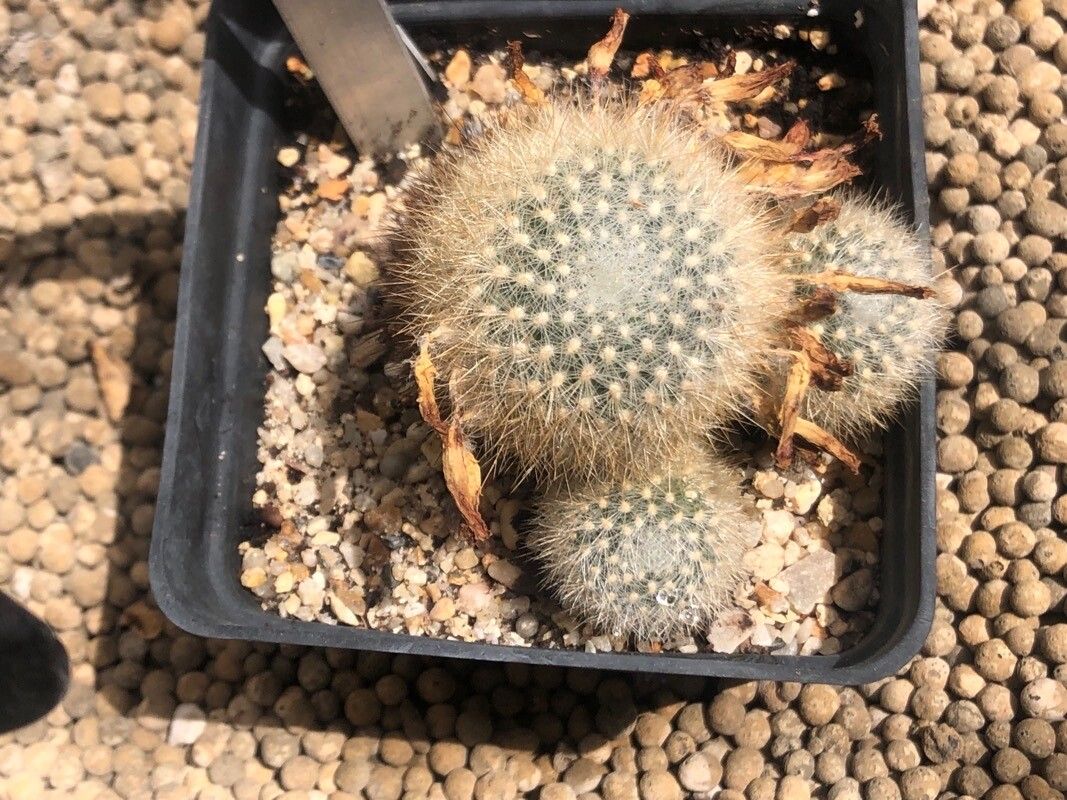
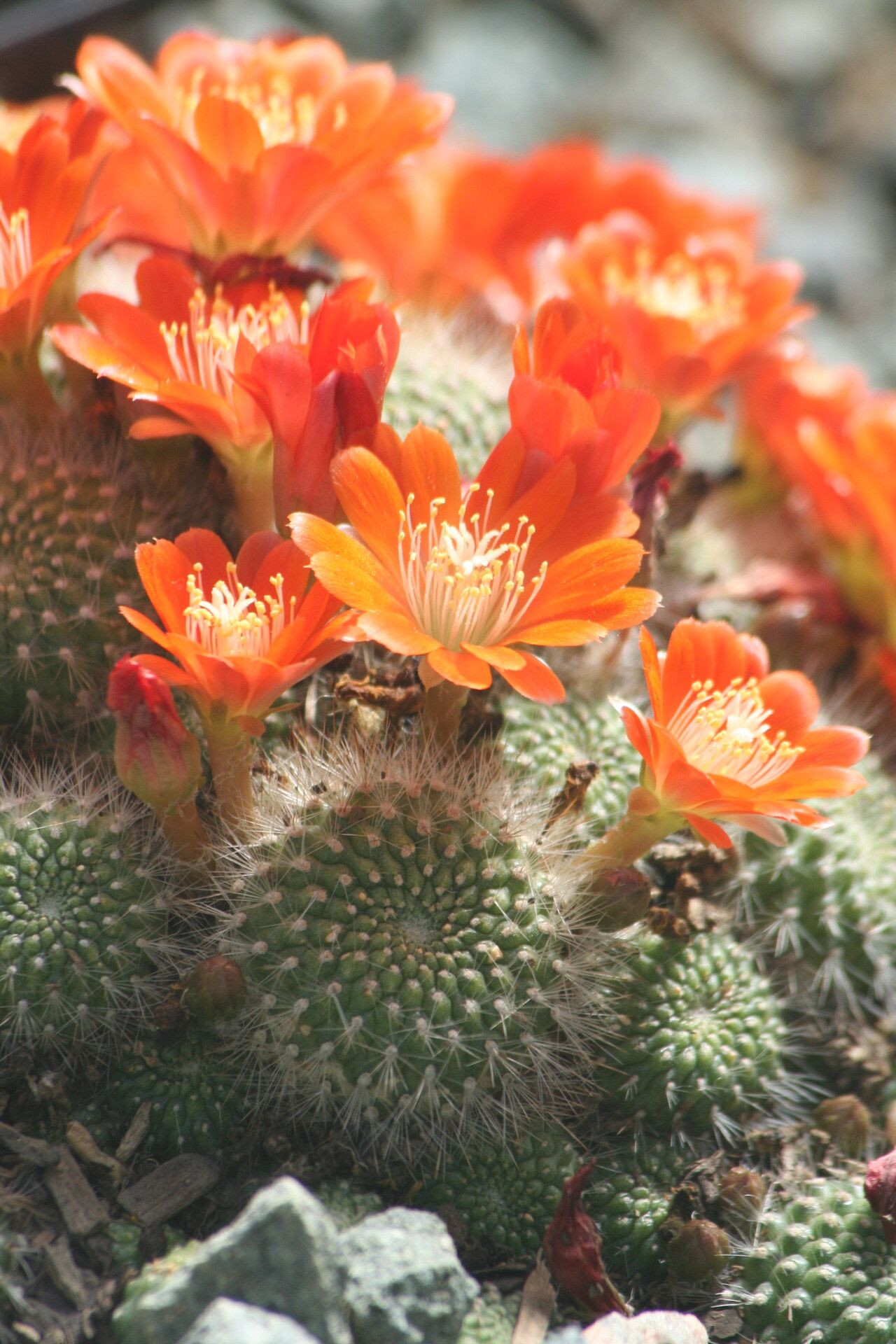
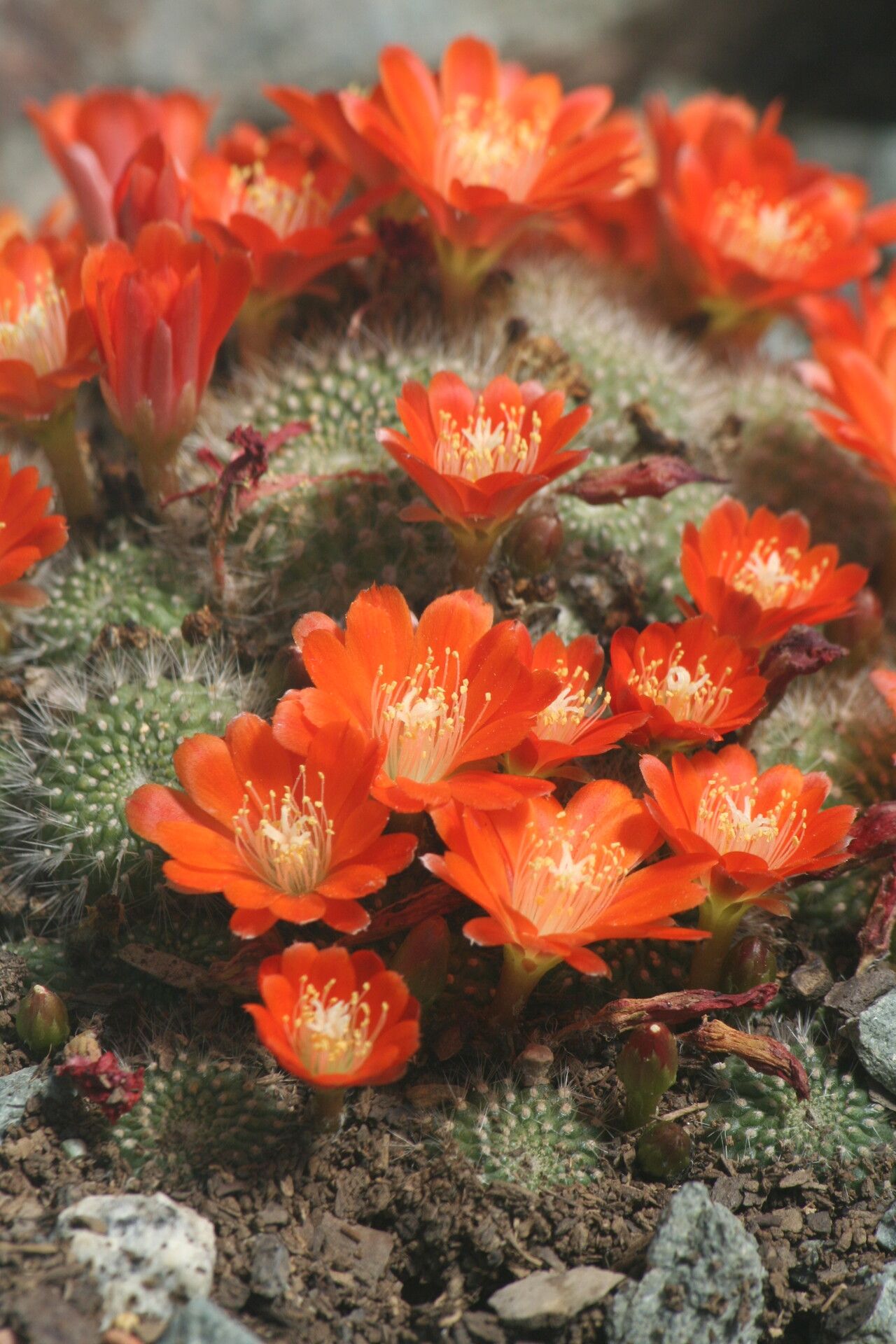
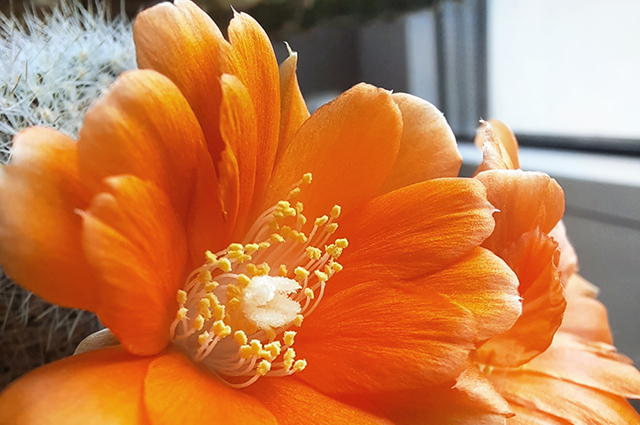
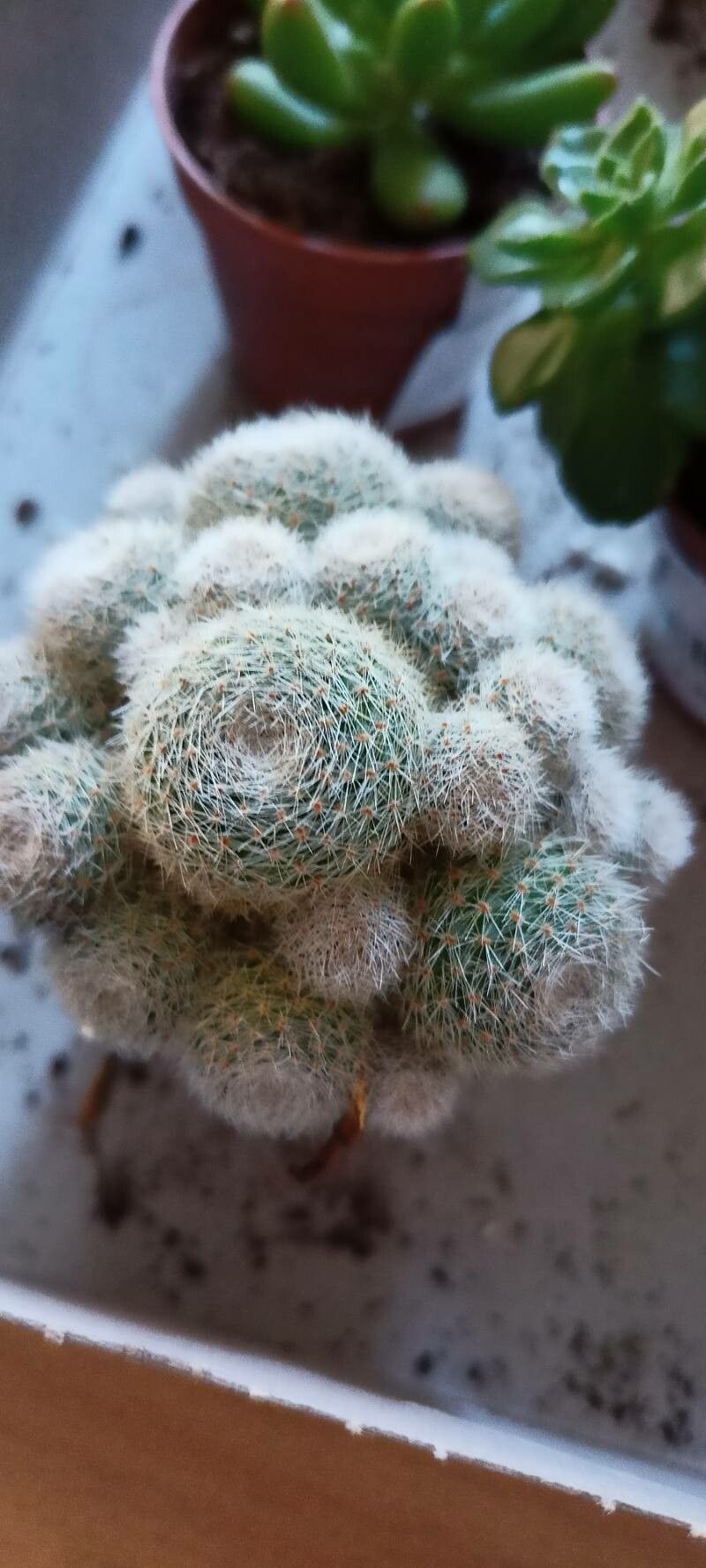
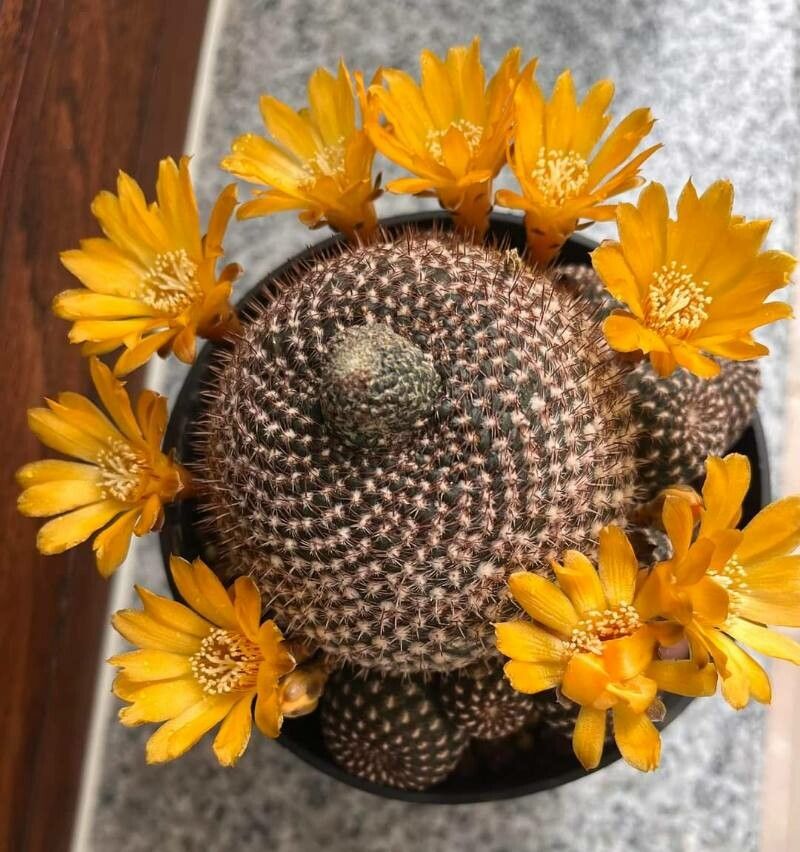
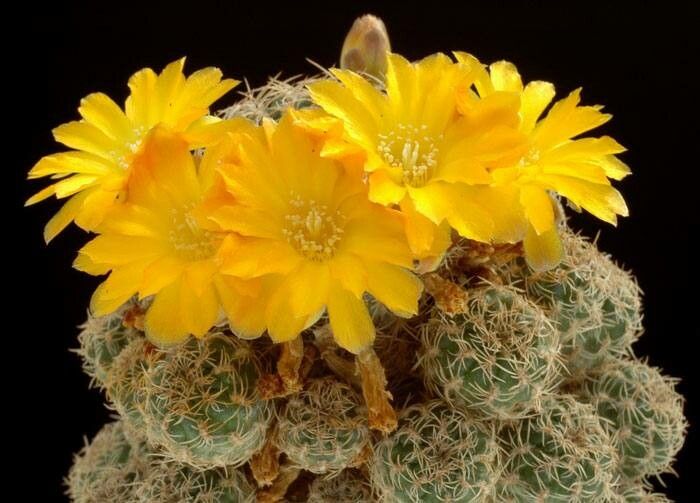
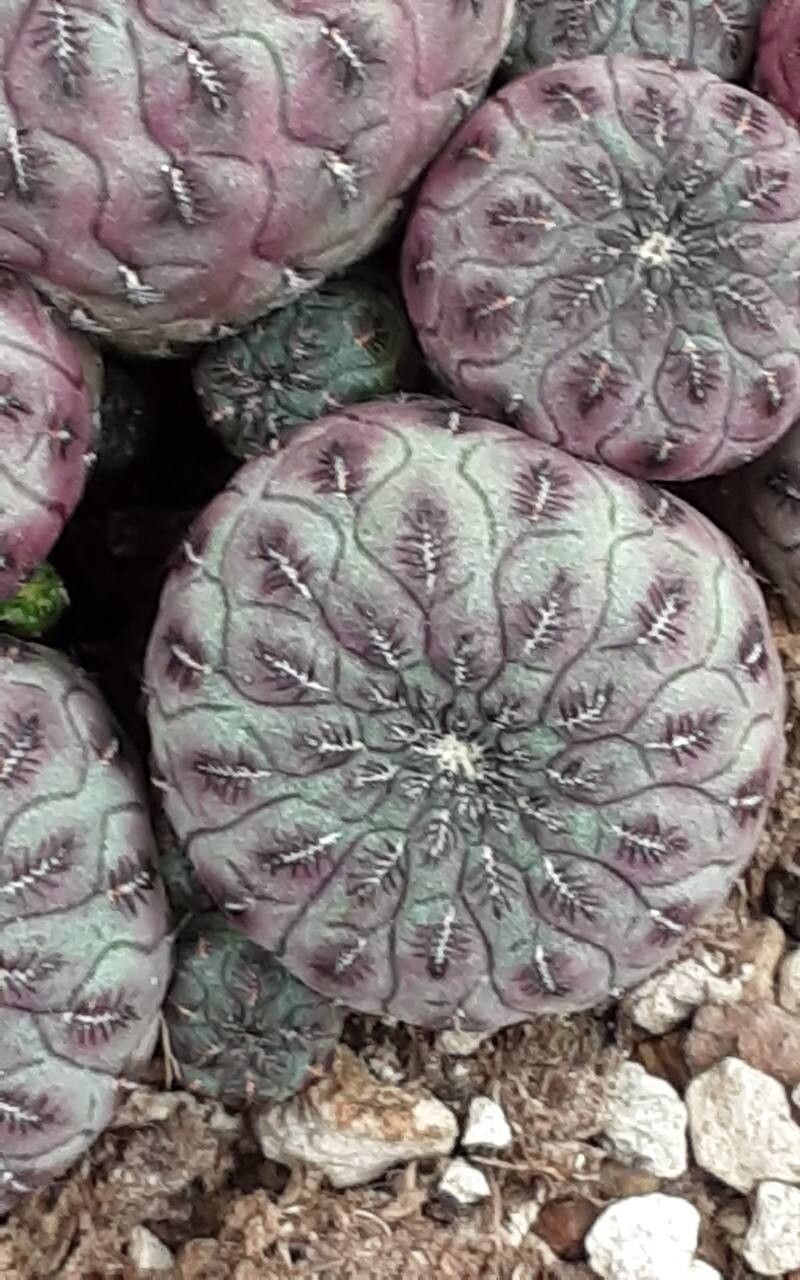
Rebutia fiebrigii, the orange crown cactus or flame crown, is a species of flowering plant in the cactus family that is native to exposed rocky plateaux in the Bolivean Andes, at altitudes of 2,100–4,000 m (6,900–13,100 ft) above sea level. It consists of a solitary ball some 15 cm (5.9 in) in diameter, covered in tubercles and silky hairs, with brilliant orange daisy-like flowers. In time these balls multiply to form mounds.A highly ornamental plant, this is a popular subject for cultivation in a well-drained, dry, sheltered location with plenty of sunlight, which does not freeze in winter. The cultivars ‘Donaldiana’ and the smaller ‘Muscula’ (‘Little Mouse’) have gained the Royal Horticultural Society’s Award of Garden Merit.
The Orange crown cactus has strong resistance to diseases and generally remains healthy under normal care. It can, however, be vulnerable to mealybugs; these pests may inflict some harm but usually do not pose a major danger. Regarding care, the Orange crown cactus is drought-tolerant and does not require frequent watering. It can endure extended stretches without water and needs little fertilizer. On the other hand, if light is poor and the plant is overwatered, it is very prone to root rot. In general, the Orange crown cactus is a good choice for people who prefer low-maintenance plants, though it is still important to meet its basic needs; it is especially well-suited for those who are away for long periods and might forget to water regularly.
How to keep Rebutia Fiebrigii.
Light
Orange crown cactus is a species of the cactus family that does best with abundant full-day sunlight. In its native habitats it receives plenty of sun, which supports strong growth. Too little light results in elongated, pale growth, while excessive sunlight can scorch and damage the plant.
Water
The orange crown cactus is well adapted to high-altitude habitats with minimal rainfall, making it highly drought-tolerant. To maintain the right moisture balance, water it once every three weeks. This cactus is ideal for indoor cultivation, where it thrives in dry soil conditions and produces more flowers during the growing season.
Temperature
Orange crown cactus is native to regions where temperatures fluctuate between 68 and 100.4 °F (20 and 38 °C). It prefers this warm range. Adjusting its ambient temperature to match this range, particularly during seasonal changes, would be beneficial to its health.
Fertilizer
For Orange crown cactus, light fertilizer applications once or twice a year during the growing season are sufficient. Avoid fertilizing in winter and in summer when the plant is dormant. Cut back on fertilizer for plants that have been repotted and wait a couple of months after repotting before fertilizing. Fertilizing promotes healthy growth and encourages flowering.
Pruning
The orange crown cactus needs very little pruning. Simply remove any withered flowers and branches regularly to help the plant direct nutrients toward healthy growth.
Pot & Repot
Repot the orange crown cactus during spring or summer, selecting a pot that is just a bit bigger than the current one and has good drainage. Fill it with a sandy or gritty cactus mix that drains well. Handle the plant carefully to avoid its spines. Let the cactus dry out before repotting to reduce the risk of root rot. After you repot it, wait about a week before watering so the roots can recover.
Toxicity
Orange Crown Cactus is known to be non-toxic to cats, dogs and humans, and this makes it a great indoor plant as every member of the household will feel safe around it. The plant can however cause mild stomach upsets and diarrhea if consumed in very large quantities, so contact your veterinarian to know the next steps to take in such a situation.
Further reading →
The toxicity and danger assessments provided are for reference only. We do not assure their accuracy, so it's crucial not to depend on them. Seek professional advice when necessary for accurate guidance.
Botanical profile.
- Plant Type
- Succulent
- Life Cycle
- Perennial
- Genus
- Rebutia
- Family
- Cactaceae
- Hardiness Zone
- 9-11
- Mature Height
- 10 cm
- Mature Spread
- 15 cm
- Leaf Color
- Green, Dark Green
- Leaf Type
- Semi-evergreen
- Flower Color
- Orange, Yellow, Pink, Red
- Flower Size
- 3.05 cm to 4.06 cm
- Bloom Time
- Mid spring, Late spring, Early summer, Mid summer
- Planting Time
- Spring, Summer, Autumn
- Harvest Time
- Summer, Early fall
- Native Area
- South America
Other names.
Reader questions.
What should I do if I give my Orange crown cactus too much or too little water?
Orange crown cactus, like other succulents, can go without water for a long time. However, if you forget to water your Orange crown cactus for a month or more, it may show signs of thirst or damage. These signs include a lackluster and wrinkled appearance, dried-up or brown and crispy sections, and dropped-off leaves. The soil will also be completely dry. To remedy this, you should give your plant plenty of water, submerging the pot in water for 5-10 minutes until the soil feels moist on the surface. Overwatering is dangerous for Orange crown cactus and can lead to root rot. Root rot occurs when fungi and bacteria thrive in wet soil, preventing the roots from absorbing nutrients and water. Symptoms of overwatering include yellow, swollen, and translucent organs that may burst open. If not treated, the plant may turn brown or black and lose leaves easily. To remedy overwatering, you should change the growing conditions by improving ventilation and adjusting the watering frequency. If your plant is overwatered, it is important to catch it early before extensive damage occurs. Remove the plant from the pot, gently remove wet soil from the roots, and rinse them in room-temperature water to remove fungus and assess their health. If the majority of the roots are affected by rot, it may not be salvageable. In this case, remove any healthy stems to propagate a new Orange crown cactus. If only a portion of the roots are affected, you can use a sterilized cutting tool to remove unhealthy roots, dip the remaining healthy roots in fungicide, and repot the plant in fresh, well-draining soil. While this may not always save a succulent with root rot, it often allows the plant to recover and grow new shoots in the next growing season.
Why should I add fertilizer to my Orange crown cactus?
Applying plant food to the growing medium of an Orange crown cactus helps it receive essential nutrients, despite its ability to store water and nutrients. Doing so during the growing season promotes healthy growth and can even stimulate mature specimens to produce blooms.
What are the sunlight requirements for an Orange Crown Cactus?
An Orange Crown Cactus, botanically known as Rebutia fiebrigii, thrives in environments that offer full sun conditions, meaning it requires above 6 hours of sunlight daily to grow well. It's essential to observe the movement of sunlight through your garden to select spots that provide an ideal balance of light and shade, ensuring the plant's well-being. In its native habitat, this species is accustomed to ample sunlight, which contributes significantly to its robust growth. Insufficient light may cause the cactus to display elongated, pale growth while excessive exposure can lead to scorching. To optimize growth and health, especially indoors or during less sunny seasons, artificial lighting can be employed. This entails using the right type of artificial light, such as LED lights, at an appropriate distance of 12-36 inches above the plant for 8-12 hours per day, mirroring natural daylight conditions.
What is the ideal temperature range for Orange crown cactus?
The Orange crown cactus thrives in temperatures between 68 to 100.4 °F (20 to 38 °C), which are native to its original habitat. This warm temperature range is essential for the health of the plant, and efforts should be made to maintain this range, especially during the change of seasons. As a heat-loving plant, the Orange crown cactus gradually stops its growth and enters a dormant state during winter. When temperatures drop below 0°C, it's crucial to move the plant indoors and place it near a south-facing window for maximum sunlight exposure. Supplemental lighting can be employed if natural light is insufficient. Below 20°C, the plant's growth slows and watering should be reduced or halted to prevent issues like root rot. For plants grown outdoors, cease watering during colder periods or consider insulation methods, such as a temporary greenhouse or wrapping, to protect the plant.
How often do I need to water my Orange crown cactus?
To determine how often to water your Orange crown cactus, there is no set rule. The best way is to check the soil and only water when it is completely dry. You can use either your finger or a moisture meter to check the soil below the surface. If you have planted it in a deep pot, you can use a stick or chopstick to do this. If the soil feels slightly moist, wait a few days and check again. In general, most people will need to water their Orange crown cactus every two weeks in summer and once a month in winter. However, there are some factors that can affect the frequency of watering. The section below provides some considerations to help determine how often to water.
When should I fertilize my Orange crown cactus for the best results?
Orange crown cactus can benefit from extra nutrients, but it only requires a small amount of fertilizer during the growing season. For optimal results, fertilize your cactus 1-2 times a year, preferably in the spring and autumn when it is actively growing. Avoid fertilizing in the winter and summer when the cactus is dormant. When repotting the cactus, use less fertilizer and wait a few months before applying any.
What symptoms indicate insufficient or excessive sunlight in Orange Crown Cactus?
Symptoms of insufficient sunlight in Orange Crown Cactus include smaller new leaves, leggy or sparse growth, faster leaf drop, slower or halted new growth, lighter-colored new leaves, and overall weak appearance. Excessive sunlight, on the other hand, can lead to chlorosis, where leaves lose their green color, sunscald visible as pale or necrotic spots on the plant, leaf curling as a protective response, wilting due to excessive water loss, and leaf scorching characterized by brown or crispy leaf edges. These symptoms highlight the Orange Crown Cactus's need for a balanced light environment to maintain health and vigorous growth.
How does low temperature affect Orange crown cactus and what are the remedies?
Orange crown cactus is not tolerant of low temperatures and prefers environments above 20°C. Exposure to temperatures below 0°C, especially when reaching -5°C, can weaken the plant, causing it to wilt and be susceptible to root rot. In the event of mild frost damage, a plant might initially show no symptoms but will slowly wither a week thereafter. To remedy this, trim the frostbitten areas and check for root rot. Rotted roots require removal, and the plant can be propagated from cuttings. To recover, move the plant to a warmer indoor setting near a south-facing window for ample sunlight. Utilize supplemental lighting if needed to ensure sufficient light.
What do I need to think about when giving water to my Orange crown cactus?
Knowing how to properly water your Orange crown cactus depends on various environmental factors. These include the size of the container, type of soil, temperature, and humidity. To begin, the container and soil you choose will determine the frequency and amount of water needed. It is important to have a container with drainage holes to allow excess water to escape. Smaller containers hold less moisture and need more frequent watering, while larger pots retain moisture longer and require less frequent watering. Avoid using an oversized pot as it may cause overwatering. When repotting, choose a container just one size larger than the current one. Shallow containers are ideal as Orange crown cacti have shallow root systems. The watering needs of your Orange crown cactus will also vary depending on the time of year. During winter, when growth slows down and less water is required, water the plant less frequently. In cooler temperatures, water evaporates slower, keeping the soil wet for longer periods compared to summer. The general climate in your location also affects watering frequency. Humid regions with abundant rainfall require less frequent watering, whereas dry and arid climates necessitate more frequent watering. Keep in mind that even within the same geographic location, seasonal changes and the use of indoor heating or air conditioning can significantly impact conditions. If your Orange crown cactus is planted in the ground, it typically only needs water from precipitation and dew once its root system is established. However, during extended dry periods, occasional watering may be necessary. In areas where the cactus can only be grown in containers, it can be moved outdoors during suitable spring and summer temperatures, and brought back indoors as temperatures cool. Potted Orange crown cacti kept outside typically require more water due to increased exposure to sunlight, even if they are shaded on a porch.
When is it not a good time to fertilize my Orange crown cactus?
The Orange crown cactus, like other plants, has a dormancy period. During this time, it's best to avoid applying fertilizer. The plant stops growing in both summer and winter, which is also when you should stop fertilizing. Additionally, after repotting in spring, it's advisable to wait a couple of months before resuming fertilizer applications.
How can you resolve light-related issues in Orange Crown Cactus?
To resolve light-related issues in an Orange Crown Cactus, it's crucial to gradually increase or decrease sunlight exposure. For indoor plants, this may involve moving the plant to a sunnier location step by step each week until it achieves at least 6 hours of direct sunlight daily, using a south-facing window, and considering the use of artificial light sources like desk or ceiling lamps or professional grow lights for at least 8 hours a day if the plant is large or not easily movable. Outdoors, plants should be moved to sunnier spots gradually to adapt without risk of sunburn. For plants in the ground, reducing obstructions by pruning trees or transplanting smaller plants during their dormant period to locations with ample sunlight and good drainage is advisable. While parts of the plant affected by insufficient sunlight may not recover, the new growth will be healthy with improved light conditions.
What should be done when Orange crown cactus is exposed to high temperature?
To avoid adverse effects from high temperatures, keep the Orange crown cactus below 38°C during summer. Exceeding 43°C can halt the plant's growth, causing water loss, wilting, and increasing susceptibility to sunburn. Address these issues by removing sunburned and rotten parts of the plant and shielding it from the afternoon sunlight until recovery and growth resume. If the plant suffers from root rot, it's advisable to stop watering until new roots form, supporting the plant's recovery and continued health.