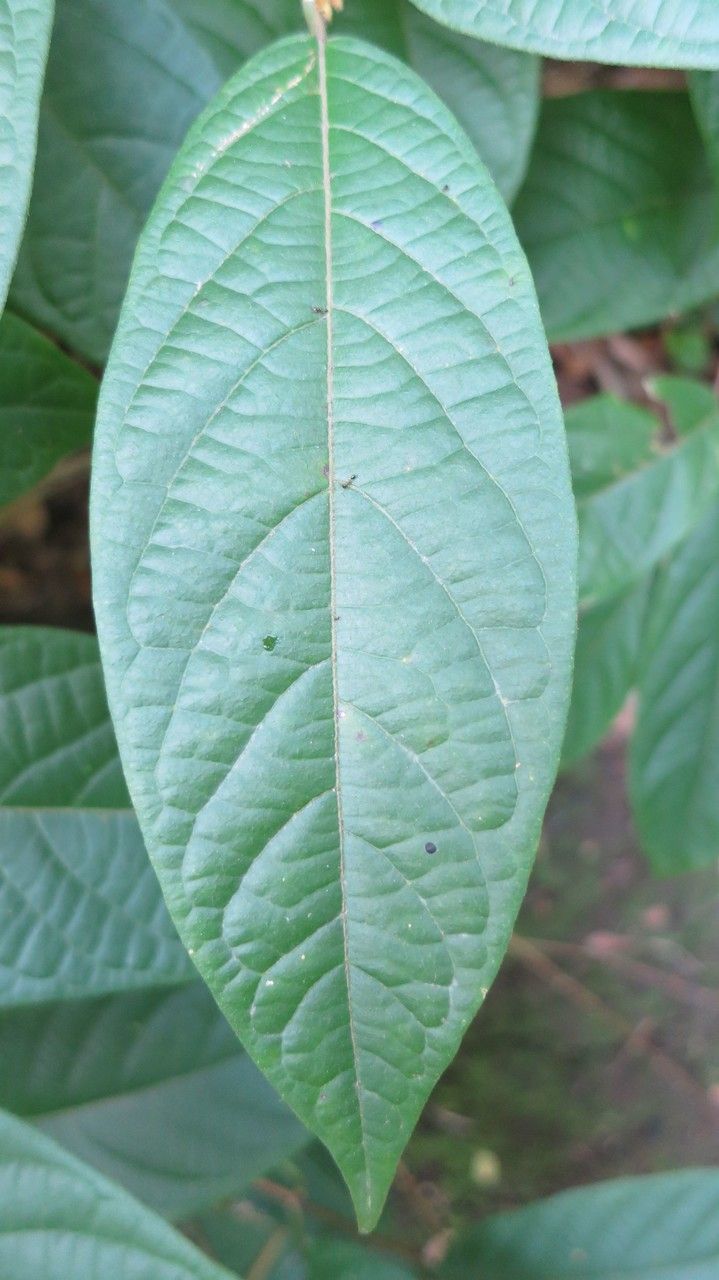
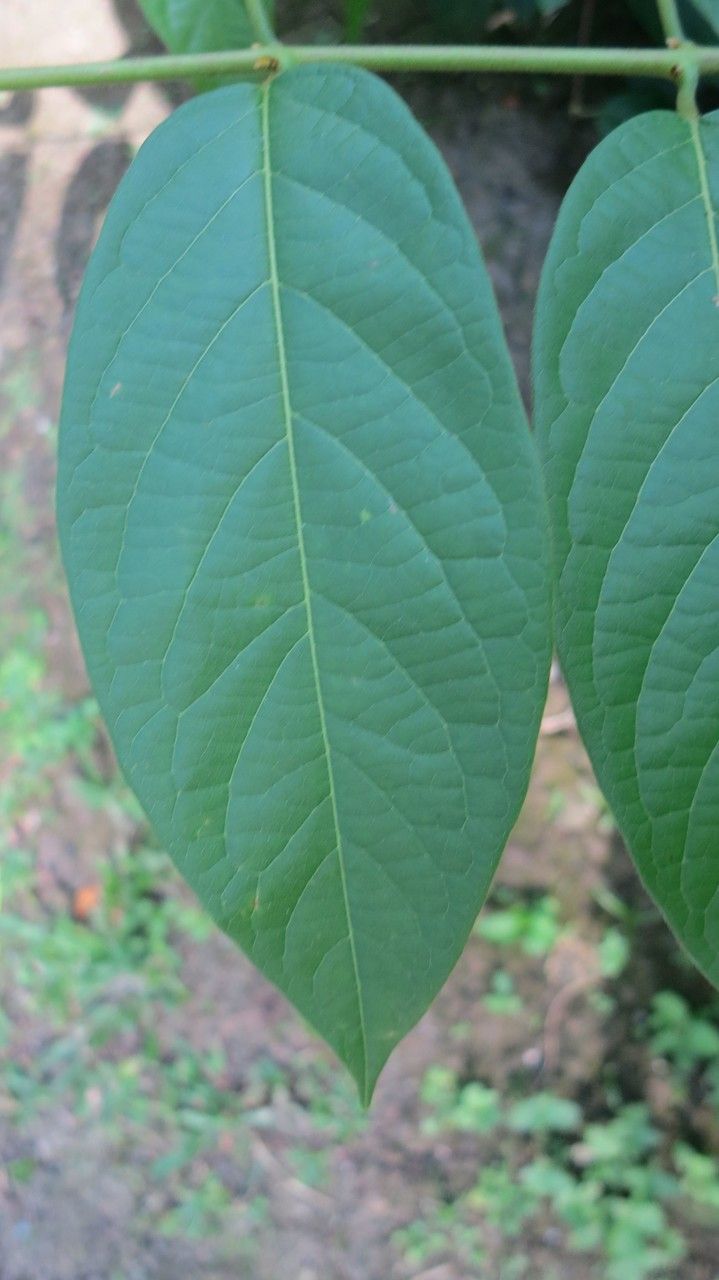
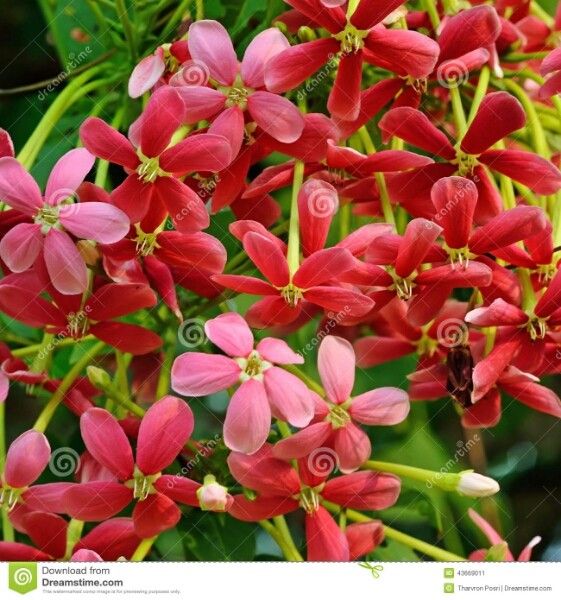
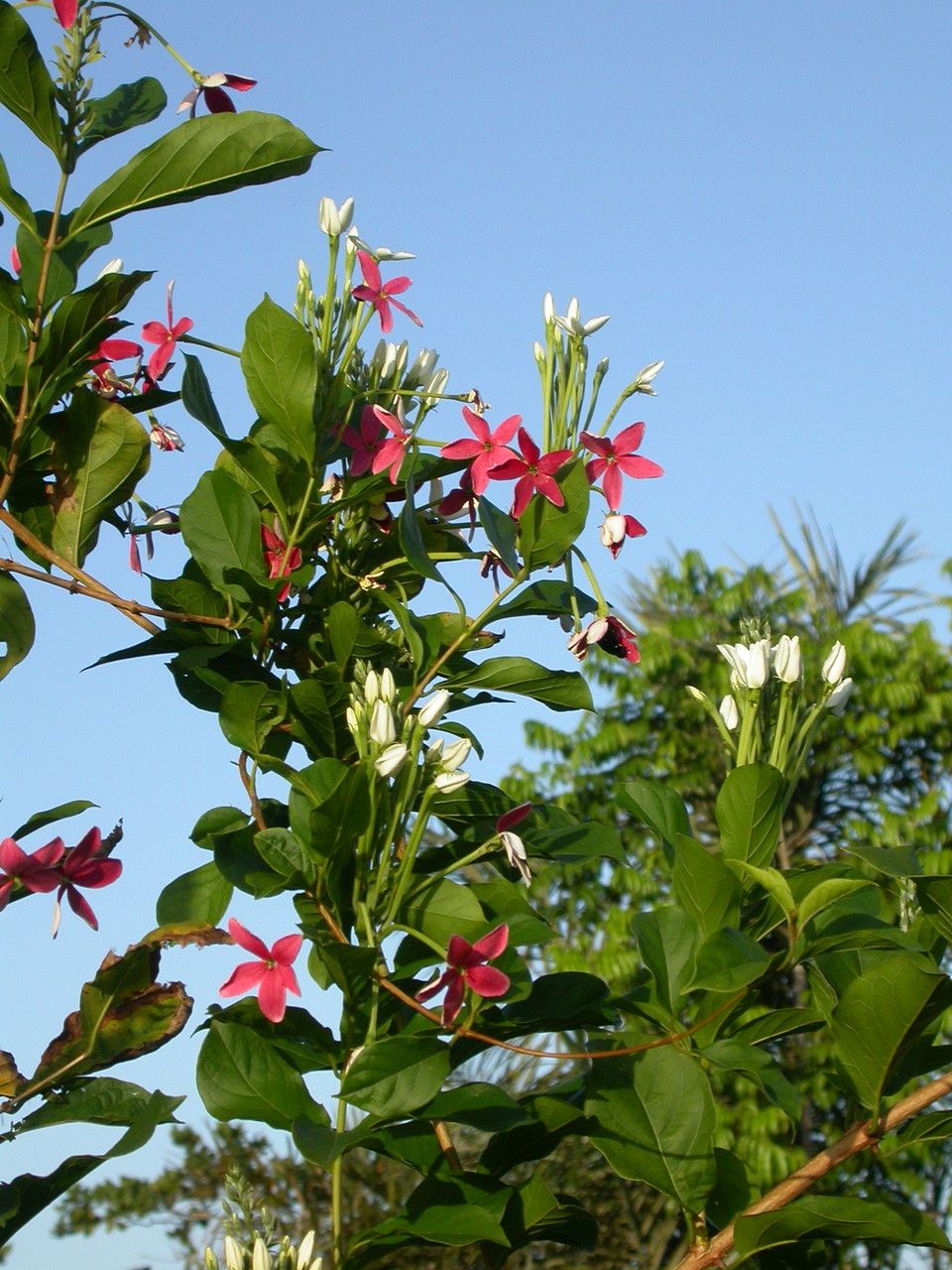
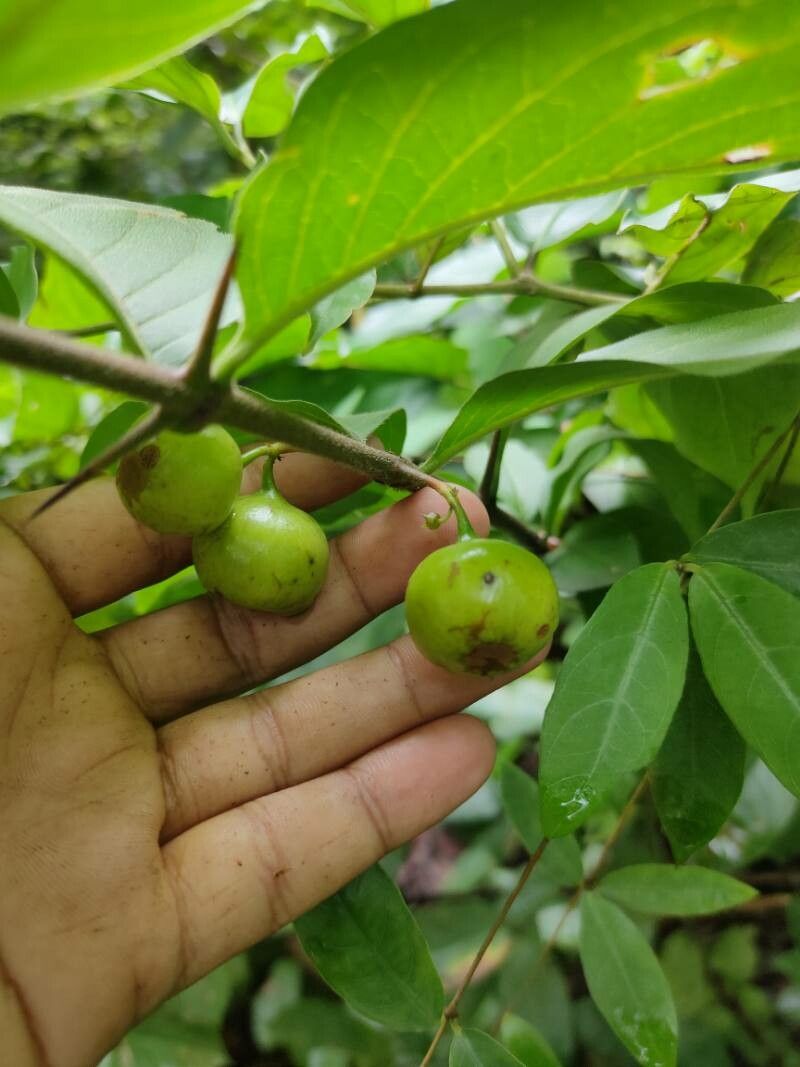
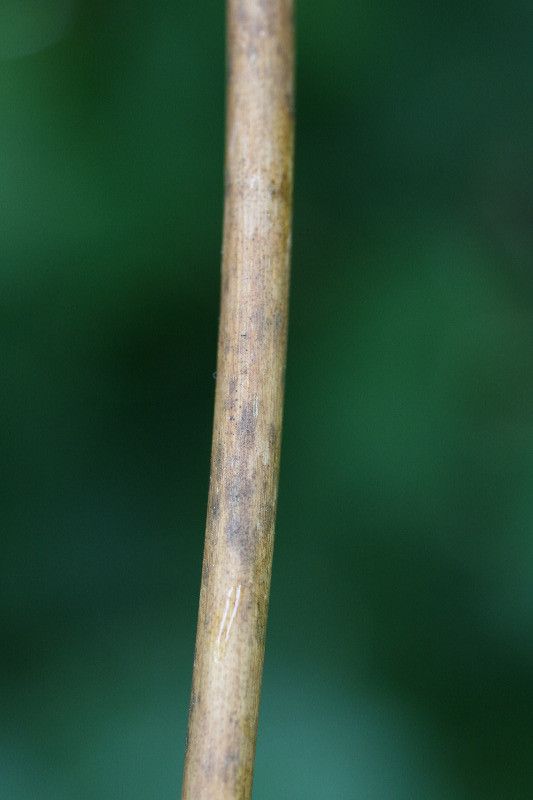
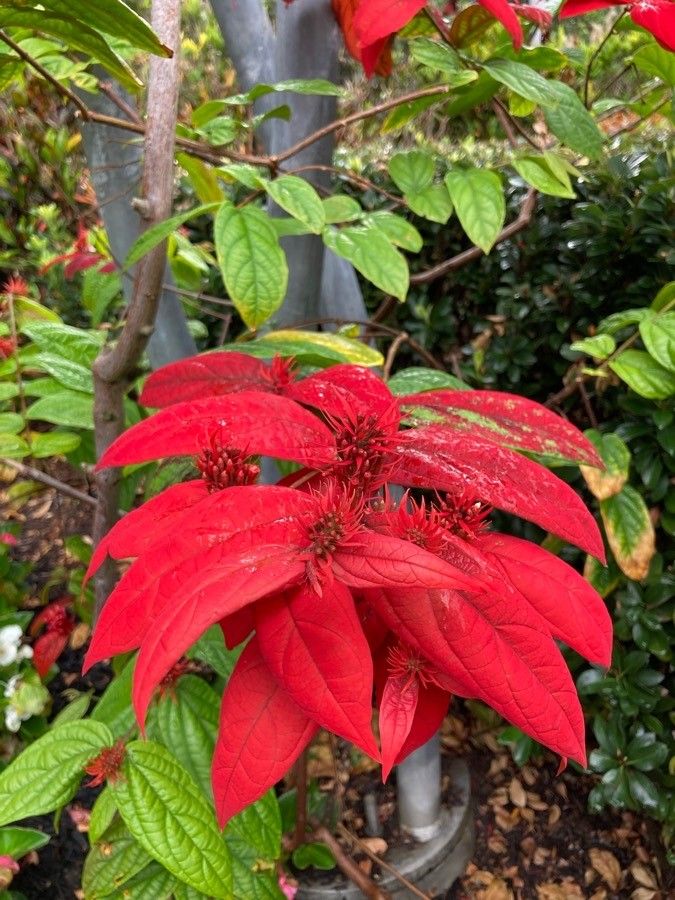
Quisqualis indica, commonly known as the Rangoon creeper or Chinese honeysuckle, is a fast-growing vine in the family Combretaceae. Native to tropical regions of Asia, it has been widely cultivated as an ornamental plant worldwide. This plant can reach up to 8 meters in height, featuring a woody stem with twining branches capable of climbing any support structure. The leaves are simple, ovate or elliptic with pointed tips, and are arranged alternately on the stem. One of the most striking features of Quisqualis indica is its flowers, which bloom profusely during the summer and autumn seasons. The fragrant, tubular-shaped flowers have five petals that change color as they mature, transitioning from white to pink and finally to red. The plant produces small drupes containing a single seed each. It takes about six months for the fruit to mature after flowering. Quisqualis indica thrives best in full sun but can also tolerate partial shade. It prefers well-drained soil rich in organic matter for optimal growth but can also grow in poorer soil conditions. In traditional medicine, various parts of Quisqualis indica have been used for their medicinal properties, such as treating fever, inflammation, and skin diseases. Overall, Quisqualis indica makes an excellent ornamental addition due to its beautiful flowers, while also offering medicinal benefits, making it useful beyond just its aesthetic appeal!
Rangoon creeper has strong resistance to disease and is typically not susceptible to illnesses. Regarding maintenance, this plant is fairly easy to care for. When grown outdoors it needs only light watering, and mature plants usually do not require pruning. Young or smaller plants, however, should be pruned after they finish flowering. Rangoon creeper is a good choice for anyone with outdoor space like a garden or a deck, and it does not demand extensive gardening experience.
How to keep Quisqualis Indica.
Light
Rangoon creeper grows best when it gets a moderate amount of sunlight during the day. It readily adjusts to different light levels. In the wild, it is often found where other plants partially filter the sun's rays. Too much or too little light can inhibit its growth.
Temperature
Rangoon creeper originates from regions where average temperatures range from 68 to 100°F (20 to 38°C). Tolerant of both heat and cool conditions, it prefers warm climates. To promote healthy growth, keep its surroundings within this temperature range and adjust for seasonal changes.
Fertilizer
The best time to fertilize a Rangoon creeper is in early spring, as it breaks dormancy. This encourages overall growth and flower development. Fertilizing improves the foliage, stems, and branches, and encourages flowers that are larger, more vivid, and longer-lasting. It helps transfer nutrients from the roots to the flowers and enhances the plant's health and resistance to disease.
Botanical profile.
- Plant Type
- Vine
- Life Cycle
- Perennial
- Genus
- Quisqualis
- Family
- Combretaceae
- Hardiness Zone
- 10-11
- Mature Height
- 7.92 m
- Mature Spread
- 4.88 m
- Leaf Color
- Green, Blue
- Leaf Type
- Evergreen
- Flower Color
- White, Pink
- Flower Size
- 2.54 cm to 5.08 cm
- Bloom Time
- Late spring, Summer
- Planting Time
- Spring, Autumn
- Harvest Time
- Mid summer, Late summer
- Native Area
- Nepal, Sri Lanka, India, Malaysia, Angola, Philippines, Bangladesh, Laos, Nigeria, Tanzania, China, Benin, Mali, Sierra Leone, Indonesia, Cambodia, Vietnam, Myanmar, Togo, Ghana, Côte d'Ivoire, Congo (DRC), Thailand
Other names.