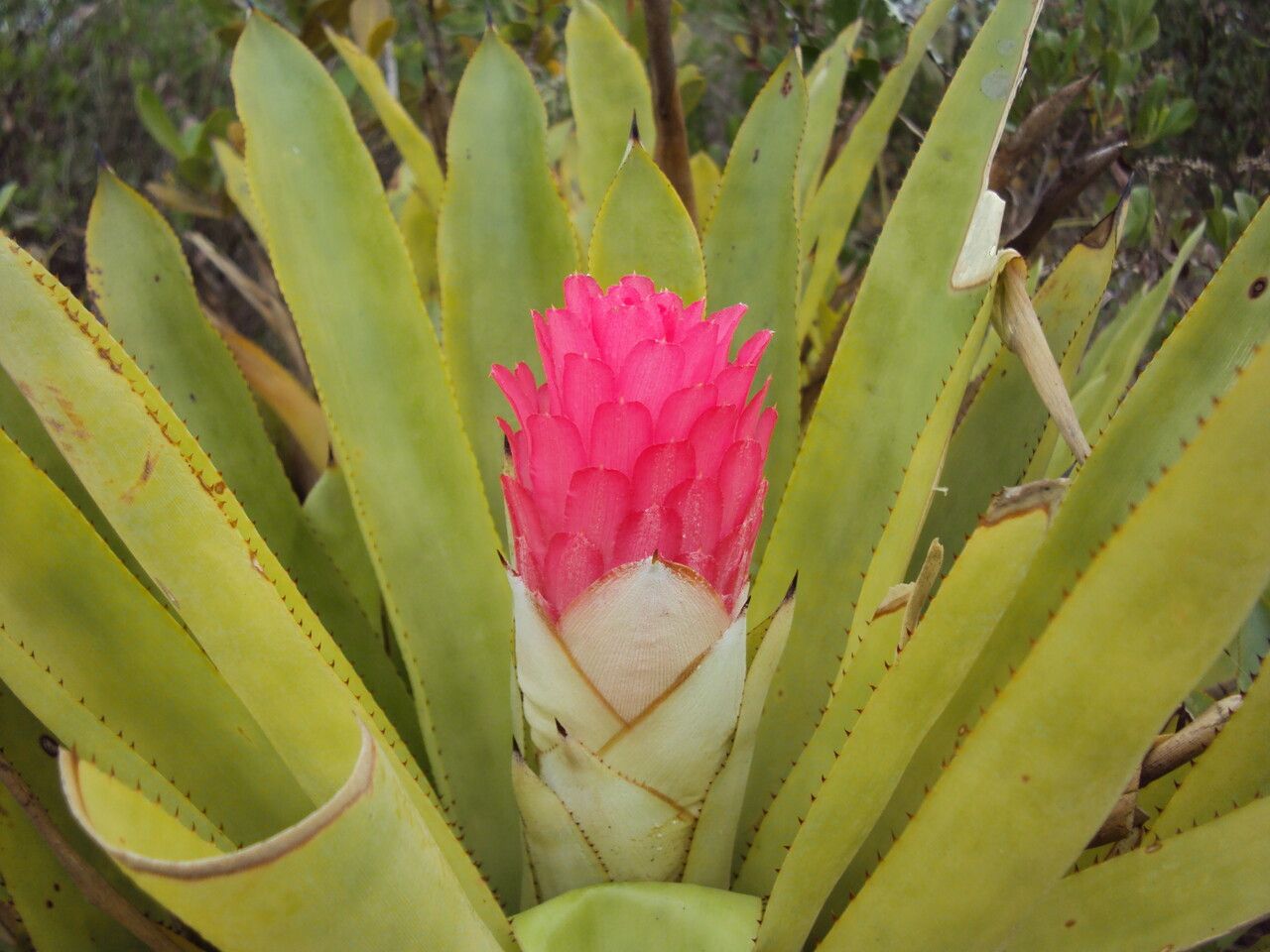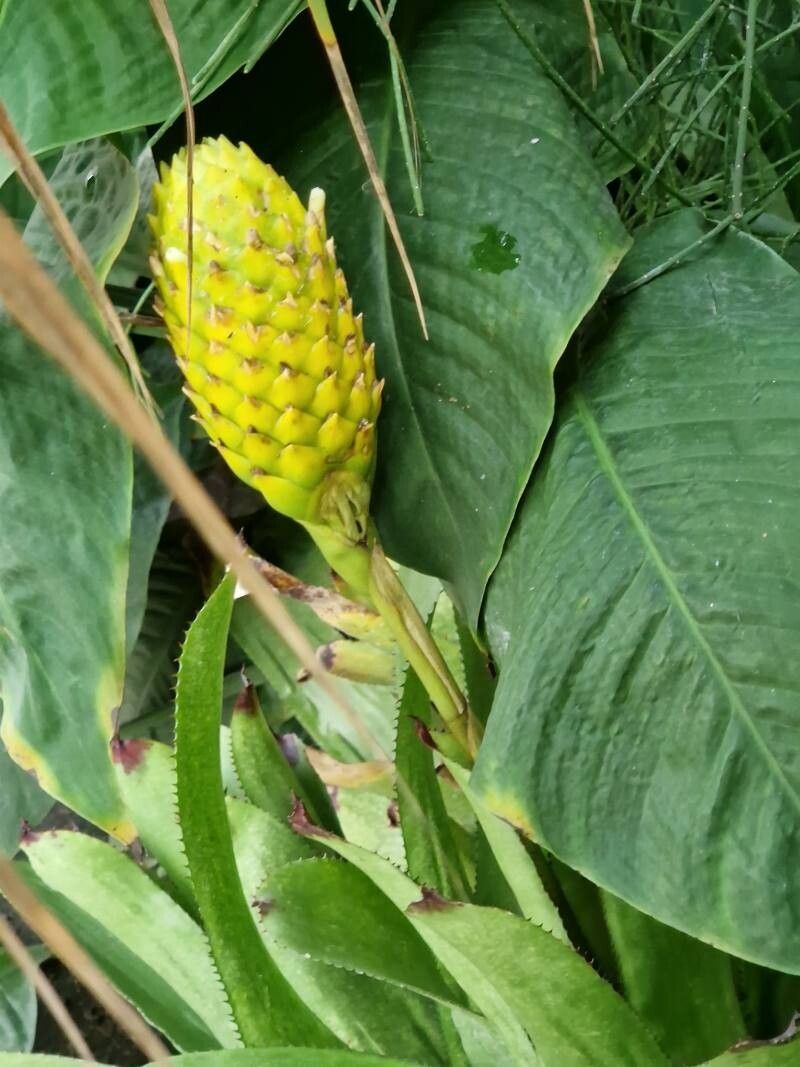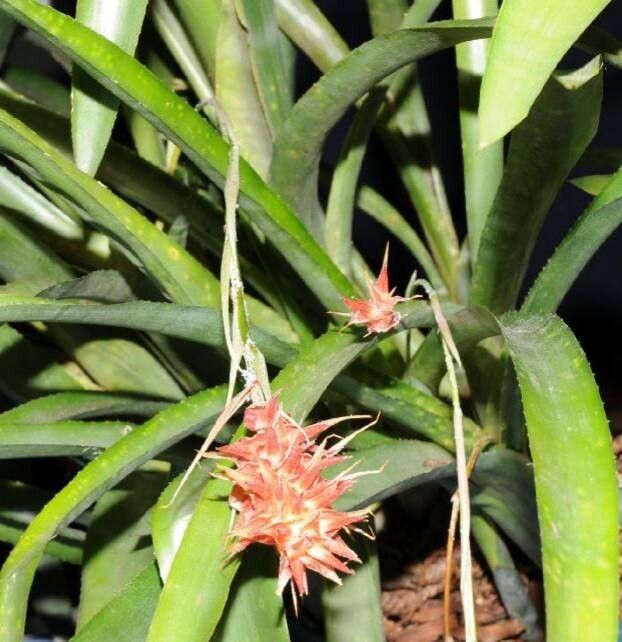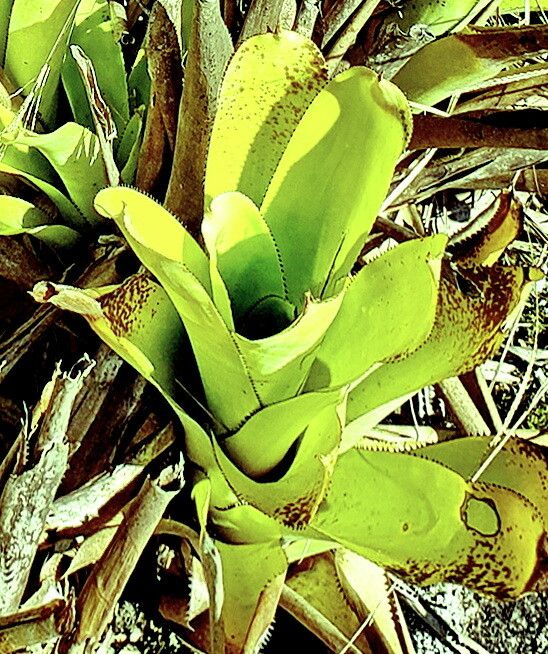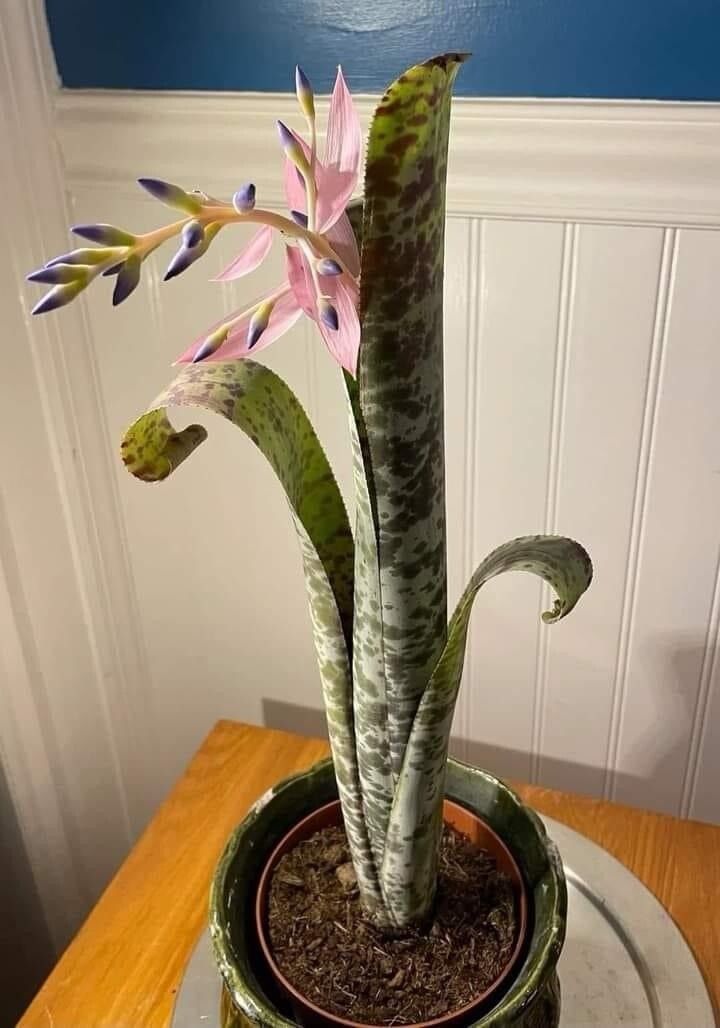
Quesnelia marmorata is a species of flowering plant in the family Bromeliaceae, endemic to the Atlantic Forest ecoregion of southeastern Brazil. It was first described by Charles Antoine Lemaire in 1855 as Billbergia marmorata.
Quesnelia marmorata shows good resistance to disease and is generally unlikely to develop illnesses. In terms of care, this plant is fairly low-maintenance. When grown outdoors it needs only light watering, and larger plants usually do not require pruning; smaller plants, however, should be trimmed after they finish blooming. Quesnelia marmoratat is appropriate for anyone with an outdoor space, such as a garden or a deck, and does not demand extensive care experience.
How to keep Quesnelia Marmorata.
Light
Quesnelia marmorata is native to habitats such as forest understories that provide natural shade. It prefers partial sun but can tolerate full sun when necessary.
Humidity
This plant will thrive in moderate humidity, which is probably the level in your home. However, misting it a few times a week can be very beneficial. Make sure the room has good ventilation.
Temperature
Quesnelia marmorata grows best in warm conditions. If the ambient temperature drops too low, the plant may stop growing or sustain frost damage. It tolerates high heat and humidity well and needs a consistent level of moisture around it. Nonetheless, very high temperatures and humidity can increase its risk of fungal infections. In dry environments, regular watering and misting are required to keep the air humidity adequate. The plant is sensitive to abrupt temperature changes, so maintaining a relatively stable temperature is important.
Fertilizer
The best time to fertilize a Quesnelia marmorata is in early spring, as it breaks dormancy. This promotes overall growth and flower development. Fertilizing improves the foliage, stems, and branches, and encourages large, vibrant, long-lasting flowers. It assists in moving nutrients from the roots to the flowers and enhances the plant’s health and disease resistance.
Botanical profile.
- Plant Type
- Shrub
- Life Cycle
- Perennial
- Genus
- Quesnelia
- Family
- Bromeliaceae
- Hardiness Zone
- 10-12
- Mature Height
- 30 cm to 61 cm
- Mature Spread
- 40 cm to 76 cm
- Leaf Color
- Green, Light Green
- Leaf Type
- Evergreen
- Flower Size
- 5.08 cm to 6.35 cm
- Bloom Time
- Mid winter, Late winter, Early spring
- Planting Time
- Spring, Summer, Autumn
- Harvest Time
- Mid spring, Late spring, Early summer
- Native Area
- Brazil