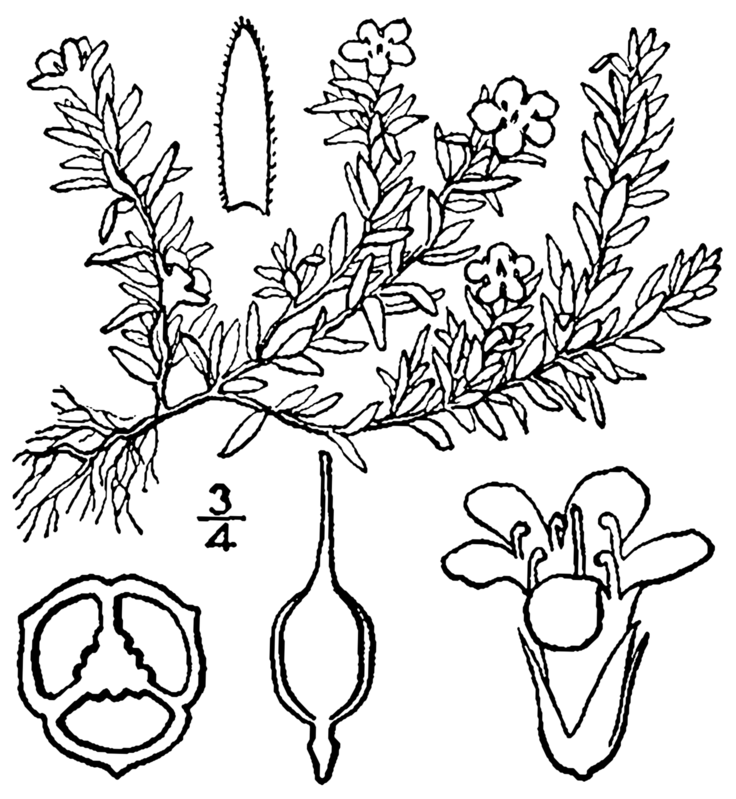
Pyxidanthera barbulata, the flowering pixiemoss, is a species of flowering plant in the family Diapensiaceae. It is native to the eastern United States, occurring on the coast from Long Island to New Jersey and Virginia to South Carolina.Pyxidanthera barbulata is not a moss. It is a low subshrub producing a mat on the ground. It grows from a rhizome and the stems root at intervals where they meet the ground. The crowded leaves are lance-shaped and no more than a centimeter long. The flowers have pink sepals and white petals up to about half a centimeter long.This plant grows in dry, sandy soils under pines. Though it may occur in wetlands, it is well adapted to dry conditions. It is also adapted to habitat prone to wildfire. It is known from pine barrens, flatwoods, sandhills, and the edges of pocosins.
Flowering pixiemoss has strong disease resistance and typically isn’t prone to illnesses. However, it can be affected by pests and diseases present in its surroundings. These infections are generally not severe. In terms of care, the plant requires moderate maintenance. It should be pruned routinely to preserve a good appearance and healthy growth. Applying fertilizer can also help encourage flowering. Flowering pixiemoss is suitable for anyone with outdoor space, such as a garden or patio, and does not demand extensive care experience. It may need more attention when grown indoors.
How to keep Pyxidanthera Barbulata.
Light
Flowering pixiemoss comes from habitats like forest understories or rocky areas where it grows in natural shade. It prefers partial sun but can tolerate full sun or full shade, highlighting its hardy, adaptable nature.
Water
Flowering pixiemoss flourishes in temperate woodlands, where it benefits from regular moisture and consistent humidity. To keep it well-hydrated, this plant needs to be watered once a week. It is usually grown outdoors, and its ability to produce vibrant blooms during the growing season depends on receiving an adequate water supply.
Temperature
Flowering pixiemoss can tolerate a wide range of temperatures, though its distribution may still be constrained by particular combinations of moisture and heat. It does best in warm summer conditions with adequate rainfall or watering. Extended periods of cloudy, rainy weather, as well as prolonged high temperatures, increase the likelihood of Flowering pixiemoss dying. In winter, protecting it from cold can improve its chances of survival.
Fertilizer
The best time to fertilize a Flowering pixiemoss is in early spring, as it comes out of dormancy and begins active growth. Fertilization supplies essential nutrients for healthy development. Although Flowering pixiemoss needs relatively little fertilizer, applying it once a year can improve its survival and encourage better, longer-lasting flowers.
Pruning
Flowering pixiemoss is an evergreen ground cover characterized by its needle-like leaves and small, star-shaped flowers. To maintain its health and appearance, prune your flowering pixiemoss from early to late spring. Focus on removing dead stems and lightly shaping the plant. Minimal intervention helps preserve its natural form, encouraging resilience and denser growth.
Botanical profile.
- Plant Type
- Herb, Shrub
- Life Cycle
- Perennial
- Genus
- Pyxidanthera
- Family
- Diapensiaceae
- Hardiness Zone
- 5-8
- Mature Height
- 5 cm to 10 cm
- Mature Spread
- 10 cm to 30 cm
- Leaf Color
- Dark Green
- Leaf Type
- Semi-evergreen
- Flower Color
- White, Pink
- Flower Size
- 0.51 cm to 1.02 cm
- Bloom Time
- Early spring, Mid spring
- Planting Time
- Spring, Summer
- Harvest Time
- Late spring, Early summer