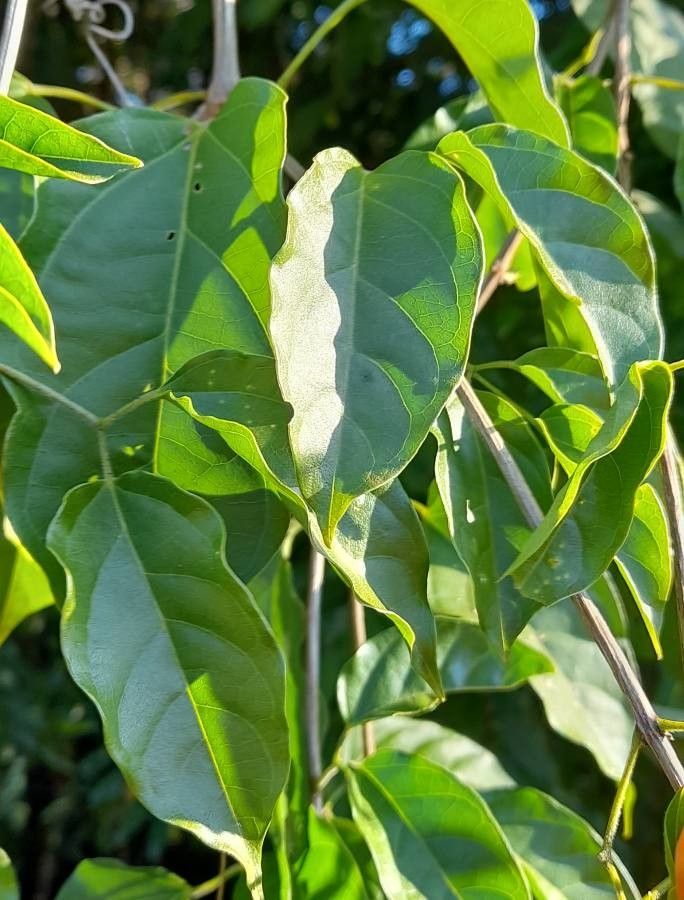
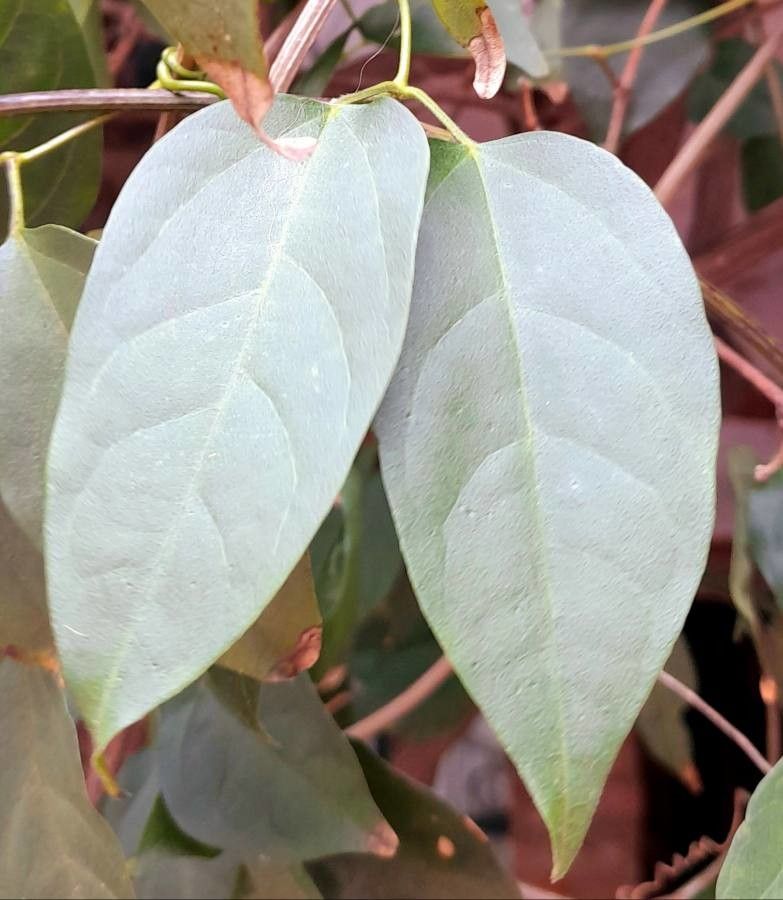
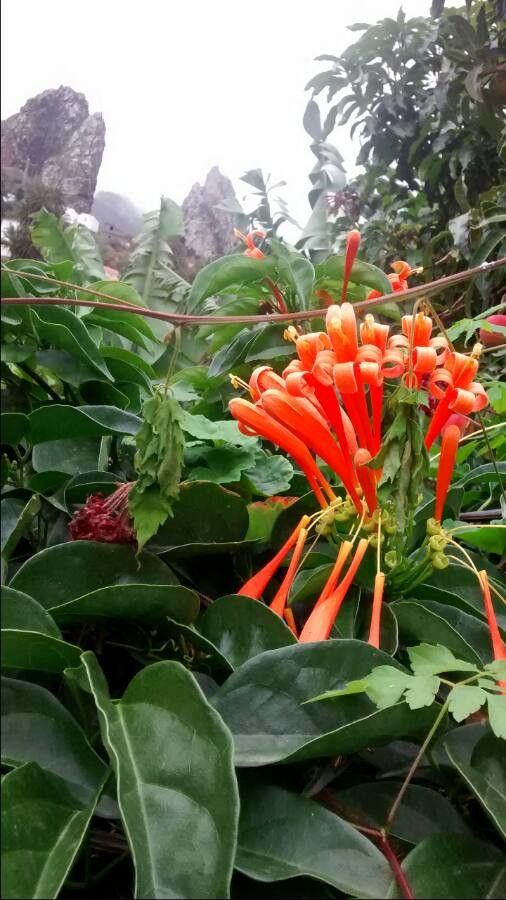
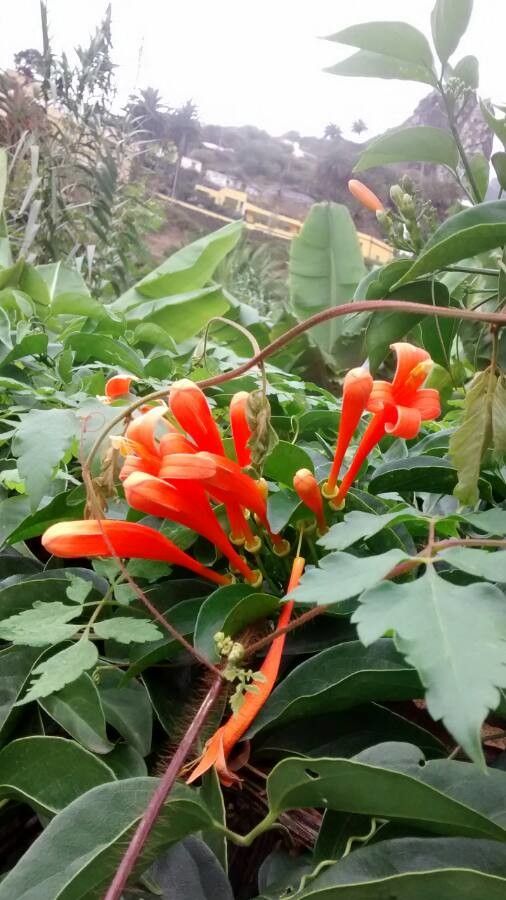
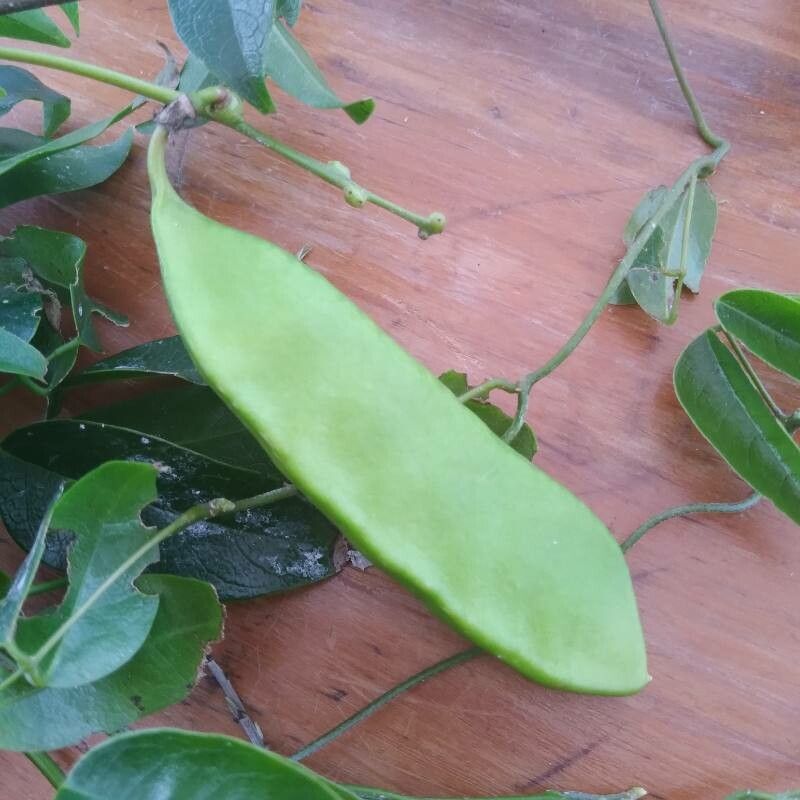
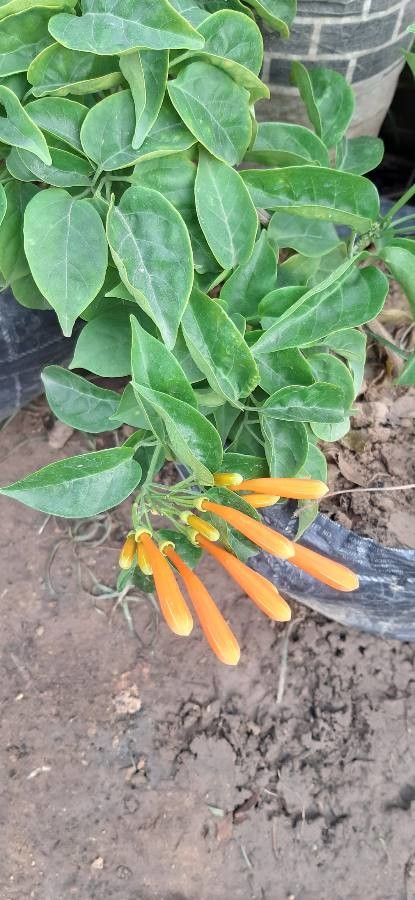
Pyrostegia venusta, commonly known as flame vine or orange trumpet vine, is a flowering plant species in the Bignoniaceae family. Native to Brazil, this plant is widely cultivated as an ornamental plant in tropical and subtropical regions worldwide. It features long, slender stems that can grow up to 10 meters in length, climbing trees or other structures with the help of tendrils. The dark green, glossy leaves have a leathery texture, while the large, trumpet-shaped flowers boast bright orange-red petals and can reach up to 10 cm in length.
Pyrostegia venusta blooms profusely during the winter months when many other plants are dormant, making it a popular choice for adding vibrant color to gardens during this time of year. It prefers full sun exposure and well-drained soil, though it can tolerate some shade and moderate drought conditions once established. However, it is not frost-tolerant and should be protected from freezing temperatures if grown outside its native range.
Flamevine has strong disease resistance and is generally not susceptible to illnesses. In terms of care, this plant is fairly low maintenance. When planted outdoors it requires minimal watering, and larger plants generally do not need pruning. Smaller plants, however, should be pruned after they have bloomed. Flamevine is suitable for anyone with an outdoor space, such as a garden or deck, and does not require much care experience.
How to keep Pyrostegia Venusta.
Light
Flamevine does best with steady, abundant sunlight. In its native environment it is generally not protected from the sun's rays. Too much shade can weaken the plant and may reduce flower production. Conversely, excessive sun exposure generally does not harm this hardy species.
Water
Flamevine is well-suited for tropical climates, thriving in high humidity and warmth with moderate moisture needs. To prevent overwatering, it should be watered every three weeks. Commonly grown outdoors for its stunning flowers, flamevine benefits from rainwater during the growing season, which helps enhance its lush foliage and ornamental beauty.
Temperature
Flamevine is native to regions where temperatures range from 68 to 100 °F (20 to 38 ℃). It favors warmer climates and may need additional heat during colder seasons.
Fertilizer
The best time to fertilize a Flamevine is in early spring as it comes out of dormancy. This supports overall growth and flower development. Fertilizing improves the foliage, stems, and branches, and encourages flowers that are large, vibrant, and long-lasting. It also helps move nutrients from the roots to the flowers and boosts the plant’s health and resistance to disease.
Pruning
Flamevine produces striking orange flowers and needs to be pruned annually in early spring. To encourage healthy growth and better air circulation, trim away any old wood and overcrowded shoots. Regular pruning helps manage its rapid growth and prevents it from becoming invasive. It's important to always use clean tools to minimize the risk of spreading diseases.
Botanical profile.
- Plant Type
- Vine
- Life Cycle
- Perennial
- Genus
- Pyrostegia
- Family
- Bignoniaceae
- Hardiness Zone
- 9-11
- Mature Height
- 22.86 m
- Mature Spread
- 1.83 m to 2.44 m
- Leaf Color
- Green
- Leaf Type
- Evergreen
- Flower Color
- Orange
- Flower Size
- 5.08 cm to 7.62 cm
- Bloom Time
- Early spring, Fall, Winter
- Planting Time
- Spring, Autumn
- Harvest Time
- Mid spring, Late spring
- Native Area
- Colombia, Honduras, Guatemala, Bolivia, Venezuela, Peru, Guyana, El Salvador, Ecuador, Costa Rica
Other names.
Reader questions.
What's the best way to water my Flamevine plant?
To ensure excellent root development, it is recommended to place a garden hose at the base of the plant. However, avoid spraying the leaves directly, as this can cause issues. If the plant is outdoors and exposed to direct sunlight, the leaves will need more frequent watering. One option is to use bubblers that can be attached to each plant to keep the roots moist. Soaker hoses that cover the entire garden or bed can also be used to help deeply water the plants when adding or removing them. It's important to drain any excess water and allow the soil to dry before watering again. To prevent diseases, water the plants at ground level. On sunny days, it can be beneficial to spray the entire bush with water. Whether the Flamevine is potted or planted in the ground, it is best to provide deep watering rather than light sprinkling.
Why should I put fertilizer on my Flamevine plant?
Flamevine's overall health and well-being depend on fertilization. It not only promotes the growth of healthy foliage, stems, and branches, but also enhances the value of its flowers. By providing the necessary energy and nutrients, fertilization results in large, vibrant, and long-lasting flowers. This is because the right fertilizer facilitates the efficient transfer of fuel from the roots to the flowers through the stems. Additionally, proper fertilization improves the plant's overall health, making it more resistant to diseases.
What are the sunlight requirements for Flamevine?
Flamevine, or Pyrostegia venusta, thrives under full sun conditions, requiring more than 6 hours of direct sunlight per day to flourish. Its natural habitat is one where it isn't typically shielded from the sun's rays, meaning it's adapted to a generous exposure to sunlight. Excessive shade can weaken the plant, potentially affecting its ability to produce blooms, although it's robust enough that sun overexposure generally doesn't cause harm. When planning where to place your Flamevine in the garden, observe how sunlight moves through the area, choosing spots that offer a balance of light and shade to ensure the plant's happiness.
What is the ideal temperature range for growing Flamevine?
Flamevine, also known by its botanical name Pyrostegia venusta, thrives in regions with temperatures ranging from 68 to 100 °F (20 to 38 °C). It is a heat-loving plant that prefers warmer climates. During colder seasons, it might require additional heat to maintain its growth. It is recommended to bring the plant indoors when autumn arrives, placing it near a bright window yet at a certain distance from heaters. Keeping the indoor temperatures above 20°C during the winter season will support its growth. Exposure to temperatures nearing 0°C is harmful to the plant.
What should I do if I give Flamevine too much or too little water?
An overwatered Flamevine can show signs of stress such as yellowing, dropping leaves, and wilting. The plant may also appear dull and unhealthy with mushy stems. When these signs start to appear, it is recommended to adjust your watering schedule if possible. Wilting can also indicate under watering, with leaves becoming crispy and dry. In such cases, check the soil moisture level and provide a thorough watering as necessary. However, even with enough water, the Flamevine may still have dry, yellow leaves due to a damaged root system. Once the plant recovers, the yellowing of the leaves will cease. For indoor Flamevines, always check for moisture levels and avoid overwatering. Look out for black spots on the plant, and if present, allow the soil to dry out by withholding water for a few days. Overwatering can lead to root rot, in which case transferring the plant to a different pot is advisable, especially if roots appear discolored and slimy. To prevent root rot, ensure the soil does not become excessively soggy. When planting Flamevines outdoors, dig a little deeper and check the soil moisture level. If the soil feels too dry, it may indicate underwatering, and adequate watering is necessary for plant recovery.
When should I fertilize my Flamevine?
To properly fertilize a Flamevine, the ideal time is during early spring when the plant is coming out of its dormant phase and preparing to bloom. This boosts its energy and supports overall growth and flower development. However, it's not the only opportune time for fertilization. Giving it another feeding during the fall months can also benefit the plant, albeit with a smaller amount. Some gardeners opt to fertilize the Flamevine during planting, but this step is not always essential.
How can artificial lighting benefit indoor Flamevine plants?
For indoor Flamevine plants, especially in scenarios where natural sunlight is insufficient, such as winter months or less sunny locations, artificial lighting can be a vital solution. Adequate lighting is crucial for optimal growth. LED lights, being a popular choice, can be customized to supply specific wavelengths needed by the plants. The intensity required varies with the type of plant: full sun plants need 30-50W/sq ft, partial sun 20-30W/sq ft, and full shade plants 10-20W/sq ft. The correct setup involves placing the light source 12-36 inches above the plant to mimic natural sunlight and ensuring the plants receive 8-12 hours of light per day.
How should I care for my Flamevine if it experiences low temperatures?
Flamevine is sensitive to low temperatures and best thrives when the thermometer reads above 20°C. To protect it during the winter, ensure that temperatures remain above 0°C. If the temperature drops below -5°C, you may notice a discoloration in the leaves. Following frost damage, the leaves may turn brown or black, accompanied by wilting and drooping. To care for a frost-damaged Flamevine, trim off the affected parts and move the plant to a warm environment indoors. Position it near a south-facing window for sufficient sunlight, but not too close to heaters or air conditioning vents, to avoid making the air too dry around it.
How often do I need to water my Flamevine?
The Flamevine prefers deep and infrequent watering, especially when planted in pots. Pots have limited water storage and the soil can dry out quickly, so it is important to soak the plant with a gallon of water each time. In cold regions, water every 3 to 5 days. Water in the morning when the soil is dry, both indoors and outdoors. Check the soil inside the pot to determine if watering is needed - if the top 2-3 inches are dry, it's time to water. During hot days, check the moisture daily as the heat can dry out the soil faster. For garden watering in hot climates, water once a week when about 2 to 3 inches of soil become too dry. Take into account the amount of rainfall and avoid overwatering to prevent root rot. Flamevine generally grows in spring and fall, so add mulch about 3 to 4 inches deep outdoors to conserve water. Sandy soil drains faster, so plants in this soil type may need more frequent watering. On the other hand, plants in clay soil need less frequent watering to prevent root rot. Keep track of watering dates on a calendar, and if you notice drooping leaves, it might be a sign that you need to water a day earlier.
When is it best to not add fertilizer to my Flamevine?
During the winter, Flamevine plants are dormant and do not require fertilization. Fertilizing during this time can lead to negative effects from overfertilization. The ideal feeding times for Flamevine are in early spring and fall. Therefore, during most of the spring and summer, the plant does not need fertilizer. It is also best to avoid feeding if the plant is exposed to excessively hot or dry conditions.
What are common symptoms of light deficiency in Flamevine?
Light deficiency in Flamevine can lead to several easily identifiable symptoms. The plant may exhibit small new leaves that are smaller in size compared to mature ones, leggy or sparse growth due to longer spaces between leaves or stems, and faster leaf drop as the plant tries to conserve resources. Additionally, there may be slower or no new growth as the plant enters a survival mode under poor light conditions. Leaves developing lighter colors or irregular patterns signal insufficient sunlight, leading to a lack of essential nutrients and chlorophyll. These conditions often require adjustments in the plant's environment to encourage healthier growth.
How does high temperature affect Flamevine and what are the solutions?
During the summer, it's crucial to ensure the Flamevine's temperature does not exceed 38°C, as this can lead to leaf discoloration and increase susceptibility to sunburn, especially when the temperature goes beyond 43°C. If your Flamevine suffers from high temperature or sunburn, you should trim away the sunburned and dried parts. Relocate the plant to a spot where it can receive shade during the midday and afternoon sun. Additionally, watering it in the morning and evening will help keep the soil adequately moist and assist in cooling the plant.