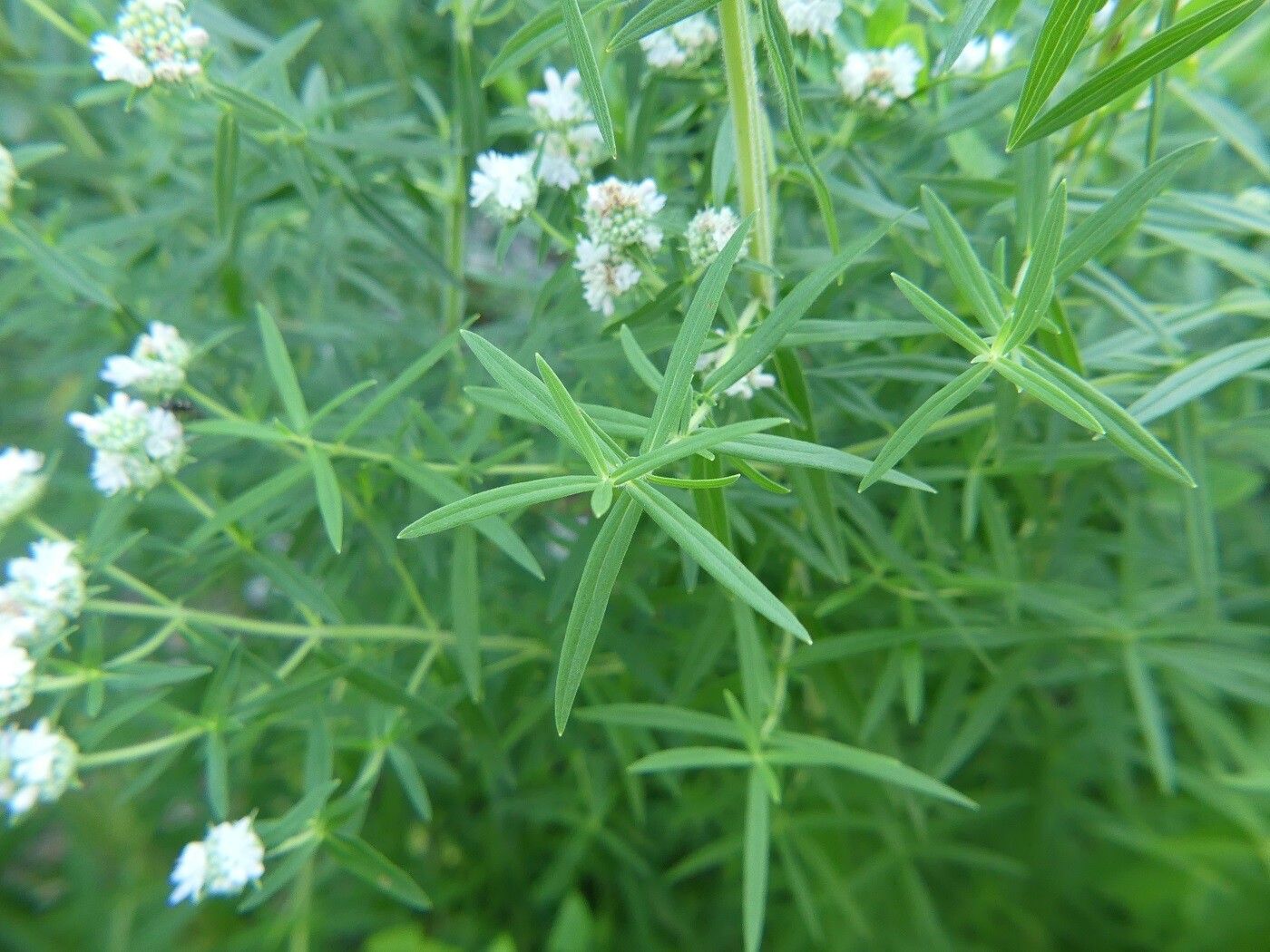
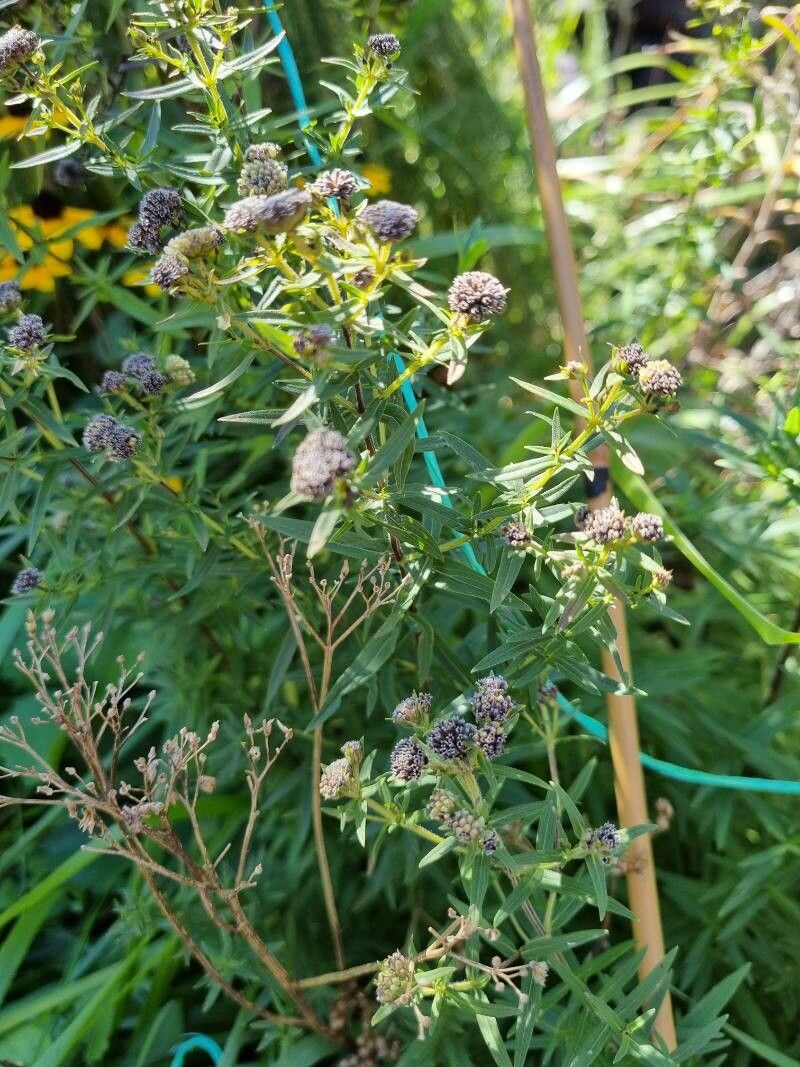
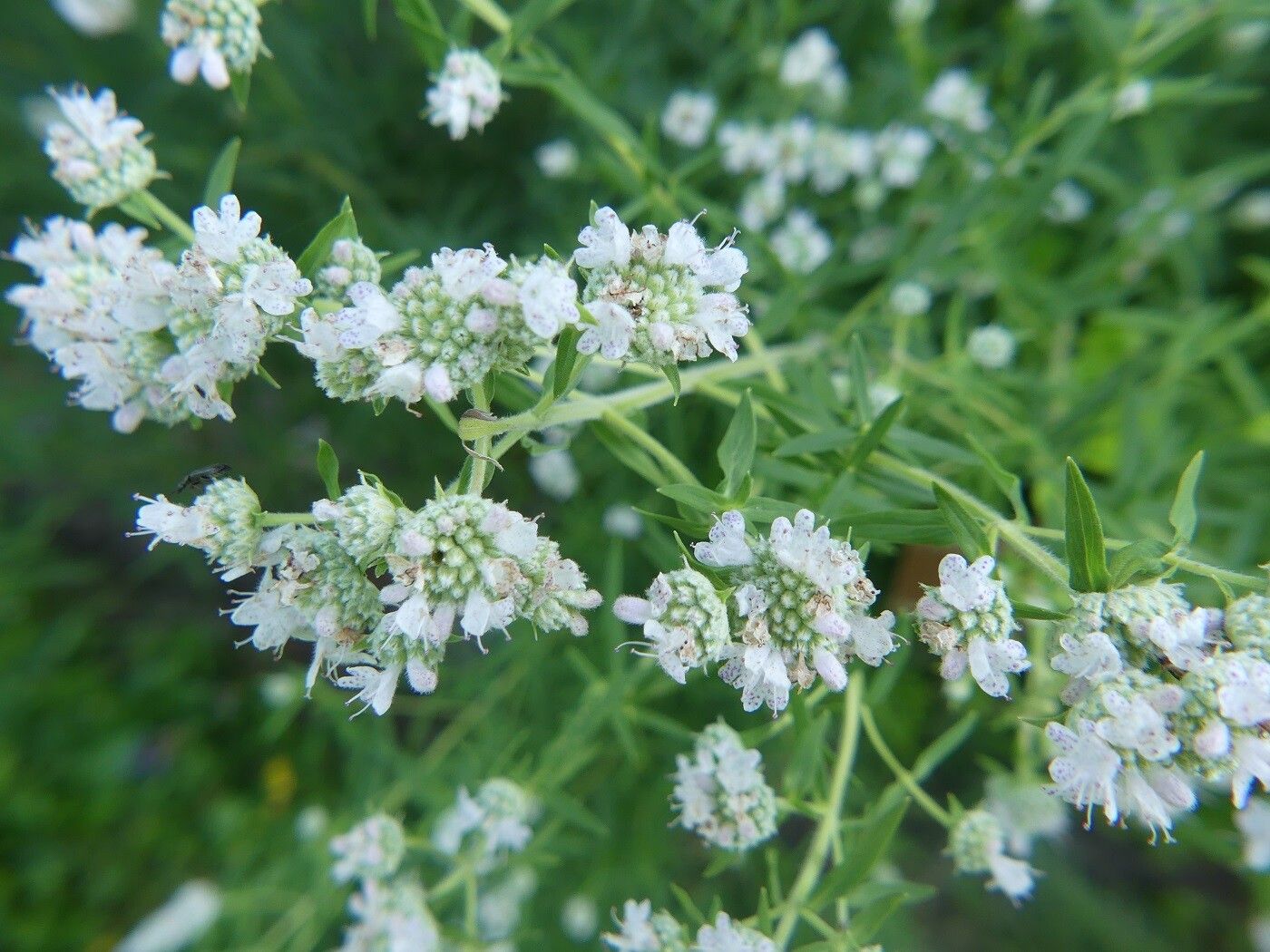
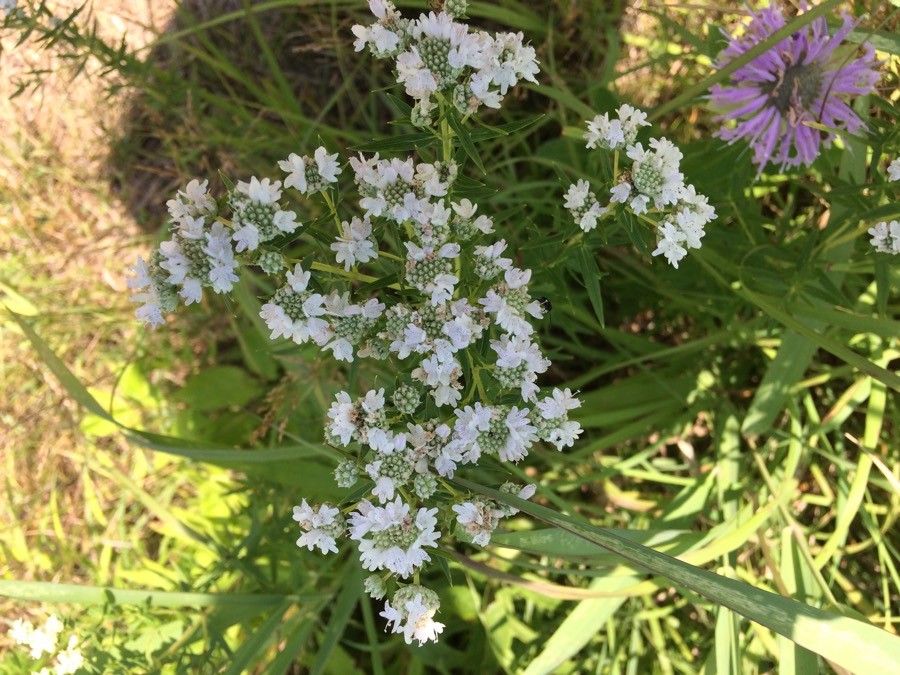
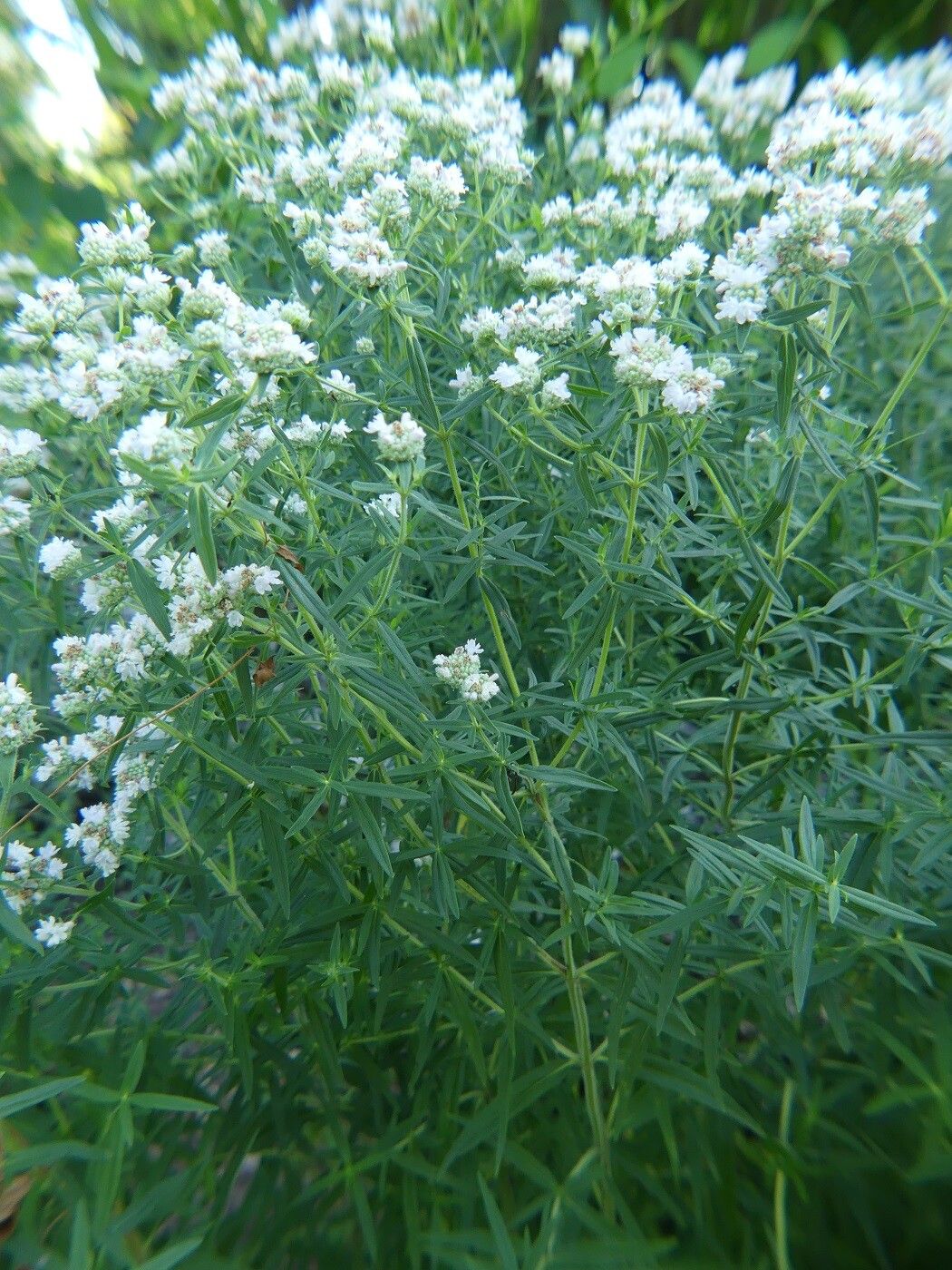
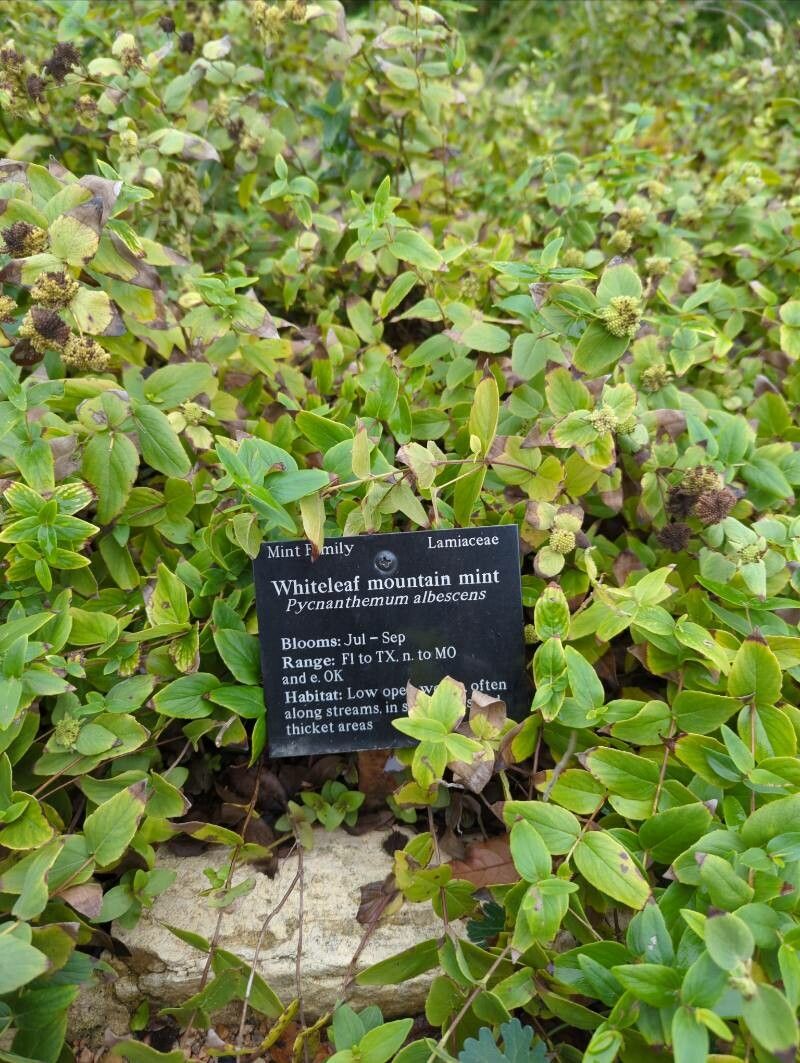
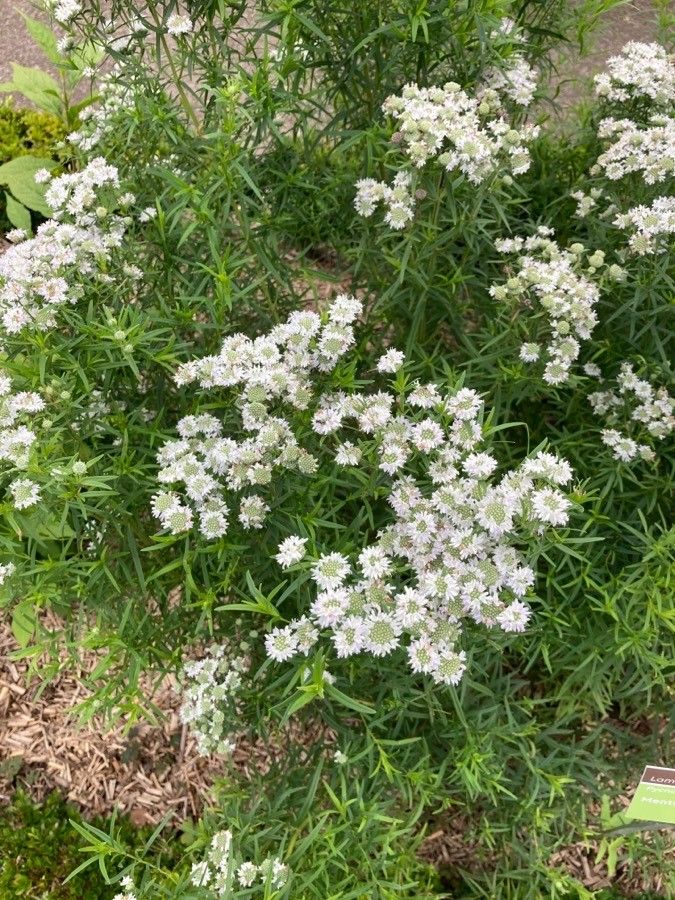
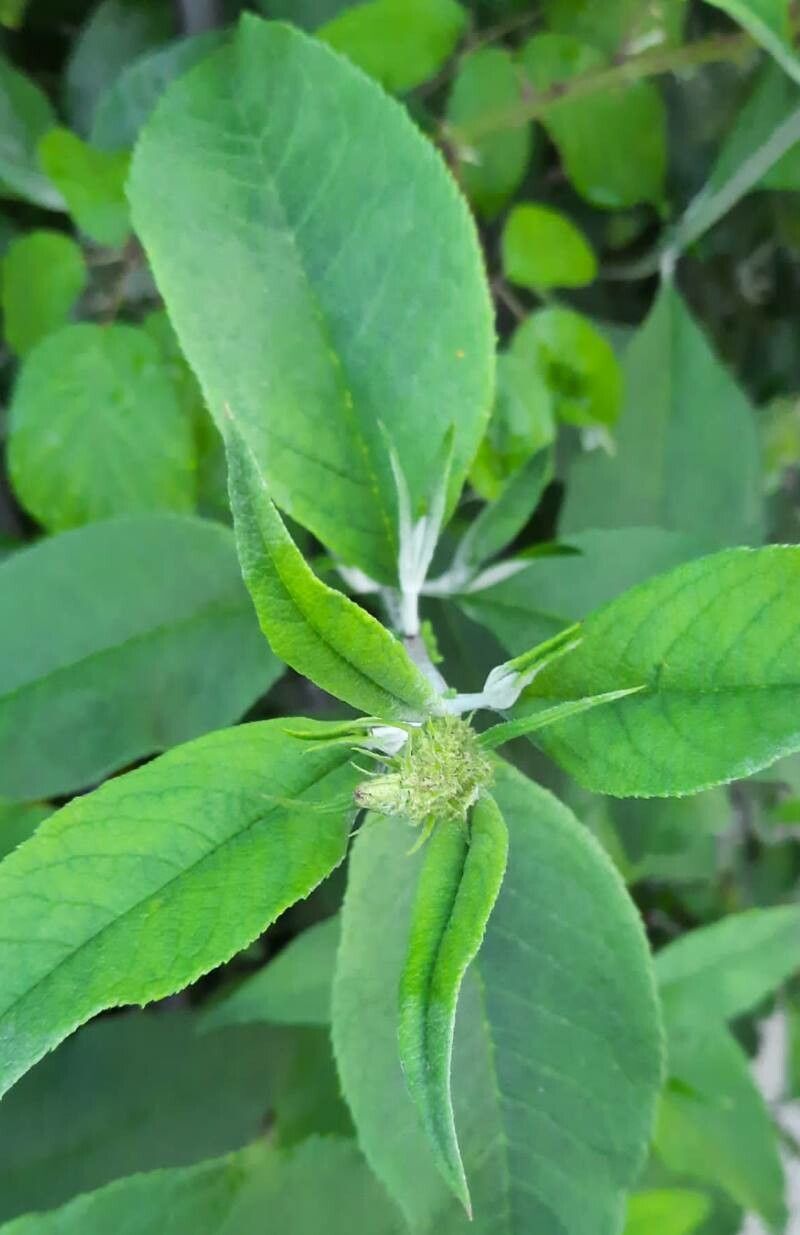
Pycnanthemum virginianum, the Virginia or common mountain-mint, is a plant in the mint family, Lamiaceae. It is a herbaceous plant with narrow, opposite, simple leaves, on wiry, green stems. The flowers are white with purplish spotting, borne in summer. Like most plants in the genus, the foliage has a strong mint fragrance when crushed or disturbed. It is native to the eastern United States and eastern Canada.The flowers are visited by many insects, including honeybees, cuckoo bees, sweat bees, thread-waisted wasps, potter wasps, tachinid flies, wedge-shaped beetles, and pearl crescent butterflies.
Virginia mountain mint has strong resistance to disease and is typically not prone to illnesses. However, it can be affected by pests and diseases present in its environment. These infections are generally minor. Regarding care, the plant needs a moderate amount of attention. It should be pruned regularly to preserve its appearance and support healthy growth. Applying fertilizer can also encourage flowering. Virginia mountain mint is appropriate for anyone with outdoor space, like a garden or patio, and does not demand extensive gardening experience. It may need more care when cultivated indoors.
How to keep Pycnanthemum Virginianum.
Light
Virginia mountain mint grows most vigorously when given a generous amount of daily sunlight, mirroring the abundant sun of its native habitat. It can, however, tolerate locations with moderate sun exposure. Too much or too little sunlight can disrupt its normal growth and flowering.
Water
Virginia mountain mint thrives in humid environments and needs consistent moisture, preferring regular watering. It should be watered twice a week, especially during the active growing season, to ensure lush foliage and robust growth. Though it has moderate drought tolerance, keeping it well-hydrated is essential for maintaining its vitality.
Temperature
Virginia mountain mint is native to habitats with a broad temperature range, from 41 to 89.6 °F (5 to 32 ℃). The plant favors cool to warm conditions, so make sure it is well sheltered during the heat of summer and the chill of winter.
Fertilizer
The ideal time to fertilize a Virginia mountain mint is in early spring, when it is coming out of dormancy and beginning active growth. Fertilizing supplies essential nutrients for healthy growth. Although Virginia mountain mint has relatively low fertilizer requirements, applying fertilizer annually can enhance its survival and encourage better, longer-lasting flowers.
Pruning
Virginia mountain mint benefits from pruning between early and late spring, which helps the plant recover and promotes bushier growth. To control the plant's height and improve airflow, remove any dead stems and leggy growth. This will encourage more vigorous blooming. Always use clean tools to prevent the spread of disease.
Botanical profile.
- Plant Type
- Herb
- Life Cycle
- Perennial
- Genus
- Pycnanthemum
- Family
- Lamiaceae
- Hardiness Zone
- 4-8
- Mature Height
- 30 cm to 91 cm
- Mature Spread
- 91 cm
- Leaf Color
- Green
- Leaf Type
- Deciduous
- Flower Color
- White
- Flower Size
- 2.54 cm
- Bloom Time
- Early summer, Mid summer
- Planting Time
- Spring, Summer, Autumn
- Harvest Time
- Mid summer
Other names.
Reader questions.
What are the sunlight requirements for Virginia mountain mint?
Virginia mountain mint requires a substantial amount of daily sunlight exposure for healthy growth, thriving best when it receives ample sunlight similar to its native habitat conditions. It can grow in full sun, which is defined as above 6 hours of sunlight daily, or partial sun with about 3-6 hours of sunlight. However, it's also adaptable to areas with moderate sun exposure. Observing how sunlight moves through your garden to choose the perfect balance of light and shade is crucial for the plant's happiness. Overexposure or underexposure may disturb its growth and flowering pattern.
What is the native temperature range for Virginia mountain mint?
Virginia mountain mint (Pycnanthemum virginianum) thrives in environments with a wide temperature range, from 41 to 89.6 °F (5 to 32 °C). This botanical species is adapted to cooler to warmer climates, highlighting the need for proper shelter during extreme heat in summer or cold in winter to maintain its health and aesthetic appeal.
How can artificial lighting support the growth of Virginia mountain mint indoors?
When natural sunlight is insufficient for indoor Virginia mountain mint, artificial lighting becomes a vital solution, particularly during winter or in less sunny spaces. LED lights are recommended because they can be customized to provide specific wavelengths needed by plants. For full sun plants, 30-50W/sq ft of artificial light is needed; partial sun plants require 20-30W/sq ft, and full shade plants need 10-20W/sq ft. The artificial light source should be placed 12-36 inches above the plant, mimicking the length of natural daylight, which is typically 8-12 hours per day.
Does Virginia mountain mint require special frost protection in winter?
Virginia mountain mint exhibits strong cold resistance, making special frost protection measures usually unnecessary during the winter months. However, should winter temperatures be anticipated to plummet below -30°C, it becomes crucial to shield the plant using protective coverings such as soil or straw. Additionally, to combat drought and water scarcity in winter and early spring, it's advisable to water the plant generously before the first freeze of autumn, ensuring the soil remains moist as it freezes.
What are the symptoms of inadequate lighting for Virginia mountain mint?
Virginia mountain mint exhibits several symptoms when exposed to inadequate lighting, including the growth of smaller new leaves, leggy or sparse growth, faster leaf drop, slower or halted new growth, lighter-colored new leaves indicating a lack of chlorophyll and essential nutrients, chlorosis (leaves losing green color), sunscald (damage from intense sunlight exposure), leaf curling (a defense mechanism against excessive sunlight), wilting (due to loss of turgor pressure), and leaf scorching (brown, dry, and crispy leaf edges). These symptoms help identify when the plant’s lighting conditions need adjustment.
How does low temperature affect Virginia mountain mint, and what are the solutions?
Virginia mountain mint is notably cold-tolerant, best performing in temperatures above 5°C, while it should remain above -25°C during the winter. Exposure to temperatures below -30°C might not manifest immediately, but it could lead to reduced or even absent sprouting in the following spring. The recommended solution for any parts of the plant that fail to sprout in spring is simply to remove them.
How can one address the issue of inadequate sunlight for Virginia mountain mint?
Addressing inadequate sunlight involves a combination of solutions depending on where the Virginia mountain mint is positioned. Indoor plants can be gradually moved to a sunnier location or supplemented with artificial light using a desk or ceiling lamp for at least 8 hours daily, or professional plant grow lights. For outdoor and ground-planted specimens, the process of moving them gradually to sunnier locations while avoiding sudden changes in light intensity is recommended. Additionally, reducing obstructions like pruning trees or transplanting the plant during its dormant period to a sunnier spot can significantly help. It's important to note that parts of the plant affected by insufficient sunlight may not recover, but new growth can be healthy with improved lighting.
What are the effects of high temperature on Virginia mountain mint and how can they be mitigated?
In the summer, ensuring that Virginia mountain mint does not exceed 32°C is essential for its well-being. Should temperatures surpass 35°C, the plant may exhibit signs of stress such as lighter leaf color, leaf curling, susceptibility to sunburn, and in severe cases, wilting or complete dry-out. Mitigation strategies include pruning the sunburned and dried parts of the plant, relocating it to a shaded area especially during midday and afternoon, or employing a shade cloth. Keeping the soil moist through morning and evening watering sessions is also beneficial.