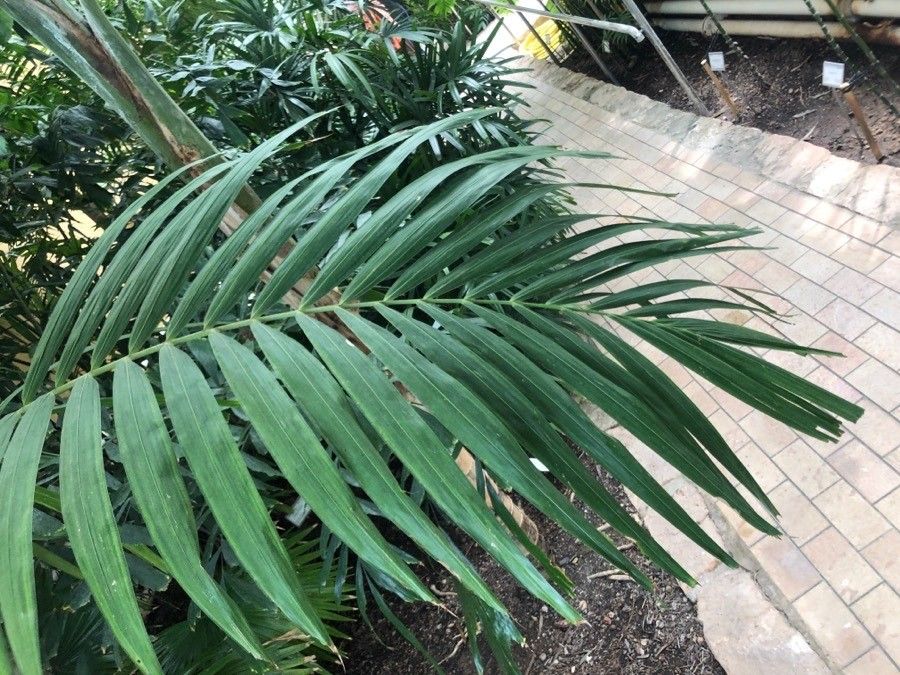
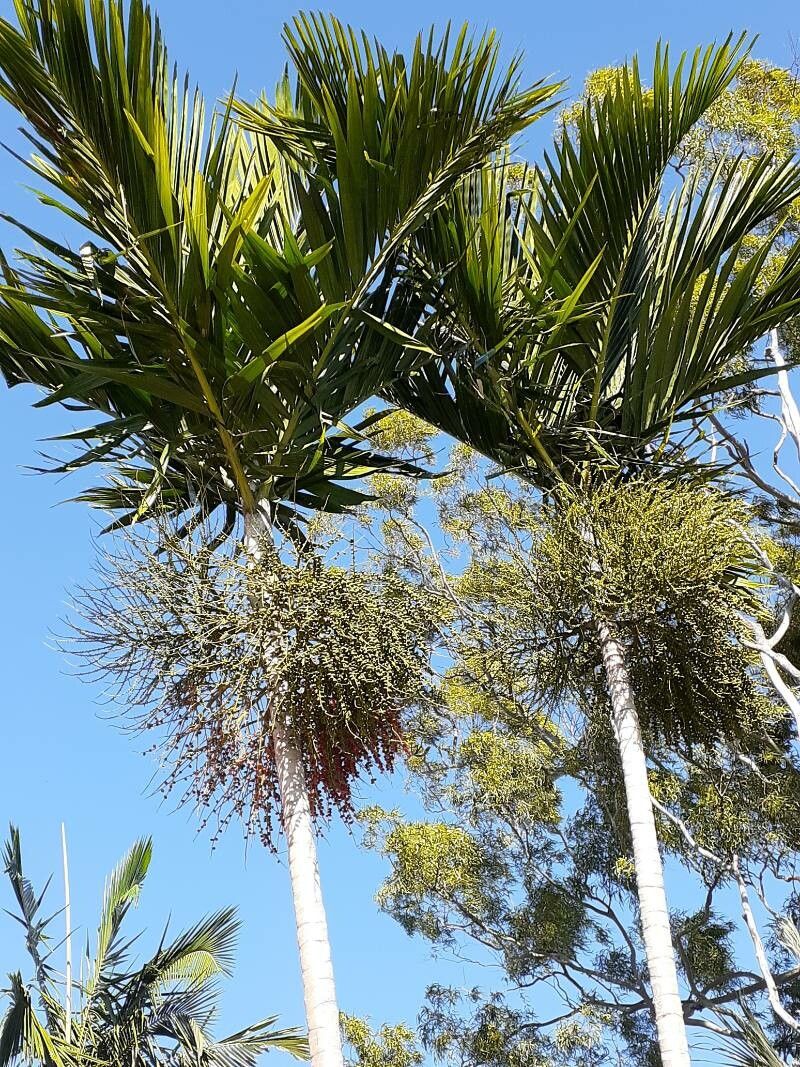
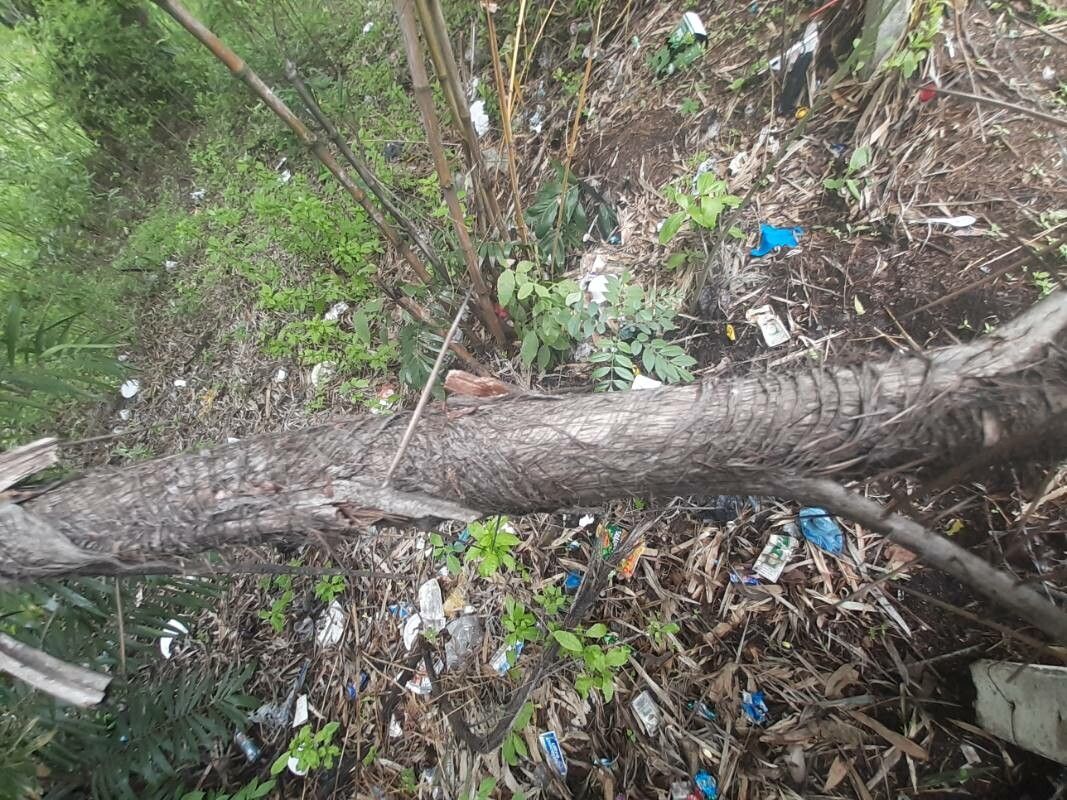
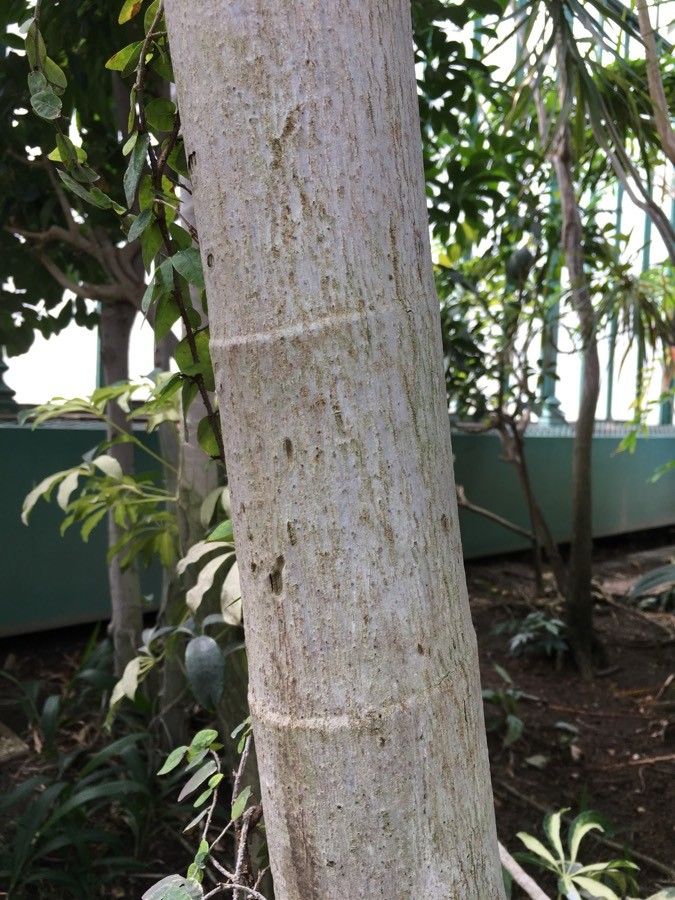
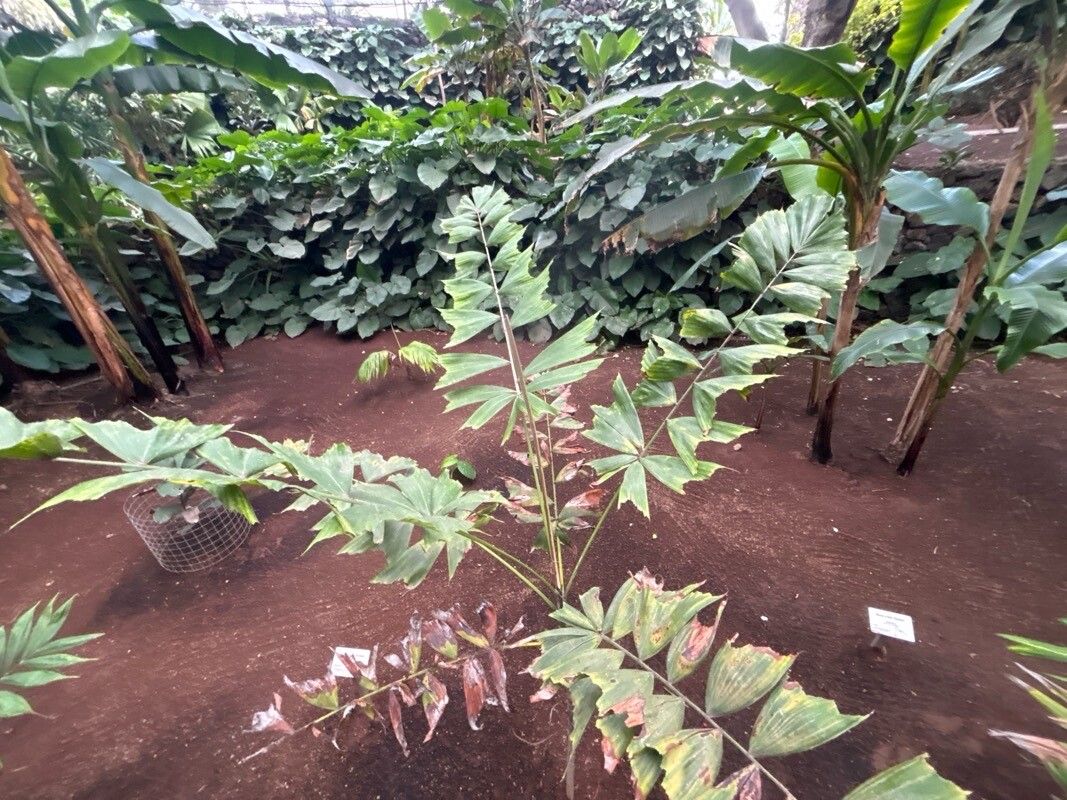
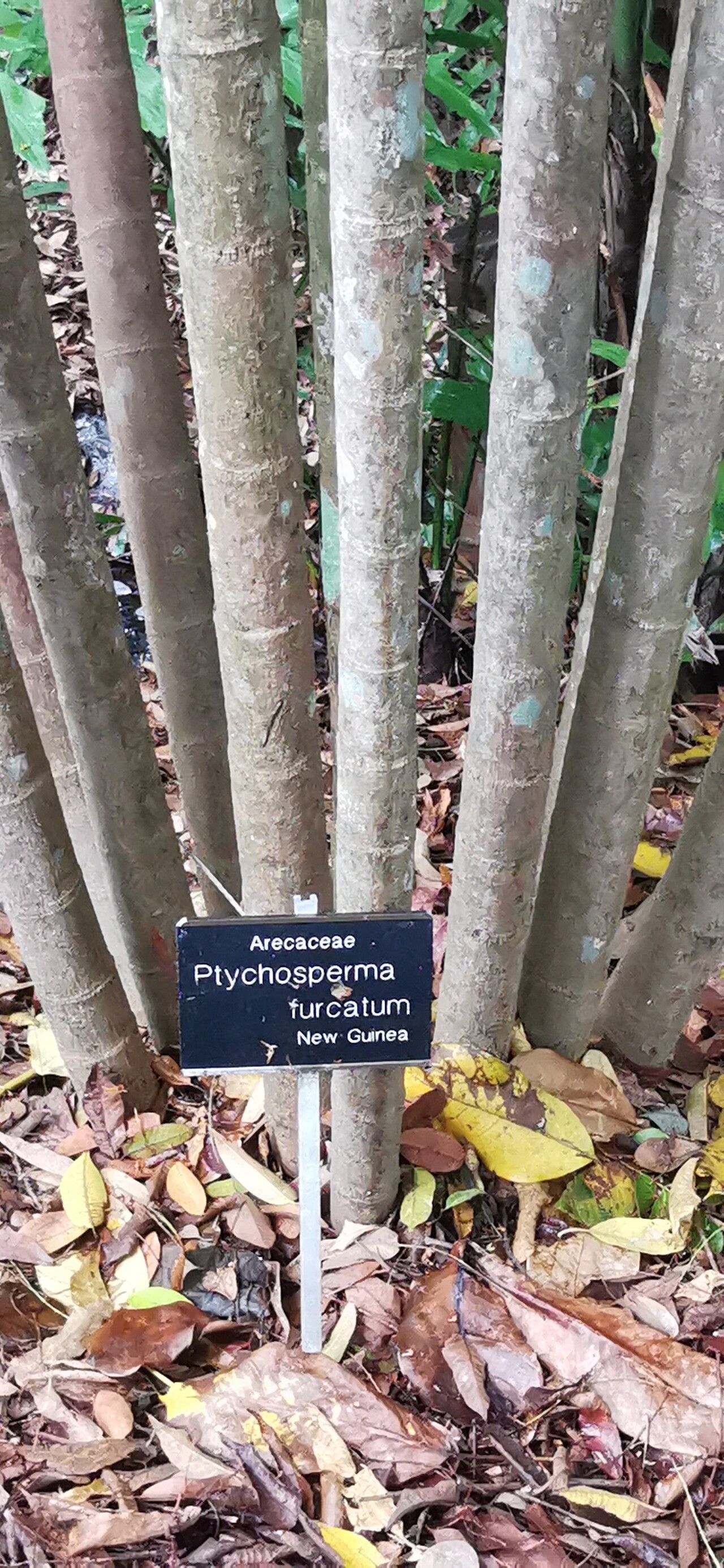
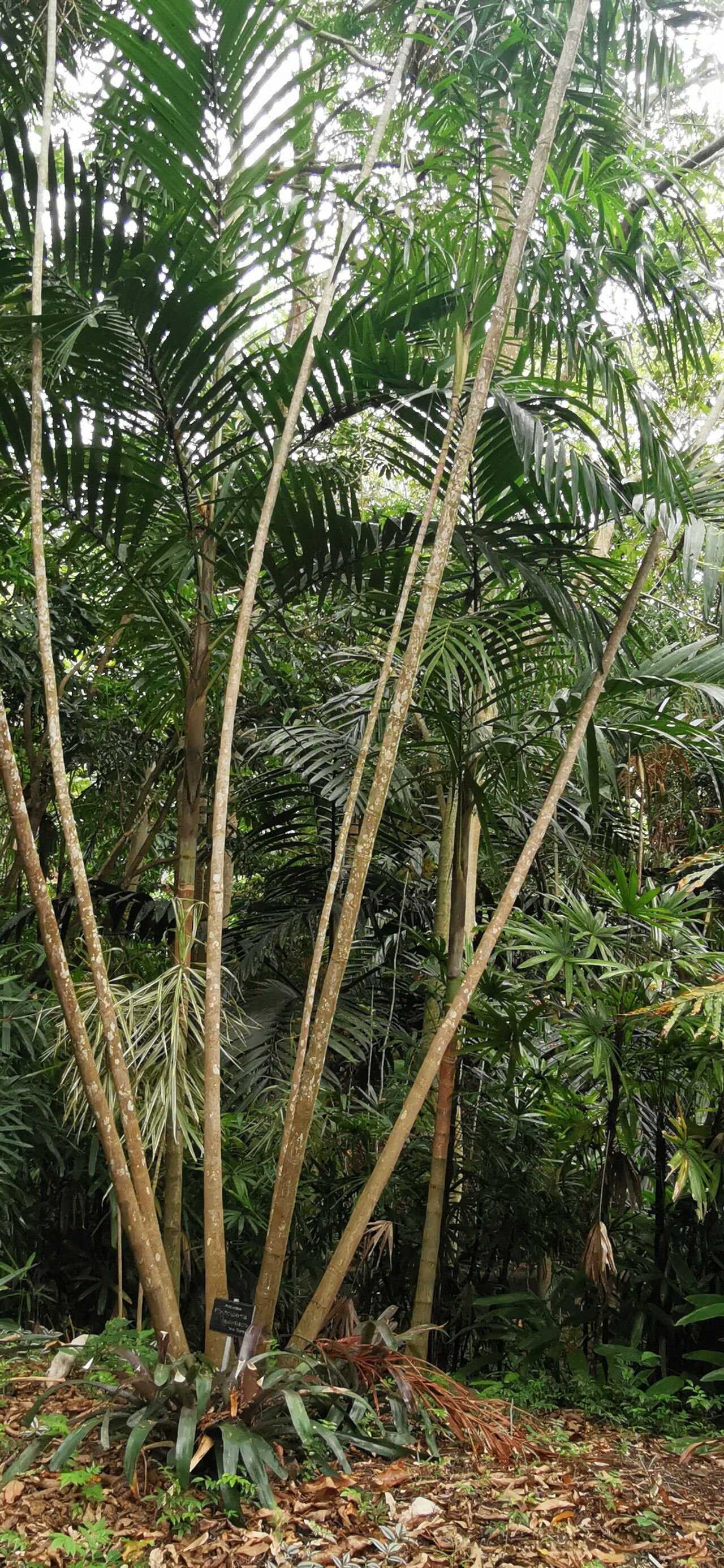
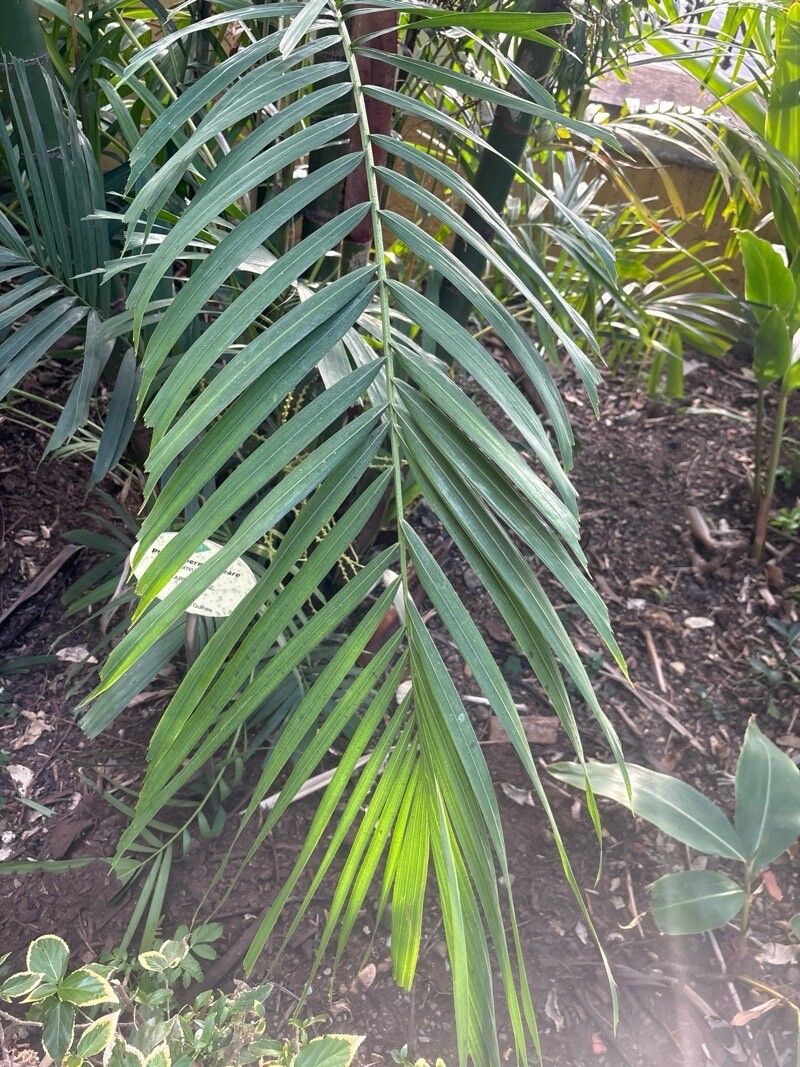
Ptychosperma elegans, commonly known as the Solitaire Palm or Alexander Palm, is a popular ornamental plant native to the rainforests of Queensland and New South Wales, Australia. This slow-growing palm can reach a height of up to 10 meters and features a slender trunk marked with ringed leaf scars. Its pinnate leaves are composed of multiple dark green, glossy leaflets with pointed tips.
The Solitaire Palm produces small white flowers on long stalks that emerge from among the leaves. These flowers eventually give way to small black fruits, each containing a single seed.
Thriving in tropical climates with high humidity and well-draining soil, this palm prefers partial shade but can also tolerate full sun if sufficiently watered.
Due to its attractive appearance, ease of care, and adaptability to various growing conditions, Ptychosperma elegans is commonly used for landscaping purposes. Its slender trunk makes it an ideal choice for smaller gardens or as an accent plant in larger landscapes.
Overall, Ptychosperma elegans is a beautiful addition to any garden or landscape design, thanks to its elegant appearance and low maintenance requirements, making it a favorite among gardeners worldwide.
The Alexander palm has strong disease resistance and is typically not susceptible to illnesses. Care-wise, this species is fairly low-maintenance. When grown outdoors it needs only minimal watering, and larger specimens usually do not require pruning. Smaller specimens, however, should be trimmed once they have finished flowering. The Alexander palm is appropriate for anyone who has an outdoor area—like a garden or a deck—and it does not demand extensive care experience.
How to keep Ptychosperma Elegans.
Light
Alexander palm prefers spots with moderate sunlight rather than strong, direct light. Native to a region where the canopy breaks the sun's rays, the plant does best when it is not subjected to constant radiant exposure. Too much or too little sun weakens it and hinders its growth.
Water
The Alexander palm thrives in humid environments such as tropical rainforests. While it shows moderate drought tolerance, it still requires watering every two weeks. As an evergreen plant, it retains its foliage throughout the year. However, it needs consistent humidity to prevent leaf drop, making it well-suited for controlled indoor environments.
Temperature
The Alexander palm is native to warm regions and typically does best at temperatures from 68 to 100.4 °F (20 to 38 ℃). During seasonal changes, consider adjusting the temperature to imitate its natural habitat to encourage healthy growth.
Fertilizer
The best time to fertilize an Alexander palm is in early spring, when it comes out of dormancy. This encourages overall growth and flower development. Fertilization improves the foliage, stems, and branches, while encouraging large, vibrant, and long-lasting flowers. It helps move nutrients from the roots to the flowers and enhances the plant’s health and resistance to disease.
Pruning
The Alexander palm is known for its slender trunk and feathery fronds. To keep it healthy, prune dead fronds in early spring and remove any suckers to prevent overcrowding. Regular pruning not only improves air circulation but also minimizes pests and directs the plant's energy toward healthy growth, resulting in lush foliage. Always use clean, sharp tools for maintenance to ensure the best results.
Botanical profile.
- Plant Type
- Tree
- Life Cycle
- Perennial
- Genus
- Ptychosperma
- Family
- Arecaceae
- Hardiness Zone
- 9-11
- Mature Height
- 6.1 m to 12.19 m
- Mature Spread
- 3.05 m
- Leaf Color
- Green, Blue
- Leaf Type
- Evergreen
- Flower Color
- Lavender
- Flower Size
- 1.02 cm to 2.03 cm
- Bloom Time
- All year round
- Planting Time
- Summer
- Harvest Time
- All year round
Other names.
Reader questions.
What are the sunlight requirements for Alexander Palm?
Alexander Palm thrives best in partial sun, requiring about 3-6 hours of sunlight each day. It's important to observe the movement of sunlight through your garden to find the optimal balance of light and shade for the plant's well-being. Originating from a climate with sunlight diffused through the canopy, Alexander Palm's health is at its peak when not under constant direct exposure. Both too much and too little sunlight can adversely affect its growth.
What is the native climate and preferred temperature range for Alexander palm?
The Alexander palm is native to warm climates and thrives in a temperature range of 68 to 100.4°F (20 to 38°C). To promote healthy growth, it's beneficial to adjust the temperature in accordance with the seasons, mimicking the Alexander palm's natural habitat. This palm is particularly heat-loving, and exposure to cold temperatures can be harmful. During autumn, if the palm is grown outdoors, it's advisable to bring it indoors near a bright window while keeping it away from heaters to ensure it isn't exposed to temperatures below 20°C, especially during winter. Temperatures nearing 0°C can be detrimental to the plant.
How do artificial lights support the growth of indoor Alexander Palms?
Indoor Alexander Palms benefit significantly from proper artificial lighting, especially when natural sunlight is insufficient. Optimal artificial lighting promotes healthier and faster growth. Choosing the right type of light is crucial, with LED lights being a popular option due to their ability to provide specific wavelengths needed by the plant. The amount of artificial light needed varies with plant type: full sun plants require 30-50W/sq ft, partial sun plants need 20-30W/sq ft, and full shade plants 10-20W/sq ft. Proper placement of the artificial light, about 12-36 inches above the plant, and mimicking natural daylight hours, typically 8-12 hours per day, are essential for optimal growth.
How does Alexander palm react to low temperatures, and what are the solutions for frost damage?
Alexander palm prefers warm conditions and does not tolerate low temperatures well, thriving best above 20°C and necessitating protection from temperatures below 0°C during winter. Exposure to temperatures below -5°C may cause the leaves to lighten in color, and following frost damage, leaves may turn brown or black, displaying symptoms like wilting and drooping. To manage frost damage, trim off the frost-damaged parts and immediately move the palm indoors to a warm environment for cold protection. Placing the plant near a south-facing window ensures ample sunlight, but it should not be positioned near heaters or air conditioning vents to avoid too much dryness in the air.
What are the common symptoms of light-related issues in Alexander Palm?
Alexander Palm may exhibit several symptoms when faced with insufficient light, including smaller new leaves, leggy or sparse growth, faster leaf drop, slower or halted new growth, and lighter-colored or chlorotic new leaves. Exposure to excessive sunlight can also cause leaf scorching, chlorosis, sunscald, leaf curling, and wilting. These symptoms indicate the plant's struggle with adaptation to its light conditions, affecting its overall health and growth.
What should be done when Alexander palm is exposed to high temperatures?
During the summer months, Alexander palm should be kept in conditions below 38°C. If temperatures exceed 43°C, the leaves may lighten and the plant becomes more susceptible to sunburn. To address sunburn damage, sunburned and dried-up parts should be trimmed away and the plant should be relocated to an area with shade from the midday and afternoon sun. It's also important to water the plant in the morning and evening to maintain soil moisture.
What solutions can address light-related issues in Alexander Palm?
To address light-related issues in Alexander Palm, gradually acclimatizing the plant to appropriate sunlight conditions is key. For indoor plants, increasing natural light exposure weekly or supplementing with artificial light for at least 8 hours a day can be effective. Outdoor plants should be moved progressively to sunnier spots to avoid sunburn. Reducing obstacles that block sunlight, such as pruning tree branches, or relocating smaller plants to well-lit areas, can improve light availability. It's important to note that parts of the plant damaged by insufficient light may not recover, but new growth should be healthy with proper light exposure.