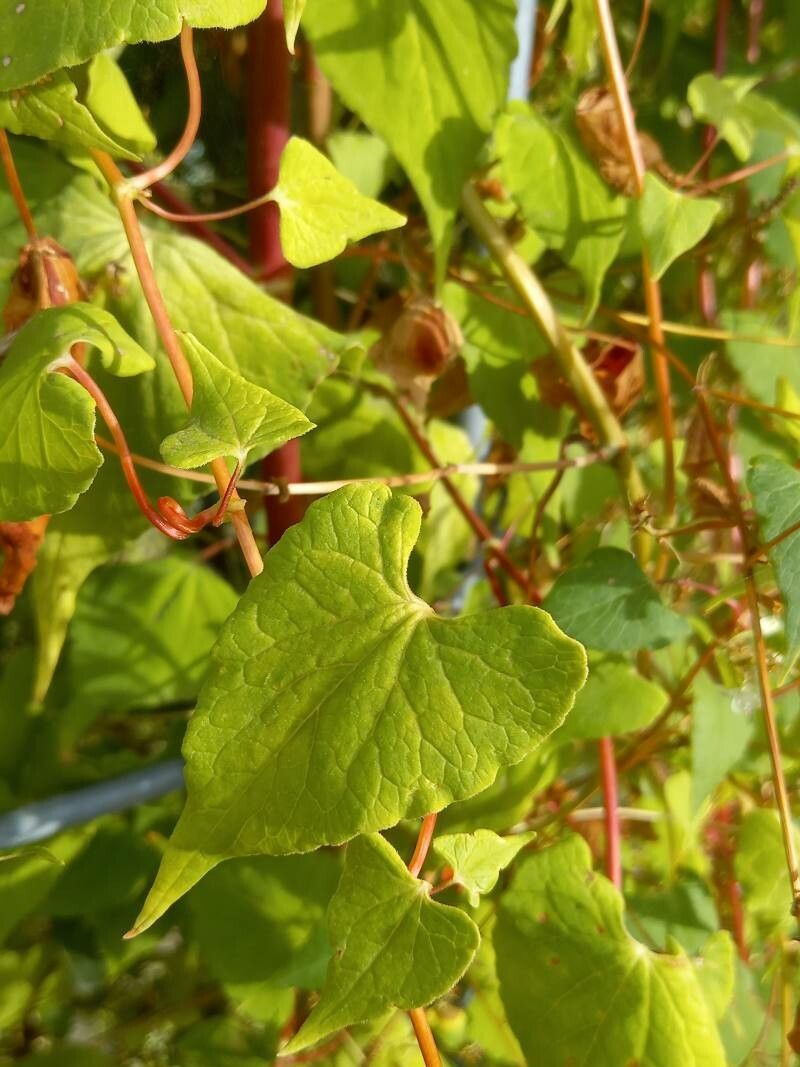
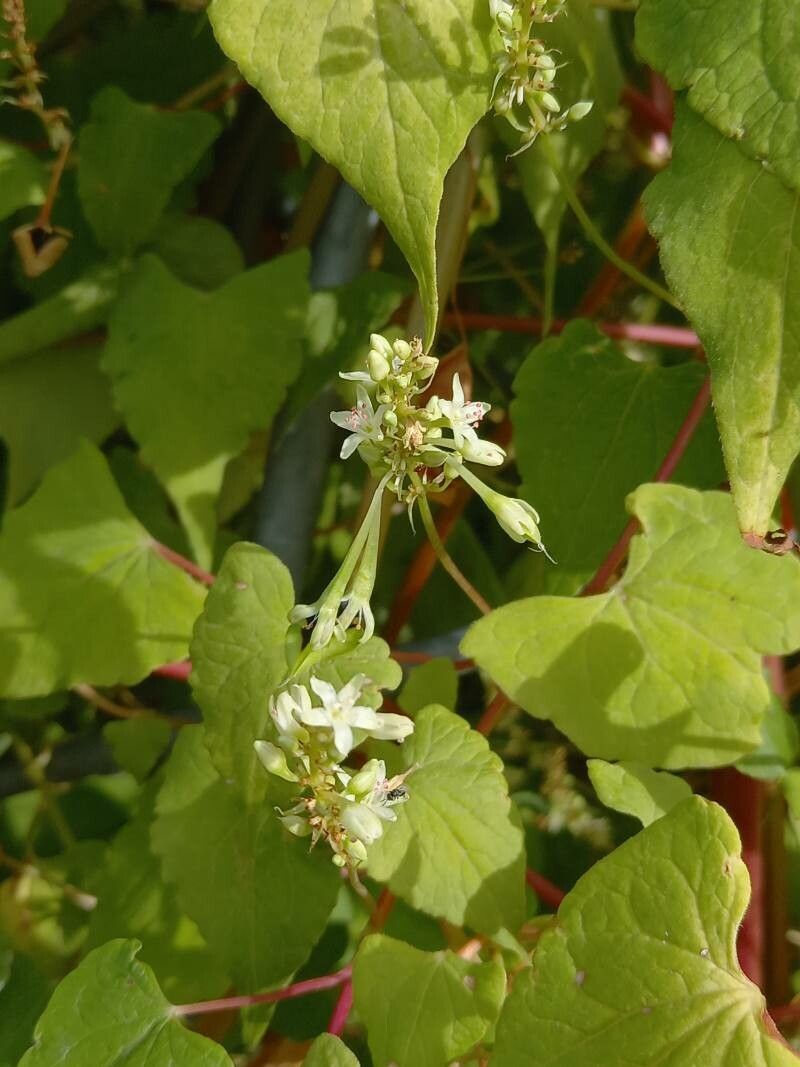
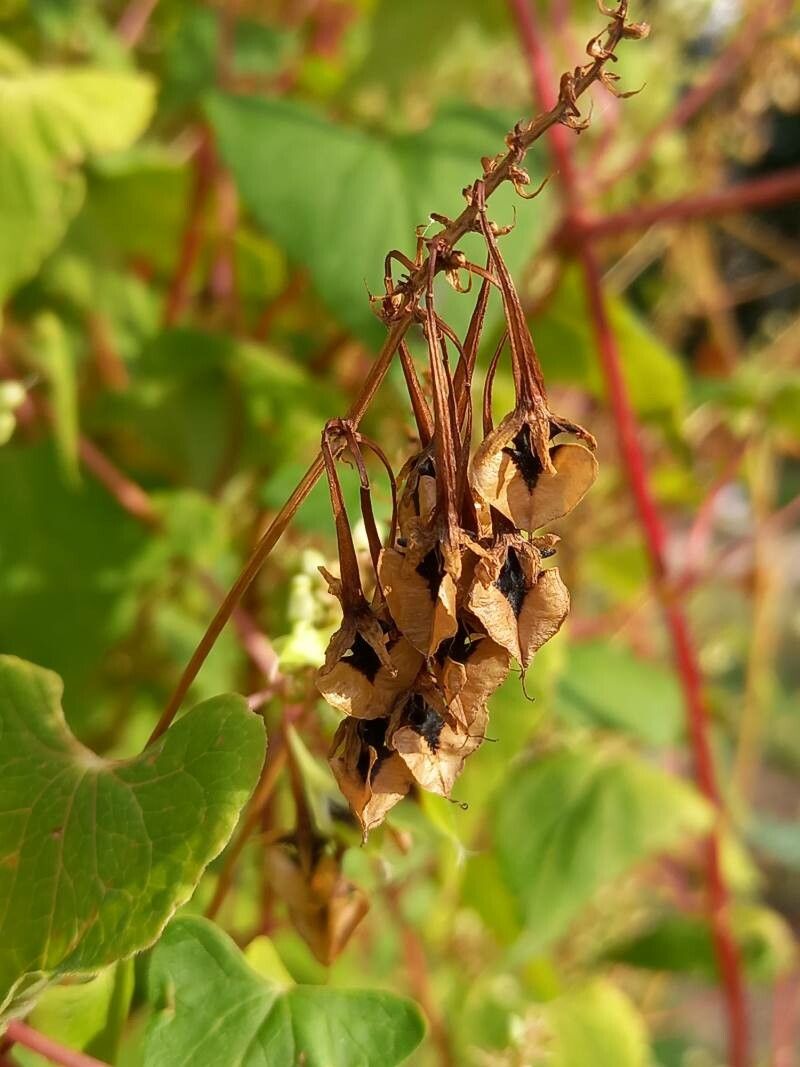
Pteroxygonum giraldii is a species of flowering plant in the family Polygonaceae, endemic to the Chinese provinces of Gansu, Hebei, Henan, Hubei, Shaanxi, Shanxi, and Sichuan. It is found at altitudes of 600–2,000 m (2,000–6,600 ft). It grows to more than 3 m (10 ft) in height, with leaf blades triangular or triangular-ovate in shape, 4–7 cm (1.6–2.8 in) by 3–6 cm (1.2–2.4 in).
Pteroxygonum giraldii is fairly resistant to disease and usually not susceptible to illnesses. Still, it can be affected by pests and diseases present in its environment. Such infections are generally mild. Regarding upkeep, this plant needs a moderate level of care. It should be pruned regularly to preserve a neat appearance and support healthy growth. Applying fertilizer can also encourage blooming. Pteroxygonum giraldii is well suited to anyone with outdoor space, like a garden or patio, and does not demand extensive gardening experience. It may need more attention if cultivated indoors.
How to keep Pteroxygonum Giraldii.
Light
Pteroxygonum giraldii naturally occurs in habitats like forest understories and rocky areas, where it grows in natural shade. It prefers partial sun but can tolerate full sun or full shade, demonstrating its versatility and hardiness.
Water
Pteroxygonum giraldii, originally adapted to humid environments, thrives in consistently moist conditions and prefers soil that remains evenly damp. While it has some drought tolerance, it requires weekly watering to prevent the roots from becoming oversaturated. As a climbing outdoor plant, it benefits from rainwater, which supports its natural growth cycle.
Temperature
Pteroxygonum giraldii originates from areas with moderate temperatures and grows best in a range of 50 to 95 °F (10 to 35 ℃). Small seasonal adjustments may be required to maintain these ideal temperature conditions.
Fertilizer
Typically a single application of fertilizer in spring is enough for Pteroxygonum giraldii, although repeated feedings can maximize growth. Apply fertilizer every month to six weeks. Fertilizing improves leaf appearance and function, helping maintain even color and a healthy texture. It also promotes root growth and nutrient uptake to support the plant’s long-term health.
Pruning
Pteroxygonum giraldii benefits greatly from pruning conducted in early to late spring. During this time, remove dead branches and thin out dense areas to improve air circulation. Formative pruning helps maintain the plant's shape, and it's important to use sharp tools to prevent disease. By pruning correctly, you promote healthy growth and encourage flowering. To foster new growth, make your cuts just above a bud.
Botanical profile.
- Plant Type
- Herb
- Life Cycle
- Perennial
- Genus
- Pteroxygonum
- Family
- Polygonaceae
- Hardiness Zone
- 6-9
- Mature Height
- 3.05 m
- Mature Spread
- 15 cm
- Leaf Color
- Green, Dark Green
- Leaf Type
- Deciduous
- Flower Color
- White
- Flower Size
- 2.03 cm to 5.08 cm
- Bloom Time
- Early summer, Mid summer
- Planting Time
- Spring, Autumn
- Harvest Time
- Late summer, Early fall
- Native Area
- China
Reader questions.
What is the native environment of Pteroxygonum giraldii?
Pteroxygonum giraldii thrives in environments with moderate temperatures, preferring a temperature range of 50 to 95°F (10 to 35°C). Its native habitat allows it to adapt well to varying seasonal conditions, making slight adjustments necessary to maintain the ideal temperature conditions for its growth.
Does Pteroxygonum giraldii require frost protection during winter?
Pteroxygonum giraldii is known for its strong cold resistance and generally does not require special frost protection measures during the winter months. However, in extremely cold conditions where temperatures are expected to drop below -25°C, it's important to provide cold protection. This can be accomplished by covering the plant with insulating materials such as soil or straw. Additionally, watering the plant abundantly before the first freeze in autumn helps ensure the soil remains moist and enters a frozen state, aiding in the prevention of drought and water scarcity for the plant during the winter and early spring.
How does Pteroxygonum giraldii react to low temperatures?
Pteroxygonum giraldii is cold-tolerant and functions best when temperatures are maintained above 10°C. During the winter months, it's crucial to keep the plant’s environment above -15°C to prevent damage. If temperatures fall below -25°C, the plant may not show immediate signs of distress during winter but may exhibit a decrease in sprouting or fail to sprout at all come spring. If this occurs, any parts of the plant that have failed to sprout should be removed in the spring to promote new growth.
How does Pteroxygonum giraldii react to high temperatures?
During the summer, it is important to ensure Pteroxygonum giraldii is kept in conditions below 35°C. Exposure to temperatures above 38°C can result in the leaves becoming lighter in color, prone to curling, suffering from sunburn, and in severe cases, the entire plant may wilt and dry out. To mitigate damage from high temperatures, sunburned and dried parts of the plant should be trimmed away. The plant should be moved to a shaded location or protected with a shade cloth to avoid midday and afternoon sun. Additionally, watering the plant in the morning and evening will help keep the soil moist and reduce temperature stress.