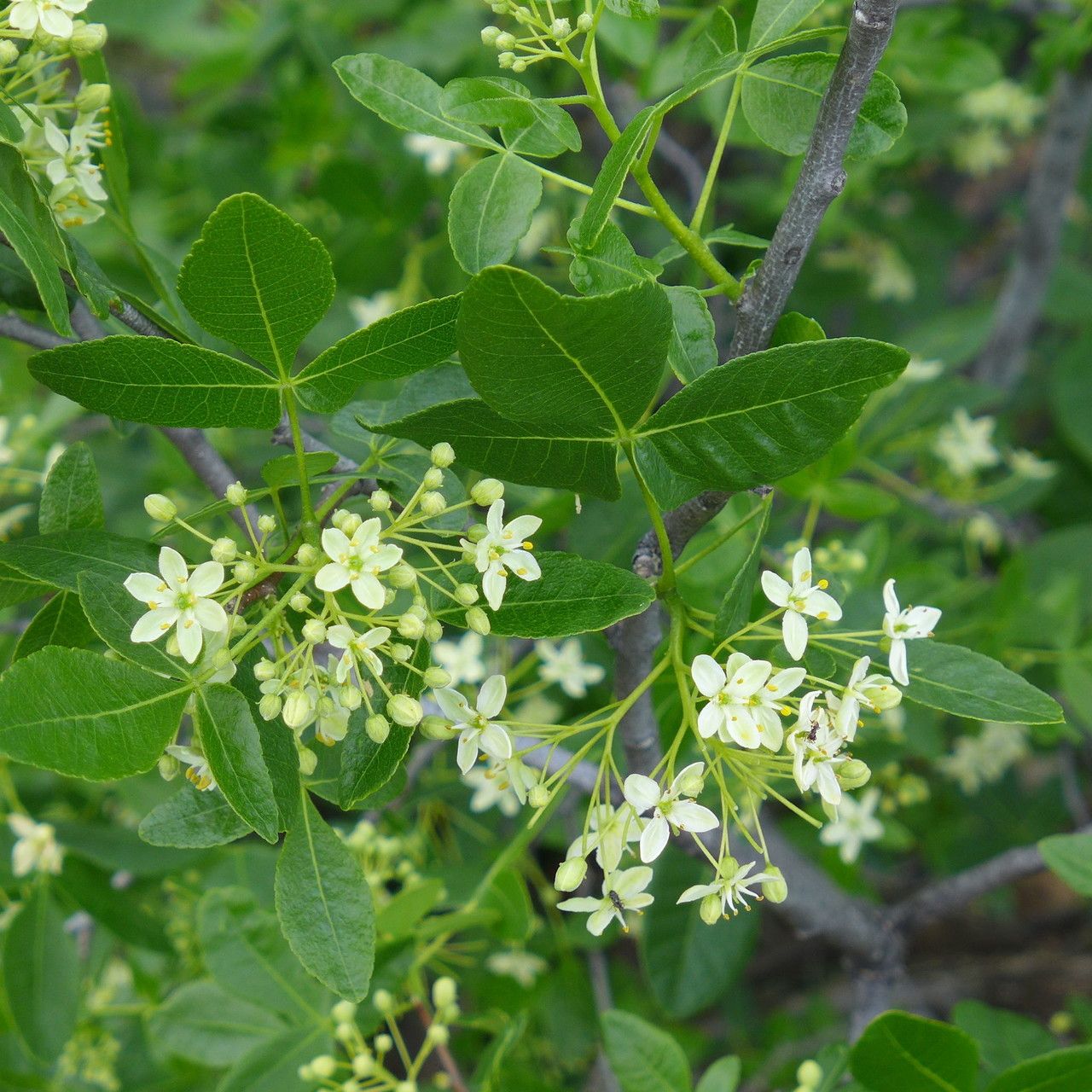
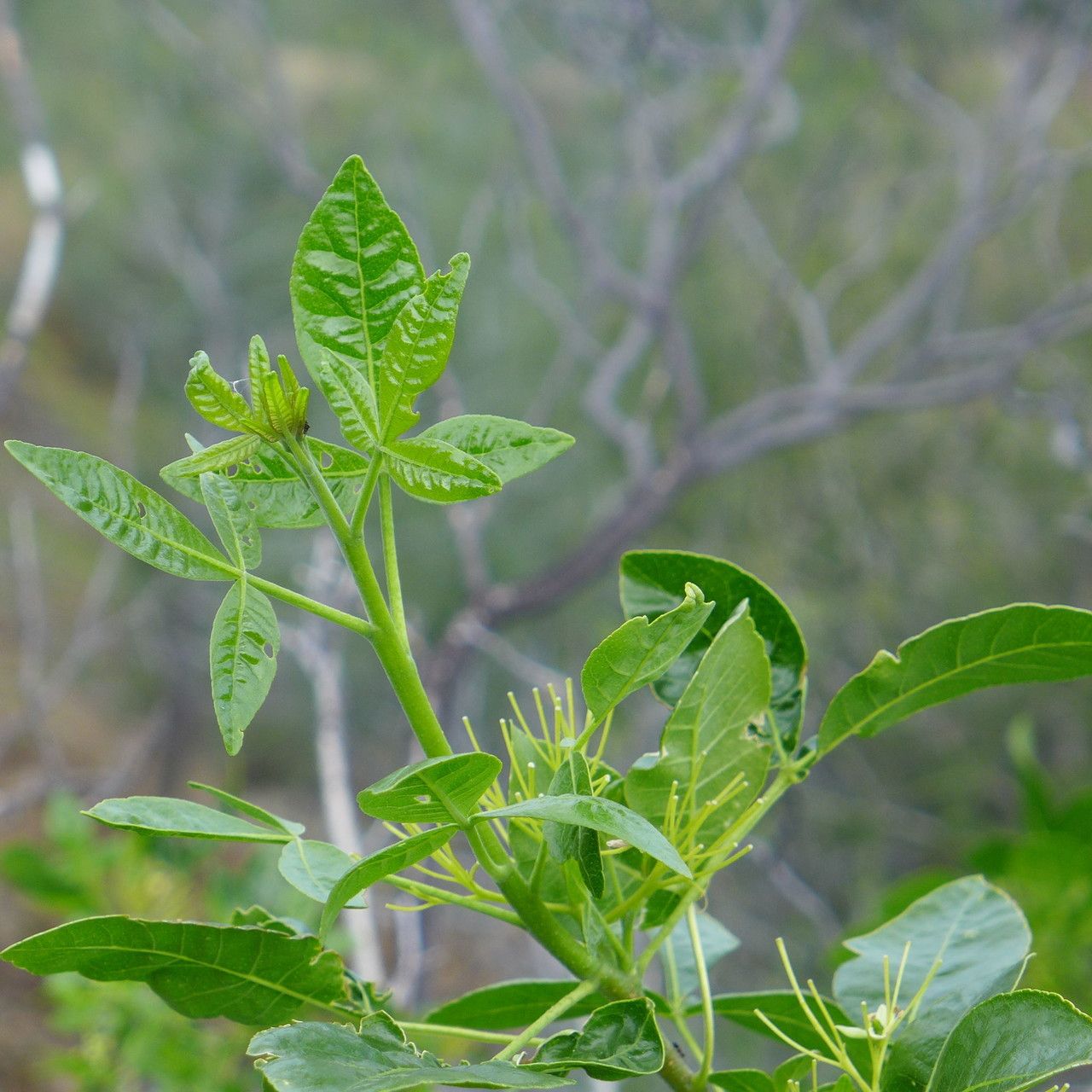
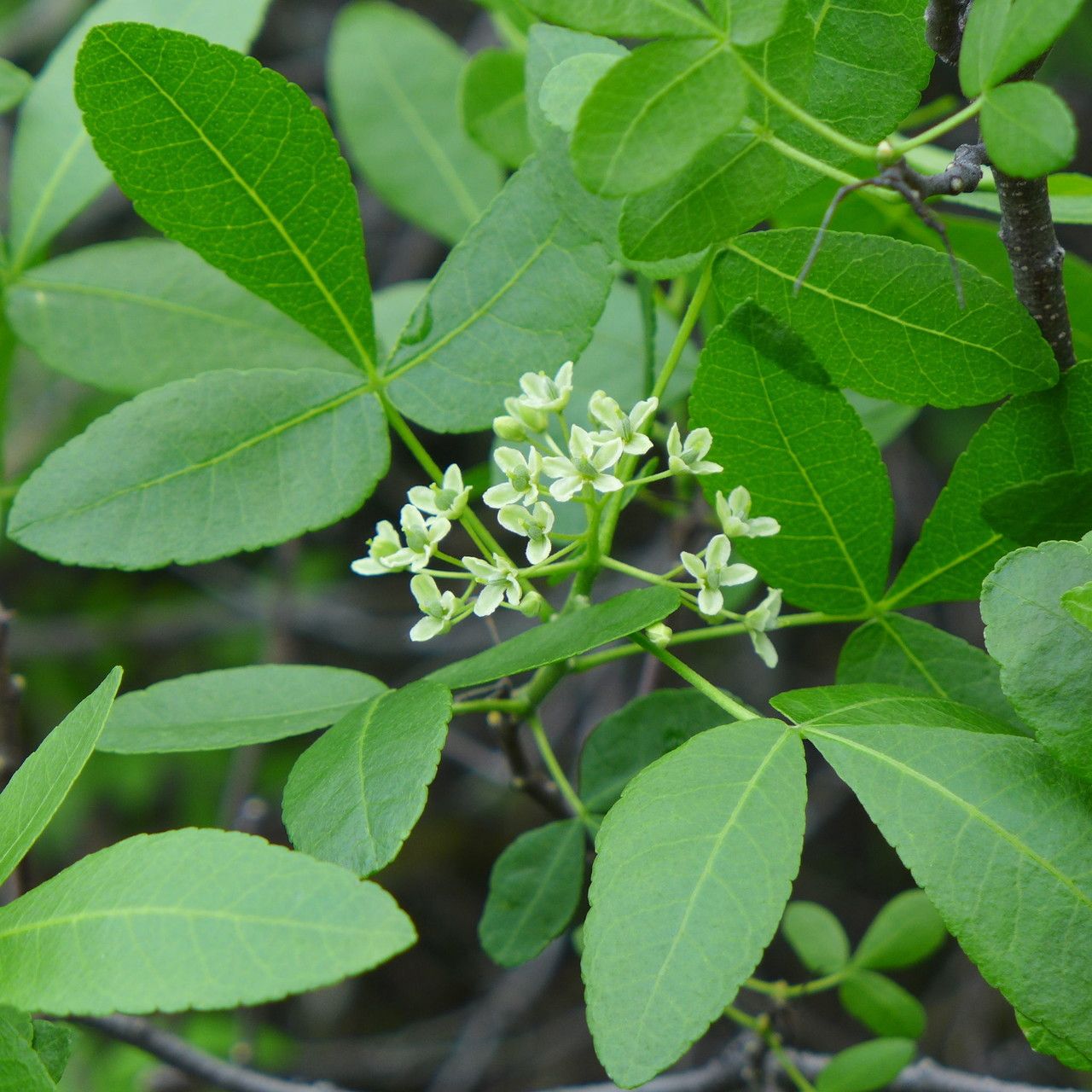
Ptelea crenulata, commonly known as the Western hoptree or stinking ash, is a deciduous shrub or small tree native to western North America. Typically reaching heights of up to 10 meters, it features a rounded crown with spreading branches. The dark green, glossy leaves have serrated edges and emit an unpleasant odor when crushed.
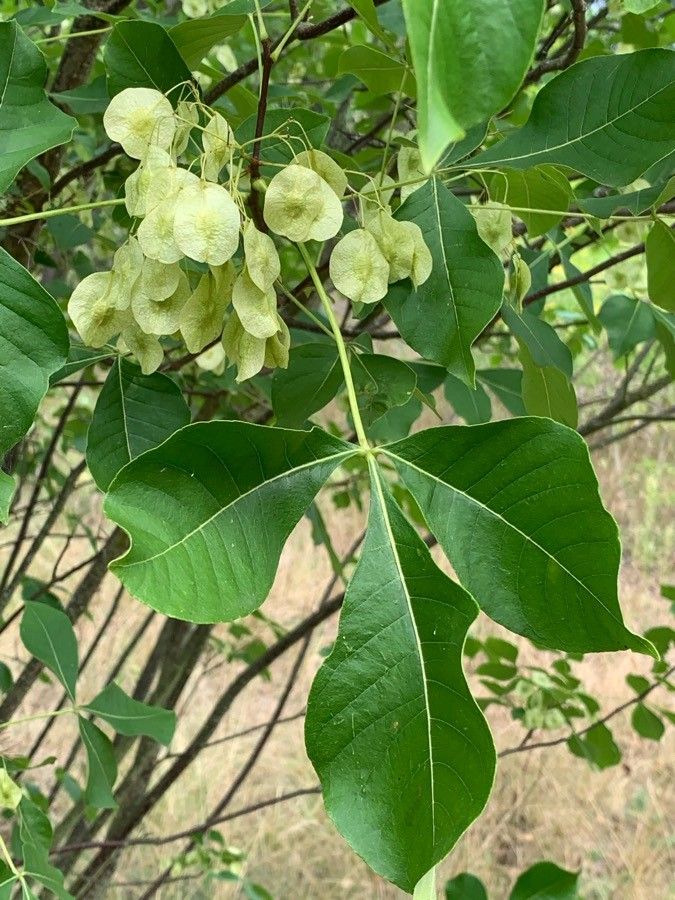
In the spring, the Western hoptree produces small clusters of greenish-yellow flowers, which are followed by winged fruits in the summer. These fruits emit a distinctive hop-like aroma when crushed, which gives the plant its common name, "hoptree." This species prefers well-drained soils and thrives in full sun to partial shade, demonstrating a notable tolerance for drought conditions.
Native American tribes have historically used the bark of Ptelea crenulata for medicinal purposes, such as treating skin ailments and respiratory issues. Additionally, it is valued as an ornamental plant for its attractive foliage and unique fragrance. However, it is important to note that some individuals may be allergic to the plant's sap or pollen.
Overall, Ptelea crenulata is an intriguing native shrub or tree with unique features that distinguish it from other plants in its range.
How to keep Ptelea Crenulata.
Pruning
To maintain the health and shape of the California hoptree, it’s best to prune it each year in early spring. Key techniques involve removing any damaged branches and thinning out the tree to improve air circulation. Be sure to avoid making harsh cuts, as this can stress the tree. By following these guidelines, you can encourage vigorous growth and improve the tree's resilience.
Botanical profile.
Other names.
Reader questions.
What are the sunlight requirements for a California hoptree?
A California hoptree, also known by its botanical name, Ptelea crenulata, thrives in full sun, which means it requires above 6 hours of sunlight per day. It's important to observe how sunlight moves through your garden to choose the ideal location for your plant. The perfect spot will provide a balance of light and shade, ensuring the plant's happiness and growth.