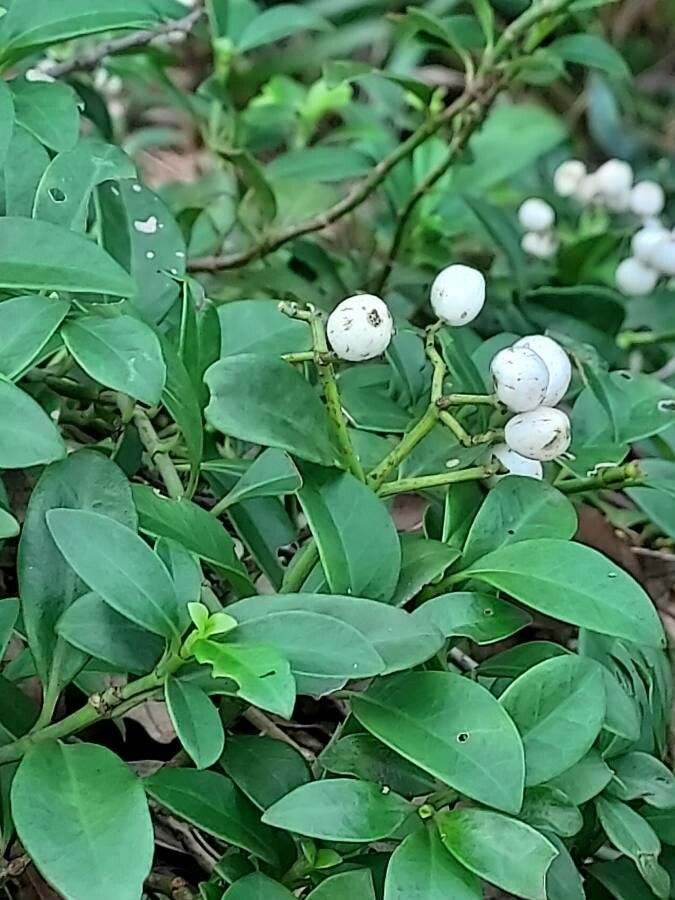
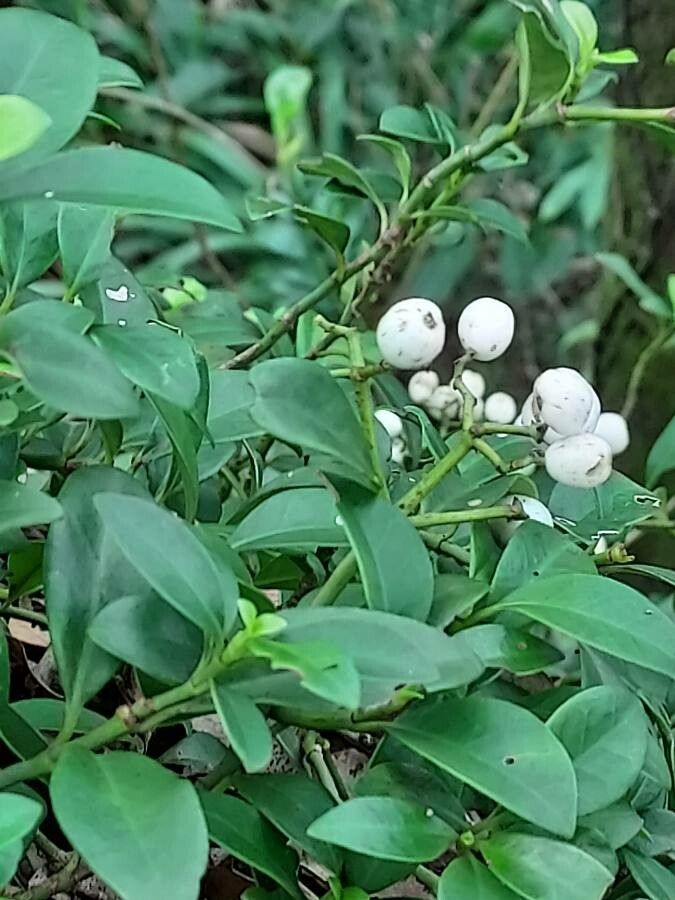
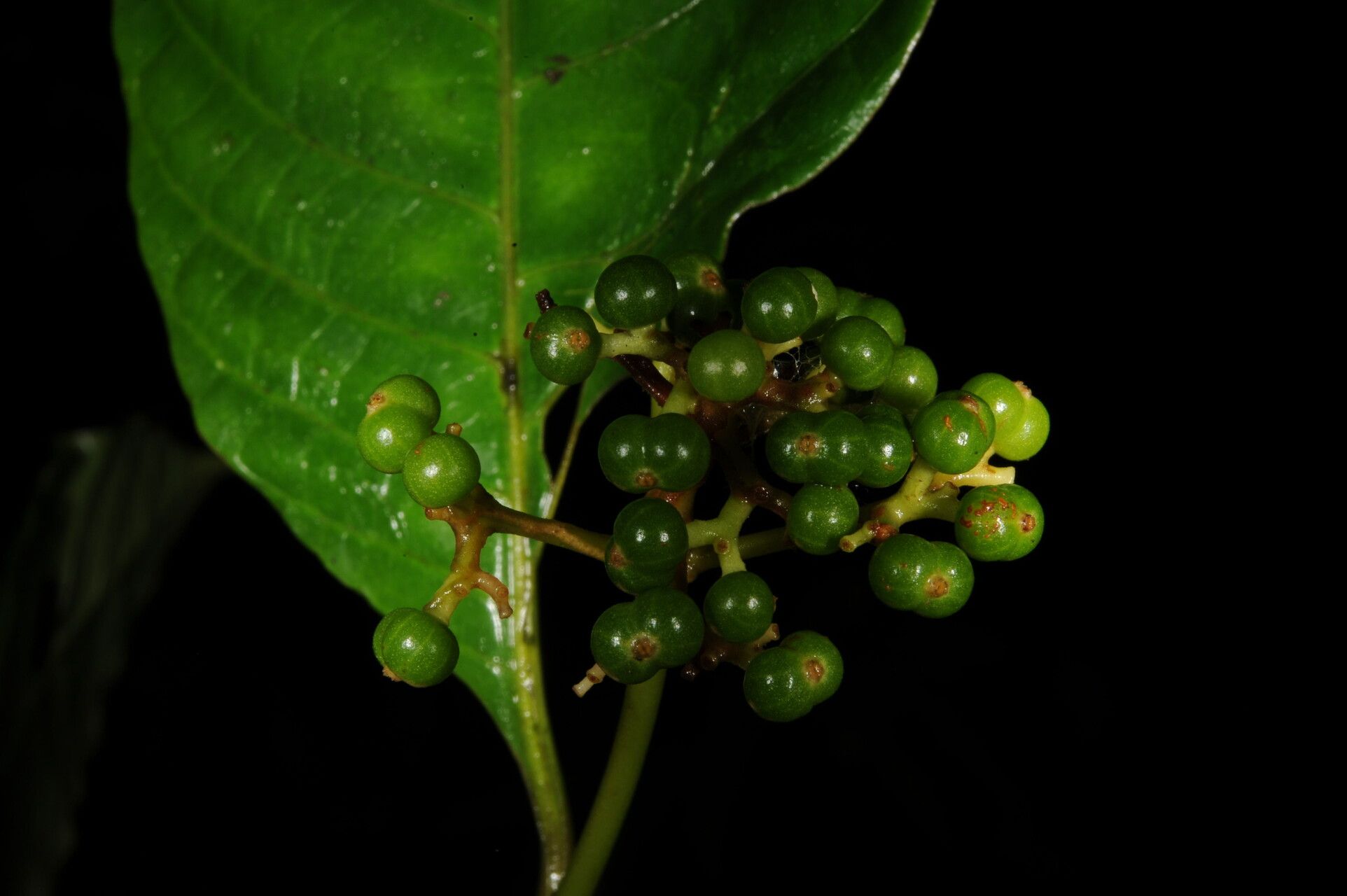
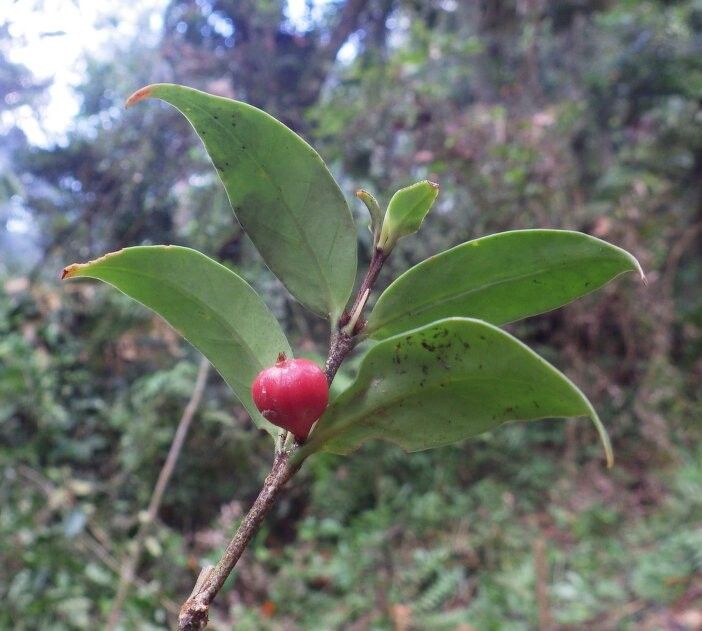
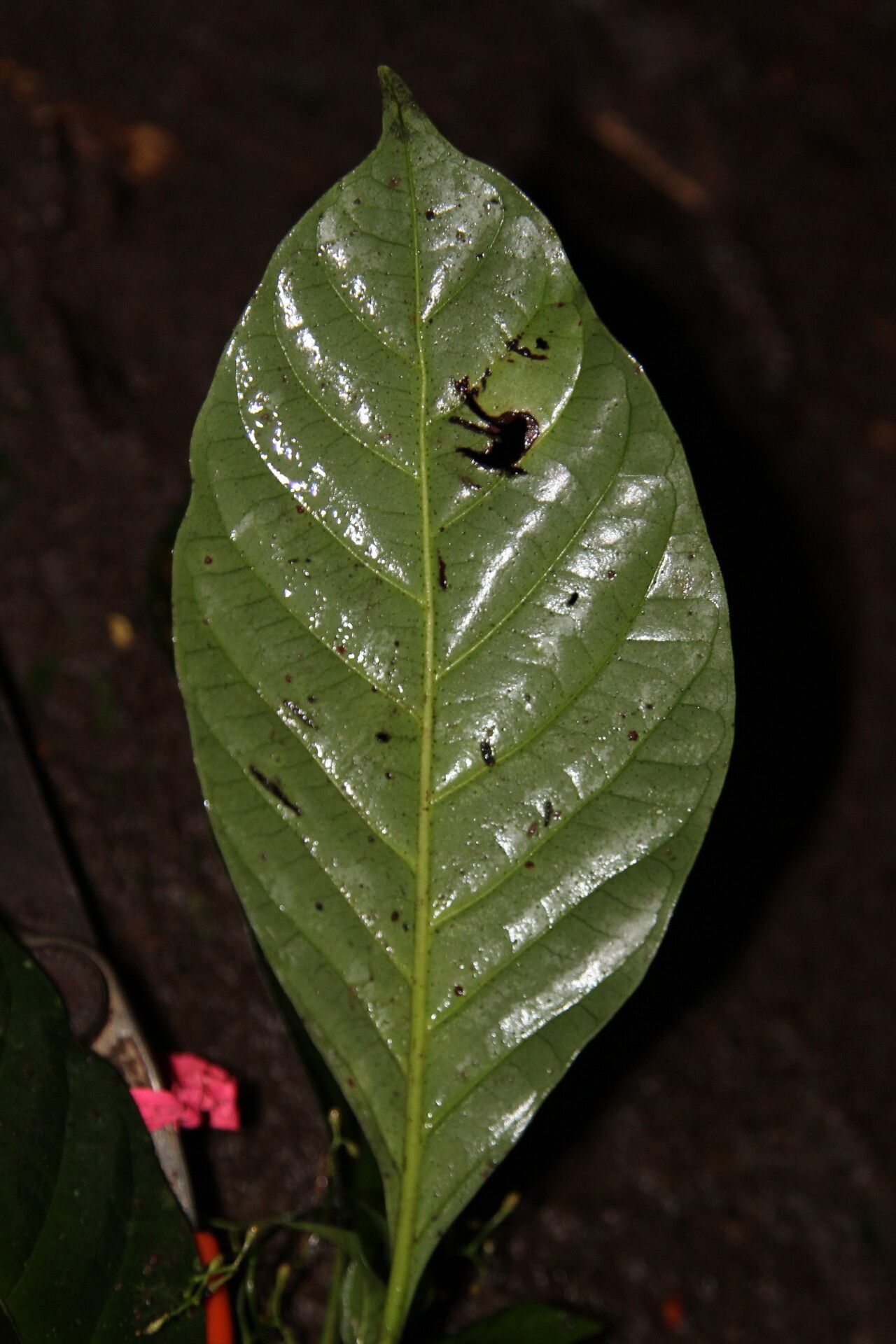
Psychotria serpens, the creeping psychotria, is a species of flowering plant in the family Rubiaceae, native to Peninsular Malaysia, Southeast Asia, southeastern China, Hainan, Taiwan, the Ryukyu Islands, and central and southern Japan. A creeping or climbing perennial liana, it is typically found in thickets and forests, from 100 to 1,400 m above sea level. It is often substituted for "Caulis Trachelospermi" in traditional Chinese medicine preparations sold to people with cancer.
Creeping psychotria has strong disease resistance and is usually not susceptible to illnesses. In terms of care, the plant is fairly low-maintenance. When grown outdoors it needs minimal watering, and larger specimens generally do not require pruning. Smaller plants, however, should be pruned after they have finished blooming. Creeping psychotria is suitable for anyone with outdoor space, such as a garden or deck, and does not demand much prior plant-care experience.
How to keep Psychotria Serpens.
Light
Creeping psychotria occurs naturally in habitats such as forest understories and rocky areas, where it grows in natural shade. It prefers partial sun but can tolerate full sun or full shade, reflecting its hardy, adaptable nature.
Temperature
Creeping psychotria comes from tropical areas where the climate is generally warm and humid. Therefore it is well suited to high temperatures and moisture. It does not tolerate sudden temperature shifts and prefers a steady thermal environment, so avoiding indoor temperature fluctuations is important. It typically cannot endure cold and needs warmer conditions to grow. If the surrounding temperature falls too low, the plant may stop growing or even die.
Fertilizer
Fertilization is essential for the care of Creeping psychotria. Regular feeding during the growing season provides the energy needed for its showy leaves and supports overall growth. Skipping fertilization can lead to unhealthy foliage, reduced ornamental value, and stunted or weak growth that is prone to breakage.
Pruning
Creeping psychotria is a low-growing plant that thrives in shaded areas and features small leaves and white flowers. To promote growth and improve air circulation, it’s best to prune it in early spring. This practice also helps prevent disease. Always use clean tools during pruning to avoid infections, which will help ensure a fuller and more attractive plant.
Botanical profile.
- Plant Type
- Vine
- Life Cycle
- Perennial
- Genus
- Psychotria
- Family
- Rubiaceae
- Hardiness Zone
- 9-11
- Mature Height
- 6.1 m
- Mature Spread
- 0.91 m to 2.13 m
- Leaf Color
- Dark Green
- Leaf Type
- Evergreen
- Flower Color
- White
- Flower Size
- 1.52 cm to 5.08 cm
- Bloom Time
- Summer
- Planting Time
- Spring, Summer, Autumn
- Harvest Time
- Late summer, Fall
- Native Area
- Cambodia, Vietnam, Japan, Laos, Thailand, China
Reader questions.
What are the sunlight requirements for plants?
The sunlight requirements for plants vary, with partial sun being about 3-6 hours of sunlight and full sun requiring above 6 hours of sunlight daily. It's crucial to observe how sunlight moves through your garden to find spots that offer a balance of light and shade, ensuring a conducive environment for plant growth.
What are creeping psychotria's preferred sunlight conditions?
Creeping psychotria, scientifically known as Psychotria serpens, thrives in partial sun but can also tolerate full shade. This makes it a versatile perennial herbaceous plant adaptable to various lighting conditions, from forest understories to rocky areas with natural shade.
How should artificial lighting be used for indoor plants?
When natural sunlight is insufficient, artificial lighting is crucial for indoor plant growth. LED lights are recommended due to their ability to provide specific wavelengths necessary for plants. Full sun plants need 30-50W/sq ft, partial sun plants need 20-30W/sq ft, and full shade plants need 10-20W/sq ft of artificial light. The light source should be placed 12-36 inches above the plant, mimicking natural sunlight, and most plants need 8-12 hours of light per day.
What are some symptoms of light deficiency in creeping psychotria?
Symptoms of light deficiency in creeping psychotria include smaller new leaves, leggy or sparse growth, faster leaf drop, slower or no new growth, lighter-colored new leaves, chlorosis, sunscald, leaf curling, wilting, and leaf scorching. These signs indicate that the plant is not receiving adequate sunlight for healthy growth.
What solutions are available for light deficiency in plants?
To address light deficiency in plants, indoor options include moving plants to sunnier spots or using artificial light like desk or ceiling lamps, or professional grow lights, for at least 8 hours daily. Outdoors, gradually acclimate plants to more sunlight. Reduce obstructions to sunlight by pruning or transplanting. Although damage from insufficient light may be irreversible, new growth will be healthy once better lighting conditions are provided.