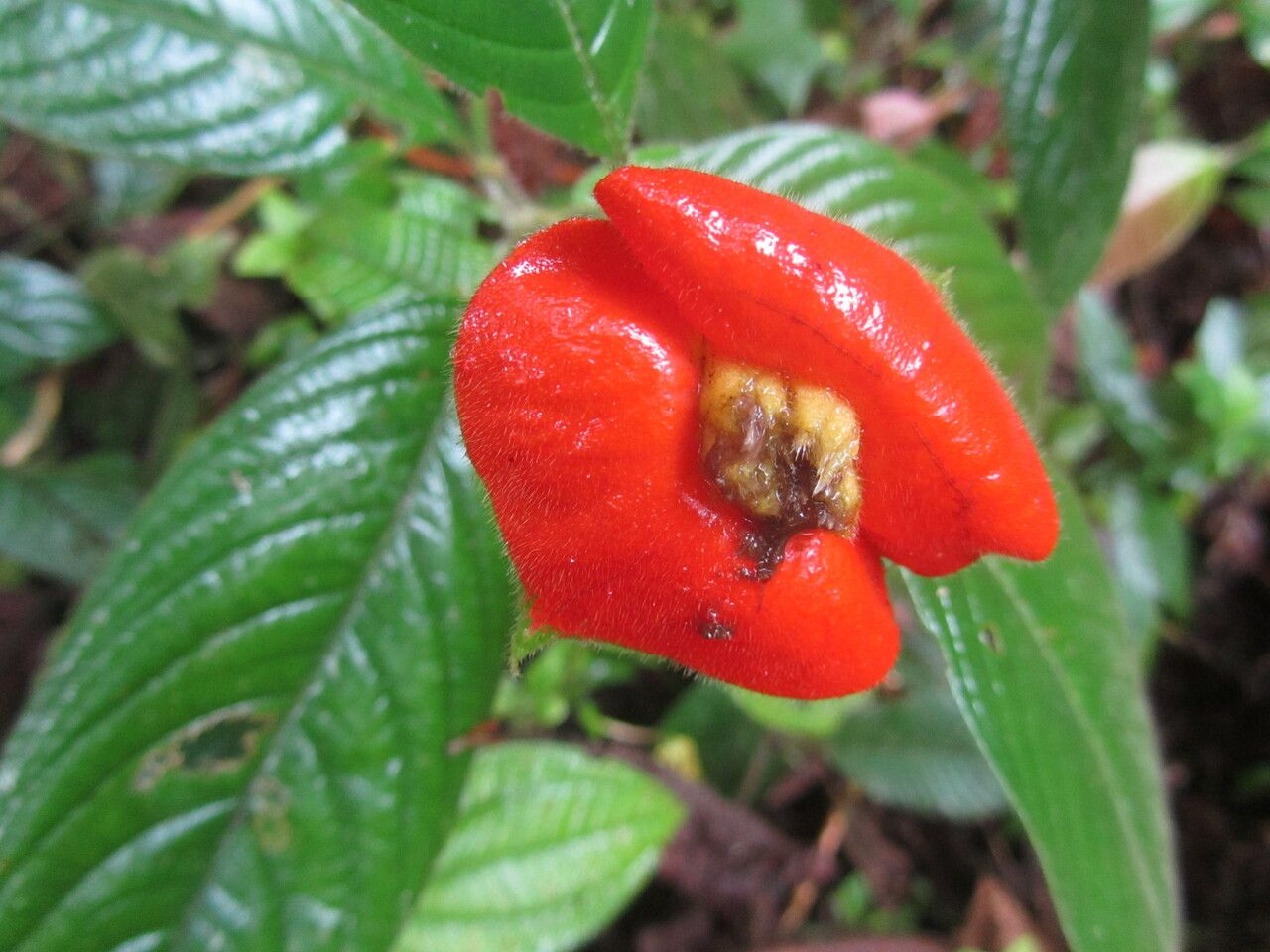
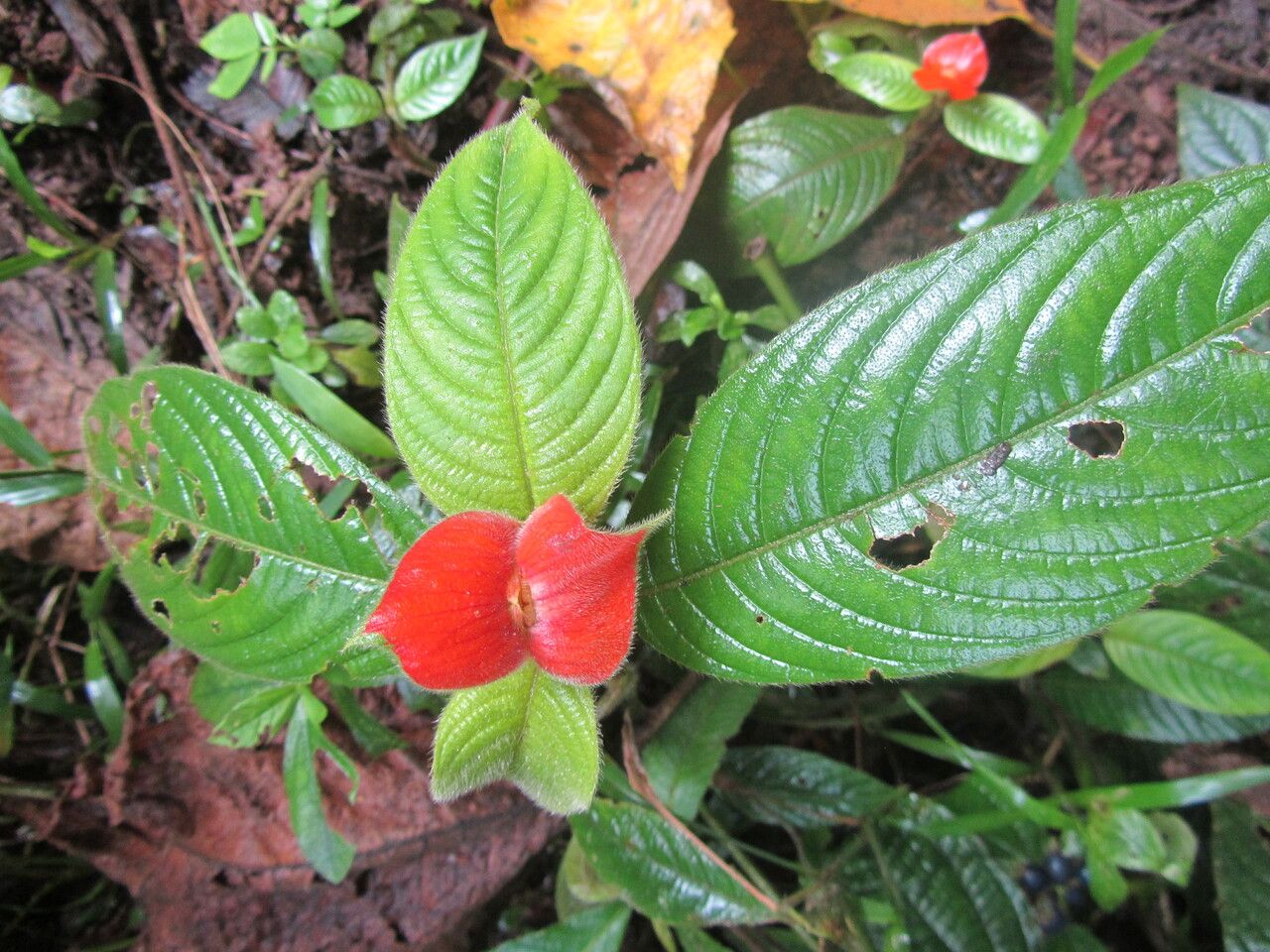
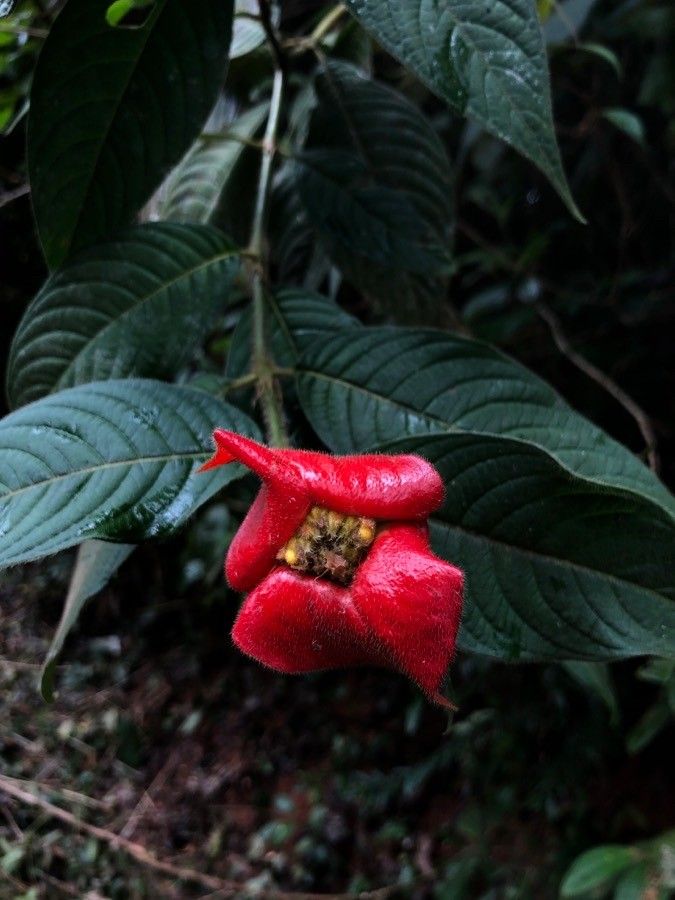
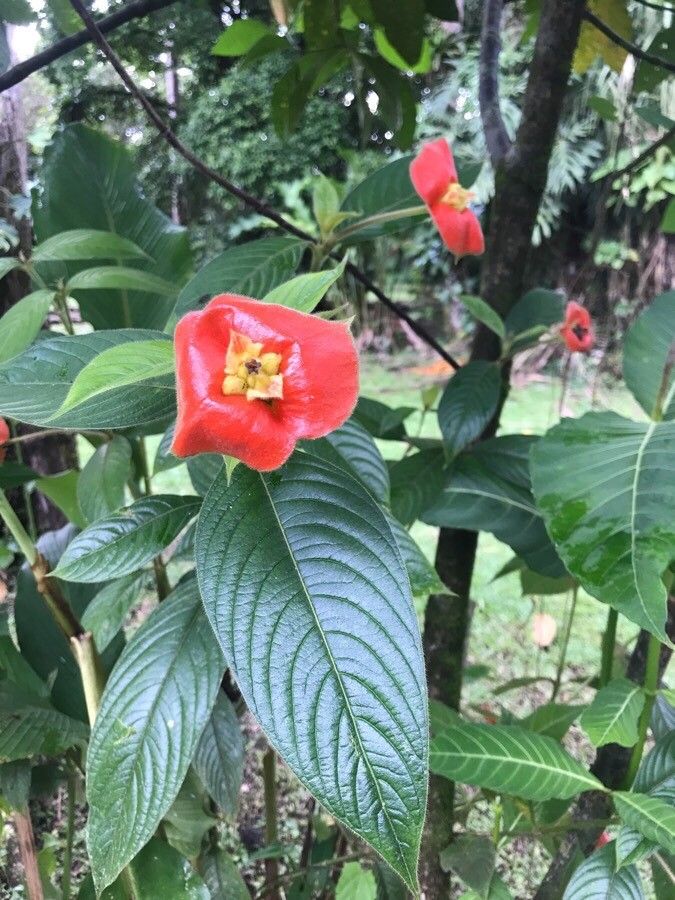
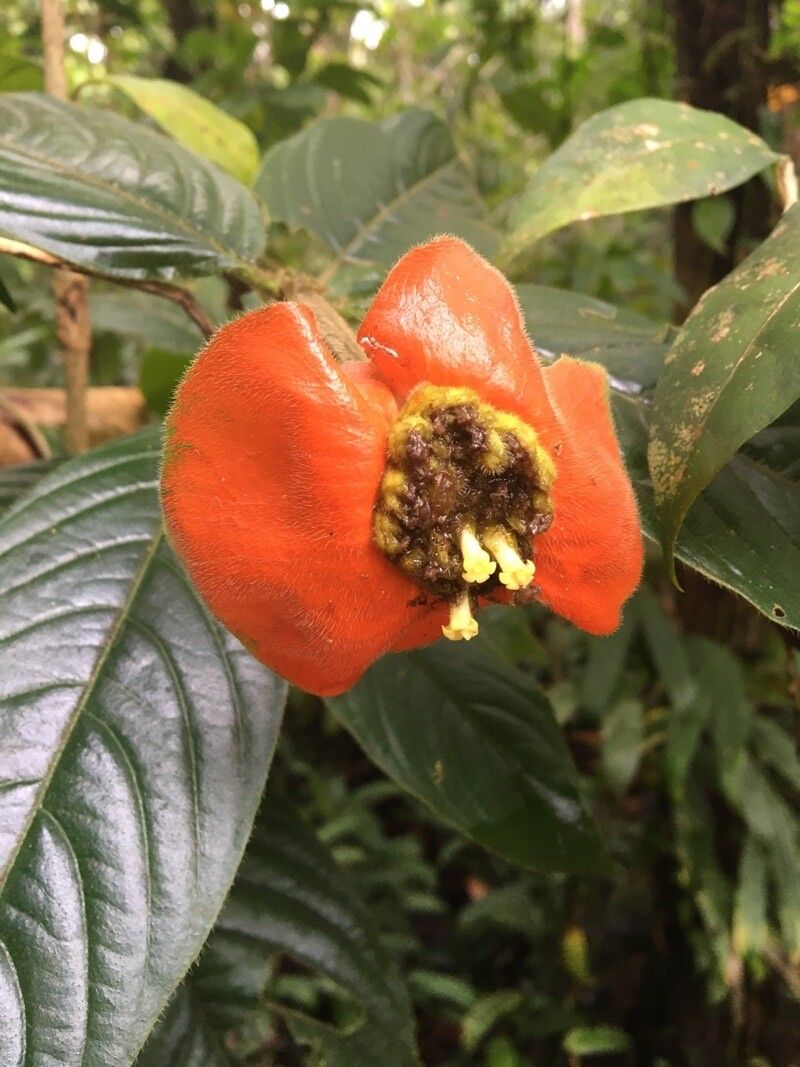
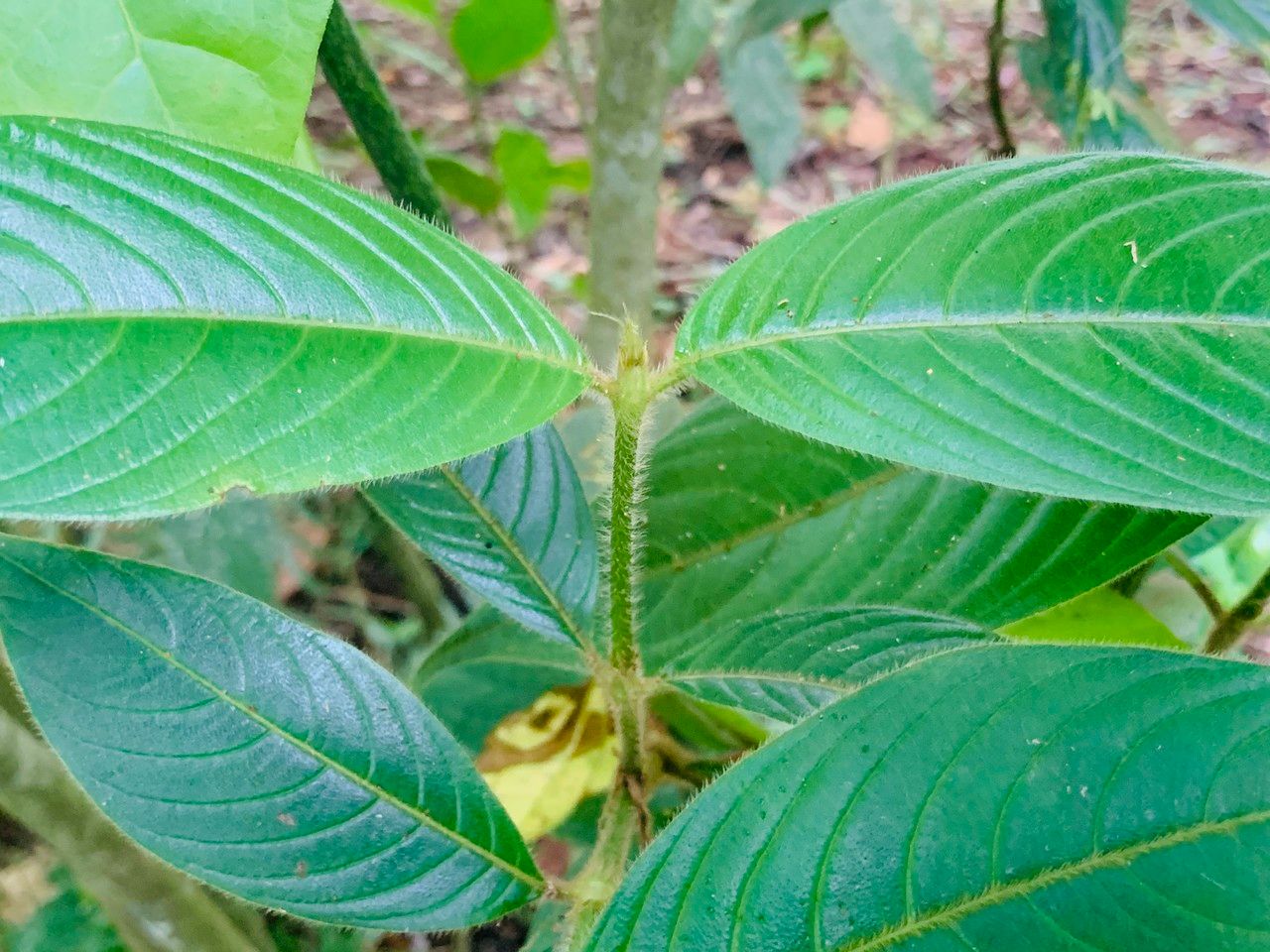
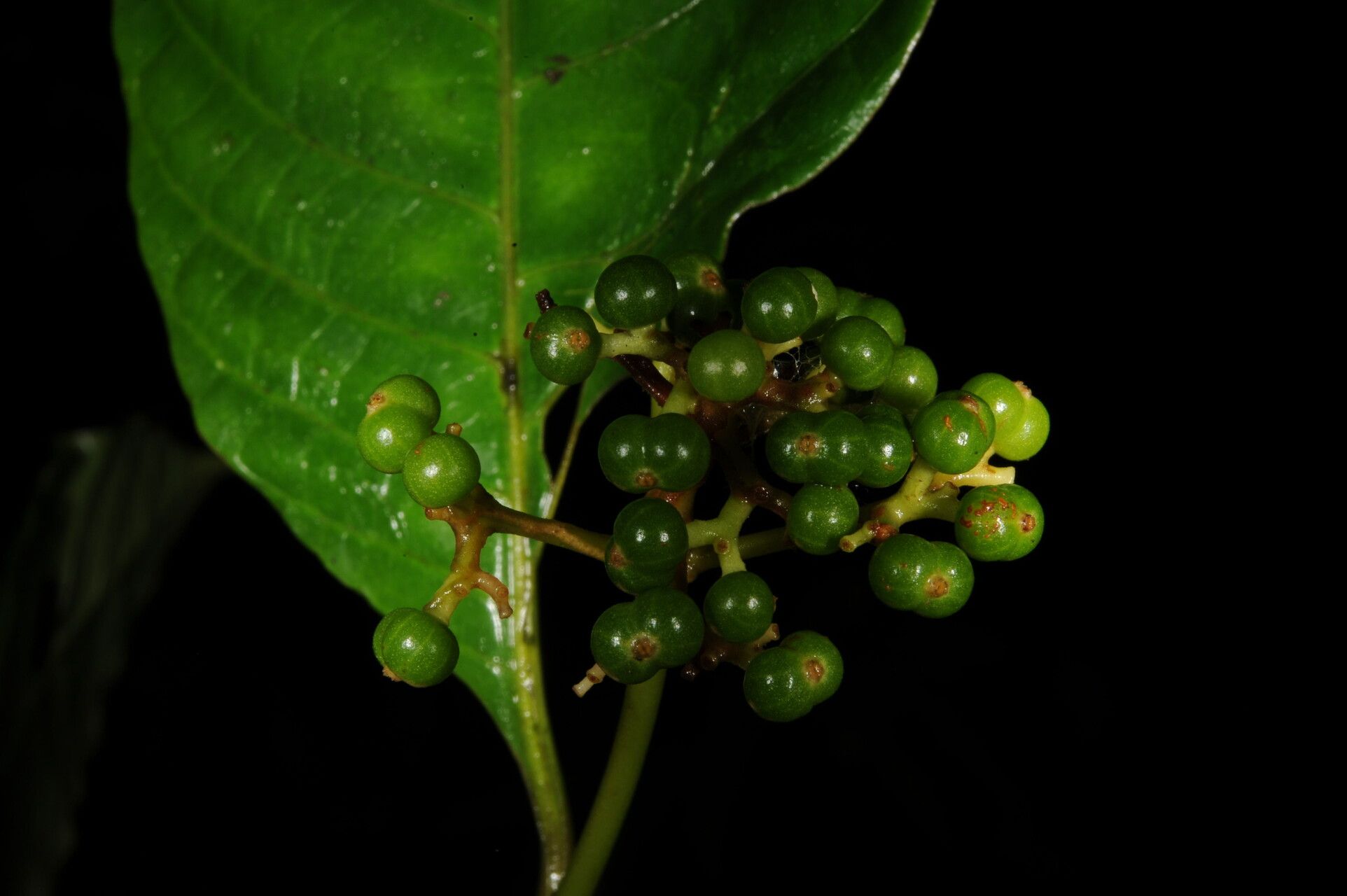
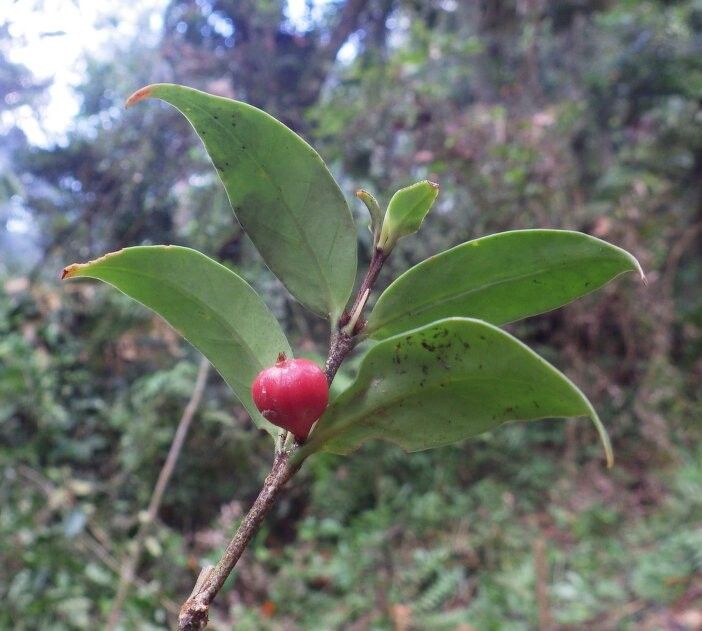
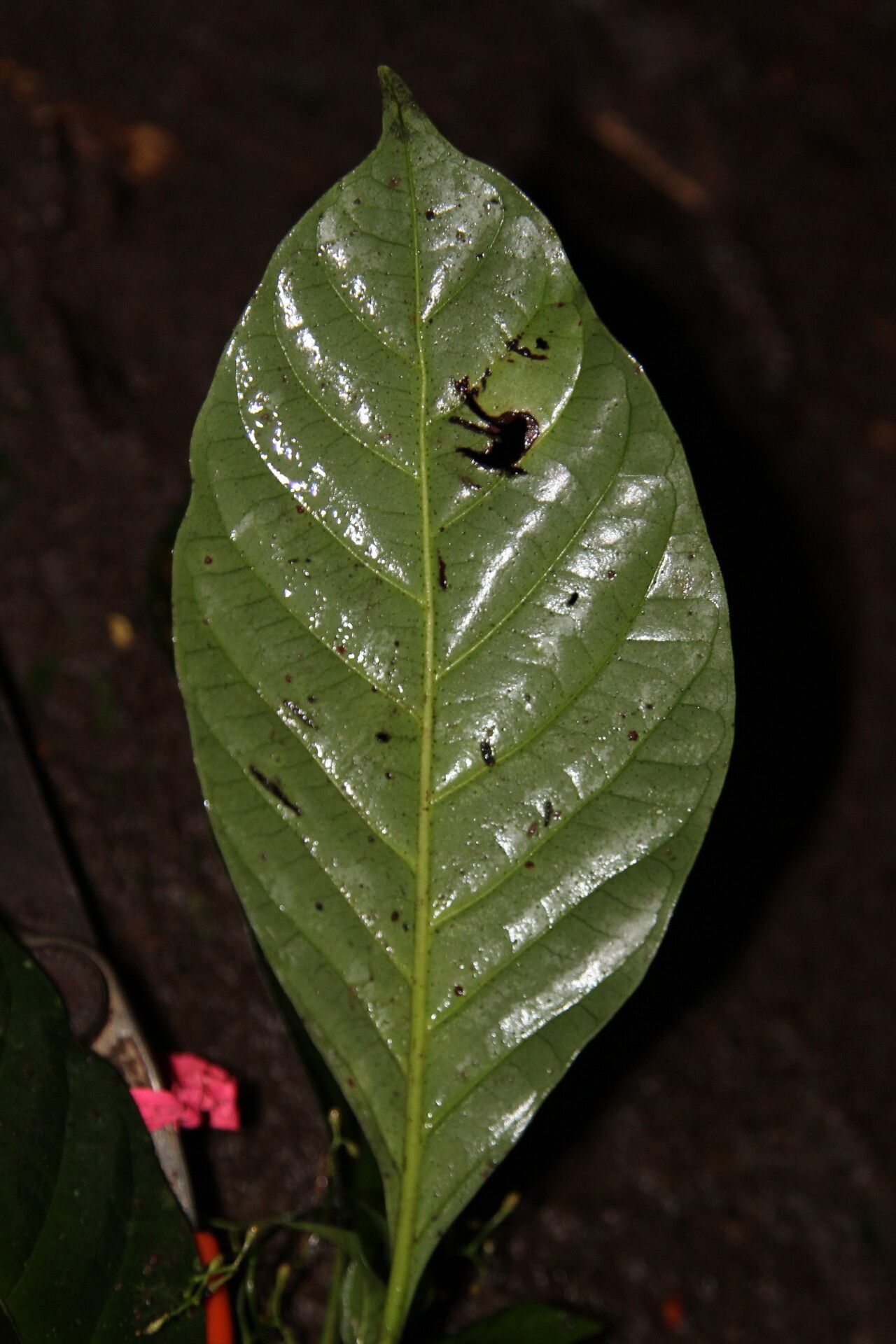
Psychotria poeppigiana is a plant species in the family Rubiaceae; a common name is sore-mouth bush, though it is not very often used. This species is currently accepted as Palicourea tomentosa based on a journal article published in 2011 (see #Taxonomy and names). It ranges widely in the tropical Americas, from Chiapas, Oaxaca, Tabasco and Veracruz in Mexico to the very north of Argentina. It does not occur on the Pacific side of the American cordillera however, and is thus absent from El Salvador and Chile. It is probably also absent from Uruguay and Paraguay.P. poeppigiana is a large shrub. The inflorescences are carried upright or semi-erect and are surrounded by large bracts, colored a conspicuous red, that attract pollinators. The flowers themselves are inconspicuous, with the small yellow petals and sepals forming a narrow corollar tube. Pollinators are mainly hummingbirds, namely small hermit (Phaethornithinae) species like the black-throated hermit (Phaethornis atrimentalis), straight-billed hermit (P. bourcieri) and reddish hermit (P. ruber). They do not insert their bills deeply into the small flowers, and thus the pollinators of the sore-mouth bush include curved- and straight-billed species alike.
Sore-mouth bush demonstrates strong resistance to disease and is typically not easily affected by illnesses. In terms of maintenance, this plant is fairly low-maintenance. When grown outdoors it needs only minimal watering, and larger plants usually do not require pruning. Smaller plants, however, should be trimmed after they have bloomed. Sore-mouth busht is appropriate for anyone with an outdoor area, such as a garden or deck, and does not need much care experience.
How to keep Psychotria Poeppigiana.
Light
Sore-mouth bush is native to open habitats, such as sunny meadows and forest edges, which offer abundant light. It thrives in Full Sun but will also tolerate Partial Sun, adapting well to a range of sunlight conditions.
Temperature
Sore-mouth bush comes from tropical areas, where the climate is usually warm and humid. Consequently, it is suited to high temperatures and humidity. It does not tolerate rapid temperature shifts and prefers a steady thermal environment, so avoiding temperature fluctuations indoors is important. It generally cannot withstand cold and needs warmer conditions to grow. If the environmental temperature falls too low, the plant may stop growing or even die.
Fertilizer
Fertilizing is essential for the care of the Sore-mouth bush. Regular feeding during the growing season maintains the energy needed for its showy leaves and supports overall growth. Neglecting fertilization can lead to unhealthy leaves, reduced ornamental appeal, and stunted or weak growth that is prone to breakage.
Botanical profile.
- Plant Type
- Shrub
- Life Cycle
- Perennial
- Genus
- Psychotria
- Family
- Rubiaceae
- Hardiness Zone
- 10-12
- Mature Height
- 2.13 m
- Mature Spread
- 1.52 m to 2.44 m
- Leaf Color
- Forest Green, Dark Green
- Leaf Type
- Evergreen
- Flower Color
- Yellow, White
- Flower Size
- 1.02 cm to 1.52 cm
- Bloom Time
- Late spring, Summer, Early fall
- Planting Time
- Spring, Summer, Autumn
- Harvest Time
- Late summer, Fall
- Native Area
- Colombia, Belize, Honduras, Mexico, Guatemala, Bolivia, Venezuela, Peru, Guyana, Nicaragua, Ecuador, Costa Rica, Panama
Other names.