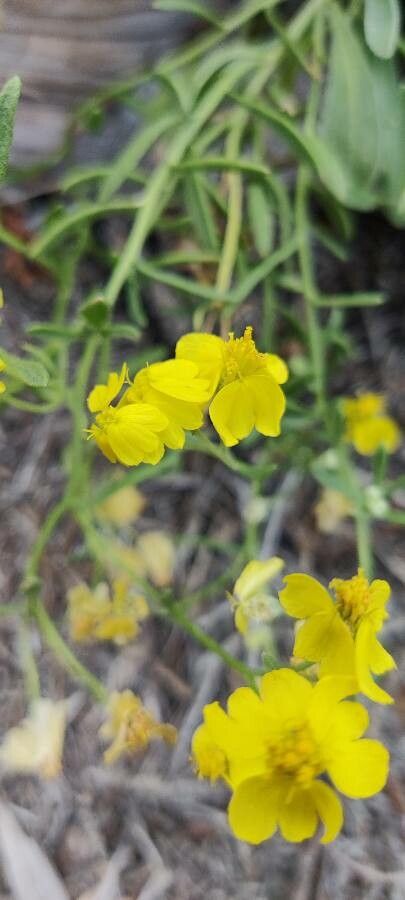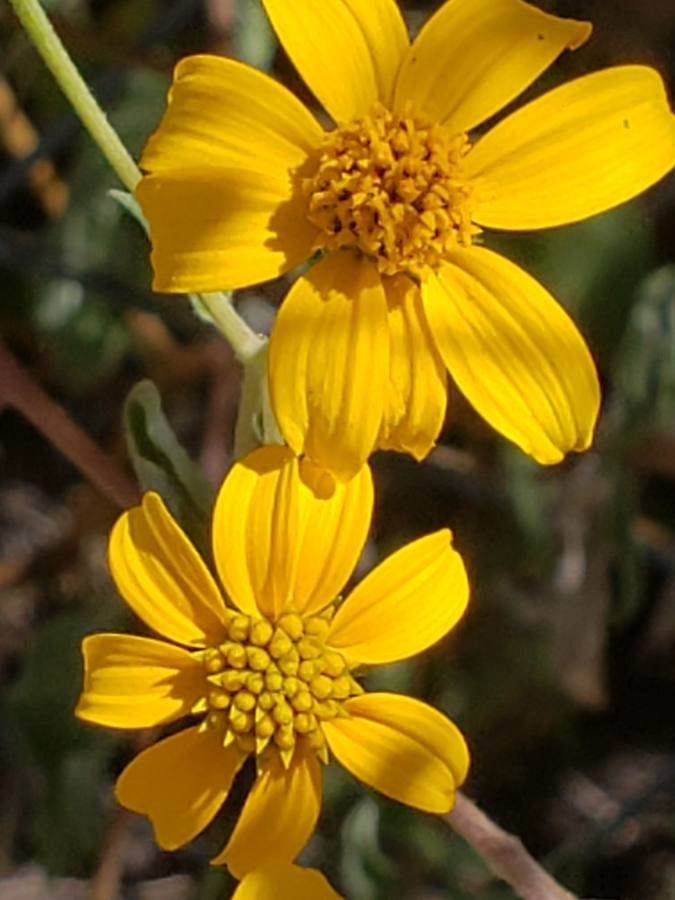
Psilostrophe cooperi is a flowering plant in the daisy family known by the common names Cooper's paper daisy and whitestem paperflower. It is native to the Mojave and Sonoran Deserts of California, the Southwestern United States, and northwestern Mexico.
Whitestem paperflower is fairly disease-resistant and typically does not readily suffer from illnesses. However, it can be affected by pests and diseases present in its environment. These infections are generally mild. In terms of care, this plant requires moderate maintenance. It should be pruned regularly to maintain a neat appearance and promote healthy growth. Fertilizing can also help encourage flowering. Whitestem paperflower is suitable for anyone with an outdoor space, such as a garden or patio, and does not demand extensive gardening experience. It may need more attention when grown indoors.
How to keep Psilostrophe Cooperi.
Light
The whitestem paperflower does best when it receives abundant sunlight for most of the day, promoting healthy growth. Its natural habitat is sunny regions where it grows most successfully. Both too much and too little sunlight can impede its proper development.
Water
The Whitestem paperflower is highly drought-tolerant and thrives in arid conditions. It needs deep watering once a week, which reflects its adaptation to low humidity environments. This outdoor plant prefers full sunlight and requires less water during its dormant phase, which aligns with the dry seasons in its natural habitat.
Temperature
Whitestem paperflower is native to habitats with temperature ranges of 59 to 100 °F (15 to 38 ℃). It flourishes in these relatively warm climates. Depending on the season, one may need to adjust the surrounding temperature to mimic its natural habitat.
Fertilizer
For Whitestem paperflower, the main time to fertilize is early spring, when the flowers are forming. The appropriate fertilizer promotes improved blooms and helps the Whitestem paperflower produce attractive flowers. Fertilizing in early spring ensures excellent flowers during the season and supplies energy for dormant growth phases.
Pruning
The Whitestem paperflower benefits from well-timed pruning, ideally in early to late spring. To encourage new growth, remove any dead stems, and for ongoing blooming, deadhead the spent flowers. Pruning helps the plant maintain a compact shape and prevents it from becoming leggy. Make sure your cuts are clean and at a slight angle to promote the plant's health.
Botanical profile.
- Plant Type
- Herb, Shrub
- Life Cycle
- Perennial
- Genus
- Psilostrophe
- Family
- Asteraceae
- Hardiness Zone
- 8-11
- Mature Height
- 52 cm
- Mature Spread
- 49 cm to 91 cm
- Leaf Color
- Gray, Light Gray
- Leaf Type
- Deciduous
- Flower Color
- Yellow
- Flower Size
- 2.03 cm to 5.08 cm
- Bloom Time
- Mid spring, Late spring, Early summer, Mid summer
- Planting Time
- Spring, Summer, Autumn
- Harvest Time
- Summer
- Native Area
- Mexico
Other names.
Reader questions.
What are the sunlight requirements for Whitestem paperflower?
The Whitestem paperflower requires full sun, meaning it thrives best when it receives more than 6 hours of sunlight daily. It's important to observe the movement of sunlight through your garden to find the ideal balance of light and shade that ensures the plant's well-being. In its natural habitat, this plant is accustomed to regions abundant in sunshine, contributing to its healthy growth. Both excessive and insufficient exposure to sunlight can hinder its development.
What is the ideal temperature range for Whitestem paperflower?
Whitestem paperflower, also known botanically as Psilostrophe cooperi, is native to environments with temperature ranges of 59 to 100 °F (15 to 38 °C). It thrives in these relatively warm climates, making it imperative for gardeners or caretakers to adjust the surrounding temperature to mimic its natural habitat, depending on the season. This plant has some cold tolerance and generally does not require any additional protective measures when the temperature is above -5°C. However, if temperatures are expected to drop below -5°C, temporary measures for cold protection should be taken, such as wrapping the plant with plastic film, fabric, or other suitable materials until the temperature rises again.
How essential is sunlight for the growth of Whitestem paperflower?
Sunlight plays a critical role in the growth of the Whitestem paperflower, promoting its health when exposed to sunlight for the majority of the day. In instances where natural sunlight is insufficient, especially during winter or in less sunny spaces, artificial lighting can be a valuable solution. Optimal growth is achieved through adequate lighting, with considerations for the type, distance, and duration of artificial light. For example, full sun plants necessitate 30-50W/sq ft of artificial light, whereas partial to full shade plants require between 10-30W/sq ft.
How does Whitestem paperflower react to low temperatures?
Whitestem paperflower has a moderate tolerance to low temperatures and thrives best when the temperature is above 15°C. During the winter, it's important to keep it above -5°C to prevent damage. If the temperature falls below -10°C, you may notice the leaves starting to droop, which is an early sign of distress. In milder cases, the plant can recover, but in severe instances, leaves will wilt and eventually fall off. To address frost damage, the recommended solution is to trim away the frost-damaged parts. Before the plant is exposed to low temperatures again, it should be wrapped with non-woven fabric or cloth, and a wind barrier may be needed to protect it from cold winds.
What symptoms indicate inadequate light exposure in Whitestem paperflower?
Symptoms of inadequate light exposure in Whitestem paperflower include smaller new leaves, leggy or sparse growth, faster leaf drop, slower or no growth, lighter-colored leaves, and leaf curling. Additionally, too much sunlight can cause symptoms like chlorosis, sunscald, wilting, and leaf scorching. These symptoms highlight the balance needed between adequate sunlight and the potential harm caused by overexposure. Monitoring these symptoms can guide adjustments in the plant's light environment for optimal health.
How does Whitestem paperflower react to high temperatures?
During the summer, it's crucial to ensure that the Whitestem paperflower remains below 38°C. When temperatures exceed 43°C, the plant shows signs of stress such as lighter leaf color, dry and withered leaf tips, leaf curling, and increased susceptibility to sunburn. To mitigate damage from high temperatures, affected plant parts should be trimmed away. Moving the plant to a shaded area during midday and afternoon hours, or using a shade cloth, can provide protection from the sun. Additionally, watering the plant in the morning and evening helps keep the soil moist and supports plant health under high temperature conditions.
How can I address light-related issues in Whitestem paperflower?
To remedy light-related issues in Whitestem paperflower, gradually introduce the plant to more sunlight, targeting at least 6 hours daily, particularly using a south-facing window for indoor plants. Utilize artificial lighting when natural light is insufficient, ensuring a minimum of 8 hours of light per day for plants that are large or not easily movable. Outdoors, acclimate your plants to sunnier spots progressively to prevent sunburn. Minimize obstructions by pruning and consider transplanting to sunnier locations if necessary. Remember, while affected parts may not recover, new growth post-adjustment should be healthy.