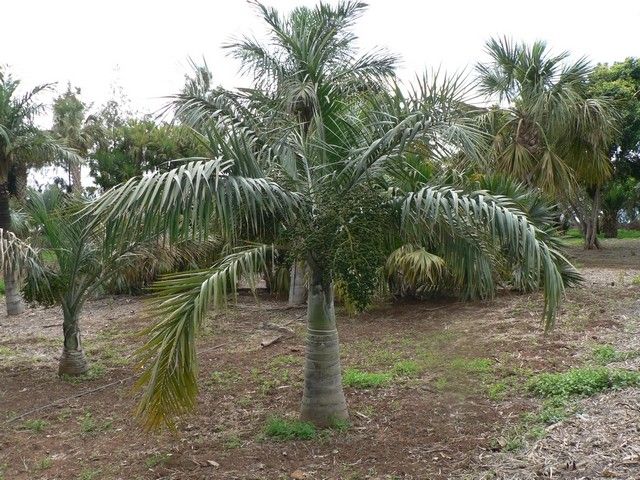
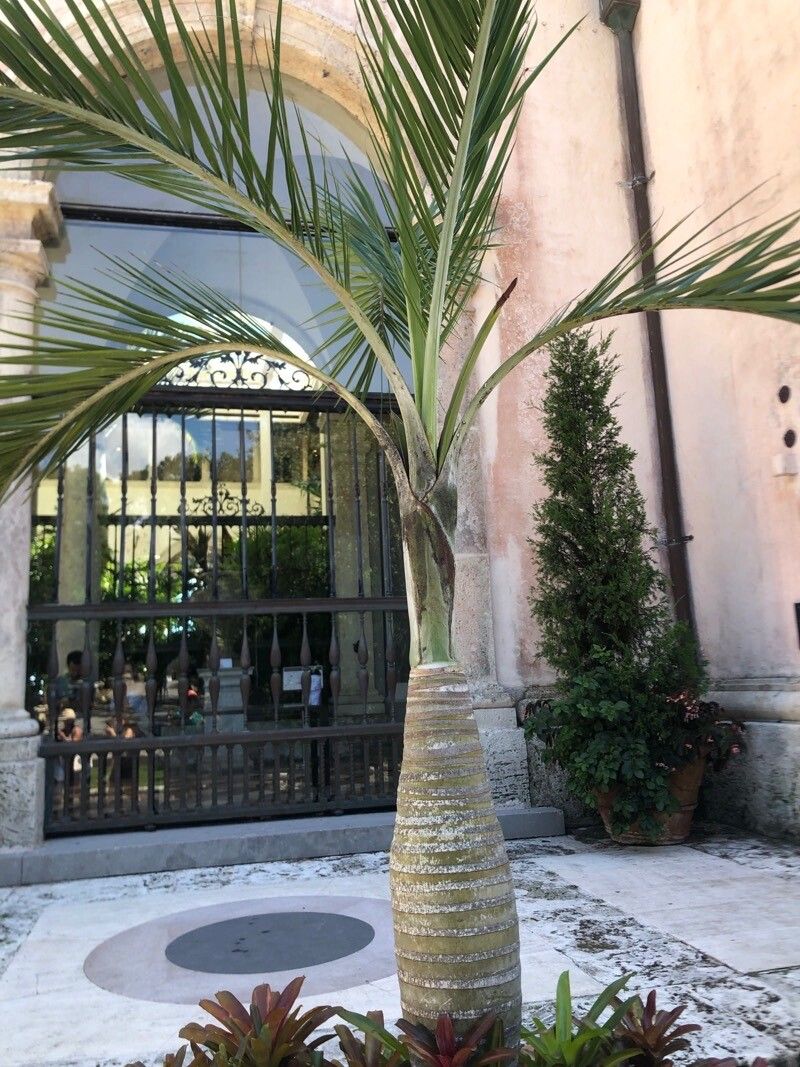
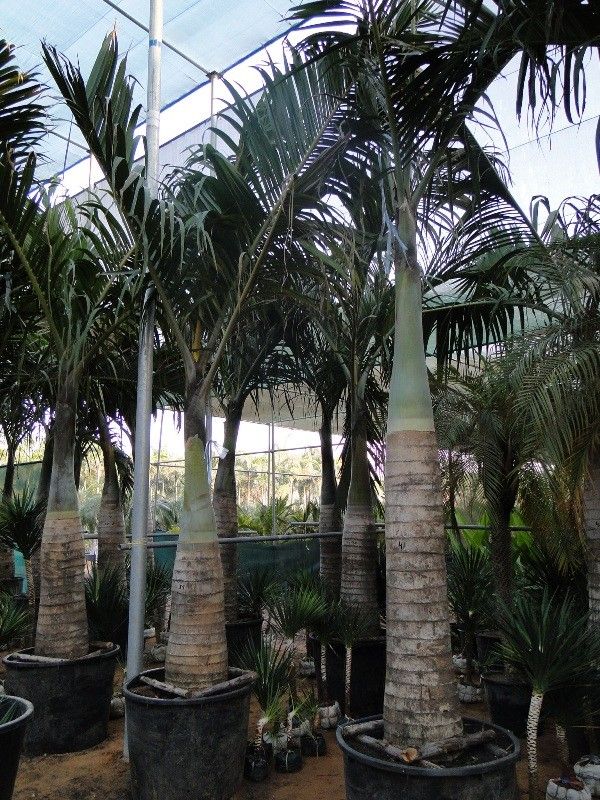
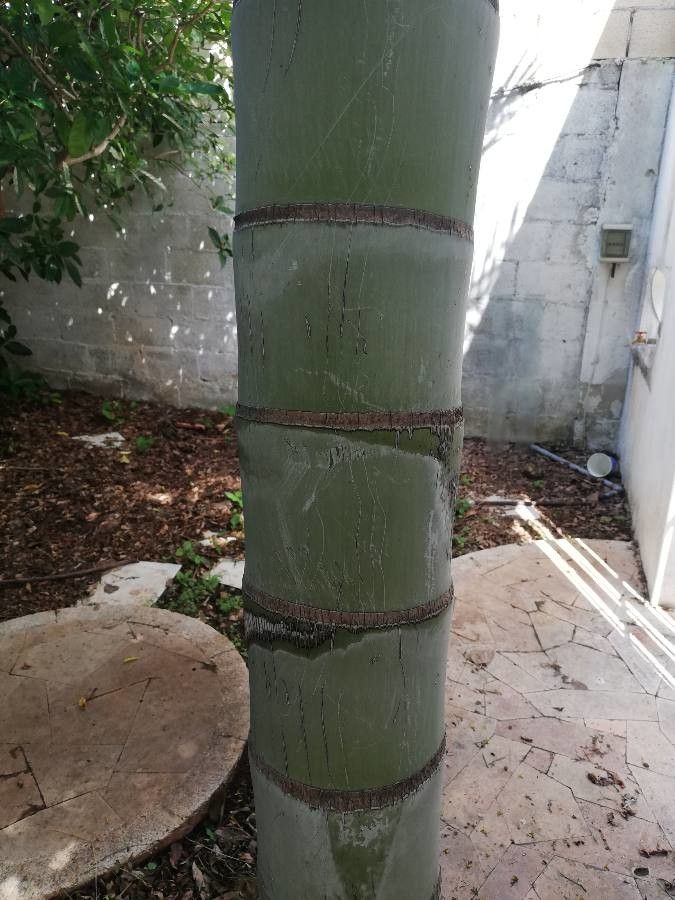
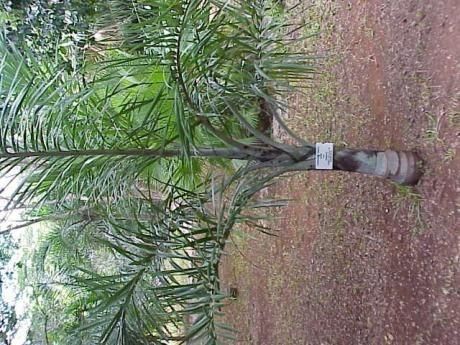
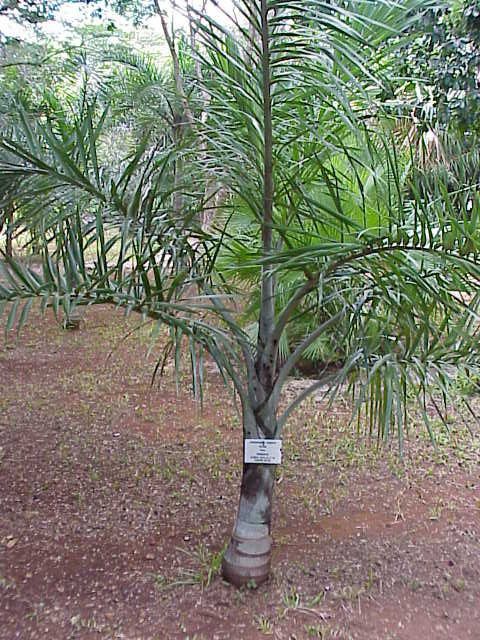
Pseudophoenix sargentii, commonly known as the Buccaneer Palm or Sargent's Cherry Palm, is a slow-growing palm species native to the Bahamas and Florida. This small to medium-sized palm can reach heights of up to 10 meters and has a trunk diameter of up to 30 centimeters. The trunk is slender and smooth, adorned with prominent leaf scars.
The leaves of Pseudophoenix sargentii are pinnate, meaning they are composed of multiple leaflets arranged along both sides of a central stem. These leaves can grow up to 3 meters in length and have a dark green hue.
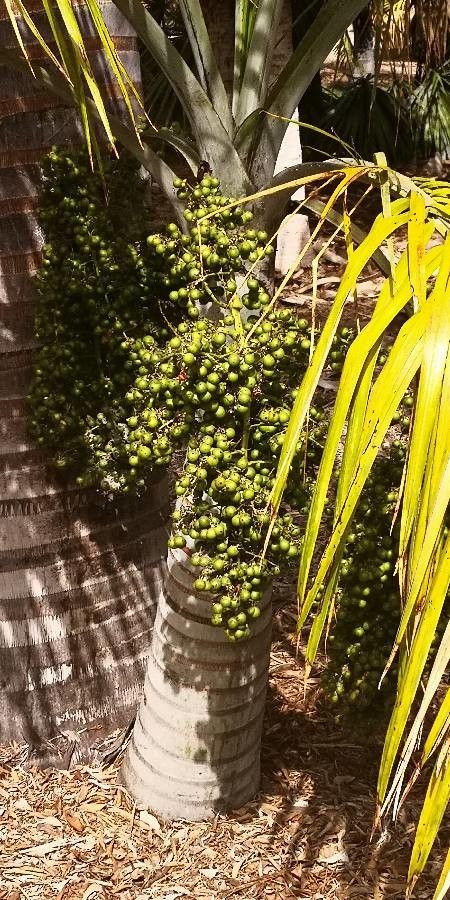
This palm produces small yellow flowers on long inflorescences that emerge from between the leaves. These flowers eventually turn into small red or black fruits, each about 1 centimeter in diameter.
Pseudophoenix sargentii prefers well-drained soils and full sun exposure, although it can tolerate partial shade. While it is drought-tolerant, it requires regular watering during its establishment period.
Unfortunately, this plant has become rare due to habitat destruction caused by human activities such as logging, agriculture, and urbanization. As a result, it is listed as an endangered species under both Florida state law and the federal Endangered Species Act (ESA). Conservation efforts, including habitat restoration programs, have been implemented to preserve its natural habitat for future generations.
The Florida cherry palm resists disease well and is usually not prone to illnesses. In terms of care, this plant is relatively low-maintenance. Planted outdoors, it needs minimal watering, and larger specimens generally do not require pruning. Smaller plants, however, should be pruned after they have bloomed. The Florida cherry palm is suitable for anyone with outdoor space, such as a garden or deck, and does not require a lot of care experience.
How to keep Pseudophoenix Sargentii.
Light
The Florida cherry palm comes from open habitats, such as sunlit meadows and forest edges, which supply abundant light. It does well in full sun but can also tolerate partial sun, adapting well to different sunlight conditions.
Water
The Florida cherry palm is well-suited to both coastal and arid environments, making it resistant to drought. It requires infrequent watering, roughly every 2 to 3 weeks. It's important not to overwater this evergreen plant, as doing so can cause harm. Thriving outdoors, the Florida cherry palm maintains lush foliage throughout the year, thanks to its efficient water storage capabilities.
Temperature
The Florida cherry palm comes from tropical areas where the climate is generally warm and humid. For that reason, it is well suited to high heat and humidity. It is sensitive to sudden temperature changes and prefers a steady temperature, so avoiding indoor temperature fluctuations is important. It typically cannot tolerate cold and needs warmer conditions to grow. If the surrounding temperature falls too low, the plant may stop growing or even die.
Fertilizer
The best time to fertilize a Florida cherry palm is in early spring as it breaks dormancy. Doing so encourages overall growth and flower development. Fertilization improves the foliage, stems, and branches and supports large, vibrant, long-lasting flowers. It also helps move nutrients from the roots to the flowers and enhances the plant’s health and disease resistance.
Pruning
The Florida cherry palm is a native palm tree distinguished by its unique trunk and feathery fronds. For optimal health, prune it in early spring, removing only dead or damaged fronds to minimize the risk of disease and pests. Be careful not to over-prune, as this helps maintain the tree's vigor and natural shape, promoting healthy growth.
Botanical profile.
- Plant Type
- Tree
- Life Cycle
- Perennial
- Genus
- Pseudophoenix
- Family
- Arecaceae
- Hardiness Zone
- 10-11
- Mature Height
- 4.88 m to 7.01 m
- Mature Spread
- 3.05 m to 3.96 m
- Leaf Color
- Green, Dark Green
- Leaf Type
- Evergreen
- Flower Size
- 0.25 cm to 0.51 cm
- Bloom Time
- Late spring, Early summer, Mid summer
- Planting Time
- Spring, Summer, Autumn
- Harvest Time
- Late summer, Early fall, Mid fall
- Native Area
- Bahamas, Mexico, Belize, Cuba
Other names.