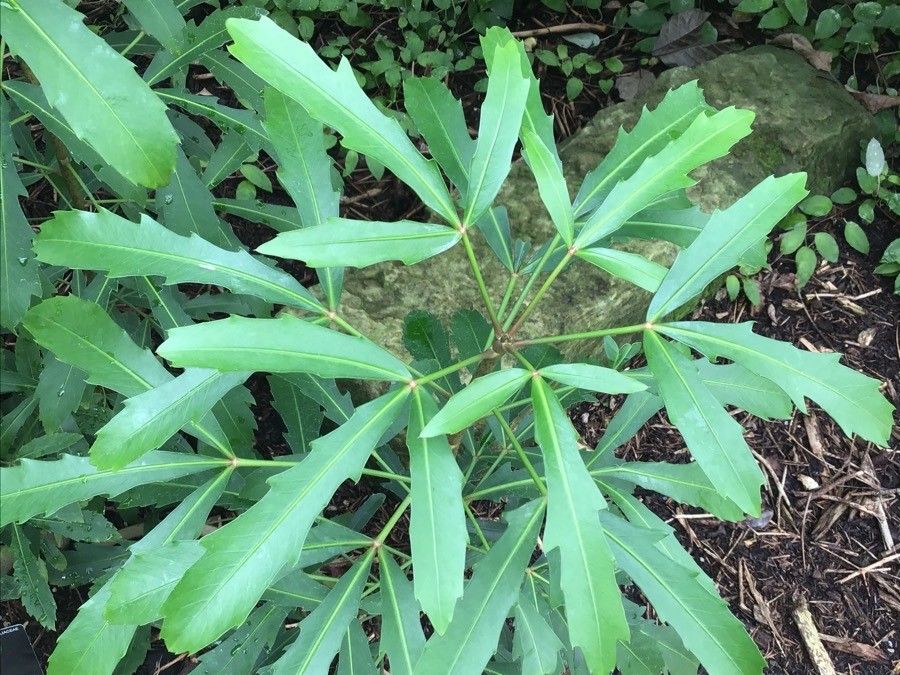
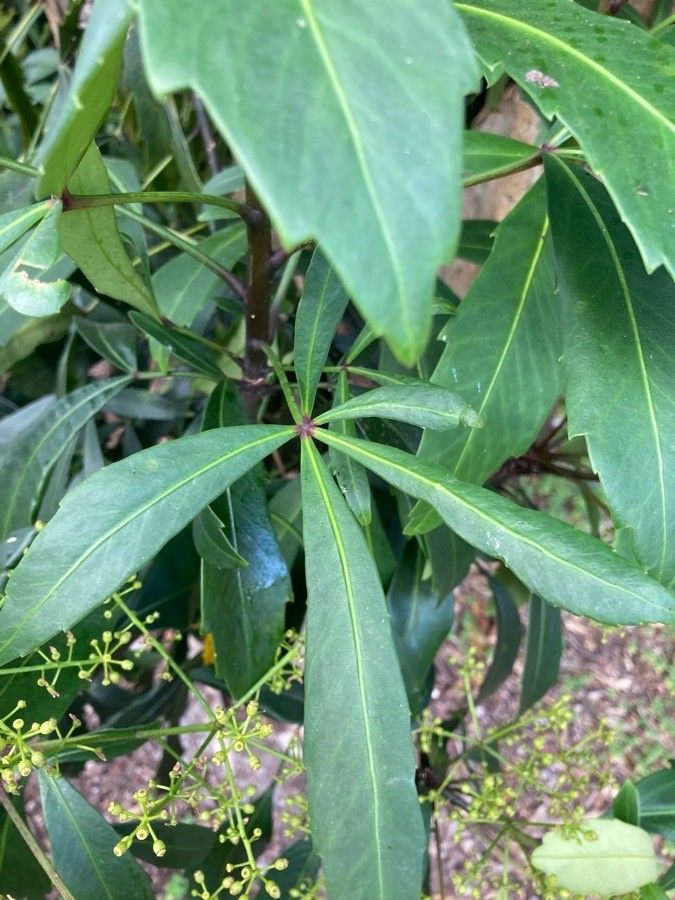
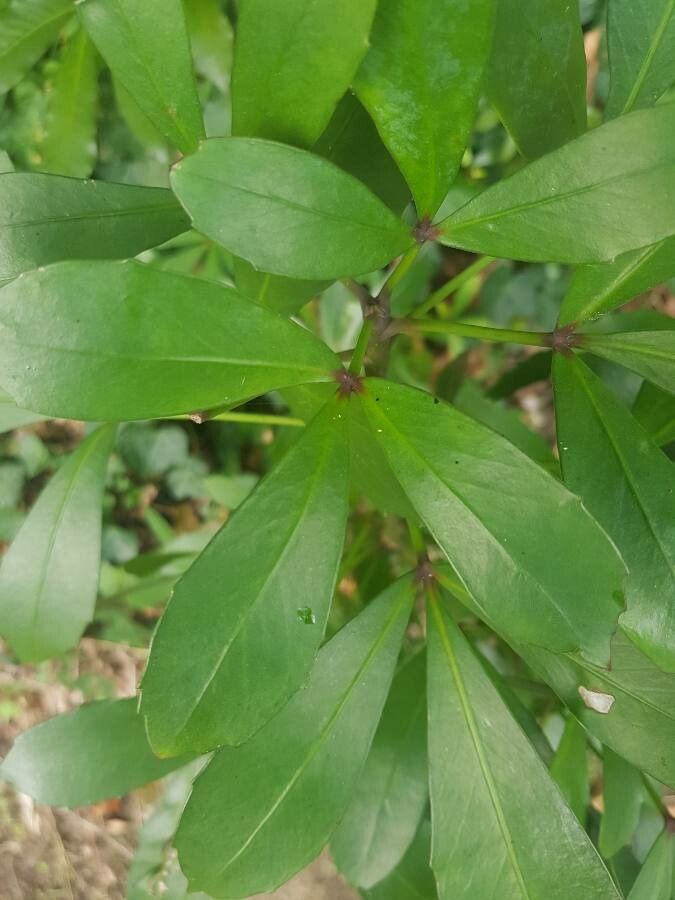
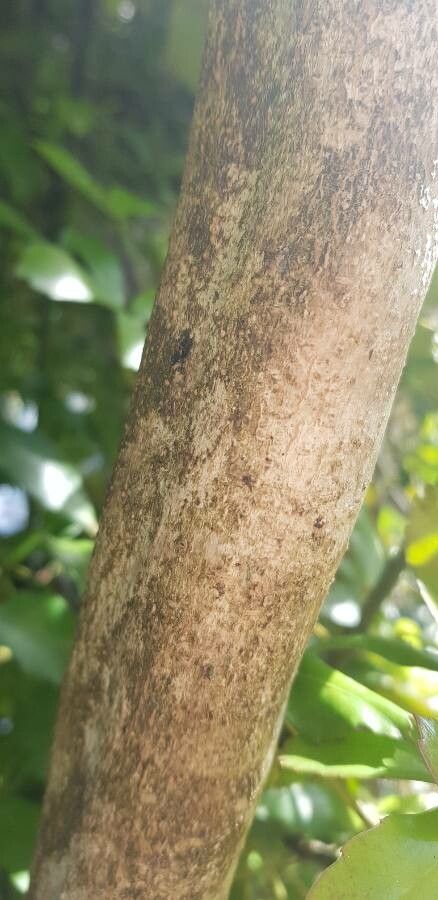
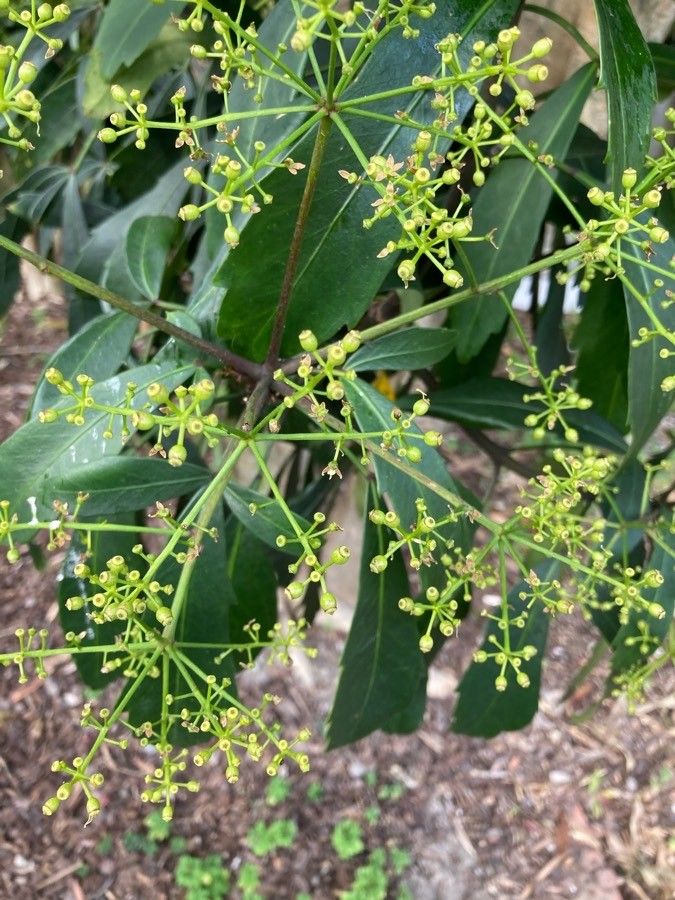
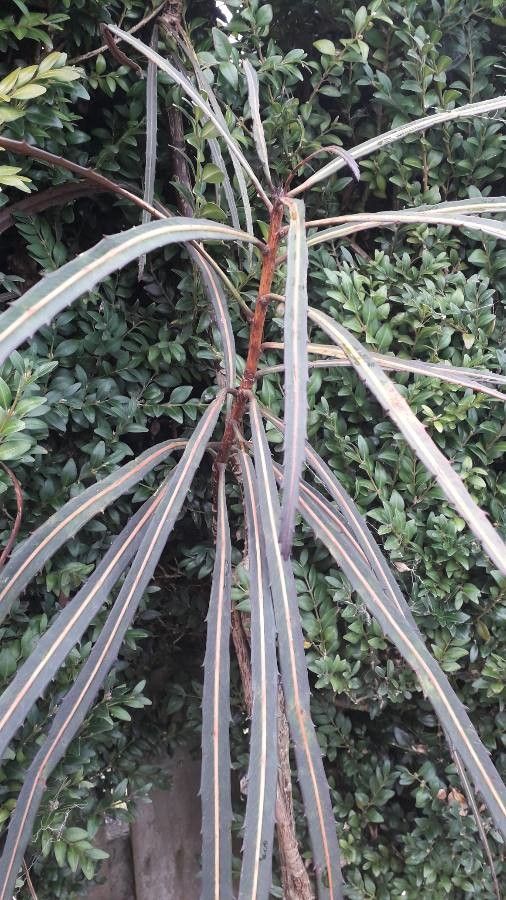
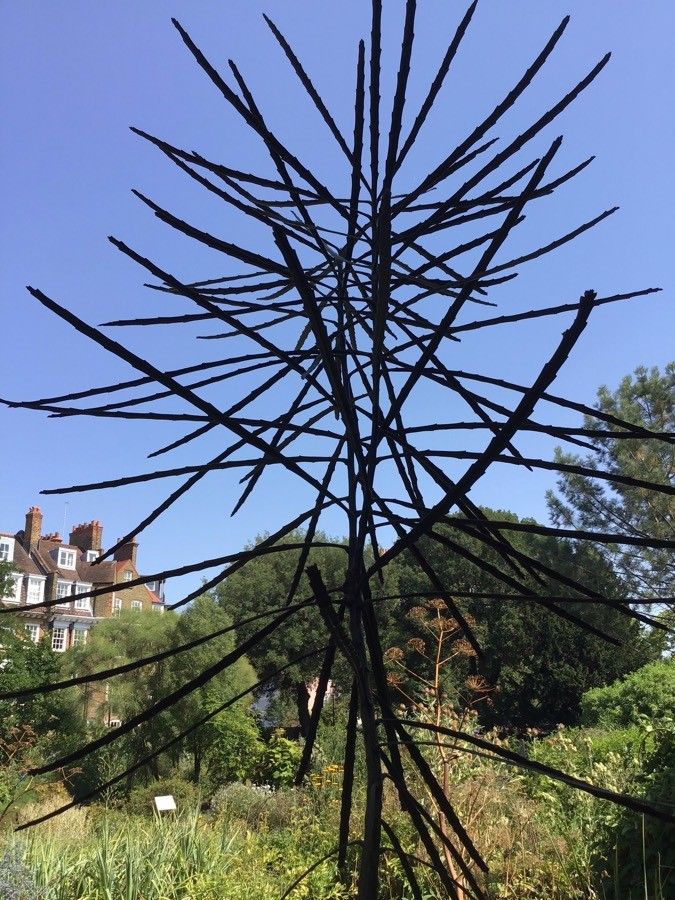
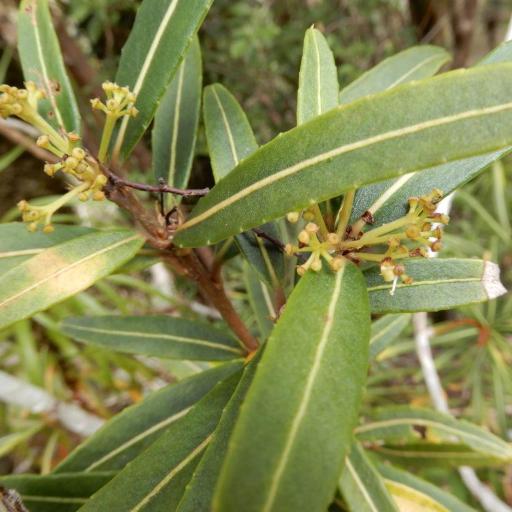
Pseudopanax lessonii, commonly known as Five Finger or Whauwhaupaku, is a species of evergreen shrub or small tree native to New Zealand. It belongs to the Araliaceae family and can reach heights of up to 10 meters in its natural habitat.
This plant is easily recognizable by its distinctive palmate leaf structure, featuring five glossy, dark green leaflets. The leaves, which are arranged alternately on the stem, can grow up to 20 cm long. In the summer, Pseudopanax lessonii produces small white flowers that are followed by black berries.
Pseudopanax lessonii prefers moist soil conditions and partial shade, but it can also tolerate full sun exposure. It is often used as an ornamental plant in landscaping due to its attractive foliage.
In traditional Maori medicine, Pseudopanax lessonii was used to treat various ailments such as rheumatism, skin diseases, and wounds, thanks to its anti-inflammatory properties.
Overall, Pseudopanax lessonii is a beautiful evergreen shrub with unique foliage that adds an exotic touch of New Zealand's flora wherever it is planted.
Houpara is resistant to disease and typically not susceptible to illnesses. As for care, this plant is fairly low-maintenance. When grown outdoors it needs only light watering, and larger specimens usually do not require pruning. Smaller plants, however, should be pruned after they finish blooming. Houparat is suitable for anyone with an outdoor area, such as a garden or deck, and does not call for extensive gardening experience.
How to keep Pseudopanax Lessonii.
Light
Houpara does best with abundant sunlight, reflecting the conditions of its native environment. Excessive light can cause leaf scorch, while insufficient light may limit growth. It can survive in lower light, but not as well.
Water
Houpara thrives best in environments that mimic its natural habitat, which features alternating moist and dry conditions. It should be watered every 1-2 weeks, allowing the soil to partially dry between waterings. This plant is ideal for indoor settings with higher humidity, such as well-lit bathrooms, to support its lush foliage.
Temperature
Houpara is a plant adapted to the mild temperatures of its native environment. It prefers a temperature range of 59 to 95 °F (15 to 35 ℃). Seasonal temperature changes should accommodate this preference.
Fertilizer
Timing is vital when feeding Houpara. Apply fertilizer in early spring and continue on a monthly schedule until early summer. Fertilizer encourages attractive blooms and supplies energy both during dormancy and during active growth.
Pruning
To keep your houpara healthy and looking its best, it's important to prune it regularly. The ideal time for pruning is from early to late winter, during the plant's dormant period. Pruning helps maintain the plant's shape, encourages new growth, and improves air circulation by removing damaged branches. Be sure to use clean, sharp tools to make precise cuts, which will promote quick healing and help prevent disease. This will enhance the overall appearance of your houpara.
Pot & Repot
Repot your houpara during the spring every two years, using a slightly larger pot to help prevent overwatering. After repotting, water it gently and keep it out of direct sunlight for a week. Providing proper care will promote the houpara’s recovery and improve its foliage display.
Botanical profile.
- Plant Type
- Tree, Shrub
- Life Cycle
- Perennial
- Genus
- Pseudopanax
- Family
- Araliaceae
- Hardiness Zone
- 8-10
- Mature Height
- 6.1 m
- Mature Spread
- 1.52 m
- Leaf Color
- Green
- Leaf Type
- Evergreen
- Flower Color
- Yellow, Green
- Flower Size
- 0.51 cm to 0.51 cm
- Bloom Time
- Early summer, Mid summer
- Planting Time
- Autumn
- Harvest Time
- Late summer, Early fall, Mid fall
- Native Area
- New Zealand
Other names.
Reader questions.
What are the sunlight requirements for Houpara?
Houpara, also known as Pseudopanax lessonii, thrives best under generous sunlight exposure, echoing its native habitat's conditions. Full sun exposure, defined as more than 6 hours of sunlight daily, is ideal, but it can also tolerate partial sun, which means about 3-6 hours of sunlight. Too much sunlight may lead to leaf scorch, while too little can restrict growth. It's vital to observe the sunlight's movement in your garden to ensure your plants get the ideal balance of light and shade. Observing how your garden's sunlight exposure changes can help you pick the best spots for your Houpara, ensuring it gets the necessary light for optimal growth and health.
What are the ideal temperature conditions for growing Houpara?
Houpara thrives in mild temperatures, with an ideal temperature range between 59°F to 95°F (15°C to 35°C) in its native environment. It can tolerate some cold and generally does not need extra protection if the temperature stays above -5°C. However, if temperatures are expected to fall below -5°C, temporary protective measures like wrapping the plant in plastic film, fabric, or other materials are necessary until it warms up again.
How can artificial lighting benefit indoor Houpara plants?
For Houpara plants grown indoors, utilizing artificial lighting can significantly enhance their growth, especially when natural sunlight is insufficient. This is commonly the case during winter or in less sunny indoor spaces. Artificial lights, like LED lights, can be tailored to provide specific wavelengths of light needed by plants. Depending on the plant's sunlight needs, artificial lighting intensity should be adjusted accordingly: full sun plants require 30-50W per square foot, partial sun plants need 20-30W per square foot, and full shade plants should get 10-20W per square foot. The light source should be placed 12-36 inches away from the plant, mimicking natural sunlight as closely as possible. Providing 8-12 hours of light per day will further promote healthier and faster growth.
How does Houpara react to cold temperatures and what should be done?
Houpara has a moderate tolerance for low temperatures and performs best when the temperature is above 15°C. If temperatures drop below -10°C, its leaves may begin to droop; while they can recover in mild cases, severe cases might lead to wilting and leaf loss. To protect Houpara from cold damage, trim off the frost-damaged parts and wrap the plant in insulation like non-woven fabric or cloth, and construct a wind barrier to shield it from cold winds before it encounters low temperatures again.
What are the symptoms of inadequate light exposure for Houpara?
Houpara shows distinct symptoms when it doesn't receive enough light. Key indicators include smaller new leaves, leggy or sparse growth, quicker leaf drop, and stunted or no new growth, all of which suggest the plant is struggling with light deficiency. Leaves might also develop lighter colors, indicating insufficient chlorophyll and essential nutrients. Additionally, excessive sunlight can cause chlorosis, sunscald, leaf curling, wilting, and leaf scorching. These symptoms collectively impair Houpara's capacity to photosynthesize efficiently, reflecting the plant's struggle to adapt to suboptimal light conditions.
What are the effects of high temperatures on Houpara and how can they be mitigated?
During the summer, keeping Houpara below 35°C is crucial. Temperatures exceeding 41°C can lighten the leaf color, cause dry and withered leaf tips, curl the leaves, and increase the risk of sunburn. To mitigate these effects, trim away any sunburned or dried-up parts of the plant. Move the plant to a shaded location or use a shade cloth to protect it from the midday and afternoon sun. Additionally, watering the plant in the morning and evening helps keep the soil moist, reducing stress from high temperatures.
What steps can be taken to improve Houpara's growth in terms of sunlight exposure?
Improving Houpara's growth regarding sunlight exposure involves several strategies, whether the plant is kept indoors, outdoors, or in the ground. Indoors, gradually move the plant to sunnier locations each week until it achieves at least 6 hours of direct sunlight daily, utilizing a south-facing window for best results. If needed, complement with artificial light for at least 8 hours a day. Outdoors, slowly adjust the plant to more sunlight to prevent sunburn, aiming for a gradual transition. If tree branches or other obstructions shadow your plant, consider pruning to improve sunlight penetration. For those in the ground, particularly smaller plants, transplanting during the dormant season to a location with more sunlight and good drainage can significantly benefit growth. Remember, while you can encourage new healthy growth by increasing light exposure, parts of the plant that suffered from previous insufficient light may not recover.