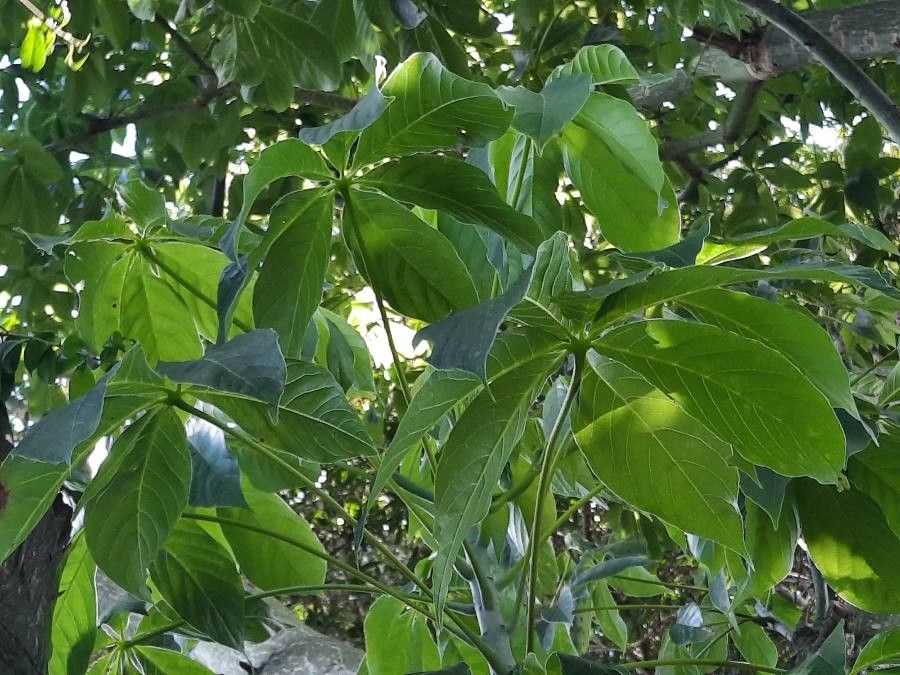
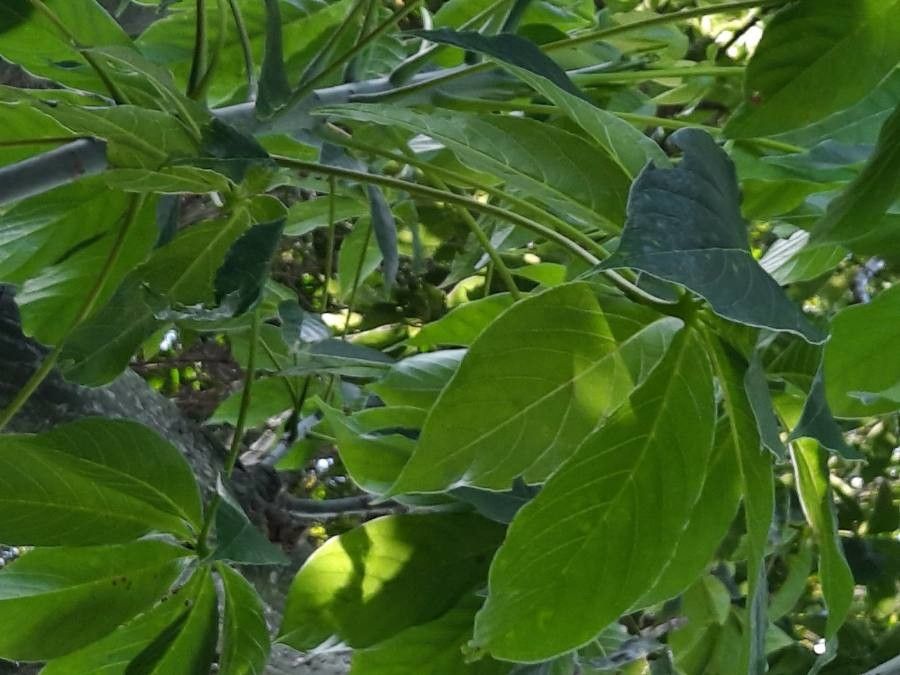
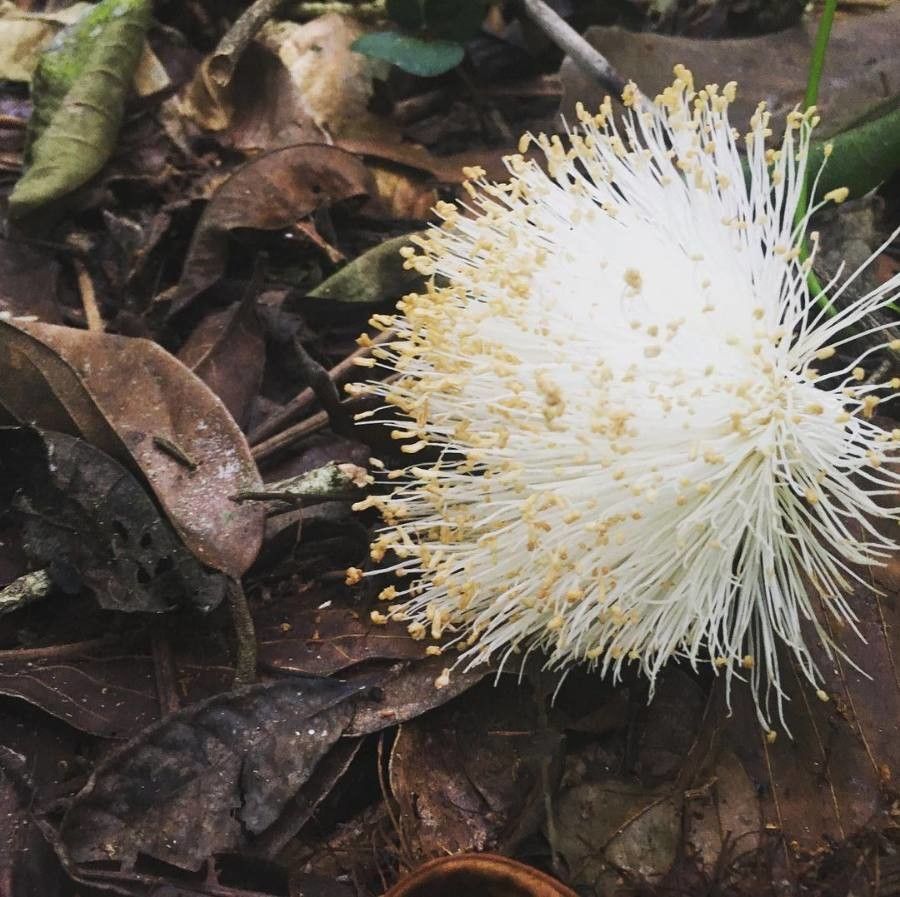
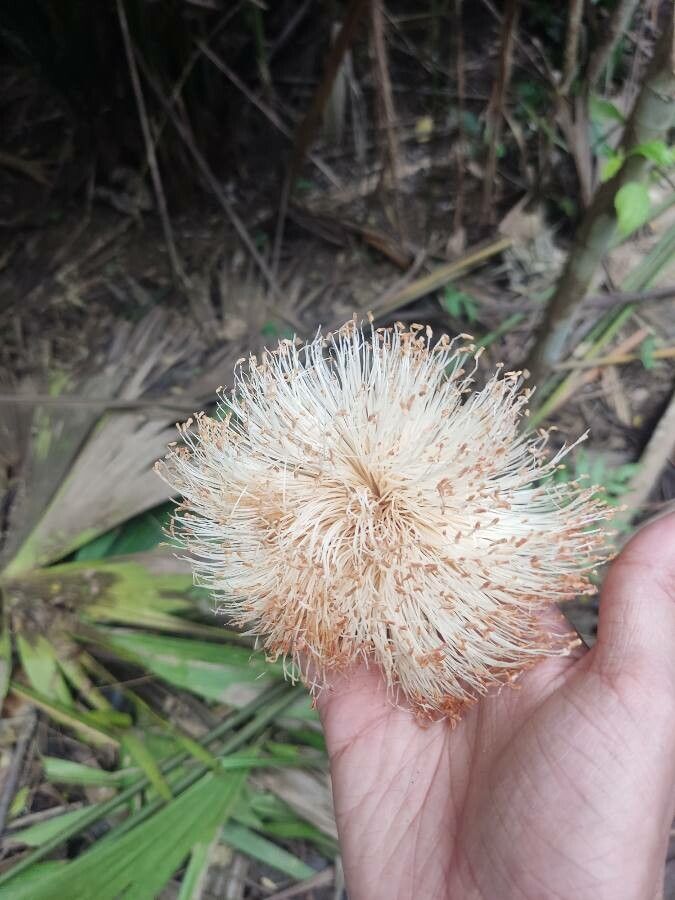
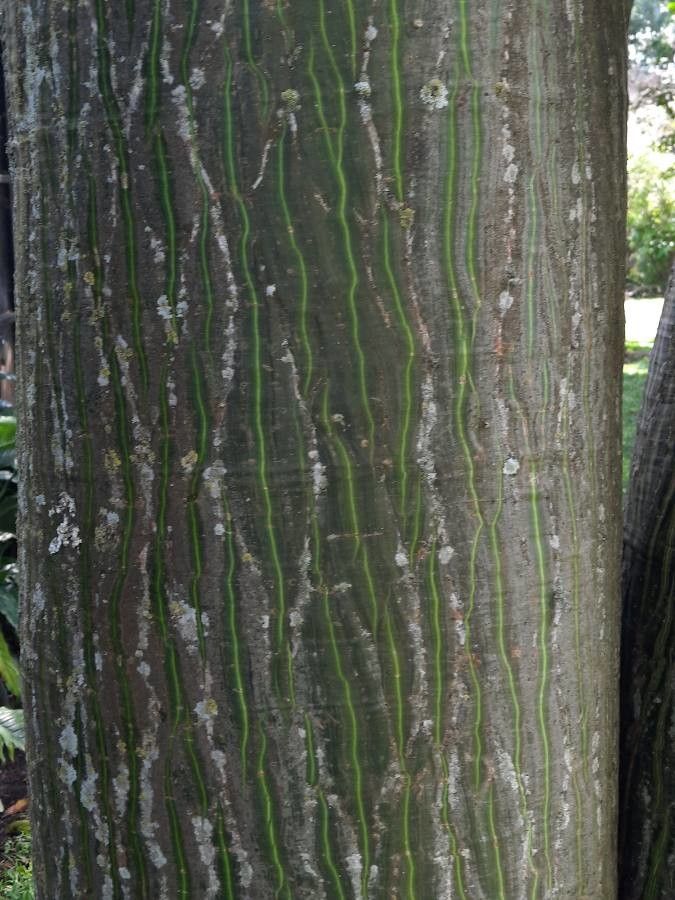
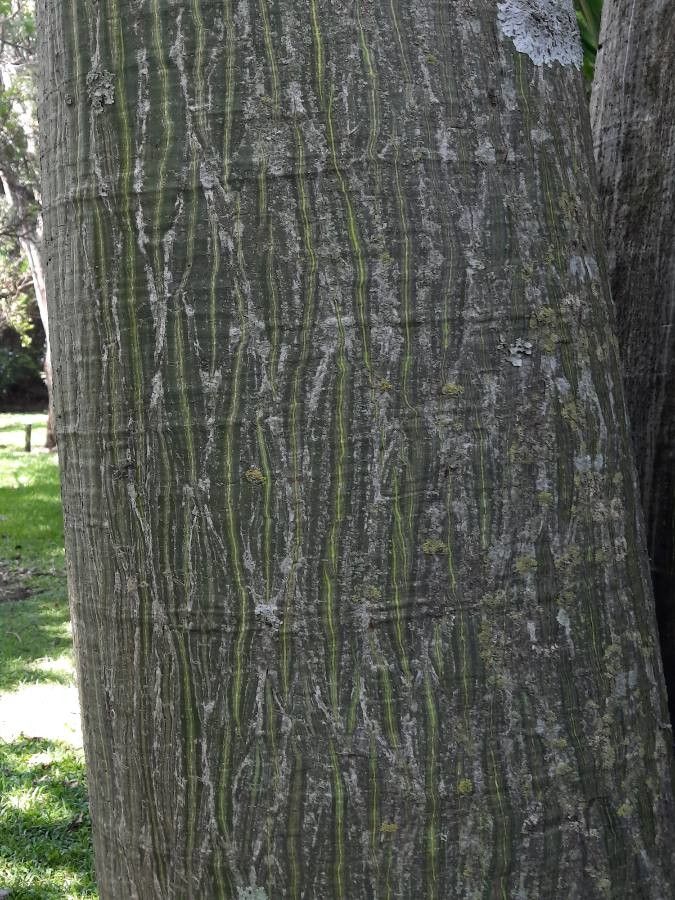
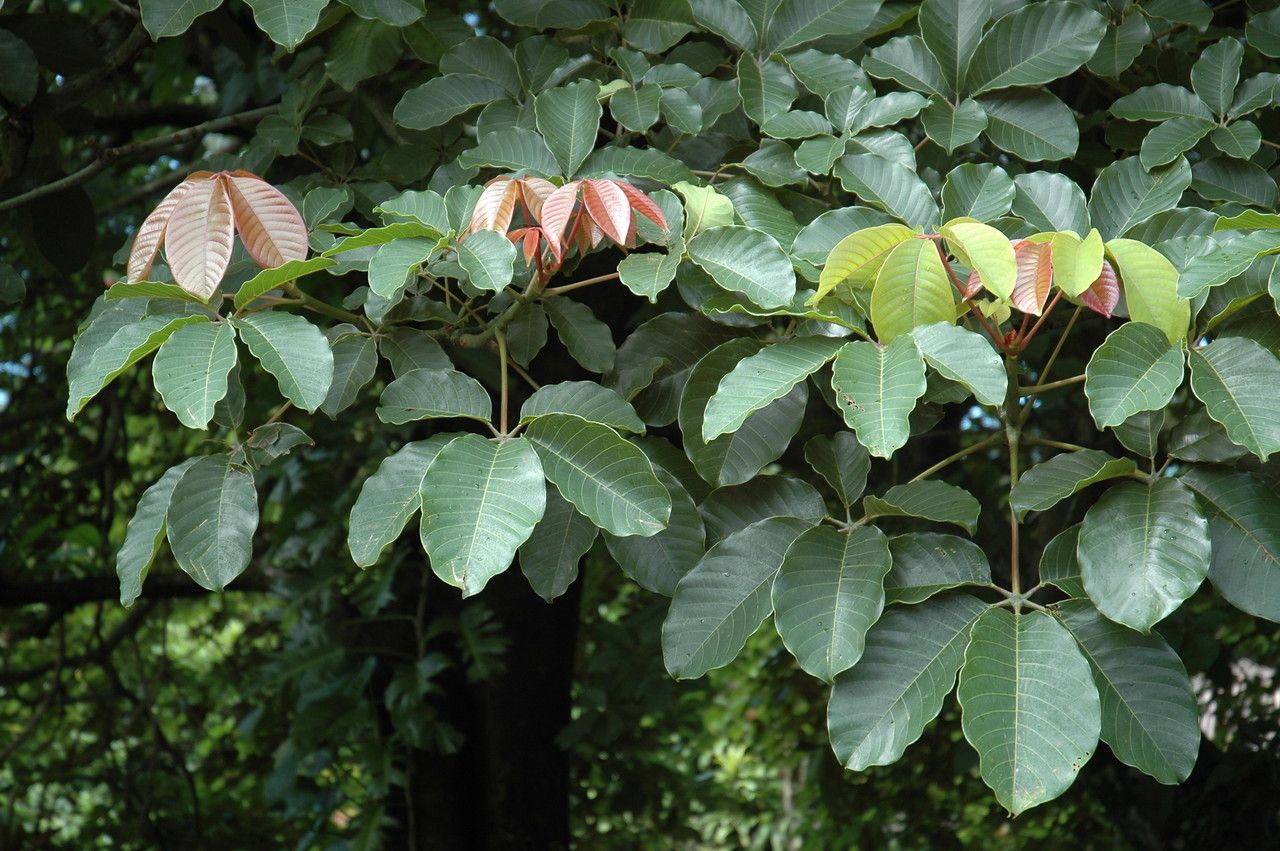
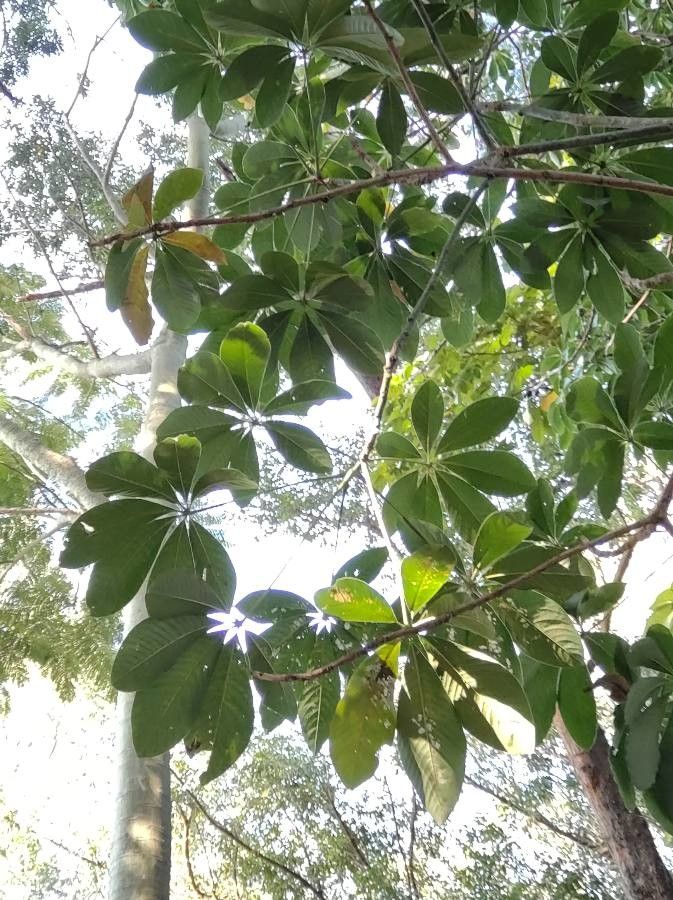
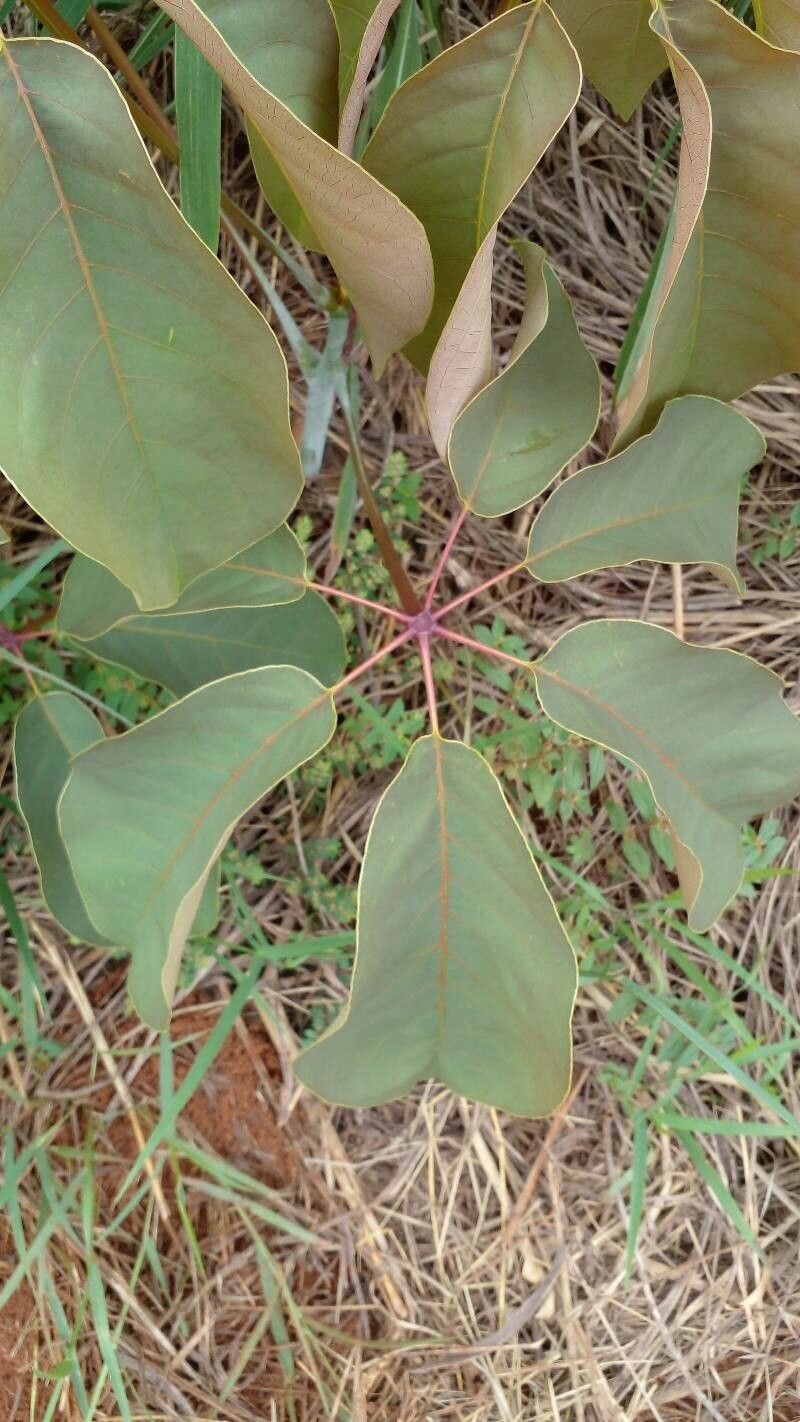
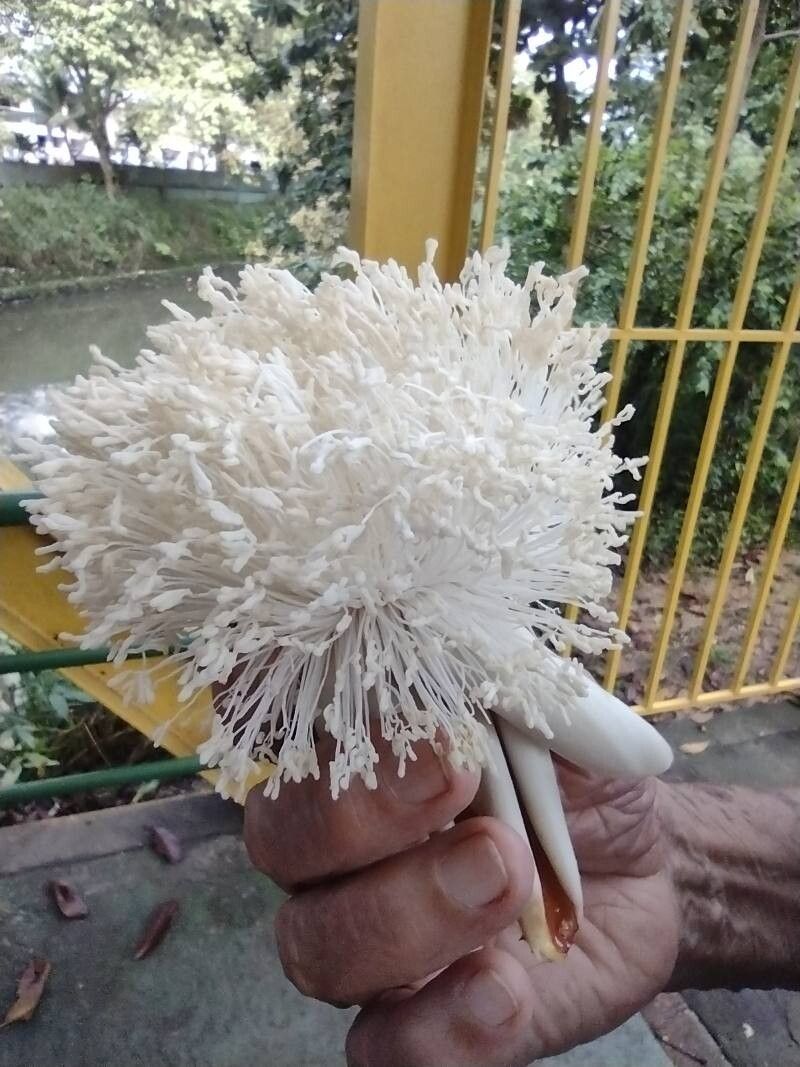
Pseudobombax septenatum is of the family Malvaceae, commonly known as Algodón de río, beldaco, ceibo barrigón, majagua colorada or barrigon. It is a deciduous tree up to 80 feet (24.5 meters) in height which grows in semideciduous rainforest with a definite dry season. It is found from Nicaragua to Brazil. Its flowers are cream-colored and like those of Ceiba spp., in forming a roundish cluster of stamens on a stalk surrounding the pistel, in this instance up to one thousand stamens in number. The leaves generally have seven smooth-edged narrowly oblong leaflets. It was originally named Pachira barrigon, and later Bombax barrigon. It has the bright green lines running through the bark that is also seen in Ceiba spp. and Chorissa spp. It was first described in 1760 by the Dutch scientist Nikolaus Joseph von Jacquin as Bombax septenatum. The current name is from Armando Dugand in 1943.
The Barrigon kapoktree has strong resistance to disease and, overall, is unlikely to be affected by illnesses. In terms of care, this plant is fairly low-maintenance. When grown outdoors it needs only light watering, and larger specimens usually do not require pruning. Smaller plants, however, should be pruned after they have finished blooming. The Barrigon kapoktree is suitable for anyone with an outdoor area, such as a garden or deck, and does not demand extensive care experience.
How to keep Pseudobombax Septenatum.
Light
Barrigon kapoktree comes from open environments, such as sunny meadows and forest edges, which provide ample light. It grows best in Full Sun but can also tolerate Partial Sun, adapting well to different sunlight conditions.
Temperature
Barrigon kapoktree comes from tropical areas, where the climate is usually warm and humid. As a result, it is well suited to high temperatures and humidity. It does not tolerate sudden temperature shifts and prefers a steady temperature environment, so avoiding temperature fluctuations indoors is important. It generally cannot endure cold conditions and needs warmer temperatures to grow. If the surrounding temperature falls too low, the plant may stop growing or even die.
Fertilizer
The optimal time to fertilize a Barrigon kapoktree is in early spring as it breaks dormancy. This encourages overall growth and the development of flowers. Fertilization improves foliage, stems, and branches, while encouraging large, vibrant, long-lasting blooms. It assists in moving nutrients from the roots to the flowers and enhances the plant’s health and resistance to disease.
Pruning
Pruning the barrigon kapok tree in early spring helps promote growth and maintain its shape. When pruning, focus on removing dead branches and ensure you make clean cuts to prevent infections. This practice improves air circulation and light penetration, leading to vibrant foliage and vigorous growth, which are essential for the healthy care of the barrigon kapok tree.
Botanical profile.
- Plant Type
- Tree
- Life Cycle
- Perennial
- Genus
- Pseudobombax
- Family
- Malvaceae
- Hardiness Zone
- 10-12
- Mature Height
- 14.94 m to 29.87 m
- Mature Spread
- 10.06 m to 14.94 m
- Leaf Color
- Forest Green, Dark Green
- Leaf Type
- Deciduous
- Flower Color
- White, Pink
- Flower Size
- 10.16 cm to 15.24 cm
- Bloom Time
- Mid winter, Late winter, Early spring
- Planting Time
- Summer, Autumn
- Harvest Time
- Mid spring, Late spring, Early summer
- Native Area
- Colombia, Bolivia, Venezuela, Peru, Brazil, Nicaragua, Ecuador, Costa Rica, Panama
Other names.