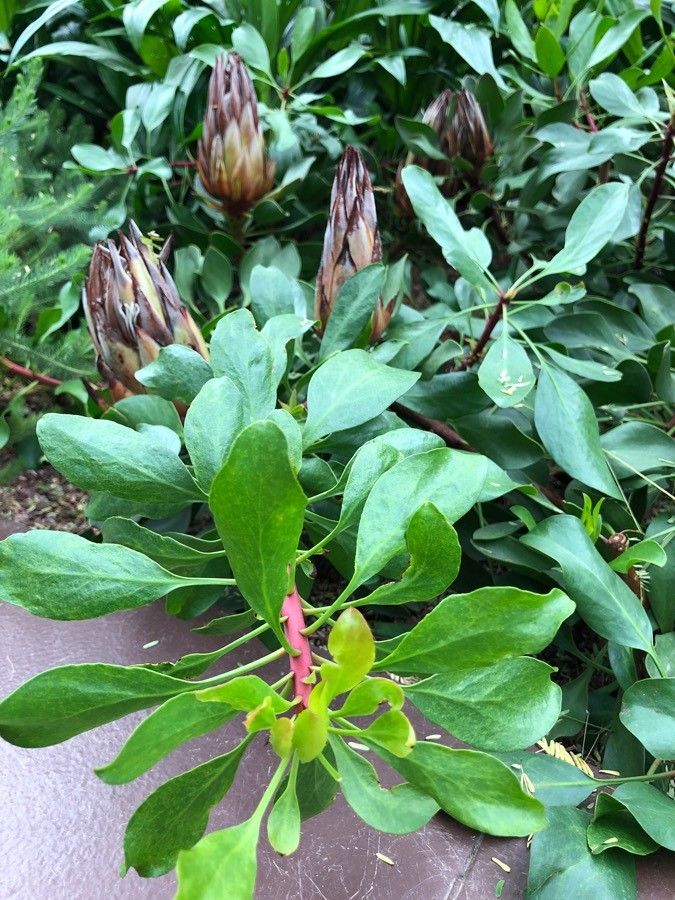
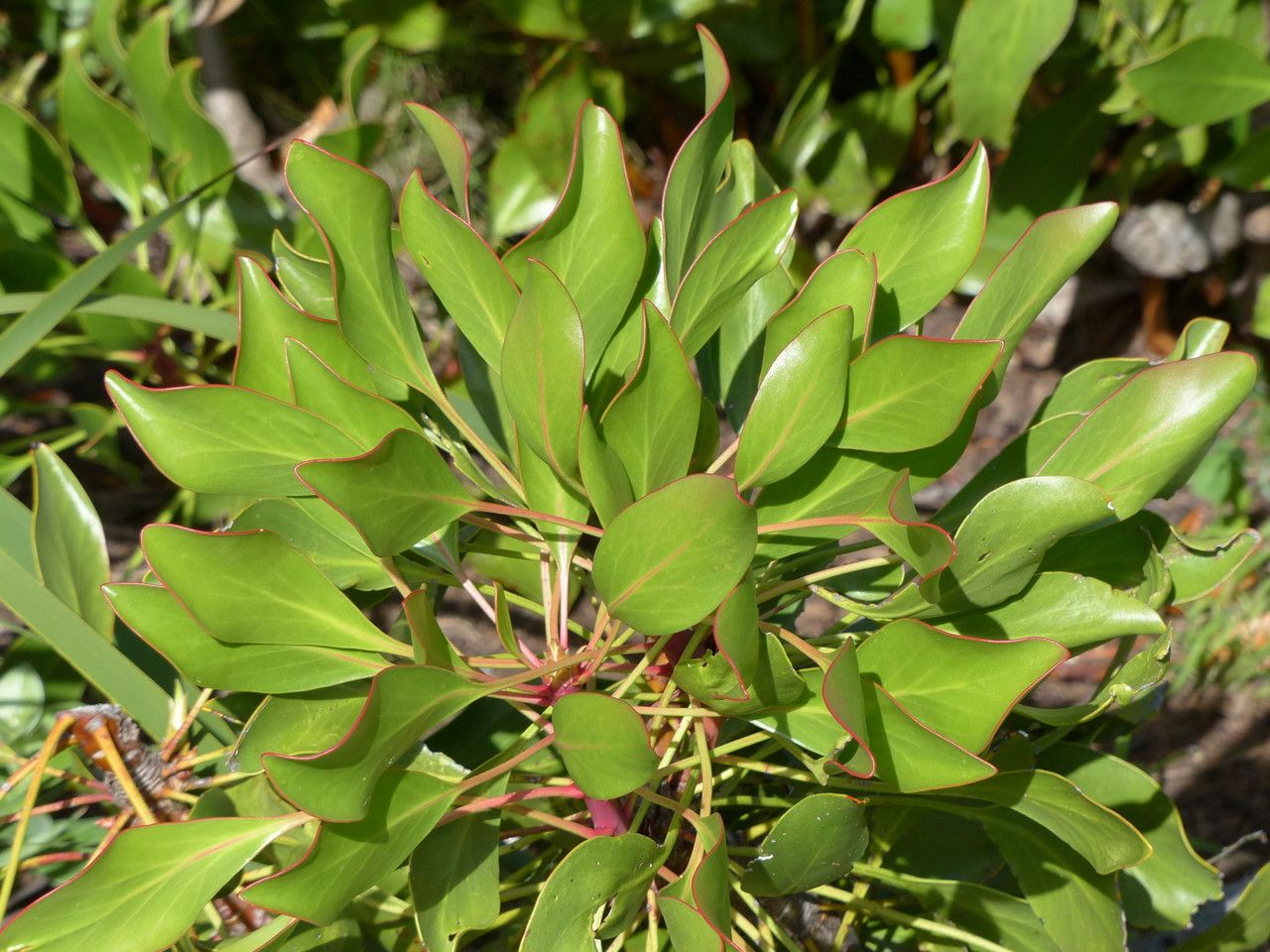
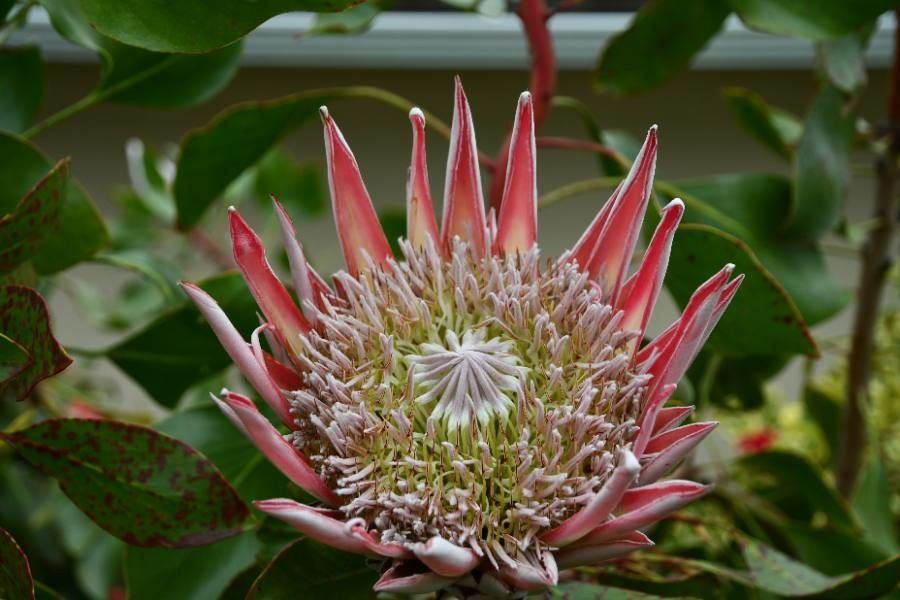
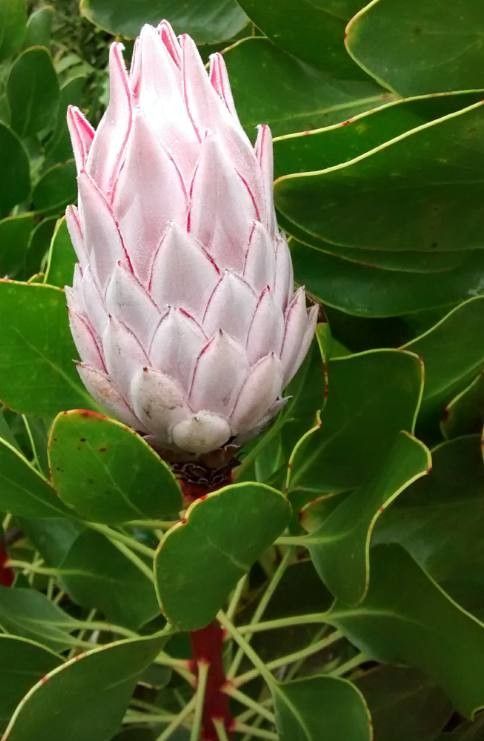
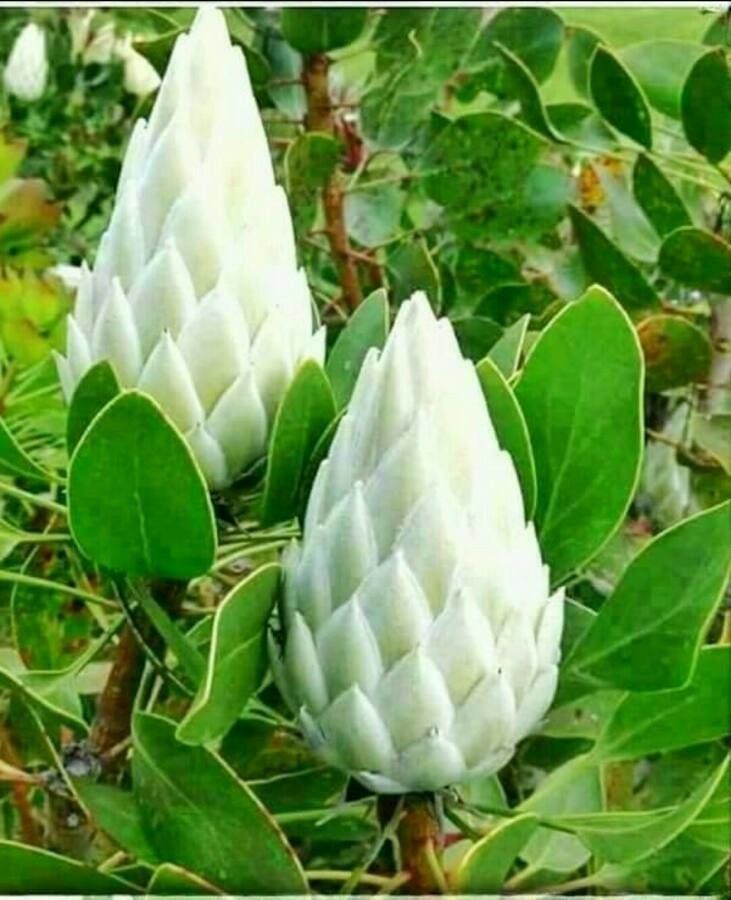
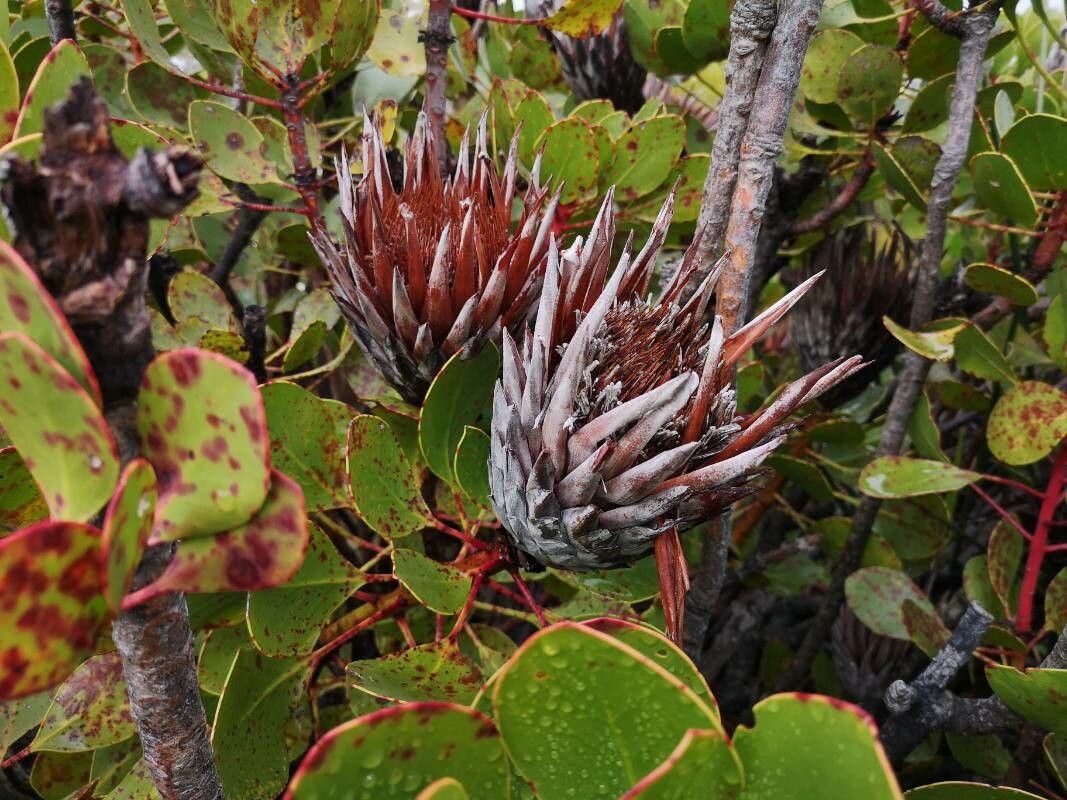
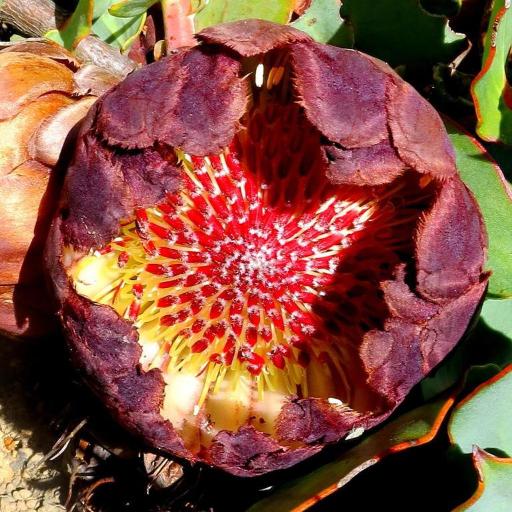
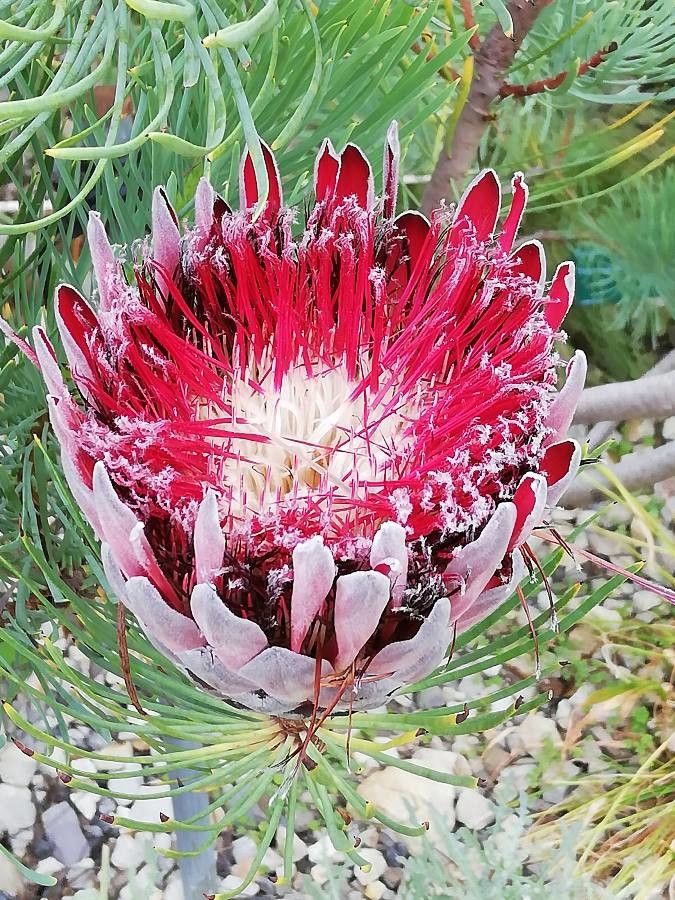
Protea cynaroides, commonly known as the King Protea, is a flowering plant native to South Africa. It belongs to the Proteaceae family and is one of the most iconic and recognizable plants in the region. The King Protea gets its name from its large flower head, which can measure up to 30 cm in diameter and resembles a crown.
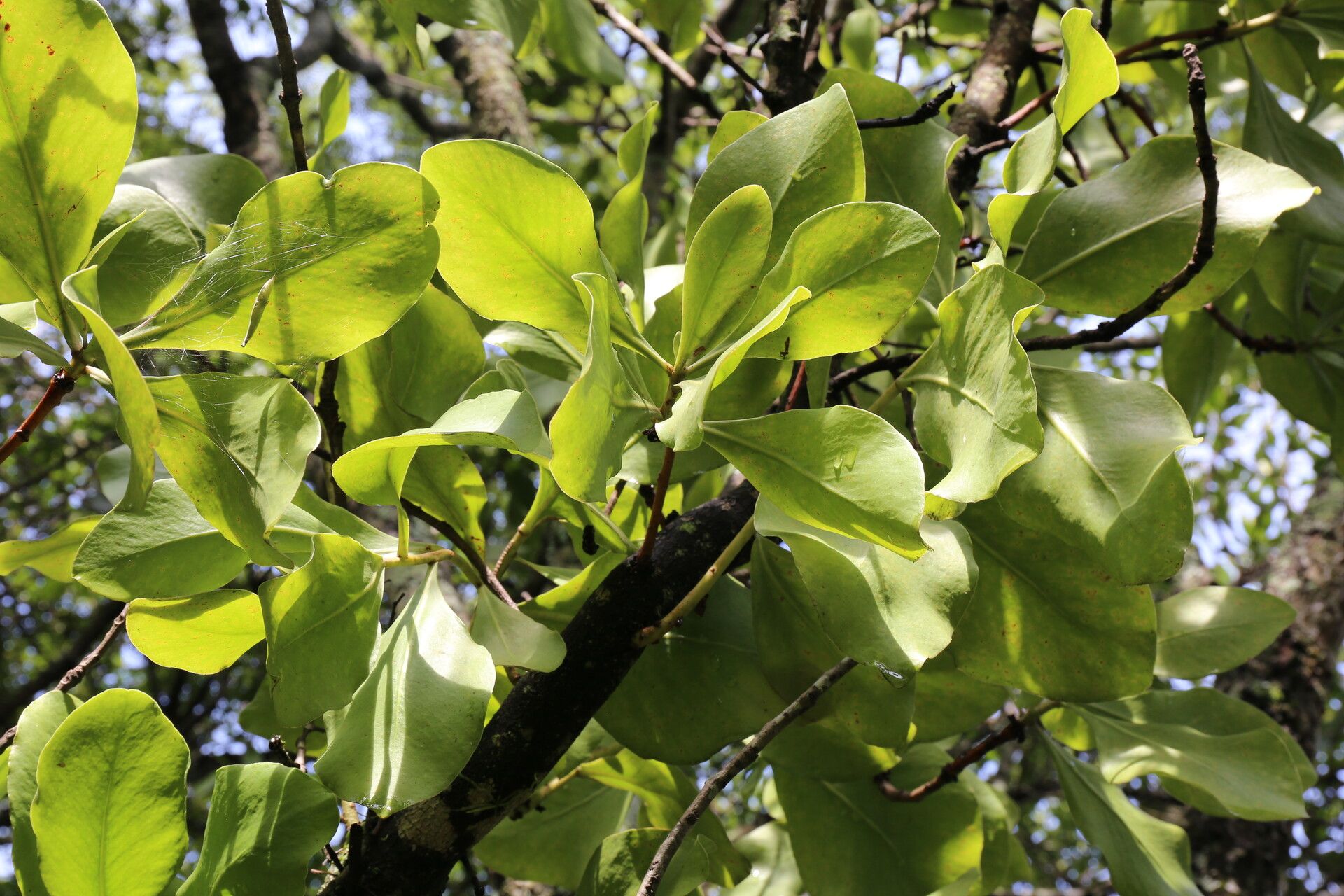
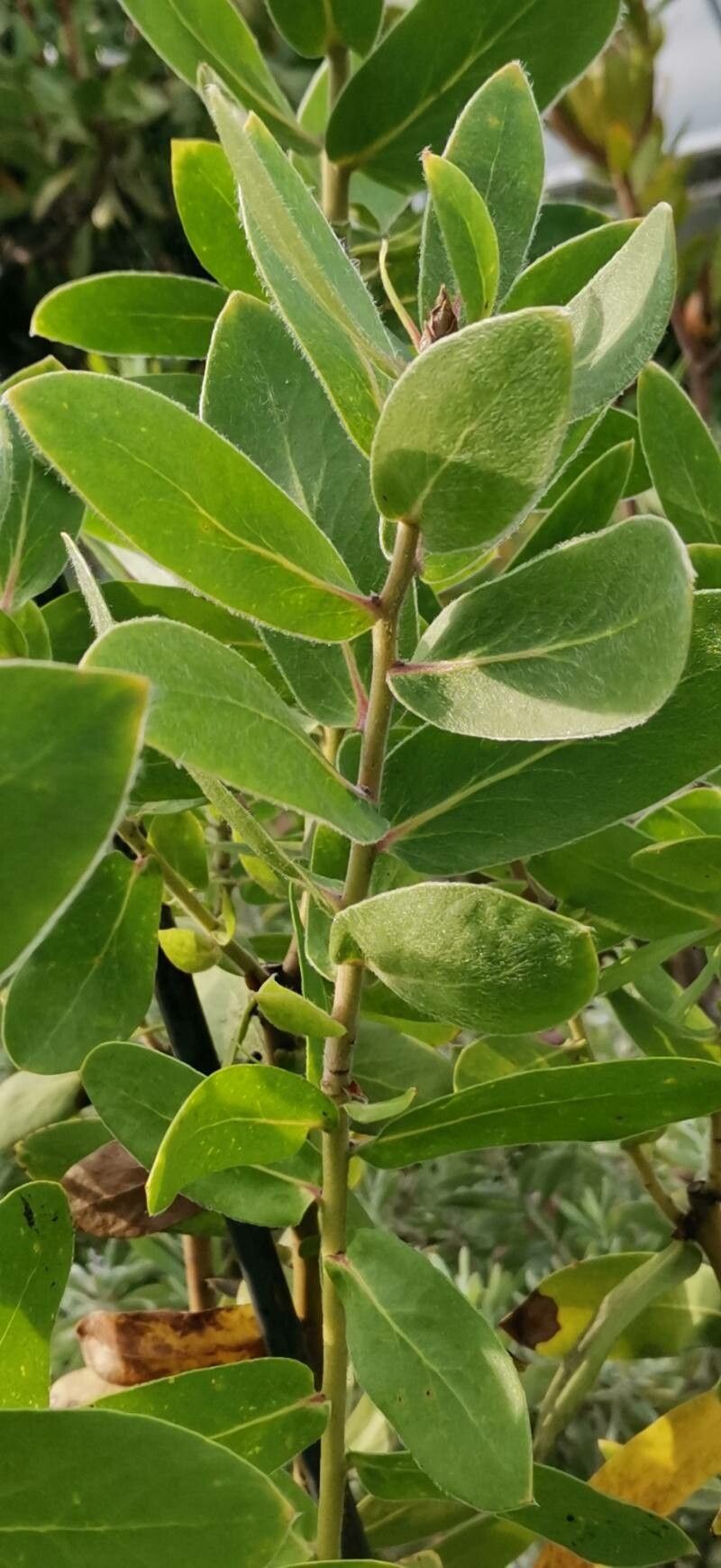
The plant has thick stems that can grow up to 2 meters tall, with dark green leaves that are leathery in texture. The flowers are cone-shaped with pink or white petals surrounding a central cluster of smaller flowers.
The King Protea blooms from late winter through early summer and attracts birds, such as sunbirds, for pollination. It prefers well-drained soil with full sun exposure but can tolerate some shade.
Protea cynaroides holds cultural significance for many indigenous tribes in South Africa, who use it for medicinal purposes or as part of traditional ceremonies. It is also popular among florists worldwide due to its unique appearance and long-lasting blooms.
However, habitat loss caused by urbanization and agriculture has led to this species being listed as vulnerable on the IUCN Red List since 2008. Conservation efforts are underway to protect this iconic species from further decline.
The King protea is highly resistant to disease and typically does not get sick often. As for maintenance, this plant is fairly low-maintenance. When grown outdoors it needs only light watering, and larger plants normally do not require pruning. Smaller plants, however, should be pruned after they finish flowering. King proteat is appropriate for anyone with an outdoor area like a garden or deck and does not demand much gardening experience.
How to keep Protea Cynaroides.
Light
The king protea does best in locations with full sun, though it can persist in places with somewhat lower light. Its natural habitats reflect these conditions. Excessive or insufficient sunlight can limit growth or cause the plant to dry out.
Water
Originating from South Africa's fynbos region, the king protea thrives in a Mediterranean climate and needs watering only once every 1 to 2 weeks. As an evergreen plant, it requires consistent soil moisture to maintain its foliage and robust structure, especially when grown outdoors.
Temperature
King protea performs best in its native habitat at an average temperature range of 20 to 28 ℃ (68 to 82.4 ℉). It can, however, tolerate temperatures from 10 to 38 ℃ (50 to 100.4 ℉) and needs mild winter conditions that remain above freezing. In summer, keep the plant cool and moist to avoid damage to leaves and blooms. In winter, place the plant in a bright, well-ventilated spot, either indoors or outdoors.
Fertilizer
Fertilizing a King protea is best done in early spring as it breaks dormancy. This encourages overall growth and flower development. Nutrient application improves the foliage, stems, and branches, and promotes flowers that are large, vibrant, and long-lasting. It also helps move nutrients from the roots to the blooms and enhances the plant’s health and resistance to disease.
Pruning
Pruning king protea in late spring can significantly enhance its growth and flowering. To do this effectively, remove old flowers, dead wood, and any crossing branches. This improves air circulation, boosts vitality, and reduces the risk of disease. Pruning at the right time aligns with the plant's growth cycle, encouraging a fuller and more attractive shrub structure.
Pot & Repot
When repotting King protea, select a pot 1-2 inches (2.5–5.1 cm) larger that has good drainage. Use a well-draining potting mix. Repot in spring or fall, making sure the root ball sits slightly below the rim of the pot. Water thoroughly after repotting and keep it in a warm spot with indirect sunlight.
Toxicity
The king protea's blooms, nectar, and seeds are exceptionally harmful to people and pets. All parts of this plant can cause skin irritation as well as in the mouth and tongue. Moreover, the bulb is especially harmful to children, so be very careful.
Further reading →
The toxicity and danger assessments provided are for reference only. We do not assure their accuracy, so it's crucial not to depend on them. Seek professional advice when necessary for accurate guidance.
Botanical profile.
- Plant Type
- Shrub
- Life Cycle
- Perennial
- Genus
- Protea
- Family
- Proteaceae
- Hardiness Zone
- 9-12
- Mature Height
- 0.34 m to 2.13 m
- Mature Spread
- 0.91 m to 1.22 m
- Leaf Color
- Green
- Leaf Type
- Evergreen
- Flower Color
- Pink, Red
- Flower Size
- 11.43 cm to 30.48 cm
- Bloom Time
- Early spring, Mid spring, Winter
- Planting Time
- Spring, Autumn
- Harvest Time
- Late spring, Early summer, Mid summer
- Native Area
- South Africa
Other names.
Reader questions.
How should I water my King protea plant?
Watering your King protea doesn't require a specific method - you can use a watering can, hose, or even a cup. It's important to water directly onto the soil, making sure to evenly moisten all areas to support the entire root system. Using filtered water is recommended, as tap water may contain harmful particles. Additionally, it's best to use water that is at or slightly above room temperature, as extreme temperatures can be a shock to the plant. However, overall, your King protea is adaptable to different types of water.
Why do I have to put plant food on my King protea?
Fertilization plays a vital role in maintaining the overall health and well-being of a King protea. When provided with the necessary energy and nutrients, this plant can develop a healthy foliage, strong stems, and branches. Notably, gardeners highly value the flowers of a King protea. Thankfully, fertilization also promotes the growth of large, vibrant, and long-lasting flowers. This happens because the right fertilizer facilitates the transfer of fuel from the plant's roots, through its stems, and to its flowers. Additionally, proper fertilization ensures the plant's overall robustness, making it more capable of defending against diseases.
What are the sunlight requirements for King Protea?
King Protea requires full sun, meaning it needs more than 6 hours of sunlight daily to thrive, but it can also grow in partial sun, which is about 3-6 hours of sunlight. It's important to watch how sunlight moves through your garden to ensure you're choosing spots that provide the right balance of light and shade, as this will greatly influence the plant's happiness and growth.
What is the ideal temperature range for King protea to thrive?
The King protea (Protea cynaroides) thrives in its native growth environment at an optimal temperature range of 20 to 28°C (68 to 82.4°F). This range is considered ideal for the plant to grow and blossom efficiently.
What do I need to do if I give my King protea plant too much or too little water?
Outdoor plants, especially newly planted ones or seedlings, can be prone to lack of watering. It's important to keep watering them enough for the first few months, especially when they are small or just planted. This is because once the roots are established, King protea plants can rely on rain for most of the time. When King protea plants are planted in pots, overwatering becomes more likely. If you accidentally overwater your King protea, you should take immediate action to remedy the situation. First, stop watering the plant right away to minimize the impact of overwatering. Then, consider removing the King protea from its pot to check its roots. If no root rot is found, you can return the plant to its container. However, if you do find signs of root rot, trim any affected roots and apply a fungicide to prevent further damage. Finally, repot the King protea in well-draining soil. On the other hand, underwatering a King protea is usually an easy fix. If you notice the plant's leaves drooping, drying out, and falling off, simply water it more frequently. The leaves will quickly regain their fullness after sufficient watering. Make sure to adjust your watering frequency as soon as you notice signs of underwatering.
When should I fertilize my King protea plant?
To effectively fertilize a King protea, it is recommended to do so in the early spring as the plant transitions from dormancy to flowering. This timing provides the necessary energy for overall growth and flower development. However, fertilizing once during the fall months can also benefit the plant, albeit with a smaller feeding. Some gardeners may choose to fertilize the King protea during planting, but it is not always essential.
What are the essentials for growing King Protea?
The King Protea thrives best in environments that maximize exposure to sunlight, matching its native habitat conditions. However, it's adaptable and can survive with slightly reduced light. Both an overabundance and a lack of sunlight can have adverse effects on the plant, such as stunted growth or drying out. For indoor plants requiring more light, especially in less sunny spots or during winter, using artificial lighting like LED lights can simulate natural sunlight. Indoor plants need varying degrees of artificial light based on their sun exposure needs, with full sun plants requiring 30-50W/sq ft, partial sun 20-30W/sq ft, and full shade plants needing 10-20W/sq ft of light.
Can King protea survive outside its ideal temperature range?
Yes, the King protea can survive outside its ideal temperature range. It can withstand a wider temperature range of 10 to 38°C (50 to 100.4°F). To support its growth during summer, it's important to keep the plant cool and moist to prevent leaf and bloom damage. Meanwhile, in winter, the plant should be kept in a well-ventilated and bright spot, whether indoors or outdoors, with temperatures preferably above freezing to avoid harm.
How many times should I water my King protea plant?
Most outdoor plants can grow well with rainfall, but if your area lacks rain, you should water them every 2 weeks in spring and fall. During summer, you'll need to water more frequently. In winter, when plants grow slower and need less water, water sparingly or not at all. If your King protea is young or newly planted, water it more often to help it establish and grow to be more adaptable and drought tolerant. When it comes to potted plants, there are two ways to determine how often to water your King protea. The first option is to follow a set schedule, like watering once a week or every other week. However, this may not work well as it doesn't consider the specific conditions of your plant's environment. Another approach is to base the watering frequency on soil moisture. It's generally best to wait until the top two to four inches of soil in the pots have completely dried out before watering again. Keep in mind that during summer, your plant will have higher water needs, so a set schedule may not be sufficient.
When is it a bad idea to give my King protea plant fertilizer?
During the winter, King protea plants are in a dormant phase, so fertilizing is not necessary. Fertilizing during this time can actually lead to negative effects from overfertilization. The best times to feed a King protea are in early spring and fall. Therefore, for most of spring and summer, the plant does not require fertilizer. It is also recommended to avoid fertilizing if the plant is exposed to extremely hot or dry conditions.
What are the common symptoms of light deficiency in King Protea?
Common symptoms of light deficiency in King Protea include smaller new leaves compared to mature ones, a leggy or sparse appearance due to long spaces between leaves or stems, faster leaf drop as the plant conserves resources, slowed or halted growth as the plant enters survival mode, lighter-colored new leaves indicating a lack of chlorophyll, and other symptoms like chlorosis, sunscald, leaf curling, wilting, and leaf scorching. These indicate either too much or too little light, affecting the plant's ability to photosynthesize properly.
How do you care for King protea in winter?
During winter, protecting King protea from cold temperatures is vital since it is extremely heat-loving. The plant should be brought indoors in autumn and placed near a bright window, distant enough from heaters to avoid excessive heat. Maintaining temperatures above 20°C during winter benefits the plant's growth, and it is crucial to ensure the temperature does not approach 0°C to prevent damage.