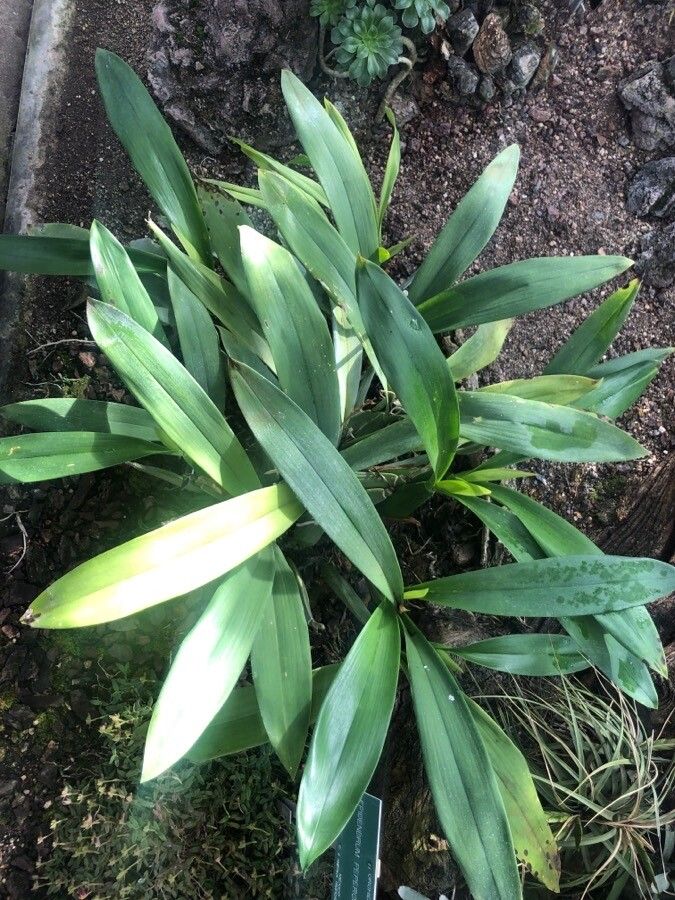
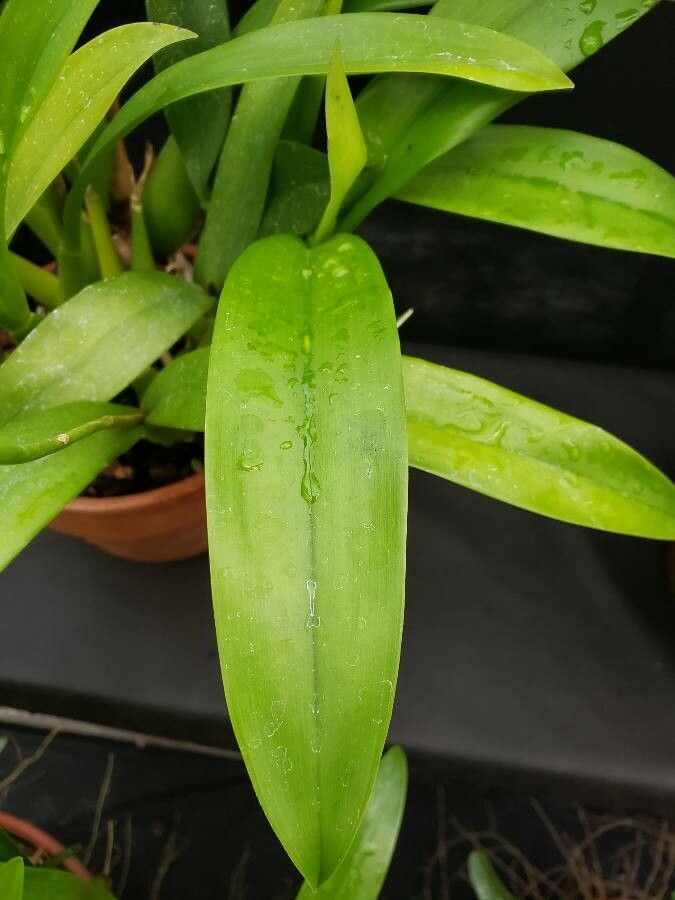
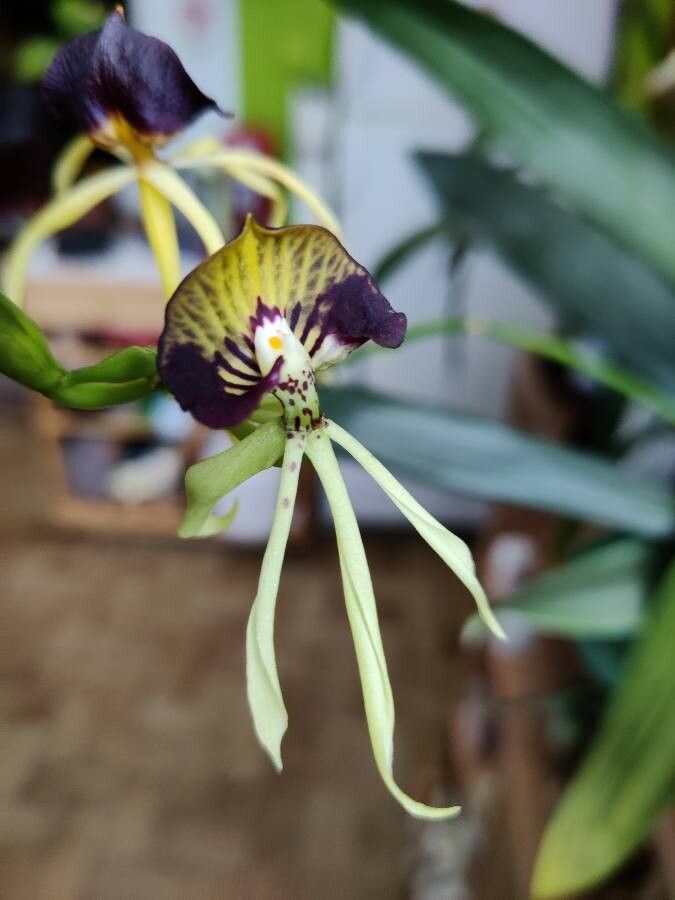
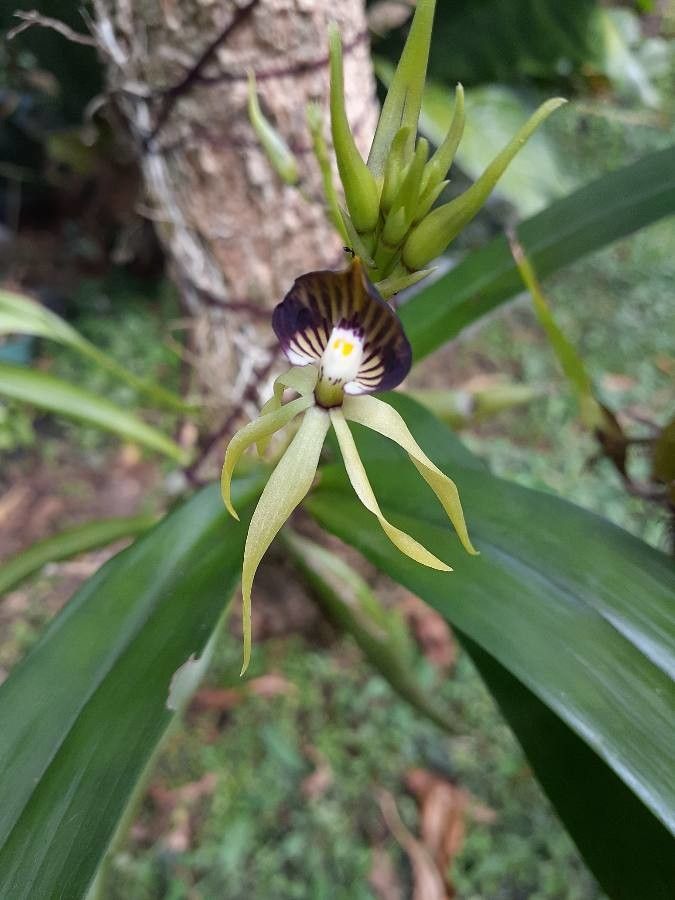
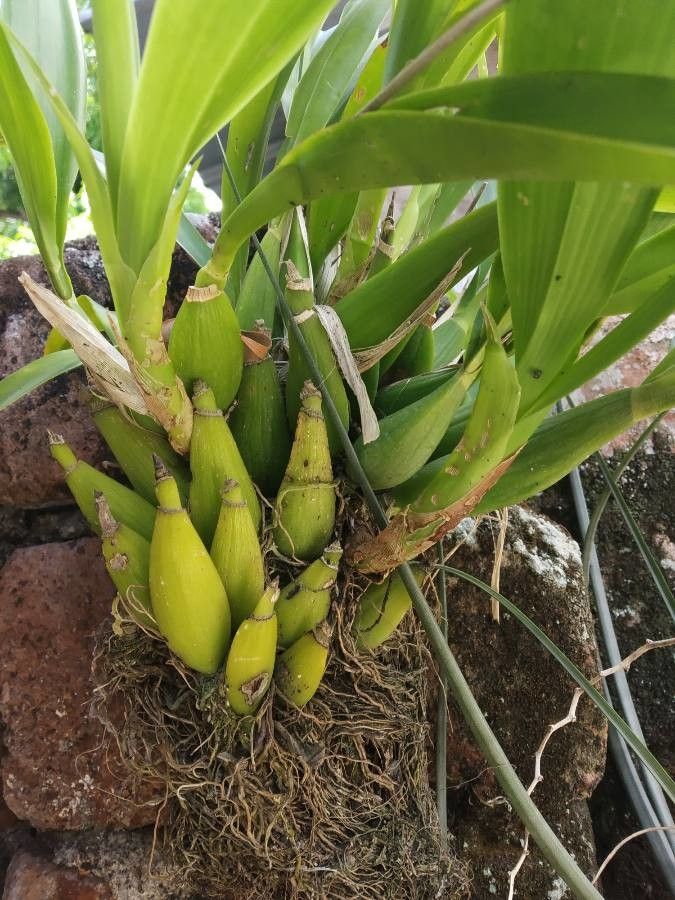
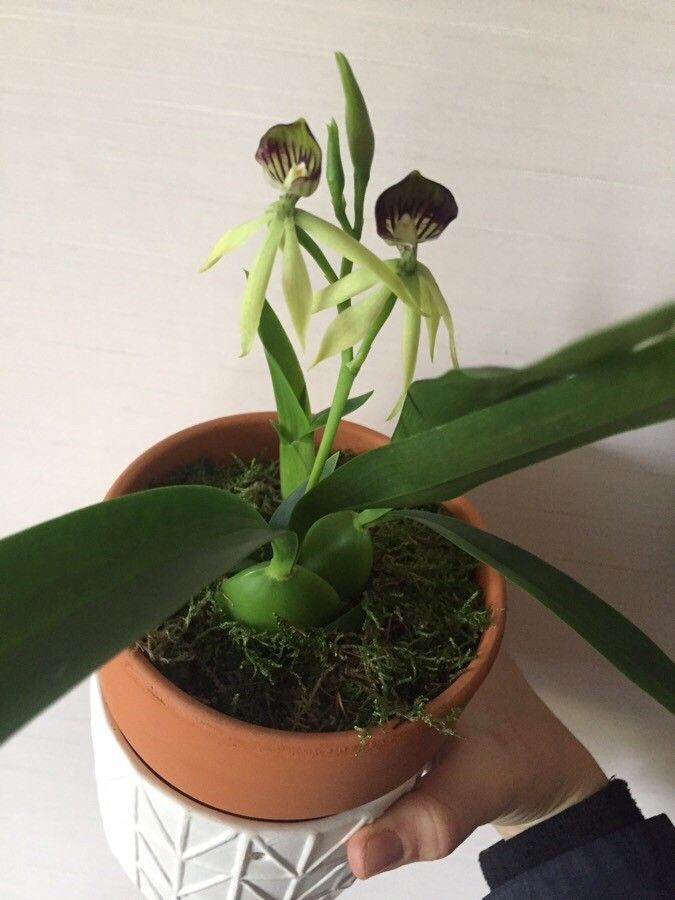
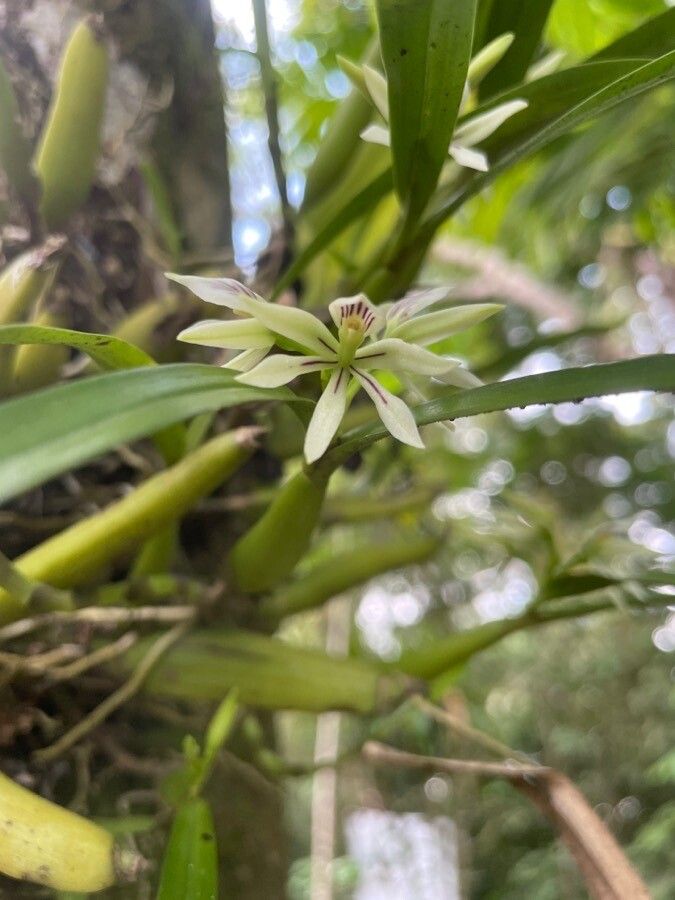
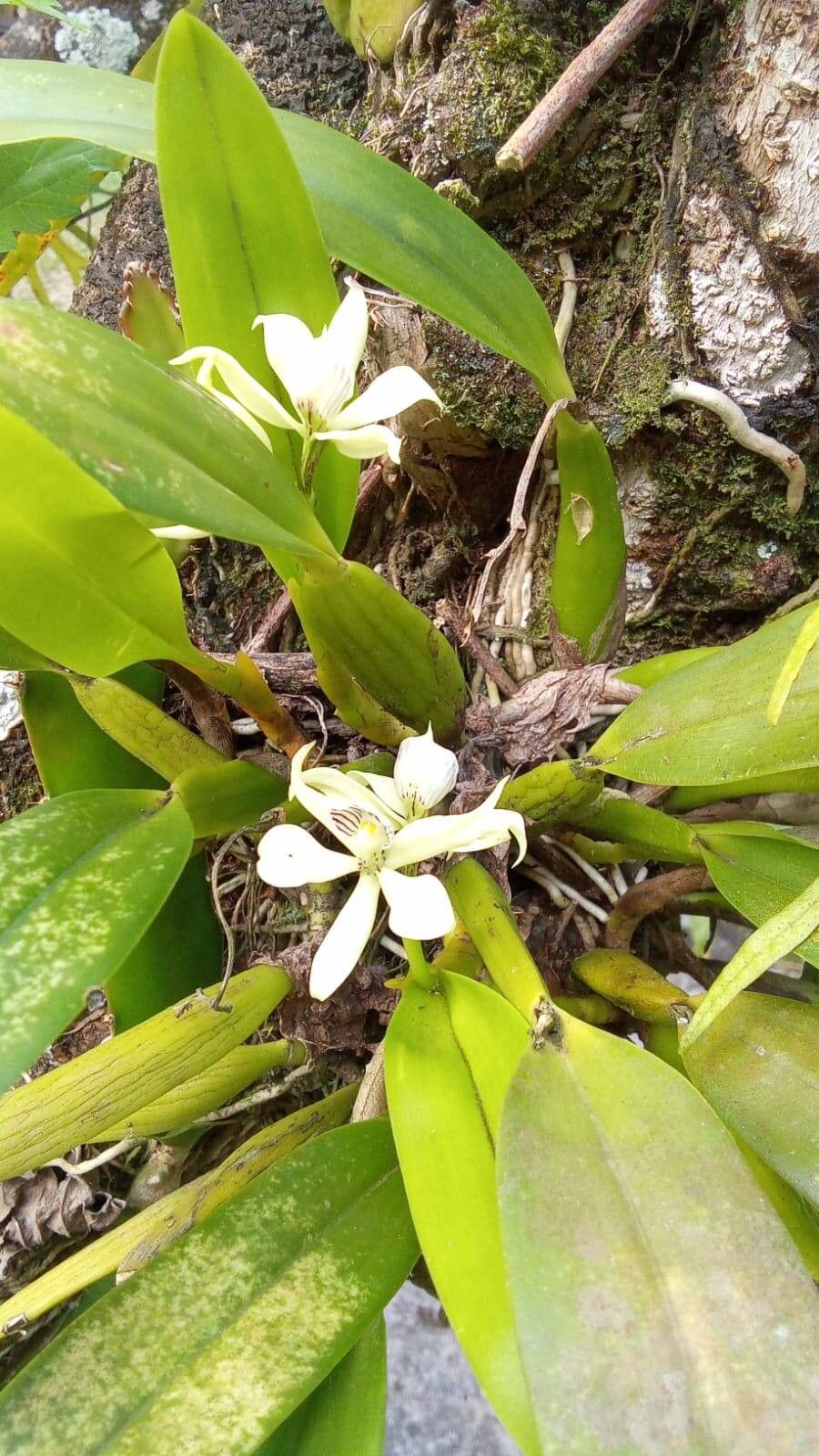
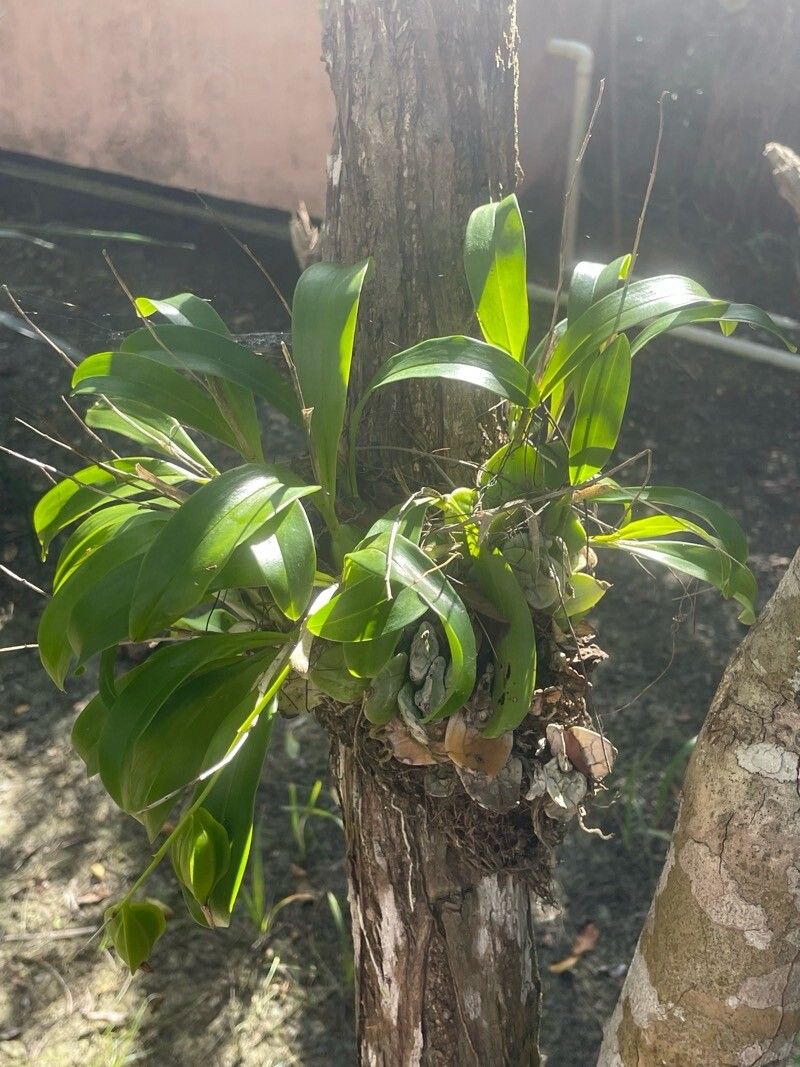
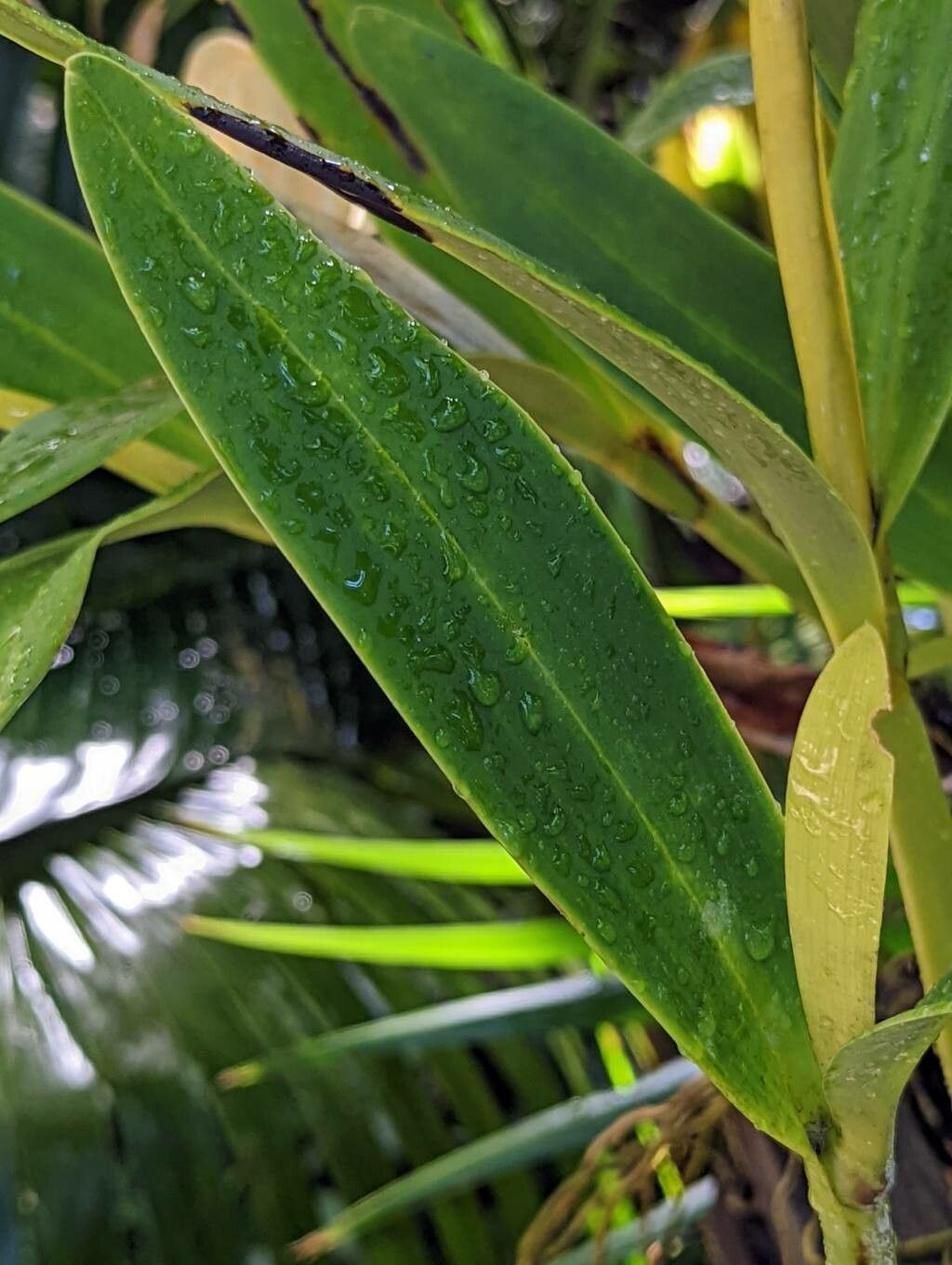
Prosthechea cochleata, commonly referred to as the clamshell orchid or cockleshell orchid, is an epiphytic, sympodial New World orchid native to Central America, the West Indies, Colombia, Venezuela, and southern Florida. It is also known as the black orchid in Belize, where it is the national flower.Each oblong discoid pseudobulb bears one or two linear nonsucculent leaves. The flowers are unusual in that though the labellum is usually below the column in the orchids, in the members of Prosthechea the labellum forms a "hood" over the column. This makes the flower effectively upside down, or non-resupinate. Whereas the species usually has one anther, Prosthechea cochleata var. triandra is an endangered variety that has three anthers and is autogamous, allowing its existence in Florida where no appropriate pollinators appear to be present.P. cochleata is common in cultivation, and is valued for its uniquely shaped and long-lasting flowers on continually growing racemes. Several hybrids have been produced with this species, including the popular Prosthechea Green Hornet. (still often listed as Encyclia Green Hornet)
The Clamshell Orchid, scientifically known as Prosthechea cochleata, earns its common name from the shape of its blooms, which closely resemble clamshells. The genus name, Prosthechea, is derived from a Greek word meaning "appendage," referring to a small appendage-like tissue located on the back of the flower's reproductive column. The species name, cochleata, also has Greek origins and translates to "shell."
The Clamshell orchid is generally resistant to disease and is affected by relatively few insect pests. Its care is considered difficult because it needs high humidity while remaining well ventilated and kept in an environment with few harmful pathogens. Too much watering can cause root rot. Although anyone can grow the Clamshell orchid, keeping it healthy and getting it to bloom again requires more cultivation experience.
How to keep Prosthechea Cochleata.
Light
The clamshell orchid grows best with moderate sunlight. It is naturally adaptable, tolerating both full sun and deep shade as a result of its native habitat. Excessive sun can cause leaf burn, while too little light may prevent flowering.
Water
The clamshell orchid thrives in high humidity and consistent moisture, flourishing in conditions similar to its rainforest origins. To care for this plant, water it weekly to prevent over-saturation and mist it regularly to promote optimal growth and flowering. As an epiphytic orchid, it prefers moist air.
Temperature
The clamshell orchid is a tropical species that needs temperatures of 68 to 105 ℉ (20 to 41 ℃) for optimal growth. It is found in a broad range of habitats, including lowlands, mountainous areas, and even warmer coastal regions. During hot summer months, the plant can benefit from cooling by misting or by providing shade. In cooler conditions, it is important to avoid exposing the plant to temperatures below 50 ℉ (10 ℃), as it can be vulnerable to damage or disease.
Fertilizer
Proper fertilization is vital for the Clamshell orchid's health and appearance. Fertilize the Clamshell orchid in summer, repeating the treatment monthly throughout the season. Nutrients supply the energy for growth and help maintain the plant's structures. Fertilization improves the Clamshell orchid's flower display, ensuring the best blooms.
Pruning
The Clamshell orchid flourishes when carefully pruned, ideally between late winter and early spring. To encourage healthy growth and vibrant blooms, remove any dead pseudobulbs and old stems. Be sure to use sterilized tools to prevent the spread of disease. Regular pruning not only boosts the plant's vitality but also helps maintain its shape.
Pot & Repot
When repotting Clamshell orchid, select a slightly larger pot with good drainage, preferably a clear orchid pot. Use a well-draining, orchid-specific mix that includes bark or moss. Gently clean the roots and trim any that are dead or rotting. Repot after flowering, typically in spring or fall, water thoroughly, and place it in bright, indirect light. Avoid disturbing the roots once repotted.
Botanical profile.
- Plant Type
- Herb
- Life Cycle
- Perennial
- Genus
- Prosthechea
- Family
- Orchidaceae
- Hardiness Zone
- 10-13
- Mature Height
- 30 cm to 46 cm
- Mature Spread
- 15 cm
- Leaf Color
- Green
- Leaf Type
- Evergreen
- Flower Color
- Yellow, Purple
- Flower Size
- 7.62 cm to 10.16 cm
- Bloom Time
- Late spring, Early summer, Mid summer
- Planting Time
- Spring
- Harvest Time
- Summer
- Native Area
- Colombia, Bahamas, Belize, Cuba, Honduras, Mexico, Guatemala, Venezuela, Guyana, El Salvador, Nicaragua, Costa Rica, Panama, Jamaica
Other names.
Reader questions.
How should I water my Clamshell orchid the best way?
The way you water your Clamshell orchid depends on its growth phase. During active growth, water the soil and occasionally water overhead to allow the plant to absorb moisture through its leaves in warm weather. In winter or cool, wet weather, stick to watering the soil directly. Signs that your orchid needs water include thin, dry roots and leaves or discoloration. If the orchid receives too much water, it will appear mushy and limp. Use a pot with good drainage and a well-draining potting mix. During the growing season, water the orchid multiple times per week, ensuring that each watering drains quickly. Adjust the amount of water based on the pot size, with larger pots requiring less frequent watering. Use rainwater or distilled water that matches the air temperature.
Why is it important to fertilize my Clamshell orchid?
Fertilizer and soil nutrients are crucial for your Clamshell orchid's healthy growth. Plants in general use these nutrients to develop new plant material and keep their existing components in good condition. In the case of the Clamshell orchid, fertilization is necessary to enhance the beauty of its flowers. Since the flowers are the main attraction of this plant, most gardeners strive to ensure they appear in their best form. Fertilizing is one of the most effective methods to help your Clamshell orchid produce exceptional blooms.
What are the sunlight requirements for Clamshell Orchid (Prosthechea cochleata)?
Clamshell Orchid requires partial sun, about 3-6 hours of sunlight, but can also thrive in full sun or full shade, which means more than 6 hours of sunlight. It's adaptable to both sunny and shady conditions, reflecting its natural habitat. However, it's important to ensure that the location provides a balance of light and shade to prevent issues like leaf burn from too much sun or reduced flowering from insufficient light. Observing the movement of sunlight through your garden can help in choosing the best spots for planting.
What are the optimal temperature conditions for growing Clamshell Orchids?
Clamshell Orchid (Prosthechea cochleata) thrives in tropical environments and requires temperatures between 68°F to 105°F (20°C to 41°C) for optimal growth. This orchid is adaptable to a wide range of habitats, including lowlands, mountains, and coastal areas. It is important to protect the plant from temperatures below 50°F (10°C) to prevent damage or disease. During winter, if temperatures drop below 41°F (5°C), it's advised to bring the orchid indoors, ensuring the temperature remains above 68°F (20°C) and it gets ample sunlight, ideally near a south-facing window. Maintaining humidity through regular misting or a humidifier is also beneficial, especially if the orchid needs to overwinter indoors.
What should I do if I give my Clamshell orchid too much water or too little water?
One common mistake that can kill a Clamshell orchid is leaving it in overly moist soil for too long. While these plants do need regular watering when they are actively growing, they also require a well-draining growing medium. If the plant is overwatered, it will become mushy and develop root rot. In this case, you should use sterilized pruning shears to remove any rotted roots and then repot the orchid in a container with proper drainage and fast-draining potting mix. However, Clamshell orchids do not respond well to excessive repotting, so it is important to find the right balance with watering. If the orchid is underwatered, it will start to shrivel and feel dry to the touch. This indicates that the soil is drying out too quickly, so you should increase the frequency of watering.
When should I fertilize my Clamshell orchid?
The Clamshell orchid has two main phases in a year. The first phase is the dormant phase, which occurs during winter and involves minimal new growth. The second phase is the active growth phase, happening in spring and fall, when fertilization is most important for your Clamshell orchid. It is recommended to start fertilizing your orchid in the spring and continue doing so once a month until the end of summer. As fall approaches, you can gradually decrease the frequency of fertilization.
How can artificial lighting benefit indoor Clamshell Orchid plants?
Artificial lighting is crucial for the Clamshell Orchid's growth when natural sunlight is inadequate, especially during winter or in spaces that don't receive enough sunlight. LED lights are recommended for their ability to provide specific wavelengths needed for plant growth. Full sun plants require 30-50W/sq ft, partial sun plants 20-30W/sq ft, and full shade plants 10-20W/sq ft of light. The light source should be placed 12-36 inches above the plant and kept on for 8-12 hours per day to mimic natural daylight hours, promoting healthier, faster growth.
How should Clamshell Orchids be cared for in low temperature conditions?
In low temperature conditions, Clamshell Orchid requires special care as it is not tolerant to cold weather, thriving best above 68°F (20°C). During winter months, particular attention should be given to keep the orchid above 41°F (5°C). Exposure to temperatures below 34°F (1°C) can lead to extensive necrosis, wilting, and drooping of the leaves. To protect the orchid from cold damage, any frostbitten areas should be trimmed off and the plant should be moved indoors to a warm environment. Placing the orchid near a south-facing window ensures it receives sufficient sunlight. Moreover, avoiding placement near heaters or air conditioning vents will help prevent air dryness.
How often should I give water to my Clamshell orchid?
During the spring and summer months, when the Clamshell orchid is actively growing, you should plan to water it once or twice a week. If the weather is hot and dry for long periods, you may need to increase the watering frequency to three times per week or even more. During winter, you still need to water the orchid, but not as much. Two to three times per month should be sufficient to keep the orchid alive during the coldest months. However, if you keep the orchid indoors during winter, keep in mind that indoor locations can cause the soil to dry out faster than usual. This means you might need to increase the number of monthly waterings. In the fall, gradually reduce the watering frequency from multiple times per week in the summer to the reduced winter schedule.
When is it not a good time to add fertilizer to my Clamshell orchid?
To support the growth of Clamshell orchids while avoiding root burn, it is important to provide extra nutrients during the active growth period in spring and summer. However, during the fall and winter when the plant enters its dormancy stage, fertilization should be discontinued.
What are the symptoms of insufficient or excessive sunlight in Clamshell Orchid?
Symptoms of insufficient sunlight in Clamshell Orchid include lighter-colored new leaves, indicating a lack of chlorophyll and nutrients, potential impacts on future flowering and fruiting, slower or no new growth as the plant enters survival mode, and symptoms of excessive sunlight include chlorosis (leaves turning yellow), sunscald (damage from intense sunlight), leaf curling (to reduce sunlight exposure), wilting (due to water loss from transpiration), and leaf scorching (brown or crispy leaf edges from too much sunlight). These signs help in diagnosing and addressing sunlight-related issues in Clamshell Orchid.
What steps should be taken to protect Clamshell Orchids from high temperature?
During the summer, Clamshell Orchids should be sheltered from temperatures exceeding 105°F (41°C). If temperatures rise above 113°F (45°C), the orchid's growth halts, leaves wilt, and the plant becomes more prone to root rot and sunburn. To mitigate heat stress, trim away sunburned or dried parts and relocate the plant to a shaded area, particularly during the midday and afternoon sun. It's also crucial to water the plant in the morning and evening to maintain both the plant and its environment's moisture levels. Creating a consistent moisture atmosphere helps the orchid cope with high temperatures.