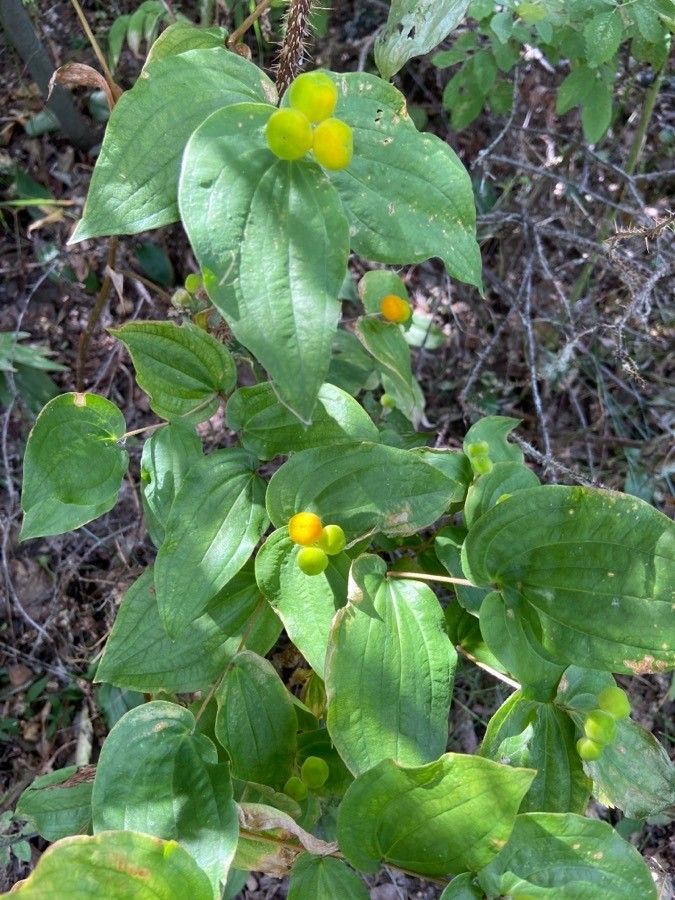
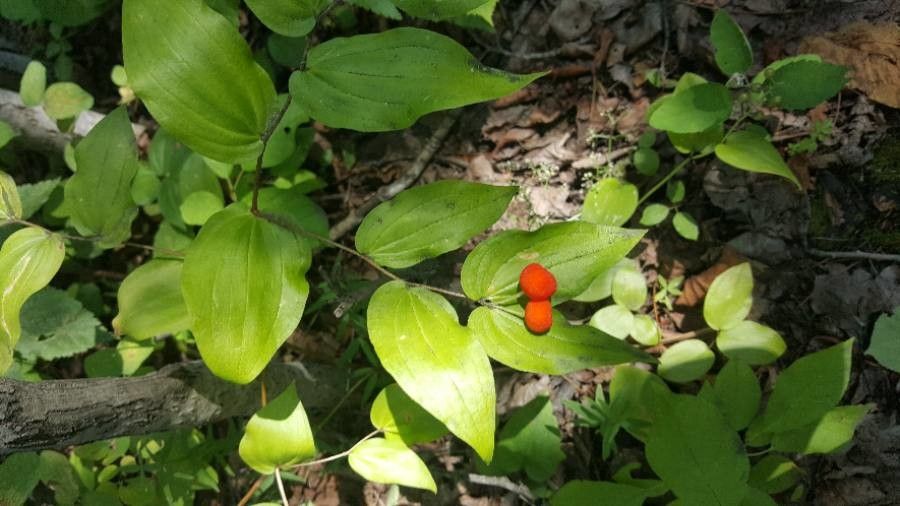
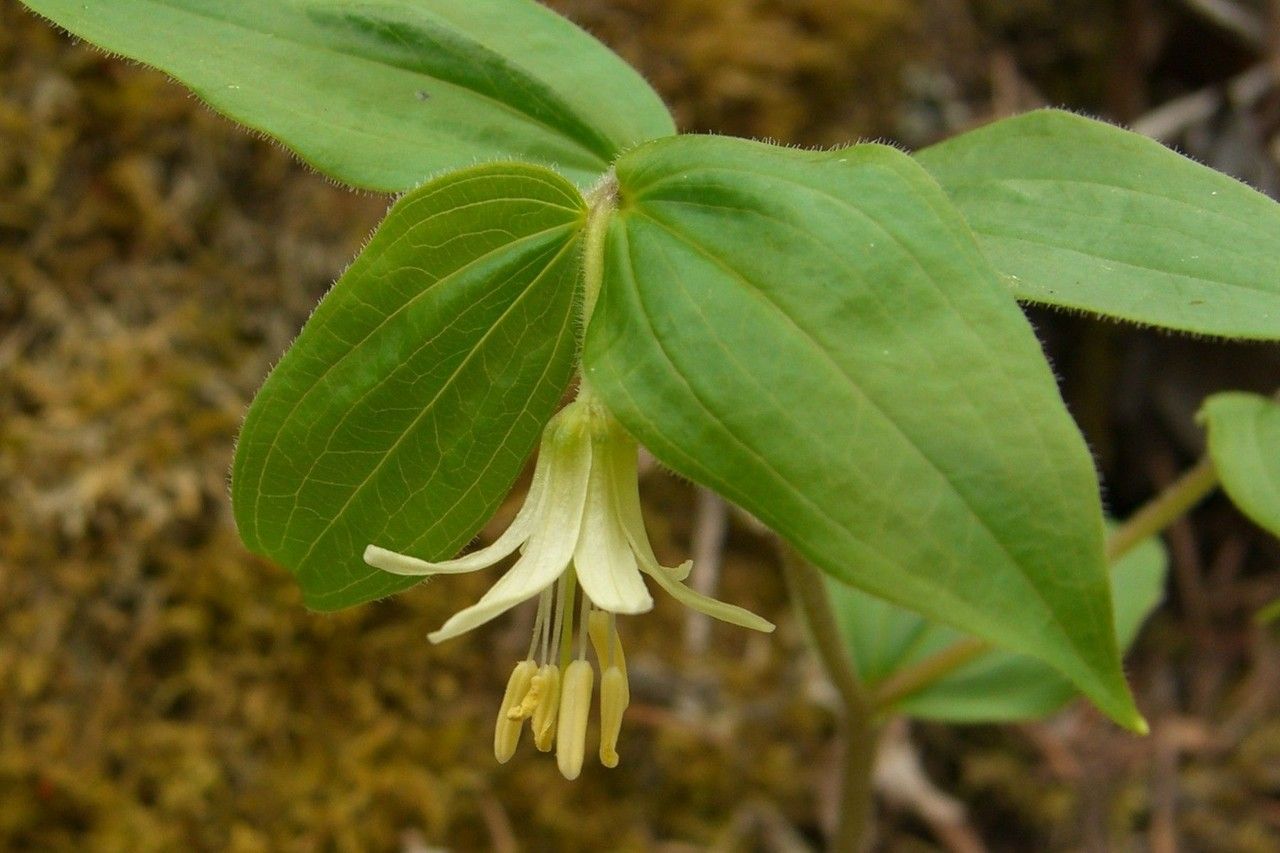
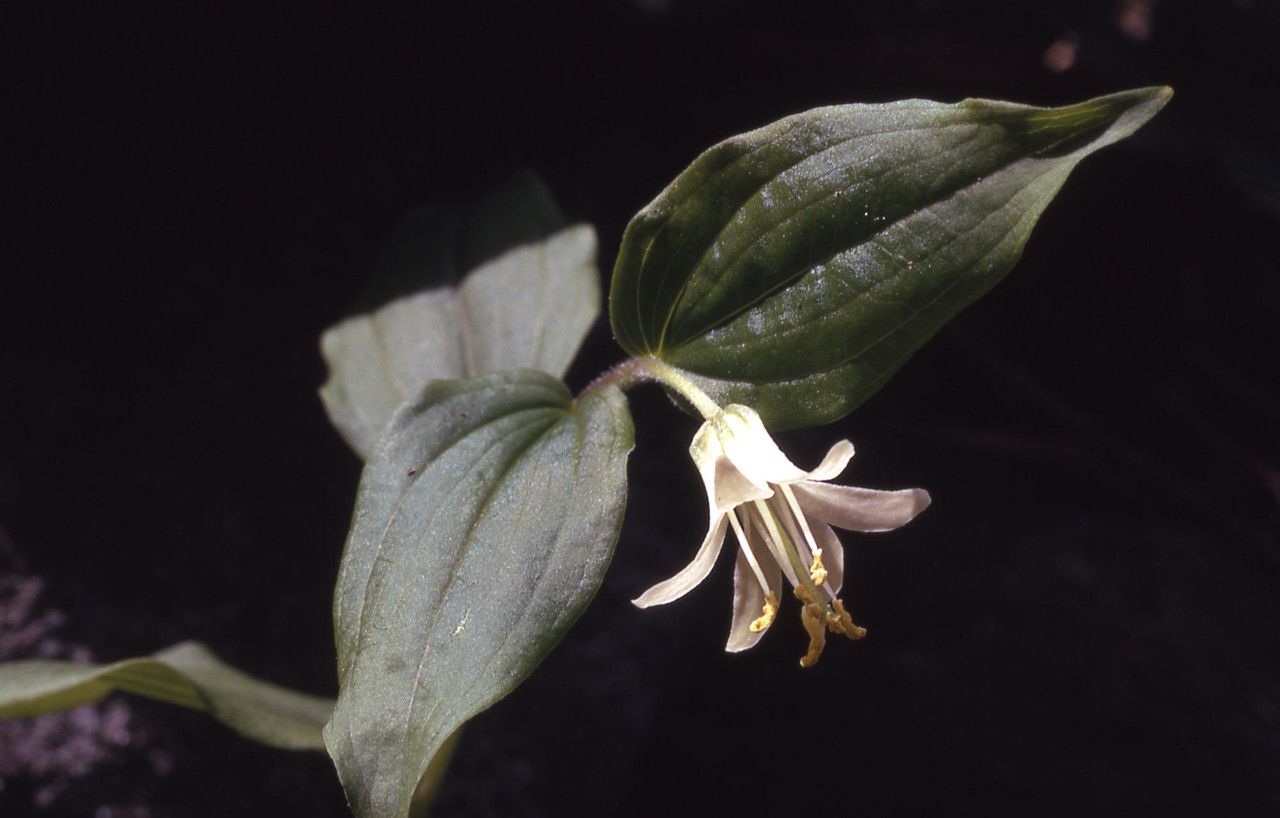
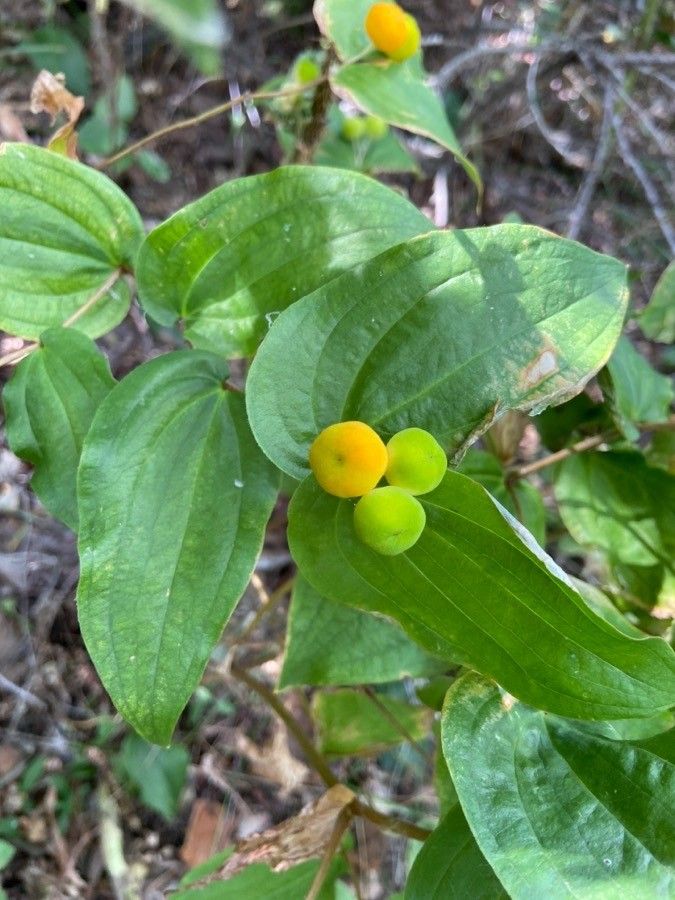
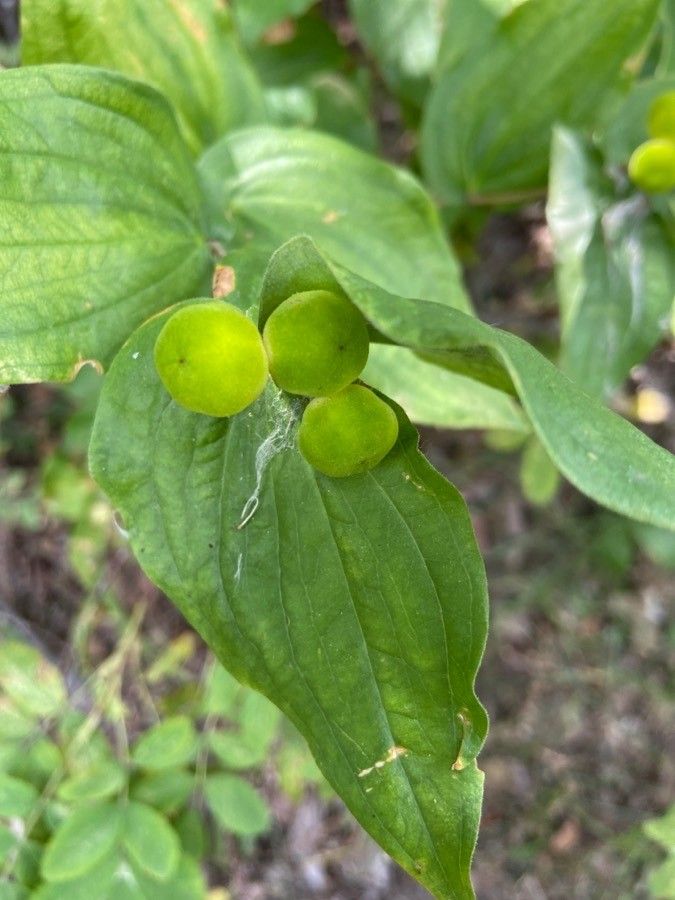
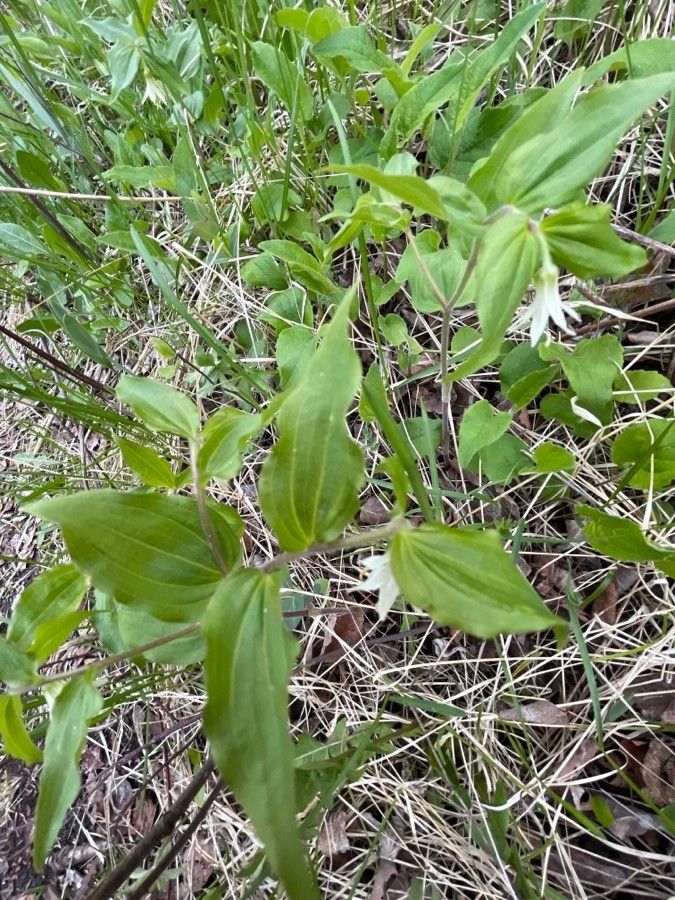
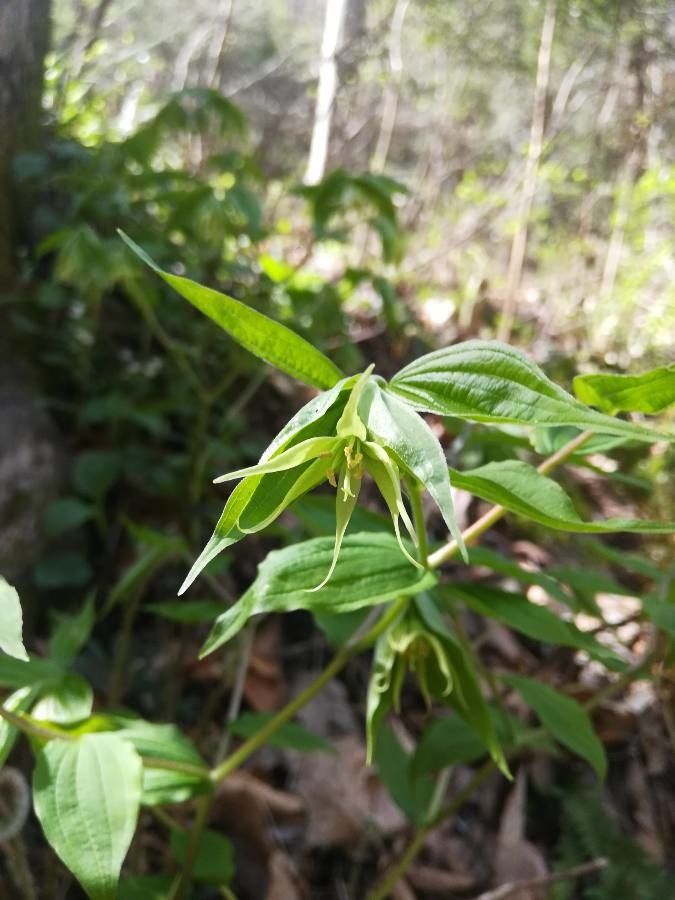
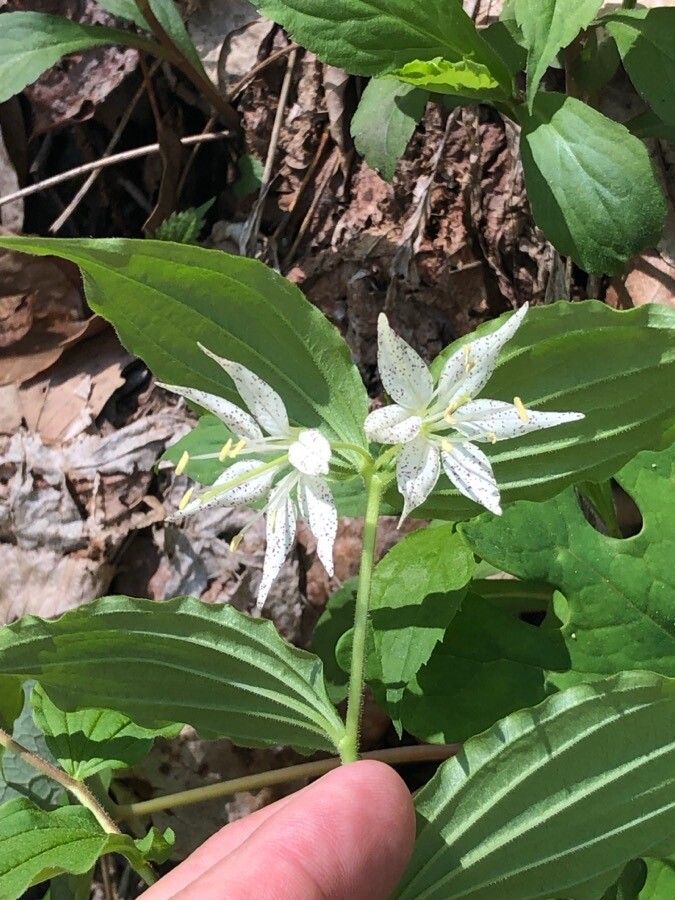
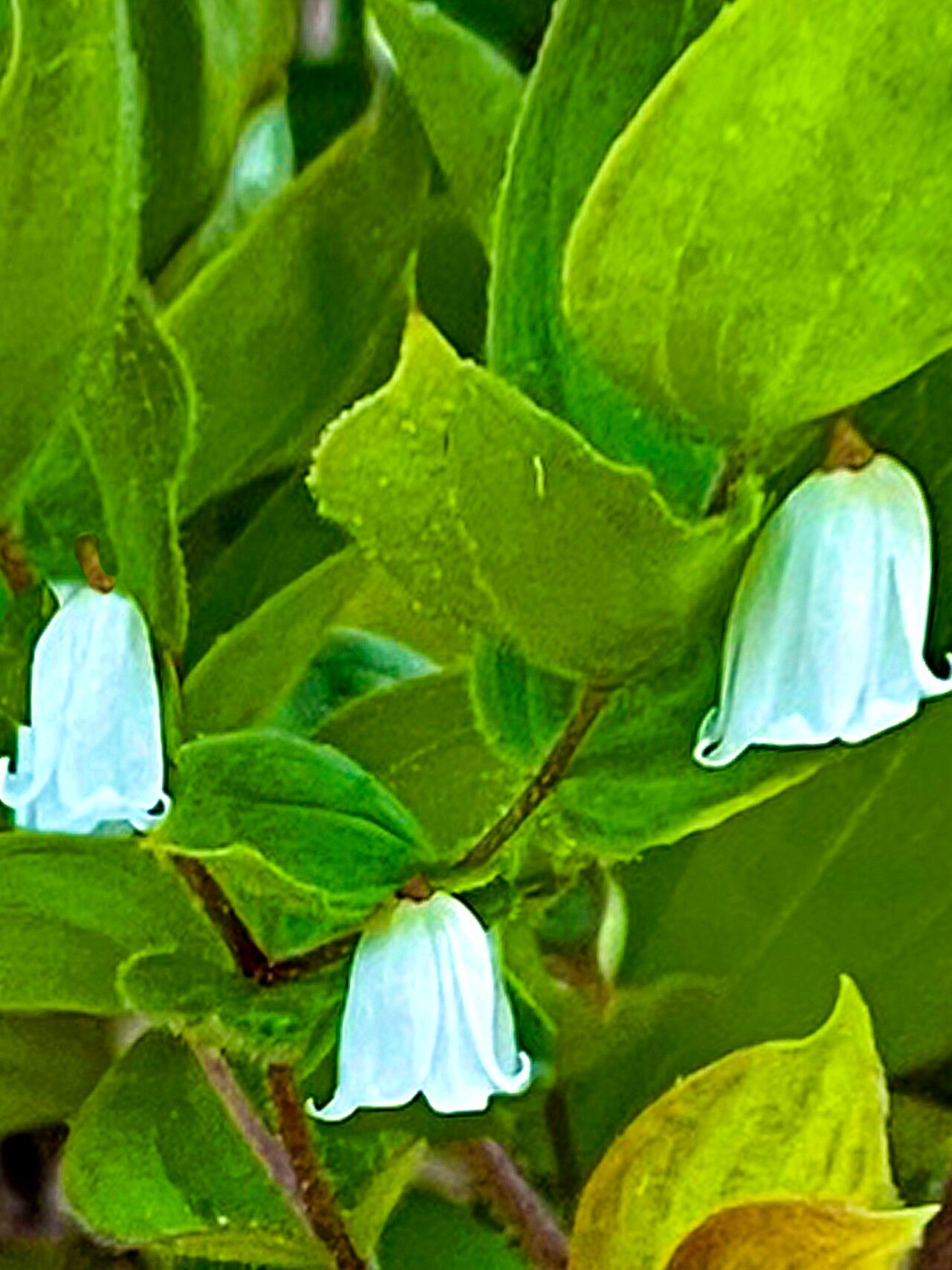
Prosartes trachycarpa, the roughfruit fairybells, rough-fruited fairybells or rough-fruited mandarin, is a North American species of plants in the lily family. The species is widespread, known from British Columbia to Ontario and south to Arizona and New Mexico. One isolated population was reported from Isle Royale in Lake Superior.The flowers are delicate and hang down. The berry is larger than a Saskatoon, pincherry or chokecherry, about the size of a grocery store cherry or small grape. The rough-fruited fairybell can be found in the same locale as other native fruits such as Saskatoons and chokecherries. This perennial is 30 centimeters (12 in) to 60 centimeters (24 in) in height. The leaves alternate and are about 3 centimeters (1.2 in) to 8 centimeters (3.1 in) Berries begin yellow, then orange and when fully ripe are red. The surface of the fruit feels fuzzy and velvety.The images of the rough-fruited fairy bell here were photographed as one was climbing up the riverbank of the South Saskatchewan River, south of Saskatoon. The first nations ate fairybells, and a previous name was dog feet.The specimen shown in the photograph, Prosartes trachycarpa (rough-fruited fairybell) was found in western Canada. The species is listed amongst plants found in the Prince Albert National Park and Riding Mountain National Park and are considered a common range plant of northern Saskatchewan.
Roughfruit fairybells has strong resistance to disease and is generally not susceptible to illnesses. That said, it can be affected by pests and diseases present in its surroundings. These problems are usually mild. Regarding care, this plant needs moderate maintenance. It should be pruned regularly to preserve its appearance and support healthy growth. Fertilizing can also encourage flowering. Roughfruit fairybells is appropriate for anyone with outdoor space, like a garden or patio, and does not demand extensive care experience. It may need more attention when grown indoors.
How to keep Prosartes Trachycarpa.
Light
Roughfruit fairybells is native to habitats like forest understories or rocky areas, where it occurs in natural shade. It prefers partial sun but can tolerate full sun or full shade, showing its versatile, hardy character.
Temperature
Roughfruit fairybells can tolerate a broad range of temperatures, but its distribution can still be constrained by different combinations of moisture and heat. It performs best in warm summer climates with sufficient rainfall or regular watering. Extended periods of cloudy, rainy weather or prolonged high temperatures raise the risk of Roughfruit fairybells dying. In winter, providing proper protection from cold can increase the plant's survival rate.
Fertilizer
Applying fertilizer once in spring is generally enough for Roughfruit fairybells, though several feedings will maximize growth. Feed them once every month to a month and a half. Fertilization improves the leaves' appearance and function, encouraging even color and a healthy texture. It also promotes root development and nutrient uptake, supporting the plant's long-term health.
Pruning
Roughfruit fairybells are known for their drooping, bell-shaped flowers and rough-textured fruit. Pruning in early spring is crucial to remove dead branches, improve air circulation, and promote growth. This practice leads to healthier blooms, helps manage the plant's size and shape, and aligns with its growth cycle.
Botanical profile.
- Plant Type
- Herb
- Life Cycle
- Perennial
- Genus
- Prosartes
- Family
- Liliaceae
- Hardiness Zone
- 3-7
- Mature Height
- 30 cm to 61 cm
- Mature Spread
- 20 cm to 40 cm
- Leaf Color
- Green
- Leaf Type
- Deciduous
- Flower Color
- White
- Flower Size
- 1.02 cm to 2.03 cm
- Bloom Time
- Mid spring, Late spring
- Planting Time
- Spring, Summer
- Harvest Time
- Mid summer, Late summer, Early fall
Other names.