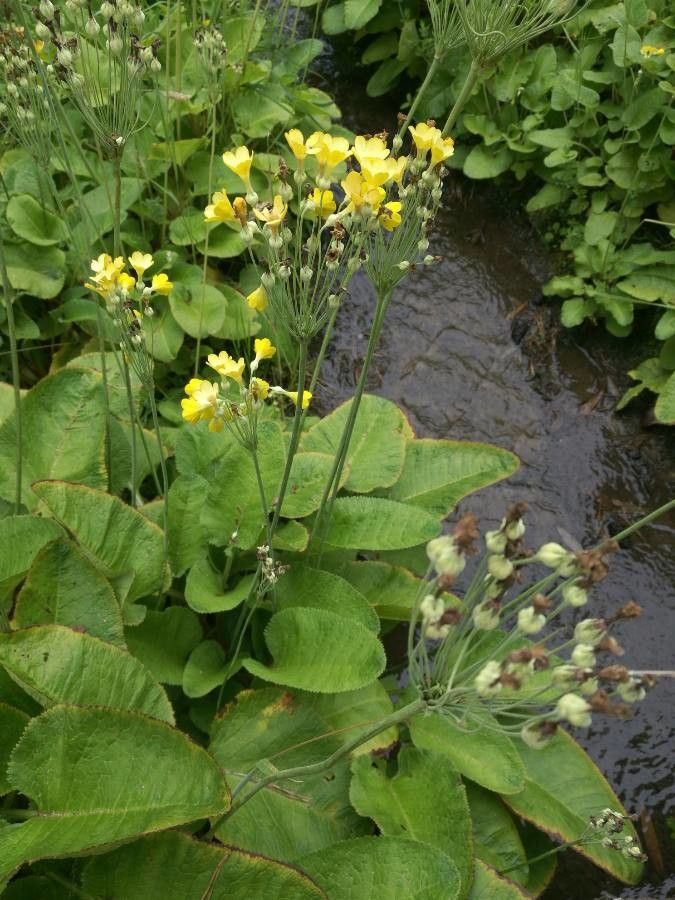
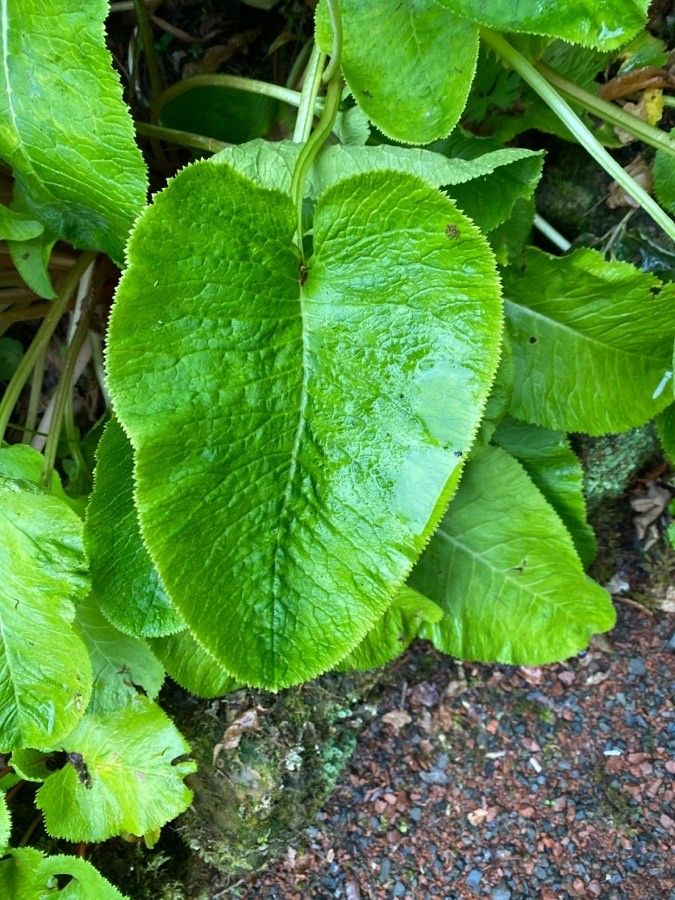
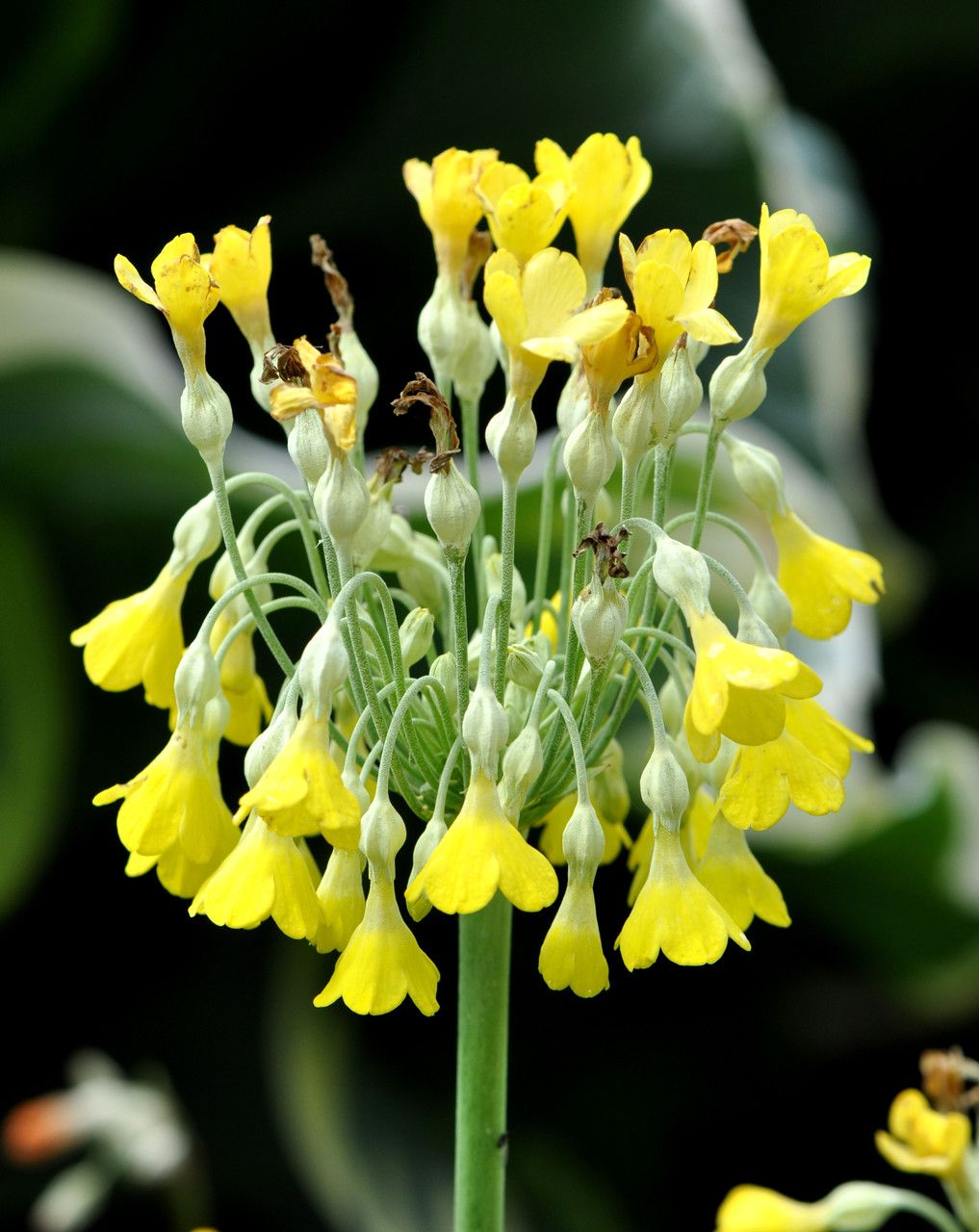
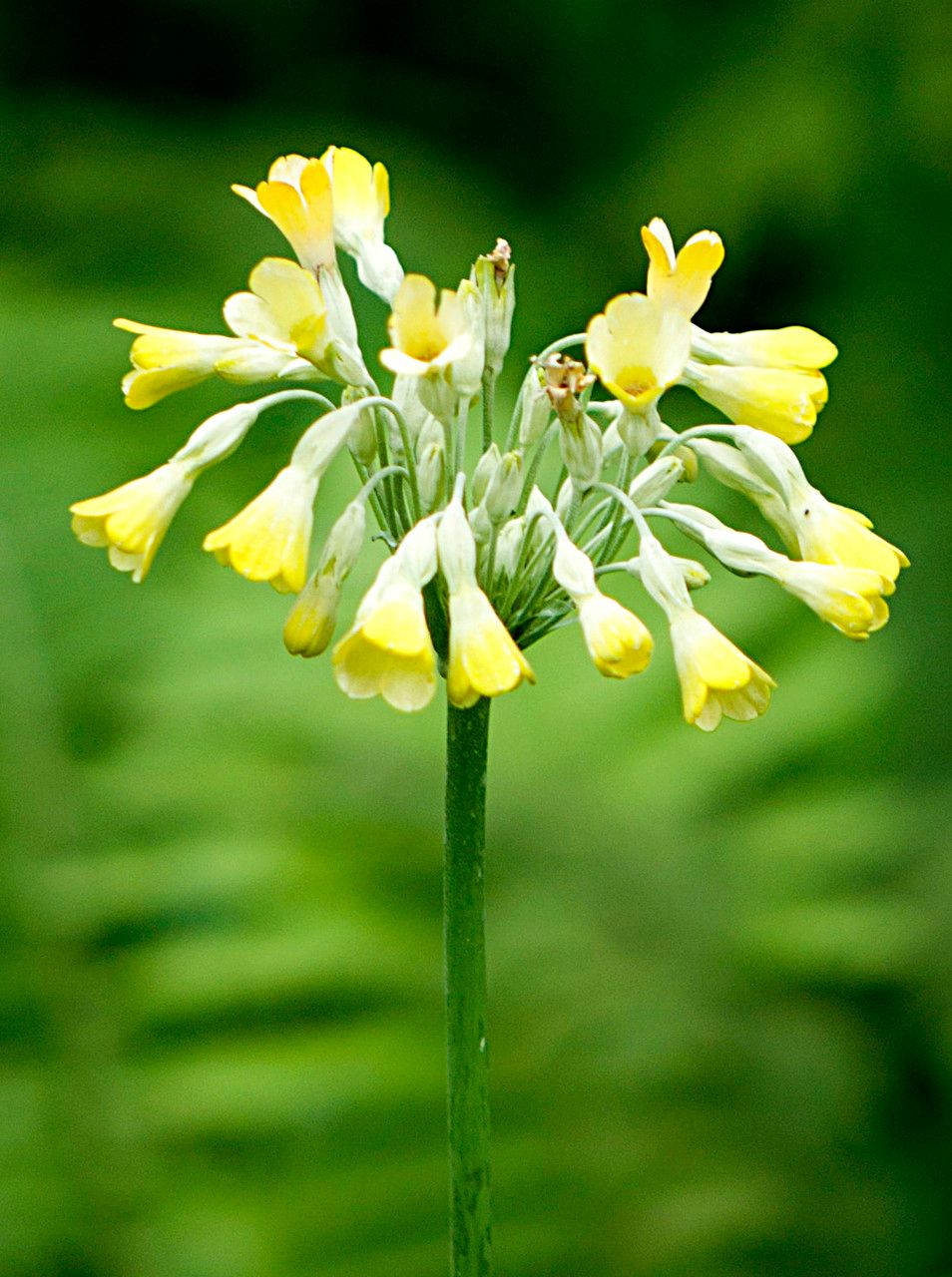
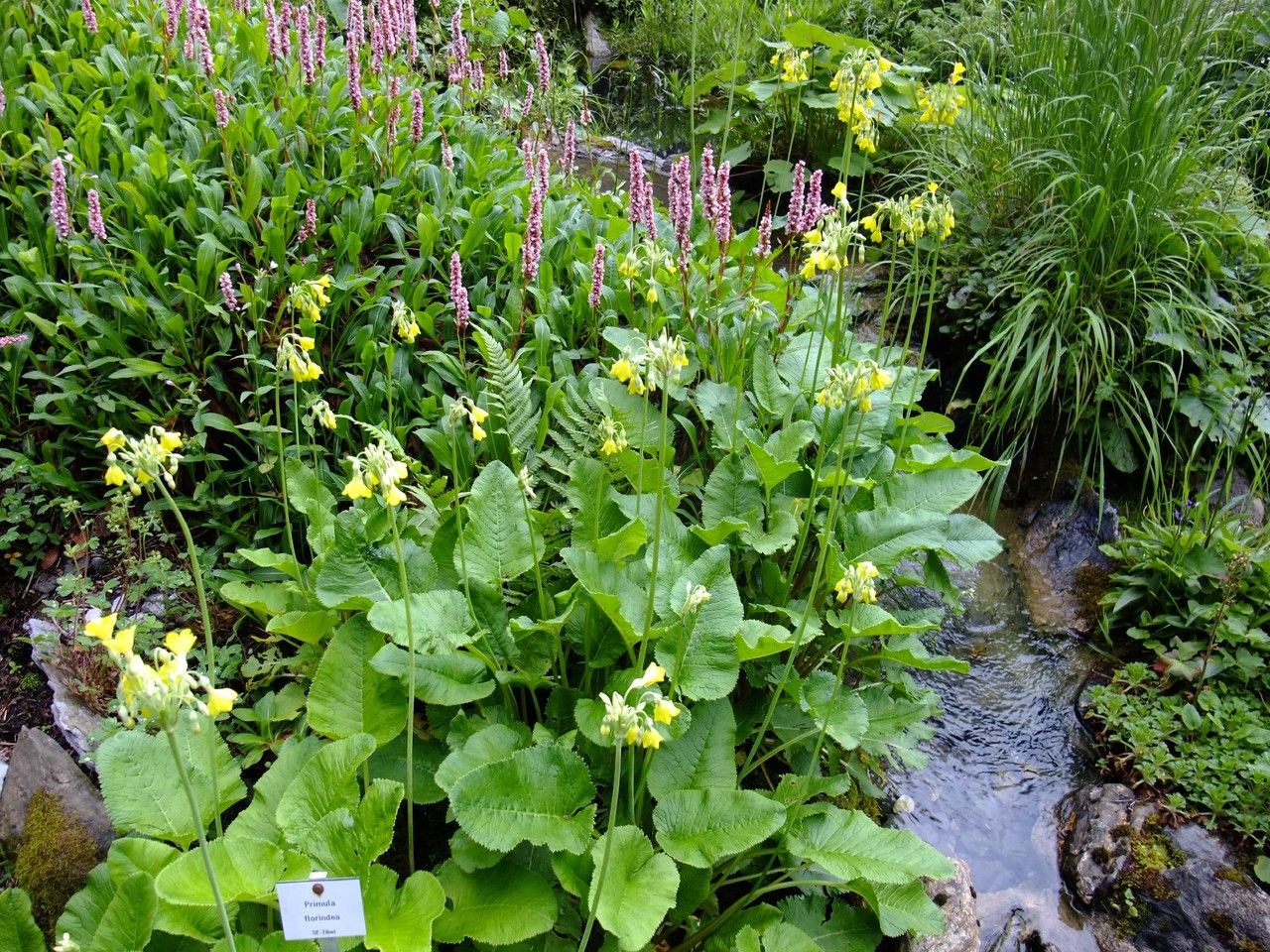
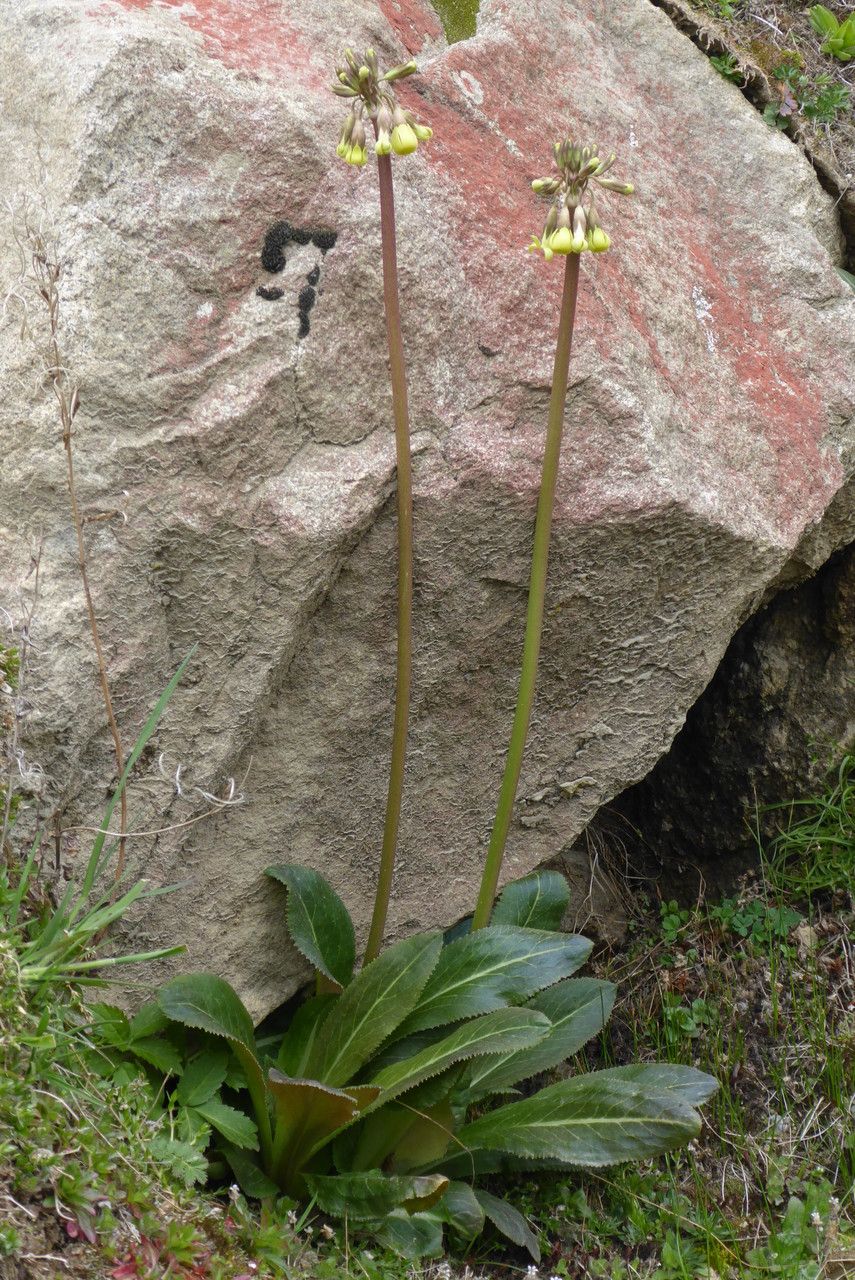
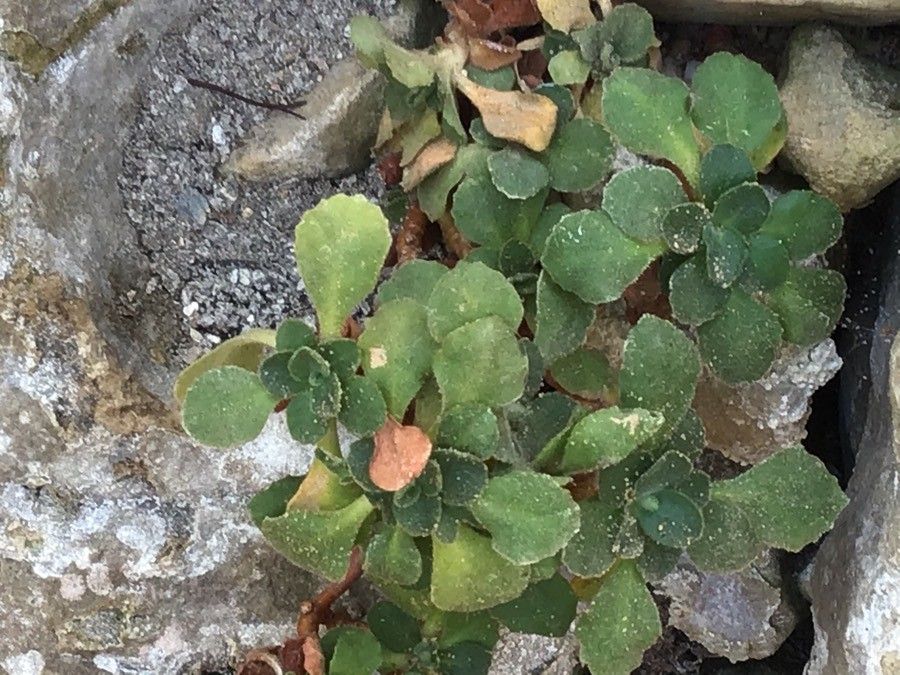
Primula florindae, the Tibetan cowslip or giant cowslip, is a species of flowering plant in the family Primulaceae, native to southeastern Tibet, where it grows in huge numbers close to rivers such as the Tsangpo. It is a substantial herbaceous perennial growing to 120 cm (47 in) tall by 90 cm (35 in) wide. In summer the flower stalks rise from basal rosettes of 5–20 cm (2–8 in) long leaves. They bear clusters of 20–40 yellow, pendent, bell-like, delicately scented flowers with a mealy white bloom.The plant was first collected for western horticulture in 1924 by the British botanist Frank Kingdon-Ward, and was named after his wife Florinda. This plant grows best in very moist conditions as its home is the margins of rivers. It is cold-hardy as long as its roots are not allowed to dry out. It has gained the Royal Horticultural Society's Award of Garden Merit.
Tibetan cowslip is fairly disease-resistant and typically not prone to illnesses. Still, it can be vulnerable to pests and diseases present in its surroundings. These outbreaks are usually not serious. In terms of care, the plant requires moderate maintenance. It should be pruned regularly to preserve an attractive appearance and support healthy growth. Fertilizing can also aid in encouraging flowering. Tibetan cowslip is suitable for anyone with outdoor space, such as a garden or patio, and does not demand extensive care experience. It may need more attention when grown indoors.
How to keep Primula Florindae.
Light
Tibetan cowslip naturally occurs in habitats such as forest understories or rocky sites, where it receives natural shade. It prefers partial sun but can tolerate full sun or full shade, showing its versatility and hardiness.
Water
Tibetan cowslip flourishes in high humidity and needs to be watered weekly to stay healthy. It prefers cooler climates and is typically grown outdoors. During dry seasons, it enters a dormant state to conserve water, resuming growth when the rains return.
Temperature
Tibetan cowslip can tolerate a wide range of temperature conditions, but its distribution may still be restricted by various combinations of moisture and heat. It performs best in warm summer climates with sufficient rainfall or watering. Long stretches of cloudy, rainy weather or extended high temperatures raise the probability of Tibetan cowslip dying. In winter, adequate protection from cold can increase the plant's survival rate.
Fertilizer
The optimal time to fertilize a Tibetan cowslip is in early spring, as it comes out of dormancy and starts active growth. Fertilizing supplies essential nutrients for healthy development. Although Tibetan cowslip has relatively modest fertilizer requirements, an annual application can improve its survival and encourage better, longer-lasting blooms.
Pruning
To keep Tibetan cowslip healthy and vibrant, it's important to prune it strategically from early to late spring. By removing dead foliage and thinning out dense growth, you can prevent overcrowding, which improves air circulation and reduces the risk of disease. These practices not only boost the plant's overall vitality but also enhance the quality of its blooms, making it a beautiful addition to any garden.
Botanical profile.
- Plant Type
- Herb
- Life Cycle
- Perennial
- Genus
- Primula
- Family
- Primulaceae
- Hardiness Zone
- 3-8
- Mature Height
- 1.22 m
- Mature Spread
- 91 cm
- Leaf Color
- Green
- Leaf Type
- Deciduous
- Flower Color
- Yellow
- Flower Size
- 2.03 cm to 3.05 cm
- Bloom Time
- Summer
- Planting Time
- Spring, Summer
- Harvest Time
- Early fall, Mid fall
- Native Area
- China
Other names.
Reader questions.
What are the sunlight requirements for plants?
Plants require varying amounts of sunlight based on their specific needs. Partial sun means a plant needs about 3-6 hours of sunlight, while full sun refers to more than 6 hours of sunlight. It's important to observe how sunlight moves through your garden to ensure you're providing the right balance of light and shade for plant happiness.
What is Tibetan cowslip?
Tibetan cowslip, scientifically known as Primula florindae, is a species within the Primula genus. Further details about its characteristics, native habitat, cultivation requirements, or uses are not provided in the available information.
What are the essentials for growing Tibetan cowslip?
Tibetan cowslip thrives in conditions where it experiences natural shade, such as forest understories or rocky areas. It prefers partial sun but can tolerate full shade, making it a versatile perennial herbaceous plant. When natural sunlight is insufficient, especially indoor during winter or in less sunny spaces, artificial lights such as LED lights can be used to promote optimal growth. Full sun plants need 30-50W/sq ft of artificial light, partial sun plants 20-30W/sq ft, and full shade plants 10-20W/sq ft. Proper distance and duration of artificial lighting are crucial for healthy growth.
What are the symptoms of insufficient light in Tibetan cowslip?
When Tibetan cowslip receives insufficient light, several symptoms may occur. These include smaller new leaves, leggy or sparse growth, faster leaf drop, slower or no new growth, lighter-colored or yellow leaves (chlorosis), sunscald, leaf curling or twisting, wilting, and leaf scorching. These symptoms indicate either a lack of or too much sunlight, affecting the plant's health and ability to photosynthesize efficiently.
How can I solve light-related issues for my indoor and outdoor plants?
For indoor plants, gradually increase their exposure to sunlight or use artificial lighting to simulate natural light conditions, moving them weekly to sunnier spots and ensuring they receive 3-6 hours of direct sunlight daily. Outdoor plants also benefit from gradual relocation to sunnier areas to prevent sunburn. Pruning obstructions like tree branches can help increase sun exposure. For smaller plants, transplant them during their dormant period to a location with better sunlight and drainage. Note that damaged parts may not recover, but new growth should be healthy with improved light conditions.