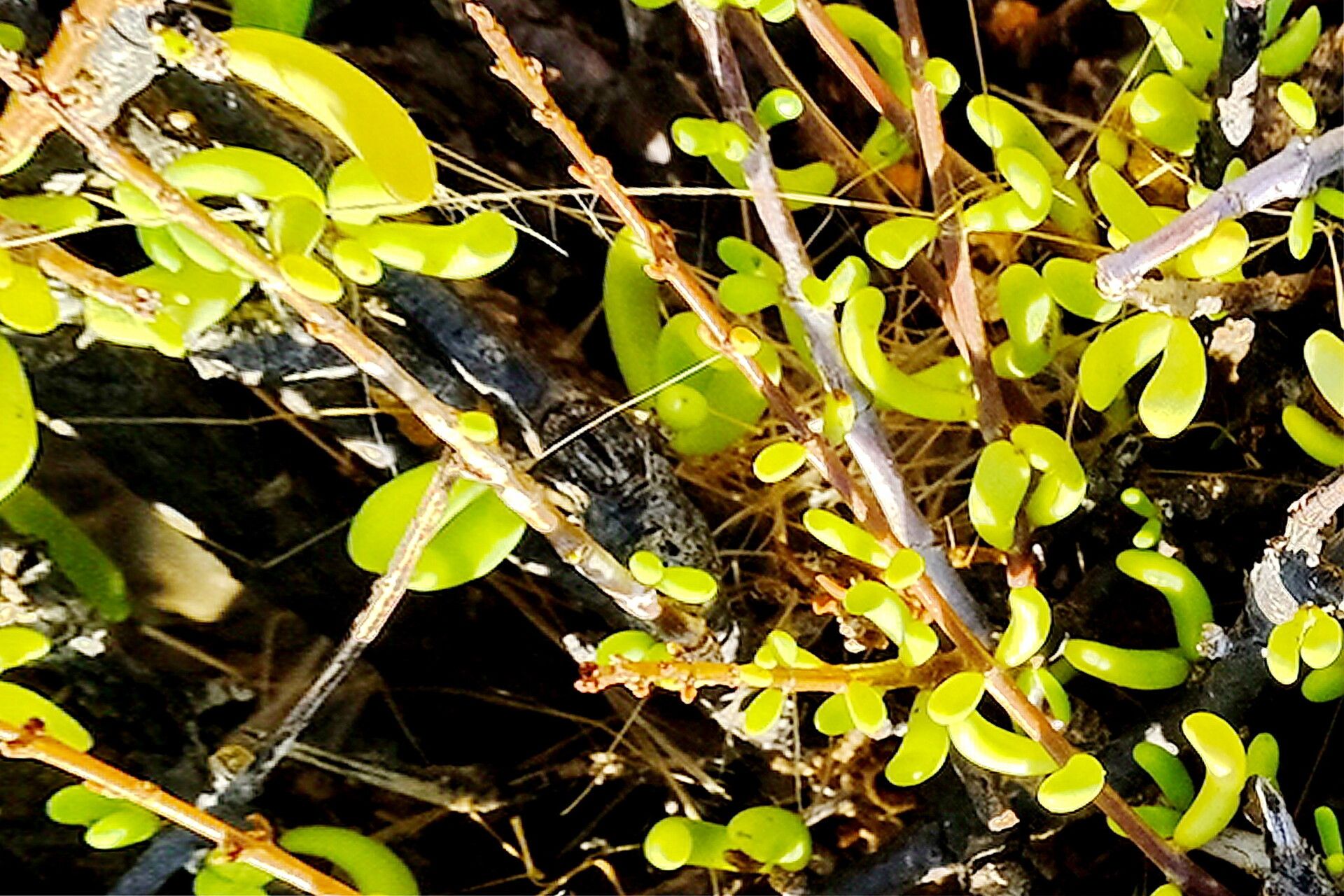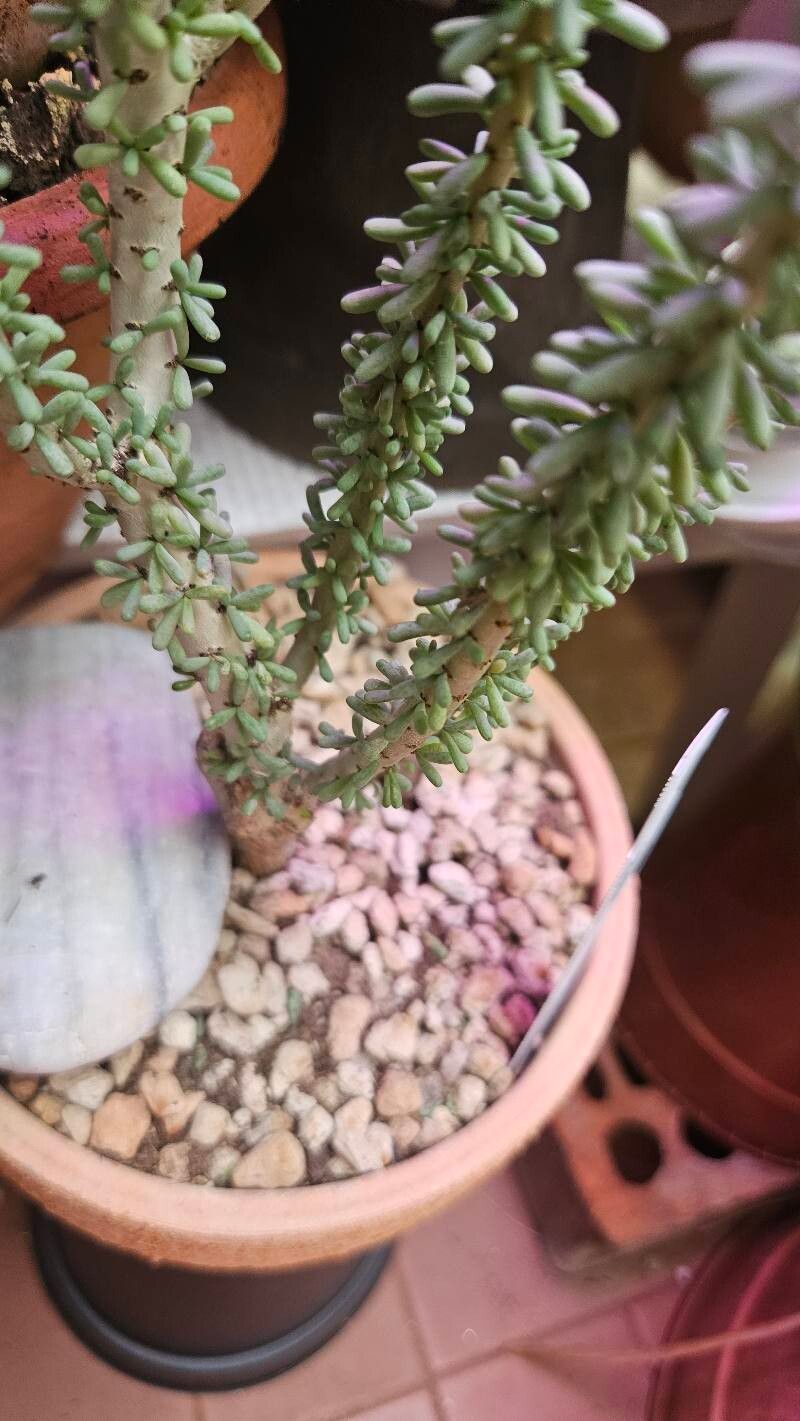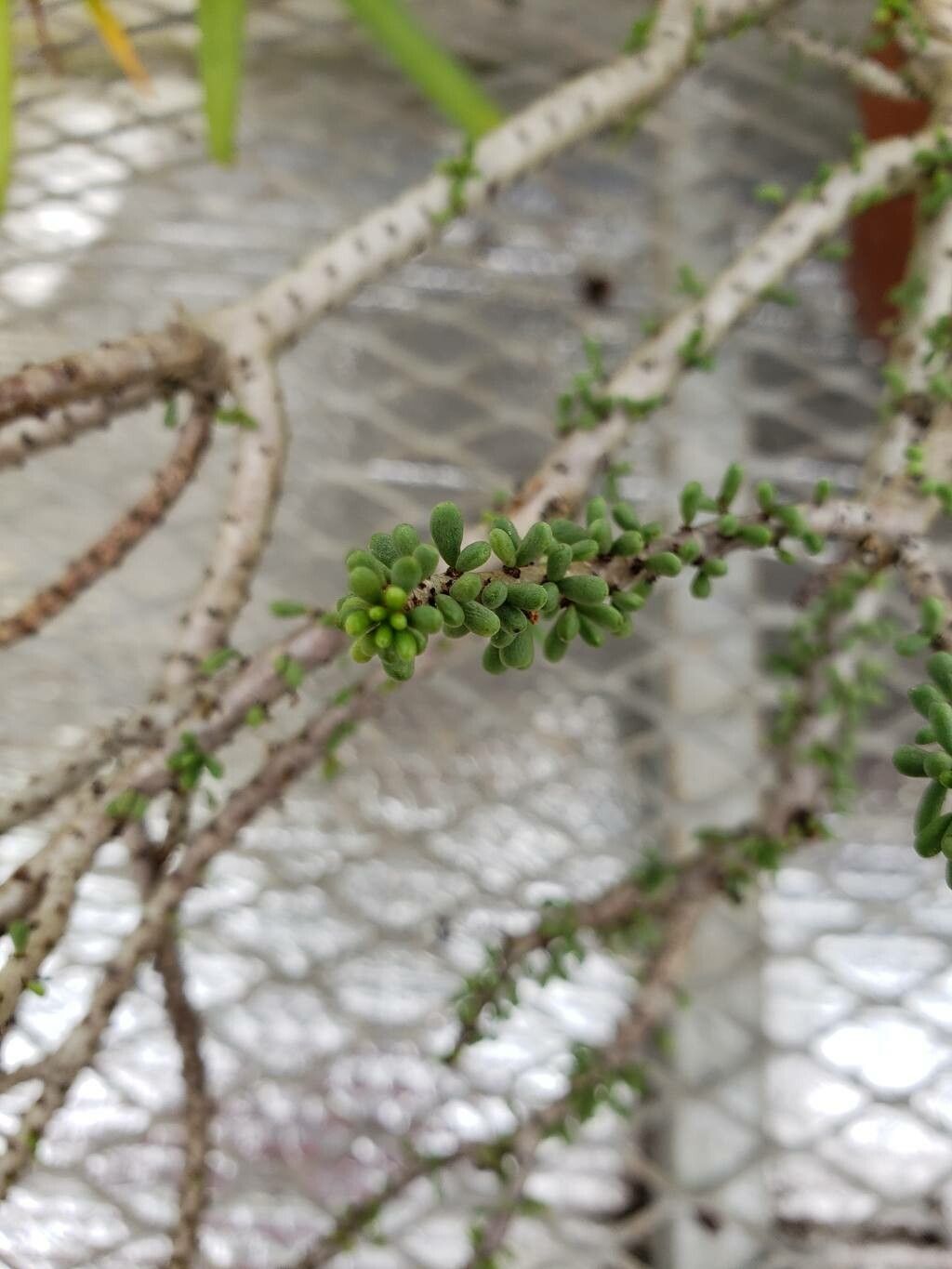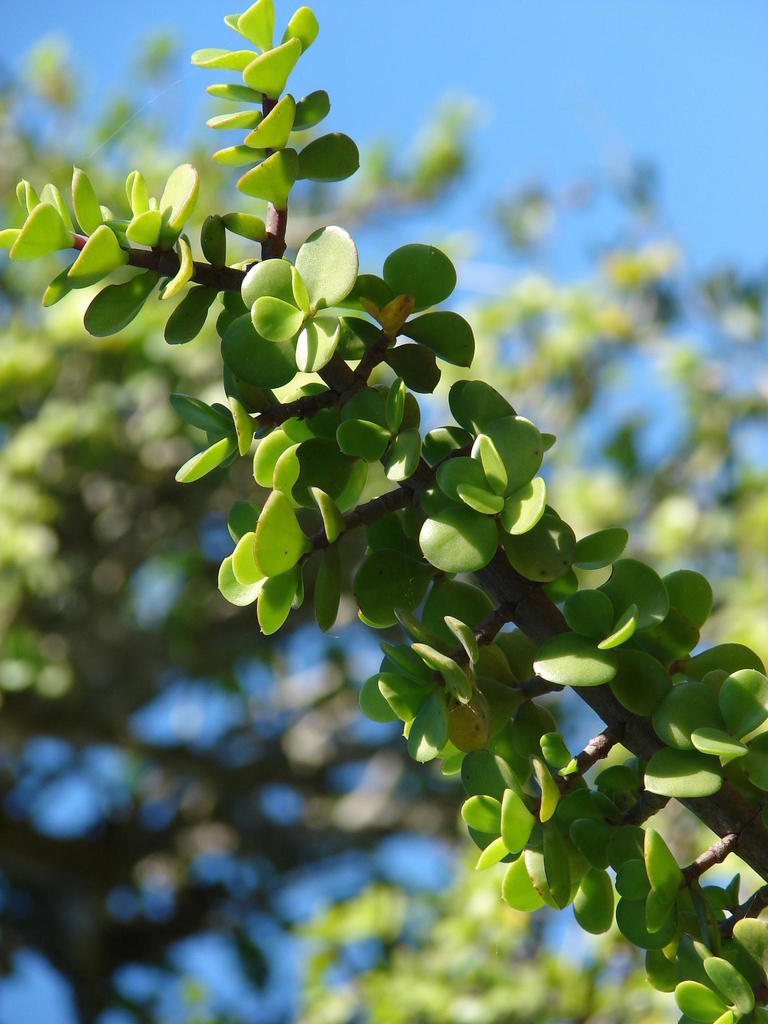
Portulacaria afra, commonly known as Elephant Bush or Dwarf Jade Plant, is a succulent native to South Africa. It is a popular houseplant due to its attractive appearance and easy care needs. The plant features thick, fleshy, green leaves that can grow up to 2 inches long, arranged in opposite pairs along glossy-textured stems.
Outdoors, the Elephant Bush can reach heights of up to 6 feet, though it typically remains smaller when grown indoors. It prefers bright light but can tolerate some shade and should be watered sparingly, as it is drought-tolerant.
The Elephant Bush has medicinal properties that have been utilized for centuries by the indigenous people of South Africa to treat various ailments such as high blood pressure, diabetes, and respiratory infections.
The elephant bush is a quiet and reserved plant. It enjoys dancing with its own branches and leaves in the sunlight. No grand words can capture the beauty of this solo dance. FUN FACT · FROM THE LIBRARY
Overall, Portulacaria afra is an attractive succulent with easy care requirements, making it an ideal choice for both novice and experienced gardeners seeking low-maintenance plants with unique features.
The Elephant Bush is a small shrub native to South Africa. It closely resembles the jade plant, also known as Crassula ovata. Its name is not derived from its appearance, but rather its natural habitat and the fact that it is a food source for elephants, which is why it is called the Elephant Bush.
Elephant bush has a moderate resistance to disease but is relatively sensitive to humidity and excess watering. It is also more prone to illness if it receives insufficient light and is overwatered. Regarding care, Elephant bush is drought-resistant and can go long periods without water. It requires little fertilizer and only needs pruning occasionally. For these reasons, it suits people at any experience level, particularly those who prefer to spend less time on plant care or who may be away from home for extended periods. It’s a good option for anyone who doesn't want to devote a lot of time to maintenance but still wants an easy-to-care-for plant.
How to keep Portulacaria Afra.
Light
Elephant bush does best in a sunlit setting that combines balanced exposure with some shaded areas. In its natural environment it is accustomed to varying levels of light intensity. However, excessive sunlight or a marked lack of it can damage growth, producing stunted development and wilted leaves.
Water
Elephant bush, native to arid regions, is well-adapted to dry conditions and requires minimal water. You should water it every three weeks and plant it in well-draining soil to prevent root rot. Its adaptability makes it an excellent choice for indoor growth in controlled climates.
Humidity
This plant prefers dry conditions, so don't mist it. However, watering it less often can also thrive in higher humidity.
Temperature
Native to South Africa, the elephant bush needs a warm tropical or subtropical climate to grow. It prefers temperatures of 68 to 100 ℉ (20 to 38 ℃). In winter it can tolerate somewhat cooler conditions but must not be exposed to freezing temperatures. In summer, occasional misting or relocating it to a cooler spot indoors can be beneficial.
Fertilizer
For Elephant bush, light applications of fertilizer once or twice a year during the growing season are adequate. Avoid fertilizing in winter and in summer when the plant is dormant. Reduce fertilizer for plants that have been repotted, and wait a couple of months after repotting before applying fertilizer. Fertilizing supports healthy growth and promotes blooms.
Pruning
The elephant bush thrives when it receives the right amount of moisture and nutrients. To maintain an attractive shape, regular pruning is necessary. In late spring or early summer, trim the thin branches by about half to two-thirds, making sure to create a wide base with a narrow top. Remove any crossed or overly dense branches to keep the desired shape. Additionally, when repotting, prune any excess or rotten roots.
Pot & Repot
Repot the Elephant bush in warmer months, picking a pot just a little larger than the existing one that has good drainage. Use a well-draining cactus or succulent soil mix. Be careful with the roots and caudex when you repot. After repotting, wait about a week before watering to avoid root rot. Place it in a sunny location for the best growth.
Toxicity
The leaves of the Portulacaria Afra 'Elephant Bush' are delicious and non-toxic to both pets and people.
Further reading →
The toxicity and danger assessments provided are for reference only. We do not assure their accuracy, so it's crucial not to depend on them. Seek professional advice when necessary for accurate guidance.
Botanical profile.
- Plant Type
- Succulent, Shrub
- Life Cycle
- Perennial
- Genus
- Portulacaria
- Family
- Didiereaceae
- Hardiness Zone
- 10-12
- Mature Height
- 2.13 m to 4.88 m
- Mature Spread
- 1.22 m to 1.83 m
- Leaf Color
- Green
- Leaf Type
- Evergreen
- Flower Color
- Pink
- Flower Size
- 0.25 cm to 0.51 cm
- Bloom Time
- Mid summer, Late summer, Early fall
- Planting Time
- Spring, Summer, Autumn, Winter
- Harvest Time
- Late summer, Early fall, Mid fall
- Native Area
- South Africa, Eswatini, Mozambique
Other names.
Reader questions.
When Should I Water My Elephant Bush?
Proper watering is fundamental to the health and survival of an elephant bush, allowing it to develop robust roots, grow optimally, and showcase its distinctive features. The leaves of the elephant bush serve as a good indicator for when it needs water; they will appear puckered, shriveled, or wrinkled if the plant is thirsty, whereas healthy leaves are succulent and plump. Always check the soil's dryness by dipping your finger about 2 inches deep. If the soil feels dry, it's time to water. The pot's weight can also guide you; a lighter pot suggests the soil is dry and needs watering. Be cautious not to water too early or too late to avoid root rot or dehydration, both of which can be damaging to the plant.
Why do I have to add fertilizer to my Elephant bush?
Fertilizing Elephant bush is important for adding nutrients to the soil. Despite its ability to store water and nutrients, applying plant food during the growing season promotes healthy growth. Additionally, fertilizing can stimulate mature Elephant bush plants to produce blooms.
What are the sunlight requirements for Elephant Bush?
Elephant Bush (Portulacaria afra) thrives in environments that offer a balance of sunlight and shade. It does well in partial sun, receiving about 3-6 hours of sunlight, but can also tolerate full sun or full shade conditions, requiring above 6 hours of sunlight. It's essential to observe the movement of sunlight through your garden to find the ideal spots that provide the necessary light balance, ensuring the plants' well-being. Overexposure to sunlight or severe lack of it can negatively impact the Elephant Bush's growth, causing issues like stunted development and wilted leaves.
What is the native climate of the elephant bush?
The elephant bush, or Portulacaria afra, originates from South Africa and thrives in warm tropical or subtropical climates. It prefers temperatures ranging from 68°F to 100°F (20°C to 38°C). Although it can withstand slightly cooler temperatures during winter, it should never be exposed to freezing conditions. In summer, to cope with heat, the plant can benefit from occasional misting or being moved to a cooler spot indoors. It's a heat-loving plant that enters a dormant state in winter, requiring careful attention to temperature management.
How Should I Water My Elephant Bush?
Watering an elephant bush requires precision due to its succulent nature, which means it stores water in its leaves, stems, and roots, and can be harmed by both overwatering and underwatering. Recommended watering methods include bottom-watering, which ensures that the roots receive enough moisture by placing the plant pot in a shallow dish filled with water and allowing it to absorb water through its drainage holes, and spot-watering with a watering can that has a long, thin spout, directing water to the soil around the plant's stem without wetting the leaves. Using a moisture meter can help monitor soil moisture levels accurately, aiming for a middle ground in moisture content. When watering, focus on saturating the soil around the base of the plant and avoid wetting the leaves and stems directly to prevent leaf rot.
When should I put fertilizer on my Elephant bush?
Elephant bush plants benefit from added nutrients, but they only require a small amount of fertilizer during their growing season. It is recommended to fertilize them 1-2 times a year, preferably in the spring and autumn when they are actively growing. Avoid fertilizing in the winter and summer when the plant is dormant. If you have recently repotted your Elephant bush, be cautious with the amount of fertilizer you use. It is best to wait a few months after repotting before applying any fertilizer.
How can I use artificial lighting for my indoor Elephant Bush?
For indoor Elephant Bush plants, artificial lighting is a great solution when natural sunlight is insufficient, especially during winter or in less sunny spaces. Optimal growth is achieved with adequate lighting. LED lights are recommended as they can be customized to provide the specific wavelengths of light that your plants need. Full sun plants should get 30-50W/sq ft of artificial light, partial sun plants 20-30W/sq ft, and full shade plants 10-20W/sq ft. The appropriate distance for the light source is 12-36 inches above the plant, mimicking natural sunlight, and most plants will need 8-12 hours of light per day.
How should the elephant bush be cared for in different temperatures?
In terms of temperature management, the elephant bush has specific needs. When outdoor temperatures fall below 5°C, the plant should be moved indoors to ensure its survival, ideally placed near a south-facing window for maximum sunlight exposure. If natural light is insufficient, consider using supplemental lighting. The plant's growth slows when temperatures dip below 20°C, necessitating a reduction or complete halt in watering to avoid root rot. For outdoor plants, watering should stop during low temperatures. Additionally, in cold weather, consider using a temporary greenhouse or wrapping the plant with plastic film or fabric for insulation.
How Much Water Does Elephant Bush Really Need?
The elephant bush, a succulent native to South Africa, requires a careful balance of water. It's crucial to consider factors such as pot size, root depth, and the plant's size when determining how much water the plant needs. A general guideline is to water the elephant bush thoroughly whenever the top inch (2.5 cm) of soil feels dry, ensuring the water reaches the entire root system evenly. Signs of proper hydration include plump and full leaves and firm, upright stems. Overwatering can result in yellow or mushy leaves and root rot, while underwatering may cause leaves to become wrinkled and dry. Proper watering, bright, indirect sunlight, and well-drained soil are essential for the plant's health, especially during its dormant phase in the winter.
When is the best time to not fertilize my Elephant bush?
Elephant bush, like other plants, goes through a dormancy period where applying fertilizer should be avoided. This occurs in both the summer and winter when the plant stops growing. It is also recommended to refrain from fertilizing for a few months after repotting in the spring.
What are the symptoms of improper lighting for Elephant Bush?
Symptoms of improper lighting for Elephant Bush include faster leaf drop, indicative of low light conditions where the plant sheds older leaves to conserve resources. Leggy or sparse growth suggests insufficient light, causing stretched spaces between leaves or stems. Slower or no new growth indicates survival mode due to poor light conditions, halting leaf production. Chlorosis, or loss of leaf green color, and sunscald, which damages leaves or stems from intense sunlight, are also common. Additionally, leaf curling acts as a defense mechanism amid extreme sunlight, and wilting and leaf scorching occur due to excessive sunlight exposure, highlighting the plant's struggle with maintaining adequate hydration.
What are the symptoms and solutions for elephant bush under low temperature conditions?
The elephant bush is sensitive to low temperatures, thriving best above 20°C and struggling in conditions below 5°C. Exposure to temperatures below 1°C can result in weakness, wilting, and a higher risk of root rot. Initial symptoms of frost damage might not be evident, but the plant could wither within a week of exposure. The solution involves trimming frostbitten areas, checking for and removing any rotted roots, and propagating through cuttings if necessary. Moving the plant to a warm indoor environment and ensuring it receives plenty of sunlight, or supplemental lighting if required, are critical steps for recovery.