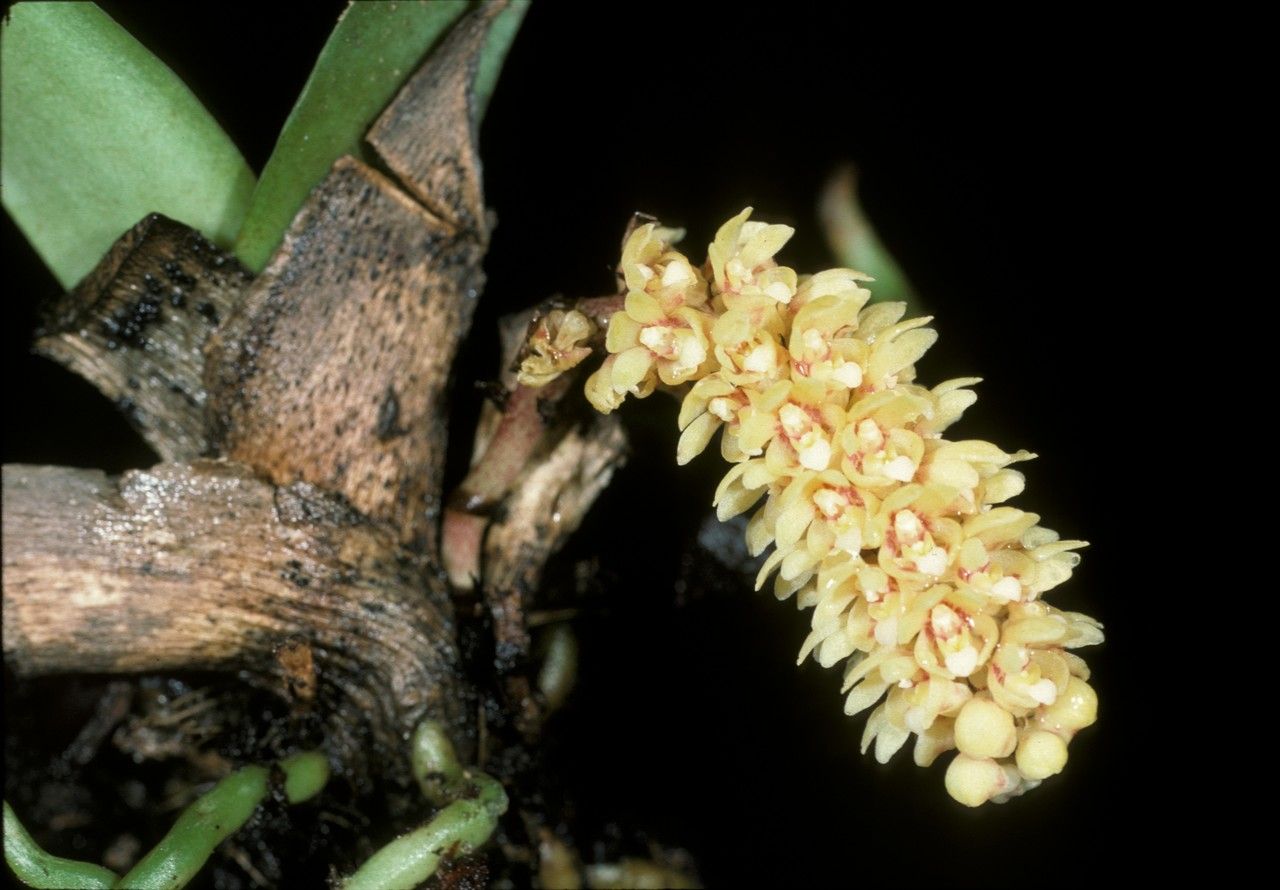
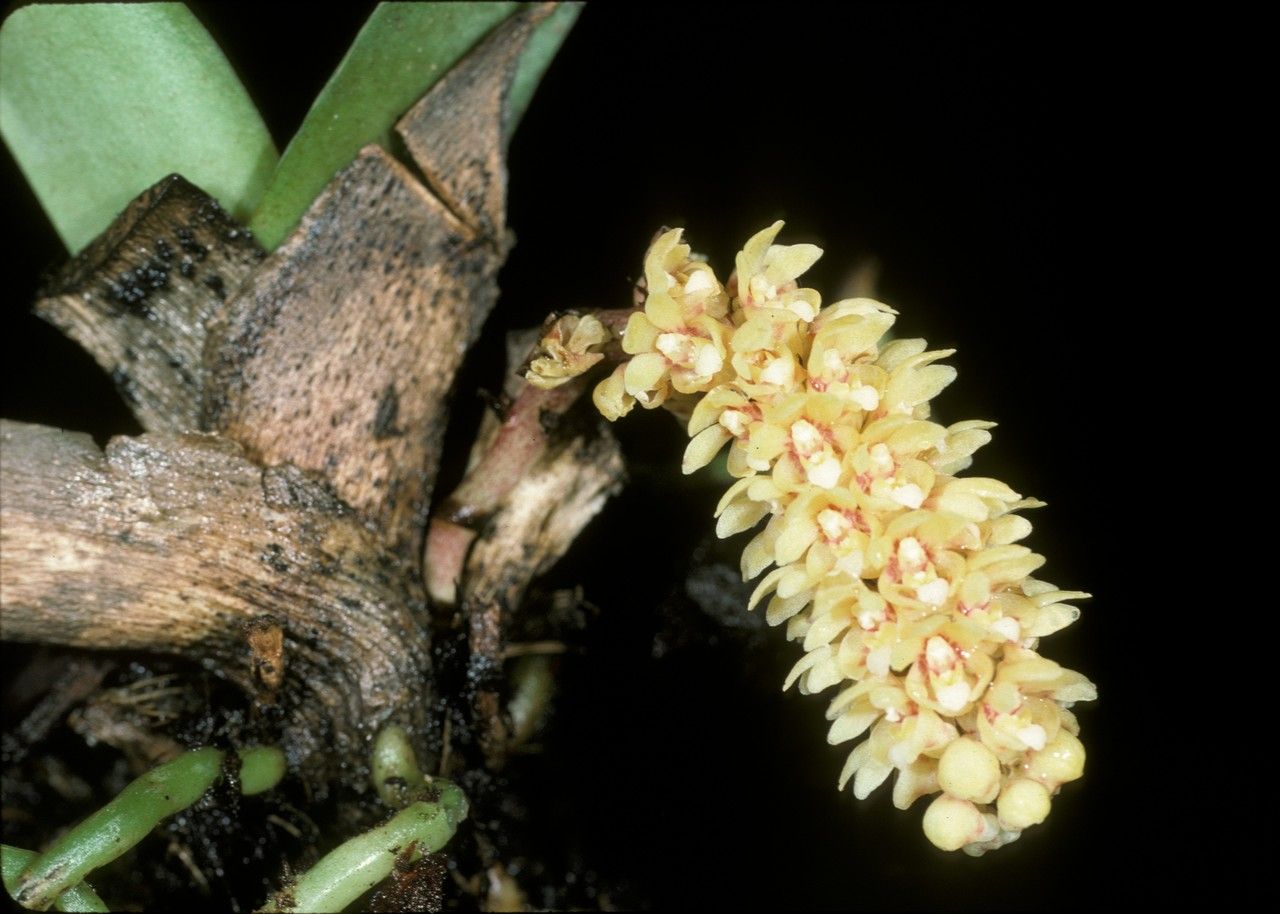
Pomatocalpa spicatum typically shows strong disease resistance and is affected by relatively few insect pests. Its care is considered challenging because it needs very high humidity while also having good ventilation and minimal exposure to harmful pathogens. Overwatering may cause root rot. While anyone can grow Pomatocalpa spicatum, maintaining its health and getting it to bloom again requires more cultivation experience.
How to keep Pomatocalpa Spicatum.
Light
Pomatocalpa spicatum naturally occurs in habitats like forest understories or rocky terrains, where it benefits from natural shading. While it thrives best in partial sunlight, it's adaptable to both full sunlight and complete shade, showcasing its robust and flexible character.
Temperature
Pomatocalpa spicatum prefers a warm climate. It flourishes in moderately high temperatures, which should not be excessively hot or humid. Sunlight heats the plant and encourages bloom. Nonetheless, extended direct sunlight in summer may result in sunburn, so managing the plant's sun exposure during this period is crucial. Generally, the plant doesn't cope well with cold temperatures, thus proper sheltering and maintaining a more elevated temperature during winter to prevent freezing is necessary.
Fertilizer
The active growth phase of Pomatocalpa spicatum, mainly in spring, summer, and early fall, is when it needs the most fertilizer. This is to supplement the essential nutrients that might be deficient in the soil, fostering robust root and stem growth, along with appealing foliage, that is specifically characteristic of this plant.
Pot & Repot
When transferring Pomatocalpa spicatum to a new pot, opt for one that is marginally bigger and equipped with excellent drainage, ideally a transparent orchid pot. Utilize an orchid-focused mixture that drains well and includes bark or moss. Delicately cleanse the roots and prune the ones that are deceased or decomposing. Transplant after the blooming phase, typically during spring or autumn, saturate with water, and position in a location with strong, diffused light. Refrain from interfering with the roots after repotting.
Botanical profile.
- Plant Type
- Herb
- Life Cycle
- Perennial
- Genus
- Pomatocalpa
- Family
- Orchidaceae
- Hardiness Zone
- 10-12
- Mature Height
- 30 cm to 61 cm
- Mature Spread
- 20 cm to 40 cm
- Leaf Color
- Forest Green
- Leaf Type
- Evergreen
- Flower Color
- White, Yellow
- Flower Size
- 1.02 cm to 2.03 cm
- Bloom Time
- Late spring, Summer, Early fall, Mid fall
- Planting Time
- Spring, Summer, Autumn, Winter
- Harvest Time
- Mid summer, Late summer, Fall, Early winter
- Native Area
- India, Malaysia, Indonesia, Vietnam, Myanmar, Philippines, Bhutan, Laos, Thailand, China