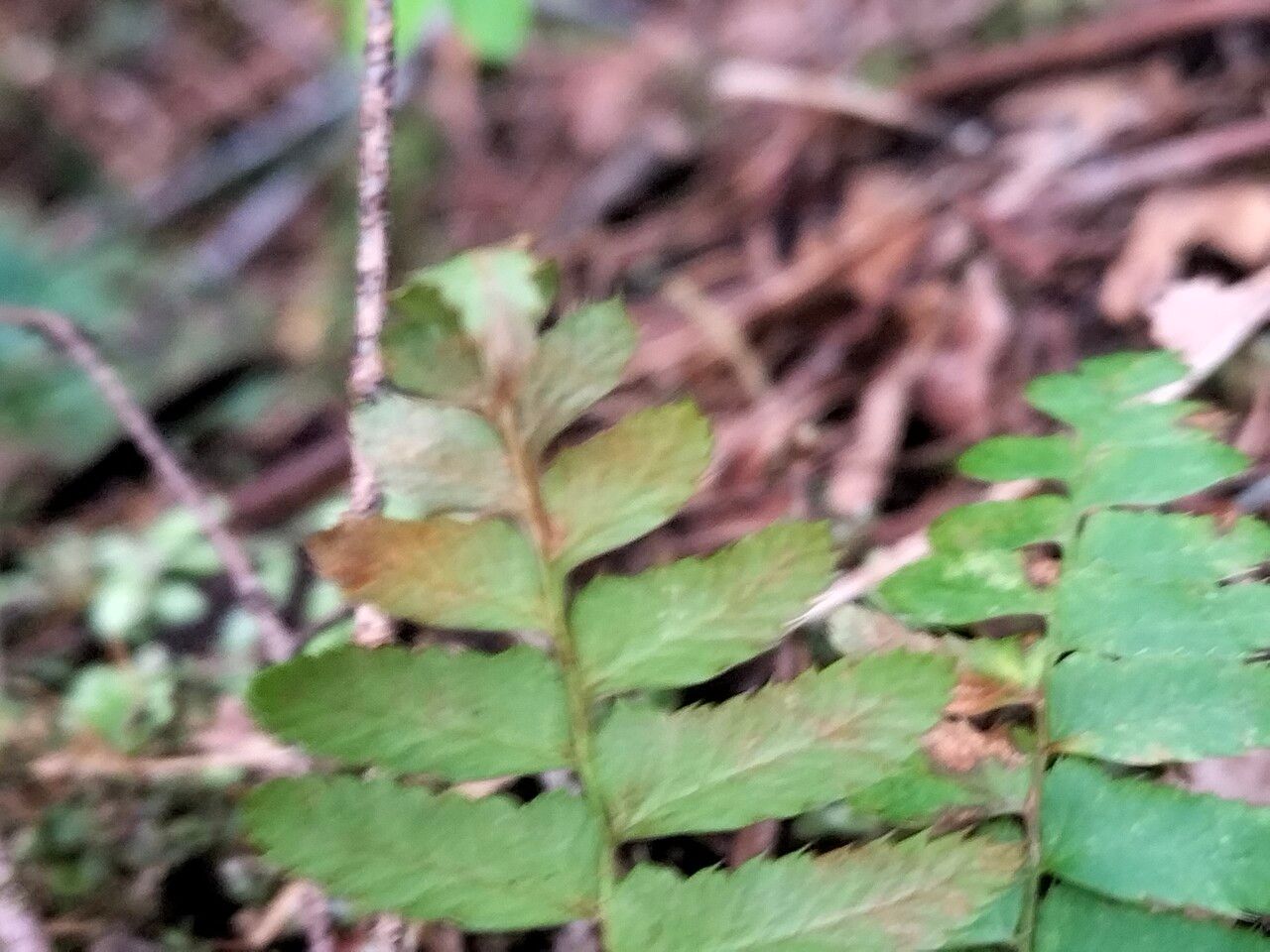
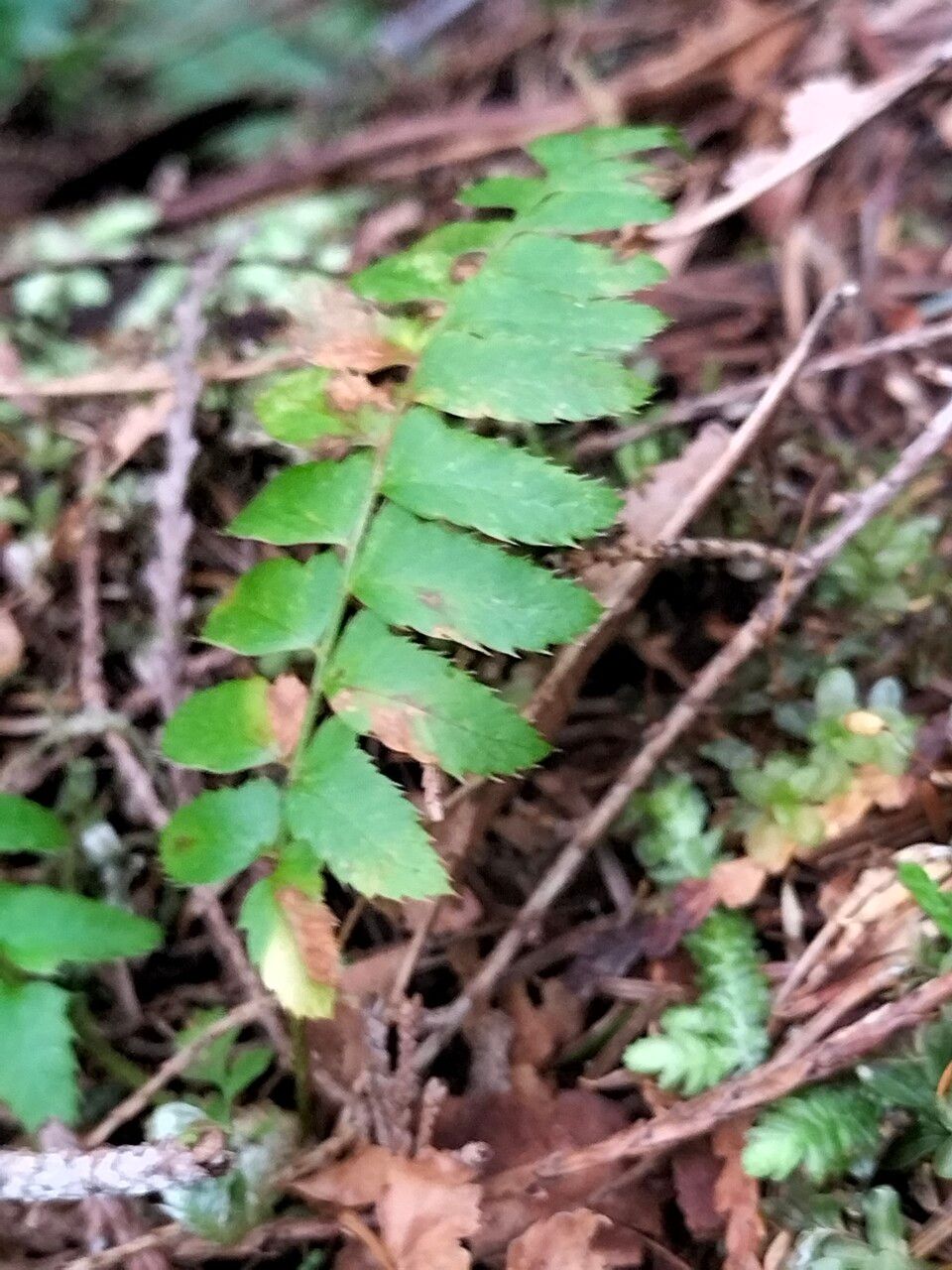
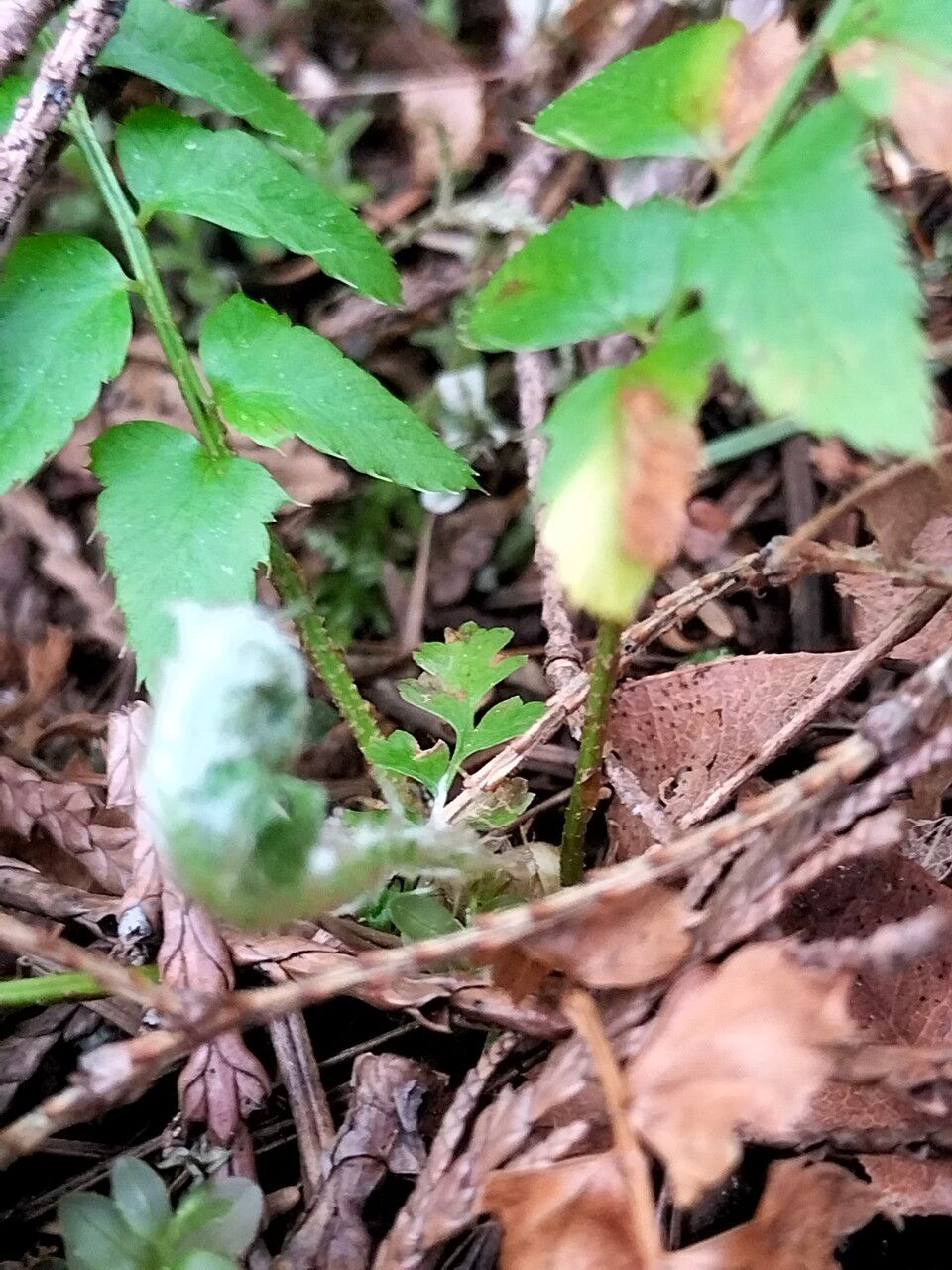
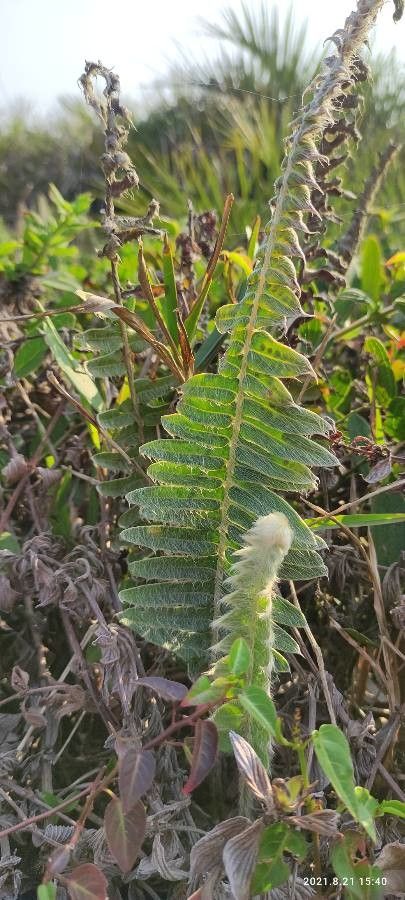
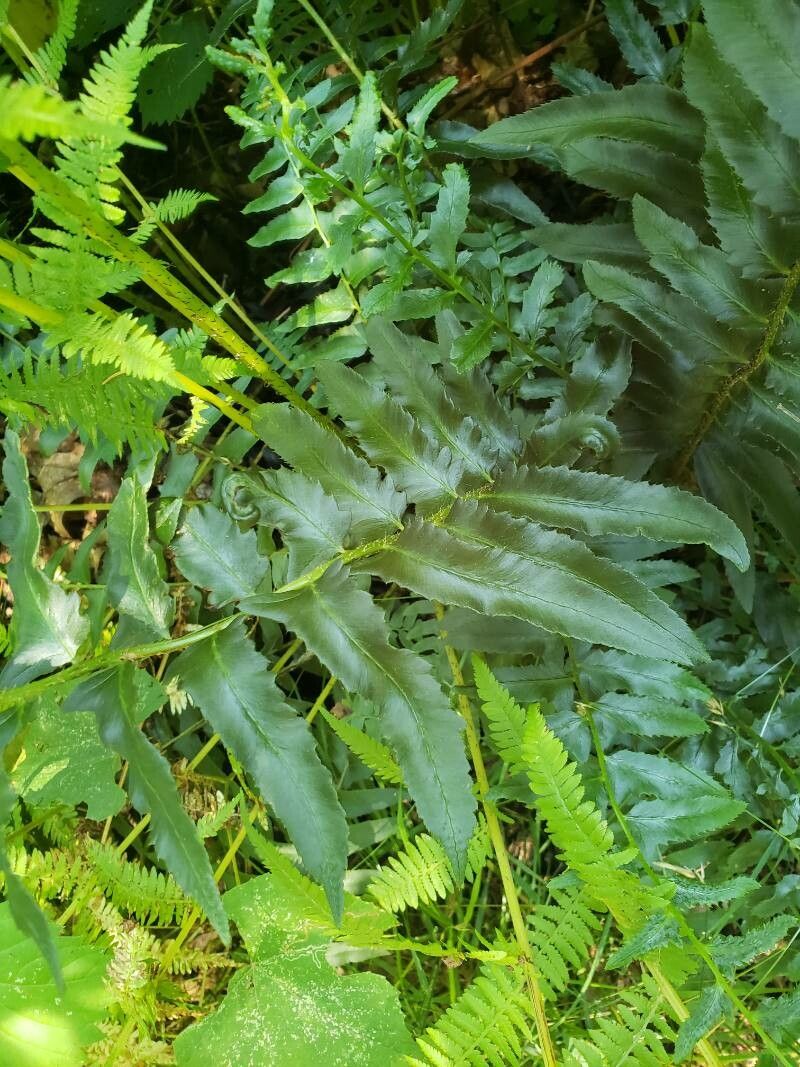
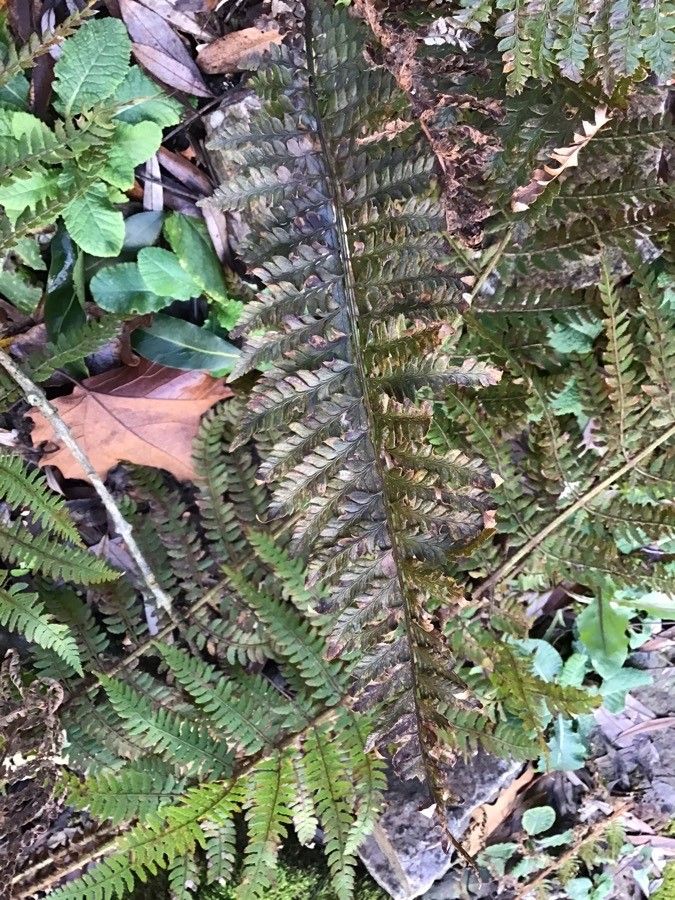
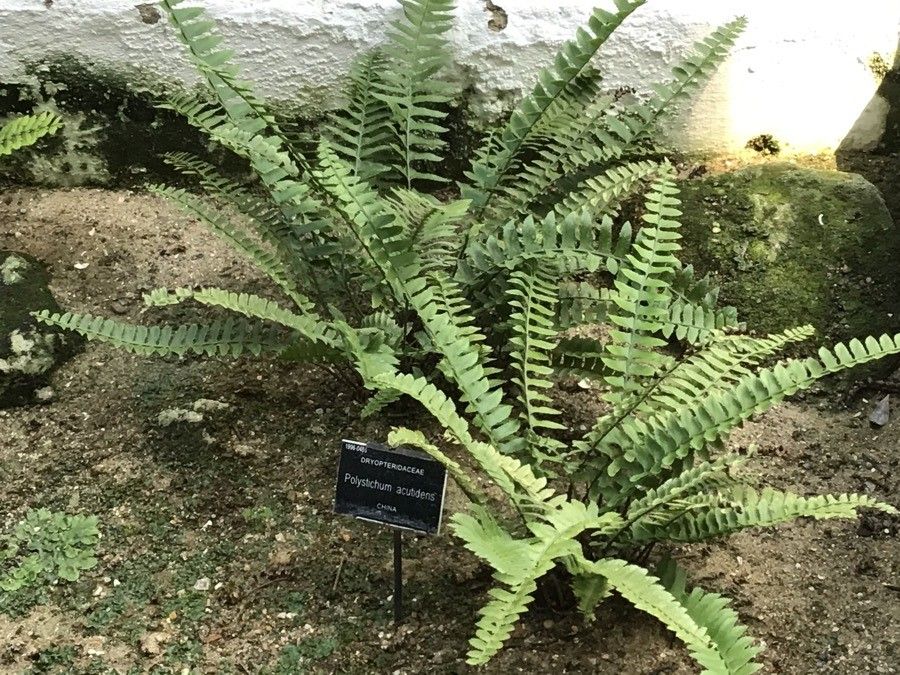
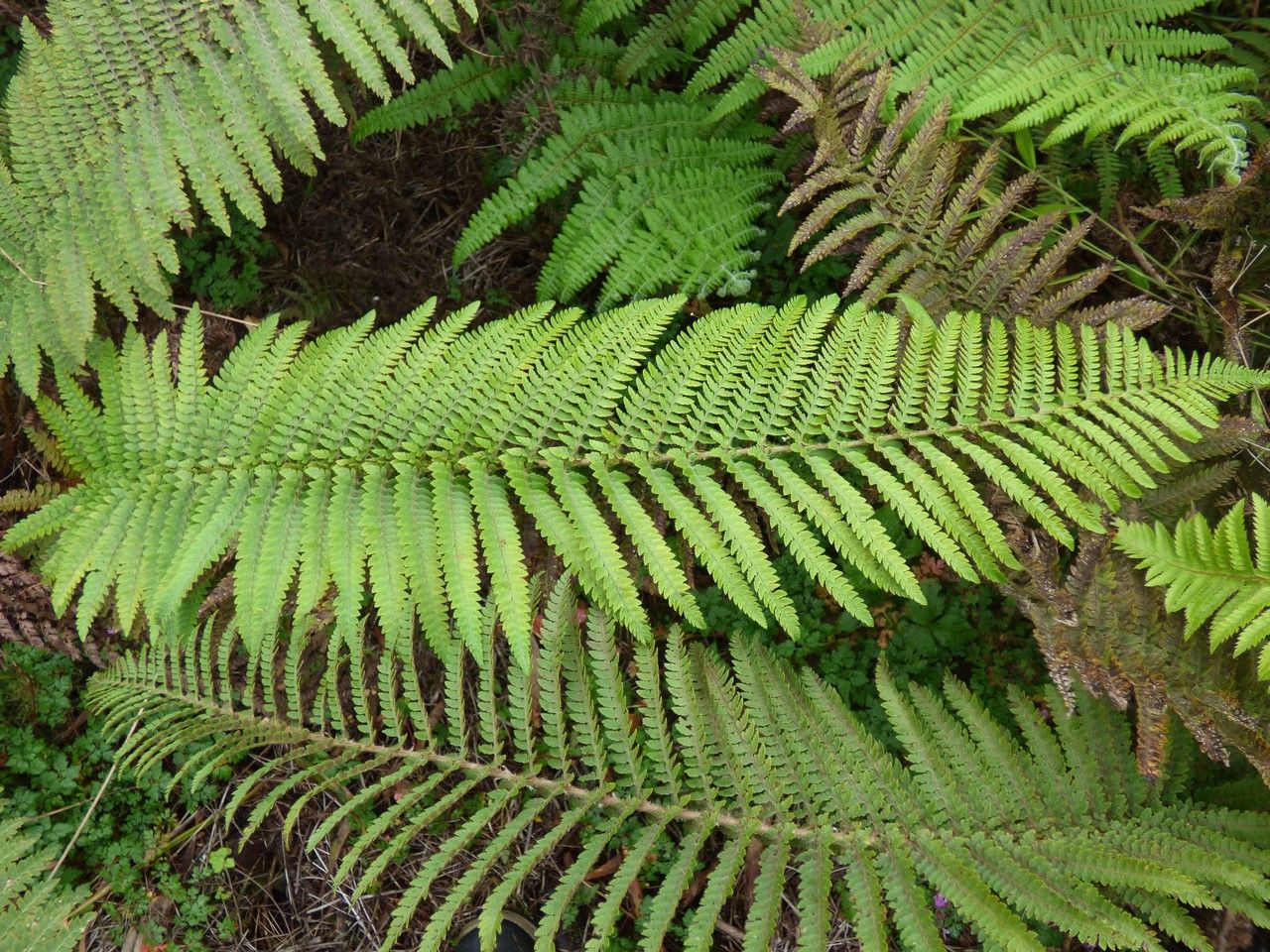
Polystichum imbricans is a species of fern known by the common names narrowleaf swordfern and imbricate sword fern. It is native to western North America from British Columbia to southern California, where it grows in rocky habitat in coastal and inland mountain ranges and foothills. This fern produces several erect linear or lance-shaped leaves up to 80 centimeters long. Each leaf is made up of many narrow, overlapping, sometimes twisting leaflets each 2 to 4 centimeters long. The leaflets have toothed edges. This fern readily forms hybrids, some of which are fertile and are considered separate species, such as Polystichum californicum, its hybrid with P. dudleyi.
Narrowleaf swordfern typically resists disease well and has relatively few insect pests. Its care is considered difficult because it needs a moist environment and frequent watering. However, the roots are susceptible to rotting if overwatered or if the area is not well ventilated. This fern is suitable for people with some growing experience, as most can keep it alive for a period of time. Still, it may struggle to thrive and its leaves can dry out and become less healthy over time.
How to keep Polystichum Imbricans.
Light
Narrowleaf swordfern is native to habitats such as forest understories and rocky areas that provide natural shade. It prefers Full Shade but can tolerate Partial Sun.
Temperature
Narrowleaf swordfern grows in forest undergrowth. It is very sensitive to temperature and humidity; high temperatures, dry conditions, and strong sunlight can all cause it distress. In summer it needs sufficient shade and a humid environment. Generally it does not need special care in winter, but a prolonged winter drought can still be lethal.
Pruning
The narrowleaf swordfern is a hardy evergreen fern characterized by its lance-shaped fronds. To keep the plant healthy and attractive, prune it in early spring to remove any dead or damaged fronds. This process enhances air circulation, reduces the risk of disease, and encourages vigorous growth, leading to a more resilient and appealing plant.
Botanical profile.
- Plant Type
- Fern
- Life Cycle
- Perennial
- Genus
- Polystichum
- Family
- Polypodiaceae
- Hardiness Zone
- 5-8
- Mature Height
- 30 cm to 91 cm
- Mature Spread
- 30 cm to 49 cm
- Leaf Color
- Dark Green, Forest Green
- Leaf Type
- Evergreen
- Planting Time
- Spring, Summer, Autumn
Other names.
Reader questions.
What are the sunlight requirements for Narrowleaf swordfern (Polystichum imbricans)?
Narrowleaf swordfern, also known as Polystichum imbricans, thrives under specific sunlight conditions. For an environment labeled as 'Full shade,' the plant requires less than 3 hours of direct sunlight per day. Additionally, for a setting considered 'Partial sun,' about 3-6 hours of sunlight daily is ideal. It's important to observe the movement of sunlight in your garden throughout the day. This observation allows you to select locations that offer the optimal mix of light and shade, ensuring your Narrowleaf swordferns grow healthy and strong.