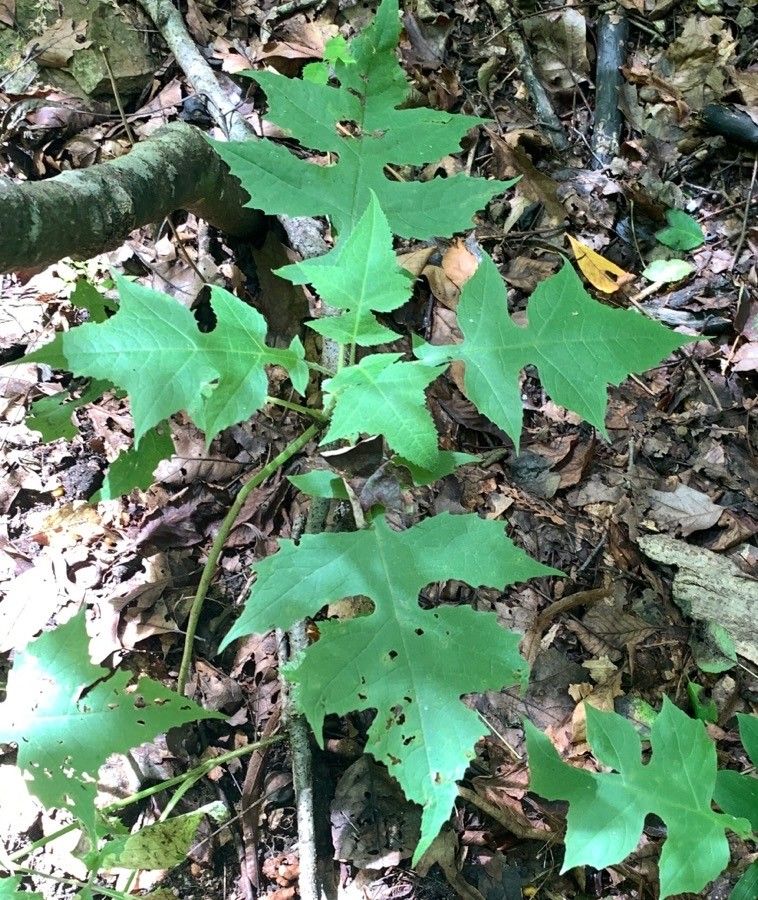
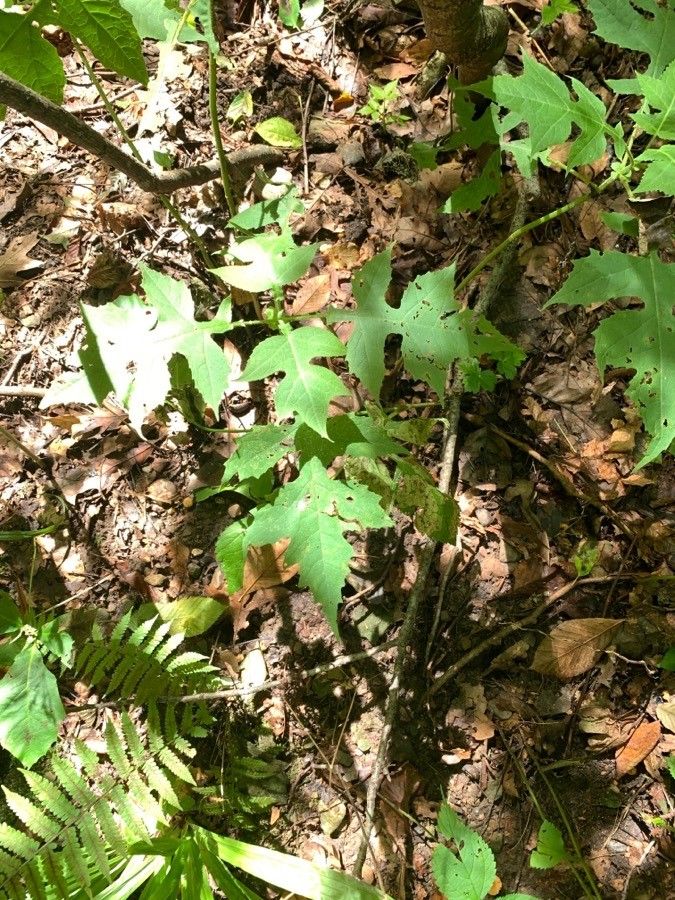
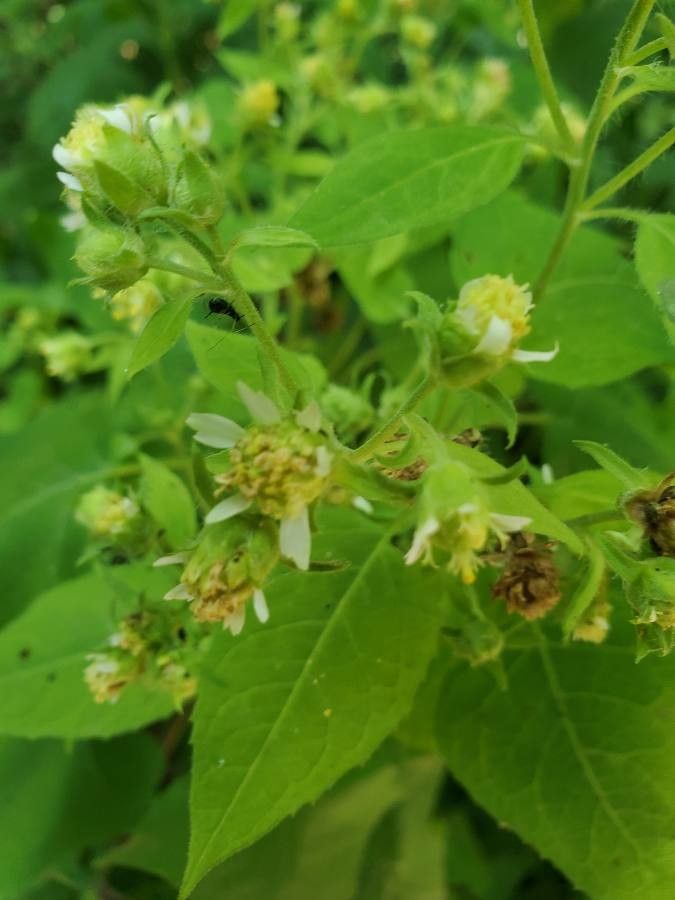
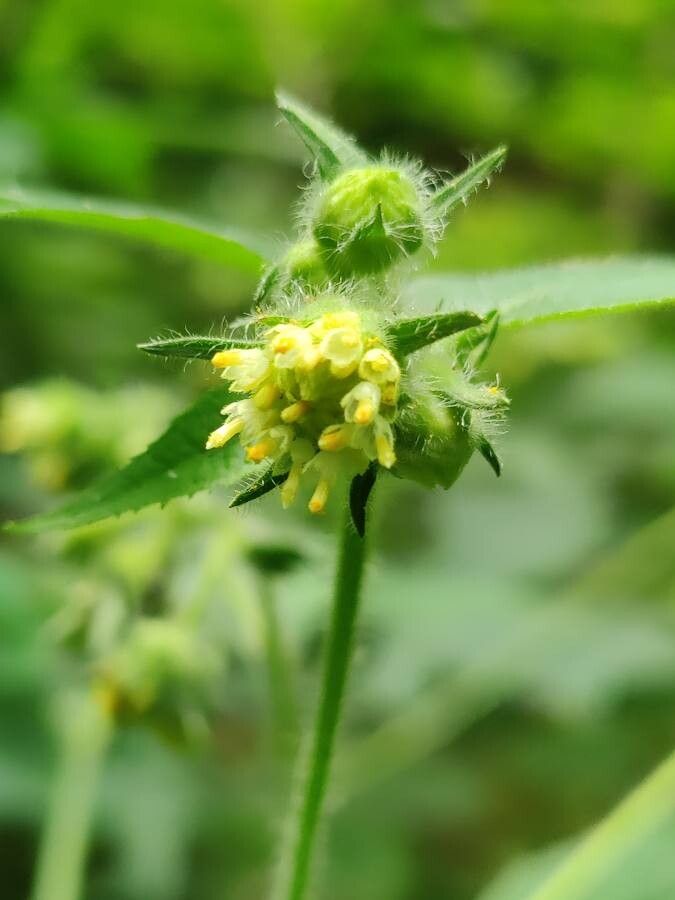
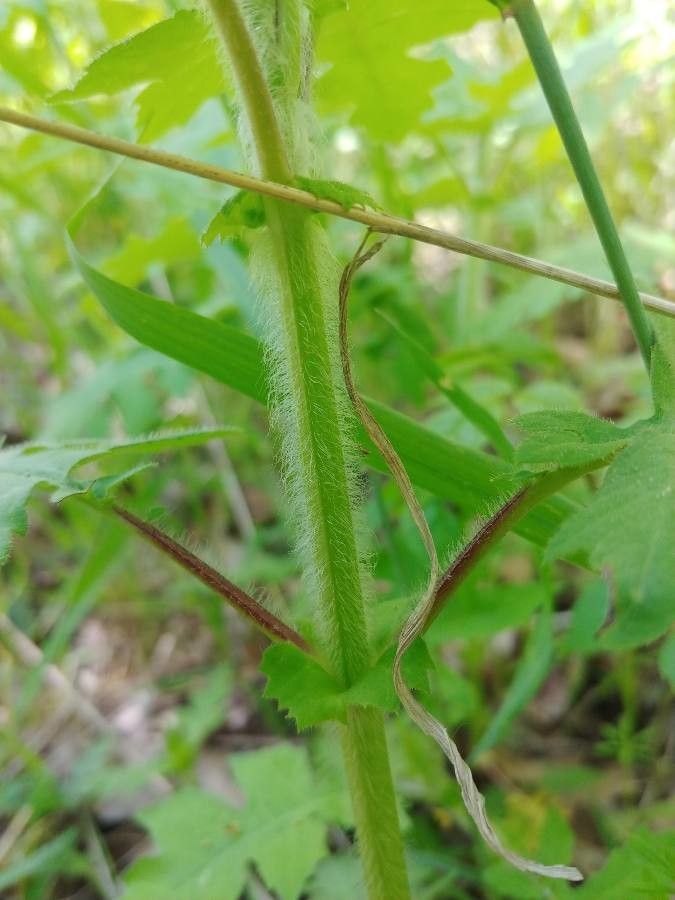
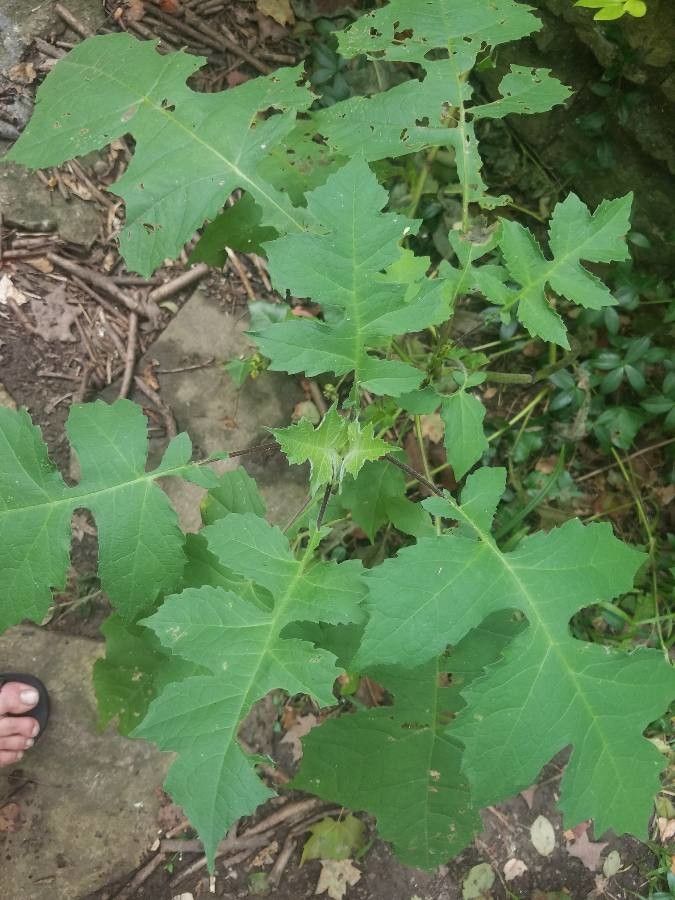
Polymnia canadensis, commonly known as American leafcup, is a perennial herbaceous plant that belongs to the Asteraceae family. Native to North America, it thrives in various habitats including woodlands, meadows, and along stream banks. This plant can grow up to 6 feet tall and features large, deeply lobed leaves with toothed edges. Its yellow flowers bloom from July to September.
Native Americans have utilized the American leafcup for its medicinal properties for centuries. It was believed to possess anti-inflammatory qualities and was used to treat various ailments such as fever, coughs, colds, and arthritis pain, among others.
The American leafcup is also ecologically significant due to its ability to attract pollinators like bees and butterflies with its nectar-rich flowers. Additionally, it serves as a food source for wildlife, including deer who feed on its leaves.
Overall, Polymnia canadensis is an important species both ecologically and medicinally, making it a vital part of North America's natural heritage.
Small flowered leafcup is fairly disease-resistant and generally does not suffer from many illnesses. However, it can be vulnerable to pests and diseases present in its surroundings. These infections are typically not serious. For care, the plant requires moderate maintenance. Regular pruning is needed to maintain an attractive appearance and healthy growth. Fertilizing can also help encourage flowering. Small flowered leafcup is well suited to anyone with an outdoor area, such as a garden or patio, and does not demand extensive plant-care experience. It may need extra attention if grown indoors.
How to keep Polymnia Canadensis.
Light
The small-flowered leafcup prefers spots with partial sun exposure. It thrives at that light level, reflecting its natural habitat. Excessive light can impede its growth, while insufficient light may stunt its development.
Water
The small-flowered leafcup is native to moist woodlands and thrives in evenly moist soil. Once established, it can tolerate moderate drought conditions. To prevent waterlogging, it is advisable to water the plant weekly. As an herbaceous perennial, it benefits from mulching, which helps retain soil moisture and reduces the need for frequent watering.
Temperature
Small flowered leafcup can tolerate a wide range of temperatures, though its distribution may still be restricted by different combinations of moisture and heat. It does best in warm summer conditions with sufficient rainfall or watering. Extended periods of cloudy, rainy weather, as well as prolonged high temperatures, can raise the chance of Small flowered leafcup dying. In winter, adequate protection from cold can increase the plant’s survival rate.
Fertilizer
One fertilization in spring is generally enough for Small flowered leafcup, though multiple feedings can boost growth. Feed every one to one and a half months. Fertilizing improves the leaves' appearance and function, helping maintain even color and a healthy texture. It also promotes root development and nutrient uptake for sustained plant health.
Pruning
The small-flowered leafcup benefits from light pruning in the spring to remove dead stems and maintain its shape. Avoid heavy pruning, as it can cause stress to the plant. Regular pruning encourages healthy growth and flowering while controlling the plant's spread. Be sure to use sharp, clean tools to minimize injury and promote quicker healing.
Botanical profile.
- Plant Type
- Herb
- Life Cycle
- Perennial, Biennial
- Genus
- Polymnia
- Family
- Asteraceae
- Hardiness Zone
- 4
- Mature Height
- 0.61 m to 1.22 m
- Mature Spread
- 61 cm to 91 cm
- Leaf Color
- Green
- Leaf Type
- Deciduous
- Flower Color
- Yellow
- Flower Size
- 2.54 cm
- Bloom Time
- Early summer, Mid summer
- Planting Time
- Autumn, Winter
- Harvest Time
- Mid summer
Other names.
Reader questions.
How should I water my Small flowered leafcup plant?
To properly water the Small flowered leafcup, it is recommended to use filtered water at room temperature. Tap water may contain harmful particles, so filtered water is preferable. The water should be at room temperature or slightly warmer since the Small flowered leafcup is adapted to a warm environment and cold water can be a shock to its system. It is also advised to avoid overhead watering as it can lead to foliage issues. Instead, you should directly apply the filtered room temperature water to the soil until it is fully soaked. This is beneficial for the plant as it helps moisten the roots and promote their spread through the soil to gather essential nutrients.
What are the sunlight requirements for a small flowered leafcup?
The small flowered leafcup thrives in semi-exposure to sunlight, needing about 3-6 hours of sunlight daily. This level of light intensity mirrors its natural habitat, promoting optimal growth. An overabundance of light can hinder its growth, while insufficient light may stunt its development. It's essential to observe how sunlight moves through your garden to choose spots that provide a balance of light and shade, ensuring the plant's happiness.
What do I need to do if I give my Small flowered leafcup plant either too much or too little water?
Overwatering and underwatering can both harm the health of your Small flowered leafcup, but overwatering is more common. When this plant gets too much water, its stems and leaves wilt and turn yellow. Overwatering for a long time can also cause diseases like root rot, mold, and mildew, which can be fatal for the plant. Underwatering is less common because the Small flowered leafcup can tolerate drought, but it can still happen. When it does, the leaves become brittle and brown. It's important to notice signs of overwatering and take action right away. Some diseases caused by overwatering, like root rot, can't be fixed if you wait too long. If you see early signs of overwatering, reduce watering immediately and check the soil. If the soil doesn't drain well, replace it with a loose potting mix. If signs of underwatering appear, simply water more regularly until the signs go away.
How can artificial lighting support plant growth indoors?
Indoor plants, including the small flowered leafcup, require adequate lighting for optimal growth, especially when natural sunlight is insufficient, like during winter or in less sunny spaces. Artificial lights, such as LED lights, offer a vital solution. These can be customized to provide specific wavelengths needed by the plants. Full sun plants need 30-50W/sq ft of light, partial sun plants 20-30W/sq ft, and full shade plants 10-20W/sq ft. Position the light source 12-36 inches above the plant and ensure it receives 8-12 hours of light per day to mimic natural daylight hours.
How often do I need to water my Small flowered leafcup?
If your Small flowered leafcup is in a pot, the most accurate way to determine if it needs water is to check the soil by sticking your finger into it. If you find that the top two to three inches of soil are dry, it's time to water it. If you grow your Small flowered leafcup outdoors in the ground, you can use a similar method to test the soil. Once again, if the first few inches of soil have dried out, it's time to water. Typically, during the spring and early fall, watering about once a week should suffice. However, during extremely hot weather, you may need to water two or more times per week. It's worth noting that mature and well-established Small flowered leafcups have a good ability to tolerate dry conditions.
What are the symptoms of inadequate light for a small flowered leafcup?
When grown indoors with insufficient light, a small flowered leafcup may exhibit symptoms like smaller new leaves, leggy or sparse growth, faster leaf drop, slower or no new growth, lighter-colored new leaves, and conditions like chlorosis, sunscald, leaf curling, wilting, and leaf scorching. These symptoms indicate the plant's struggle with light deficiency, affecting its health and growth.
How much water does my Small flowered leafcup require?
To properly water your Small flowered leafcup, make sure the top two to three inches of soil are dry. Give the plant a generous and thorough watering, making sure to completely soak the soil. You should add enough water that it flows through the drainage holes at the bottom of the pot. If you don't see any excess water draining, you may have not watered enough. However, be careful not to let the water accumulate in the soil, as this can harm the plant. It's also important to note that poorly draining soils can be harmful to the plant's health, so make sure to avoid that. If the plant is outdoors, it typically only needs about 1 inch of rain per week.
What solutions are recommended for improving a small flowered leafcup's light exposure?
To optimize a small flowered leafcup's growth, progressively introduce it to sunnier locations, aiming for 3-6 hours of direct sunlight each day. For indoor plants that are large or difficult to move, consider using artificial light sources, keeping them on for at least 8 hours daily. For outdoor plants, gradually moving them to sunnier spots each week can help avoid sunburn. Additionally, reducing obstructions by pruning trees or transplanting smaller plants during their dormant period can improve sunlight accessibility. Despite these efforts, parts of the plant already affected by insufficient light may not recover, but new growth should be healthy with better light exposure.
How do I water my Small flowered leafcup at different stages of growth?
The water needs of the Small flowered leafcup can vary depending on its growth stages. When the plant is in its early years or has just been transplanted to a new location, it requires more water than usual. During these stages, the focus of the plant's energy is on developing new roots to support future growth, and these roots require extra moisture. After a few seasons, the water needs of the Small flowered leafcup decrease significantly. Another stage in which the plant may need more water is during the bloom period. Flower development requires a significant amount of moisture, so you may need to provide additional water at this time.
How do I water my Small flowered leafcup at different times of the year?
The Small flowered leafcup has different water needs throughout the year. In the hottest months of summer, it will need the most water. You may need to water it more than once a week, depending on how quickly the soil dries out. On the other hand, during winter, the plant enters a dormant phase and requires much less water. In fact, you may not need to water it at all during the winter months. However, if you choose to water it, do so only about once a month. Overwatering during winter can increase the chances of the Small flowered leafcup getting sick.
What's the difference between watering my Small flowered leafcup inside my house and outside in the garden?
The Small flowered leafcup is best grown indoors, especially if you don't live in temperate or tropical regions. Keep in mind that the soil in a container can dry out faster compared to ground soil. If you have air conditioning units that cause drying, your Small flowered leafcup may need more frequent watering when planted outside. However, if you receive regular rainfall, you may not need to water it much at all. On the other hand, if you grow the plant indoors, you will need to water it more often because rainwater won't naturally soak the soil.