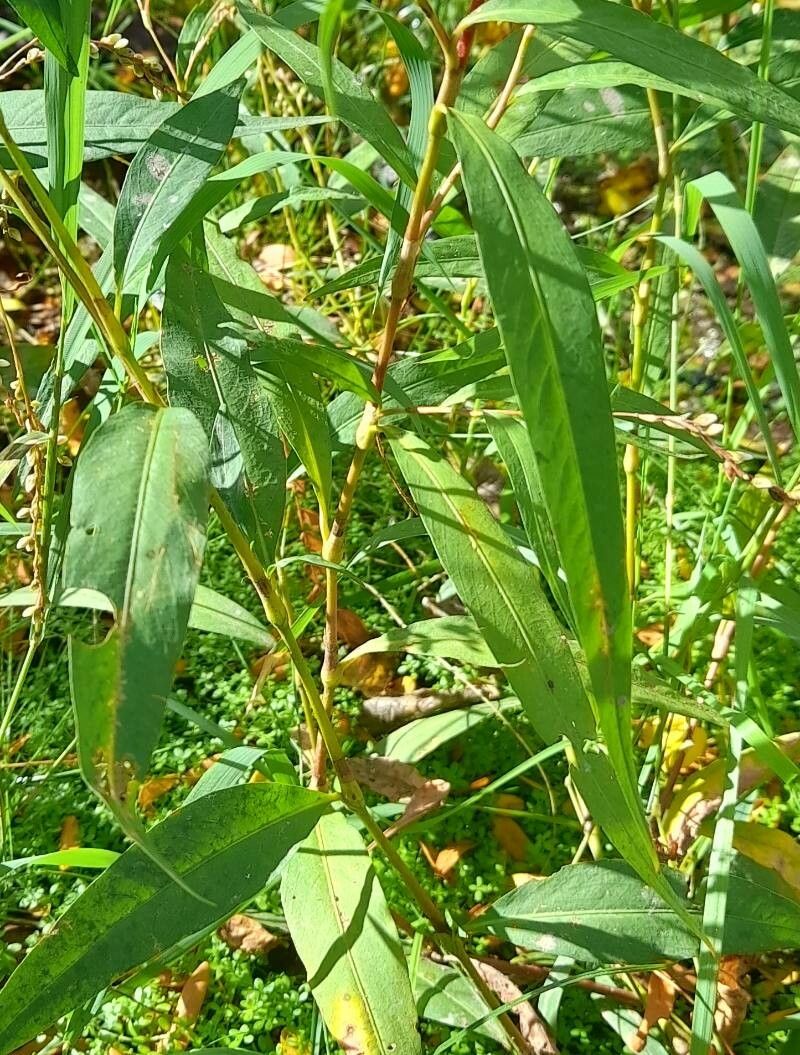
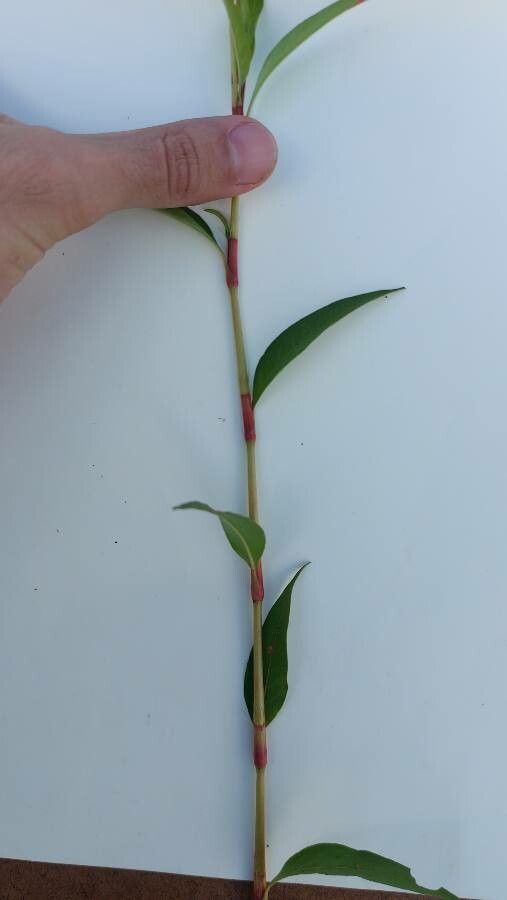
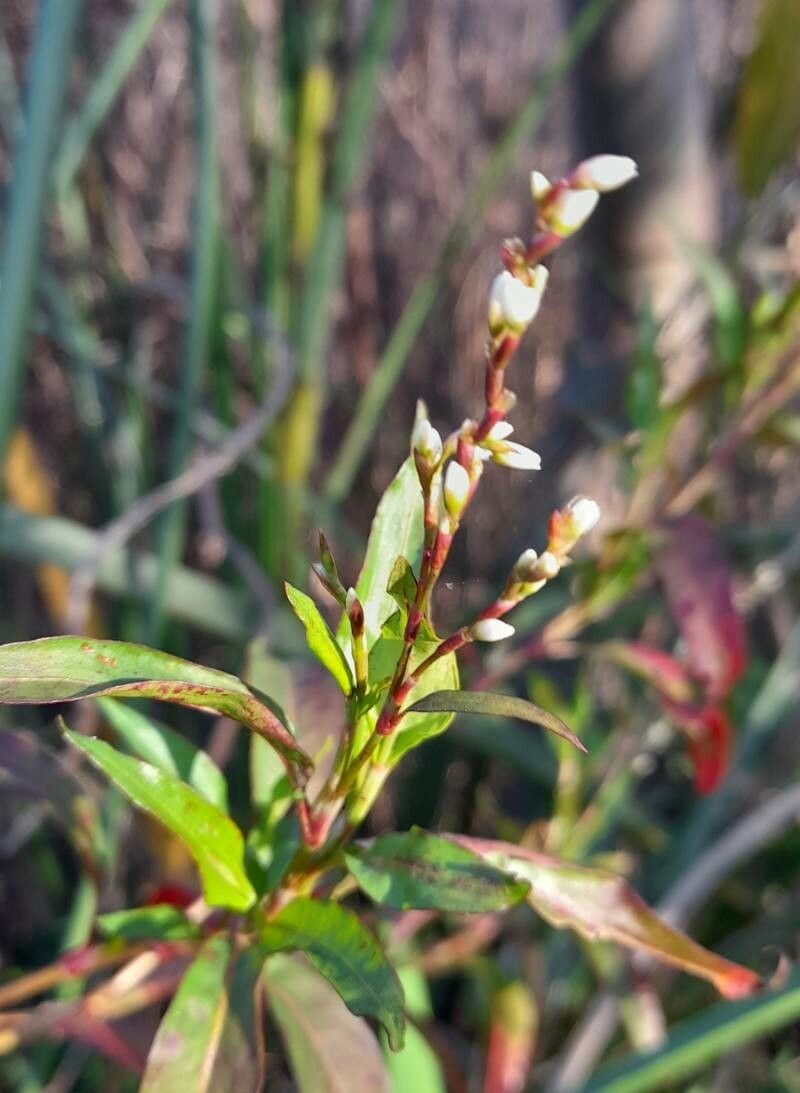
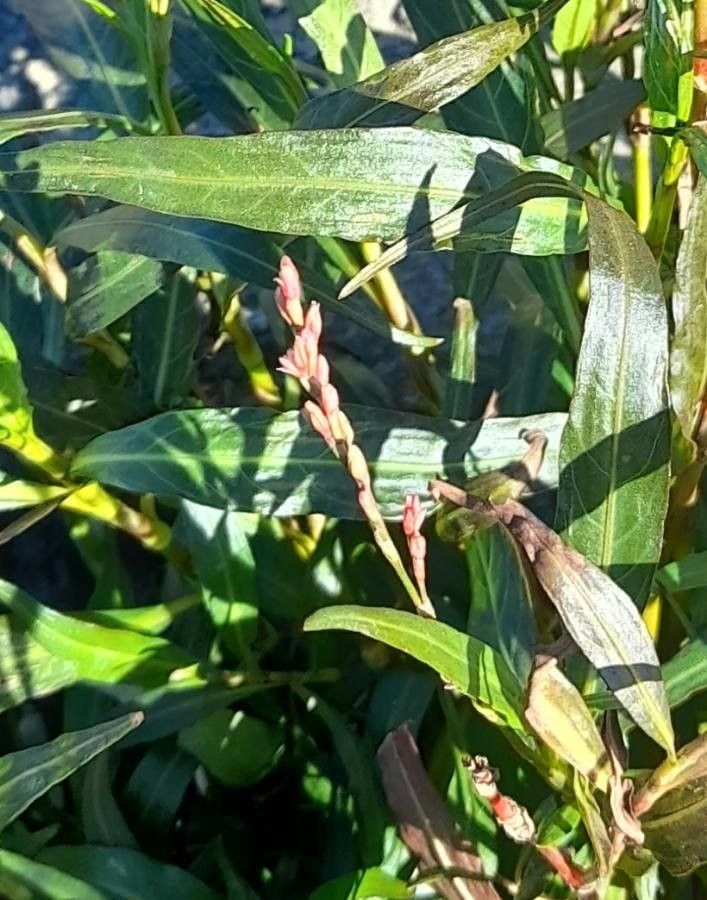
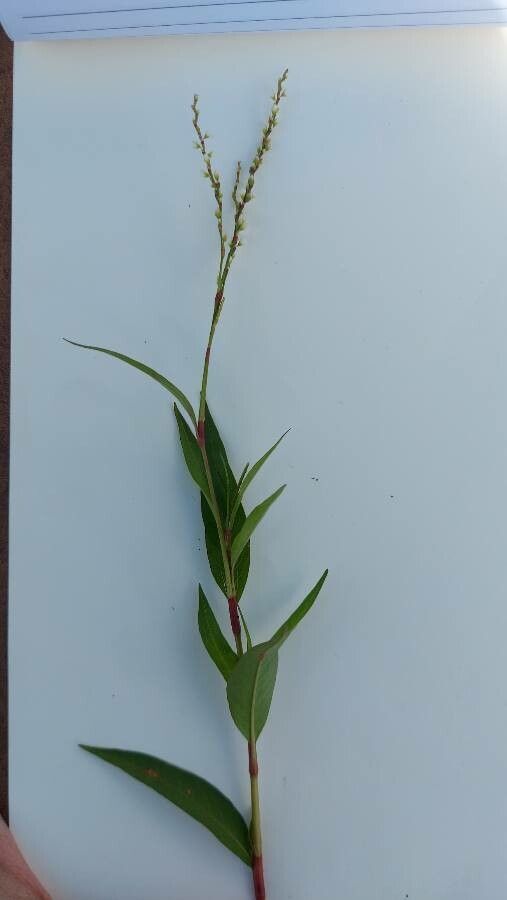
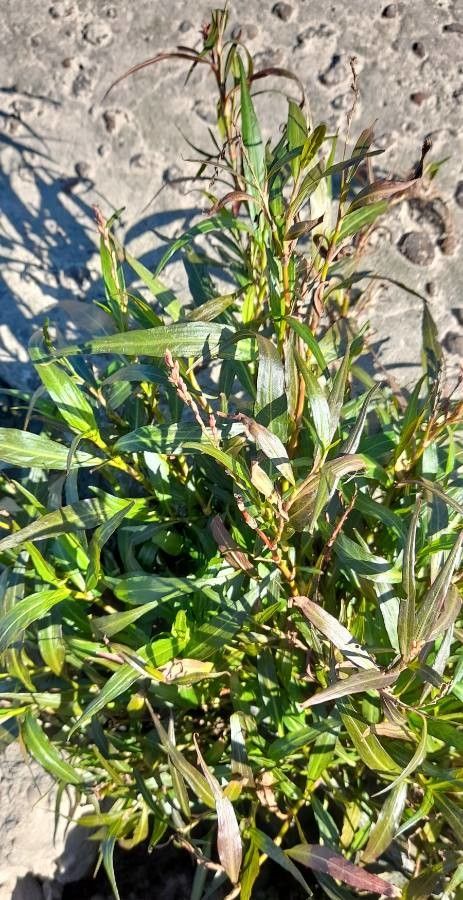
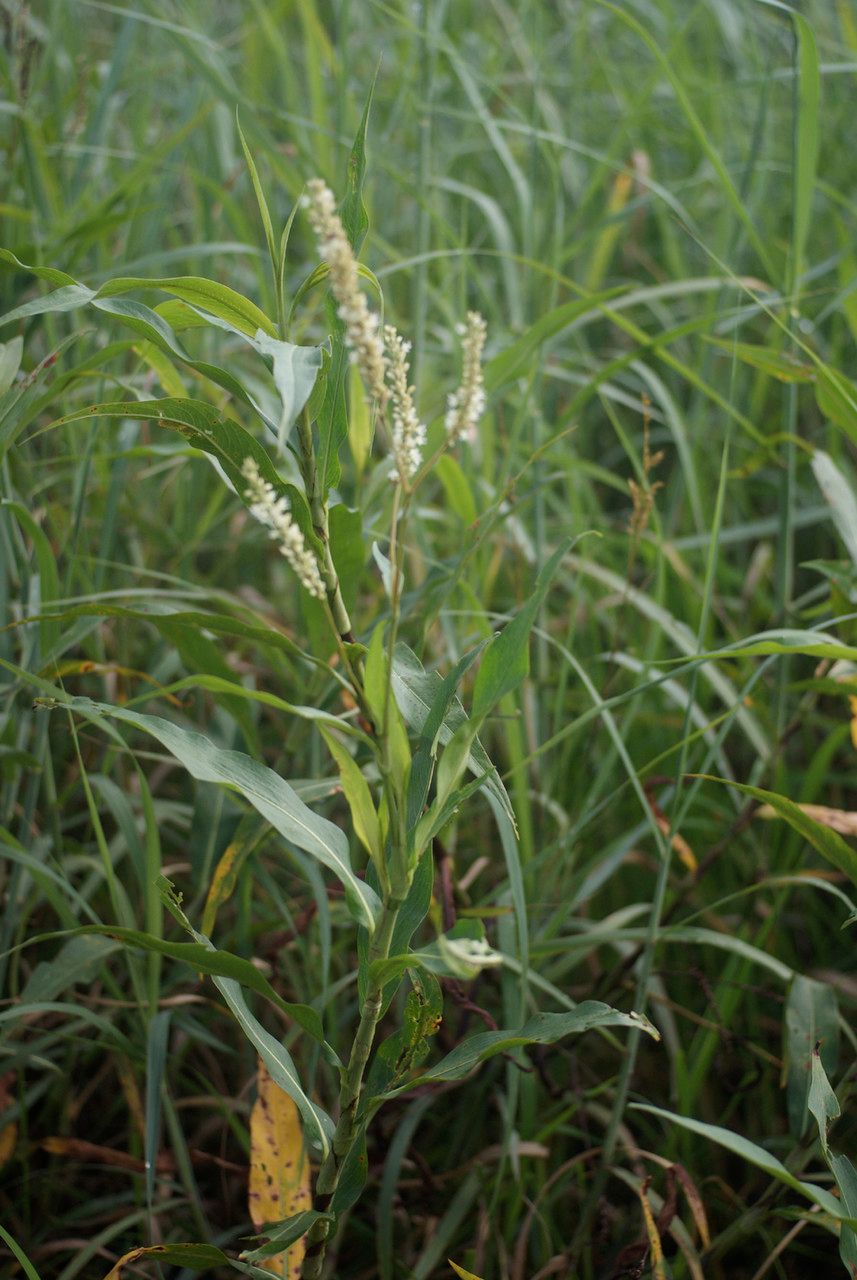
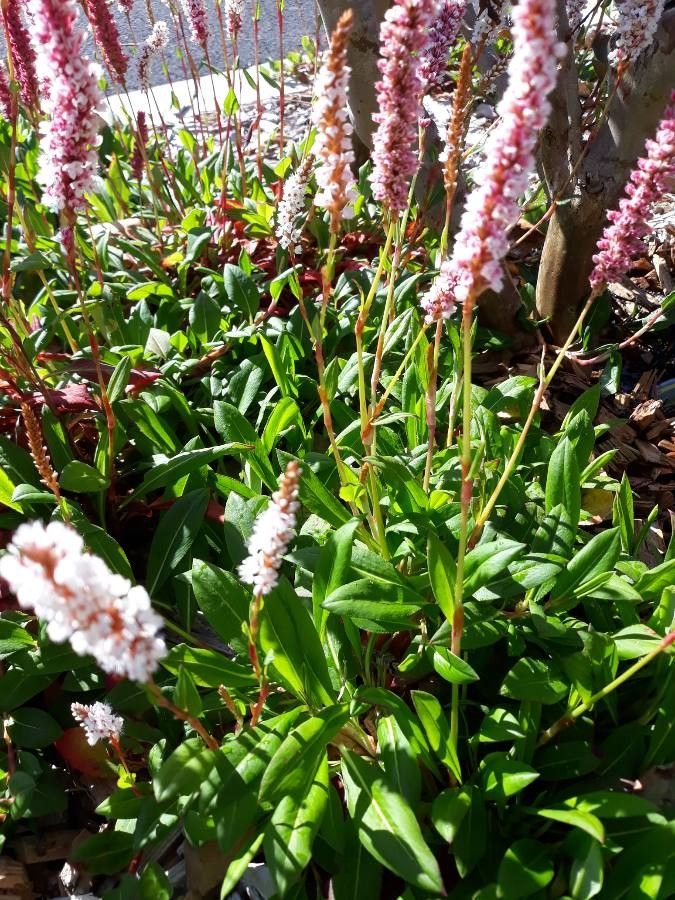
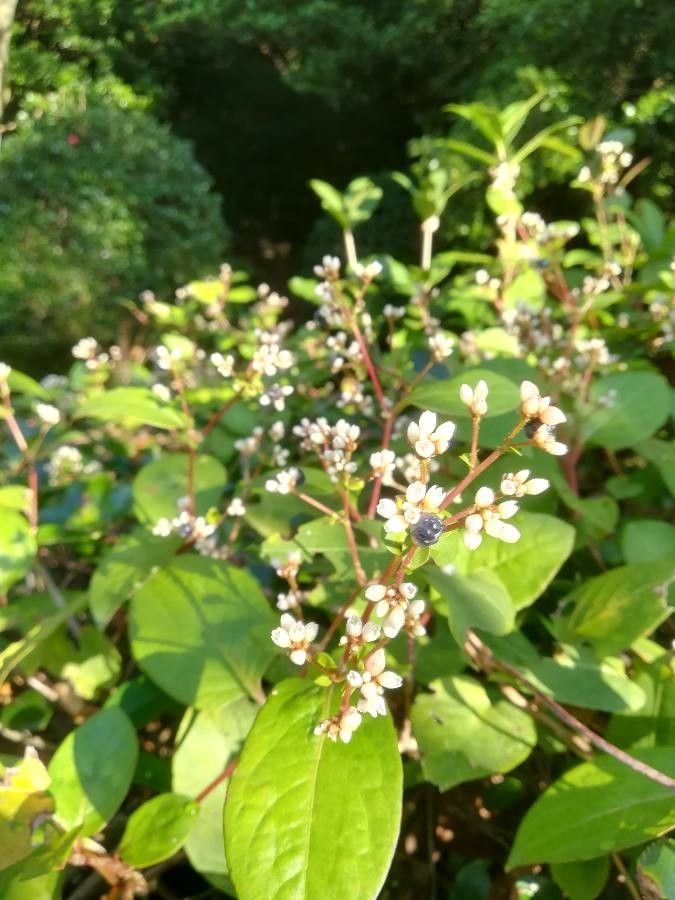
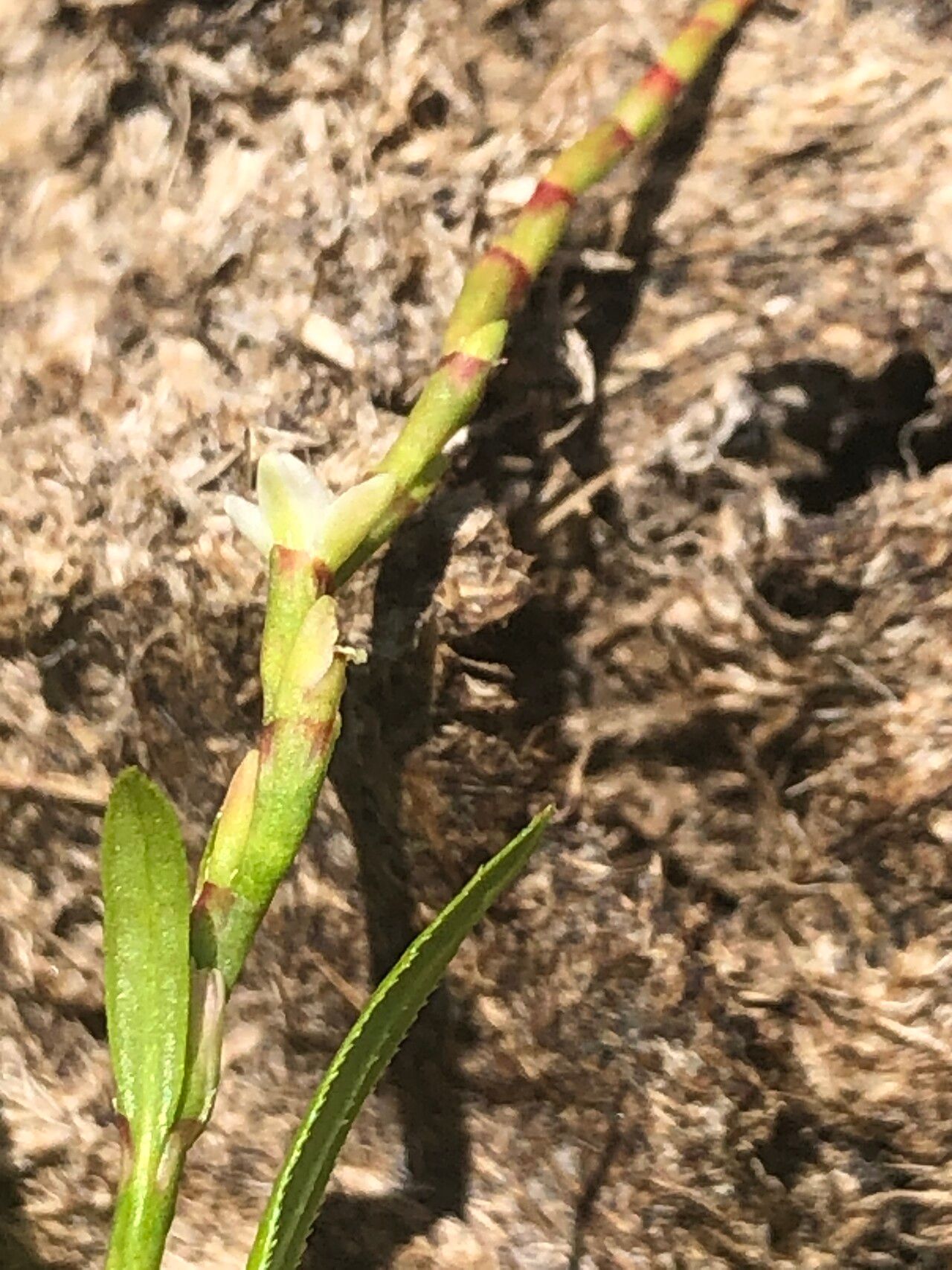
Persicaria punctata (syn. Polygonum punctatum) is a species of flowering plant in the knotweed family known by the common names dotted smartweed and dotted knotweed. Persicaria punctata is native to the Americas, where it can be found in moist and wet habitat types from Canada to Argentina including the West Indies. It is an extremely variable plant. It may be annual or perennial. Persicaria punctata grows from a rhizome and produces decumbent or erect stems which may just exceed one meter (40 cm) in length. The branching stems may root at nodes that come in contact with the substrate. The lance-shaped leaves are up to 15 centimeters long and have stipules widened into bristly brown ochrea that wrap around the stems. The inflorescence is a number of branching clusters of dotted greenish flowers with white edges, sometimes tinged pink.
Nepal persicaria has strong disease resistance and is generally not susceptible to illnesses. However, it can be affected by pests and diseases present in its surroundings. These infections are typically not serious. As for care, this plant requires a moderate amount of maintenance. It should be pruned regularly to keep a neat appearance and support healthy growth. Fertilizing can also encourage flowering. Nepal persicaria is suitable for anyone with outdoor space, such as a garden or patio, and does not demand extensive gardening experience. It may need more attention if grown indoors.
How to keep Polygonum Punctatum.
Light
Nepal persicaria occurs naturally in habitats like forest understories and rocky areas, which provide natural shade. It prefers partial sun but can tolerate full sun or full shade, demonstrating its versatility and hardiness.
Temperature
Nepal persicaria shows good adaptability to temperature, tolerating higher heat and wide temperature fluctuations. When temperatures are high, attention should be paid to watering and providing appropriate shade to avoid sunburn. However, Nepal persicaria is relatively intolerant of low temperatures. It can withstand some cold, but excessively cold conditions may cause frost damage.
Fertilizer
One fertilizer application in spring is generally enough for Nepal persicaria, though repeated feedings can maximize growth. Feed every month to a month and a half. Fertilization improves the leaves' appearance and function, maintaining uniform color and a healthy texture. It also promotes root development and nutrient uptake for long-term plant health.
Botanical profile.
- Plant Type
- Herb
- Life Cycle
- Perennial, Annual
- Genus
- Polygonum
- Family
- Polygonaceae
- Hardiness Zone
- 7-10
- Mature Height
- 40 cm
- Mature Spread
- 46 cm to 61 cm
- Leaf Color
- Green, Dark Green
- Leaf Type
- Semi-evergreen
- Flower Color
- Pink, White
- Flower Size
- 0.20 cm to 0.25 cm
- Bloom Time
- Summer, Fall
- Planting Time
- Spring, Summer, Autumn
- Harvest Time
- Late summer, Fall, Early winter
- Native Area
- Sri Lanka, India, Malaysia, Madagascar, Rwanda, Pakistan, Eritrea, Yemen, Kenya, Uganda, Tanzania, Russia, Indonesia, Cameroon, Burundi, Koppen, Ethiopia, South Korea, Nepal, Malawi, Tajikistan, South Africa, Zambia, Sudan, Philippines, Laos, China, Afghanistan, Vietnam, Myanmar, Japan, Bhutan, Congo (DRC), Thailand
Other names.