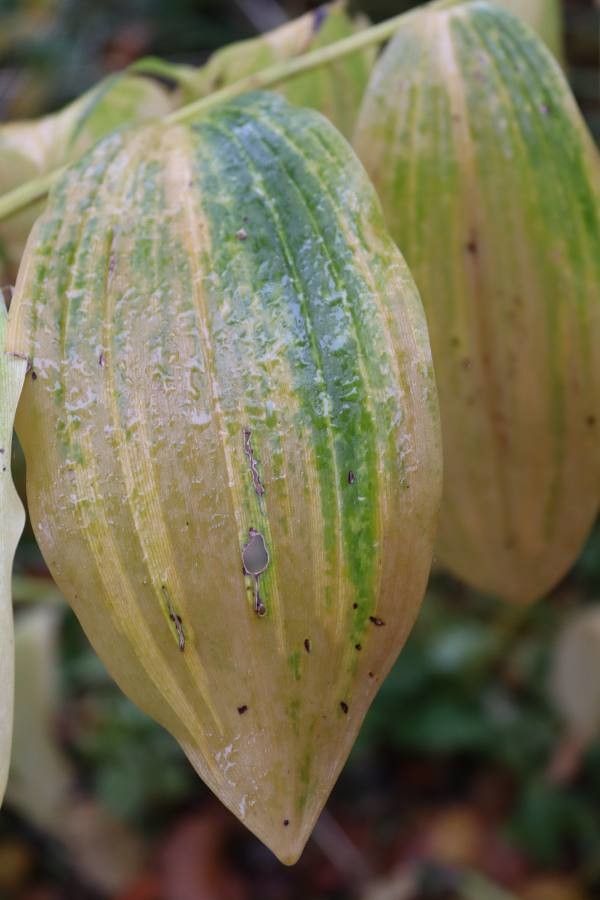
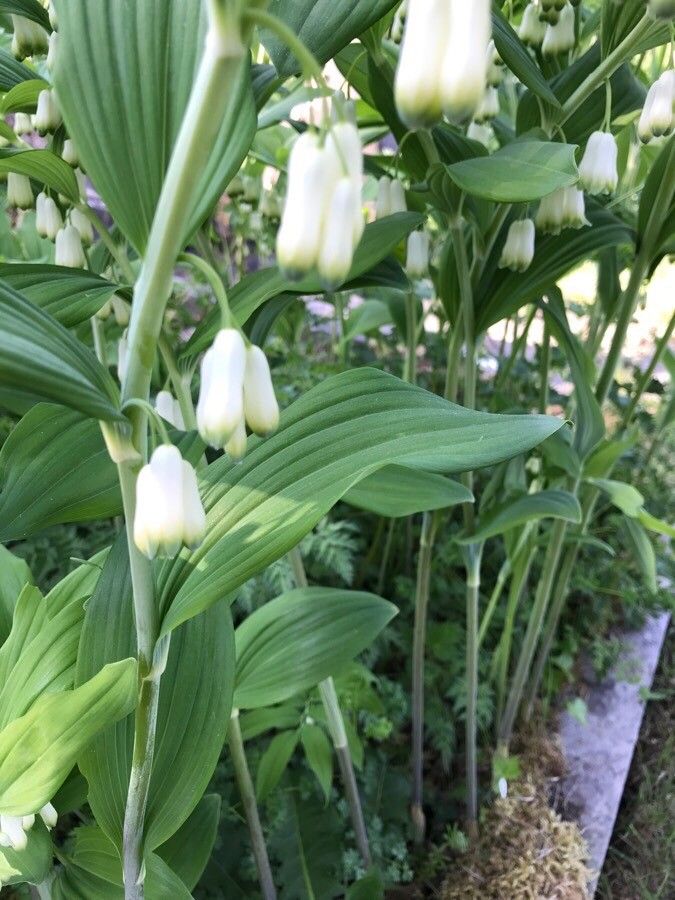
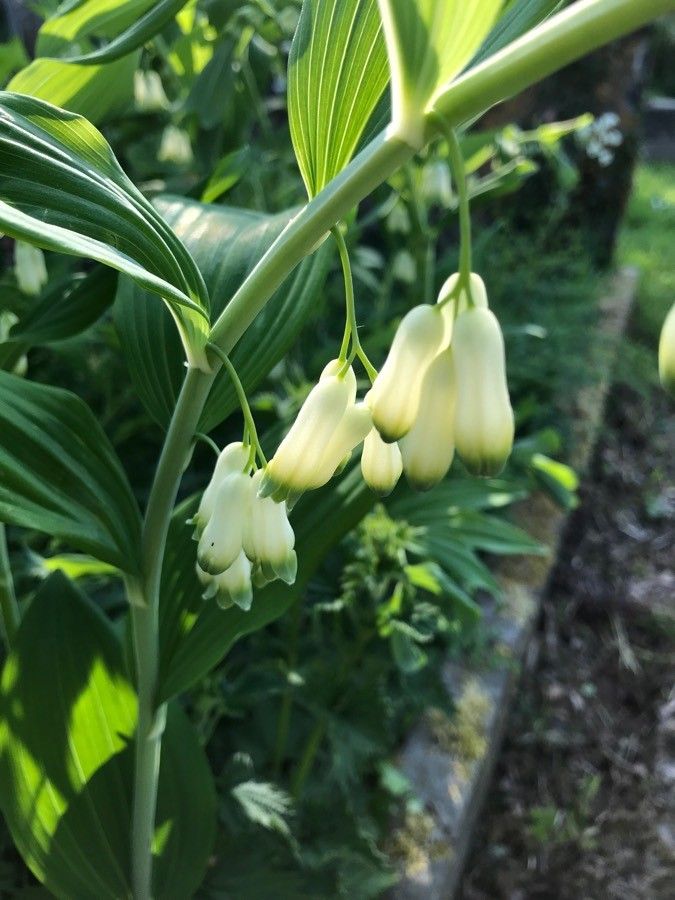
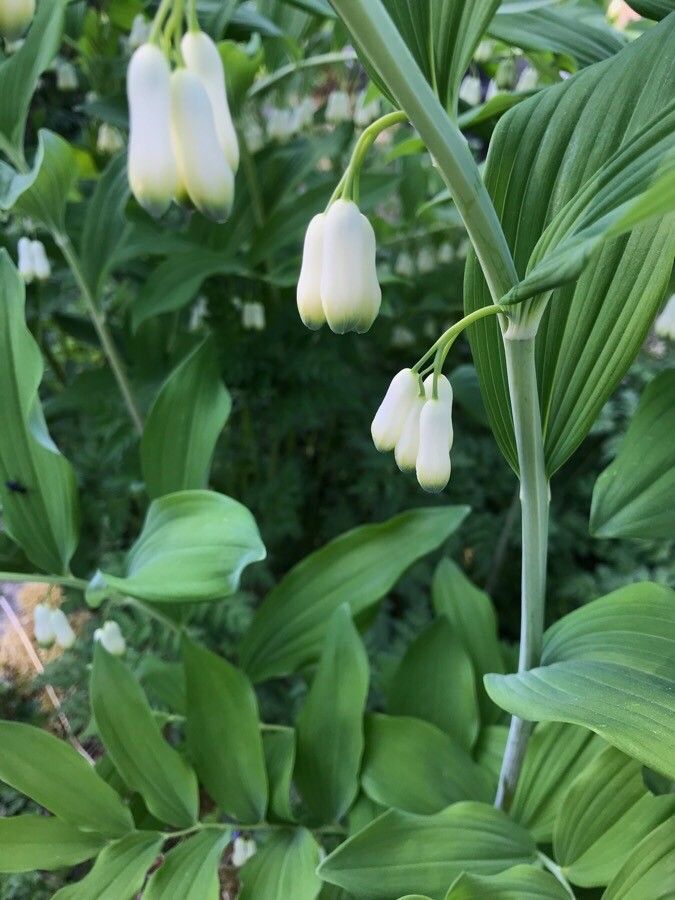
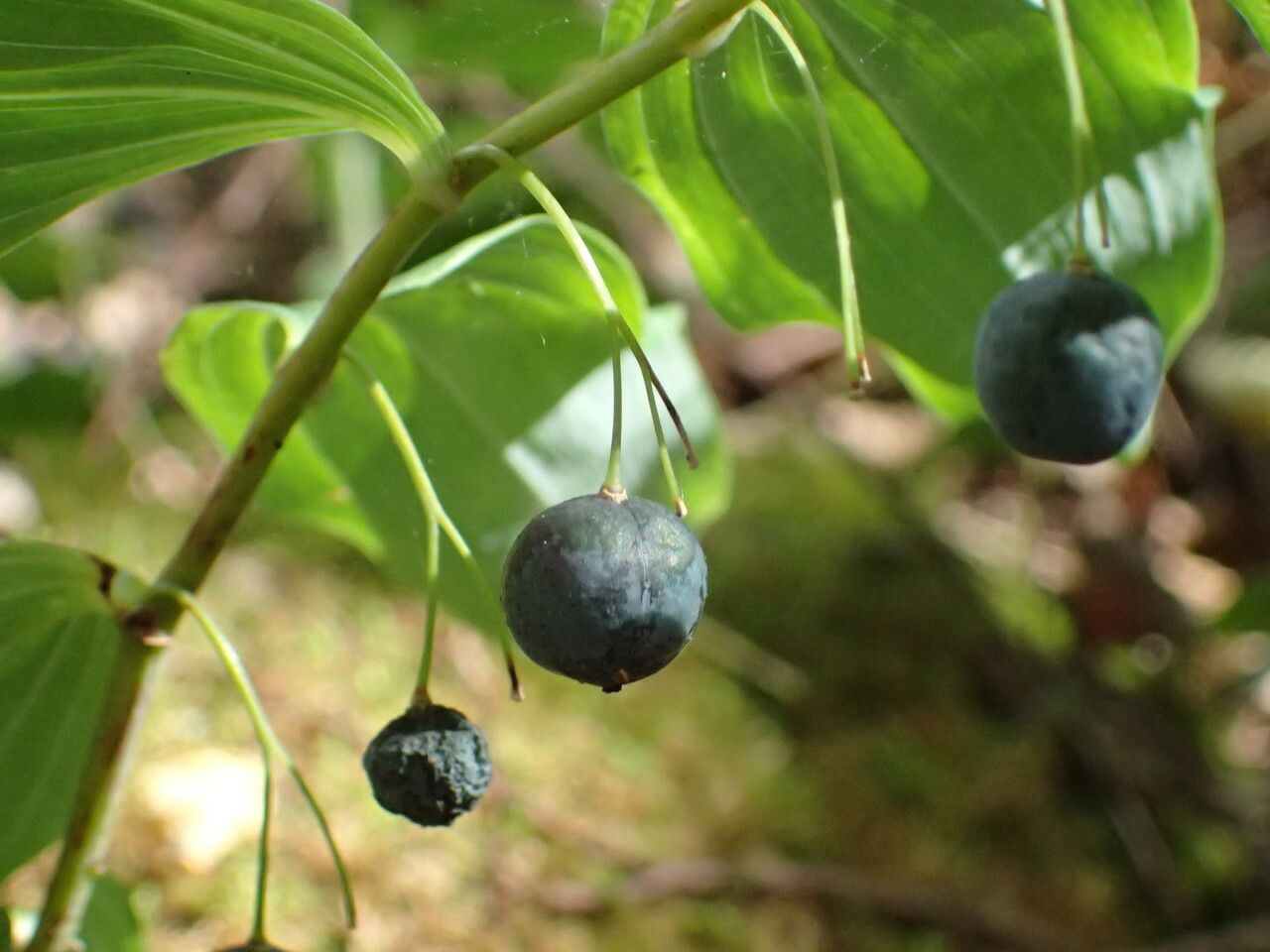
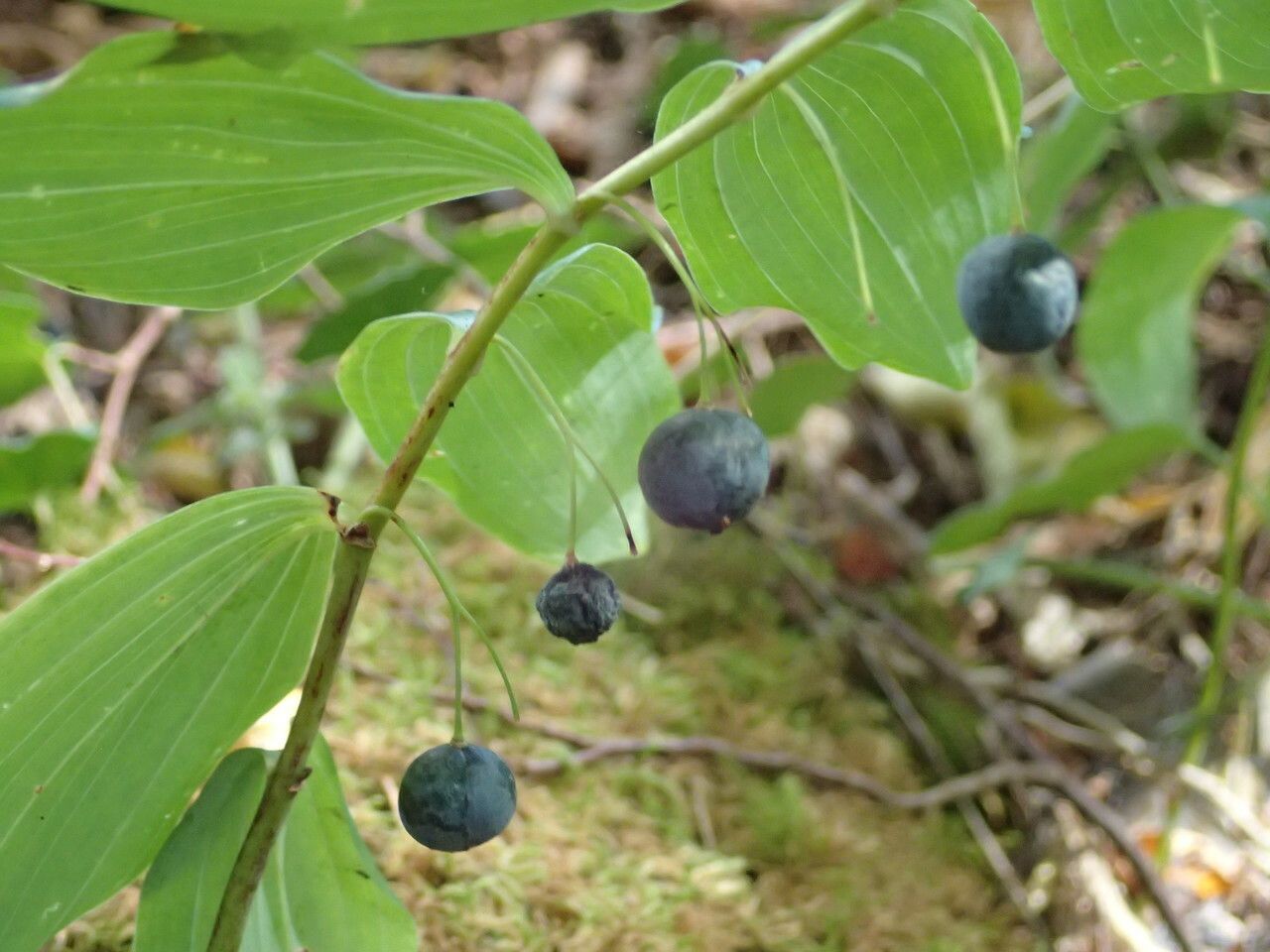
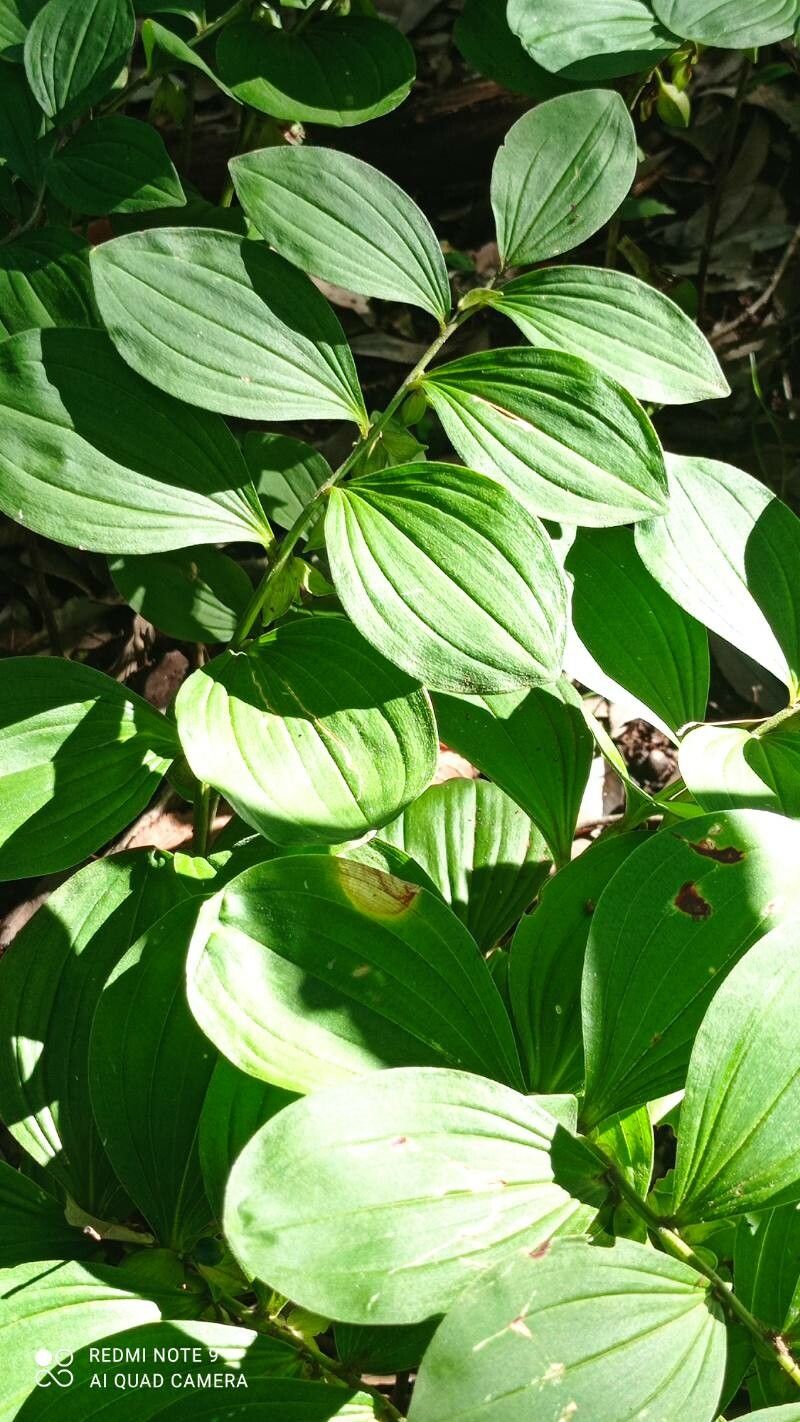
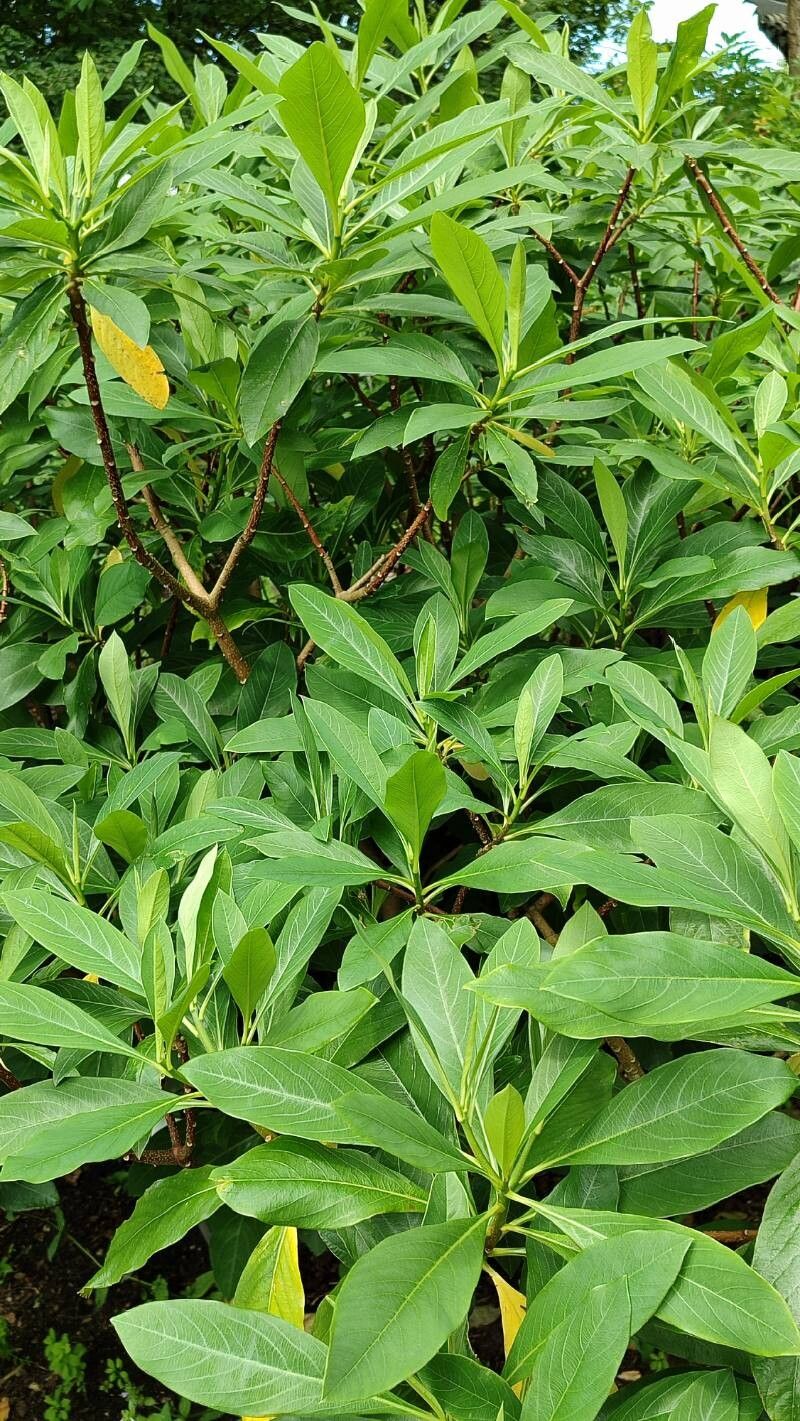
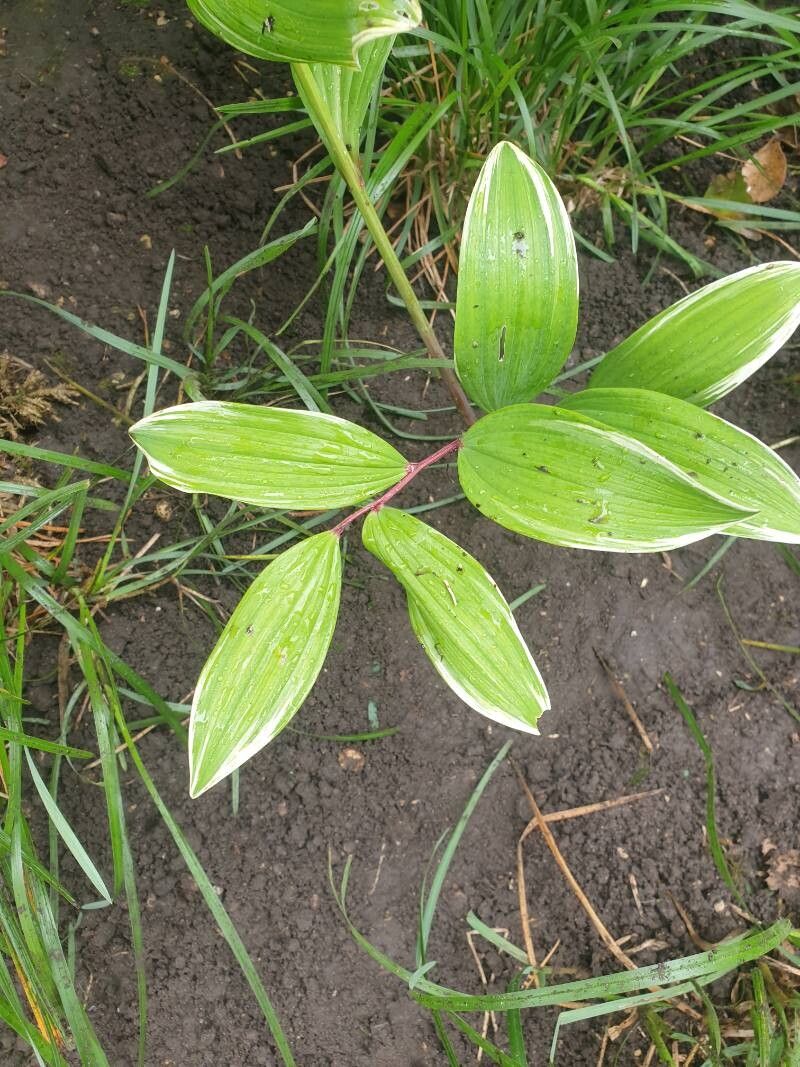
Polygonatum multiflorum, commonly known as Solomon's seal, is a perennial herbaceous plant belonging to the Asparagaceae family. Native to Europe and Asia, it can grow up to 1.5 meters tall. The plant features arching stems with alternate, oval-shaped leaves that have pointed tips.
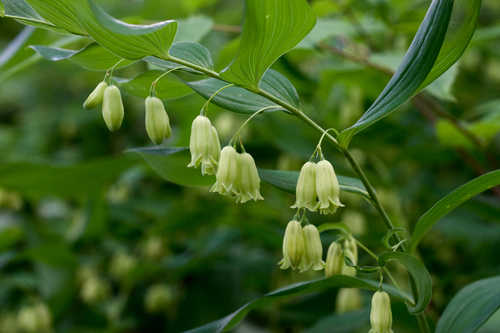
The flowers of Polygonatum multiflorum are small and bell-shaped, hanging from the undersides of the stems in clusters that can contain up to 20 blooms per stem. Typically, these flowers are white or pale green and consist of six petals.
This plant prefers moist soil conditions but can tolerate some drought once established. It thrives in partial to full shade, making it an excellent choice for woodland gardens or shady borders.
Polygonatum multiflorum has been used for medicinal purposes for centuries, particularly for its anti-inflammatory properties. It is useful in treating joint pain and inflammation caused by arthritis or other inflammatory conditions.
Overall, Polygonatum multiflorum is an attractive perennial herbaceous plant that adds both beauty and medicinal value to any garden setting.
Solomon's seal has strong resistance to disease and is generally not prone to illness. Still, it can be affected by pests and diseases present in its environment. Such infections are usually mild. In terms of care, this plant requires moderate maintenance. It should be pruned regularly to preserve a neat appearance and support healthy growth. Fertilizing can also help encourage flowering. Solomon's seal is well suited for anyone with outdoor space, like a garden or patio, and does not demand extensive gardening experience. It may need extra care when kept indoors.
How to keep Polygonatum Multiflorum.
Light
Solomon's seal prefers to grow in places with moderate sunlight but also does well in full shade. This preference stems from its natural habitat, which has variable light exposure. For best growth, the plant should not be kept consistently in either too much or too little sun.
Water
Solomon's seal flourishes in the moist, well-drained soil of temperate forest understories. It prefers consistent moisture and needs to be watered weekly, especially in the spring and summer, to support its growth cycle and ensure lush foliage and blooms. While it can tolerate brief dry periods, regular watering is important for its optimal health.
Temperature
Solomon's seal is native to regions with moderate temperatures. It performs best at temperatures between 68 and 95 °F (20 to 35 °C). Seasonal adjustments that replicate these conditions are recommended for optimal growth.
Fertilizer
The best time to fertilize a Solomon's seal is in early spring, as it breaks dormancy and begins active growth. Fertilization supplies essential nutrients for healthy development. Although Solomon's seal has relatively low fertilizer requirements, applying fertilizer annually can improve its survival and encourage better, longer-lasting flowers.
Pruning
Solomon's seal is a perennial plant that thrives in shady gardens. It is known for its graceful, arching stems and bell-shaped flowers. To maintain its health and vigor, it's important to prune the plant from early to late spring. During this time, remove any dead stems and thin out older ones to improve air circulation. This will promote healthier foliage and more abundant flowering, enhancing the plant's overall vitality.
Pot & Repot
Solomon's seal needs excellent drainage when grown in pots. This helps maintain healthy roots and prevents waterlogging.
Botanical profile.
- Plant Type
- Herb
- Life Cycle
- Perennial, Annual
- Genus
- Polygonatum
- Family
- Asparagaceae
- Hardiness Zone
- 4-8
- Mature Height
- 91 cm
- Mature Spread
- 25 cm
- Leaf Color
- Green
- Leaf Type
- Deciduous
- Flower Color
- White, Green
- Flower Size
- 1.02 cm to 2.03 cm
- Bloom Time
- Late spring, Early summer
- Planting Time
- Spring
- Harvest Time
- Mid summer
- Native Area
- India, Austria, Turkey, Sweden, Slovakia, Montenegro, Pakistan, Croatia, Slovenia, Belarus, Russia, Germany, Estonia, Romania, Latvia, Belgium, France, Netherlands, Czech Republic, Bulgaria, Armenia, Poland, Greece, Ukraine, Serbia, Lithuania, Norway, Italy, Kazakhstan, Spain, Switzerland, Denmark, Myanmar, Finland, Albania, Azerbaijan, United Kingdom, Hungary
Other names.
Reader questions.
How should I water my Solomon's seal plant?
When watering the Solomon's seal, it is best to use filtered water at room temperature. Tap water can have harmful particles, so filtered water is preferred. It is important to use room temperature or slightly warmer water because the plant is used to a warm environment and cold water can be a shock. To prevent foliage complications, do not water overhead. Instead, pour the filtered room temperature water onto the soil until it is completely soaked. This helps the roots stay moist and spread through the soil to gather nutrients.
Why is it important to fertilize my Solomon's seal plant?
Fertilization is important for the growth of Solomon's seal. It provides essential nutrients for both above and below ground development. While Solomon's seal can survive without fertilization, it has low overall fertilization needs. However, annual fertilization can be very beneficial. It helps keep the plant alive and encourages better, longer-lasting flowers. To ensure your Solomon's seal looks its best, it's recommended to fertilize annually.
What are the sun requirements for Solomon's seal?
Solomon's seal requires moderate sun coverage for optimal growth, thriving in both partial sun (about 3-6 hours of sunlight) and full shade (less than 3 hours of sunlight) conditions. This flexibility in light tolerance allows it to adapt well to varying garden environments. To ensure the plant's happiness, it's important to observe how sunlight moves through your garden, finding spots that offer a balanced light and shade mix.
What is the native environment of Solomon's seal?
Solomon's seal, botanically known as Polygonatum multiflorum, thrives in environments with moderate temperatures, specifically in a temperature range of 68 to 95 °F (20 to 35 °C). It is well-adapted to seasonal changes within these temperature ranges for optimal growth.
What should I do if I give my Solomon's seal plant too much or too little water?
Overwatering and underwatering can harm your Solomon's seal, but overwatering is more common. When the plant gets too much water, its stems and leaves may wilt and turn yellow. Overwatering for a long time can lead to diseases like root rot, mold, and mildew, which can be fatal. Underwatering is less common because this plant tolerates drought well, but it's still possible, causing brittle and brown leaves. It's crucial to detect signs of overwatering early. Some diseases, like root rot, can't be fixed if you wait too long. If you notice early signs, reduce watering immediately. Also, check the soil. If it drains poorly, replace it with a loose, well-draining mix. If you see signs of underwatering, simply water more regularly until the signs go away.
When should I fertilize my Solomon's seal plant?
The best time to fertilize a Solomon's seal is in late winter to early spring when the plant is transitioning from dormancy to active growth. Fertilizing during this time promotes healthy growth and sets the plant up for a successful season. While early spring is generally the most beneficial time to fertilize, fall is also acceptable. However, it is advised not to fertilize during summer or winter.
How does artificial lighting affect indoor plants, including Solomon's seal?
Indoor plants, like Solomon's seal, benefit significantly from adequate lighting, especially when natural sunlight is insufficient. Artificial lights, such as LEDs, can be an essential aid in promoting healthier and faster growth by providing the specific wavelengths of light that plants need. The key to effective artificial lighting includes choosing the right type of light, determining the appropriate distance between the light and the plant (12-36 inches), and mimicking the natural daylight hours (8-12 hours per day) to suit the plant's needs.
How does Solomon's seal react to cold temperatures?
Solomon's seal possesses strong cold resistance and does not usually require special frost protection measures during winter. However, in the event winter temperatures are expected to plummet below -30°C, it's important to provide the plant with cold protection, such as covering it with soil or straw. Additionally, watering the plant abundantly before the first freeze in autumn helps ensure the soil remains moist and enters a frozen state, which aids in preventing drought and water scarcity for the plant during winter and early spring.
How often should I give water to my Solomon's seal plant?
If your Solomon's seal plant is in a pot, the most precise way to determine if it needs water is by checking the moisture level of the soil. Simply stick your finger into the soil and if the top two to three inches are dry, then it's time to water it. If you have planted your Solomon's seal outdoors, you can also use a similar method to test the soil. Once again, check if the top few inches of soil have become dry, and if so, it's time to water. Typically, during the spring and early fall, this method will indicate a need for watering around once per week. However, during extremely hot weather, you may need to water your plant twice or more per week. It's worth noting that mature and well-established Solomon's seal plants have a remarkable ability to withstand drought.
When should I not add fertilizer to my Solomon's seal plant?
To avoid overfertilizing your Solomon's seal plant, it is recommended to only fertilize it once during late winter or early spring. Fertilizing during spring, summer, and fall is likely to cause overfertilization and complications. The only exception is if you missed fertilizing in spring, in which case it is acceptable to fertilize in fall. Additionally, there is no need to fertilize the plant during winter when it is in a dormant phase and not actively growing.
What are the common symptoms of insufficient light in Solomon's seal?
When Solomon's seal receives insufficient light, it may exhibit several symptoms including smaller new leaves, leggy or sparse growth, faster leaf drop, slowed or halted growth, lighter-colored new leaves, and conditions such as chlorosis, sunscald, leaf curling, wilting, and leaf scorching. These symptoms indicate a lack of adequate sunlight, affecting the plant's health and growth.
What are the important symptoms and solutions for Solomon's seal in low temperatures?
In low temperatures, Solomon's seal shows remarkable cold tolerance, thriving best when temperature is maintained above 20°C. It should not be allowed to fall below 0°C. In cases where the temperature dips below -30°C, there may not be observable changes during winter, but sprouting may be significantly reduced or even absent in spring. The solution involves removing any parts of the plant that have failed to sprout in the spring.