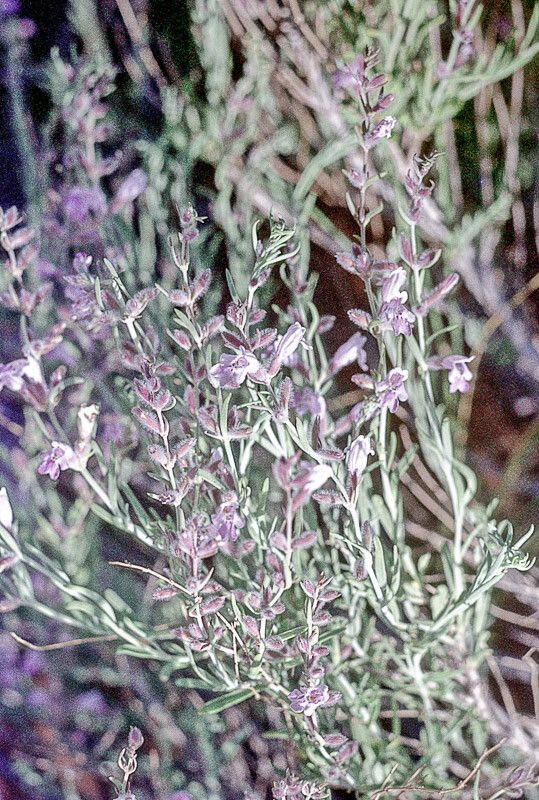
Poliomintha incana is a species of flowering plant in the mint family which is known as frosted mint. It is native to dry and desert areas of the southwestern United States and northern Mexico. It is a strongly aromatic shrub with dark green foliage covered in small white hairs. Scattered about the foliage are fuzzy, tubular flowers in shades of light purple and blue with tiny purple spots. Frosted mint is eaten fresh or dried or used as a flavoring by Native American groups, particularly the Tewa and Hopi.
Hoary rosemary mint is well resistant to disease and is generally unlikely to suffer from illnesses. As for care, this plant is fairly low-maintenance. When grown outdoors it needs little watering, and larger specimens usually do not require pruning. Smaller plants, however, should be trimmed after they finish blooming. Hoary rosemary mint is appropriate for anyone who has an outdoor area, such as a garden or a deck, and it does not demand much gardening experience.
How to keep Poliomintha Incana.
Light
Hoary rosemary mint is native to open habitats, such as sunlit meadows and forest margins, which provide abundant light. It thrives in Full Sun but can tolerate Partial Sun, adapting well to different sunlight conditions.
Water
Hoary rosemary mint is well-suited to arid environments, as it can thrive with minimal moisture and has a high tolerance for drought. It only needs to be watered infrequently, approximately once every 2 to 3 weeks. This plant is perfect for outdoor use in xeric landscapes and rock gardens, where excellent drainage is essential.
Temperature
Hoary rosemary mint is quite temperature-adaptable, able to withstand higher heat and substantial temperature fluctuations. In hot weather, attention should be paid to watering and providing some shade to prevent sunburn. Conversely, it has relatively poor cold tolerance: it can endure a degree of chill, but very cold conditions may cause frost damage.
Fertilizer
The timing of fertilization is important for Hoary rosemary mint. Apply fertilizer in early spring and then once a month through early summer. Fertilizer promotes attractive blooms and supplies energy during both dormant and active growth periods.
Pruning
Hoary rosemary mint features aromatic leaves and lavender flowers. To keep the plant healthy, it's important to prune it regularly. The best time for pruning is from early to late winter. During this period, you can cut back up to one-third of the plant to encourage dense foliage and more blooms. Additionally, removing any dead branches improves air circulation and boosts the plant's vigor, ensuring it remains healthy throughout the growing season.
Botanical profile.
- Plant Type
- Shrub
- Life Cycle
- Perennial
- Genus
- Poliomintha
- Family
- Lamiaceae
- Hardiness Zone
- 8-11
- Mature Height
- 30 cm to 91 cm
- Mature Spread
- 30 cm to 46 cm
- Leaf Color
- Green, Blue
- Leaf Type
- Evergreen
- Flower Color
- Lavender
- Flower Size
- 1.02 cm to 1.52 cm
- Bloom Time
- Late spring, Summer
- Planting Time
- Spring, Autumn
- Harvest Time
- Mid summer, Late summer, Early fall, Mid fall
- Native Area
- Mexico
Other names.
Reader questions.
What are the sunlight requirements for Hoary rosemary mint?
Hoary rosemary mint thrives best in full sun conditions, which means it requires more than 6 hours of sunlight daily. However, it can also adapt and grow in partial sun, receiving about 3-6 hours of sunlight. Observing how sunlight moves through your garden can help you pick the best spots that provide a balance of light and shade, ensuring the plants' optimal growth.
Can Hoary rosemary mint grow under artificial lighting?
Yes, Hoary rosemary mint can grow under artificial lighting, especially when natural sunlight is insufficient, like during winter or in less sunny spaces indoors. The right type of artificial light, such as LED lights, can provide the necessary wavelengths needed by the plant. Full sun plants generally need 30-50W/sq ft, partial sun plants require 20-30W/sq ft, and full shade plants need 10-20W/sq ft of artificial light. The light source should be placed 12-36 inches above the plant to mimic natural sunlight and turned on for 8-12 hours per day to ensure adequate light exposure for healthy growth.
What symptoms indicate that Hoary rosemary mint is getting insufficient light?
Symptoms of insufficient light in Hoary rosemary mint include smaller new leaves, leggy or sparse growth, faster leaf drop, slower or no new growth, and lighter-colored or yellowing leaves (chlorosis). Sunscald, leaf curling, wilting, and leaf scorching are signs of excessive light exposure. These symptoms suggest the plant's light conditions need to be adjusted to promote better health and growth.
How can I improve the light conditions for my indoor Hoary rosemary mint plant?
To ensure optimal growth for your indoor Hoary rosemary mint plant, gradually move the plant to a location where it can receive at least 6 hours of direct sunlight per day, such as near a south-facing window. If the plant is large or not easily movable, consider using artificial lighting solutions. Desk or ceiling lamps turned on for at least 8 hours a day, or professional plant grow lights, can provide sufficient light for the plant's needs. Remember, gradual changes are key to prevent stress from light intensity shifts.
How can I manage outdoor Hoary rosemary mint plants for better sunlight exposure?
For outdoor Hoary rosemary mint plants, gradually acclimatize them to the optimal light conditions by moving them to sunnier spots each week. This gradual transition helps avoid sunburn and stress from sudden changes in sunlight exposure. Note that parts of the plant damaged by prior inadequate light may not fully recover, but new growth should be healthy following improved light conditions.
What solutions can help increase sunlight exposure to ground-level Hoary rosemary mint plants?
To increase sunlight exposure for ground-level Hoary rosemary mint plants, start by identifying and minimizing obstructions like overhanging branches. Pruning nearby trees can allow more sunlight to reach the plants. For smaller plants that are easily movable, consider transplanting them during their dormant period, typically in late winter or early spring, to a location with better sunlight exposure and drainage. This helps ensure that the plants receive ample sunlight for healthy growth.