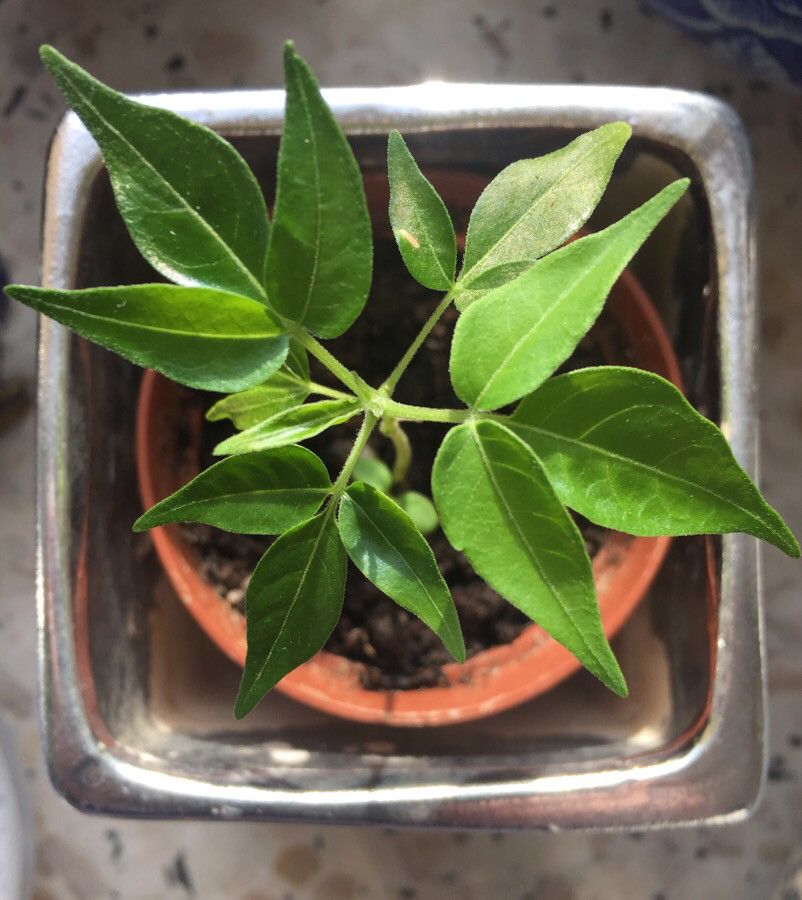
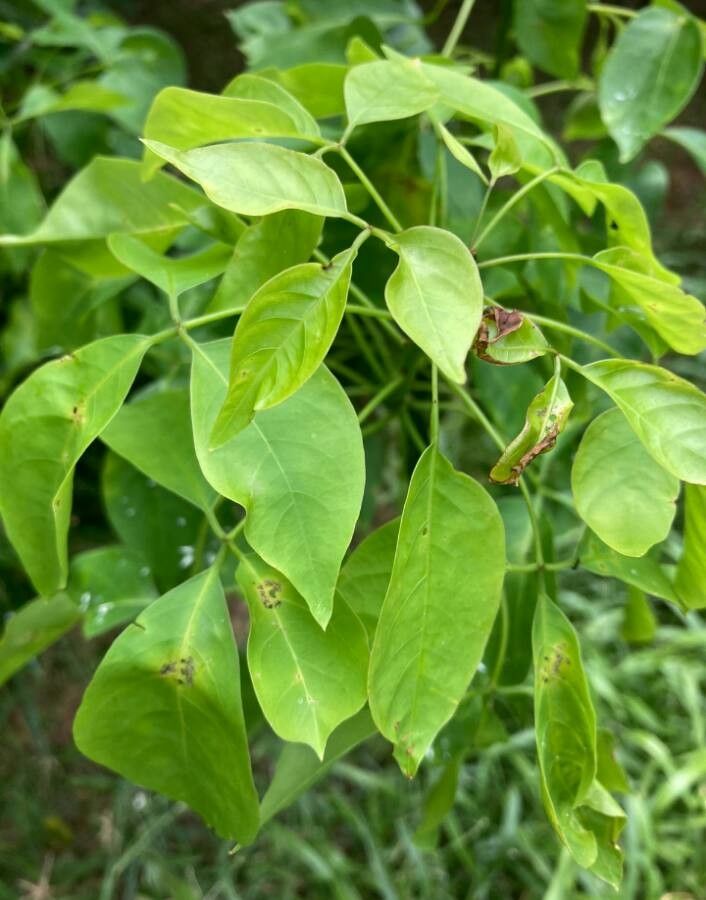
Polanisia erosa is a sticky, 10–60 cm (3.9–23.6 in) high annual herbaceous species of flowering plant in the Cleome family, Cleomaceae, known by the common name large clammyweed. It has narrow clover-like leaves, and cream-coloured, frilly flowers with a yellowish centre, looking a bit like a small butterfly or a set of elk antlers. It naturally occurs in dry and sandy habitats in Texas and adjacent parts of Arkansas, Louisiana and Oklahoma.
Large clammyweed possesses good disease resistance and is generally not prone to illnesses. However, it can be susceptible to pests and diseases present in its surroundings. These infections are typically not severe. Regarding care, this plant requires moderate maintenance. Regular pruning is necessary to maintain an attractive appearance and healthy growth. Fertilization can also help encourage flowering. Large clammyweed is suitable for anyone with outdoor space, such as a garden or patio, and does not demand much prior plant-care experience. It may need more attention when grown indoors.
How to keep Polanisia Erosa.
Light
Large clammyweed comes from bright, open environments where it thrives in full sun. It can tolerate partial sun but prefers direct sunlight for optimal growth. This annual and biennial plant is known for its sun-loving nature.
Temperature
Large clammyweed can tolerate a wide range of temperatures, but its occurrence may still be restricted by particular combinations of moisture and heat. It does best in warm summer climates with sufficient rainfall or watering. Long stretches of cloudy, rainy weather, as well as prolonged high temperatures, can raise the chance of Large clammyweed dying. In winter, protecting it from cold can increase the plant's survival.
Fertilizer
Resume fertilizing once Large clammyweed has opened most of its blooms to full size. Around the time the blooms are at peak, apply fertilizer every three to four weeks, weather permitting. Then, when Large clammyweed begins to produce fewer new blooms, stop fertilizing; there's no need to fertilize when the plant can't produce any more blooms.
Pruning
Large clammyweed features sticky, glandular hairs and clusters of white to pink flowers. To encourage growth and blooming, prune the plant from early to late spring, concentrating on removing dead or crowded stems. Make sure to clean your tools to prevent the spread of disease. Regular pruning enhances the health and visual appeal of large clammyweed.
Botanical profile.
- Plant Type
- Herb
- Life Cycle
- Annual
- Genus
- Polanisia
- Family
- Cleomaceae
- Hardiness Zone
- 8-11
- Mature Height
- 30 cm to 61 cm
- Mature Spread
- 20 cm to 40 cm
- Leaf Color
- Green, Dark Green
- Leaf Type
- Deciduous
- Flower Color
- White, Pink
- Flower Size
- 1.02 cm to 2.03 cm
- Bloom Time
- Summer, Early fall, Mid fall
- Planting Time
- Spring, Summer, Autumn
- Harvest Time
- Late summer, Fall, Early winter