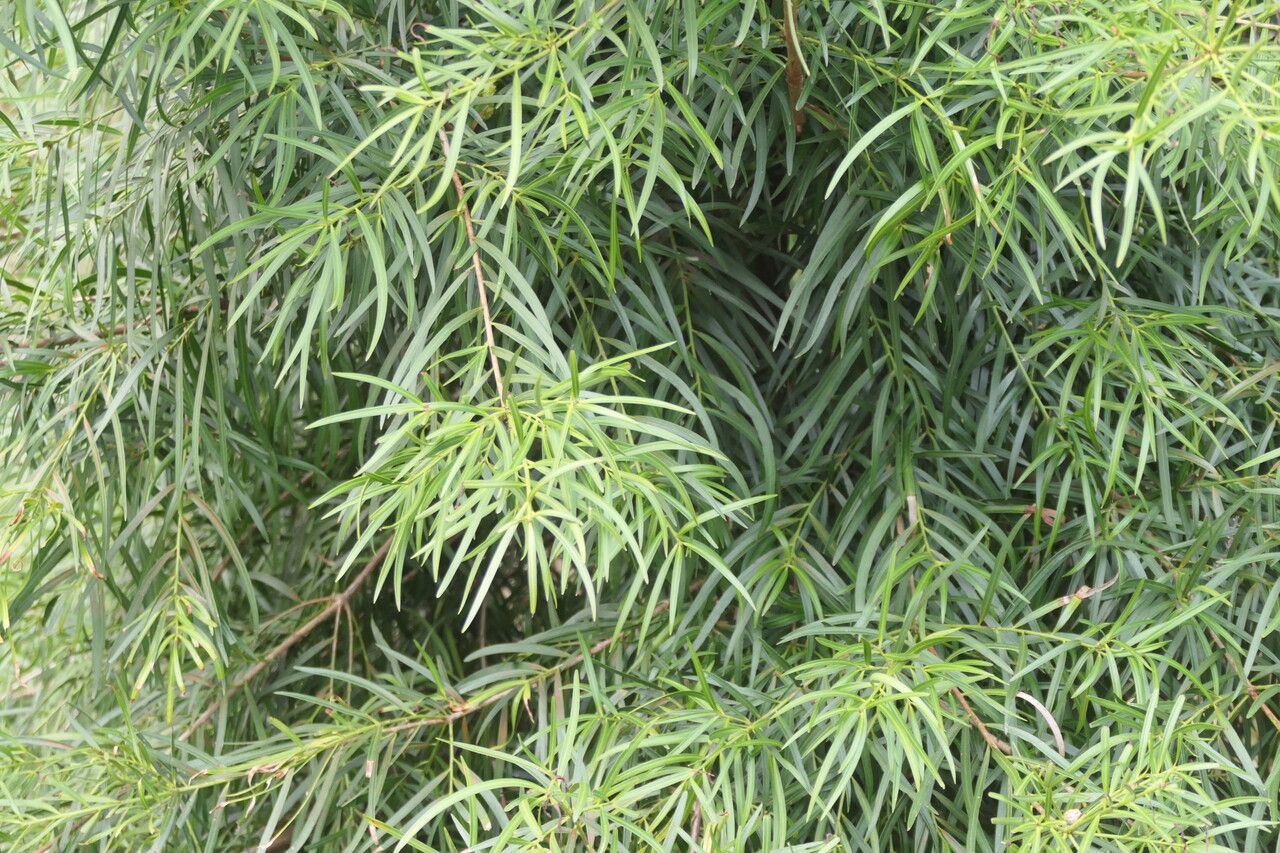
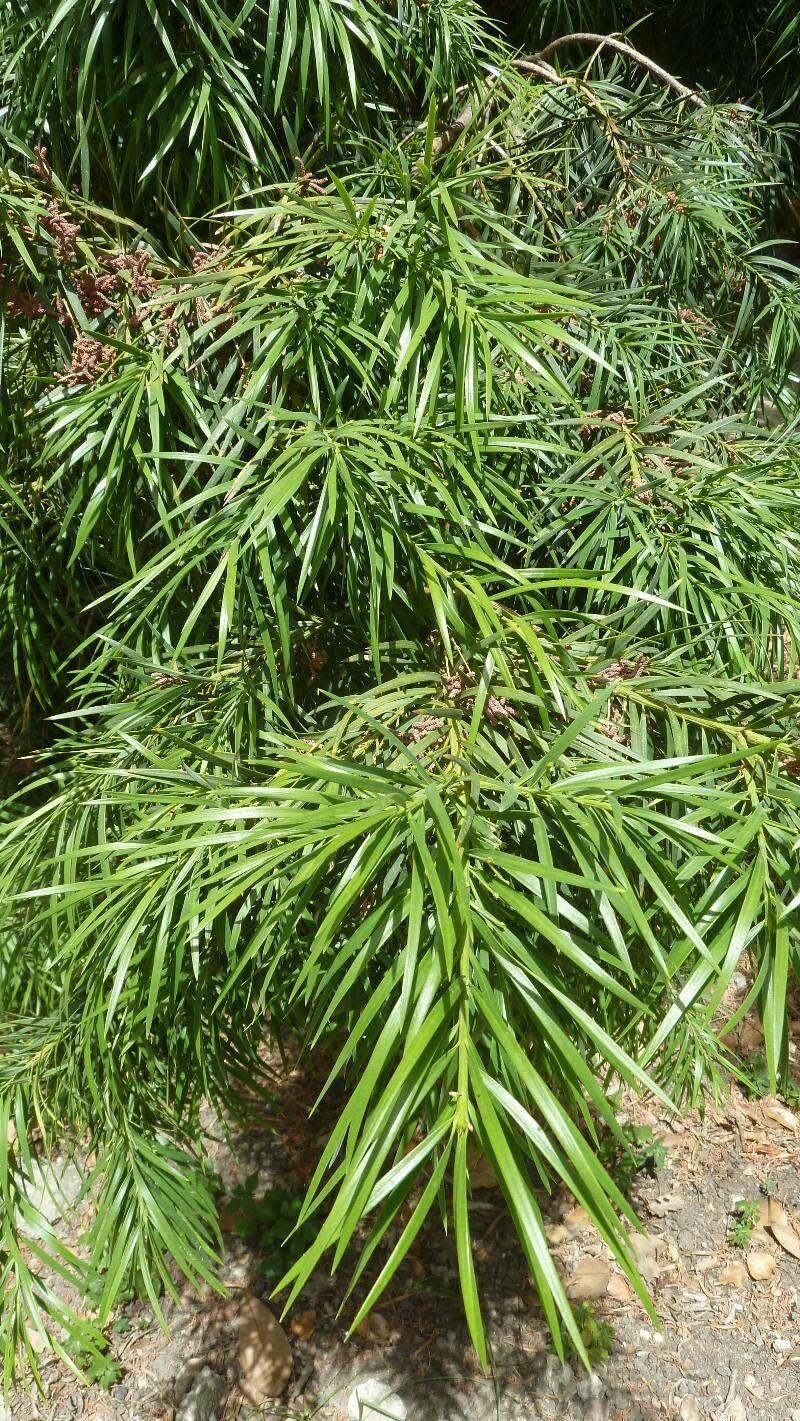
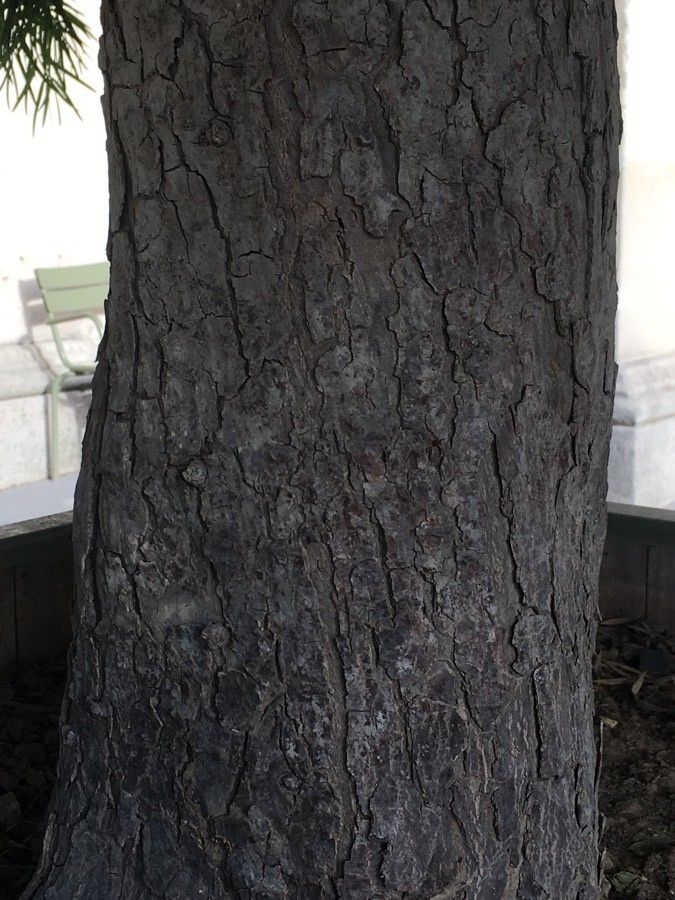
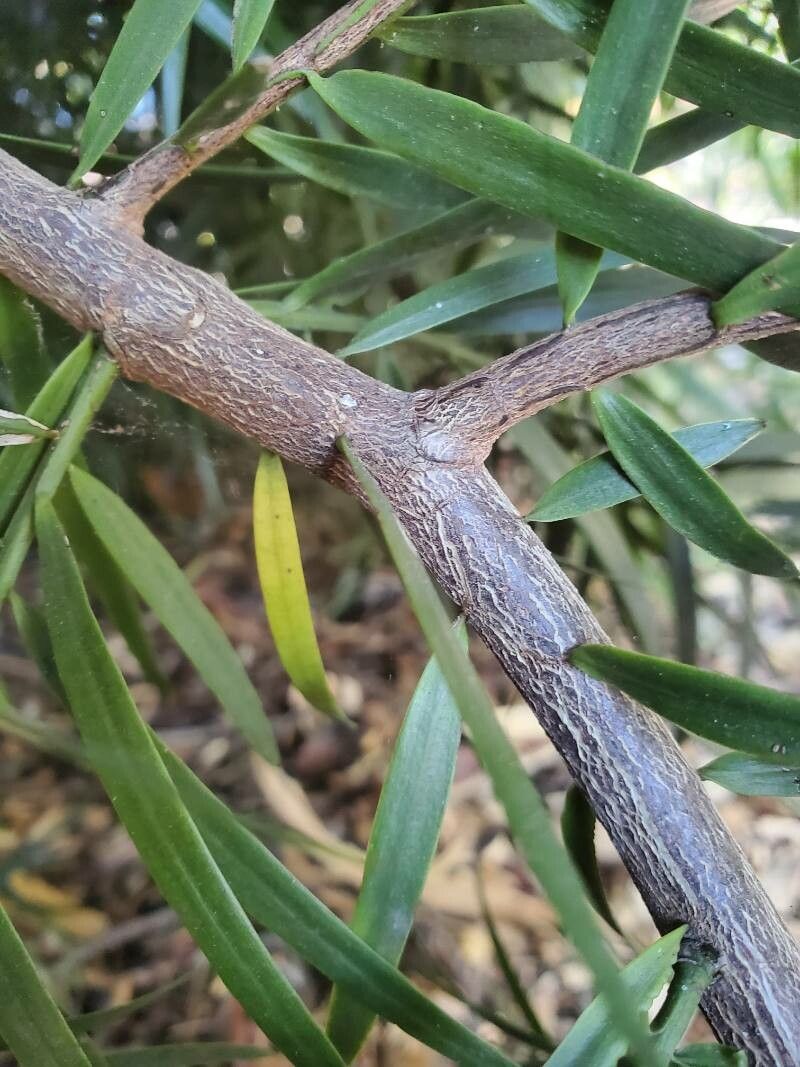
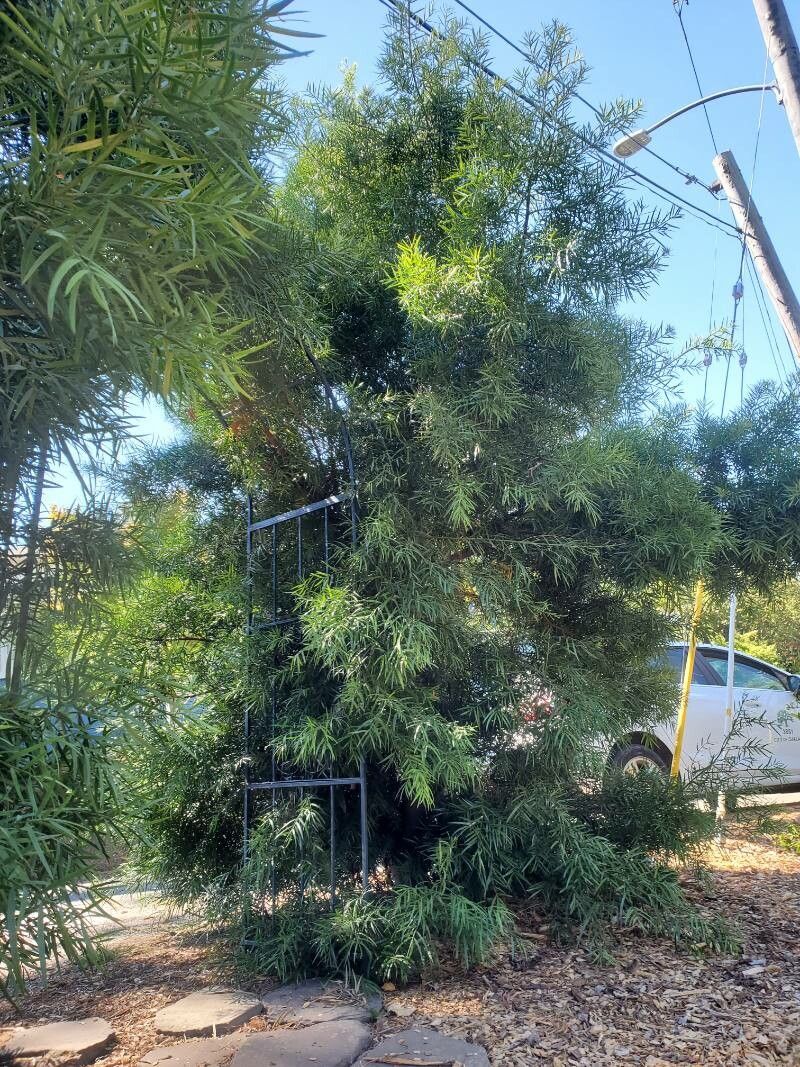
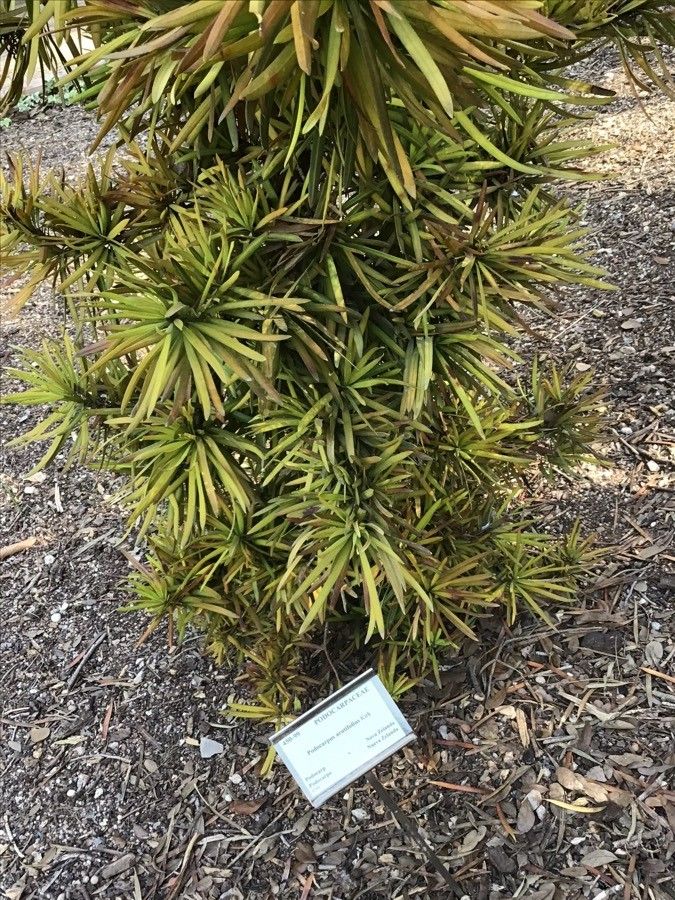
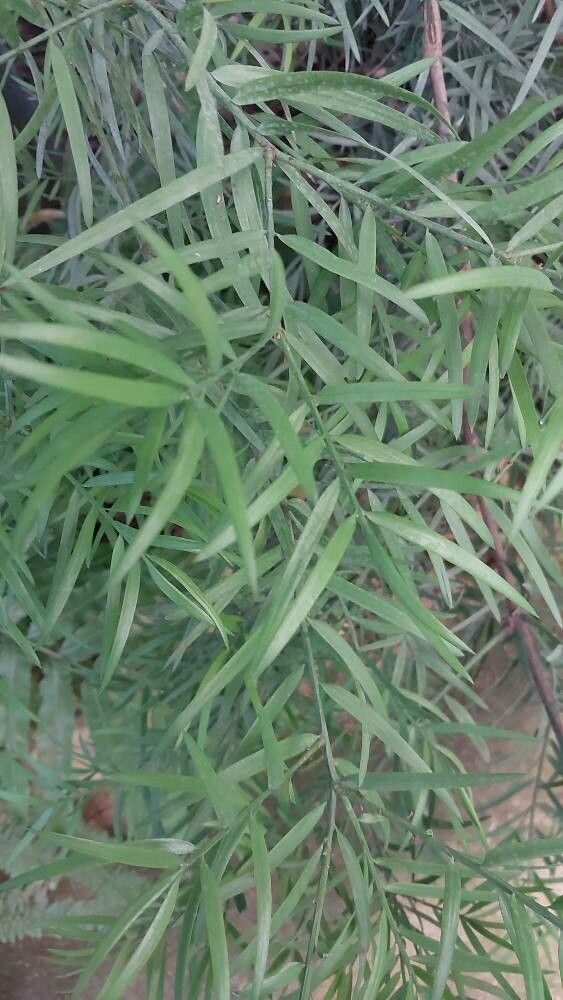
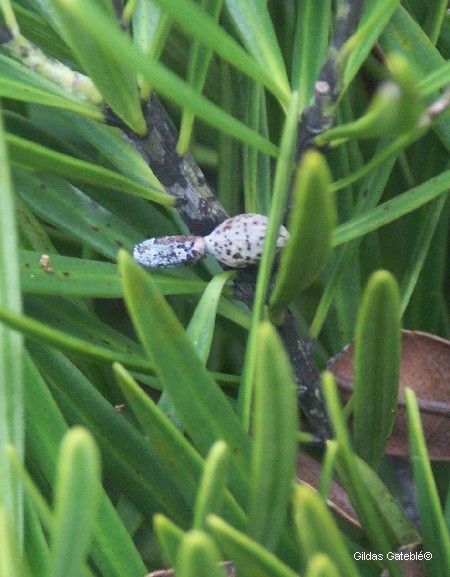
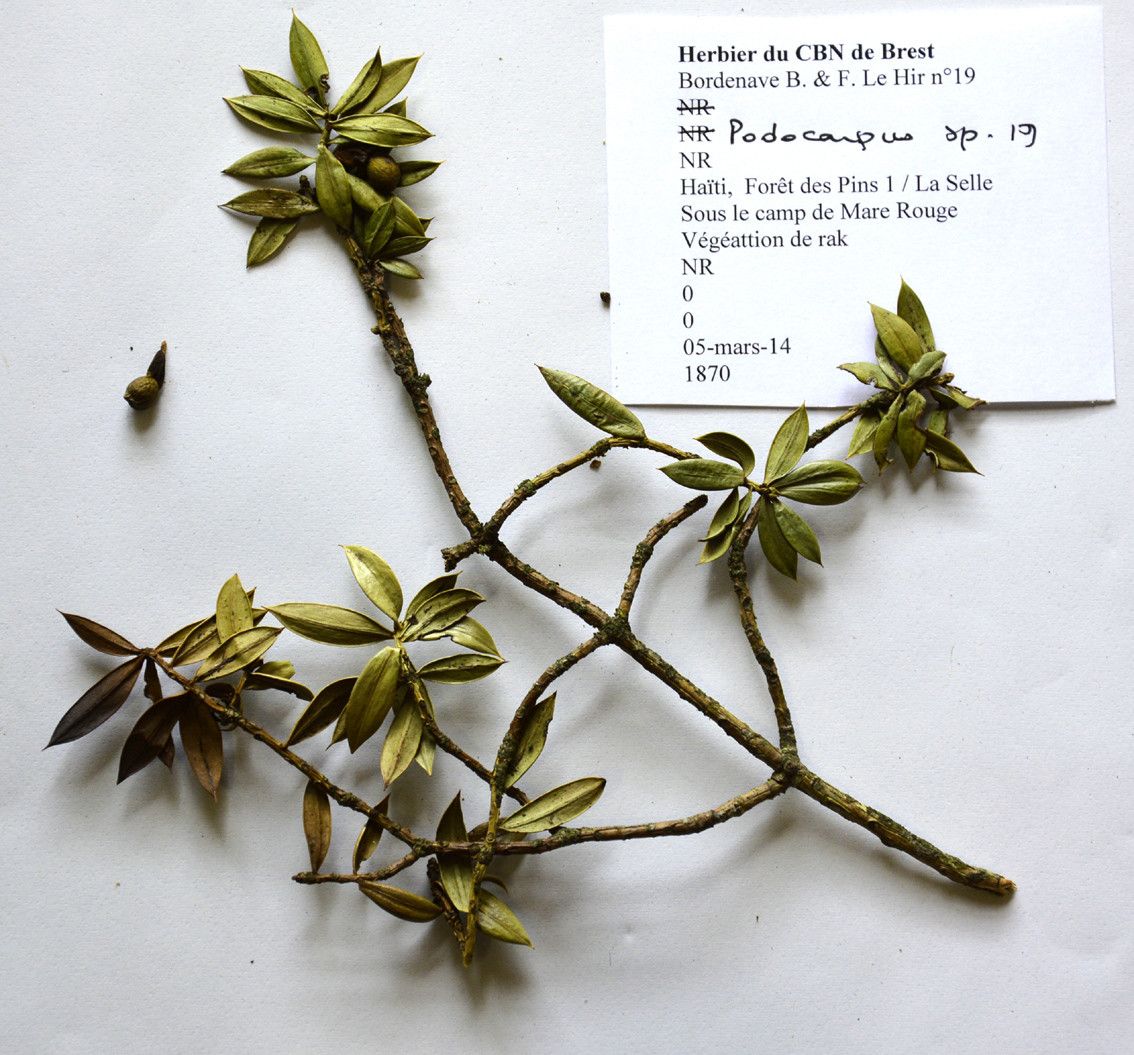
Podocarpus salignus, commonly known as the Willow-leafed Podocarp, is a species of coniferous tree native to South America. This slow-growing evergreen can reach up to 20 meters in height. Its narrow, willow-like leaves are arranged spirally on the branches and measure up to 10 cm in length. The tree's bark is smooth and greyish-brown.
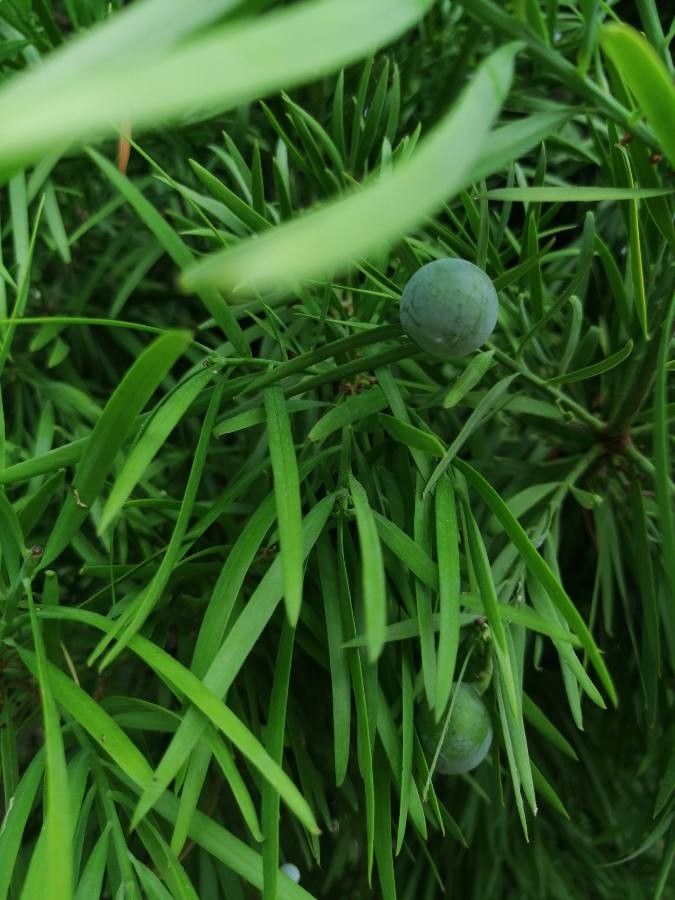
The Willow-leafed Podocarp produces small cones, each about 2 cm long, containing one or two seeds. These cones take around two years to mature before releasing their seeds.
This species is naturally found in Chile, Argentina, Bolivia, Peru, and Ecuador, thriving at altitudes between 500 and 1,500 meters above sea level. It prefers well-drained soils with good moisture retention but can tolerate some drought conditions once established.
The wood of Podocarpus salignus is prized for its durability and resistance to decay caused by insects and fungi, making it suitable for furniture making and other uses.
Overall, Podocarpus salignus is an attractive evergreen tree with narrow, willow-like leaves. It is an excellent choice for ornamental purposes and provides shade and shelter for wildlife habitats.
The willow-leaf podocarp is resistant to disease and is generally not prone to illnesses. In terms of care, this plant is fairly low-maintenance. When grown outdoors it needs only minimal watering, and larger specimens typically do not require pruning. Smaller plants, however, should be pruned after they have finished blooming. The willow-leaf podocarp is suitable for anyone with an outdoor area, such as a garden or deck, and does not demand extensive care experience.
How to keep Podocarpus Salignus.
Light
Willow-leaf podocarp naturally occurs in places like forest understories or rocky sites, where it is exposed to natural shade. It prefers partial sun but can adjust to full sun or complete shade, illustrating its hardy and adaptable character.
Temperature
The willow-leaf podocarp is highly adaptable to a range of climate conditions, from very hot summers to cold winters. However, it does have an optimal temperature range for growth. When temperatures become too high, the plant is susceptible to heat and humidity stress, which can cause its death. In areas where temperatures near the lower limit of its cold tolerance, it is important to provide insulation to protect the plant.
Fertilizer
Willow-leaf podocarp has specific nutrient needs and does not require heavy fertilization. Fertilizing in spring is best for promoting optimal growth. Providing nutrients enhances its health, increases resistance to pests and diseases, and helps maintain its long lifespan.
Botanical profile.
- Plant Type
- Tree
- Life Cycle
- Perennial
- Genus
- Podocarpus
- Family
- Podocarpaceae
- Hardiness Zone
- 7-10
- Mature Height
- 11.89 m
- Mature Spread
- 7.92 m
- Leaf Color
- Green
- Leaf Type
- Evergreen
- Bloom Time
- Mid spring, Late spring
- Planting Time
- Spring, Summer
- Harvest Time
- Late summer, Early fall, Mid fall
- Native Area
- Chile
Other names.