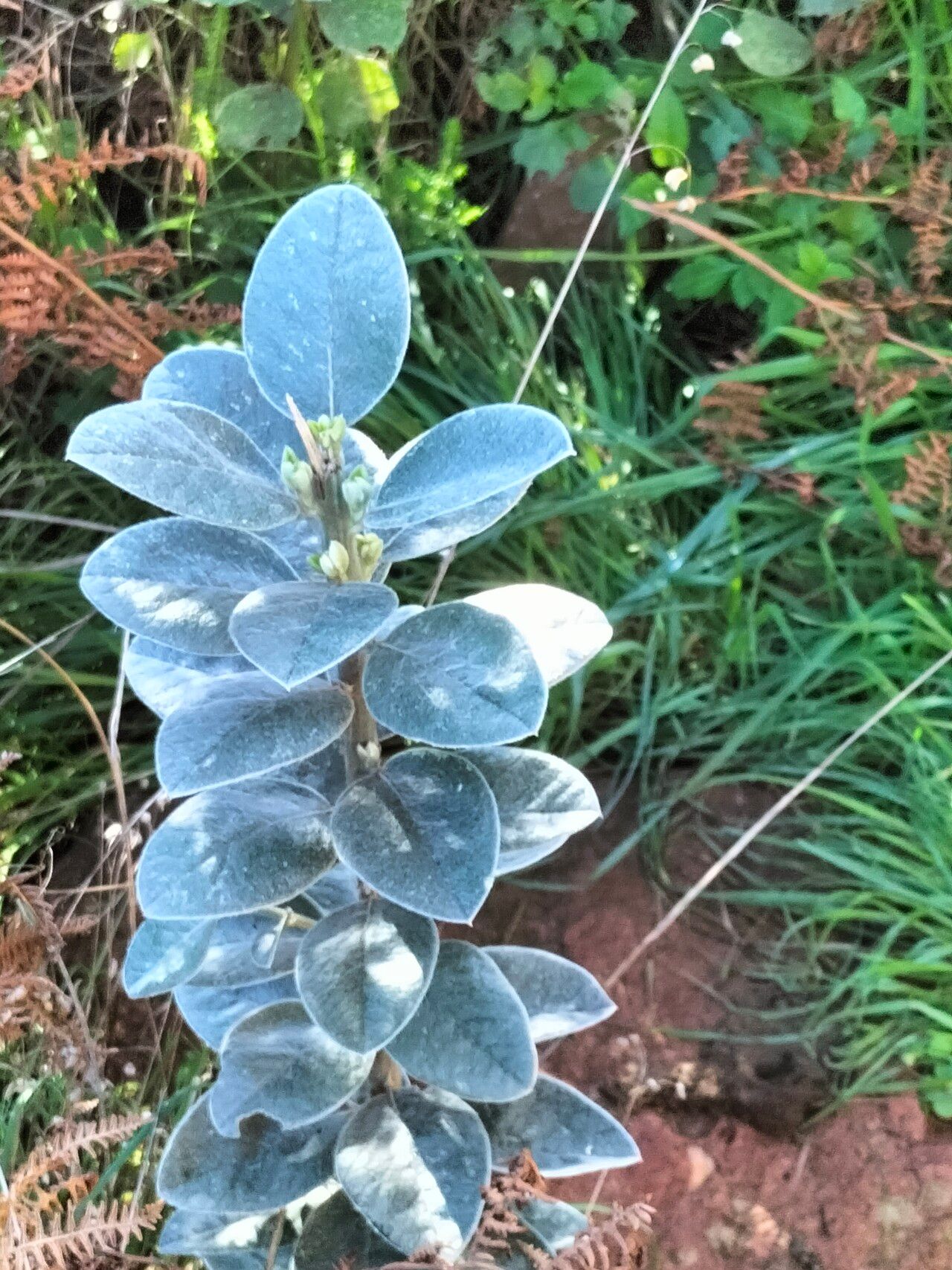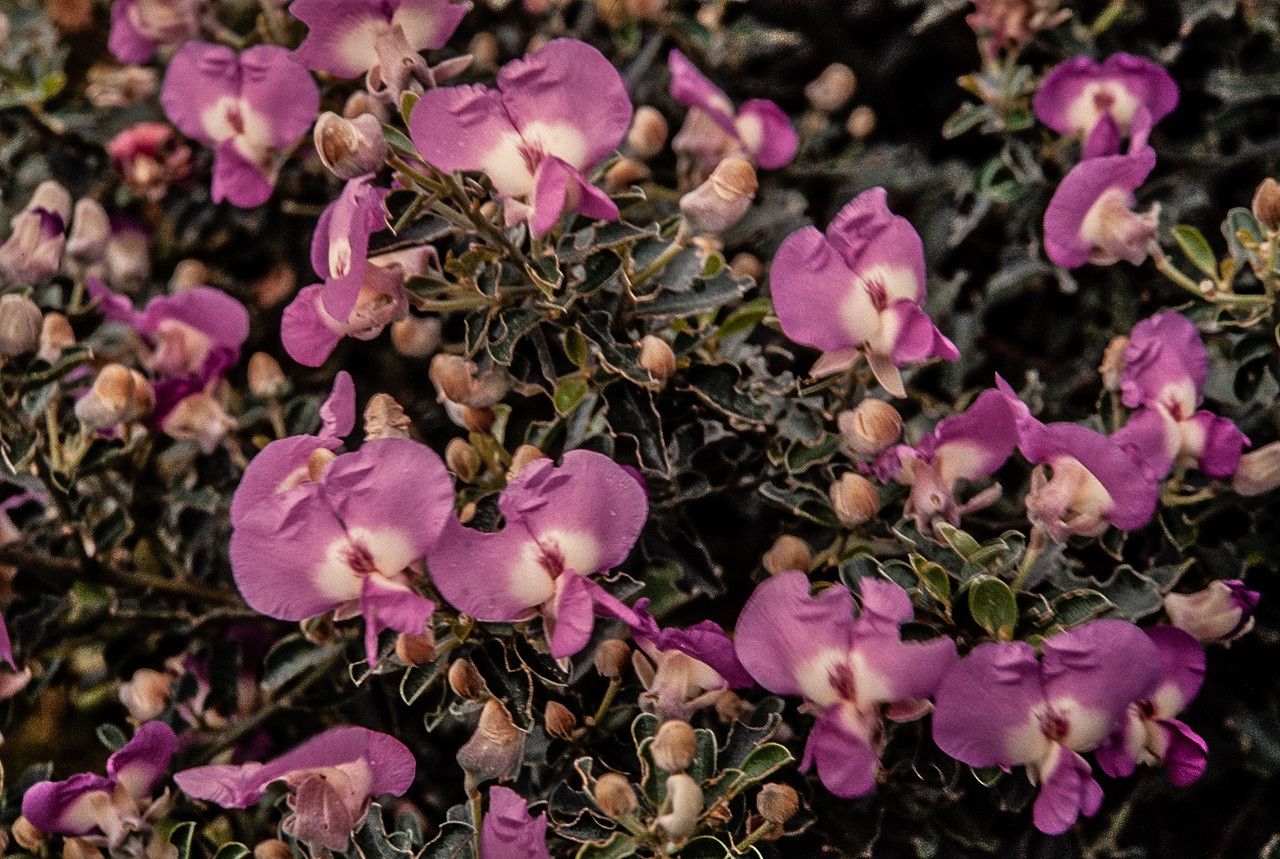
Podalyria calyptrata, commonly known as the Cape Snow Pea, is a flowering plant species belonging to the Fabaceae family. Native to South Africa, it is found in the Western Cape and Eastern Cape provinces. The plant grows up to 1 meter tall and features a woody stem with small, finely-haired leaves. Its white or pinkish-purple flowers, which bloom from late winter through early spring, are characterized by a distinctive pea-like shape.
Podalyria calyptrata thrives in well-drained soils and can grow in both full sun and partial shade. Once established, it is drought-tolerant. Due to its attractive flowers and foliage, it is often used as an ornamental plant, making it an excellent choice for gardens and landscaping projects.
Traditionally, indigenous people of South Africa have utilized Podalyria calyptrata for medicinal purposes, treating various ailments such as coughs, colds, fever, and stomach problems.
Overall, Podalyria calyptrata is an appealing flowering shrub that not only enhances garden beauty but also offers medicinal benefits, making it both aesthetically pleasing and functional.
Water blossom pea is resistant to disease and generally not easily affected by illnesses. As for care, this plant is fairly low-maintenance. When grown outdoors it needs only light watering, and larger specimens typically do not require pruning. Smaller plants, however, should be pruned after they have bloomed. Water blossom peat is appropriate for anyone with an outdoor area, such as a garden or a deck, and does not demand much experience in plant care.
How to keep Podalyria Calyptrata.
Light
Water blossom pea is found naturally in habitats like forest understories and rocky areas, where it is exposed to natural shade. It prefers partial sun but can adjust to either full sun or full shade, illustrating its adaptable and hardy character.
Temperature
Water blossom pea shows strong adaptability to a range of climatic conditions, from scorching summers to cold winters. Still, it has a preferred temperature range for healthy growth. If temperatures become too high, the plant can suffer heat and humidity stress that may kill it. In areas where temperatures near its lower cold-tolerance limit, insulating measures should be used to protect the plant.
Fertilizer
Proper timing matters when fertilizing Water blossom pea. Start applying fertilizer in early spring and continue monthly until early summer. Fertilizer encourages attractive blooms and supplies energy during both dormant and active growth phases.
Pruning
To encourage vibrant flowers, prune water blossom pea in early spring. Removing dead branches improves air circulation, leading to denser foliage and more blooms. Be sure to use sharp and clean tools, and avoid making heavy cuts. Regular pruning not only enhances the plant's appearance but also boosts its vitality, resulting in a healthier water blossom pea.
Botanical profile.
- Plant Type
- Shrub
- Life Cycle
- Perennial
- Genus
- Podalyria
- Family
- Fabaceae
- Hardiness Zone
- 9-11
- Mature Height
- 3.96 m
- Mature Spread
- 3.05 m
- Leaf Color
- Silver, Gray
- Leaf Type
- Evergreen
- Flower Color
- Pink
- Flower Size
- 2.03 cm to 3.05 cm
- Bloom Time
- Early fall, Mid fall
- Planting Time
- Spring, Summer, Autumn
- Harvest Time
- Late fall, Early winter, Mid winter
- Native Area
- South Africa