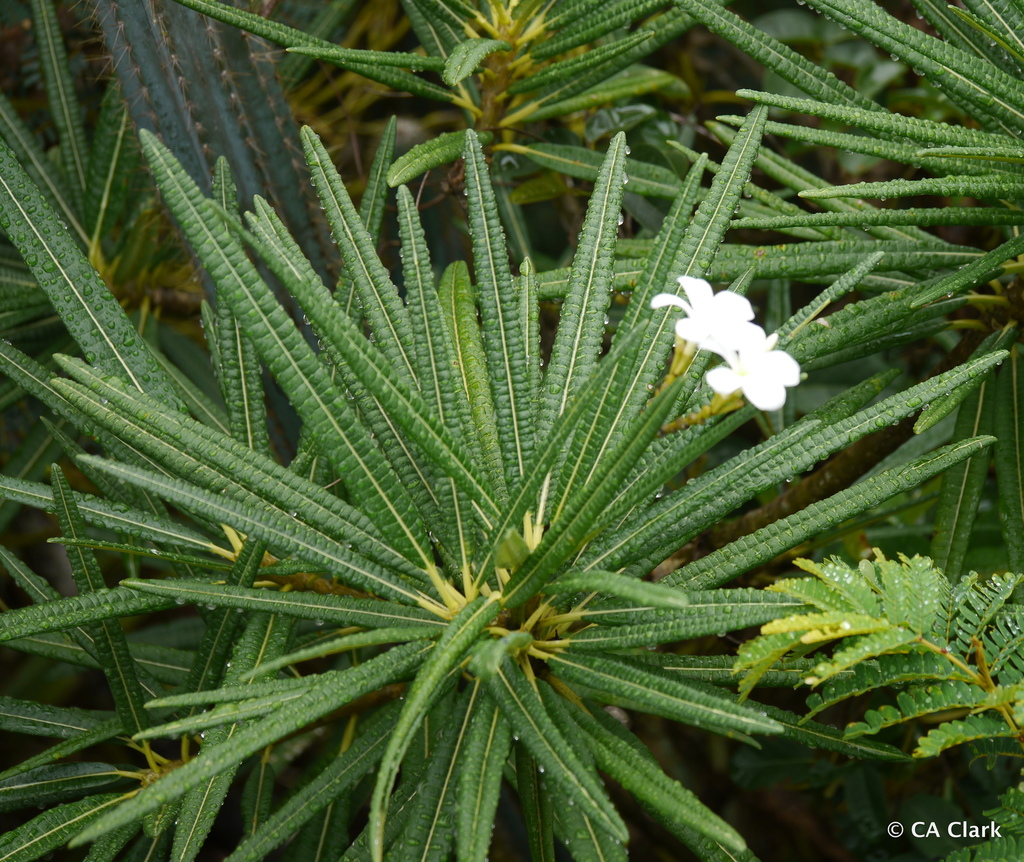
Plumeria alba, commonly known as the white frangipani, is a small deciduous tree or shrub that belongs to the Apocynaceae family. Native to Central America and the Caribbean, it has been widely cultivated in tropical and subtropical regions worldwide for its fragrant flowers.
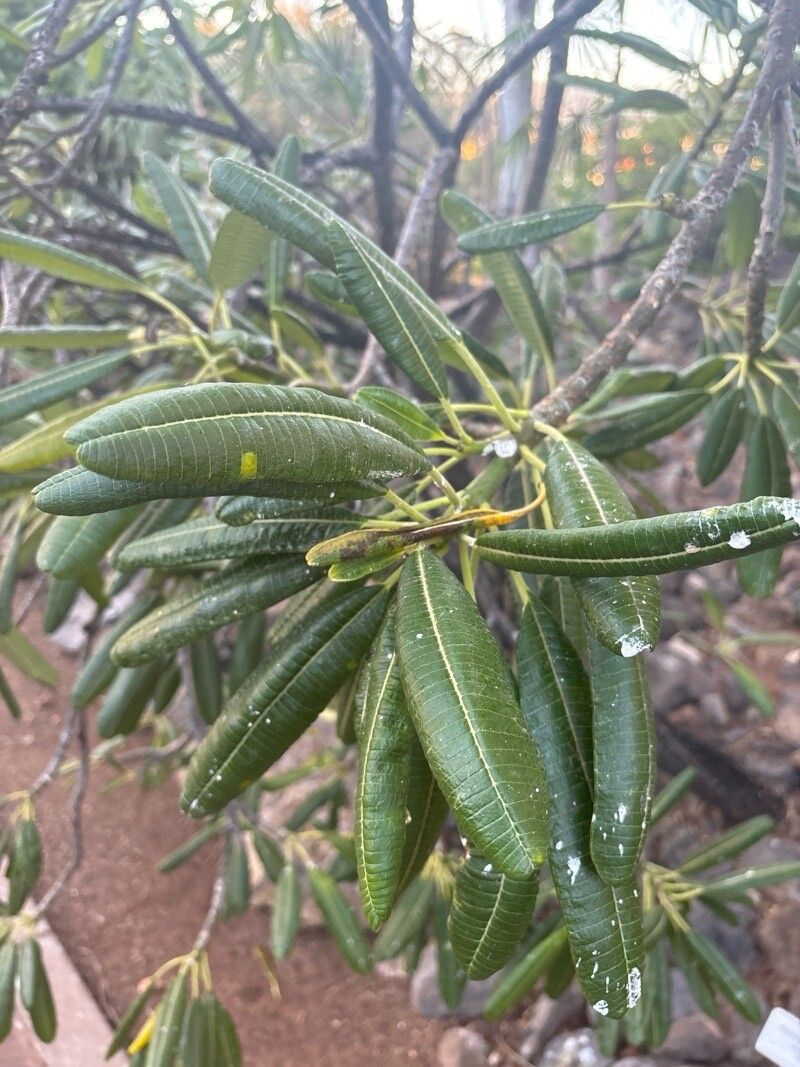
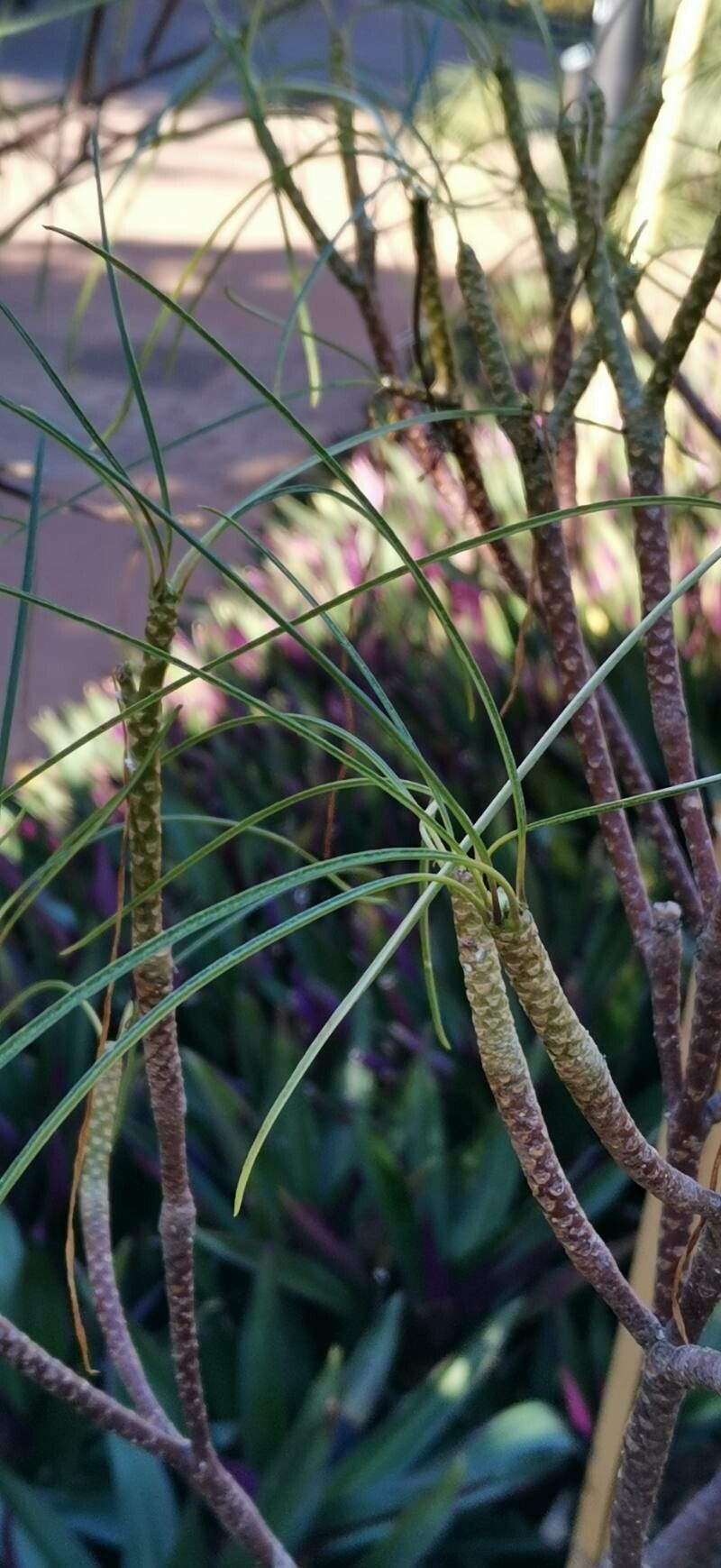
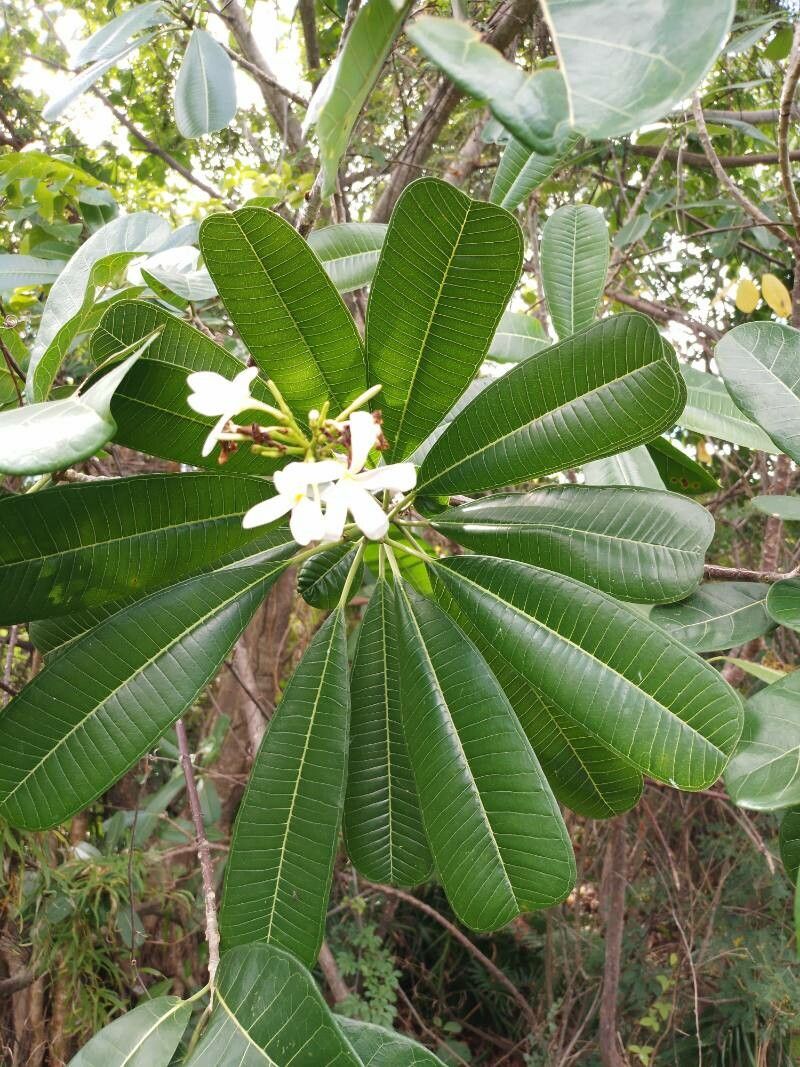
The plant can grow up to 8 meters tall with a spread of 4 meters. Its thick, succulent stems are adorned with clusters of green leaves at the tips of branches. The leaves are oblong-shaped, glossy green, and can be up to 30 cm long.
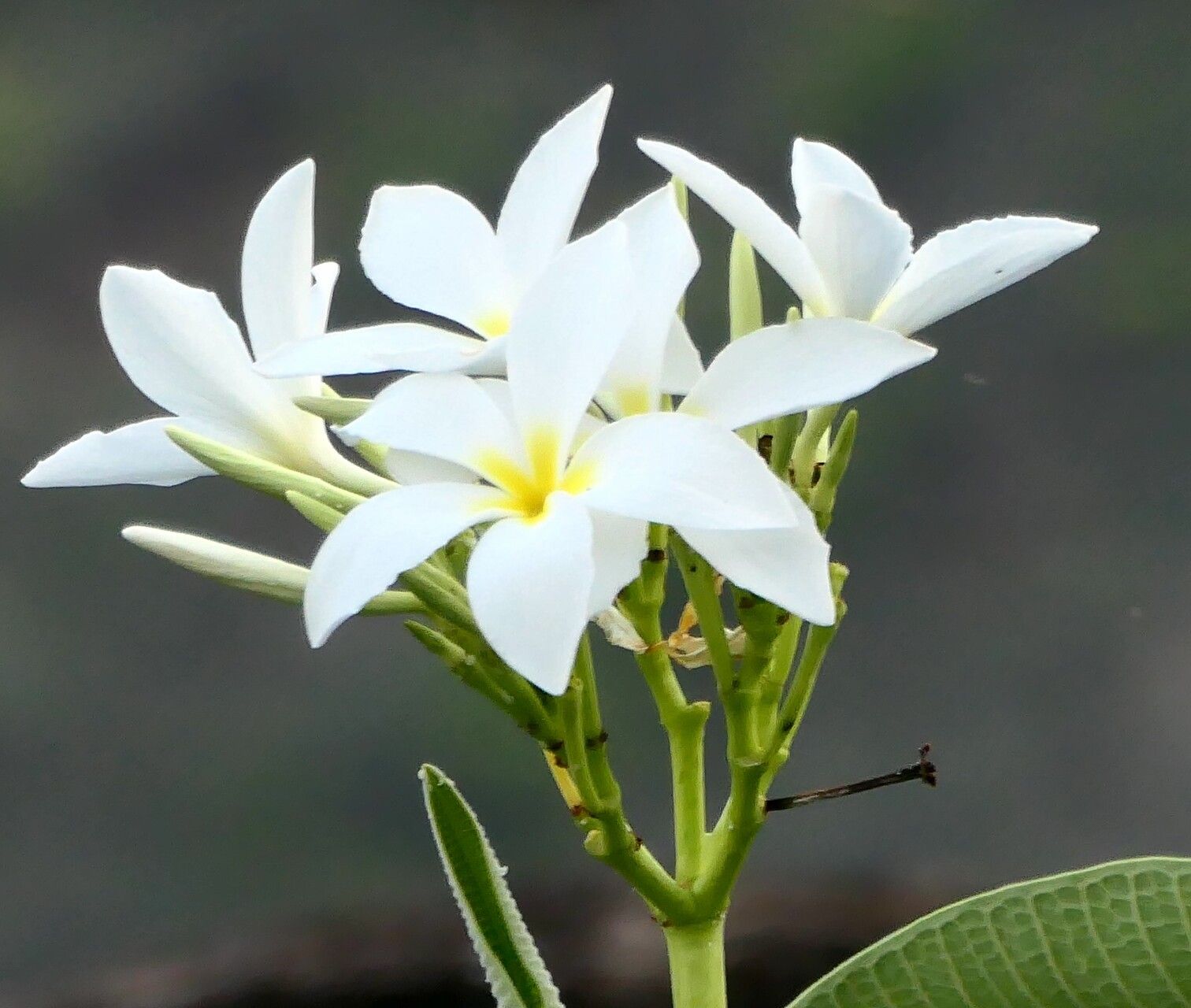
The most striking feature of Plumeria alba is its flowers, which bloom from spring through fall. The fragrant blossoms are white or yellowish-white, with five petals arranged in a spiral pattern around a central tube-like structure called the corolla tube, which contains nectar-rich glands at its base.
Plumeria alba, known as the nosegay tree, produces beautiful and decorative flowers with a delightful fragrance. However, despite its attractive appearance and sweet scent, the nosegay tree is mildly toxic. All parts of the plant contain a milky sap that can cause skin irritation. FUN FACT · FROM THE LIBRARY
Plumeria alba prefers full sun exposure and well-drained soil, but it can also tolerate partial shade and drought conditions once established. Due to its attractive foliage and showy blooms, it is commonly used for ornamental purposes such as landscaping or container gardening.
In addition to its ornamental appeal, Plumeria alba also has medicinal properties, primarily attributed to its bark extracts. Traditionally, these extracts have been used to treat various ailments, including fever, diarrhea, and dysentery.
Overall, Plumeria alba is an attractive tropical plant that adds beauty wherever it is planted, while also offering some medicinal benefits traditionally valued by various cultures.
The Nosegay tree is easily identifiable by its bouquet-like flowers. This resemblance is likely the origin of its common name, as the flower clusters resemble a nosegay. A nosegay, or posy, is a small bouquet often used as a fashion accessory.
The Nosegay tree has strong resistance to disease and is generally not susceptible to illnesses. In terms of care, this plant is fairly low-maintenance. When planted outdoors, it needs only light watering, and larger specimens usually do not require pruning. Smaller plants, however, should be pruned after they finish blooming. The Nosegay tree is appropriate for anyone with outdoor space, such as a garden or deck, and does not demand extensive care experience.
How to keep Plumeria Alba.
Light
The nosegay tree does best when it gets the maximum possible light during the day. Because it comes from open woodlands and thickets, it prefers abundant sunlight. Too little light can stunt its growth. Conversely, too much light can scorch the leaves, although it tolerates such conditions to a considerable degree.
Water
The Nosegay tree, known for its tropical origins, thrives in humid environments. To keep it healthy, water it every 1-2 weeks, increasing the frequency during the warm growing season. This evergreen is often cultivated outdoors, and its growth cycle significantly influences its watering needs.
Temperature
The Nosegay tree is native to tropical climates and generally prefers temperatures from 68 to 100°F (20 to 38 ℃). It can tolerate somewhat cooler temperatures but may need indoor protection during colder seasons.
Fertilizer
The best time to fertilize a Nosegay tree is in early spring, as it breaks dormancy. This supports overall growth and flower development. Fertilization improves the foliage, stems, and branches, while encouraging flowers that are large, vibrant, and long-lasting. It helps transfer nutrients from the roots to the flowers and enhances the plant's health and resistance to disease.
Pruning
The Nosegay tree benefits greatly from pruning in the winter. This process involves removing dead branches, thinning out the tree to improve air circulation, and shaping it for better aesthetics. Pruning in this manner encourages healthier growth and more abundant flowering. To ensure the best results, make the cuts in a way that maintains the tree's natural shape. Additionally, always sterilize your tools to prevent the spread of disease. It's a good idea to consult reputable horticultural sources for guidance.
Pot & Repot
Repot the nosegay tree every 2 to 3 years during the spring to encourage healthy growth. Choose a pot that allows enough room for the roots to expand. After repotting, ensure the tree is kept in a high-humidity environment with indirect light. Water it regularly, but be careful not to overwater, to support healthy growth.
Toxicity
Frangipani is toxic to people and pets. The plant produces a milky sap that is mildly poisonous if ingested. It will likely take eating an entire flower to cause gastrointestinal upset. Toxicity symptoms might include vomiting, diarrhea, decreased appetite, drooling, and irritation of the mouth.
Further reading →
The toxicity and danger assessments provided are for reference only. We do not assure their accuracy, so it's crucial not to depend on them. Seek professional advice when necessary for accurate guidance.
Botanical profile.
- Plant Type
- Tree, Shrub
- Life Cycle
- Perennial
- Genus
- Plumeria
- Family
- Apocynaceae
- Hardiness Zone
- 10-12
- Mature Height
- 3.05 m to 10.06 m
- Mature Spread
- 4.57 m to 7.62 m
- Leaf Color
- Green, Brown
- Leaf Type
- Evergreen, Semi-evergreen
- Flower Color
- White
- Flower Size
- 6.35 cm to 7.62 cm
- Bloom Time
- All year round
- Planting Time
- Spring, Autumn
- Harvest Time
- All year round
- Native Area
- Puerto Rico, Lesser Antilles
Other names.
Reader questions.
How should I water my Nosegay tree?
Your Nosegay tree is not very particular about how you water it. You can use pretty much any common watering tool, like cans, hoses, or even cups. The important thing is to water the soil directly, making sure to moisten all areas evenly to give the entire root system the water it needs. It's a good idea to use filtered water since tap water may contain harmful particles. Also, using water that is at or slightly above room temperature is best, as very hot or cold water can be a bit of a shock to the Nosegay tree. But don't worry too much, the tree generally responds well to any type of water you give it.
Why is it necessary to fertilize my Nosegay tree?
Ensuring the overall health and well-being of your Nosegay tree relies on proper fertilization. With an adequate supply of energy and nutrients, your tree will develop lush foliage and sturdy stems and branches. Additionally, fertilization plays a significant role in enhancing the flowers of your Nosegay tree. By providing the right fertilizer, you can promote the growth of large, vibrant, and long-lasting flowers. This is because the appropriate fertilizer enables the tree to efficiently transfer nutrients from the roots to the flowers through the stems. Furthermore, proper fertilization contributes to the tree's overall health, enhancing its ability to resist diseases.
What are the sunlight requirements for a nosegay tree?
A nosegay tree requires full sunlight to thrive, ideally receiving more than 6 hours of sunlight a day. It can also tolerate partial sun, which is about 3-6 hours of sunlight. However, it's essential to observe how sunlight moves through your garden and select spots that offer the right balance of light and shade to ensure the plants' well-being.
What is the native climate of the Nosegay tree?
The Nosegay tree, botanically known as Plumeria alba, thrives in tropical climates where temperatures typically range from 68 to 100°F (20 to 38°C). This heat-loving plant can adapt to slightly cooler temperatures but requires protection during colder seasons, such as being moved indoors near a bright window while keeping it away from direct heat sources.
What should I do if I give my Nosegay tree too much or too little water?
For outdoor plants, especially newly planted ones or seedlings, it's common for them to not receive enough water. It's important to remember to water them adequately for a few months until they are established. Once the roots are established, the Nosegay tree can rely on rain most of the time. When the Nosegay tree is planted in pots, there is a higher risk of overwatering. If you accidentally overwater your Nosegay tree, there are steps you can take to remedy the situation. First, you should stop watering the plant immediately to minimize the impact of overwatering. Then, you should remove the tree from the pot and inspect its roots. If there is no root rot, you can return the plant to its container. However, if you do find signs of root rot, you should trim away the affected roots and consider applying a fungicide to prevent further damage. Finally, you should repot the Nosegay tree in well-draining soil. In the case of underwatering, simply water the Nosegay tree more frequently. This is usually an easy fix. When the plant is underwatered, its leaves will droop, dry out, and fall off. However, they will quickly regain fullness after receiving sufficient water. It's important to correct your watering frequency as soon as you notice signs of underwatering.
When should I put fertilizer on my Nosegay tree?
The best time to fertilize a Nosegay tree is in early spring when it is coming out of its dormant phase and getting ready to bloom. Feeding it at this time will provide the necessary energy for growth and flower development. However, it is also beneficial to give the tree a smaller feeding in the fall. Some gardeners may choose to fertilize their Nosegay tree during planting, but it is not always required.
What are the essentials for growing a healthy nosegay tree?
The nosegay tree does best with maximum light exposure throughout the day, due to its origins in open woodlands where it's accustomed to abundant solar exposure. Insufficient light can stunt growth, while too much can scorch leaves, though it's quite tolerant to a degree. For indoor plants, artificial lighting can offer a solution when natural sunlight is insufficient, especially during winter or in less sunny spaces. LED lights, mimicking the specific wavelengths of light needed, are recommended. Full sun plants require 30-50W/sq ft, partial sun plants need 20-30W/sq ft, and full shade plants 10-20W/sq ft of artificial light. The light source should be placed 12-36 inches above the plant and be on for 8-12 hours per day.
How should you care for a Nosegay tree during colder seasons?
During colder seasons, it's crucial to protect the Nosegay tree from cold temperatures. If you have an outdoor-grown Nosegay tree, it's recommended to bring it indoors in the autumn and place it near a bright window, ensuring it's not too close to heaters. To encourage growth, maintaining indoor temperatures above 20°C (68°F) is beneficial. Exposure to temperatures near 5°C (41°F) can be detrimental to the plant.
How often do I need to water my Nosegay tree?
Most outdoor plants can grow naturally with rainfall, but if your area lacks rainfall, you need to water them adequately every 2 weeks in spring and fall. In summer, you'll need to water them more often, while in winter when growth slows down, you should water them less frequently or not at all. However, if your Nosegay tree is young or newly planted, you should water it more often to help it establish and grow into a drought-tolerant plant. When it comes to potted plants like the Nosegay tree, you have two options to determine watering frequency. The first option is to follow a set watering schedule, such as once a week or every other week. However, this might not work well because it doesn't consider the specific growing conditions of your tree. The other option is to base your watering frequency on the moisture level of the soil. It's best to wait until the top two to four inches of soil (around ⅓ to ½ depth of the pots) have completely dried out before watering again. This approach takes into account the changing water needs of the plant throughout different seasons. During summer, the plant will require more frequent watering than the predetermined schedule suggests.
When should I not put fertilizer on my Nosegay tree?
During the winter, the Nosegay tree enters a dormant phase and doesn't require any fertilization. This is because the tree doesn't need much energy from the soil to grow during this period. Fertilizing in winter increases the risk of overfertilization. The best times to feed the Nosegay tree are early spring and fall. Therefore, during most of the spring and summer, the tree doesn't need any fertilizer. It's also advisable to skip feedings if the plant is exposed to extreme heat or dryness.
What symptoms indicate insufficient sunlight for a nosegay tree?
Symptoms of insufficient sunlight in a nosegay tree include smaller new leaves, leggy or sparse growth, faster leaf drop, slower or halted new growth, lighter-colored new leaves, chlorosis, sunscald, leaf curling, wilting, and leaf scorching. These symptoms highlight the plant's struggle with low light conditions and its attempts to adapt by conserving resources or protecting itself from excessive sunlight.
What are the symptoms of low temperature damage on a Nosegay tree, and how can you treat it?
Low temperatures can cause significant harm to a Nosegay tree. Symptoms of low temperature damage include leaves lightening in color when temperatures fall below 1°C, followed by browning or blackening, and wilting or drooping after frost damage. To treat frost-damaged Nosegay trees, trim off the damaged parts and move the plant to a warmer indoor setting away from direct heat sources. Placing it near a south-facing window can provide ample sunlight without the risks associated with excessive heat.