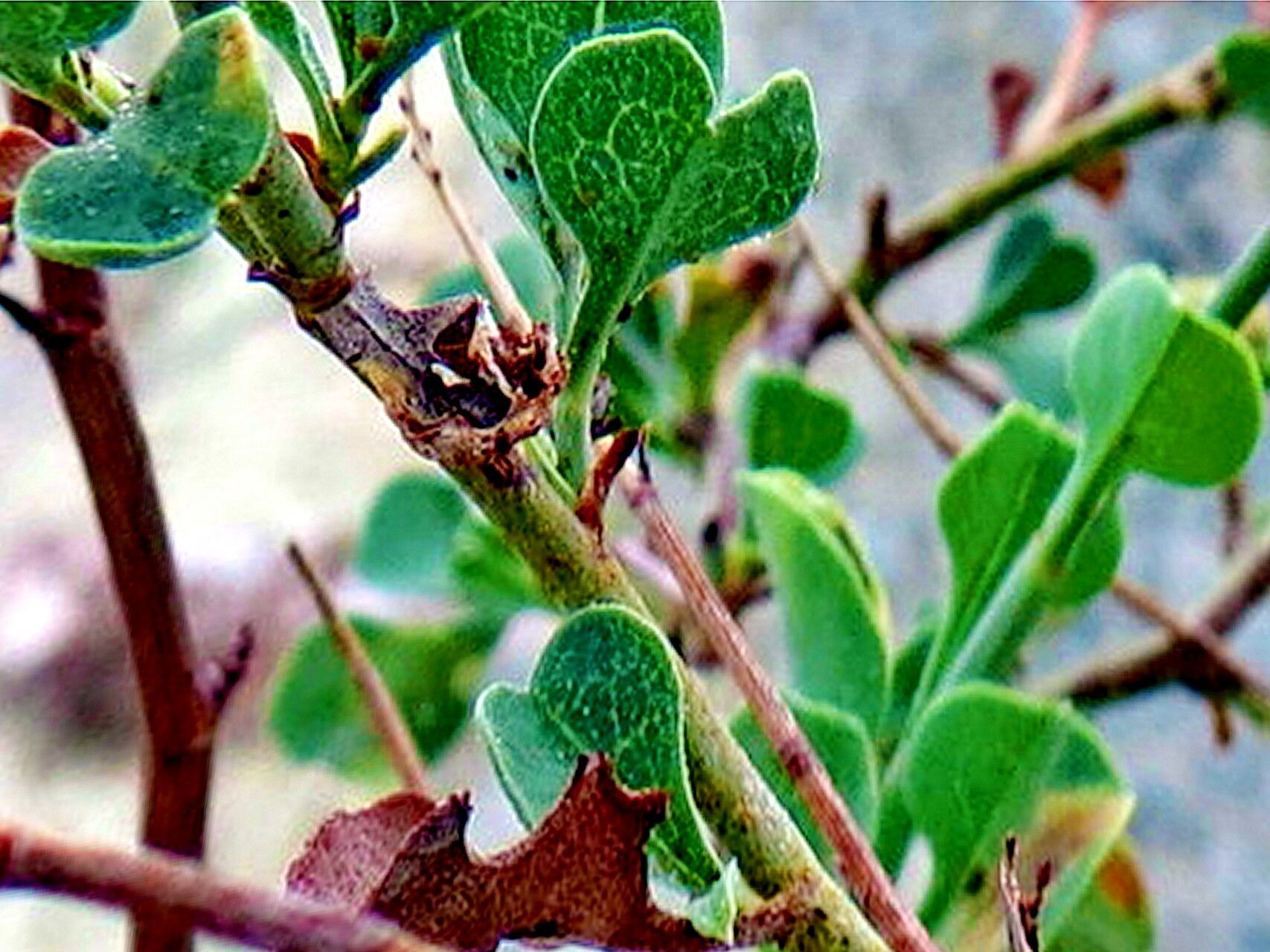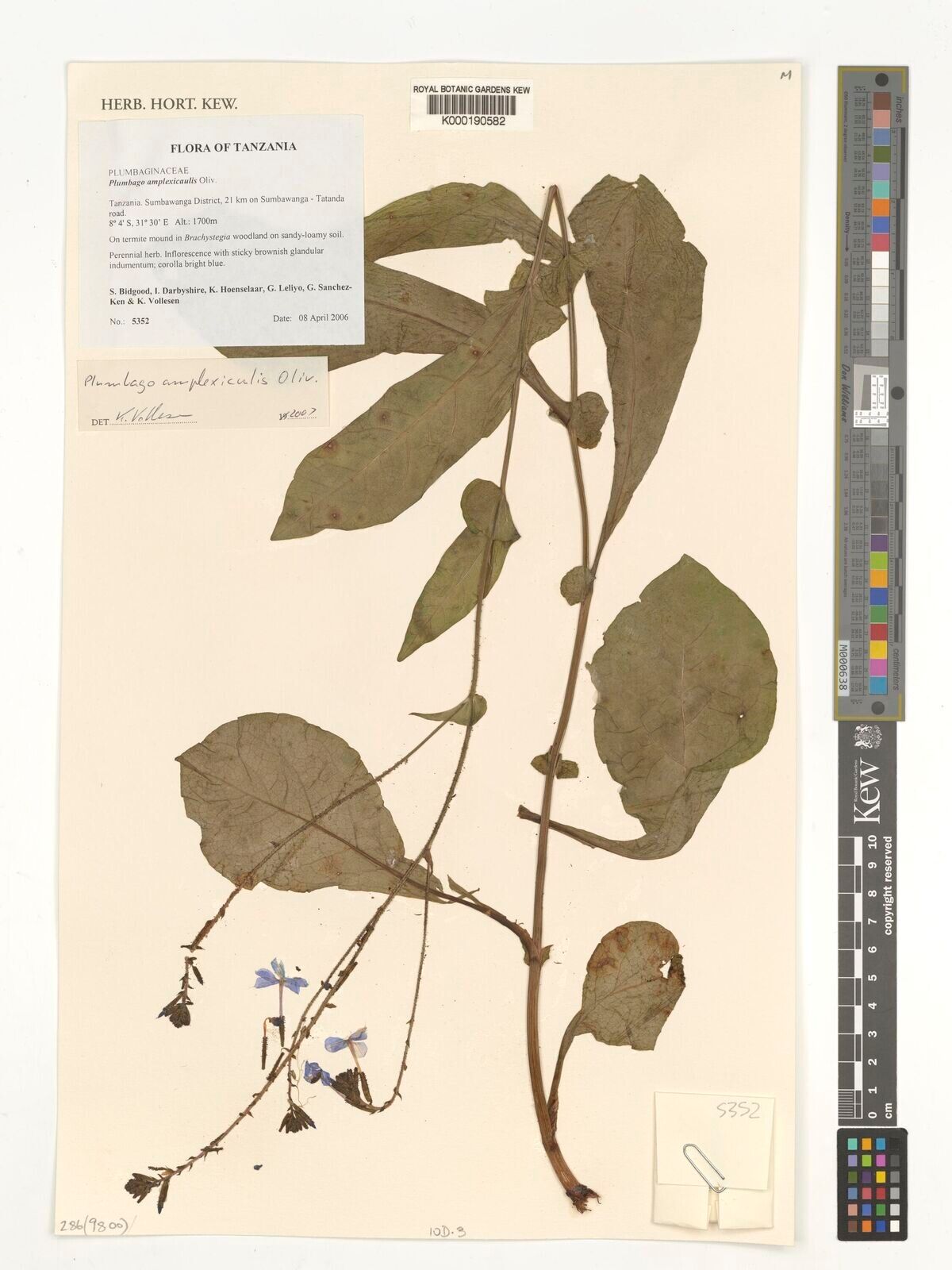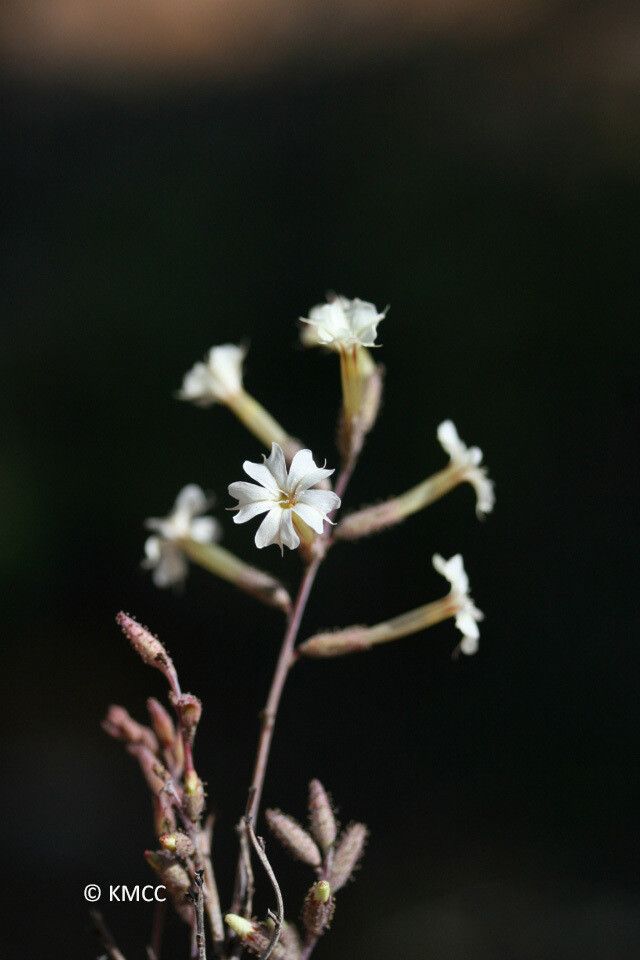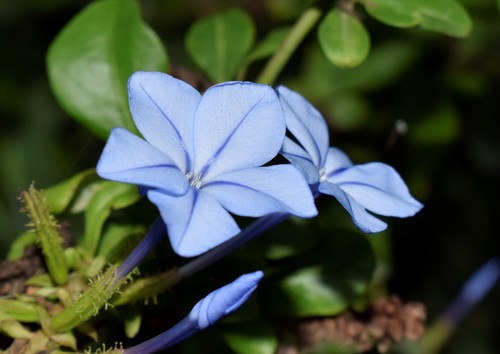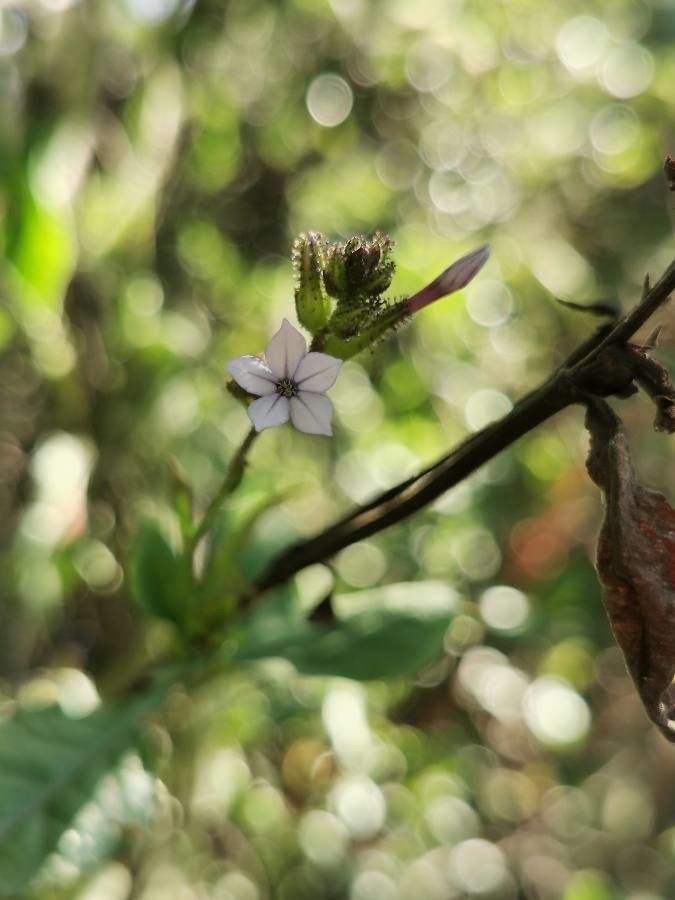
Plumbago pulchella is a species of flowering plant on the Plumbaginaceae family. It is referred to by the common name cola de iguana.The plant species is endemic to more than 20 states in Mexico.
How to keep Plumbago Pulchella.
Water
The iguana's tail thrives in humid, tropical environments where the soil is consistently moist. To promote healthy growth, water the plant weekly and, if possible, keep it outdoors to take advantage of natural rainfall. The growth cycle of the iguana's tail is attuned to seasonal changes in rainfall, which helps it absorb more water during peak growing seasons.
Pruning
The Iguana's Tail has a sprawling growth habit and is adorned with vibrant blue flowers. To maintain its shape, remove dead stems, and improve air circulation, it is best to prune it in early spring. Regular pruning encourages healthier foliage; however, be careful not to over-prune, as this can cause stress, which might diminish its vigorous and attractive appearance.
Botanical profile.
- Life Cycle
- Perennial
- Genus
- Plumbago
- Family
- Plumbaginaceae
Other names.
Reader questions.
What are the sunlight requirements for Iguana's Tail (Plumbago pulchella)?
Iguana's Tail (Plumbago pulchella) flourishes under different sunlight conditions, each with their specific requirements to ensure optimal growth and health. For full sun exposure, Iguana's Tail requires above 6 hours of direct sunlight per day, which is essential for its vitality and bloom production. On the other hand, for partial sun exposure, about 3-6 hours of sunlight per day is sufficient. It's crucial to observe the movement of sunlight through your garden carefully, aiming to provide your Iguana's Tail with the perfect balance of light and shade. This attention to sunlight exposure ensures the plant's happiness and thriving.
What is the Iguana's tail?
The Iguana's tail refers to a plant scientifically known as Plumbago pulchella. This name comes from its unique appearance or characteristics that perhaps resemble the tail of an iguana to some extent. However, specific details about its essentials or symptoms, if any, are not provided in the available information.