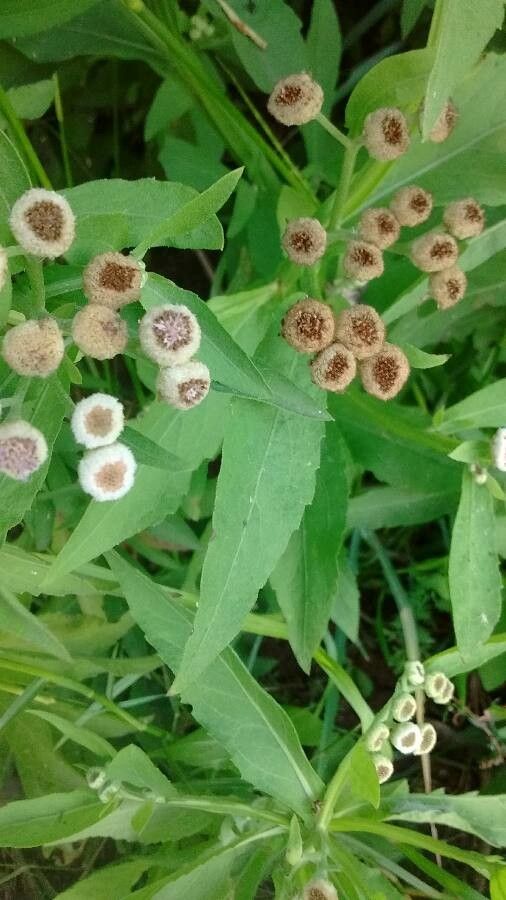
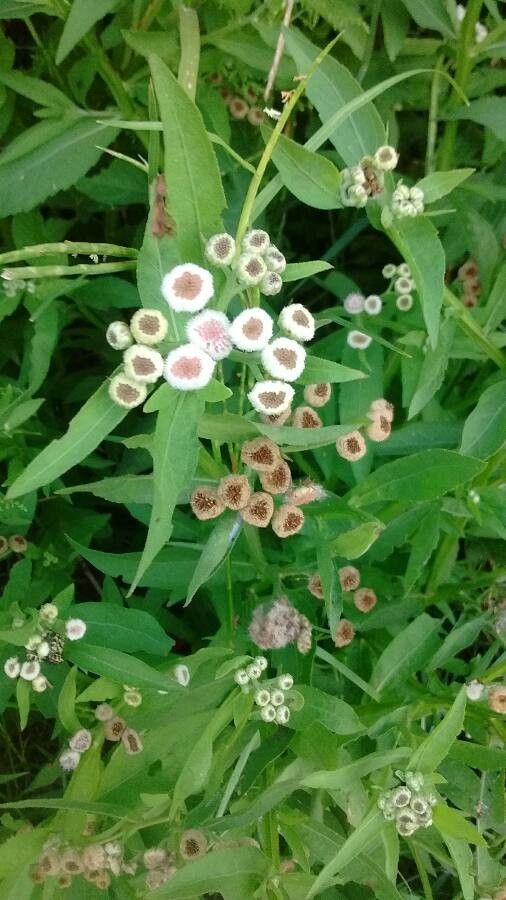
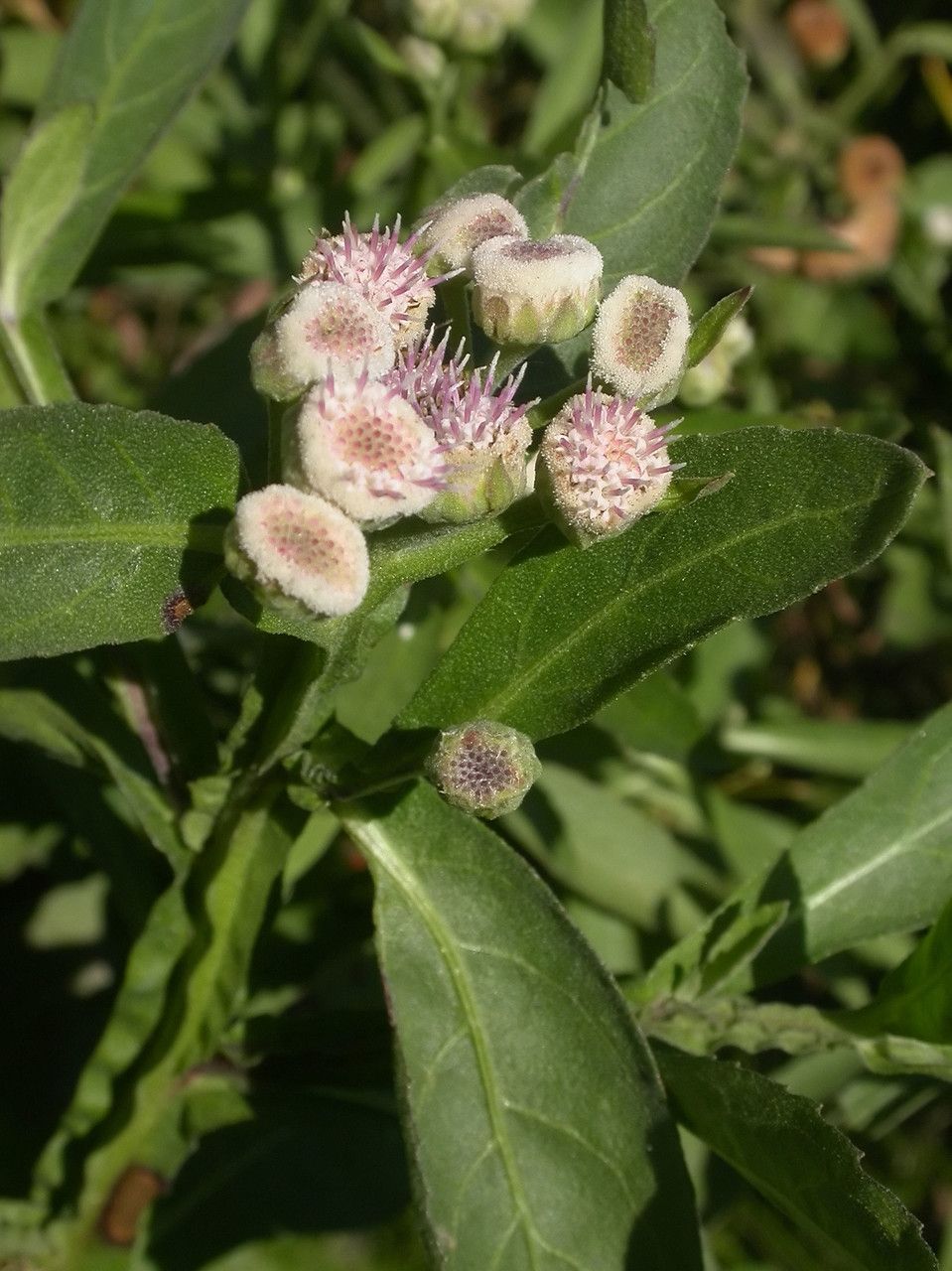
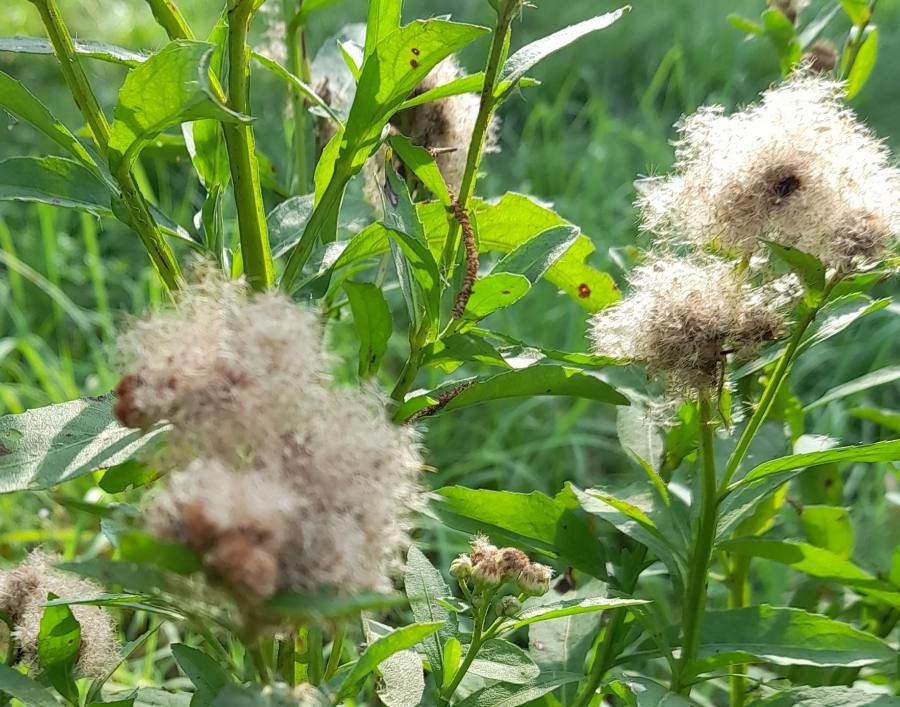
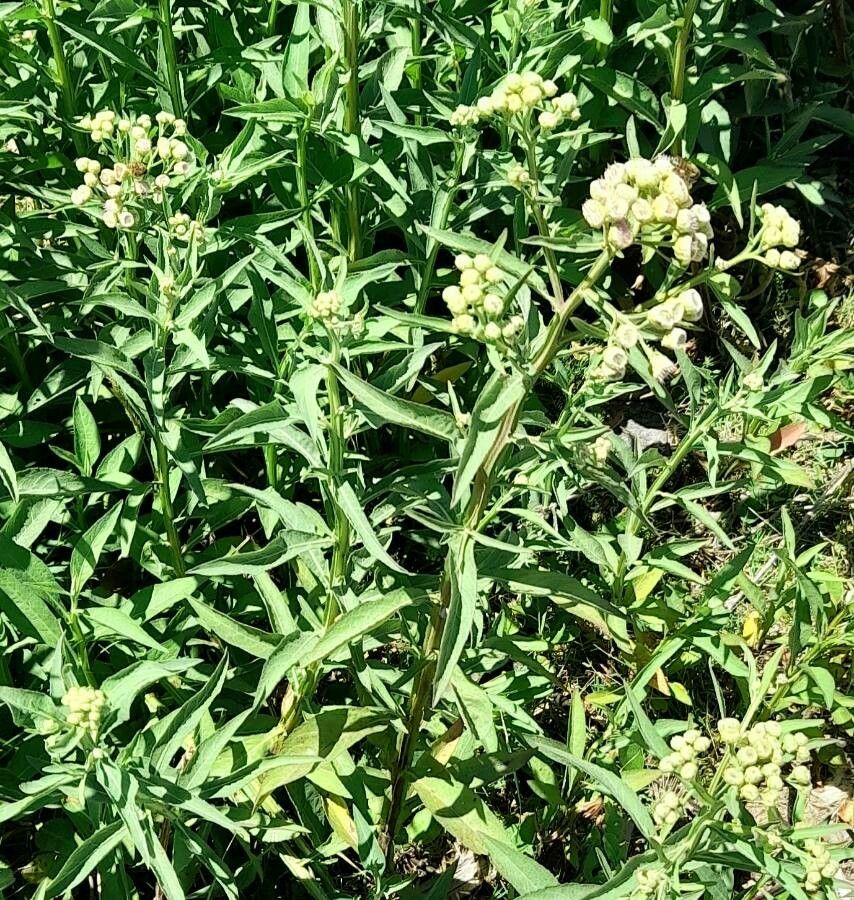
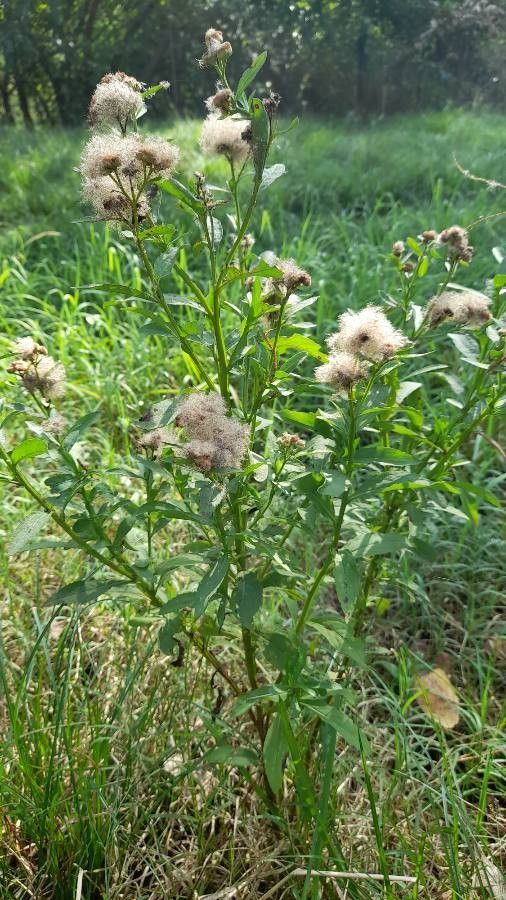
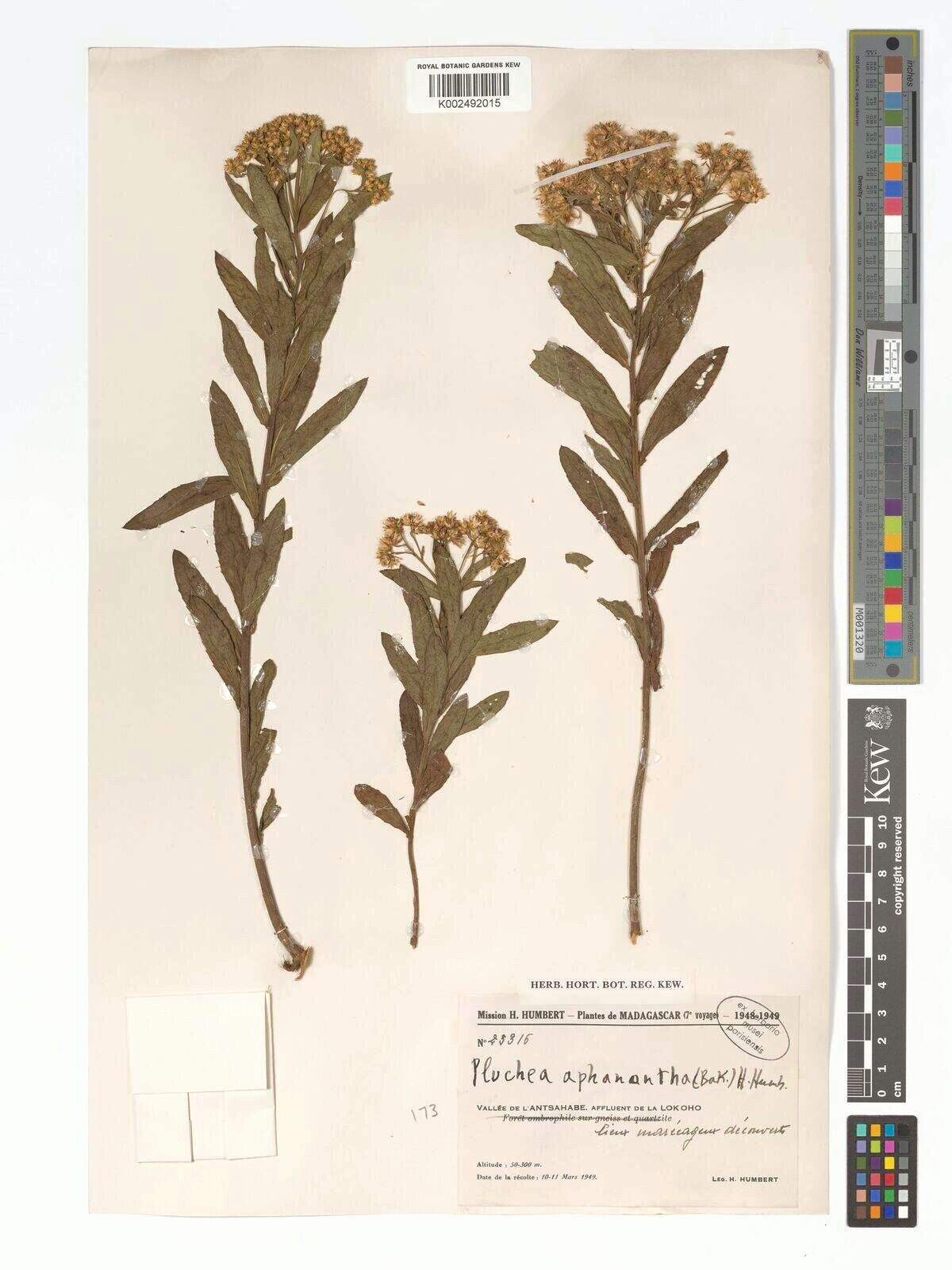
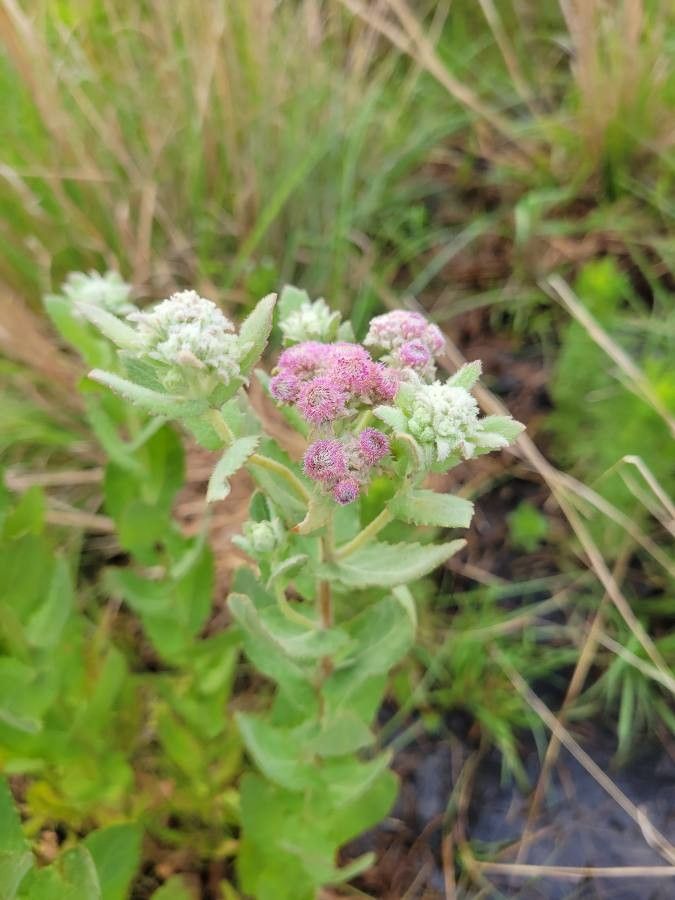
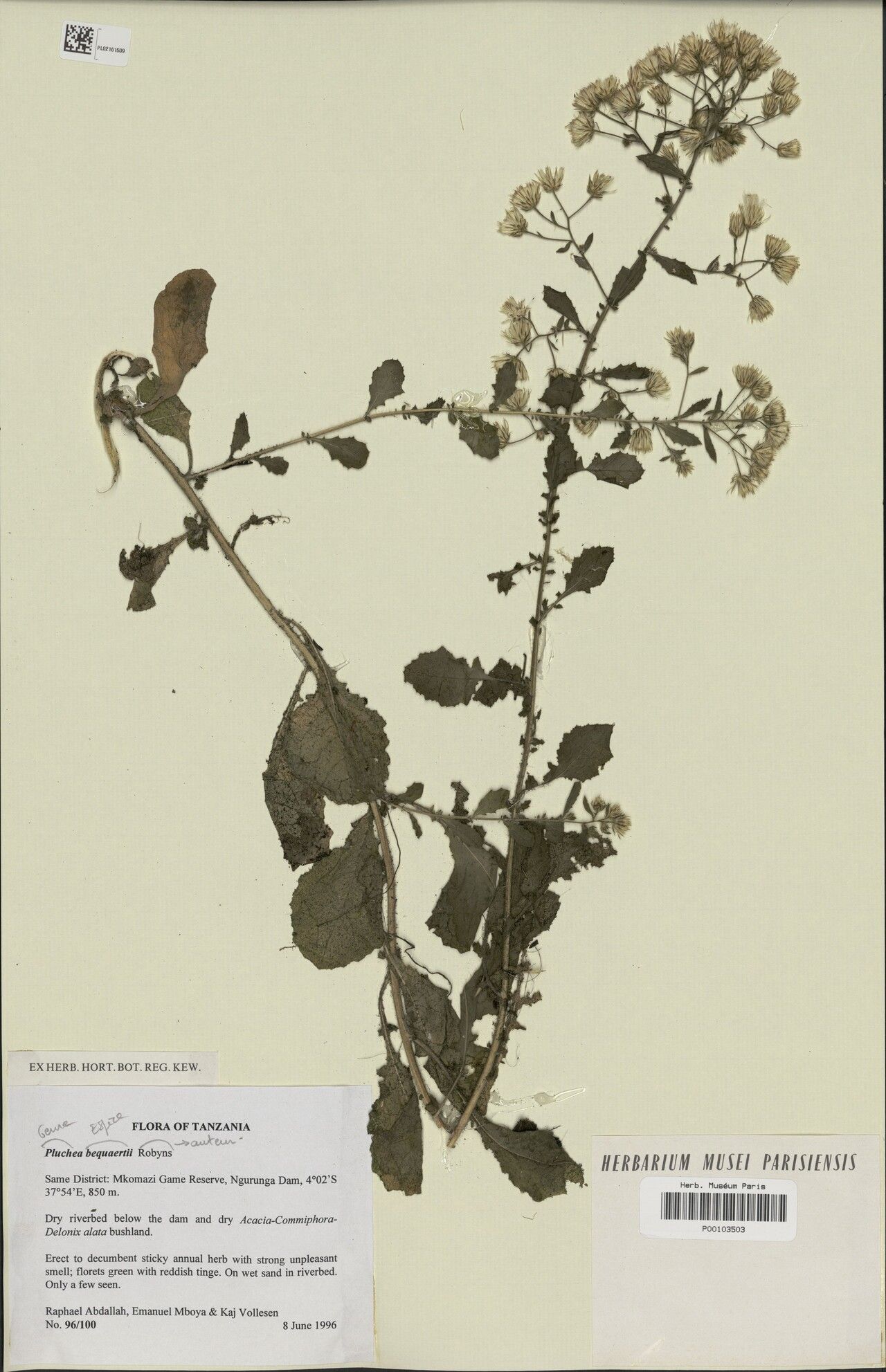
Pluchea sagittalis, commonly known as arrowleaf pluchea, is a perennial herbaceous plant belonging to the Asteraceae family. Native to the southeastern United States, it thrives in wetlands, marshes, and along riverbanks. The plant can grow up to 1 meter in height and features arrow-shaped leaves that are green on top and pale underneath. Its flowers are small, with colors ranging from white to pinkish-purple, and they possess yellow centers.
Native Americans have historically used arrowleaf pluchea for medicinal purposes to treat various ailments, including fever, coughs, colds, wounds, and skin infections. Additionally, it is grown as an ornamental plant due to its attractive foliage.
Arrowleaf pluchea plays a crucial role in wetland ecosystems by providing habitat for various wildlife species, including birds and insects. Its deep root system helps with erosion control along riverbanks by stabilizing soil structure.
Wingstem camphorweed has good disease resistance and is generally not prone to diseases. However, it can be susceptible to pests and diseases present nearby. These infections are typically not severe. Regarding care, the plant requires moderate maintenance. It should be pruned regularly to preserve a neat appearance and support healthy growth. Fertilizing can also help encourage flowering. Wingstem camphorweed is suitable for anyone with an outdoor area, such as a garden or patio, and does not demand extensive care experience. It may need additional attention when grown indoors.
How to keep Pluchea Sagittalis.
Light
Wingstem camphorweed is a herbaceous perennial plant that originates in open habitats and commonly grows in meadows and grasslands. It prefers full sun but can also tolerate partial sun.
Water
Wingstem camphorweed thrives in consistently moist environments and prefers soil that remains evenly hydrated, requiring weekly watering. As a plant native to wetland areas, it benefits from natural rainfall, making it well-suited for outdoor cultivation, especially in damp meadows or along streambanks.
Temperature
Wingstem camphorweed adapts well to temperature, tolerating high heat and wide temperature fluctuations. In hot weather, care should be taken with watering and providing suitable shade to avoid sunburn. However, it has limited tolerance for low temperatures. Although it can handle some cold, very low temperatures can cause frost damage.
Fertilizer
Typically a single fertilizer application in spring is adequate for Wingstem camphorweed, though repeated feedings can help maximize growth. Apply fertilizer roughly once every month to a month and a half. Fertilization improves the leaves’ appearance and function, helping maintain even color and a healthy texture. It also encourages root growth and enhances nutrient uptake for long-term plant health.
Pruning
Wingstem camphorweed benefits from pruning in the early to late spring. This encourages new growth, improves air circulation, and helps maintain a manageable size. For the best results, trim just above healthy buds and remove any damaged stems. This promotes vigorous regrowth and increases bloom density, which enhances the plant's overall health and reduces the risk of pests and diseases.
Botanical profile.
- Plant Type
- Herb
- Life Cycle
- Perennial
- Genus
- Pluchea
- Family
- Asteraceae
- Hardiness Zone
- 9-11
- Mature Height
- 0.49 m to 2.13 m
- Mature Spread
- 30 cm to 61 cm
- Leaf Color
- Green, Dark Green
- Leaf Type
- Semi-evergreen
- Flower Color
- Pink
- Flower Size
- 1.02 cm to 1.27 cm
- Bloom Time
- Summer
- Planting Time
- Spring, Summer, Autumn
- Harvest Time
- Late summer, Early fall, Mid fall
- Native Area
- Colombia, Bolivia, Venezuela
Other names.
Reader questions.
What are the sunlight requirements for Wingstem camphorweed?
Wingstem camphorweed thrives best in full sunlight conditions, requiring above 6 hours of direct sunlight daily. However, it can also tolerate partial sun, meaning it can grow well with about 3-6 hours of sunlight. It's important to observe your garden's sunlight patterns to ensure your plants are placed in spots that offer the right balance of light and shade, guaranteeing their growth and health.
Can Wingstem camphorweed grow under artificial lighting?
Yes, Wingstem camphorweed can grow under artificial lighting, especially in conditions where natural sunlight is insufficient, such as during winter or in less sunny spaces indoors. Adequate lighting is crucial for optimal growth, and artificial lights, like LED lights, can be tailored to provide the necessary wavelengths. Full sun plants require 30-50W/sq ft, partial sun plants need 20-30W/sq ft, and the light source should be placed 12-36 inches above the plant to mimic natural sunlight. Additionally, the artificial light should be kept on for 8-12 hours per day to simulate natural daylight hours.
What are the signs of inadequate lighting for Wingstem camphorweed?
Signs of inadequate lighting for Wingstem camphorweed include smaller new leaves compared to mature ones, leggy or sparse growth, faster leaf drop, slower or halted growth, and lighter-colored or chlorotic new leaves. Excessive exposure can lead to symptoms such as sunscald, leaf curling, wilting, leaf scorching, and chlorosis, indicating damage from too much sunlight and the plant's attempt to minimize damage by adjusting its leaf surface area or conserving water.
How can I remedy insufficient or excessive sunlight exposure for Wingstem camphorweed?
To address insufficient sunlight, gradually move your Wingstem camphorweed to a sunnier location each week to receive at least 6 hours of direct sunlight daily. For indoor plants, consider using artificial light by keeping a lamp on for at least 8 hours a day or using professional grow lights. For outdoor plants, ensure a gradual transition to sunnier spots to prevent sunburn. Eliminate obstructions like trees by pruning, and for smaller plants, consider transplanting during their dormant period to a location with ample sunlight and good drainage. Note that parts of the plant affected by insufficient light may not recover, but new growth will be healthy after increasing light exposure.