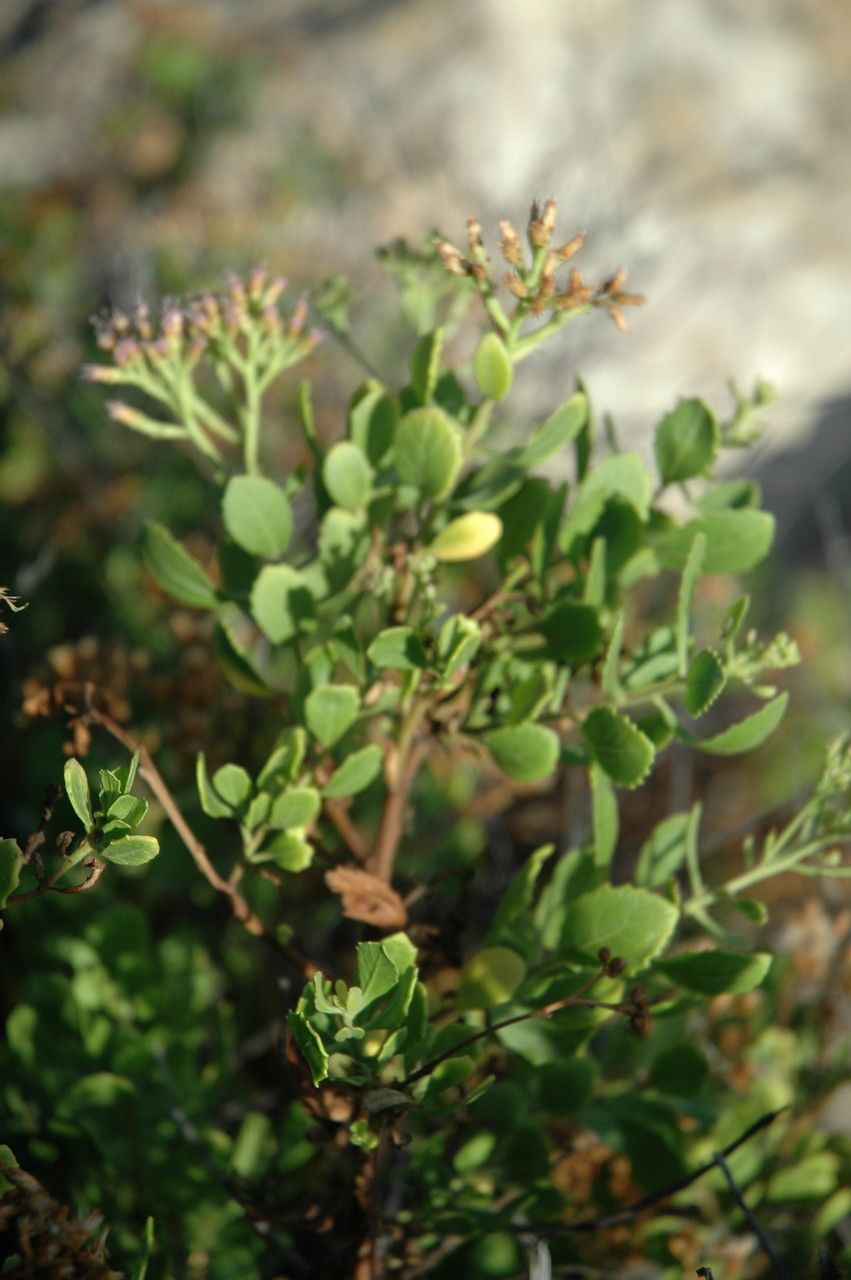
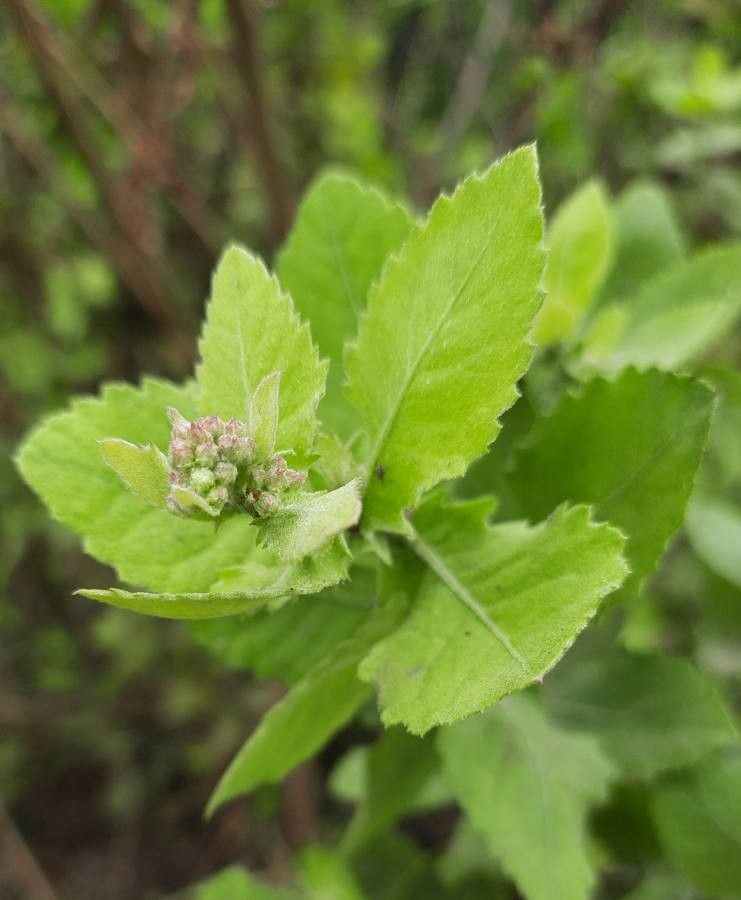
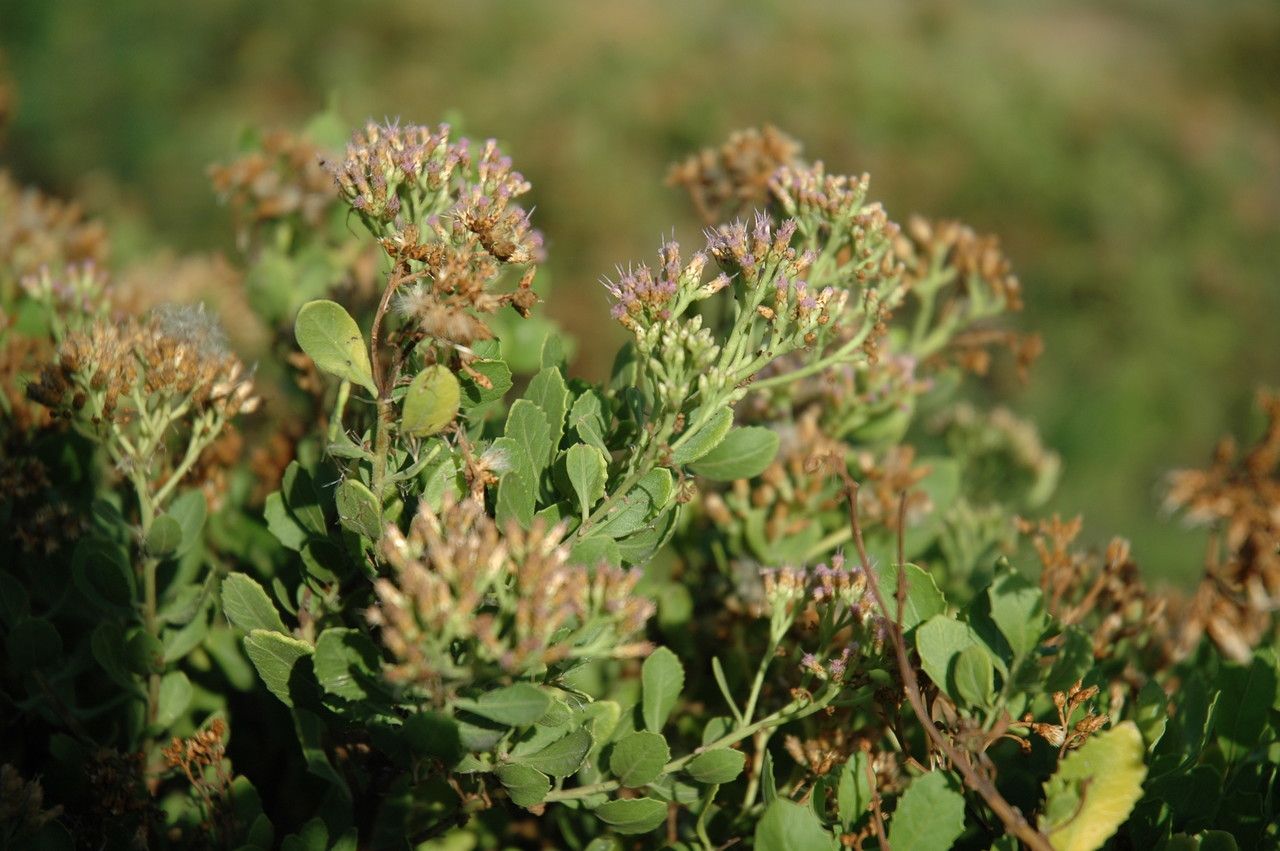
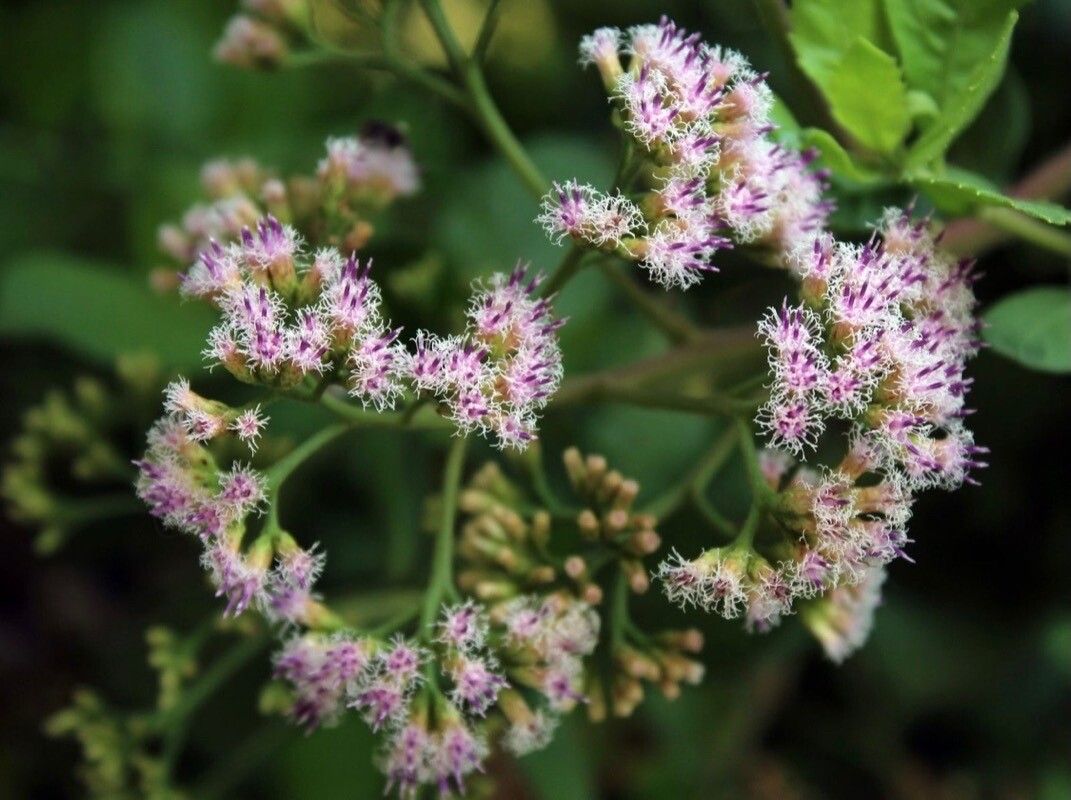
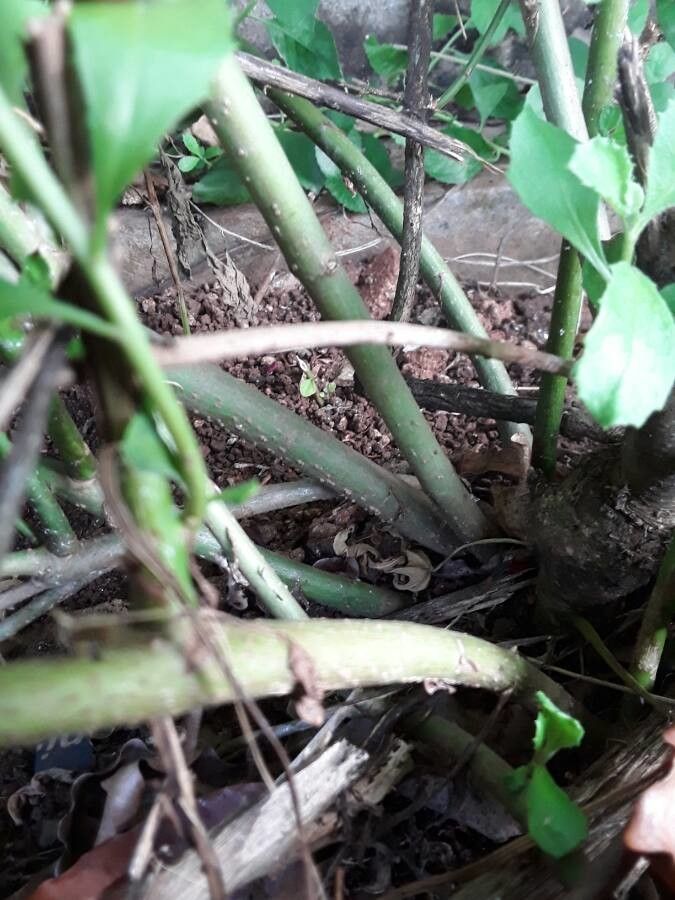
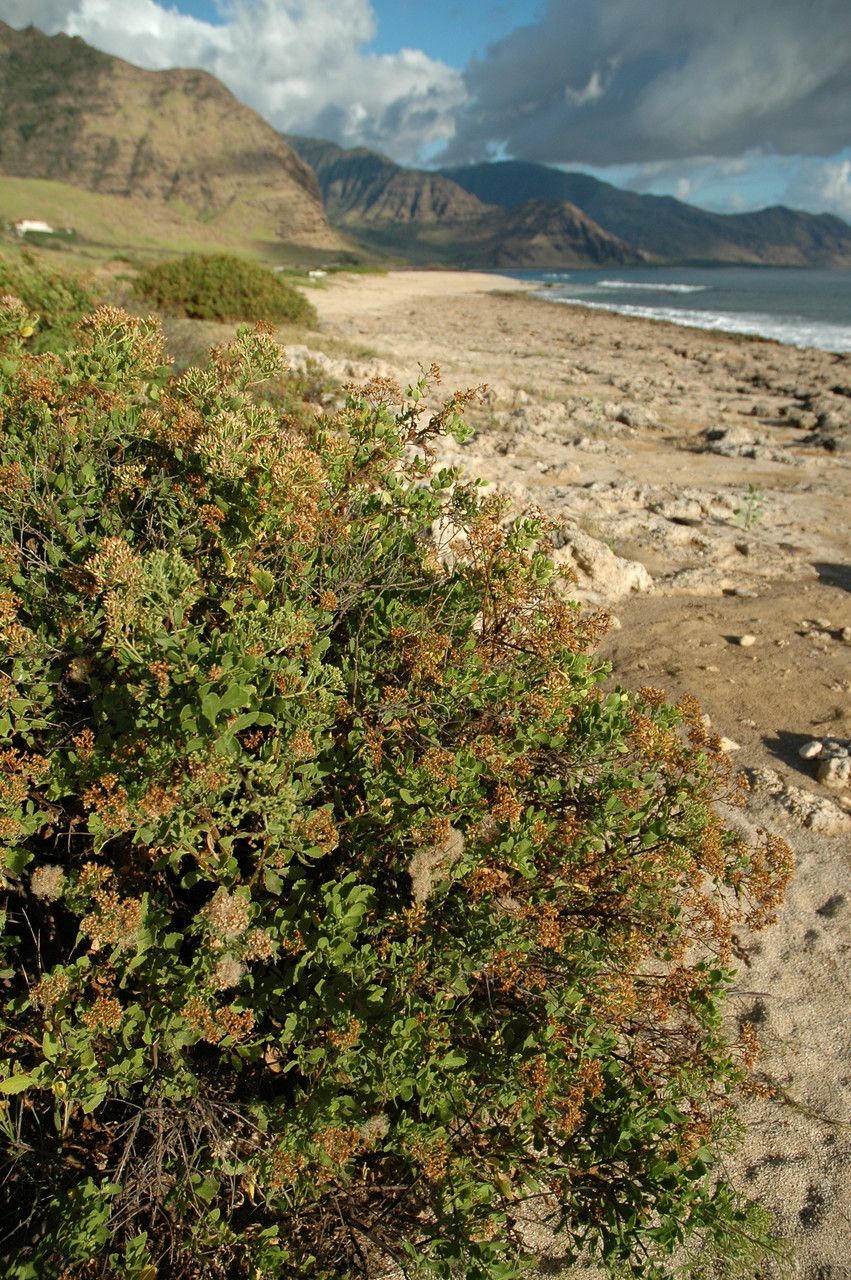
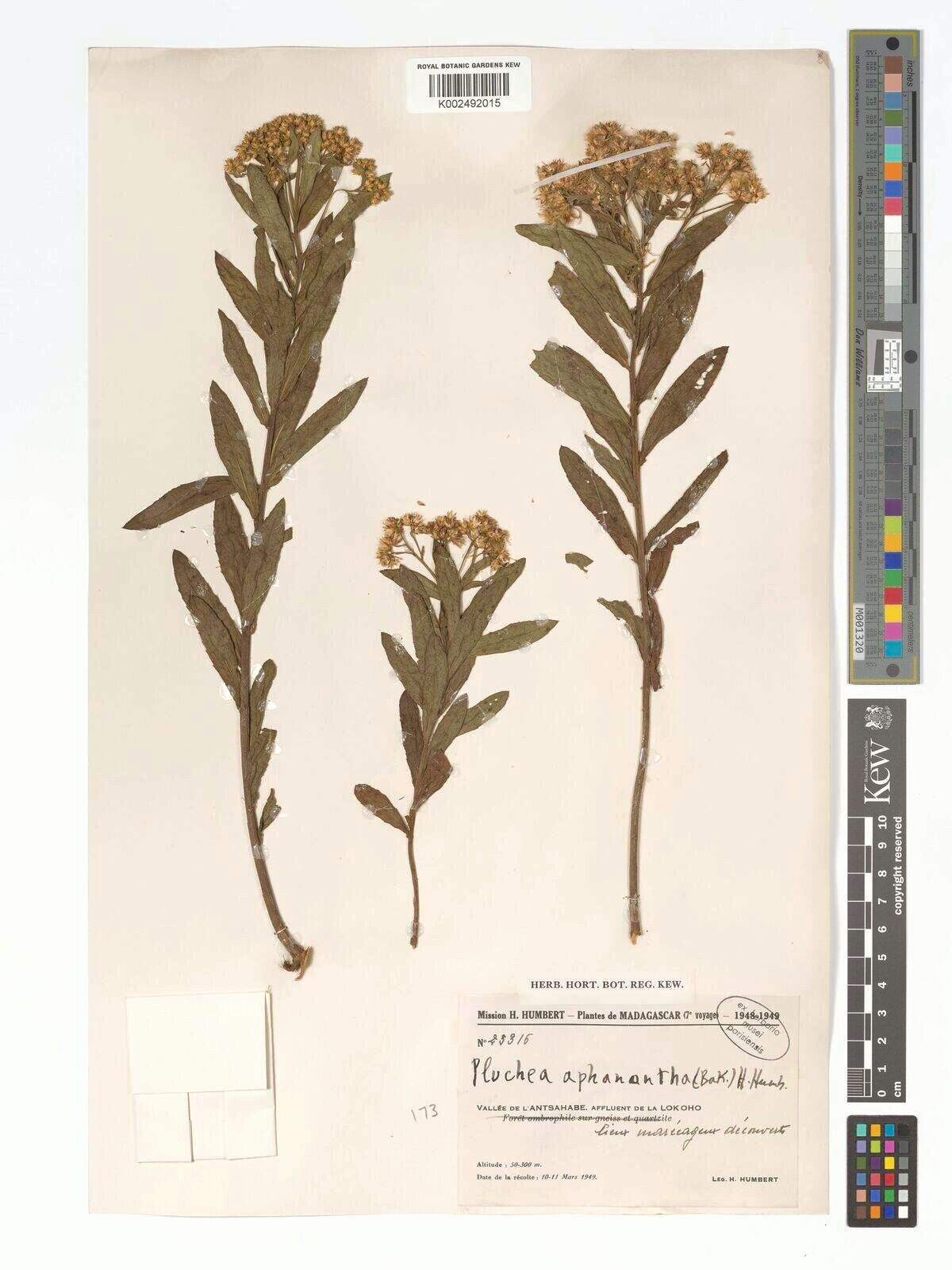
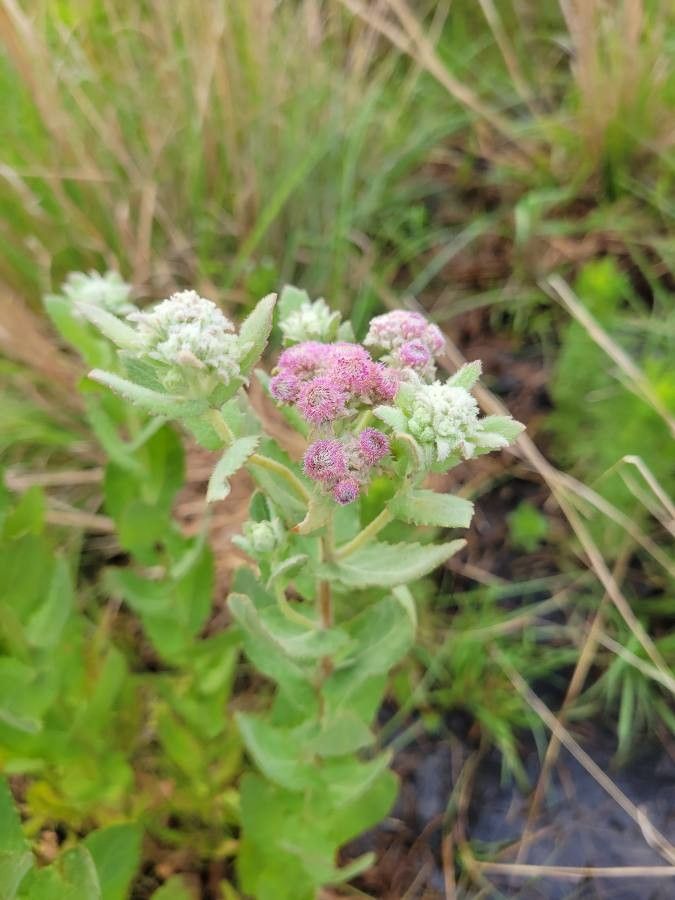
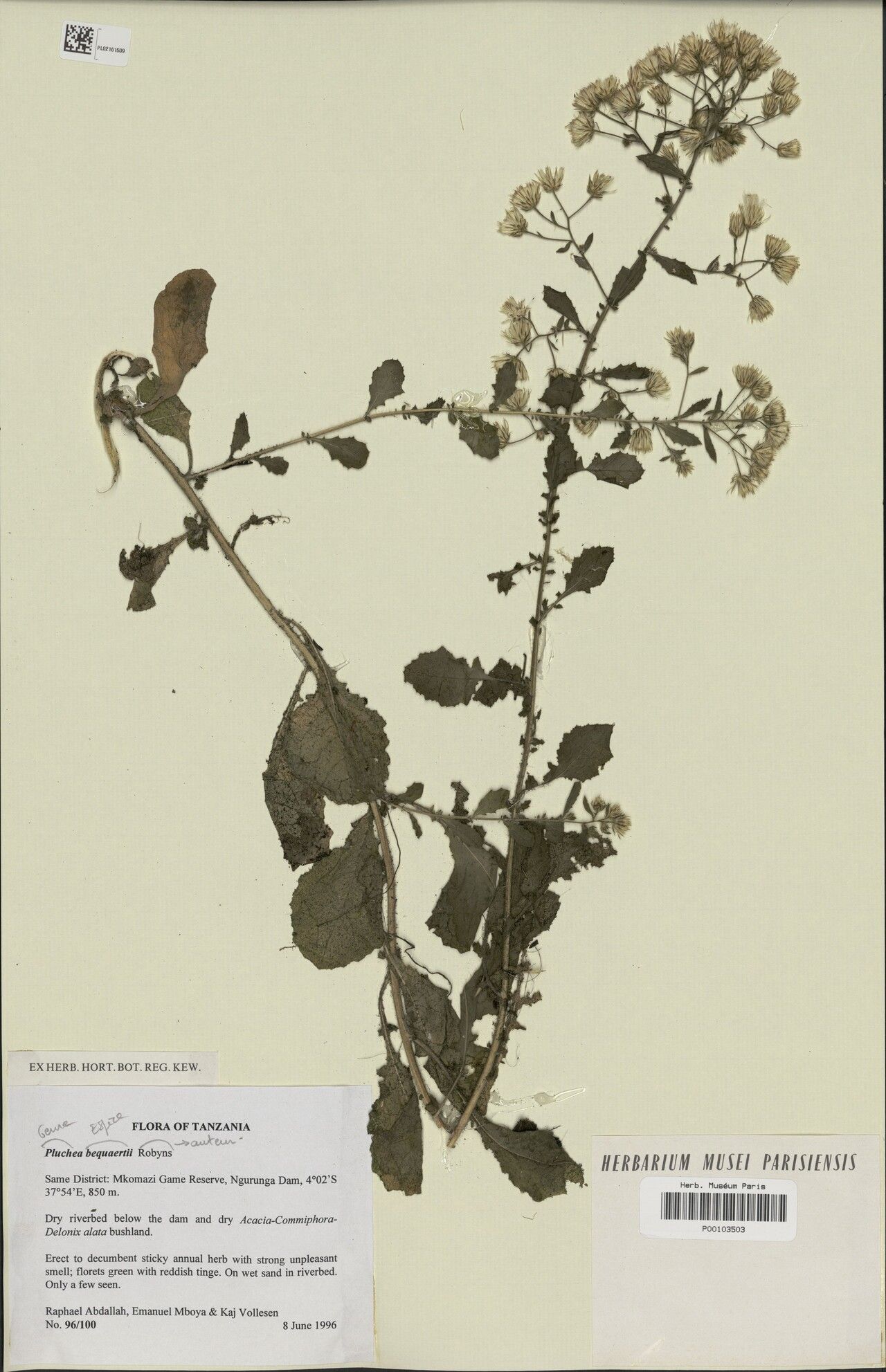
Pluchea indica is a species of flowering plant in the aster family, Asteraceae. Its common names include Indian camphorweed, Indian fleabane, and Indian pluchea. It is native to parts of Asia and Australia, and it is widespread in the Pacific Islands as an introduced and often invasive species.The species hybridizes with Pluchea carolinensis when the two plants grow together, yielding a hybrid that has been named Pluchea × fosbergii.
Indian fleabane has strong disease resistance and is generally not prone to illnesses. However, it can be affected by pests and diseases present in its surroundings. Such infections are typically not severe. Care-wise, this plant needs moderate maintenance. It should be pruned regularly to preserve a good appearance and healthy growth. Applying fertilizer can also encourage flowering. This plant is suitable for anyone with outdoor space, such as a garden or patio, and does not require extensive care experience. It may need more attention when grown indoors.
How to keep Pluchea Indica.
Light
Indian fleabane is a sun-loving, herbaceous perennial native to open habitats and often thrives in meadows and grasslands. It prefers full sun but can also tolerate partial sun.
Water
Indian fleabane thrives best with moderate water conditions, needing to be watered once a week. This drought-tolerant, deciduous plant sheds its leaves during dry seasons to reduce water loss, improving its chances of survival in its natural habitat.
Temperature
Indian fleabane comes from tropical areas where the climate is usually warm and humid. Therefore it is well suited to high temperatures and moisture. It does not tolerate sudden temperature fluctuations and prefers a steady temperature environment, so avoiding temperature swings indoors is important. It typically cannot endure cold conditions and needs warmer temperatures to grow. If the ambient temperature falls too low, the plant may stop growing or even die.
Fertilizer
Indian fleabane needs the most fertilizer during its active growth period, which is mainly in spring, summer, and early autumn. Fertilization supplies essential nutrients that the soil may lack, supporting healthy root and stem growth and improving the attractive foliage, a characteristic of this plant.
Pruning
Indian fleabane is a sturdy shrub known for its aromatic leaves and pink flowers. To improve its shape and airflow, it's best to prune it regularly from early to late spring. Use clean, sharp tools to cut away dead branches, which not only boosts the plant's health and appearance but also helps prevent the spread of disease.
Botanical profile.
- Plant Type
- Herb, Shrub
- Life Cycle
- Perennial
- Genus
- Pluchea
- Family
- Asteraceae
- Hardiness Zone
- 9-11
- Mature Height
- 2.13 m
- Mature Spread
- 0.91 m to 1.52 m
- Leaf Color
- Green
- Leaf Type
- Evergreen
- Flower Color
- Pink
- Flower Size
- 2.54 cm to 12.70 cm
- Bloom Time
- Summer, Early fall, Mid fall
- Planting Time
- Spring, Summer, Autumn
- Harvest Time
- Late summer, Fall, Early winter
- Native Area
- India, Malaysia, Indonesia, Cambodia, Vietnam, Myanmar, Philippines, Singapore, Bangladesh, Laos, Thailand, China
Other names.
Reader questions.
How should I water my Indian fleabane plant?
To properly water the Indian fleabane, it's best to use filtered water at room temperature. Tap water can have harmful particles, so filtering it is important. The plant prefers warmer water since it comes from a warm environment. Cold water can be a shock to its system. Additionally, avoid watering from above as it can cause issues with the foliage. Instead, gently apply filtered room temperature water to the soil until it's fully soaked. This helps the roots stay moist and spread through the soil for nutrient absorption.
What are the sunlight requirements for Indian fleabane?
Indian fleabane thrives best in full sun conditions, which means it requires more than 6 hours of sunlight daily. However, it can also tolerate partial sun, indicating it can grow well in areas receiving about 3-6 hours of sunlight. It's essential to observe the movement of sunlight through your garden to identify spots that offer a balance of light and shade, conducive to the plant's growth and happiness.
What is Indian fleabane?
Indian fleabane, known scientifically as Pluchea indica, is a plant species. Details on its essentials, symptoms, or uses were not provided.
What do I do if I give my Indian fleabane too much water or too little?
Overwatering is a more common problem for Indian fleabane than underwatering. If the plant gets too much water, its stems and leaves may wilt and turn yellow. Overwatering over time can also lead to diseases like root rot, mold, and mildew, which can be fatal for the plant. While underwatering is less likely, it can still happen, and in that case, the leaves may become brittle and brown. It's important to address signs of overwatering early, as some of the resulting diseases, like root rot, may not be fixable if left too long. If you see early signs, reduce your watering schedule and check the soil's drainage. If it drains poorly, replace it with a loose, well-draining potting mix. If the signs indicate underwatering, simply water more regularly until the plant is healthy again.
What are some essential care tips for growing Indian fleabane?
Indian fleabane is a perennial herbaceous plant that loves the sun. Originating from open habitats like meadows and grasslands, it flourishes in full sun but can also withstand partial sun conditions. Indoor plants might require artificial lighting, especially in areas with less natural sunlight or during winter. LEDs are recommended for their efficiency and ability to mimic natural sunlight. Full sun plants should have 30-50W/sq ft of artificial light, partial sun plants 20-30W/sq ft, and full shade plants 10-20W/sq ft. The light source should be placed 12-36 inches above the plant, and the duration should mimic natural daylight hours, typically 8-12 hours per day.
How often should I give water to my Indian fleabane plant?
If your Indian fleabane plant is in a pot, the most precise way to determine if it needs water is by checking the soil. Stick your finger into the soil to a depth of two to three inches. If you find that this top layer of soil is dry, then it is time to water your plant. For those growing the Indian fleabane outdoors in the ground, a similar method can be used to test the soil moisture. Once again, check the first few inches of soil and if it is dried out, it's time to give the plant some water. Typically, during the spring and early fall seasons, you will likely need to water the plant about once a week using this method. However, as the weather gets hotter, you may need to increase the frequency to twice or more per week. It is worth noting that mature and well-established Indian fleabane plants have a remarkable ability to withstand drought conditions.
What are the symptoms of insufficient light in Indian fleabane?
Symptoms of light deficiency in Indian fleabane include smaller new leaves, leggy or sparse growth, faster leaf drop, slower or halted growth, lighter-colored new leaves, chlorosis (leaves turning yellow), sunscald, leaf curling, wilting, and leaf scorching. These symptoms indicate that the plant is not receiving adequate sunlight, impacting its health and growth. Additionally, excessive sunlight can cause issues like chlorosis, sunscald, leaf curling, wilting, and leaf scorching.
How much water does my Indian fleabane plant need?
To properly water your Indian fleabane, be generous with the amount of water you give. Check if the top two to three inches of soil are dry before watering. Ensure that the soil is completely soaked by supplying enough water. You can tell if you've added enough water when excess water drains through the pot's drainage holes. If you don't see this excess water draining, it's likely that you haven't given enough water. However, be cautious of allowing water to accumulate in the soil, as this can harm the plant. Additionally, if the water doesn't drain properly, it could be due to poorly draining soil, which is not good for the plant's health. Lastly, if the plant is outdoors, providing one inch of rain per week should be sufficient.
How can I address light-related issues in Indian fleabane?
To address light-related issues in Indian fleabane, consider these solutions based on the plant's location. Indoors, gradually move the plant to a sunnier spot each week until it receives at least 6 hours of sunlight a day. Use south-facing windows and consider artificial lighting, such as desk or ceiling lamps, for at least 8 hours daily. Outdoors, slowly transition plants to brighter areas to prevent sunburn. Reducing obstructions like pruning branches can help outdoor and ground plants. For smaller plants, consider transplanting during their dormant period to a location with more sunlight and good drainage. It's important to note that while parts affected by insufficient sunlight may not recover, new growth should be healthy with improved light conditions.
How do I water my Indian fleabane as it grows?
The water requirements of the Indian fleabane vary depending on its growth stages. In the initial years and after transplanting, it requires more water due to the development of new roots. These roots need additional moisture to support future growth. As the plant matures, the water needs decrease. Additionally, during the blooming period, the Indian fleabane may require more water due to the flower development process.
How do I water my Indian fleabane in different seasons?
The Indian fleabane has different water needs depending on the season. During the hottest months of the year, particularly in summer, this plant will require more frequent watering, possibly more than once per week, to prevent the soil from drying out too quickly. However, in winter, the plant goes into a dormant phase and will need significantly less water. In fact, you might not need to water it at all during winter months. If you choose to water the plant during this time, it is important to do so sparingly, about once per month. Overwatering during winter can increase the chances of the Indian fleabane getting sick.
What's the difference between watering my Indian fleabane inside my house and outside?
The Indian fleabane is typically grown indoors by gardeners who do not live in temperate or tropical regions. It's important to note that the soil in containers can dry out faster than the soil in the ground. Additionally, if there are drying elements like air conditioning units, the Indian fleabane may need to be watered more frequently compared to if it was planted outside. In outdoor situations where regular rainfall occurs, there may be no need to water the Indian fleabane much at all, as the rain can keep it alive. However, for those who grow this plant indoors, watering it more often is necessary as relying on rainwater to hydrate the soil is not an option.