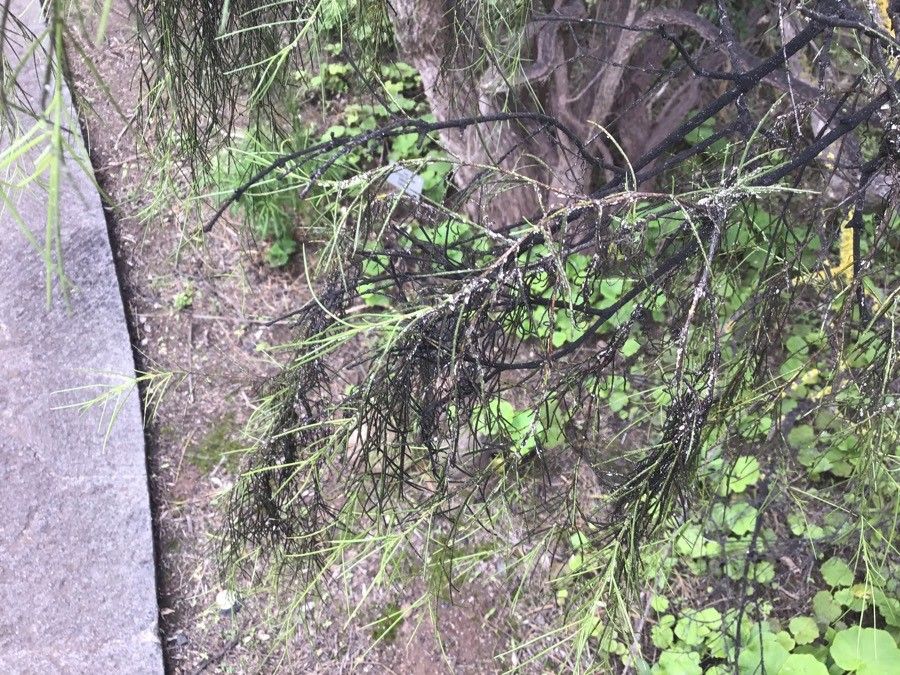
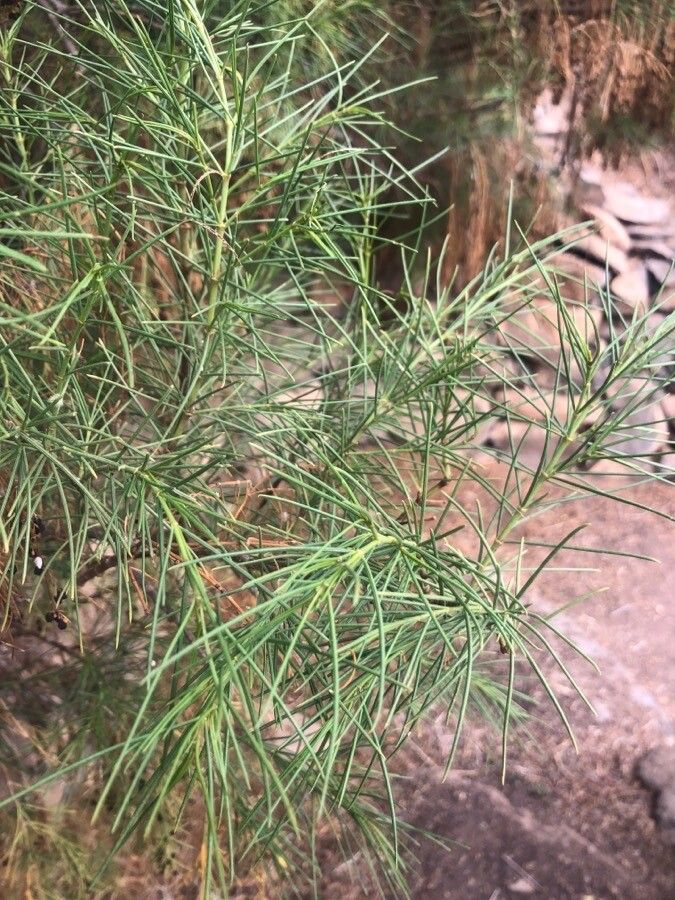
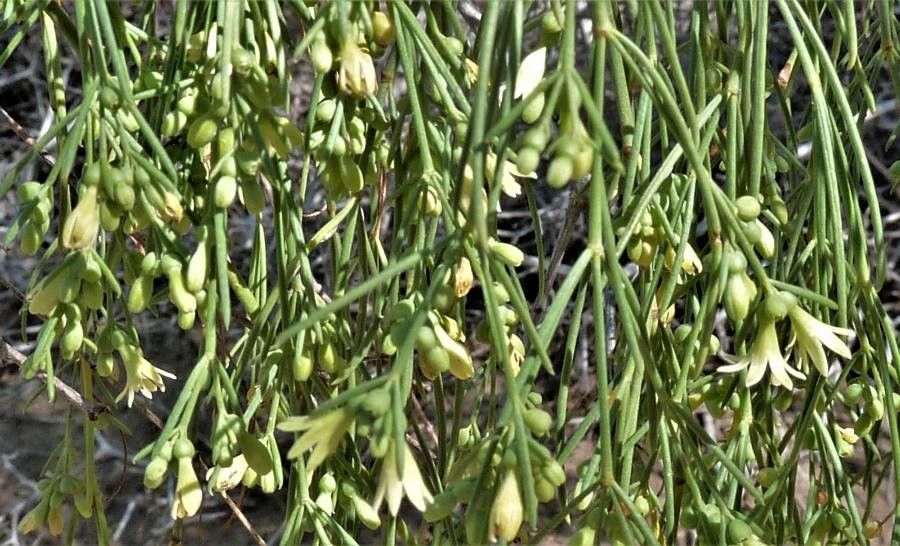
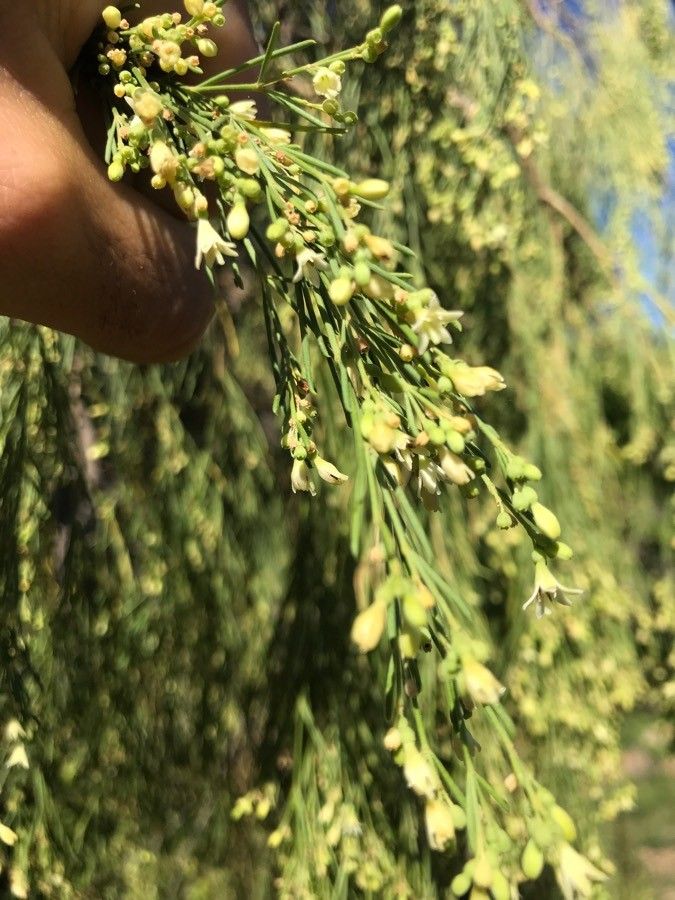
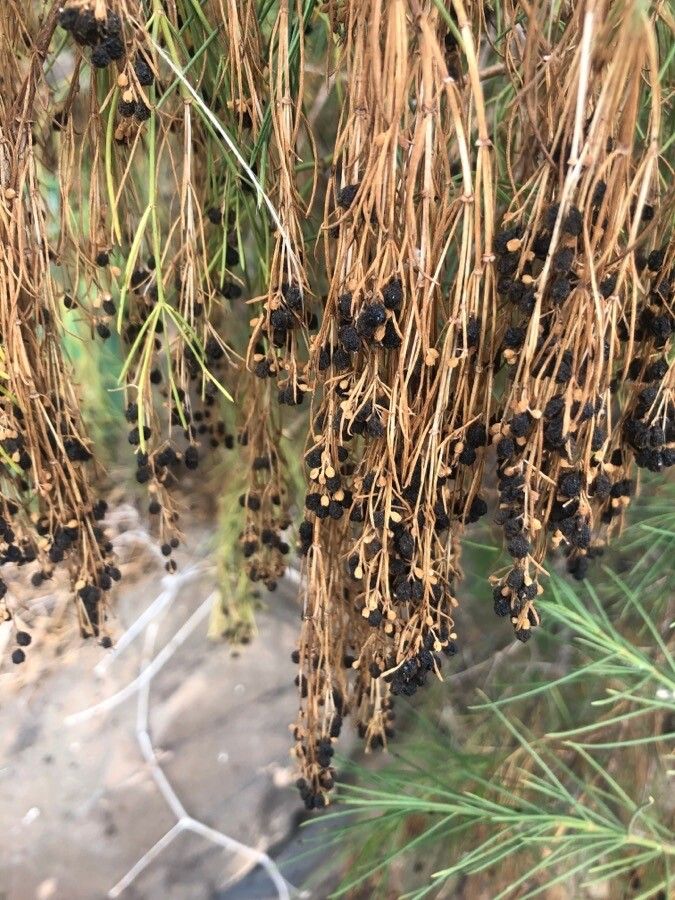
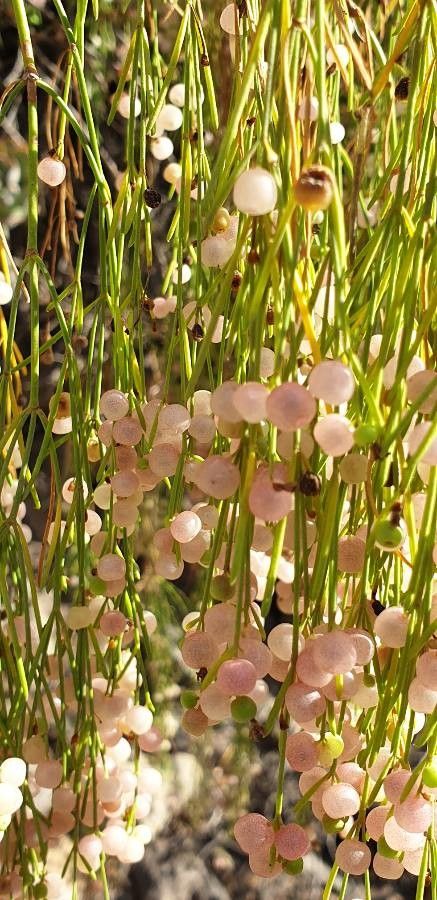
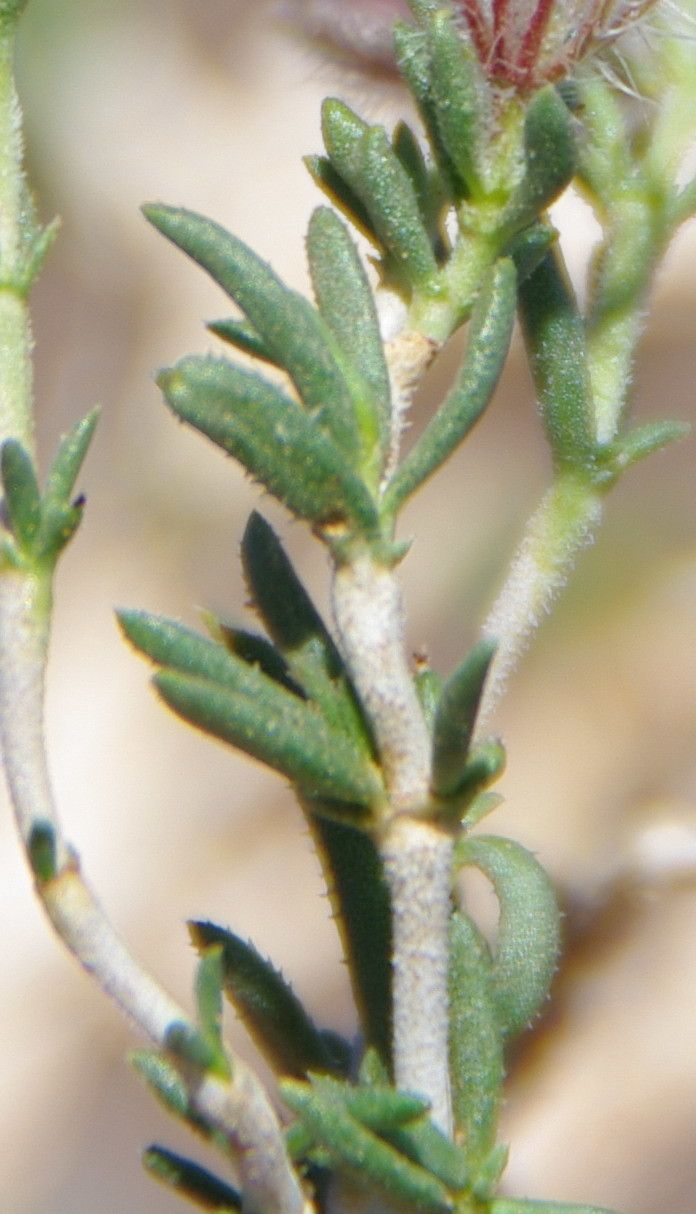
Plocama pendula is a species of flowering plant in the coffee family Rubiaceae, endemic to the Canary islands.: 260 It is a shrub growing up to 2 m (6 ft 7 in), with filiform (very narrow leaves) and minute flowers grouped near the tips of slender, pendulous branches. The fruit is a black berry.
Plocama pendula shows strong resistance to disease and is generally not prone to illness. Regarding care, this plant is fairly low-maintenance. When grown outdoors it needs only minimal watering, and larger plants typically do not require pruning. Smaller plants, however, should be pruned after they have finished blooming. Plocama pendulat is appropriate for anyone with an outdoor area, such as a garden or deck, and does not demand much care experience.
How to keep Plocama Pendula.
Light
Plocama pendula comes from open habitats like sunny meadows and forest edges that provide plenty of light. It performs best in Full Sun but can withstand Partial Sun, showing good adaptability to different light conditions.
Water
Plocama pendula is well-suited for arid environments and demonstrates a strong tolerance for drought. It thrives in dry conditions and should only be watered once a week to avoid over-saturation. For optimal growth, it is best to plant it outdoors in rocky soils that provide excellent drainage, which is essential for preventing root rot.
Fertilizer
To encourage healthy growth, fertilize your Plocama pendula in early spring. Consistent fertilization improves overall vigor, leading to strong growth, better tolerance of harsh conditions, and increased resistance to pests and diseases. Follow a regular fertilization routine for your Plocama pendula to keep the foliage vibrant, richly colored, and lush in appearance.
Pruning
Plocama pendula is characterized by its weeping branches and delicate leaves. For optimal growth, prune the plant during its winter dormancy, concentrating on removing dead branches and thinning out dense areas to improve air circulation. Proper pruning enhances blooming and overall health. Be careful not to over-prune, as this can stress the plant. Ensure all cuts are clean to maintain the plant's aesthetic appearance.
Botanical profile.