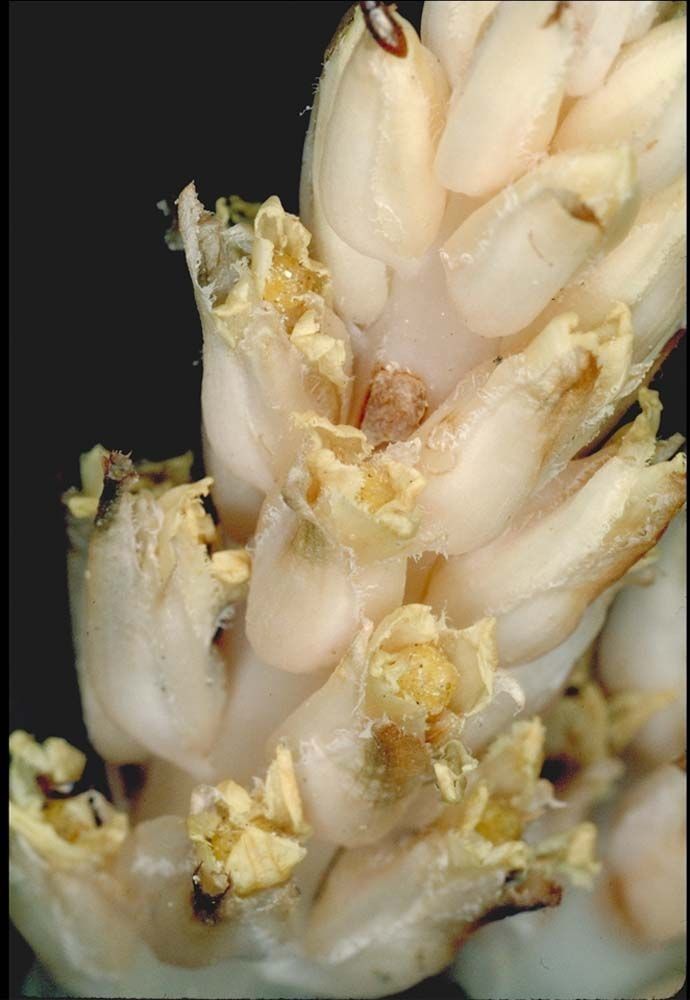
Pleuricospora is a monotypic genus of flowering plants in the family Ericaceae containing the single species Pleuricospora fimbriolata, which is known by the common name fringed pinesap. It is native to the forests of the west coast of North America from British Columbia to the San Francisco Bay Area. This perennial herb is a mycoheterotroph, parasitizing fungi for nutrients. It is yellowish, cream or white in color, lacking chlorophyll, with the tips of the bracts darkening with age. It produces a fleshy stemless peduncle above the leaf litter of the forest floor, reaching no more than 10 to 12 centimeters tall. Leaves are reduced to scales or absent, as the plant does not perform photosynthesis. The aboveground portion of the plant is essentially just inflorescence, with cylindrical whitish flowers blooming for a short time. The flower has four or five petals and about eight stamens in its throat. It produces a fleshy berry under a centimeter wide containing many tiny, sticky seeds. The seeds are dispersed when small mammals eat the fruits.
Fringed pinesap is fairly resistant to disease and usually does not develop illnesses. However, it can be vulnerable to pests and diseases present in its environment. These problems are generally mild. In terms of care, this plant has moderate maintenance needs. It should be pruned regularly to maintain a good appearance and healthy growth. Fertilizing can also aid in promoting blooms. Fringed pinesap is suitable for anyone with outdoor space, such as a garden or patio, and does not demand extensive care experience. It may require more attention when grown indoors.
How to keep Pleuricospora Fimbriolata.
Light
Fringed pinesap is found in habitats like forest understories or rocky areas that offer natural shade. It prefers Full Shade but can tolerate Partial Sun.
Temperature
Fringed pinesap can tolerate a wide range of temperatures, but its distribution may still be restricted by various combinations of moisture and heat. It does best in warm summer conditions with sufficient rainfall or watering. Extended periods of cloudy, rainy weather or prolonged high temperatures raise the chances of Fringed pinesap dying. In winter, adequate protection from cold can increase the plant’s survival rate.
Fertilizer
One fertilizer application in spring is generally sufficient for Fringed pinesap, though multiple applications can increase growth. Apply it roughly every month to a month and a half. Fertilization improves leaf appearance and function, helping maintain uniform color and a healthy texture. It also promotes root development and nutrient uptake for the plant's long-term health.
Pruning
The fringed pinesap, a parasitic plant, thrives in shaded areas and can greatly benefit from careful pruning between early and late spring. To encourage healthy growth and improve aesthetics, be sure to remove any dead parts to enhance air circulation. It's also important to sterilize your tools to prevent infection and maintain the plant's form.
Botanical profile.
- Plant Type
- Herb
- Life Cycle
- Perennial
- Genus
- Pleuricospora
- Family
- Ericaceae
- Hardiness Zone
- 5-9
- Mature Height
- 6 cm to 10 cm
- Mature Spread
- 5 cm to 10 cm
- Leaf Color
- Tan
- Leaf Type
- Semi-evergreen
- Flower Color
- White, Yellow, Pink
- Flower Size
- 0.76 cm to 1.52 cm
- Bloom Time
- Early summer, Mid summer
- Harvest Time
- Late summer, Early fall
Other names.
Reader questions.
What are the sunlight requirements for Fringed pinesap?
Fringed pinesap, scientifically known as Pleuricospora fimbriolata, thrives in full shade, receiving less than 3 hours of sunlight daily, but can also tolerate partial sun, getting about 3-6 hours of sunlight. It's essential to watch how sunlight moves through your garden, finding spots that offer a perfect balance of light and shade for your plants, ensuring their well-being.
What are the essential growing conditions for Fringed pinesap?
Fringed pinesap typically grows in environments such as forest understories or rocky areas that provide natural shade. While it prefers full shade, it can tolerate partial sun. For indoor plants requiring additional lighting, artificial lights such as LED lights can be a vital solution. It's crucial to choose the right type of light, determine the appropriate distance (12-36 inches above the plant), and the correct duration of light exposure (8-12 hours per day) based on whether the plant is full sun, partial sun, or full shade.
What are the symptoms of light deficiency in Fringed pinesap?
When Fringed pinesap is grown indoors under insufficient light, it may exhibit symptoms like smaller new leaves, leggy or sparse growth, faster leaf drop, slower or halted growth, and lighter-colored or chlorotic leaves. In contrast, excessive sunlight exposure can lead to symptoms such as sunscald, leaf curling, wilting, leaf scorching, and chlorosis. These symptoms can significantly affect the plant’s health and appearance.
What solutions exist for light-related issues in Fringed pinesap?
To address insufficient sunlight, indoor plants can be moved closer to a window or supplemented with artificial light, keeping lamps on for at least 8 hours daily or using grow lights. Outdoor plants should be gradually acclimatized to brighter conditions to avoid sunburn. If sunlight obstruction is an issue, consider pruning or transplanting to a sunnier spot. Note that while affected parts may not recover, new growth will be healthy after adjusting light conditions.