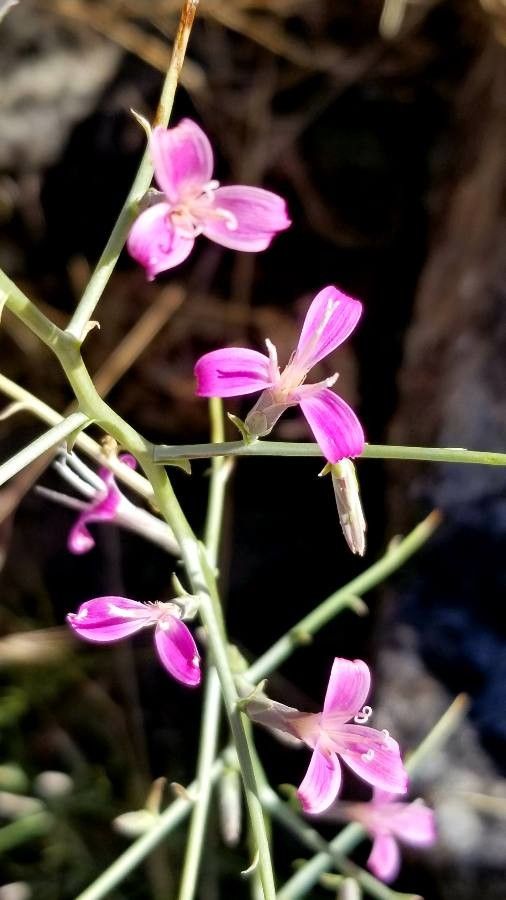
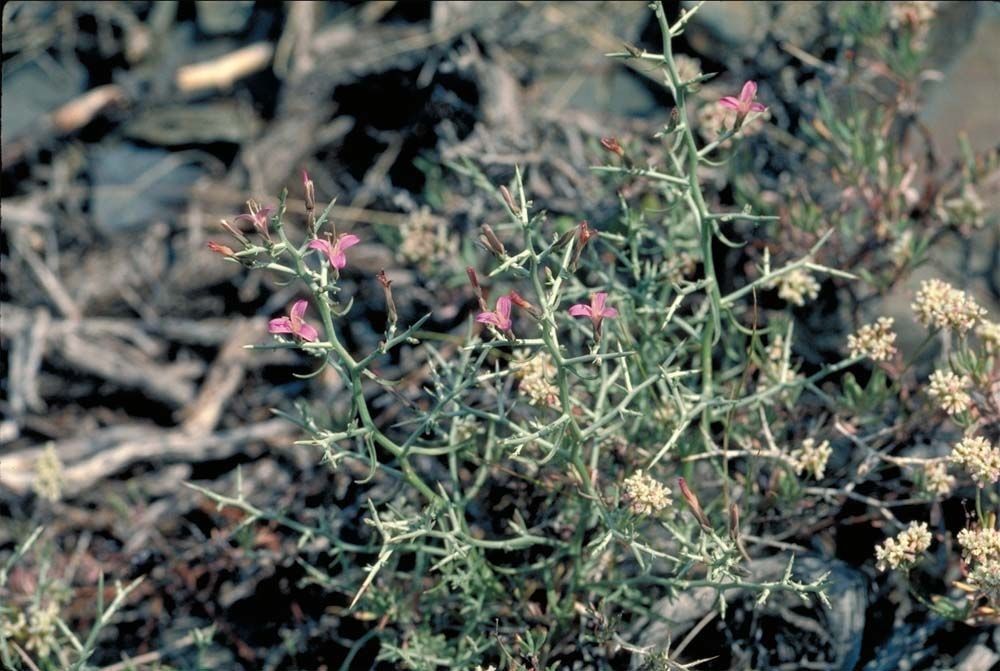
Pleiacanthus is a monotypic genus of flowering plants in the family Asteraceae containing the single species Pleiacanthus spinosus (formerly Stephanomeria spinosa), which is known by the common name thorn skeletonweed, or thorny skeletonweed. It is native to the western United States from Montana and Idaho to southern California and Arizona, where it grows in many types of mostly dry habitat from deserts to mountains. It is a spindly subshrub producing several slender stems up to 40 or 50 centimeters tall from a woody caudex. The stems divide many times into short, rigid branches which narrow to sharp thorn-tips. The plant is mostly hairless except for brownish woolly tufts at the base and below the basal leaves. The leaves are small and linear on the lower stem, and reduced to scale-like growths on the upper branches. Flower heads occur near the ends of the branches. Each has a cylindrical base wrapped in one layer of phyllaries. The head contains 3 to 5 ray florets, each with an elongated tube and a pale to bright pink ligule. The fruit is an achene tipped with a cluster of pappus bristles which are not plumelike as are those of the Stephanomeria species with which this plant was once classified.
Thorn skeletonweed has strong resistance to disease and generally does not tend to get sick. Still, it can be vulnerable to pests and diseases present in its environment. Such infections are typically mild. For care, this plant is moderately demanding. It should be pruned regularly to preserve a neat look and encourage healthy growth. Applying fertilizer can also encourage more blooms. Thorn skeletonweed is well suited for anyone with outdoor space, like a garden or patio, and does not need extensive gardening experience. It may require additional attention if kept indoors.
How to keep Pleiacanthus Spinosus.
Light
Thorn skeletonweed is a sun-preferring herbaceous perennial that originates from open environments and is commonly found in meadows and grasslands. It favors full sun but can also tolerate partial sunlight.
Water
Thorn skeletonweed flourishes in dry conditions due to its high drought tolerance, needing only light watering about once a week. Its resilient nature allows it to thrive with less water compared to many other plants. To prevent root rot and mimic its natural habitat, it is essential to ensure that the soil is well-drained and permeable.
Temperature
Thorn skeletonweed comes from tropical areas, where the climate is generally warm and humid. Consequently, it is adapted to high temperatures and humidity. It does not tolerate sudden temperature changes and prefers a stable thermal environment, so avoiding temperature fluctuations indoors is important. It typically cannot withstand cold and needs warmer conditions to grow. If the surrounding temperature falls too low, the plant may stop growing or even die.
Fertilizer
Thorn skeletonweed requires the most fertilizer during its active growth period, which occurs mainly in spring, summer, and early fall. Fertilizing supplies essential nutrients the soil may lack, encouraging healthy root and stem growth and enhancing the attractive foliage that is a defining characteristic of this plant.
Pruning
To promote healthy growth, prune thorn skeletonweed from early to late spring. Focus on removing dead or damaged branches. Shape the plant by trimming overgrown areas, but be careful to avoid cutting the main stem. Make sure to sterilize your tools to prevent the spread of diseases. Regular pruning helps the plant grow fuller while preserving its unique structure. Always take local conditions into account when pruning.
Botanical profile.
- Plant Type
- Herb, Shrub
- Life Cycle
- Perennial
- Genus
- Pleiacanthus
- Family
- Asteraceae
- Hardiness Zone
- 7-10
- Mature Height
- 40 cm to 49 cm
- Mature Spread
- 49 cm to 91 cm
- Leaf Color
- Green
- Leaf Type
- Deciduous
- Flower Color
- Yellow
- Flower Size
- 1.02 cm to 2.03 cm
- Bloom Time
- Early summer, Mid summer
- Planting Time
- Spring, Summer, Autumn
- Harvest Time
- Late summer, Early fall
Other names.
Reader questions.
What are the sunlight requirements for Thorn skeletonweed?
Thorn skeletonweed, scientifically known as Pleiacanthus spinosus, thrives in full sunlight, requiring above 6 hours of sunlight daily. It can also tolerate partial sun conditions, which means about 3-6 hours of sunlight. Optimal growth is achieved when the plant is placed in a location that meets these sunlight preferences. The plant originates from open habitats and often finds its ideal growing conditions in meadows and grasslands. It's essential to watch how sunlight moves through your garden to choose the best spots that provide a balance of light and shade, ensuring the plants' health and happiness.
How can artificial lighting support Thorn skeletonweed's growth indoors?
When natural sunlight is insufficient, especially during winter or in spaces that receive less sunlight, artificial lighting can play a crucial role in promoting the healthy growth of Thorn skeletonweed. Indoor plants benefit from adequate lighting, and artificial lights can offer a vital solution for optimal growth. LED lights are the most recommended because they can provide specific wavelengths of light necessary for the plant. For plants requiring full sun, 30-50W/sq ft of artificial light is suggested; partial sun plants need 20-30W/sq ft, and full shade plants need 10-20W/sq ft. The artificial light source should be placed 12-36 inches above the plant to mimic natural sunlight, and the duration of exposure should match the length of natural daylight hours, typically 8-12 hours per day.
What are the symptoms of inadequate lighting for Thorn skeletonweed?
Thorn skeletonweed exhibits several symptoms when subjected to inadequate lighting conditions. These include smaller new leaves, leggy or sparse growth, faster leaf drop, slower or no new growth, lighter-colored new leaves, chlorosis (leaves turning yellow due to the breakdown of chlorophyll), sunscald (damage from intense sunlight exposure), leaf curling (a defense mechanism against excessive sunlight), wilting (loss of turgor pressure), and leaf scorching (brown, dry, and crispy leaf edges). These symptoms indicate that the plant is not receiving enough light to maintain healthy growth and photosynthesis.
How can I care for Thorn skeletonweed experiencing light deficiency?
For indoor Thorn skeletonweed plants suffering from light deficiency, gradually moving them to a sunnier location until they receive at least 6 hours of direct sunlight daily is beneficial. A south-facing window with curtains open during the day is ideal. If the plant is large or not easily movable, consider using artificial light, keeping a desk or ceiling lamp on for at least 8 hours daily or investing in professional plant grow lights. For outdoor plants, gradually moving them to better sunlight spots and avoiding sudden light intensity changes is crucial to prevent sunburn. Reducing obstructions like pruning trees or transplanting to a sunnier location with good drainage can also help. It's important to note that parts of the plant already affected by insufficient sunlight may not recover, but new growth should be healthy following these adjustments.