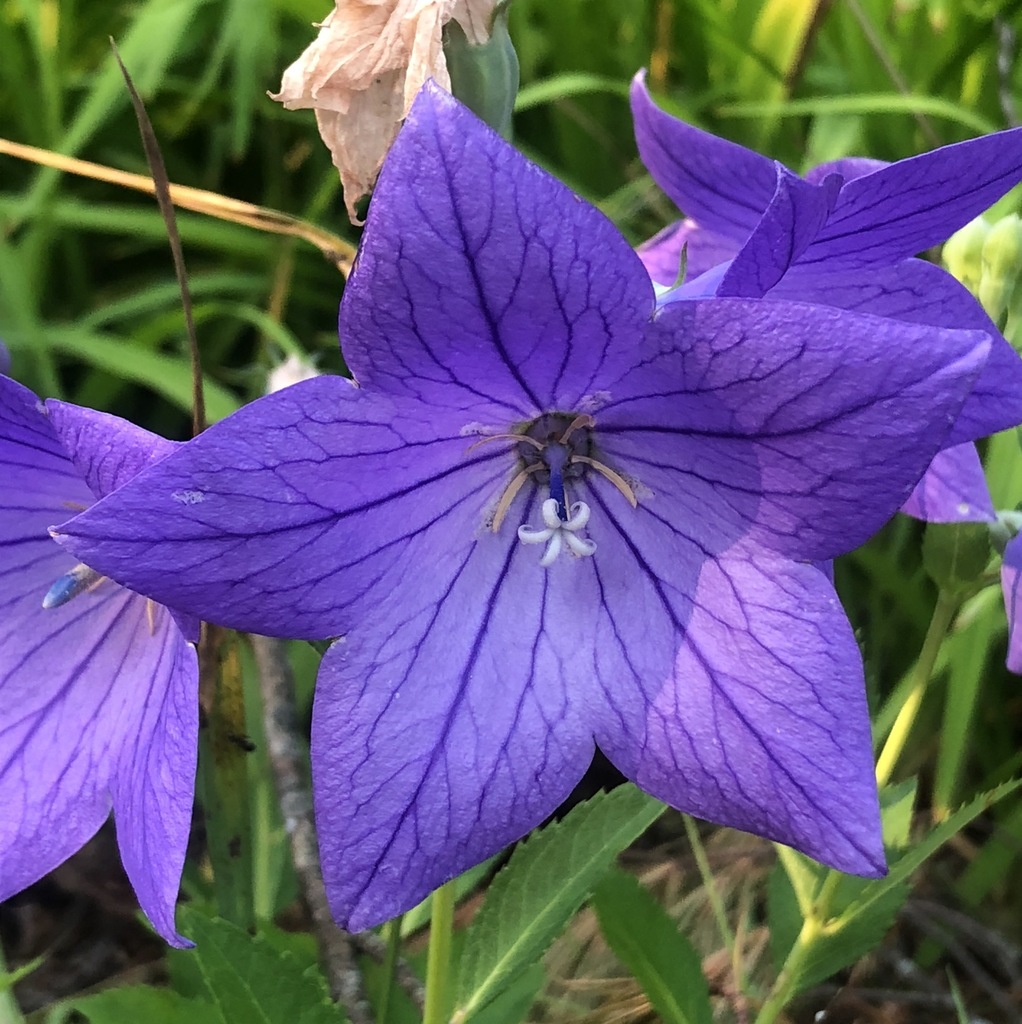
Platycodon, commonly known as the balloon flower, is a perennial plant native to East Asia. It is a popular ornamental plant thanks to its distinctive balloon-shaped buds that bloom into star-shaped flowers in shades of blue, pink, and white. The plant typically grows to a height of 2-3 feet and features dark green, toothed, oval-shaped leaves. Platycodon thrives in full sun or partial shade and prefers well-drained soil. It blooms from mid-summer to early fall, attracting bees, butterflies, and hummingbirds with its nectar-rich flowers.
In traditional medicine, Platycodon is valued for its anti-inflammatory properties. However, caution is advised, as it can cause allergic reactions in some individuals if ingested or applied topically without proper preparation or dosage guidance from a healthcare professional.
Balloon flower, scientifically known as Platycodon grandiflorus, gets its common name from its unique flowering process. This clump-forming perennial features flower buds that swell like balloons before they burst open. When they bloom, they reveal striking, bell-shaped flowers with five pointed lobes that face outward and upward.
Balloon flower is fairly disease-resistant and generally not prone to illness. However, it can be affected by pests and diseases found in its environment. Such infections are typically mild. For care, this plant needs moderate maintenance. It should be pruned regularly to preserve an attractive appearance and support healthy growth. Fertilizing can also encourage flowering. Balloon flower is well-suited for anyone with outdoor space, like a garden or patio, and does not demand extensive care experience. It may need more attention when grown indoors.
How to keep Platycodon Grandiflorus.
Light
Balloon flower does best with plenty of light like that of its native habitat, though it can tolerate moderate light. Adequate sunlight supports healthy growth by enhancing photosynthesis. However, too much or too little light can cause poor growth or slow the plant’s flowering.
Water
The balloon flower, native to the slopes and meadows of East Asia, thrives in moderately moist soil. It prefers regular watering, ideally once a week, to maintain consistent hydration. As a perennial herb, it needs sufficient moisture during its growing season to develop lush foliage and vibrant blooms.
Humidity
This plant will thrive in moderate humidity, which is probably the level in your home. However, misting it a few times a week can be very beneficial. Make sure the room has good ventilation.
Temperature
In its natural habitat, balloon flower grows in cooler areas. During the growing season it prefers a moderate temperature range of 32 to 77 ℉ (0 to 25 ℃). It can, however, tolerate temperatures from 0 to 95 ℉ (-18 to 35 ℃) provided they are not prolonged. In colder months, it is advisable to keep temperatures between 40 to 60 ℉ (4 to 16 ℃) to maintain healthy growth.
Fertilizer
The best time to fertilize a Balloon flower is in early spring, as it comes out of dormancy and begins active growth. Fertilizing supplies essential nutrients needed for healthy development. Although Balloon flower has relatively low fertilizer requirements, applying fertilizer once a year can improve its survival and encourage stronger, longer-lasting blooms.
Pruning
Balloon flowers are known for their unique balloon-shaped buds and star-like blooms. To encourage bushiness and continuous flowering, it's beneficial to prune them in early spring. Regularly removing spent blooms and, if needed, performing a hard prune in late spring can also help. Additionally, keeping your gardening tools clean is crucial to preventing disease and maintaining the plant's health and appearance.
Pot & Repot
When repotting Balloon flower, select a pot 1-2 inches (2.5–5.1 cm) larger with ample drainage. Use a well-draining potting mix. Repot in spring or fall, making sure the root ball sits slightly lower than the rim of the flower pot. Water thoroughly after repotting and place in a warm spot with indirect sunlight.
Botanical profile.
- Plant Type
- Herb
- Life Cycle
- Perennial
- Genus
- Platycodon
- Family
- Campanulaceae
- Hardiness Zone
- 3-9
- Mature Height
- 40 cm to 91 cm
- Mature Spread
- 30 cm to 61 cm
- Leaf Color
- Green, Blue
- Leaf Type
- Deciduous
- Flower Color
- Blue, White, Pink, Purple
- Flower Size
- 5.08 cm to 6.35 cm
- Bloom Time
- Early summer, Mid summer
- Planting Time
- Spring
- Harvest Time
- Mid summer
- Native Area
- Russia, Indonesia, Japan, Mongolia, Koppen, South Korea, China
Other names.
Reader questions.
When Should I Water My Balloon Flower?
Watering your balloon flower correctly involves observing signs indicating the plant's need for water. Check the soil's moisture by inserting a finger about 1 to 2 inches deep; if it feels dry, it's time to water. Other signs include wilted or discolored leaves, slow growth or stunted development, and changes in leaf color. Increase watering frequency during hot weather, but be mindful of risks related to over-watering, such as root rot, or under-watering, which can lead to wilting or stunted growth. It's crucial to balance water management to promote the plant's health and flowering.
Why is it important to put fertilizer on my Balloon flower?
Fertilization is important for the Balloon flower because it provides essential nutrients for the plant's growth. While the overall fertilization needs for a Balloon flower are relatively low, annual fertilization can be highly beneficial. It helps keep the plant alive and promotes the production of longer-lasting, better-looking flowers. Therefore, for those who want their Balloon flower to look its best, consistent annual fertilization is recommended.
What are the sun requirements for a balloon flower?
Balloon flowers require specific sunlight conditions to thrive. Full sun exposure means the plant should receive above 6 hours of sunlight daily, while partial sun exposure is about 3-6 hours of sunlight. It's important to observe how sunlight moves through your garden to find a spot that offers the perfect balance of light and shade, ensuring the plant's well-being.
What are the ideal growing conditions for Balloon Flower?
Balloon Flower, or Platycodon grandiflorus, thrives in cooler regions, favoring a moderate temperature range of 32 to 77 °F (0 to 25 °C) during its growing season. It can endure temperatures from 0 to 95 °F (-18 to 35 °C) for short periods. To maintain healthy growth, it is recommended to keep the temperature between 40 to 60 °F (4 to 16 °C) in colder seasons. This plant exhibits strong cold resistance, typically not requiring special frost protection measures. However, if temperatures are forecasted to fall below freezing, providing cold protection with soil or straw cover is advisable. An abundant watering before the first autumn freeze is recommended to ensure the soil is moist and frozen, aiding the plant through the winter and early spring.
How Should I Water My Balloon Flower?
For optimal hydration of your balloon flower, consider the plant's specific needs. Techniques like bottom-watering or using a watering can with a narrow spout to direct water to the base of the plant are effective. Although not required, a moisture meter can offer precise soil moisture assessments. Focus on hydrating the root zone while avoiding excessive wetting of the foliage to minimize the risk of fungal diseases. Ensure any excess water in trays is drained away and always check the soil's moisture level before watering to maintain consistent moisture without over-watering.
What is the ideal time to add fertilizer to my Balloon flower?
The best time to fertilize a Balloon flower is in late winter to early spring when the plant is transitioning from dormancy to active growth. Fertilizing during this time promotes healthy growth and sets the plant up for a successful season. Although early spring is typically the most beneficial time to fertilize, fall is also an acceptable time. However, it's not recommended to fertilize a Balloon flower during summer or winter.
What are the essentials for growing a healthy balloon flower?
Growing a healthy balloon flower requires ample light exposure, similar to its natural habitat, although it can also withstand moderate light. Adequate sunlight is crucial for enhancing photosynthesis, contributing to healthy growth. Both overexposure and underexposure to light can negatively affect the plant's growth and blooming progress. Indoor plants may require artificial lighting for optimal growth, especially in less sunny spaces or during winter. LED lights are a popular choice for indoor lighting, providing necessary wavelengths for plants. The amount of artificial light needed varies: full sun plants require 30-50W/sq ft, partial sun plants need 20-30W/sq ft, and full shade plants need 10-20W/sq ft. The light source should be placed 12-36 inches above the plant to mimic natural sunlight, and most plants benefit from 8-12 hours of light per day.
How does Balloon Flower respond to low temperatures?
Balloon Flower is cold-tolerant and flourishes best when the temperature remains above certain thresholds. Despite its resilience, if winter temperatures drop excessively, there might not be noticeable damage during winter, but you may observe a reduction or complete lack of sprouting in the following spring. To manage this, remove any parts of the plant that fail to sprout as the weather warms in spring.
How Much Water Does Balloon Flower Really Need?
Balloon flower thrives on a 'soak and dry' approach, mimicking its natural habitat on East Asian mountain slopes. The amount of water it needs varies but aims to moisten the entire soil volume, typically a few cups for a standard-sized pot. Ensure water reaches the entire root system, deep down, and observe immediate soil wetness after watering. The soil should then dry to the touch before the next watering. Balancing watering is crucial; under-watering and over-watering can lead to issues such as stunted growth or root rot.
When is it not a good time to add fertilizer to my Balloon flower?
To avoid overfertilization and its complications, it's best not to fertilize your Balloon flower during most of the year. The plant only needs one feeding during late winter or early spring. However, if you missed fertilizing in spring, it's okay to give it a feeding in the fall. In winter, when the Balloon flower is dormant and not growing, there is no need to fertilize. So, refrain from fertilizing for most of the growing season and avoid winter fertilization as well.
What are the common symptoms of inadequate lighting in balloon flowers?
When balloon flowers do not receive sufficient light, they may exhibit several symptoms. These include smaller new leaves, leggy or sparse growth, faster leaf drop, slower or no new growth, and lighter-colored new leaves. Excessive sunlight can cause chlorosis (leaves turning yellow), sunscald (damaged leaves or stems), leaf curling (as a defense mechanism), wilting (due to increased water loss), and leaf scorching (brown, dry edges on leaves). These symptoms indicate the plant's struggle with the current lighting conditions.
What should I do if my Balloon Flower is exposed to high temperatures?
During the summer, it's crucial to ensure that the Balloon Flower is kept in conditions below its maximum temperature tolerance. Exceeding these limits can cause the leaves to lighten in color, curl, suffer sunburn, and in severe cases, lead to wilting and drying of the plant. To mitigate these issues, trim away sunburned and dried parts of the plant. Relocating the plant to a shaded area during the midday and afternoon sun or using a shade cloth can protect it. Additionally, watering the plant in the morning and evening helps keep the soil moist and supports the plant's wellbeing in high temperatures.