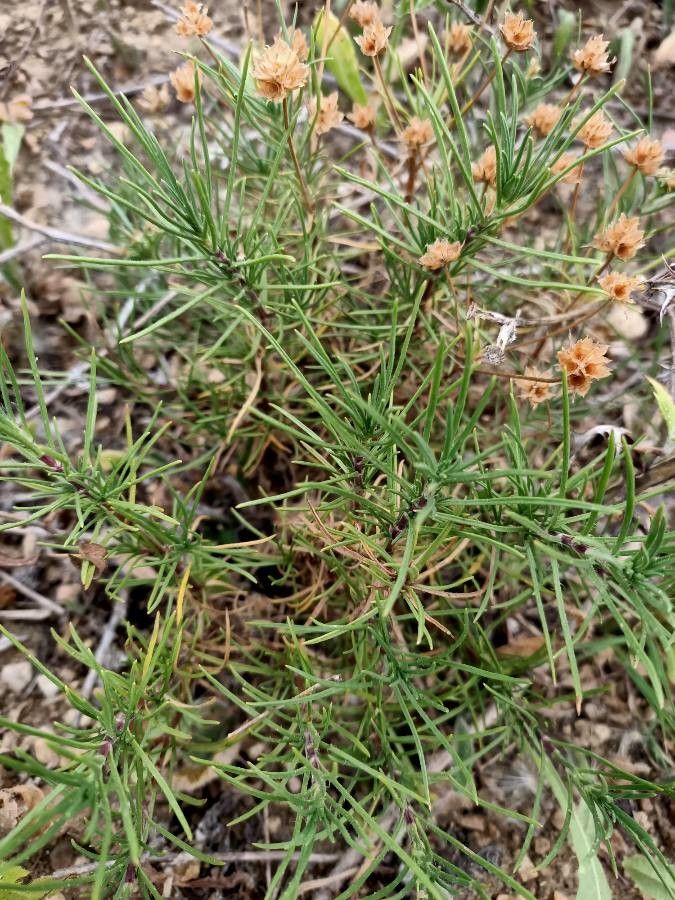
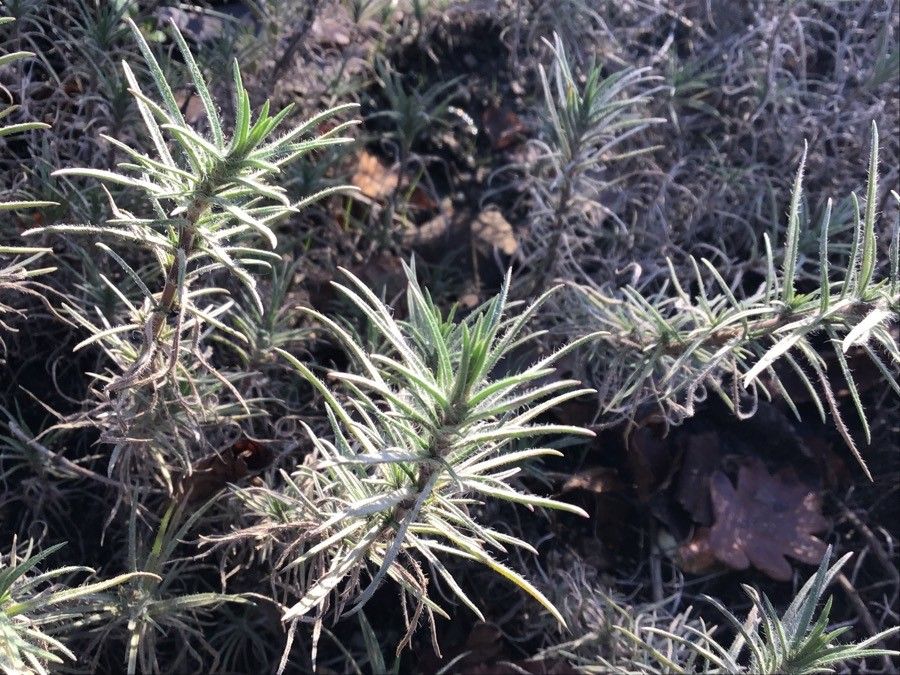
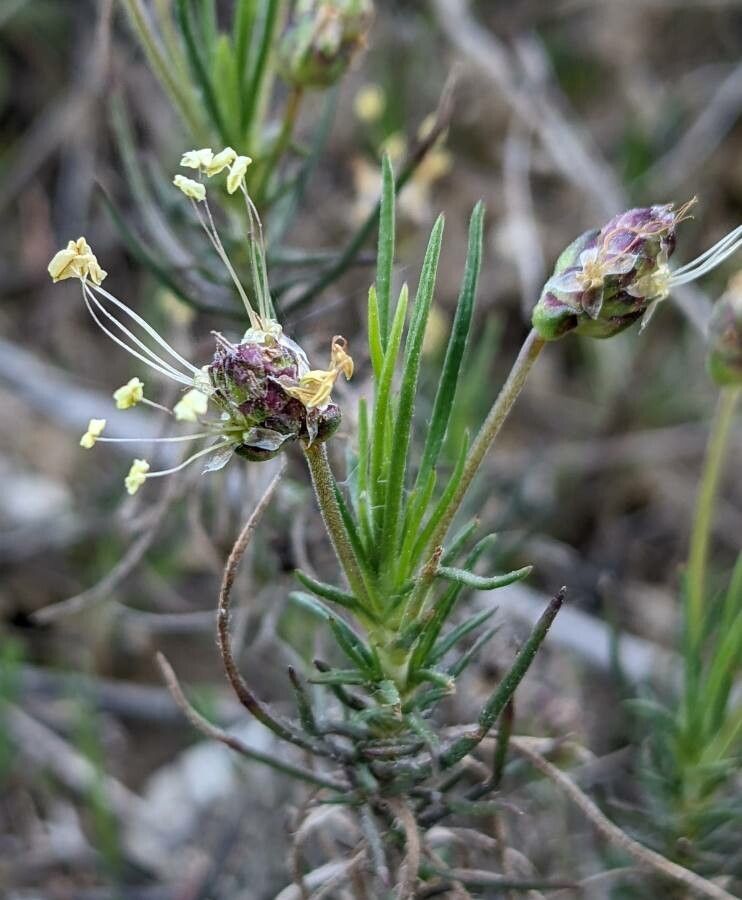
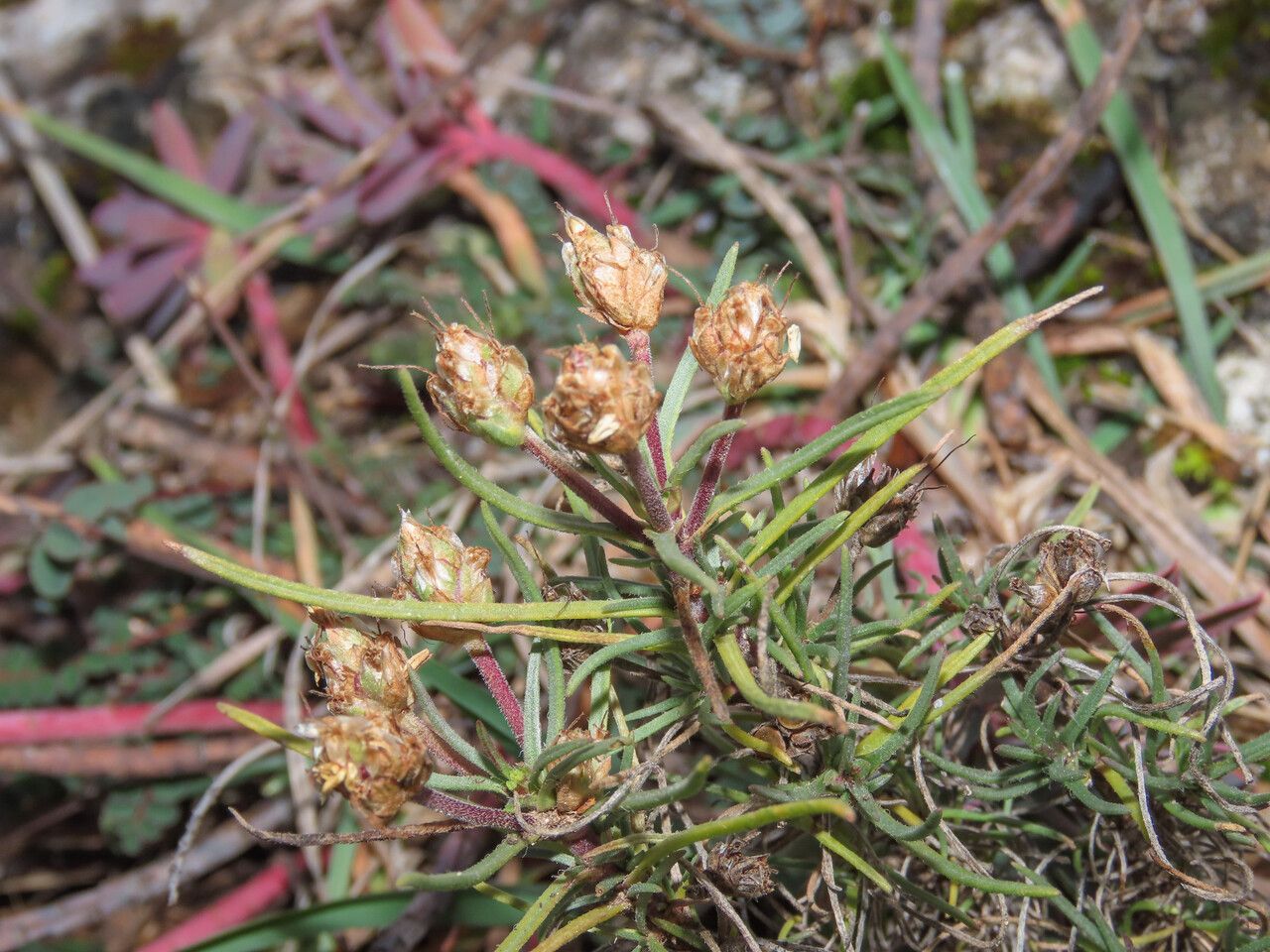
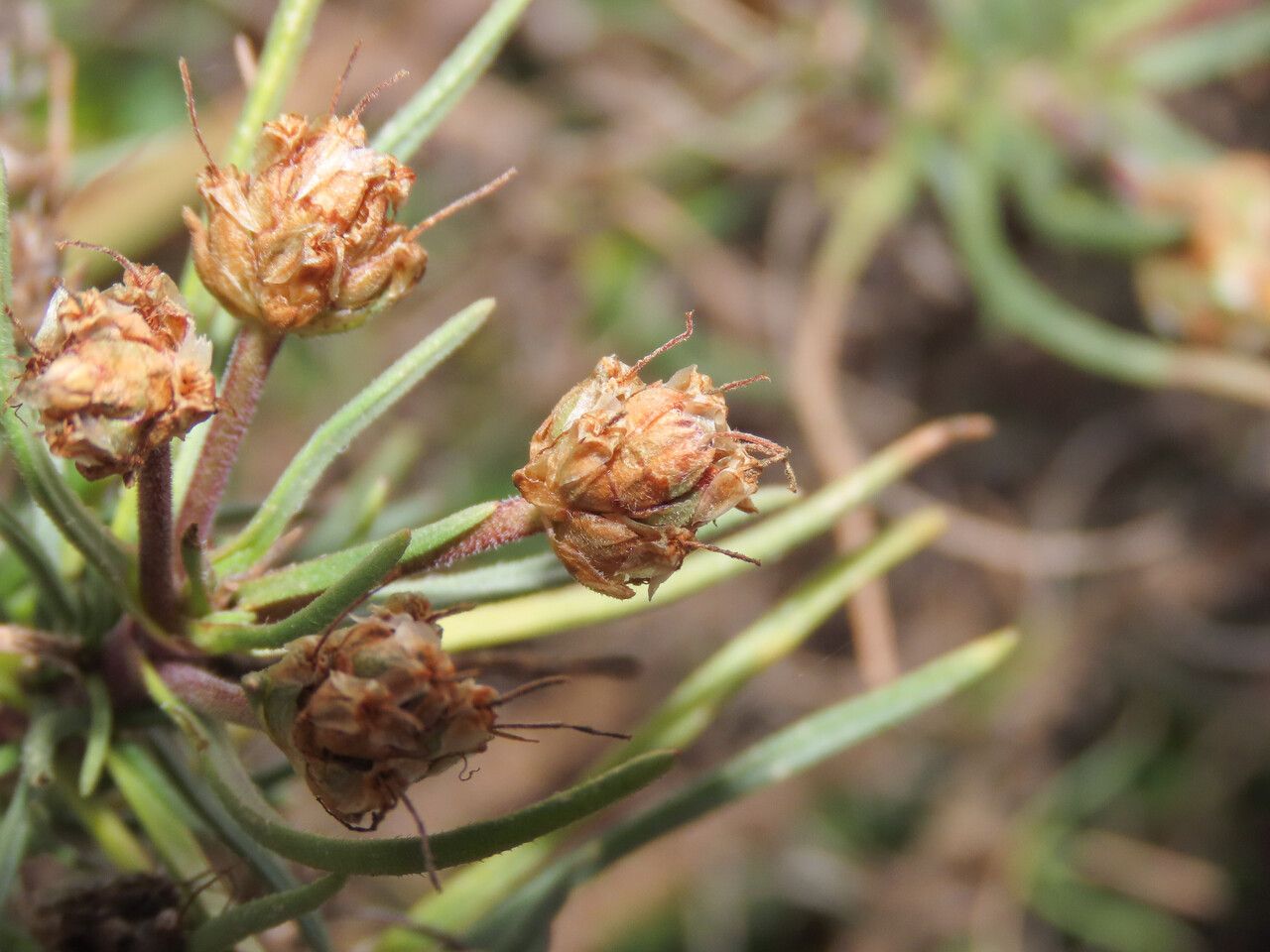
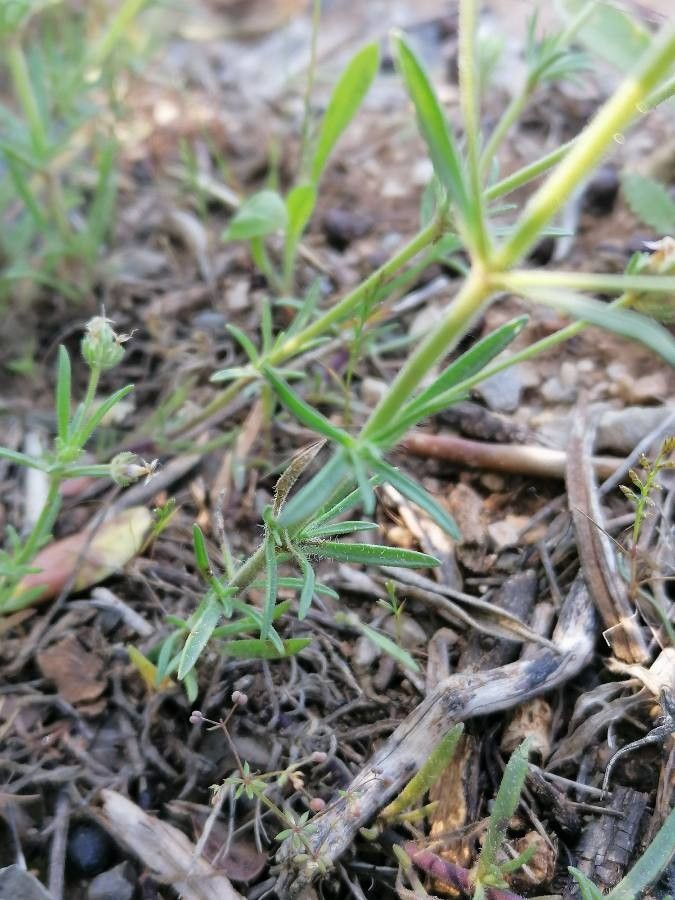
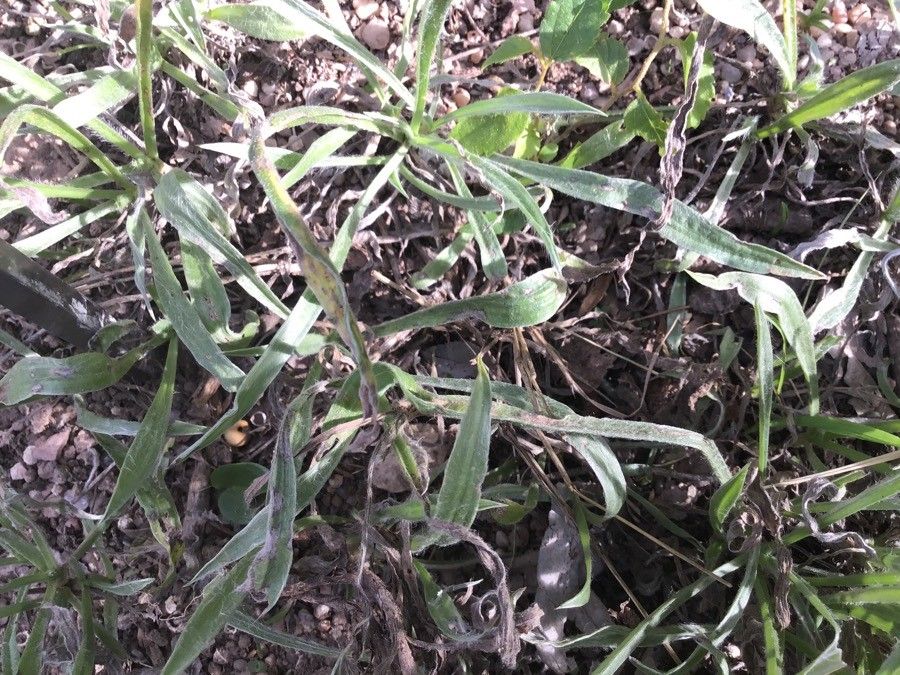
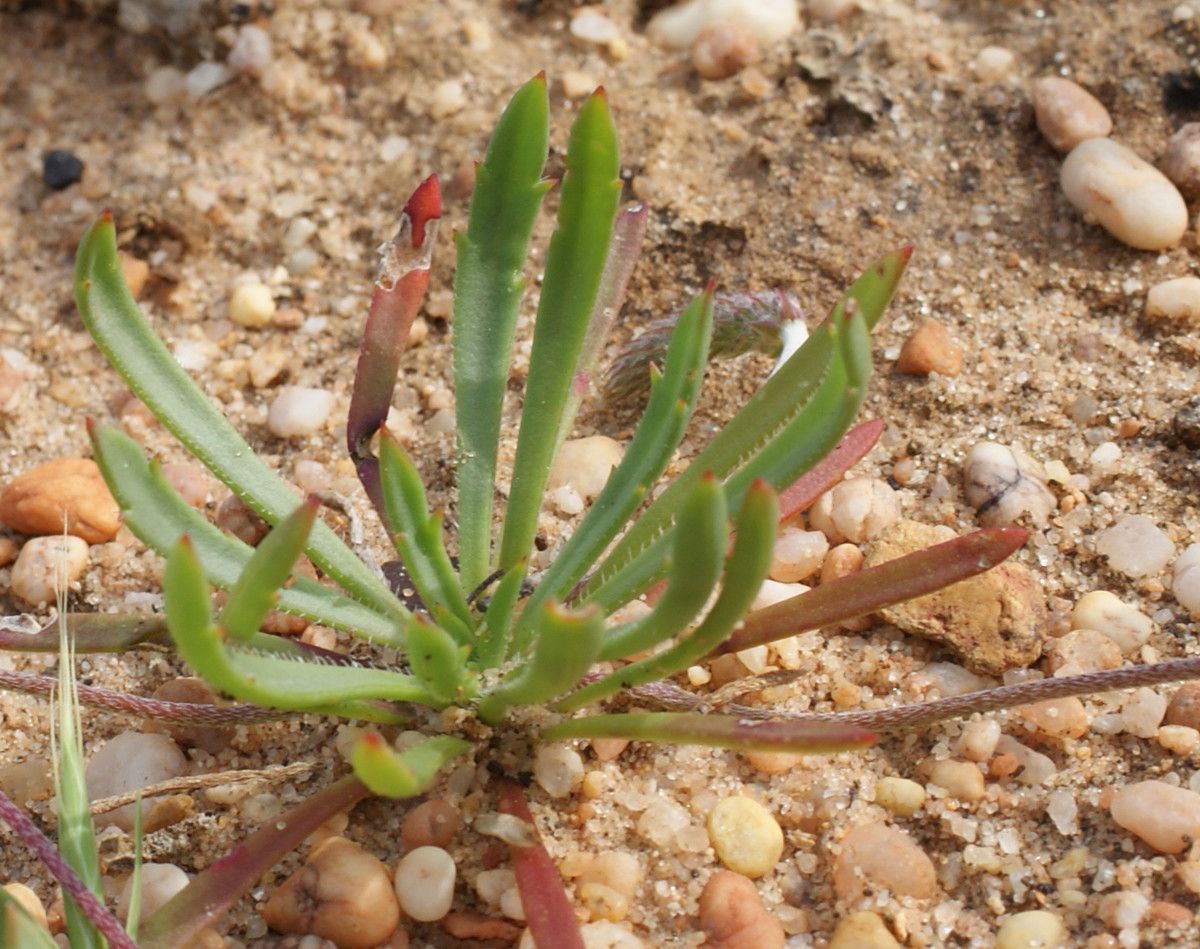
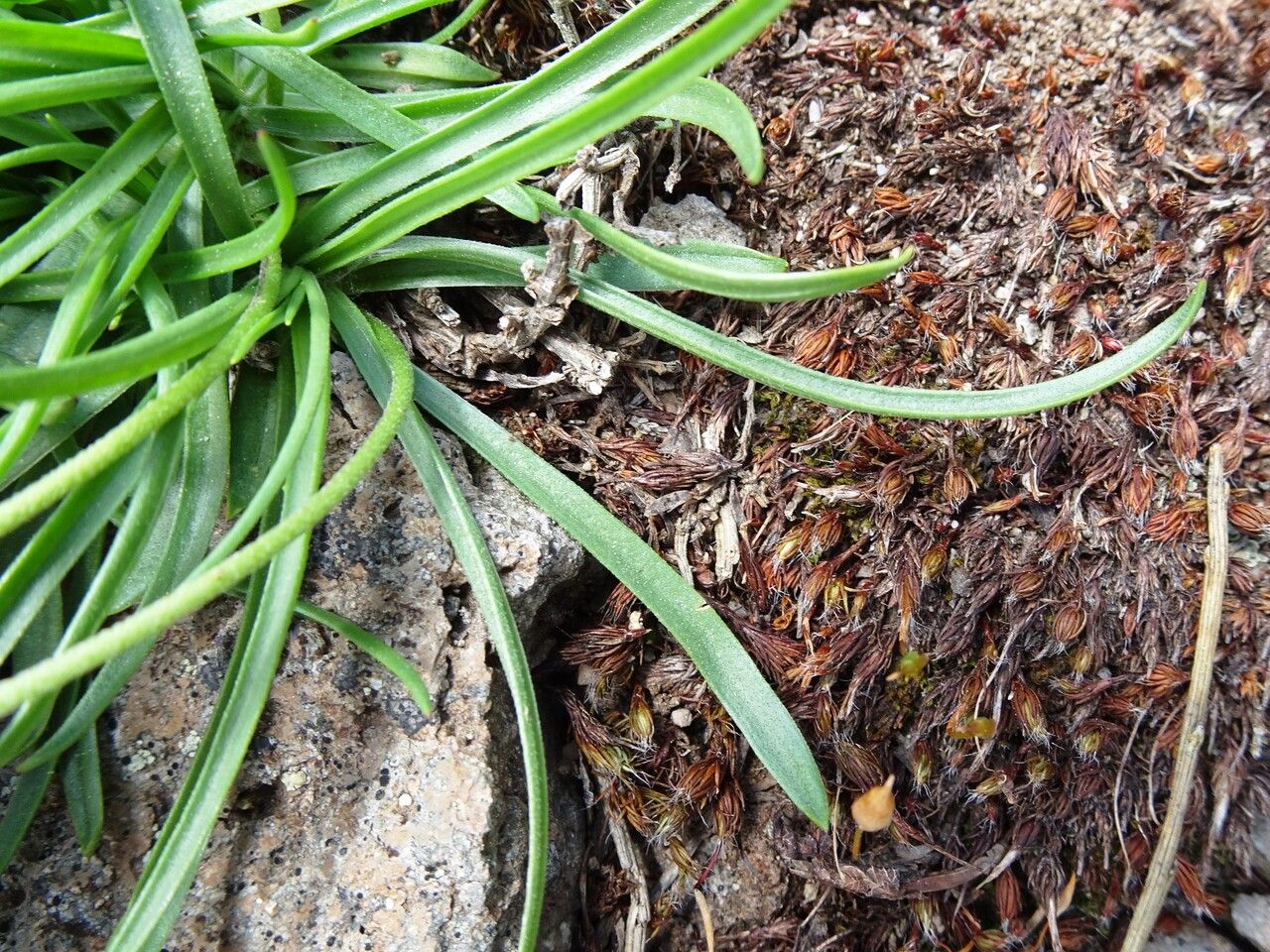
Plantago sempervirens, commonly known as the evergreen plantain, is a perennial herbaceous plant in the Plantaginaceae family. Native to Europe, it thrives in various habitats, including meadows, pastures, and open woodlands. The plant features a rosette of basal leaves that remain green year-round. These lance-shaped leaves are characterized by prominent veins, measuring approximately 10-20 cm in length and 2-4 cm in width.
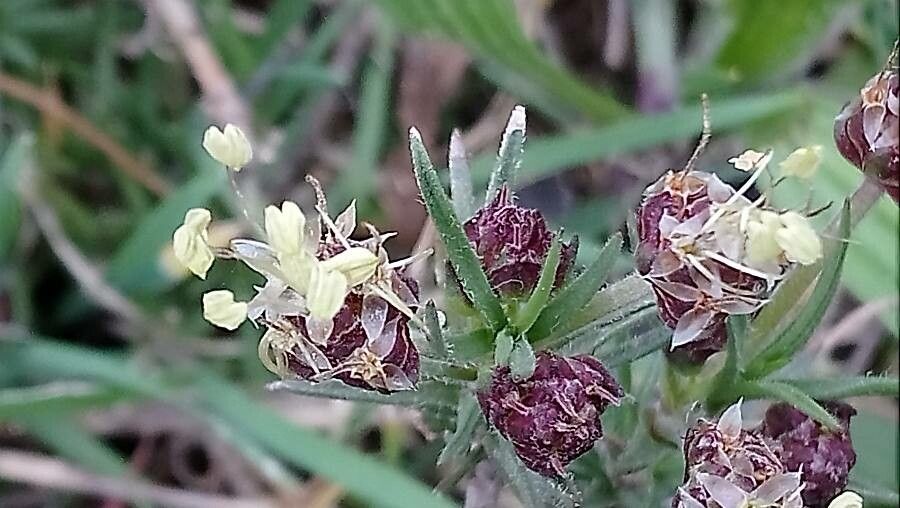
The flowers of Plantago sempervirens are small and inconspicuous, with greenish-white petals clustered in dense spikes atop tall stems that can reach up to 50 cm in height. The flowering period extends from May to August.
Historically, the evergreen plantain has been valued for its medicinal properties, particularly its anti-inflammatory effects. It has been used as a remedy for respiratory issues such as coughs, bronchitis, asthma, and sore throats.
In addition to its medicinal uses, Plantago sempervirens is an important food source for various insects. Bees feed on its nectar, while butterflies lay their eggs on the plant's leaves.
Overall, Plantago sempervirens is an attractive perennial herbaceous plant with significant medicinal benefits. It also plays a crucial ecological role by providing essential food sources for insects like bees, crucial pollinators in ecosystems where the plant naturally occurs.
Shrubby plantain has strong resistance to disease and is generally unlikely to suffer from illnesses. Still, it can be affected by pests and diseases that exist nearby. These infections tend to be mild. Regarding care, the plant needs a moderate level of upkeep. It should be pruned on a regular basis to preserve a neat appearance and healthy development. Applying fertilizer can also encourage more flowering. Shrubby plantain is appropriate for anyone with outdoor areas like a garden or patio and does not demand extensive gardening experience. It may need extra attention if kept indoors.
How to keep Plantago Sempervirens.
Light
Shrubby plantain comes from bright, open habitats and does best in full sun. It can tolerate partial shade but prefers direct sunlight for optimal growth. This plant, which can be annual or biennial, is noted for its sun-loving habits.
Water
The shrubby plantain thrives in moderately humid environments and needs weekly watering to remain healthy. This plant prefers humid conditions, making it well-suited for containers that help regulate moisture. Because of this, it is an excellent choice for indoor cultivation.
Temperature
Shrubby plantain can tolerate a wide range of temperatures, but its distribution may still be restricted by different combinations of moisture and heat. It does best in warm summer climates with sufficient rainfall or watering. Extended periods of cloudy, rainy weather and prolonged high temperatures can raise the chance of Shrubby plantain dying. In winter, protecting the plant from cold can increase its survival rate.
Fertilizer
Shrubby plantain benefits from regular, mild fertilizer applications to encourage healthy leaf development. Fertilize Shrubby plantain about once a month throughout the summer. Nitrogen is essential for the foliage, and providing nitrogen-rich fertilizer helps Shrubby plantain do well.
Pruning
The shrubby plantain has evergreen leaves and a compact shape. To maintain its form and encourage growth, it's important to prune it annually, ideally between early and late spring. During pruning, concentrate on removing dead branches and thinning out dense areas. This enhances air circulation and light penetration, which helps prevent disease and keeps the plant looking neat.
Botanical profile.
- Plant Type
- Herb
- Life Cycle
- Annual
- Genus
- Plantago
- Family
- Plantaginaceae
- Hardiness Zone
- 5-9
- Mature Height
- 20 cm to 30 cm
- Mature Spread
- 30 cm to 40 cm
- Leaf Color
- Gray, Dark Gray
- Leaf Type
- Evergreen
- Flower Color
- White
- Flower Size
- 0.25 cm to 0.51 cm
- Bloom Time
- Summer
- Planting Time
- Spring, Summer
- Harvest Time
- Late summer, Early fall, Mid fall
- Native Area
- Portugal, Italy, Spain, Croatia, France
Other names.
Reader questions.
How should I water my Shrubby plantain?
To water Shrubby plantain, you have several options for watering tools such as a garden hose with a spray nozzle or a watering can. Thankfully, Shrubby plantain is not fussy about the type of water it receives. It can thrive on rainwater, tap water, or even filtered water. However, it's best to avoid watering this plant from above as it can harm the leaves and flowers and potentially cause diseases. In such cases, it's better to use a drip irrigation system that delivers water evenly and directly to the soil. If you have a container-grown Shrubby plantain, you can still use a similar approach but switch the watering tools. Simply use a cup, watering can, or tap water to directly water the soil of the container plant.
How many hours of sunlight does Shrubby plantain need each day to grow well?
To ensure the health and growth of the plants, it is important to provide them with a minimum of 6 to 8 hours of sunlight each day. Ideally, they should be exposed to more morning light, especially during the summer. The Shrubby plantain specifically requires full sun and benefits from as much sunlight as possible. The amount of light these species receive directly affects their ability to produce food, create stunning flowers, and thrive.
What do I do if I give too much or too little water to my Shrubby plantain?
If you notice that your Shrubby plantain lacks moisture, the solution is simple: water it more regularly. Overwatering, on the other hand, can be a serious problem that can lead to diseases and the death of your plant. To avoid this, make sure to choose a growing location with plenty of sunlight and good drainage. If you have overwatered your Shrubby plantain in a pot, it might be necessary to transfer it to a new pot with proper drainage. When repotting, use loose soils and a pot that drains efficiently.
What kind of sunlight does Shrubby plantain require?
The Shrubby plantain thrives in full sunlight. To ensure even sun exposure, avoid crowding them together. It is crucial to provide the leaves with ample sunlight. If planting in pots, place the herbaceous flowers in windows that receive direct sun, ensuring they receive full sunlight throughout the year. Partial or filtered light is not ideal as it may result in weak stems and unhealthy flowers. Therefore, consistent sun exposure is recommended for the Shrubby plantain.
How much should I water my Shrubby plantain?
To ensure the healthy growth of shrubby plantain, it is important to provide regular watering. In the spring, watering once a week is recommended. As the season progresses and temperatures rise, watering two to three times a week may be necessary. However, exceeding this frequency can harm the plant. It is crucial to keep the soil moist, but not overly wet, regardless of the watering schedule. When it comes to potted shrubby plantain, watering needs to be increased due to the soil in pots drying out faster. Typically, watering a container-grown shrubby plantain a few times a week is necessary, compared to just once a week for a plant in the ground.
Can the sun harm plants? How can I shield Shrubby plantain from sun and heat damage?
When the temperature goes above 90℉ (32℃), the Shrubby plantain can suffer from extreme heat, particularly if it is exposed to prolonged sunlight. Therefore, it is recommended to provide some shade for the plant in the afternoon during the summer. It's important to remember that sunlight in the summer is stronger than in the winter and lasts 50% longer. If the plant is excessively stressed by sunlight, it is advisable to ensure it is well-hydrated by watering it when the top of the soil is about 2 inches dry. If it's too hot outside, especially for container-planted plants, consider moving them indoors. Although it is normal for the plant leaves to droop during the day and recover at night, if they continue to droop, it is a sign that the plant is losing water quickly and needs to be watered.
How much water should I give my Shrubby plantain?
Here are some tips to help you determine how much water to give your Shrubby plantain: - One method is to feel the soil for moisture. You should water until you feel the first six inches of soil becoming moist. - Another approach is to use a set measurement. Generally, giving your plantain about two gallons of water per week is recommended. However, this can vary depending on the heat and how quickly the soil dries. Be cautious not to overwater if your plant doesn't need that much. - When growing the plantain in a container, a different method should be used. Make sure to moisten all the layers of dry soil by watering. You can check for moisture by sticking your finger in the soil or watering until you see a slight trickle of excess water flowing out of the drainage holes.
Should I shield Shrubby plantain from the sun?
The Shrubby plantain thrives in the sun and benefits from being exposed to it from morning to afternoon. However, some species may experience sunburn, so it's important to offer protection from the afternoon and midday sun through the shade of a tree or wall. Growing them in shady areas is not possible as the larger flowers require ample energy to grow and produce. For best results, always provide full sun conditions for the Shrubby plantain.
How do I know if I'm giving enough water to my Shrubby plantain?
Taking care of a Shrubby plantain can be challenging when it comes to watering. These plants have deep roots, so it's important to keep the soil moist by watering it weekly. However, overwatering can lead to root rot and browning of the plant. Unlike underwatering, which is less likely to happen, Shrubby plantains can survive without extra watering for some time. But if you go too long without watering, the plant may wilt and the leaves may become dry.
What happens if the Shrubby plantain doesn't get enough sunlight?
When the Shrubby plantain doesn't receive enough sunlight or is placed in shaded locations, several effects are observed. Firstly, the photosynthetic process is slowed down. Secondly, the stems become leggy, meaning they become thin and long as they try to reach for more sunlight. As a result, they do not bloom or produce seeds in shady areas. Additionally, the lack of sunlight can cause the older leaves to die and the new leaves to be lighter in color compared to the old foliage. The new growth may also be smaller in size. Despite their preference for sunlight, Shrubby plantains can wilt when exposed to excessive heat and ultraviolet light during the hot summer months. It's important to take precautions such as covering them with a net that provides green shade, especially in the summer, to prevent scorching of the leaves and flowers. When kept indoors, using a fan to reduce heat can also be beneficial.
How do I water my Shrubby plantain during different seasons?
As the season progresses, your Shrubby plantain's water needs will increase. In the spring, watering once a week should be sufficient. However, as the summer heat arrives, you will likely need to give your Shrubby plantain a bit more water, increasing to about three times per week. This is especially important for Shrubby plantains grown in containers, as the soil in containers tends to dry out faster in warm weather. In the autumn, when your Shrubby plantain is still blooming, you may need to decrease watering slightly as the temperature cools down and the sun is not as intense as it was in the summer.
Does Shrubby plantain need specific attention to how much sunlight it gets at different stages of growth?
The Shrubby plantain needs more light while it's growing compared to when it's mature. Younger ones require sufficient light but may not be ready for sudden full sunlight, especially if they are grown in a nursery. They can be more sensitive to the summer sun, so it's best to introduce lighting gradually and slowly.