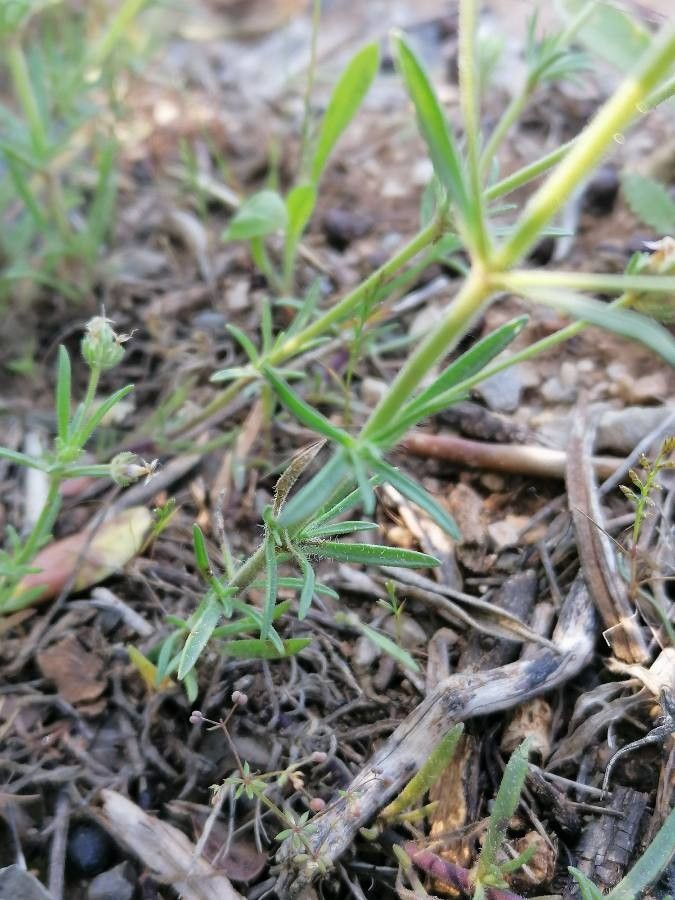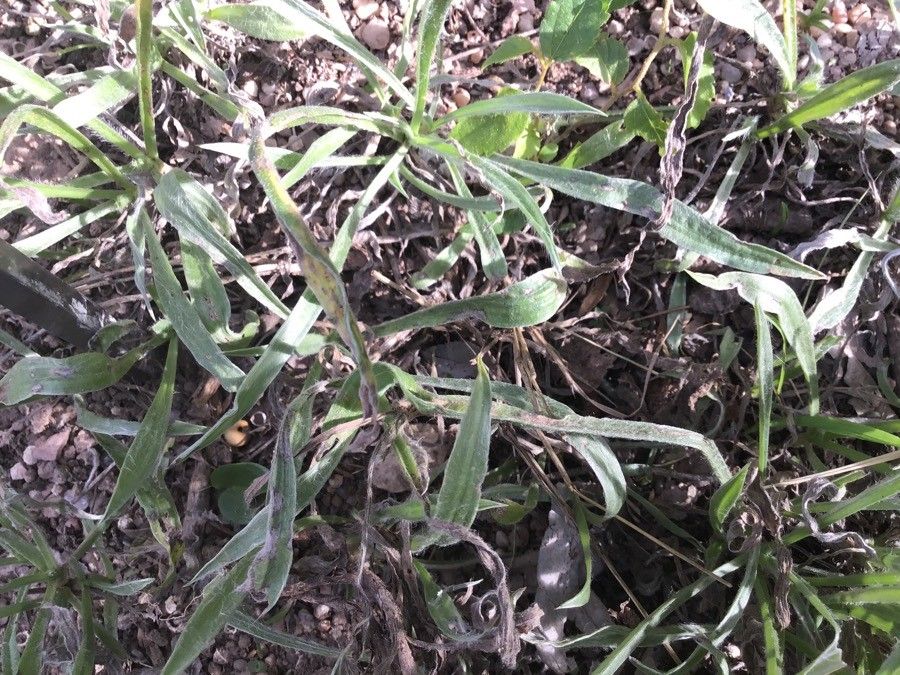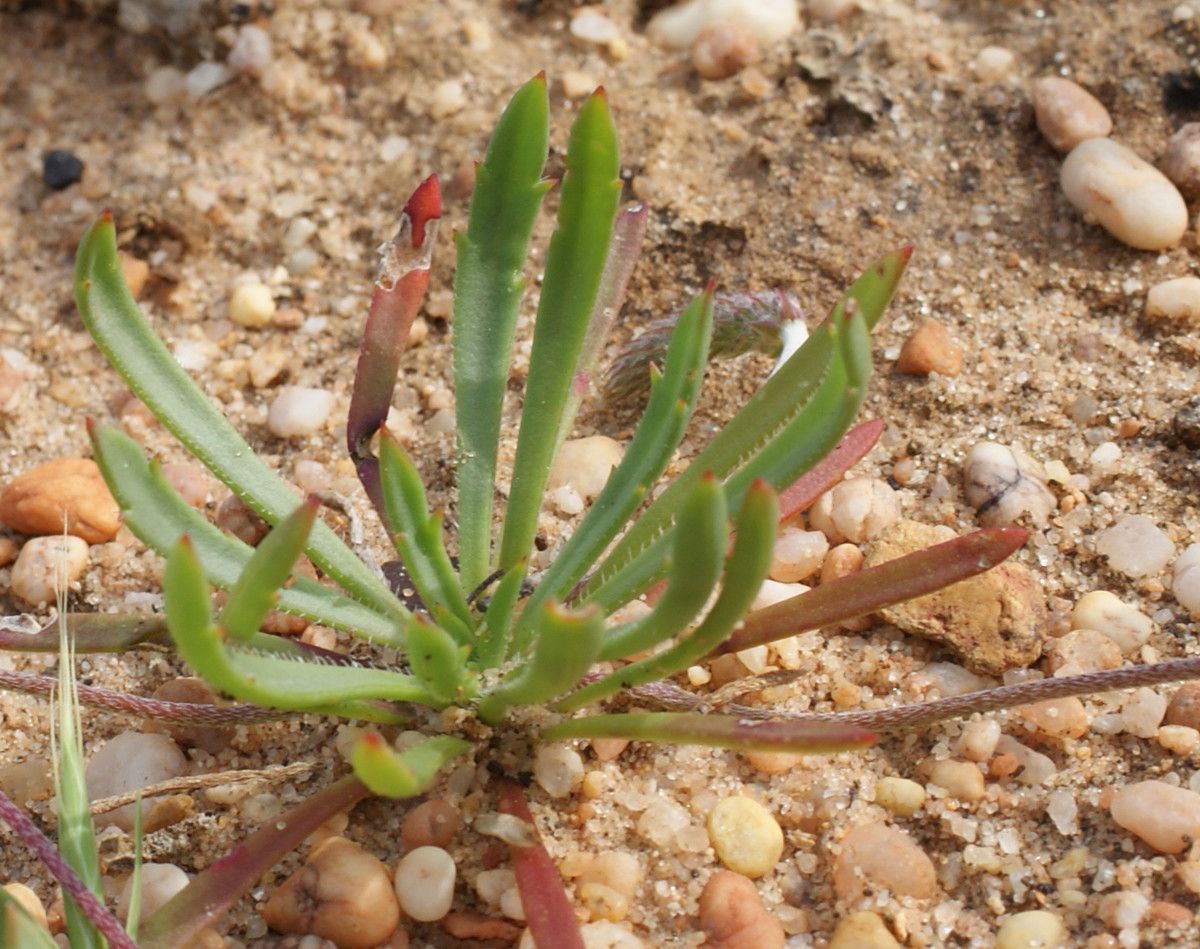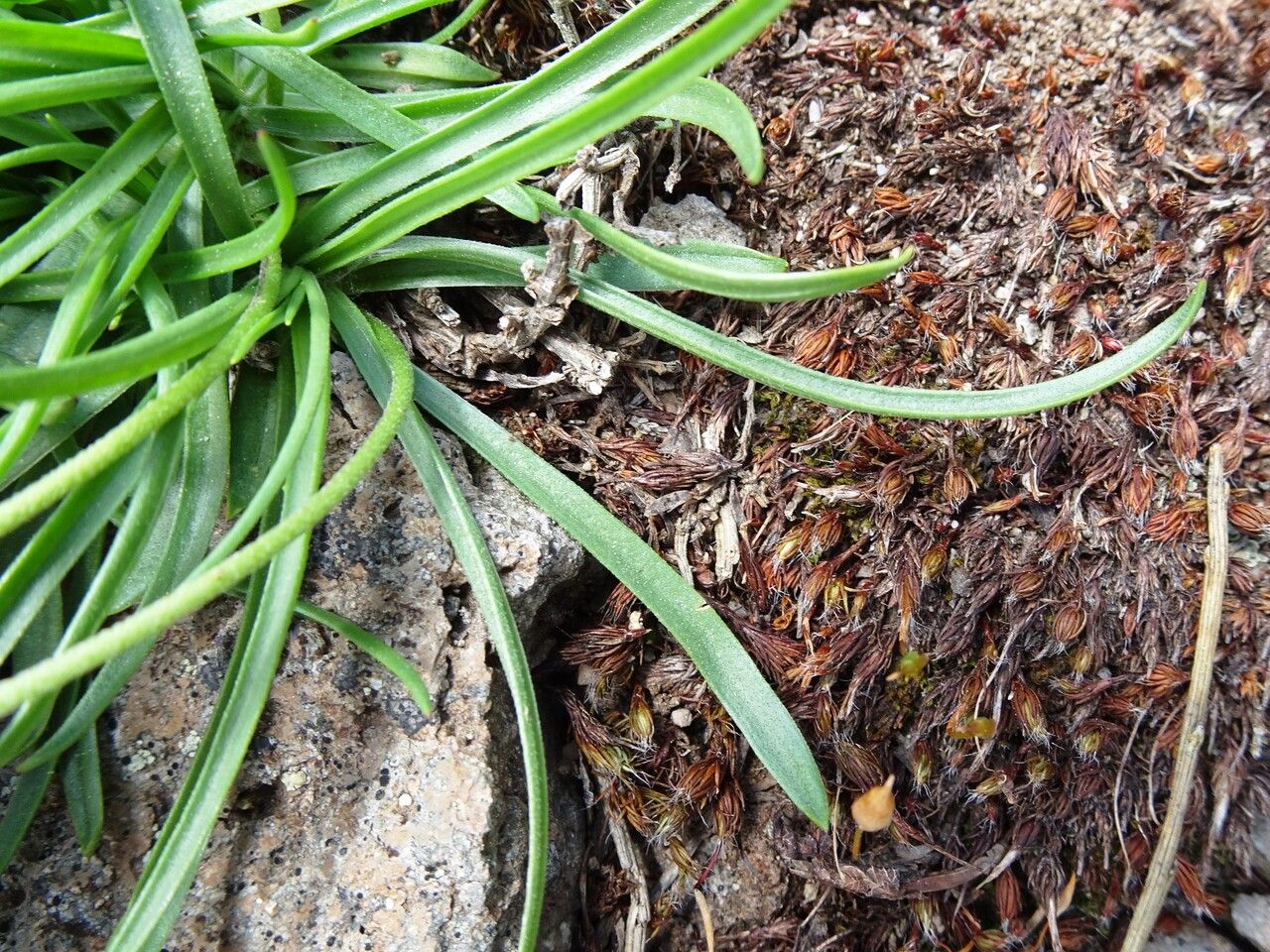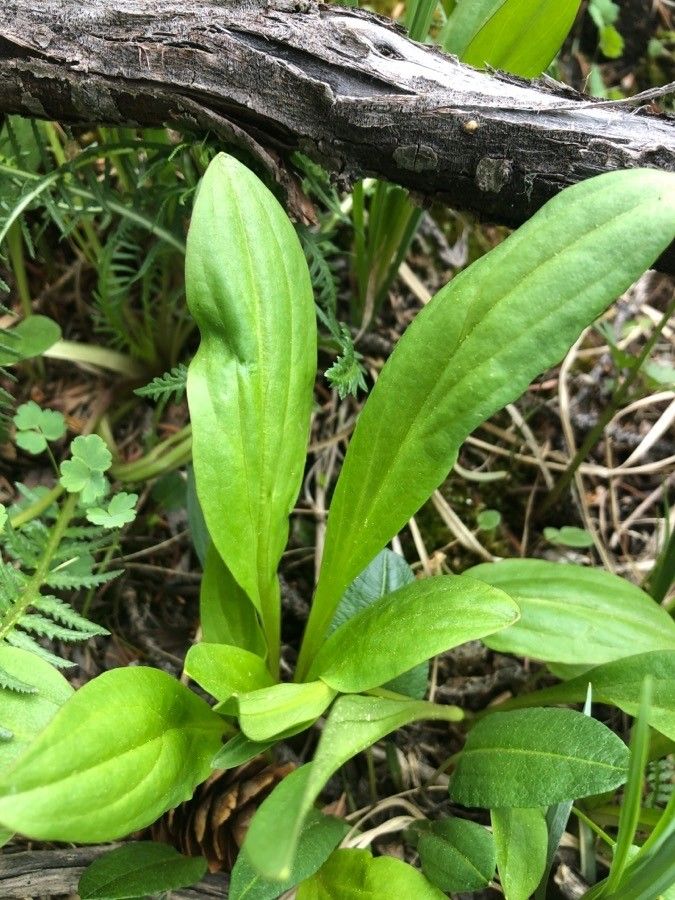
Plantago eriopoda is a species of plantain known by the common name redwool plantain. It is native to much of western and central North America from Alaska to the southwestern United States to the Great Lakes region, where it can be found in moist and wet habitat types, sometimes in alkaline soils. It is a perennial herb producing a clump of lance-shaped to narrow oval leaves up to 25 centimeters long. The leaves may have slightly toothed edges and often have a coating of woolly red hairs near their bases. The stemlike inflorescences grow erect to a maximum height near half a meter. Atop the peduncle of the inflorescence is a dense cylindrical spike of many tiny flowers. Each flower has a whitish corolla with four lobes each about a millimeter long accompanied by sepals covered with small bracts.
Redwool plantain has strong disease resistance and is generally not easily affected by illnesses. However, it can be vulnerable to pests and diseases present in its surroundings. These infections are usually mild. In terms of care, this plant needs moderate maintenance. It should be pruned regularly to maintain a neat appearance and support healthy growth. Fertilizing can also help encourage flowering. Redwool plantain is suitable for someone with an outdoor area, such as a garden or patio, and does not require extensive gardening experience. It may need more attention when grown indoors.
How to keep Plantago Eriopoda.
Light
Redwool plantain is a sun-loving, herbaceous perennial native to open habitats, commonly thriving in meadows and grasslands. It prefers full sun but can also tolerate partial sun.
Water
Originating from moist environments, the redwool plantain thrives with moderate watering, typically preferring weekly irrigation to maintain balanced soil moisture. Its resilience enables it to adapt to varying rainfall and soil conditions throughout the growing season, reflecting its natural tendency to seek moisture balance.
Temperature
Redwool plantain can tolerate a broad range of temperatures, though its distribution may still be restricted by different combinations of moisture and heat. It does best in warm summer conditions with adequate rainfall or watering. Long stretches of cloudy, rainy weather, as well as extended high temperatures, can raise the chance of Redwool plantain dying. In winter, suitable protection from cold can increase the plant's survival rate.
Fertilizer
A single fertilizer application in spring is generally enough for Redwool plantain, though multiple feedings can boost growth. Feed approximately once a month to every six weeks. Fertilization improves the leaves' appearance and function, encouraging even color and a healthy texture. It also promotes root development and nutrient uptake for long-term plant health.
Pruning
The Redwool plantain is known for its distinctive red, woolly stems and broad, leafy rosettes. It flourishes when pruned in early spring. To promote growth and improve its appearance, trim away any dead foliage and faded flower stalks. This practice also enhances air circulation, which helps prevent disease.
Botanical profile.
- Plant Type
- Herb
- Life Cycle
- Perennial
- Genus
- Plantago
- Family
- Plantaginaceae
- Hardiness Zone
- 3-8
- Mature Height
- 15 cm to 46 cm
- Mature Spread
- 15 cm to 30 cm
- Leaf Color
- Green
- Leaf Type
- Semi-evergreen
- Flower Color
- White
- Flower Size
- 0.20 cm to 0.25 cm
- Bloom Time
- Early summer, Mid summer
- Planting Time
- Spring, Summer, Autumn
- Harvest Time
- Late summer, Early fall
- Native Area
- Mexico