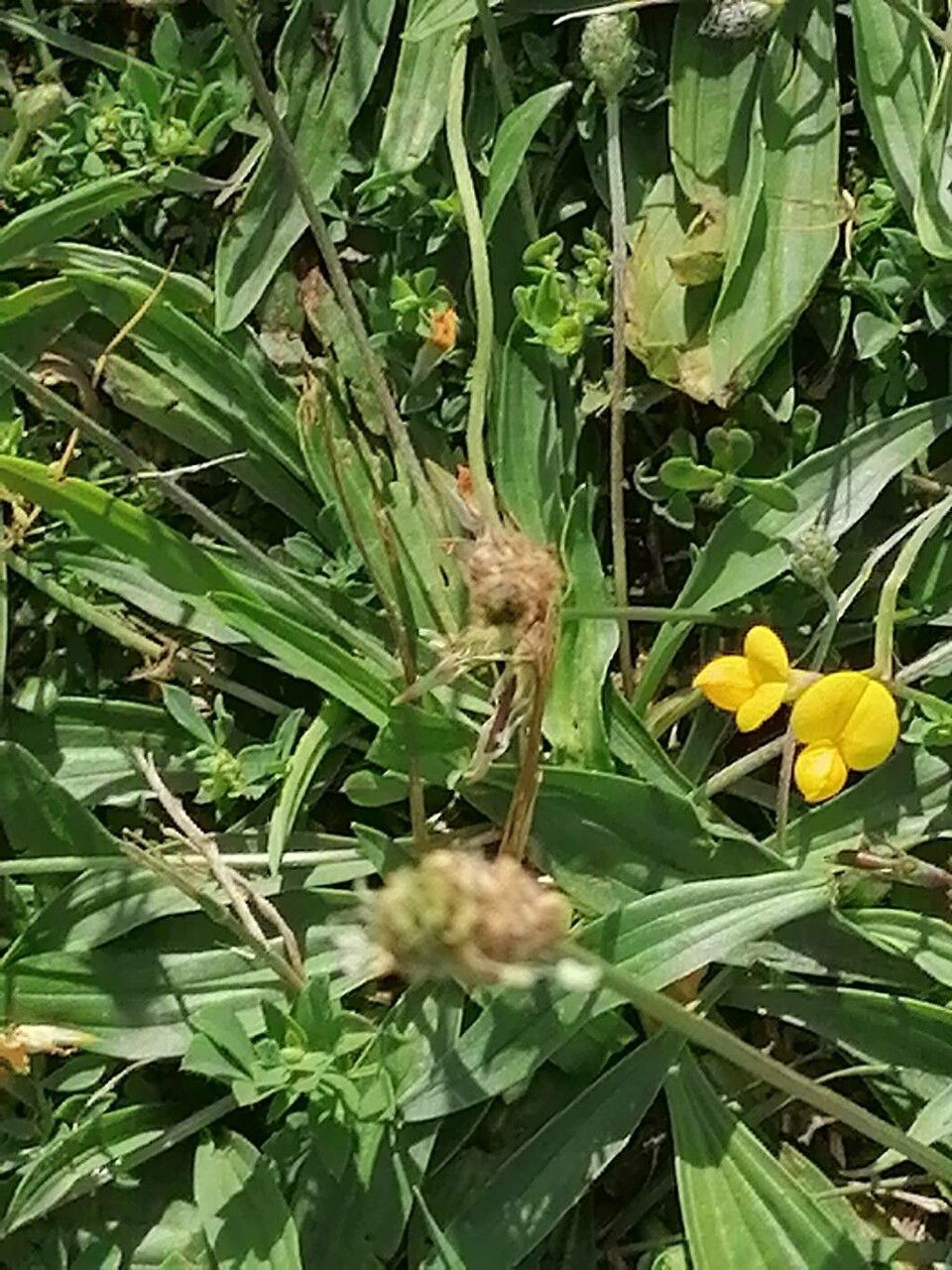
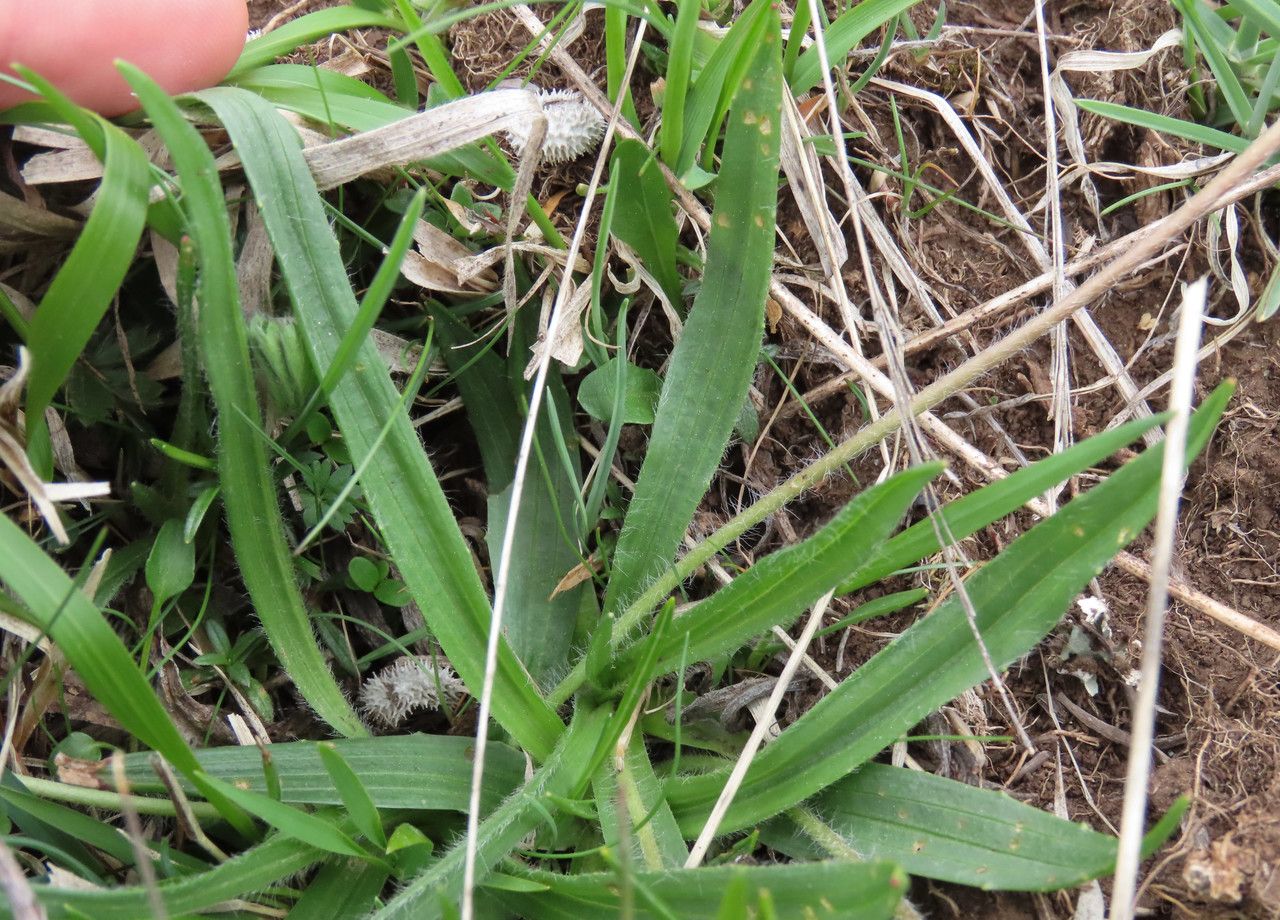
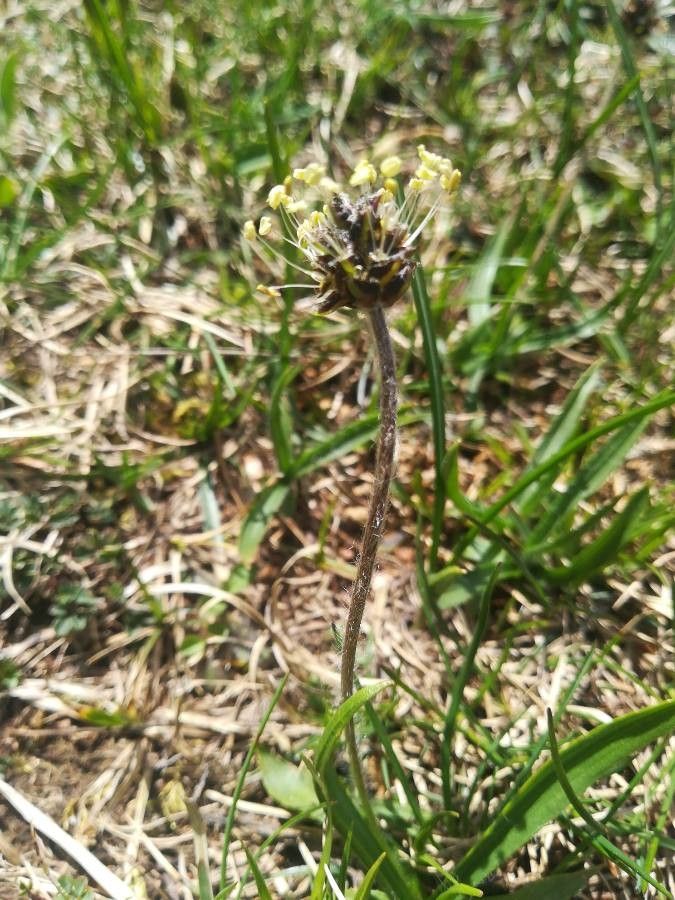
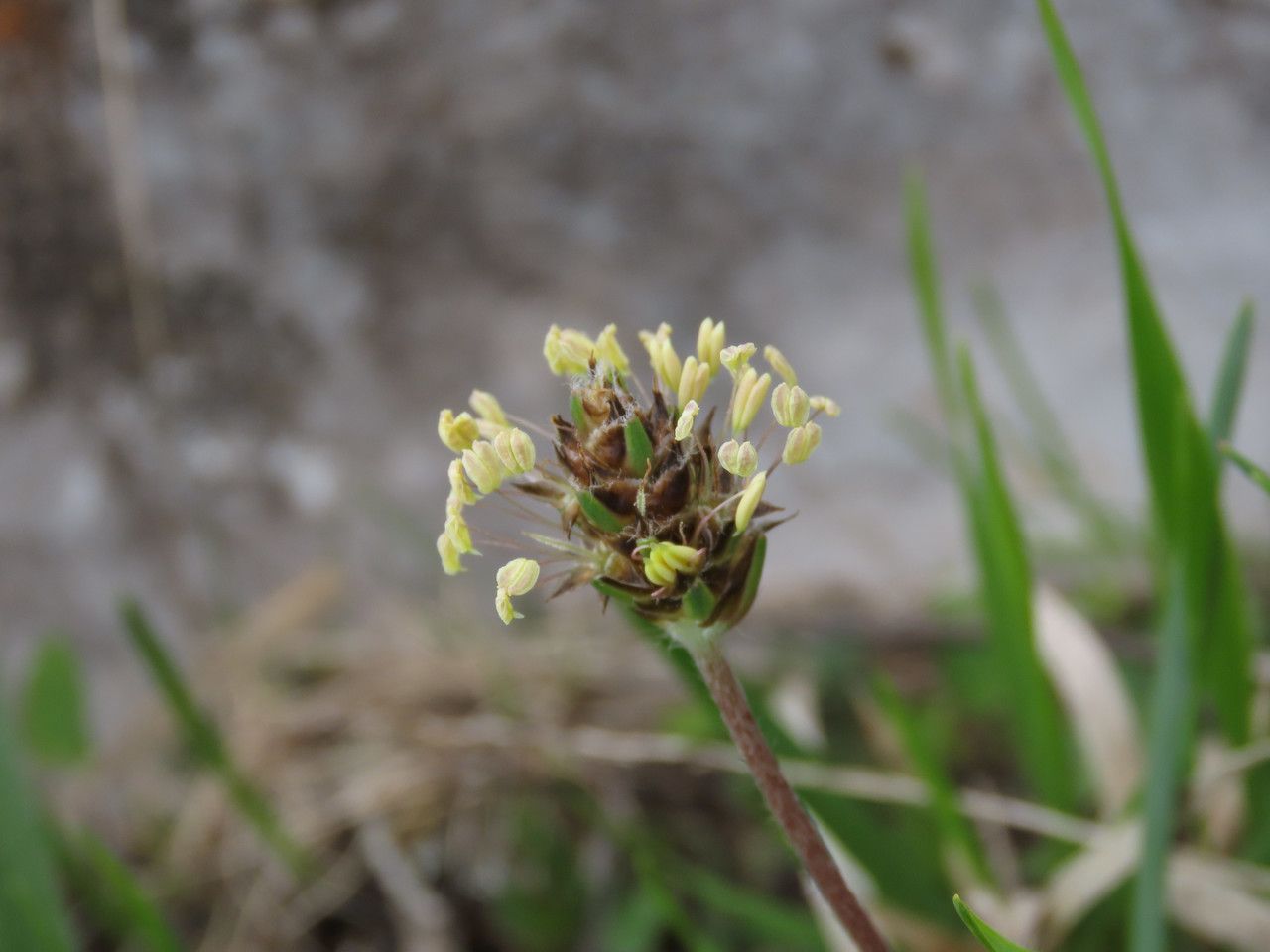
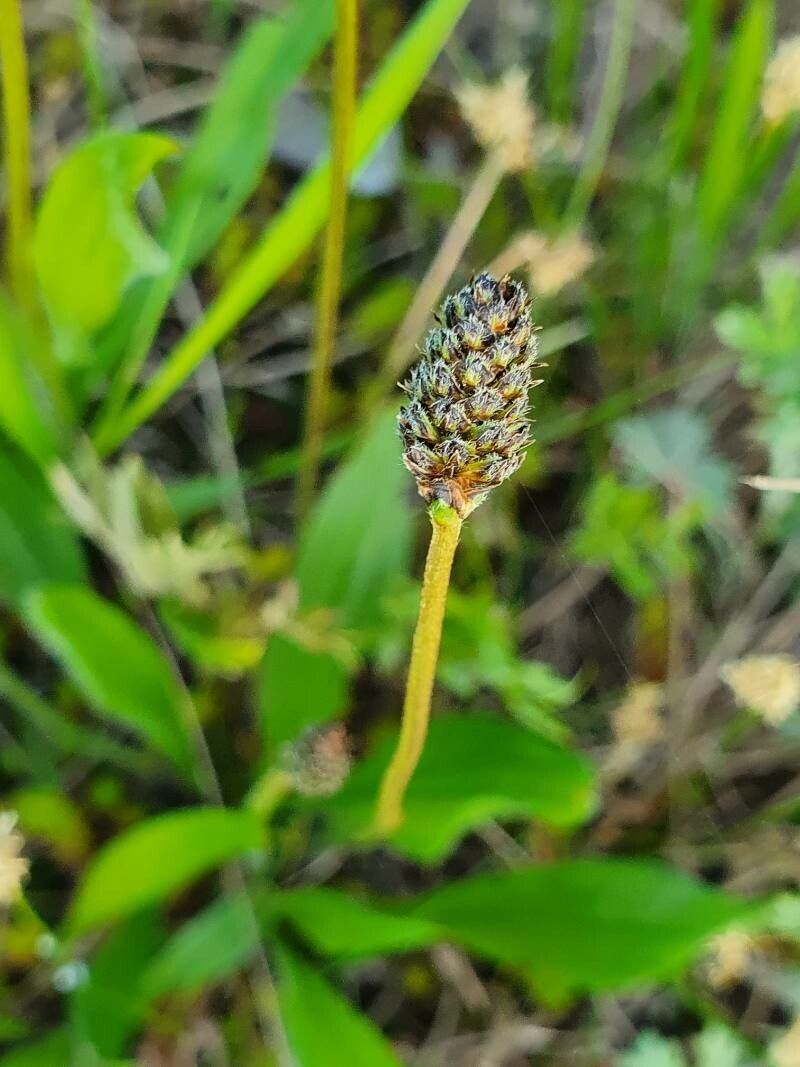
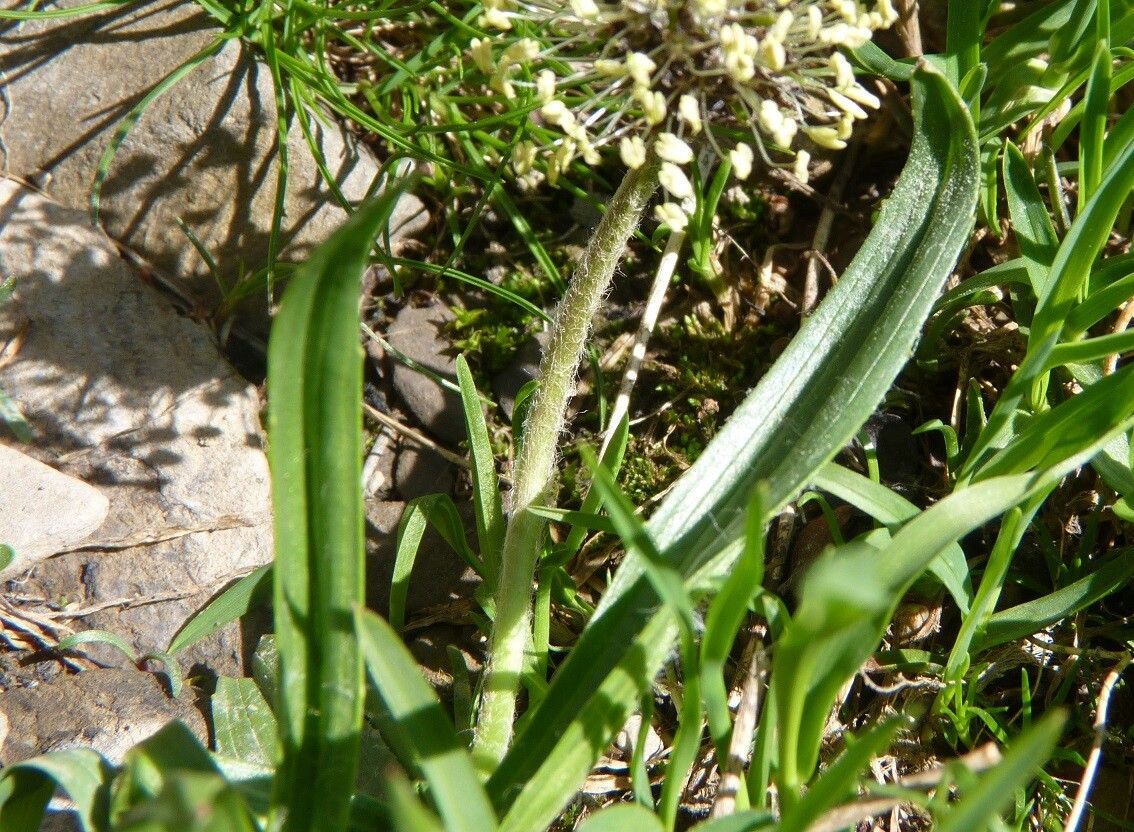
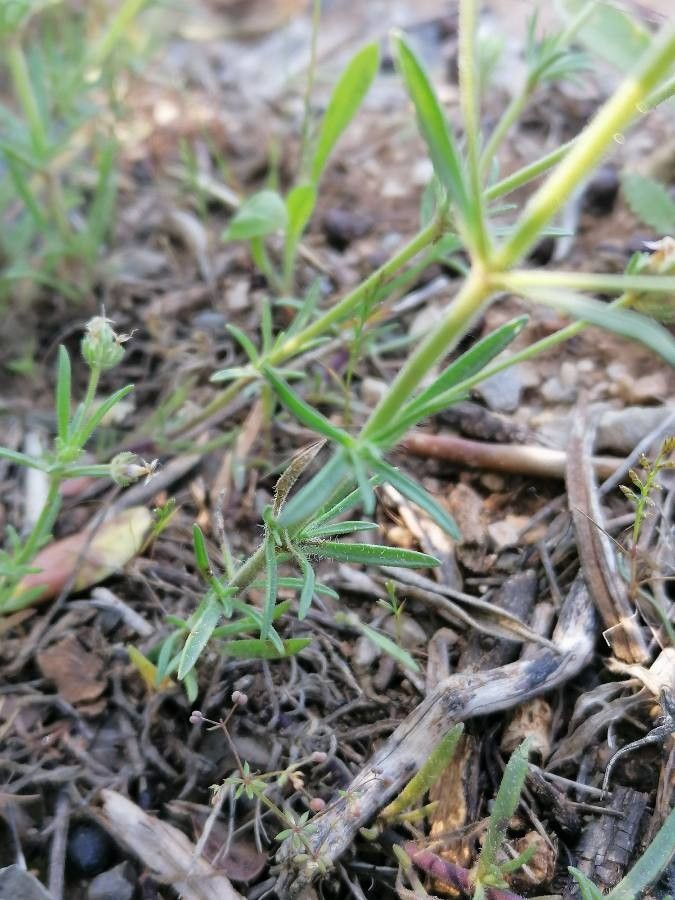
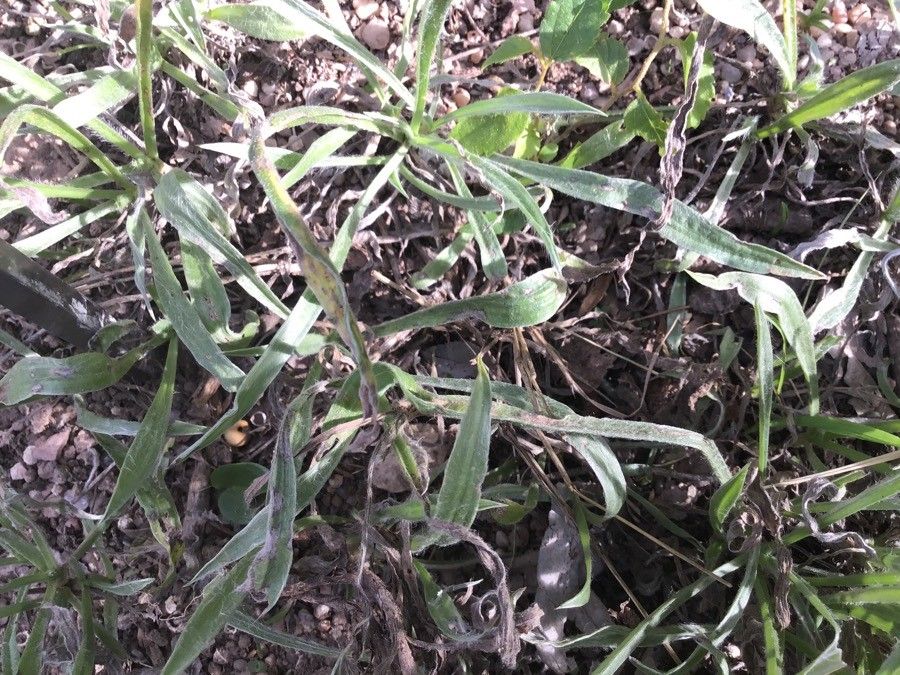
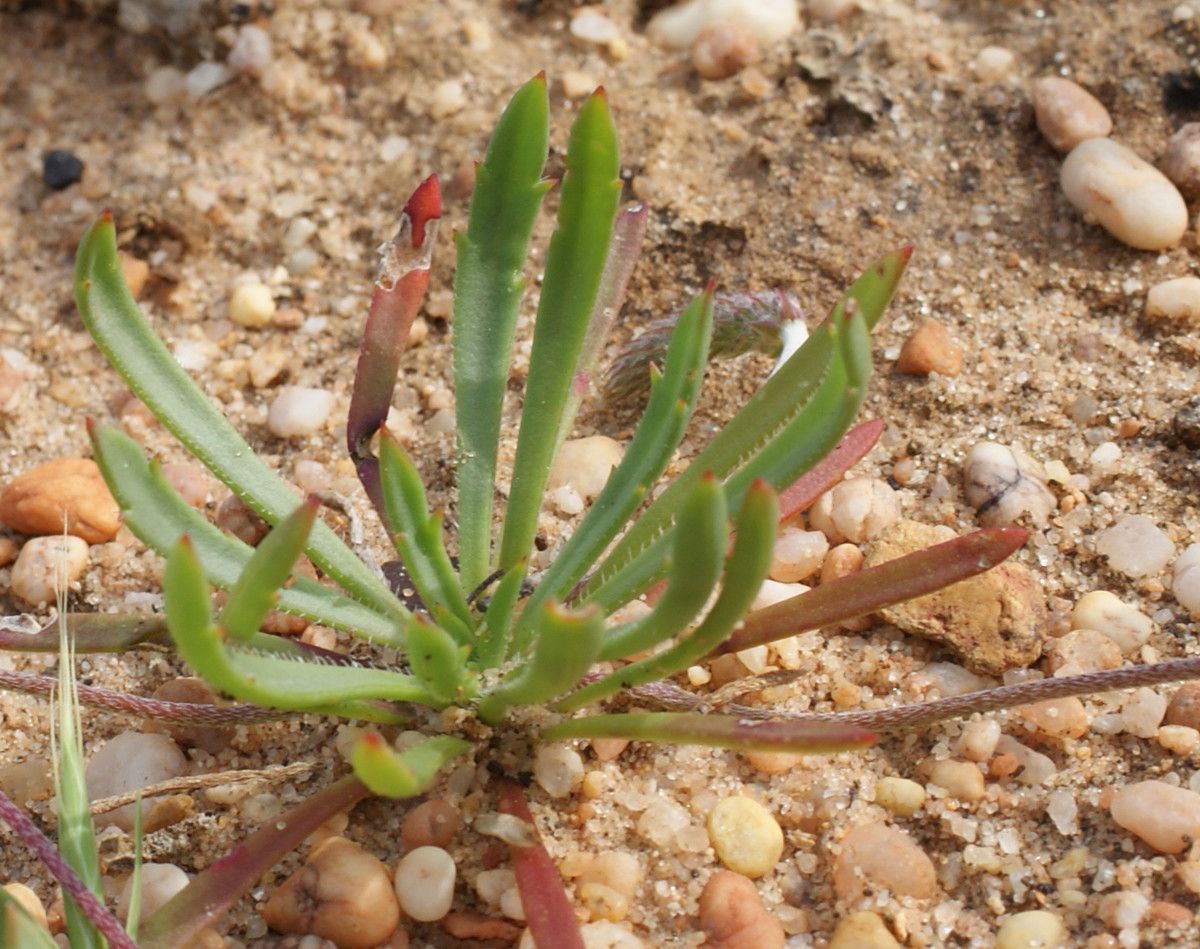
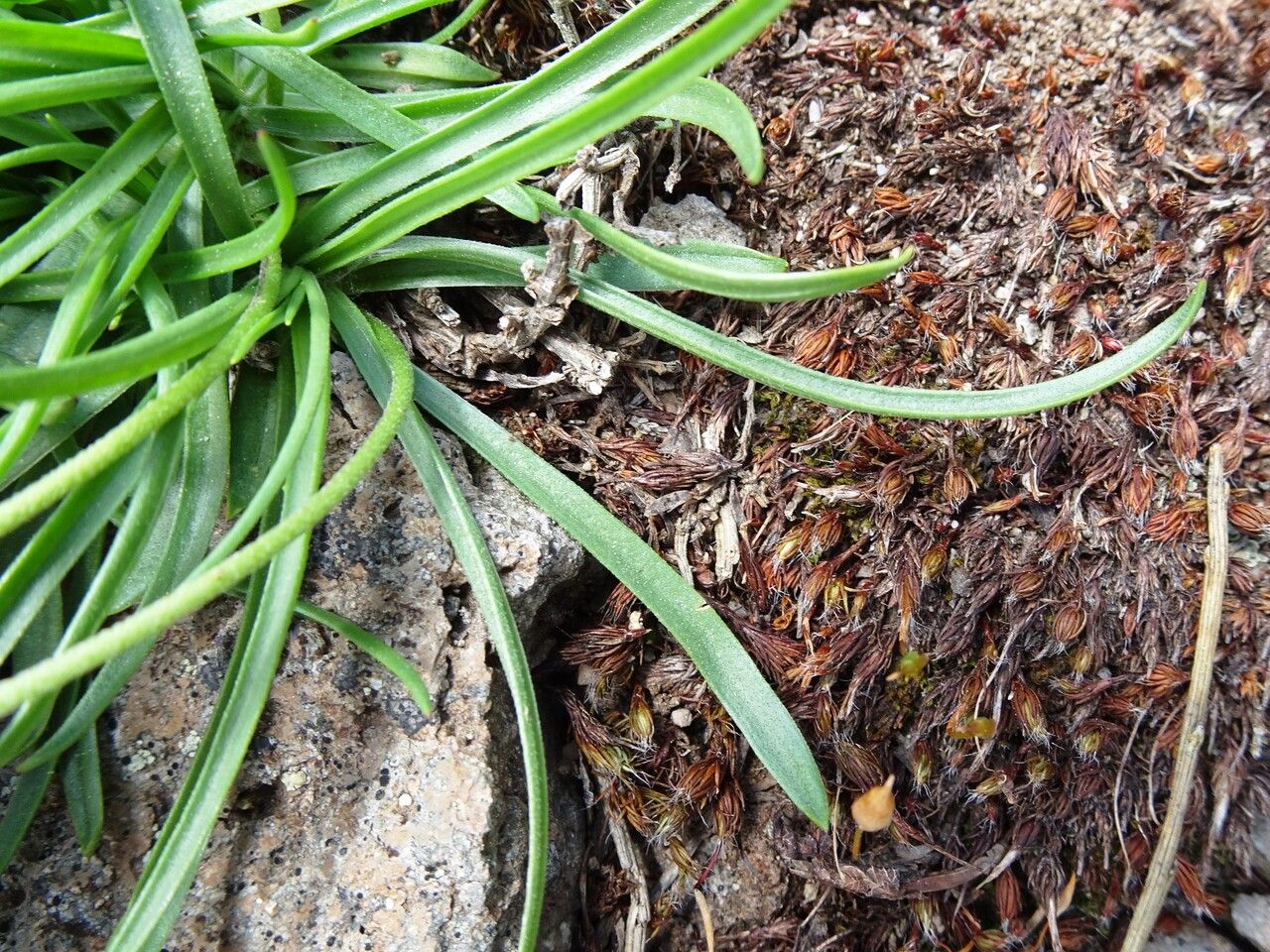
Plantago atrata, commonly known as Black Plantain, is a perennial herbaceous plant that belongs to the Plantaginaceae family. Native to Europe, it thrives in damp meadows, marshes, and along riverbanks. The plant features a rosette of basal leaves that are lance-shaped with prominent veins, growing up to 20 cm in length. These dark green, glossy leaves boast long petioles. From June to August, the Black Plantain produces tall spikes adorned with small flowers. These flowers, which are dark brown or blackish-purple, have four petals arranged cylindrically around the spike. Historically, the Black Plantain has been prized for its medicinal properties. Its anti-inflammatory qualities make it useful for treating wounds, insect bites, skin irritations, and respiratory problems such as coughs and bronchitis. Beyond its medicinal applications, Black Plantain is also consumed as food in some cultures. It can be eaten raw or cooked in salads and soups, thanks to its high nutritional value. This includes an array of vitamins (A, C, K, E, B1, B2, B3, B6), folic acid, and minerals like potassium, magnesium, zinc, copper, manganese, and selenium. Overall, Black Plantain is notable for both its medicinal properties and nutritional benefits, making it a valuable component of traditional medicine practices worldwide.
Dark plantain is fairly disease-resistant and typically not prone to illnesses. However, it can be affected by pests and diseases present in its environment. Such infections are generally not serious. This plant needs a moderate amount of care. Regular pruning is necessary to preserve a neat appearance and support healthy growth. Fertilizing can also encourage flowering. Dark plantain is appropriate for anyone with outdoor space, like a garden or patio, and does not demand extensive care experience. It may need more attention when cultivated indoors.
How to keep Plantago Atrata.
Fertilizer
Usually one application of fertilizer in spring is enough for Dark plantain, though repeated feedings can maximize growth. Apply fertilizer once every month to a month and a half. Fertilizing improves the leaves' appearance and function, helping maintain even color and a healthy texture. It also encourages root development and better nutrient absorption, supporting long-term plant health.
Pruning
Dark plantain thrives in a variety of environments, showcasing strong rosettes of lance-shaped leaves. To keep the plant healthy, lightly prune in early spring to remove any dead foliage. This practice not only improves air circulation but also boosts the plant's resistance to diseases. With regular care, you can promote healthy growth and vibrant blooms, which will enhance both the plant's beauty and its ecological value.
Botanical profile.
- Plant Type
- Herb
- Life Cycle
- Perennial
- Genus
- Plantago
- Family
- Plantaginaceae
- Hardiness Zone
- 5-9
Other names.