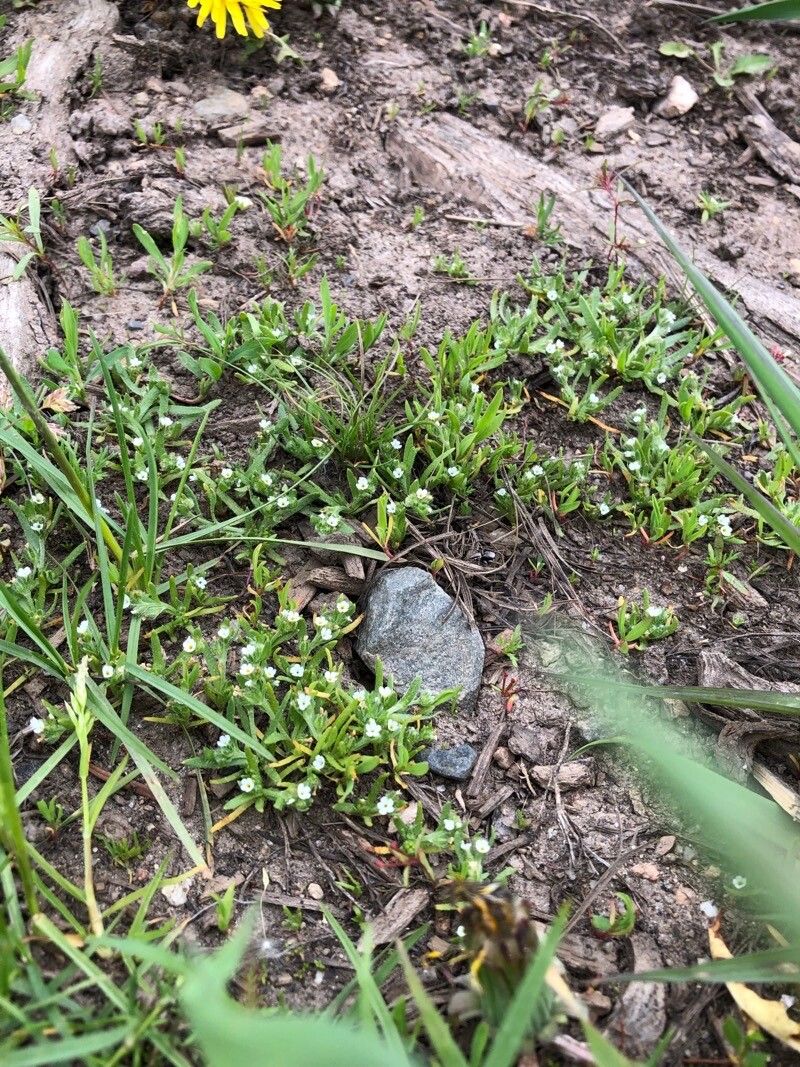
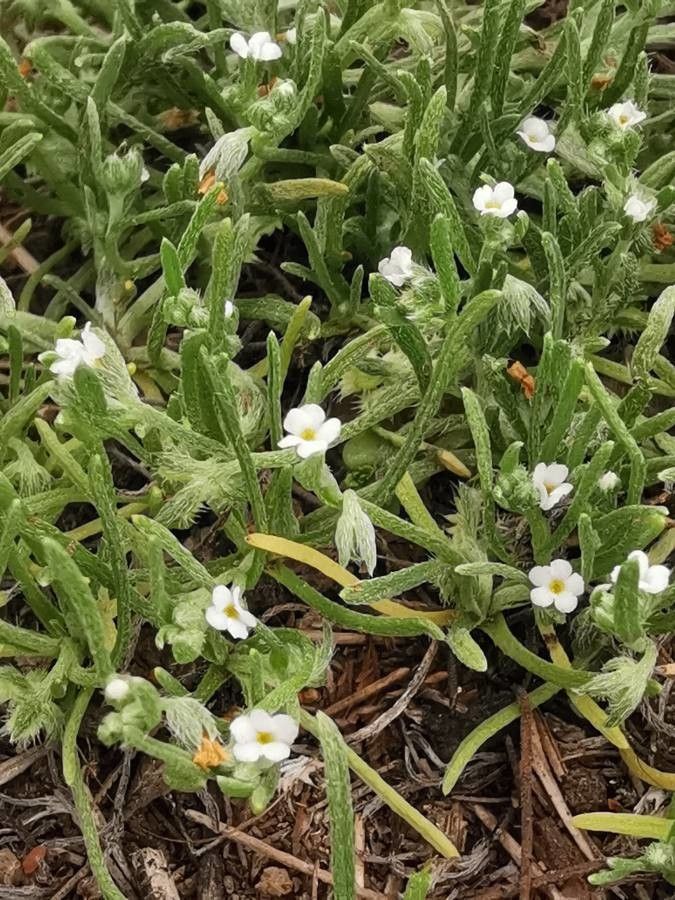
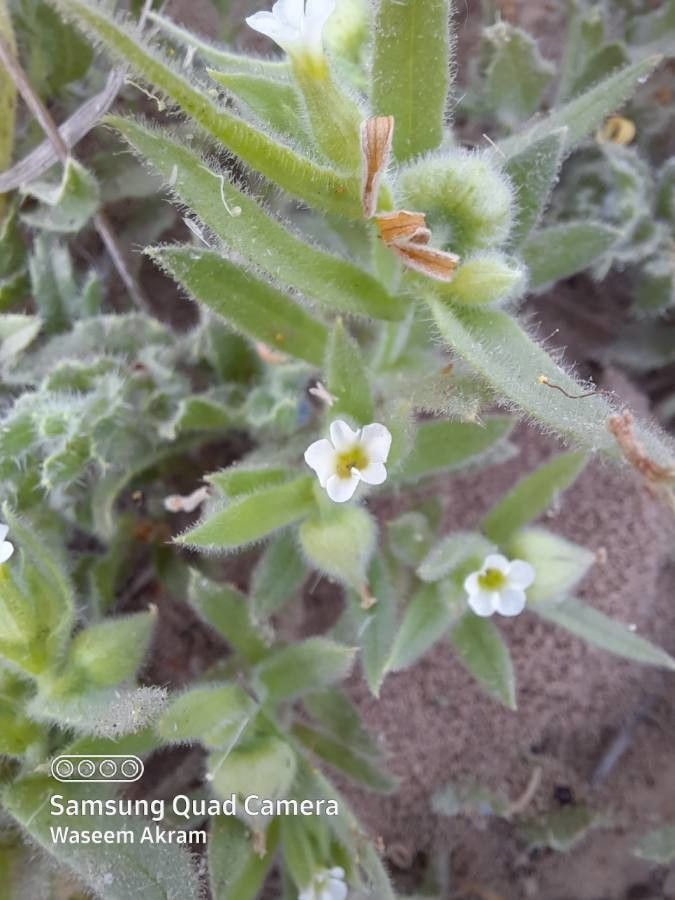
Plagiobothrys tenellus, commonly known as slender popcornflower, is a small annual plant in the Boraginaceae family. Native to western North America, it thrives in diverse habitats, including grasslands, meadows, and open woodlands.
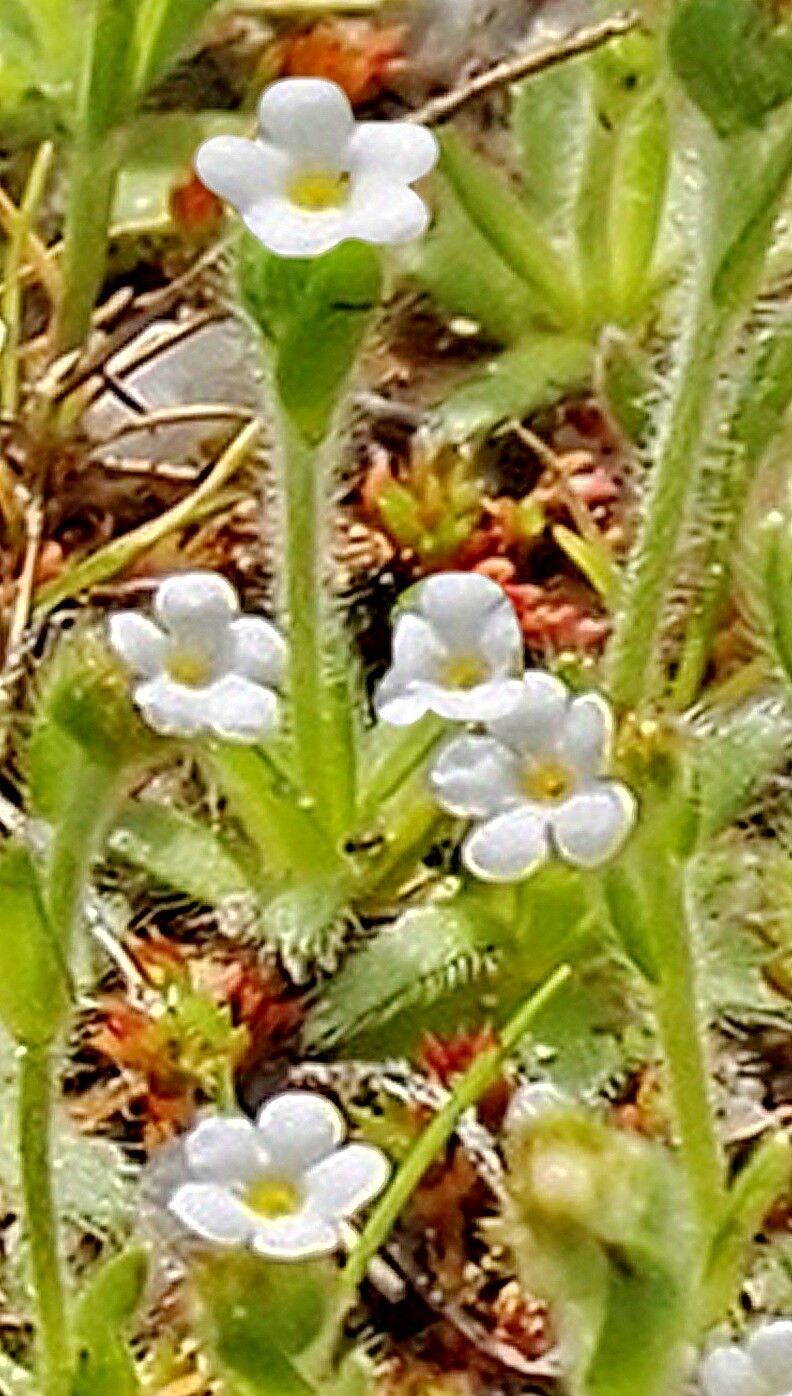
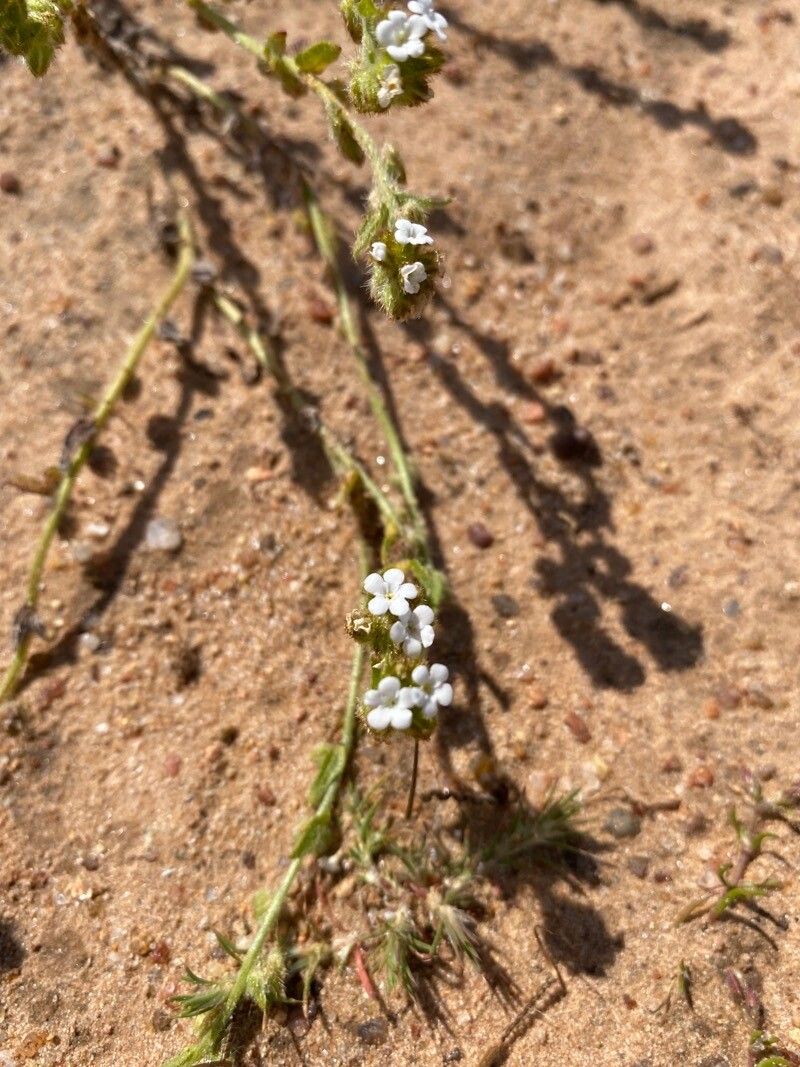
The plant reaches up to 30 cm in height, featuring slender, hairy stems and small leaves. Its tiny white flowers, each with five petals arranged in a funnel shape, bloom from April to July.
Slender popcornflower is a vital nectar source for bees and other pollinators and provides food for various herbivores such as deer, rabbits, and rodents.
Traditionally, Native American tribes have used this plant for medicinal purposes, including treating coughs and colds.
With its delicate appearance, slender popcornflower is an attractive addition to wildflower gardens or naturalized areas. However, it can become a weed in some agricultural settings due to its rapid spread through self-seeding.
Overall, Plagiobothrys tenellus is a fascinating plant with significant ecological value, deserving the attention of botanists and nature enthusiasts alike.
Pacific popcornflower is fairly disease-resistant and generally not likely to develop illnesses. Still, it can be affected by pests and diseases present in its environment. Such infections are typically mild. Carewise, this plant needs moderate maintenance. Regular pruning is required to keep a tidy appearance and support healthy growth. Fertilizing can also encourage flowering. Pacific popcornflower is suitable for anyone with outdoor space, like a garden or patio, and does not demand much care experience. It may need more attention when grown indoors.
How to keep Plagiobothrys Tenellus.
Fertilizer
Pacific popcornflower responds well to regular, light applications of fertilizer to encourage healthy leaf development. Fertilize Pacific popcornflower about once a month during the summer. Nitrogen is important for foliage, and providing nitrogen-rich sources helps Pacific popcornflower do well.
Pruning
To help Pacific popcornflower flourish, it is essential to prune it carefully from early to late spring. Focus on removing any dead or damaged stems. Light trimming will maintain the plant's shape and promote healthy growth, better air circulation, and increased disease resistance. Always use clean, sharp tools to prevent damage and infection.
Botanical profile.
- Plant Type
- Herb
- Life Cycle
- Annual
- Genus
- Plagiobothrys
- Family
- Boraginaceae
- Hardiness Zone
- 6-10
- Mature Height
- 5 cm to 13 cm
- Native Area
- Mexico
Other names.