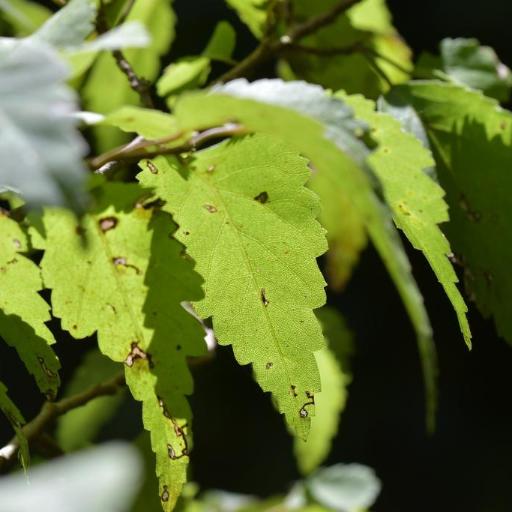
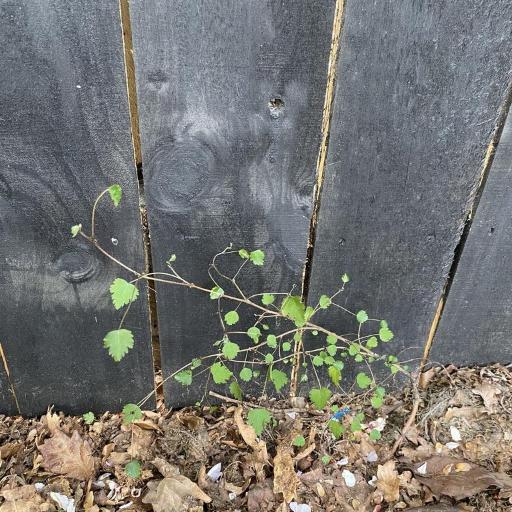
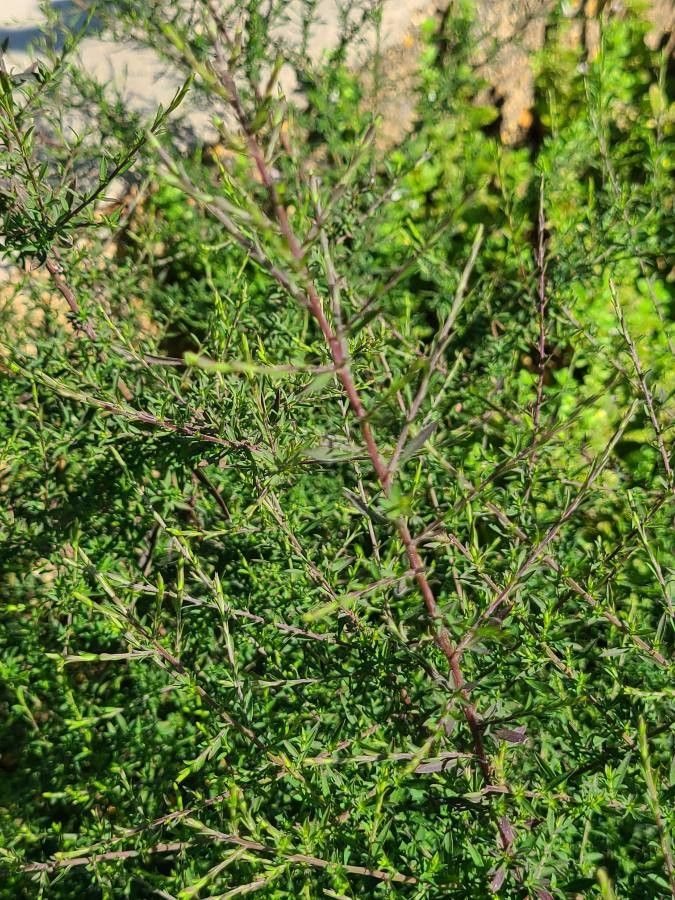
Plagianthus regius or lowland ribbonwood is a tree that is endemic to New Zealand. The common name is simply ribbonwood. The Māori name is manatu but is also known as houi, manaui manatu, puruhi and whauwhi. The juvenile form has bushy interlacing branches with small leaves, while an older tree will tend to have larger leaves, sometimes with the lower parts of tree still displaying divaricating leaves. A profusion of small white or green flowers appear in dense clusters in spring making it easier to distinguish from the similar lacebark genus. One of the distinctive aspects of this tree is that it is usually deciduous which is unusual for New Zealand, although in the northern areas it can be semi-deciduous. It is considered the largest of New Zealand's deciduous trees growing to 17 metres, and grows in the North, South and Stewart Islands. A subspecies from the Chatham Islands, Plagianthus regius subsp. chathamicus, is very similar but lacks the divaricating aspect.The bark of the tree was used in Māori traditional textiles such as in fishing nets.
Manatu is resistant to disease and is generally not susceptible to illnesses. Regarding care, this plant is fairly low-maintenance. When grown outdoors it needs little watering, and larger specimens typically do not require pruning. However, smaller plants should be pruned after they have bloomed. Manatut is appropriate for anyone with an outdoor area, such as a garden or deck, and does not demand a lot of care experience.
How to keep Plagianthus Regius.
Light
Originating from an environment rich in sunlight, manatu is adapted to take in abundant light for vigorous growth. It prospers with strong sun exposure, which greatly benefits its overall health. Excessive sunlight, however, does not present major problems. In contrast, reduced light can impede the plant's growth, highlighting the importance of sunlight.
Temperature
Manatu does best in environments with temperatures from 59 to 95 °F (15 to 35 ℃). Native to temperate regions, it favors moderate conditions. Seasonal temperature adjustments may be required for optimal growth.
Fertilizer
Timing is essential for fertilizing Manatu. Apply fertilizer in early spring and continue monthly until early summer. Fertilizer encourages attractive blooms and supplies energy during both dormant and active growth periods.
Botanical profile.
- Plant Type
- Tree
- Life Cycle
- Perennial
- Genus
- Plagianthus
- Family
- Malvaceae
- Hardiness Zone
- 7-10
- Mature Height
- 17.07 m
- Mature Spread
- 1.83 m to 2.13 m
- Leaf Color
- Green, Blue
- Leaf Type
- Deciduous
- Flower Color
- Green
- Flower Size
- 0.25 cm to 0.51 cm
- Bloom Time
- Mid fall, Late fall
- Planting Time
- Spring, Summer, Autumn
- Harvest Time
- Winter
Other names.