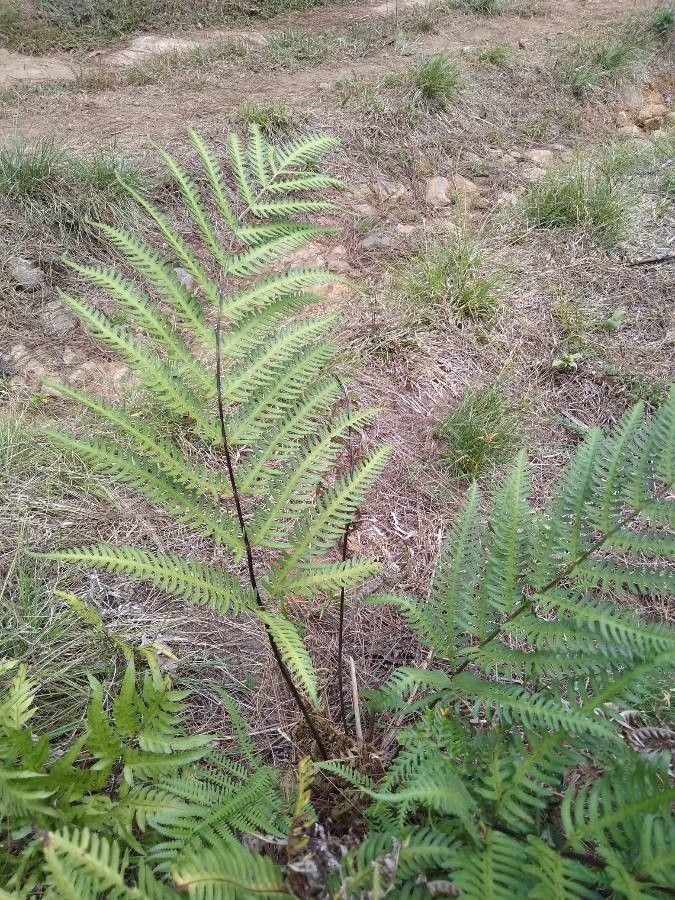
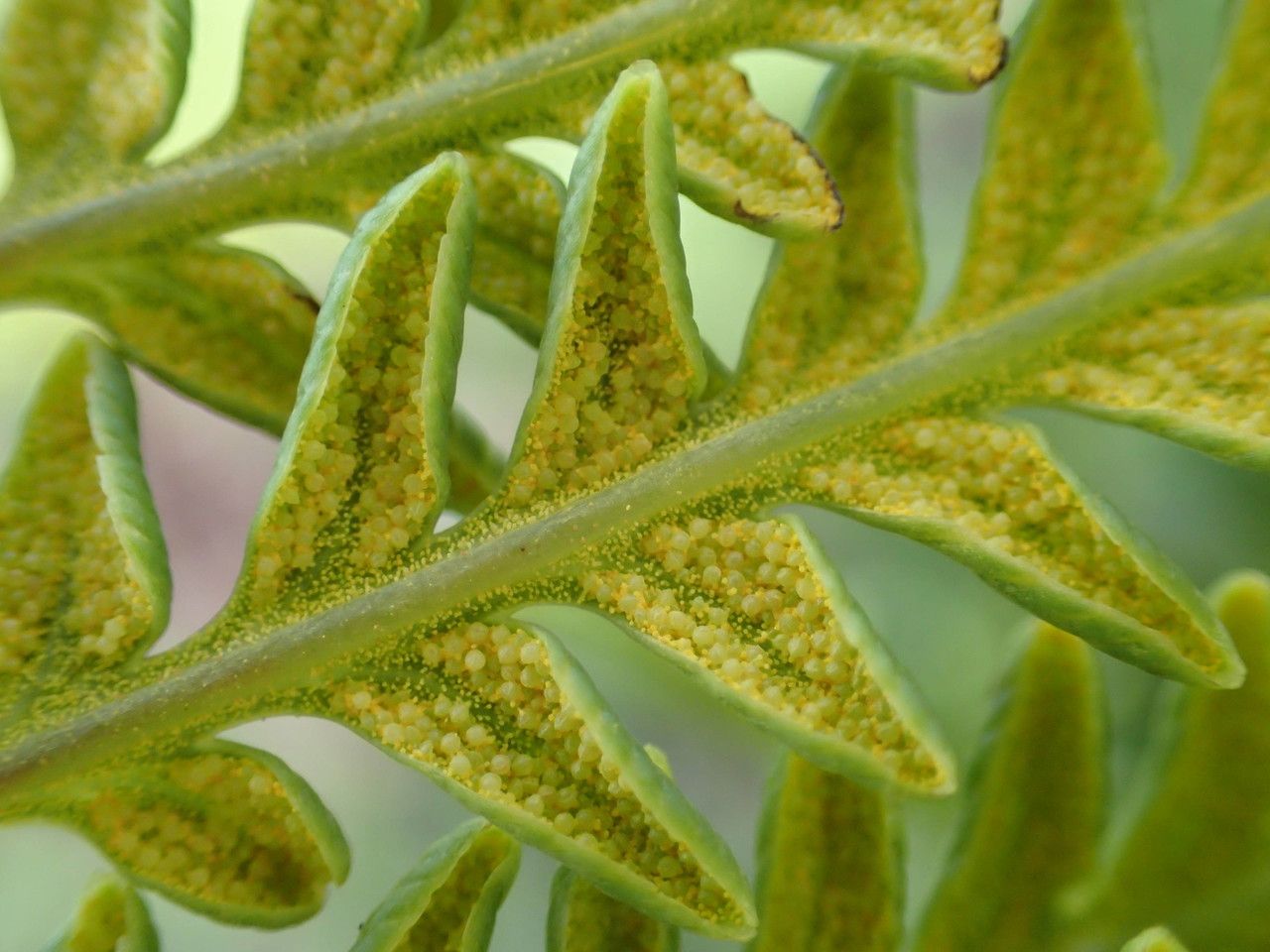
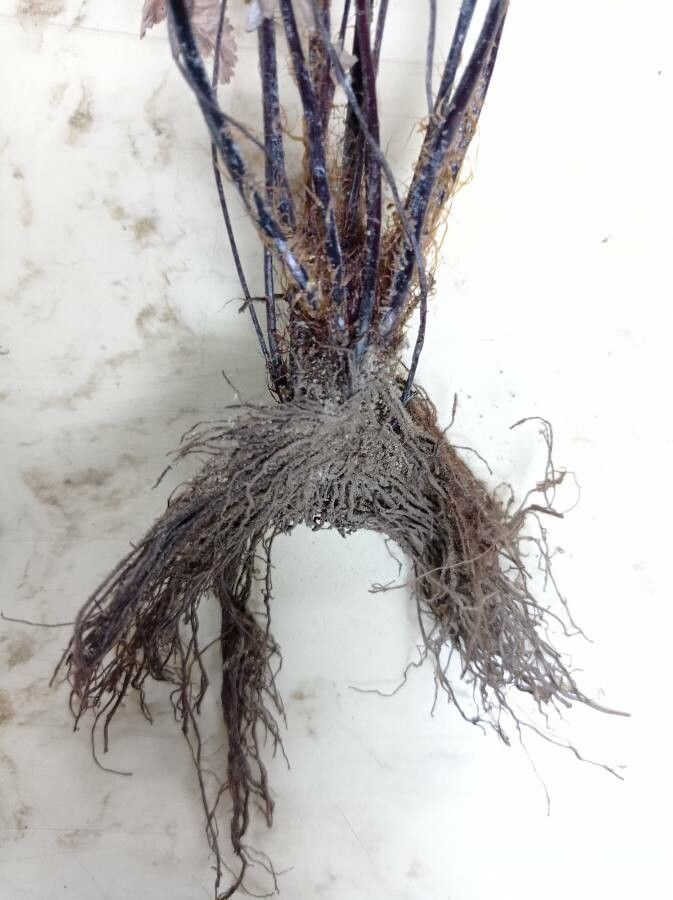
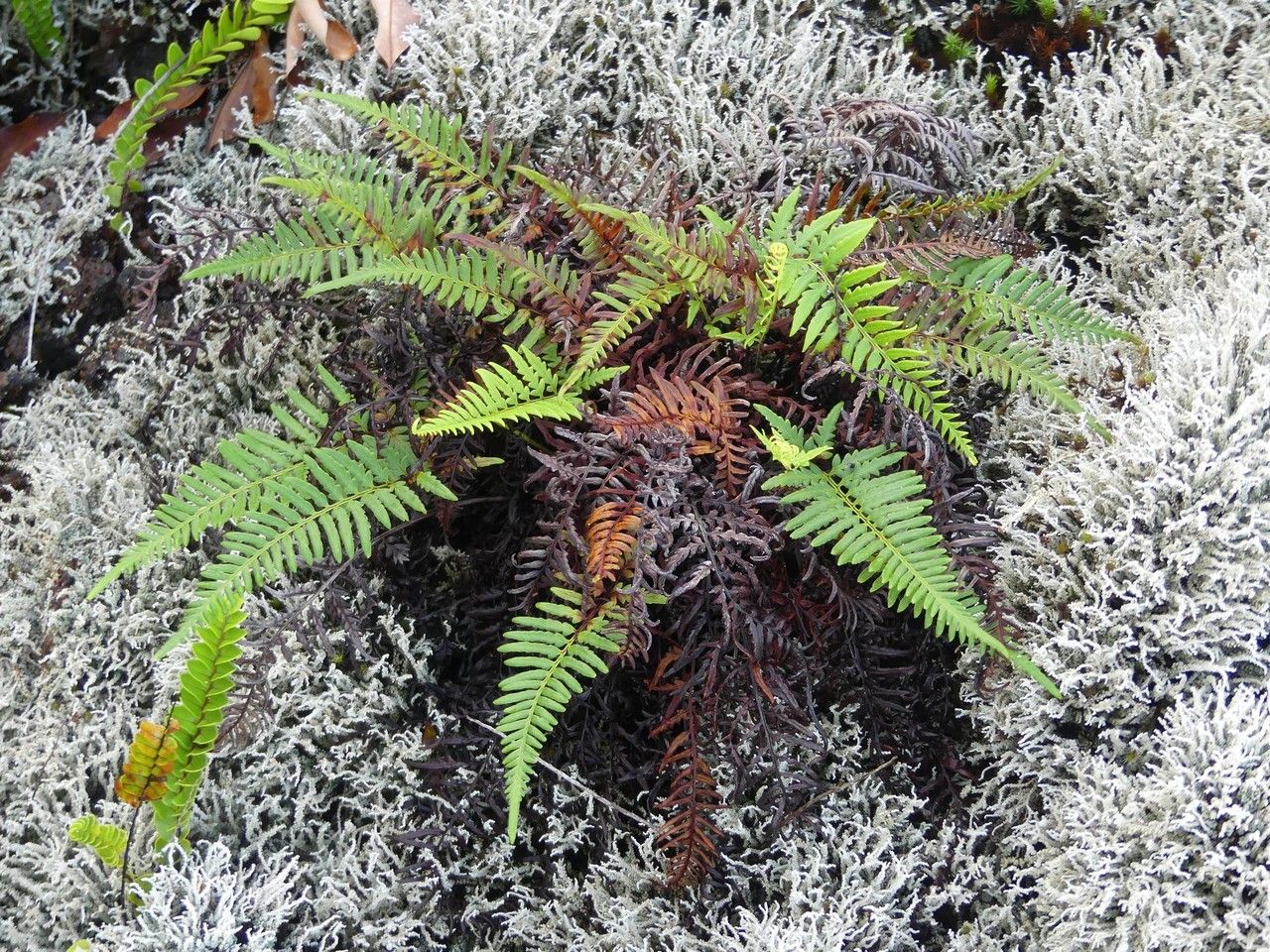
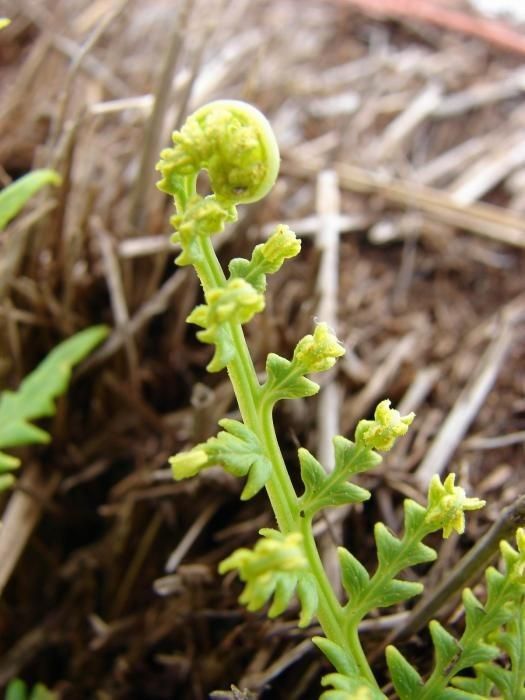
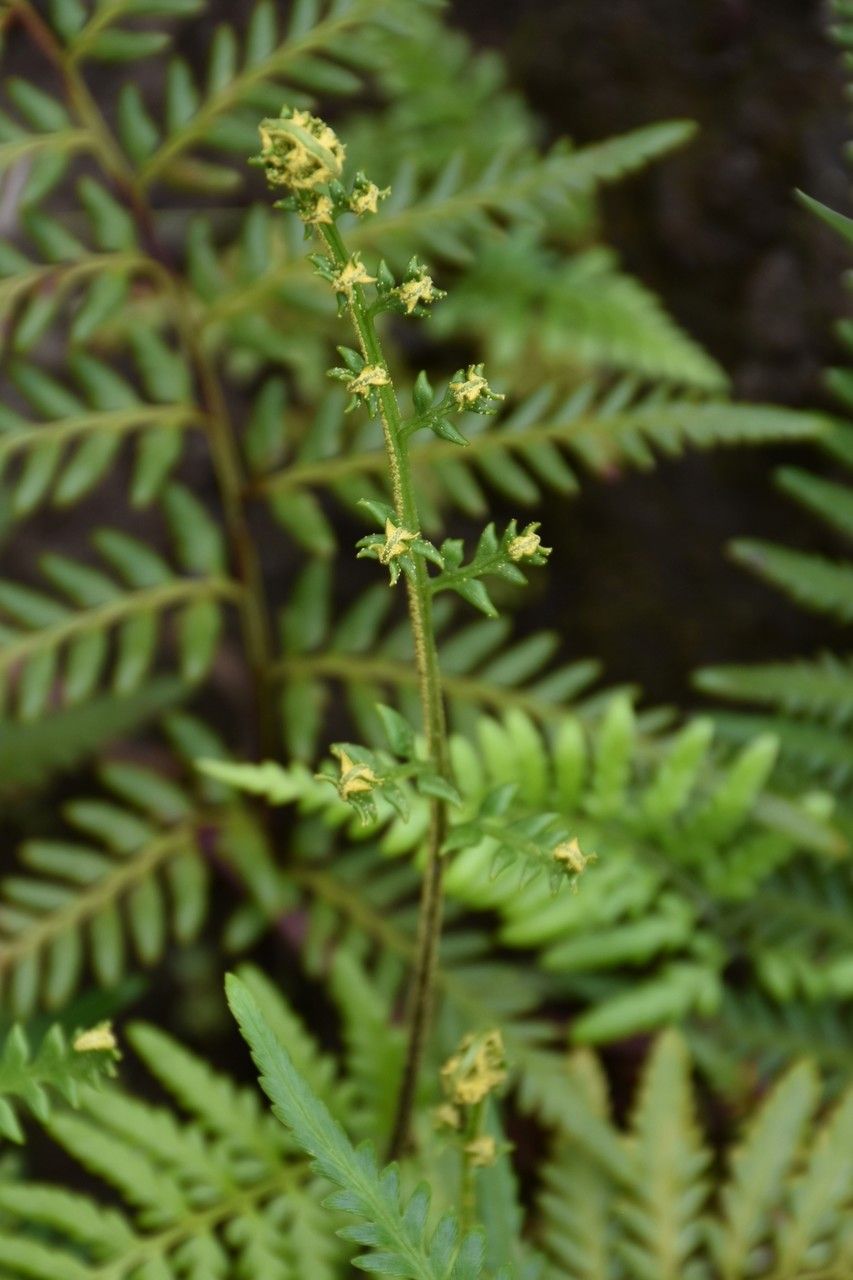
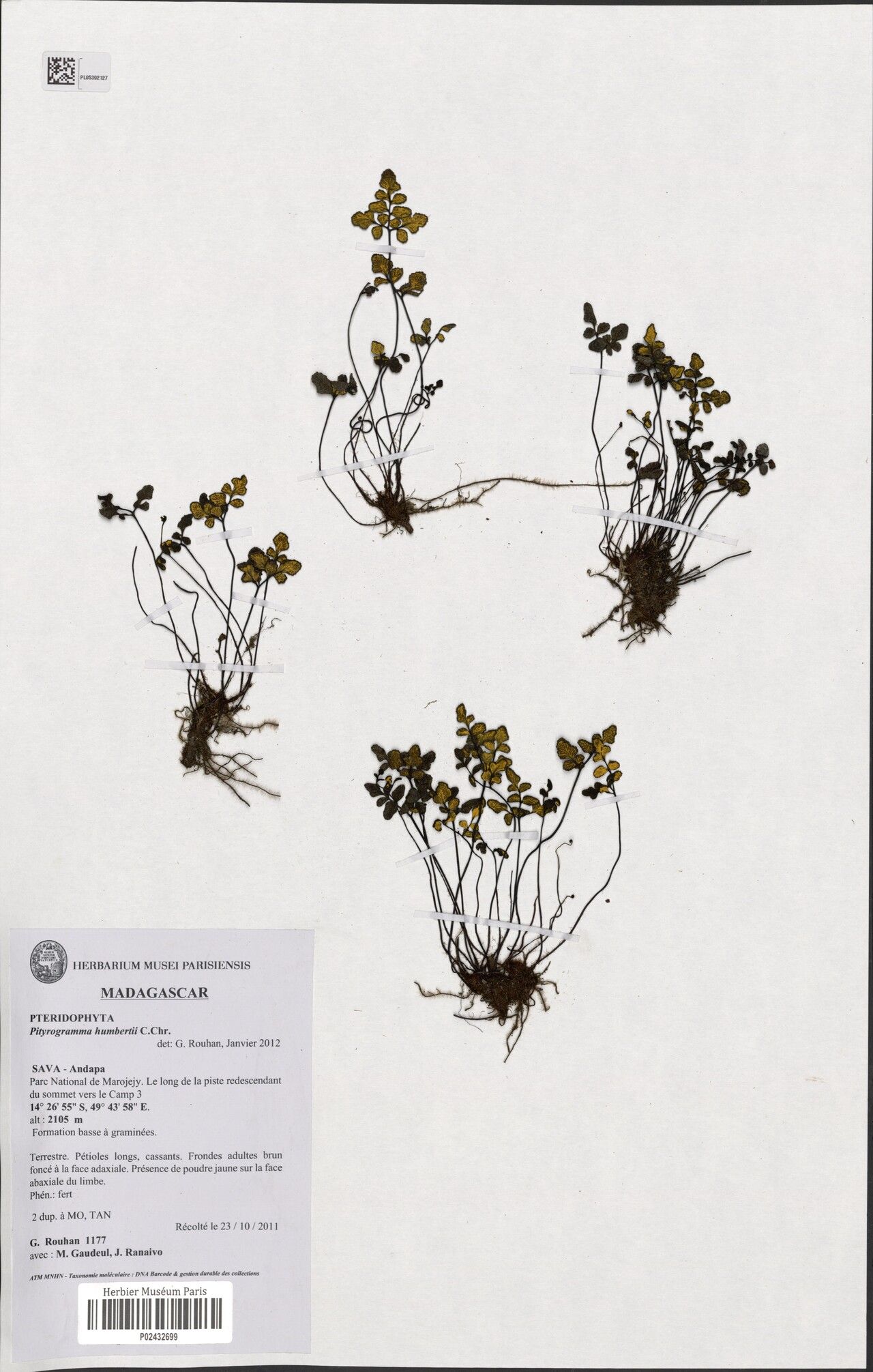
Pityrogramma calomelanos, commonly known as the gold fern or silver fern, is a species of fern belonging to the family Pteridaceae. It is native to tropical and subtropical regions of Africa, Asia, Australia, and South America. The plant has a unique appearance, with its fronds covered in tiny golden or silver scales that create a shimmering effect.
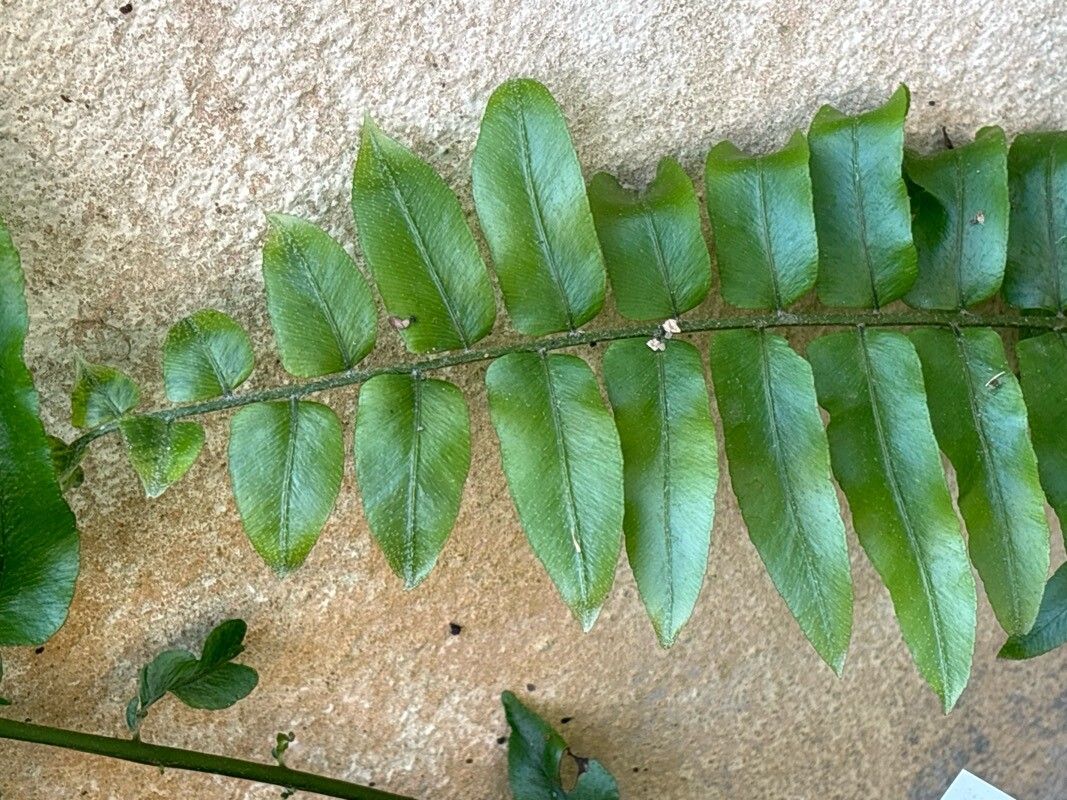
The gold fern can grow up to 60 cm in height and features pinnate fronds with up to 20 pairs of leaflets. The leaflets are oblong with pointed tips and serrated edges. While the plant prefers moist soil conditions, it can also tolerate dry conditions once established.
Pityrogramma calomelanos is popular as an ornamental plant due to its striking appearance and low maintenance requirements. It can be grown both indoors and outdoors in shaded areas such as under trees or on patios.
In addition to its ornamental value, the gold fern also possesses medicinal properties. Traditionally, it has been used to treat various ailments, such as fever, coughs, and wounds, due to its anti-inflammatory properties.
Overall, Pityrogramma calomelanos is an attractive ornamental plant that requires minimal care while enhancing the beauty of indoor and outdoor spaces. Additionally, it offers medicinal benefits for traditional uses.
The Dixie silverback fern has good resistance to disease and is generally not prone to illnesses. However, it can be vulnerable to pests and diseases present in its surroundings. These infections are typically not severe. In terms of care, this plant requires moderate maintenance. It should be pruned regularly to maintain an attractive appearance and healthy growth. Fertilization can also help to promote flowering. The Dixie silverback fern is suitable for anyone with outdoor space, such as a garden or patio, and does not require extensive gardening experience. It may need more care when grown indoors.
How to keep Pityrogramma Calomelanos.
Light
Dixie silverback fern does well with moderate sunlight but can also tolerate full sun and deep shade. Its adaptability comes from native habitats that have varying levels of light. Excessive sun can bleach the leaves, while insufficient light may inhibit growth.
Water
The Dixie Silverback Fern, which originates from tropical regions, thrives in environments with high humidity and consistent moisture. It grows best in soil that is both evenly moist and well-draining, requiring watering once a week. Being an evergreen fern, it retains its foliage throughout the year, so it's essential to provide a stable water supply even during the colder months.
Temperature
Dixie silverback fern comes from tropical areas where the climate is generally warm and humid. Consequently, it is well suited to high heat and moisture. It does not tolerate sudden temperature changes and prefers a steady temperature, so avoiding indoor temperature swings is important. It typically cannot withstand cold and needs warmer conditions to grow. If the temperature falls too low, the plant may stop growing or even die.
Fertilizer
Dixie silverback fern needs the most fertilizer during its active growing period, which is mainly in spring, summer, and early fall. Fertilization supplies essential nutrients that the soil may lack, supporting healthy root and stem growth and maintaining the attractive foliage that is a defining characteristic of this plant.
Pruning
The Dixie Silverback Fern is known for its striking silvery fronds and requires regular pruning to maintain its health and appearance. To promote growth, trim any dead fronds in early spring and lightly prune throughout late spring. Proper pruning not only improves air circulation and prevents disease but also involves making gentle cuts near the base to safeguard new shoots.
Botanical profile.
- Plant Type
- Herb
- Life Cycle
- Perennial
- Genus
- Pityrogramma
- Family
- Pteridaceae
- Hardiness Zone
- 10-12
- Mature Height
- 25 cm to 91 cm
- Mature Spread
- 30 cm to 49 cm
- Leaf Color
- Green, Silver
- Leaf Type
- Evergreen
- Planting Time
- Spring, Autumn
- Native Area
- Belize, Honduras, Mexico, Guatemala, Peru, Panama, Jamaica, Colombia, Bahamas, Cuba, Equatorial Guinea, Bolivia, Venezuela, Brazil, Guyana, El Salvador, Nicaragua, Ecuador, Costa Rica
Other names.
Reader questions.
How should I water my Dixie silverback fern?
To properly water the Dixie silverback fern, it is recommended to use filtered water at room temperature. Tap water may contain harmful particles, so filtered water is safer for the plant. It is important to use room temperature or slightly warm water because the fern is accustomed to a warm environment and cold water can be shocking. Instead of overhead watering, it is better to apply the filtered room temperature water directly to the soil until it is fully soaked. This method helps to moisten the roots and support their growth and nutrient absorption.
Why do I have to use plant food on my Dixie silverback fern?
Fertilization plays a vital role in maintaining the appearance and function of the Dixie silverback fern's leaves. By fertilizing it properly, you can ensure that the leaves have a uniform color and a healthy texture. Additionally, fertilization helps below the soil's surface by promoting the growth of new roots and maintaining existing roots. This not only keeps the plant healthy at present but also enhances its ability to absorb nutrients from the soil in the long run.
What are the sunlight requirements for plants?
Plants require varying amounts of sunlight to thrive. Partial sun plants need about 3-6 hours of sunlight, while those that demand full sun or full shade require more than 6 hours of sunlight. It's important to observe the movement of sunlight through your garden to find the ideal spots that offer a balance of light and shade suitable for your plants' needs, ensuring their well-being.
What should I do if I give my Dixie silverback fern too much water or too little water?
Overwatering is a more common issue than underwatering for the health of your Dixie silverback fern. When this species receives too much water, its stem and leaves may wilt and turn yellow. Overwatering over a long time can also lead to diseases like root rot, mold, and mildew, which can be fatal for your plant. The Dixie silverback fern has good drought tolerance, so underwatering is less common. However, if underwatering occurs, the leaves may become brittle and brown. It is crucial to notice the signs of overwatering early when caring for your Dixie silverback fern. Some diseases caused by overwatering, like root rot, may not be fixable if you wait too long. If you see early signs of overwatering, reduce your watering schedule immediately. Also, check the soil quality. If it drains poorly, replace it with a loose and well-draining potting mix. If your Dixie silverback fern shows signs of receiving too little water, simply increase your watering frequency until the signs disappear.
When should I put fertilizer on my Dixie silverback fern?
If you grow your Dixie silverback fern outdoors every year, it will start to produce new growth in early spring. This is a sign that it is time to fertilize the plant for the year. Usually, a single application of fertilizer in the spring is enough for the fern to thrive. However, if you want to maximize its growth, you can fertilize it multiple times during the spring and early summer. If you decide to do this, you can feed the fern approximately once a month to a month and a half.
What are the essentials for growing Dixie silverback fern?
The Dixie silverback fern prospers with moderate sun but can also endure full sun and deep shade, thanks to its adaptability derived from its diverse native environments. Excessive sunlight may bleach the leaves, whereas insufficient light might stun its growth. When natural sunlight is lacking, especially during winter or in darker spaces, artificial lighting can be a crucial alternative. LEDs are recommended for their adjustability to provide necessary wavelengths, varying in intensity and duration based on the plant's requirements.
How frequently should I water my Dixie silverback fern?
If your Dixie silverback fern is in a pot, the most precise way to determine if it needs water is by checking the soil with your finger. If the top two to three inches of soil feel dry, it's time to water it. Similarly, if you have planted the fern outdoors, you can use the same method to test the soil. Once again, if the top few inches are dry, it's time to water the plant. Usually, during spring and early fall, you'll need to water this plant about once a week using this method. However, during extremely hot weather, you may need to water it twice a week or more. Nevertheless, mature and well-established Dixie silverback ferns can withstand drought quite well.
When should I not put fertilizer on my Dixie silverback fern?
During the late fall and winter, your Dixie silverback fern will go into a dormant phase and stop producing new growth. It's best not to fertilize your fern during this time. In the spring and summer, if you choose to fertilize, gradually decrease the amount as summer approaches and the fern's growth rate slows down. It's always a bad idea to fertilize the fern during extremely hot weather or when the soil is very dry. Fertilizing during these conditions can stress the fern and cause it to die prematurely.
What are the common symptoms of light deficiency in Dixie silverback fern?
When Dixie silverback fern is grown indoors under inadequate light conditions, it may exhibit symptoms such as smaller new leaves, leggy or sparse growth, accelerated leaf drop, halted new growth, paler new leaves, chlorosis, sunscald, leaf curling, wilting, and leaf scorching. These symptoms indicate either a deficiency or excess of light, affecting the plant's health and ability to photosynthesize properly.
How much water does my Dixie silverback fern require?
To properly water your Dixie silverback fern, don't be afraid to give it a good amount of water. Make sure the top two to three inches of soil are dry before watering. It's best to water thoroughly, so the soil is completely soaked. You should water enough so that excess water drains out of the pot's drainage holes. If you don't see excess water draining, you may not have given enough water. Be careful not to let the water sit and accumulate in the soil, as this can harm the plant. On the other hand, if water is not draining through the pot, it could mean the soil does not drain well, which is not good for the plant's health. If the fern is outside, one inch of rain per week should be enough.
Which fertilizer should I use for my Dixie silverback fern?
Choosing the best fertilizer for a Dixie silverback fern is actually quite simple. These plants do well with a general-purpose garden fertilizer that has equal amounts of nitrogen, phosphorus, and potassium, typically in a ratio of 10-10-10 or something similar. It's important to avoid fertilizers with high levels of nitrogen if you're unsure. Granular slow-release fertilizers are generally the best option for a Dixie silverback fern, as they're easy to apply to the soil. Additionally, using an organic soil amendment like compost can be beneficial for feeding the fern.
How can I address sunlight-related issues for my Dixie silverback fern?
To optimize growth for indoor plants, gradually shift them to sunnier spots each week until they receive 3-6 hours of direct sunlight daily. For large plants or those hard to move, consider artificial lighting, using a desk or ceiling lamp for at least 8 hours a day or investing in grow lights. Outdoors, slowly acclimate plants to brighter spots, avoiding drastic light changes to prevent sunburn. Remove obstructions such as overhanging branches to improve sunlight access. For smaller plants, consider transplanting during their dormant period to a sunnier location with good drainage.