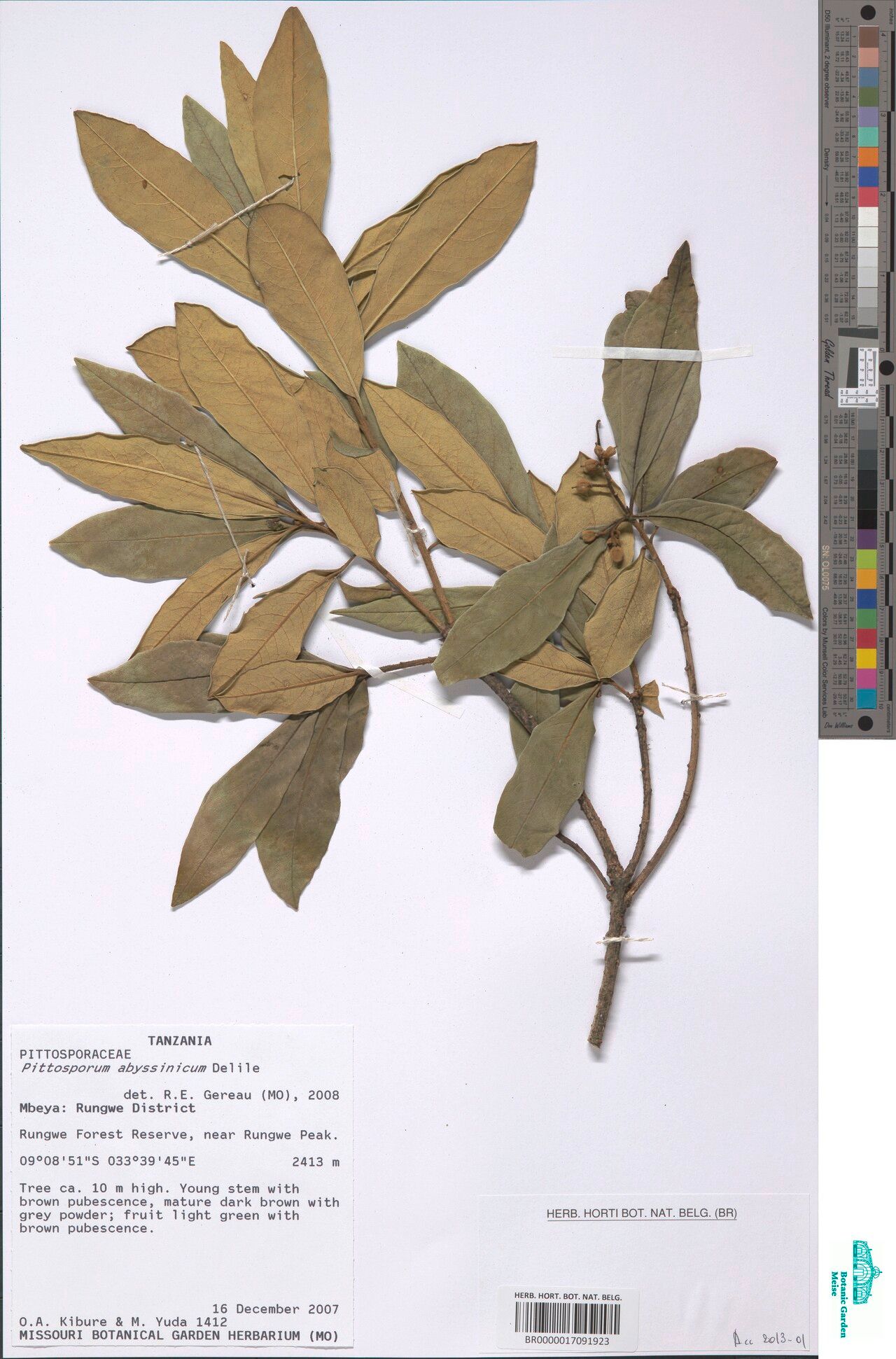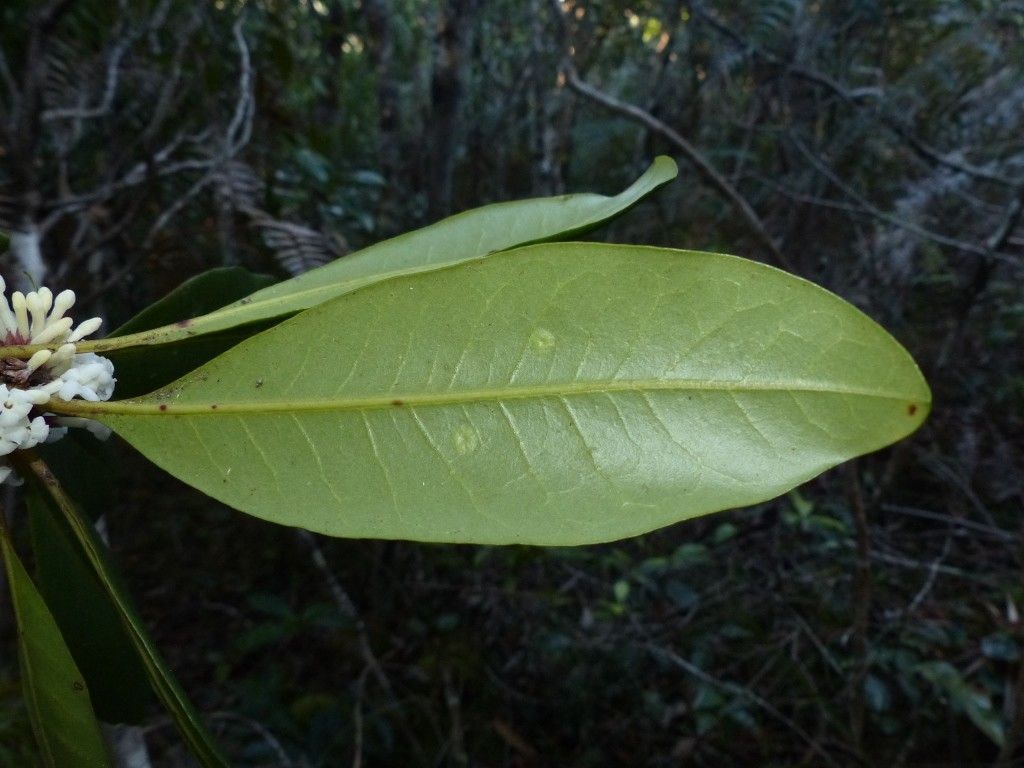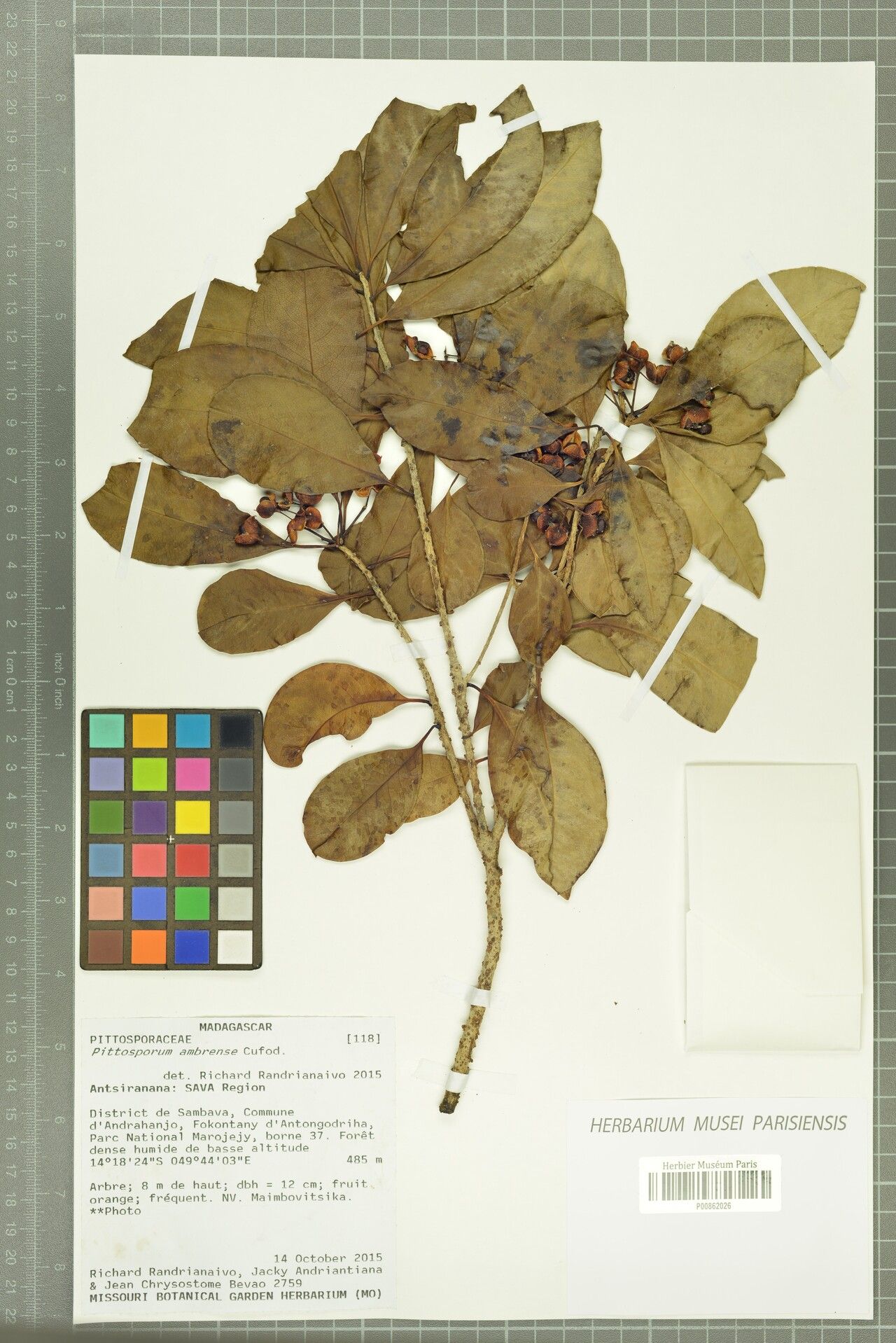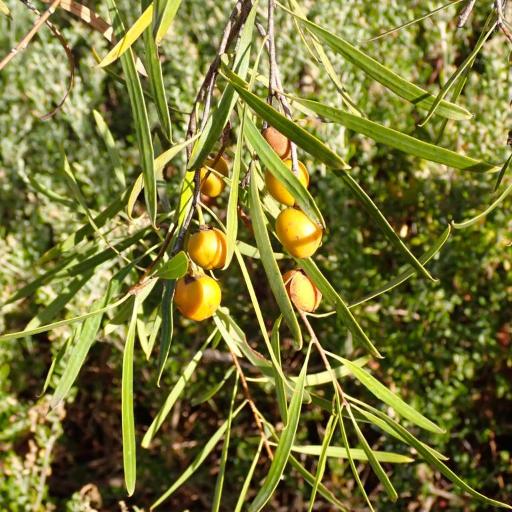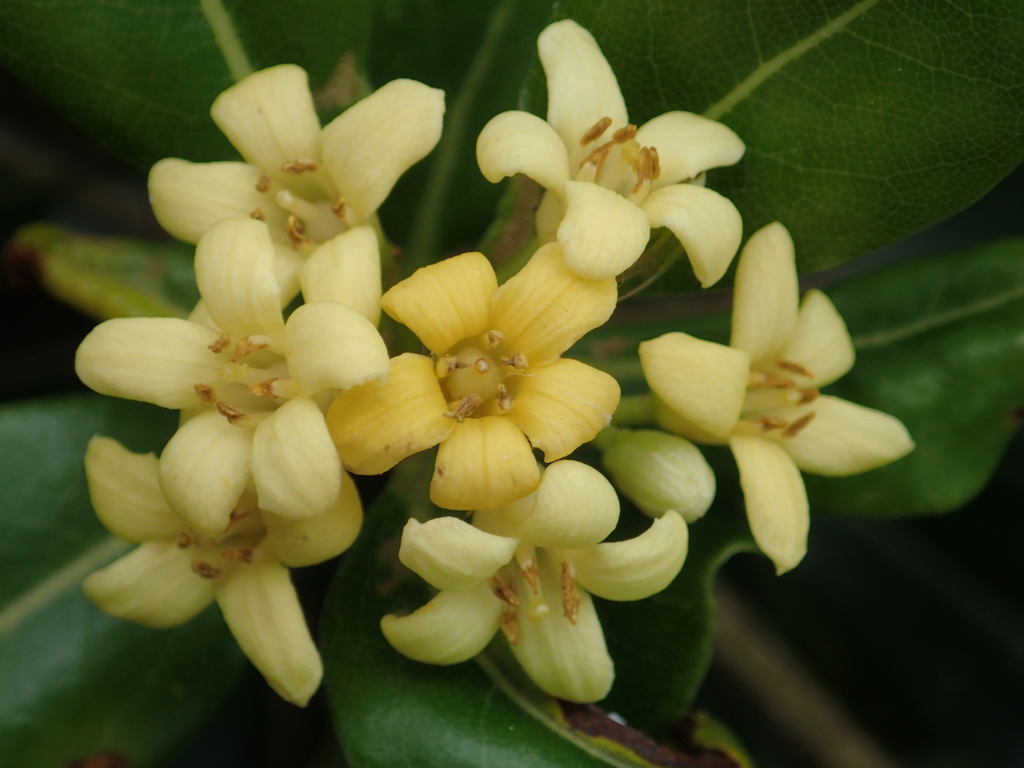
Pittosporum tobira, commonly known as Japanese pittosporum or mock orange, is an evergreen shrub that belongs to the Pittosporaceae family. Native to Japan, China, and Korea, it has been widely cultivated worldwide for its ornamental appeal.
This plant can reach up to 10 feet in height and 6 feet in width, forming a dense, rounded shape. Its glossy, dark green leaves are leathery in texture and release a pleasant fragrance when crushed or bruised. The oval-shaped leaves, with their wavy edges, can grow up to 4 inches long.
In the spring, Pittosporum tobira produces small, creamy-white flowers that are highly fragrant and attract bees and butterflies. These blossoms are followed by small, orange-red berries that add a splash of color in the fall.
Pittosporum tobira is a versatile plant, well-suited for use as an accent in borders or as a hedge, thanks to its dense growth habit. It prefers well-drained soil but can tolerate some drought once established.
Overall, Pittosporum tobira is an attractive evergreen shrub with glossy foliage, fragrant flowers, and colorful berries, making it an excellent low-maintenance choice for gardeners seeking year-round ornamental value.
Japanese cheesewood gets its name not because it resembles a tree that grows cheese or emits a cheese-like scent, but because its wood has a yellowish-white appearance reminiscent of cheese. Originating from Japan, it is commonly referred to as Japanese cheesewood.
Japanese pittosporum is resistant to disease and generally does not tend to get sick. In terms of care, this plant is fairly low-maintenance. When grown outdoors it needs only light watering, and larger plants typically do not require pruning. However, smaller plants should be trimmed after they have finished blooming. Japanese pittosporumt is suitable for anyone with an outdoor area, such as a garden or deck, and does not demand much gardening experience.
How to keep Pittosporum Tobira.
Light
The japanese pittosporum does best in locations with abundant light, receiving bright sunlight for much of the day which supports healthy growth. Although it prefers ample sunshine, it can tolerate spots with intermittent sun, but that reduced exposure may somewhat limit its growth. Its native habitats provide this sort of light.
Water
Japanese pittosporum grows best in moderate climates where there is consistent moisture, and it favors well-drained soil. It should be watered every 1-2 weeks, allowing the soil to dry out slightly between waterings. As an ornamental shrub, it benefits from mulching, which helps retain moisture and provides protection against temperature extremes.
Humidity
This plant will thrive in moderate humidity, which is probably the level in your home. However, misting it a few times a week can be very beneficial. Make sure the room has good ventilation.
Temperature
Japanese pittosporum japanese pittosporum favors a temperature range of 59 to 95 ℉ (15 to 35 ℃). It grows naturally in temperate conditions, so it cannot withstand very cold or very hot weather. In winter, keep temperatures above freezing and avoid exceeding 50 ℉ (10 ℃). In summer, offering partial shade and watering more frequently helps prevent the plant from suffering high heat stress.
Fertilizer
Fertilize your Japanese pittosporum in early spring to encourage healthy growth. Regular feeding improves overall health, leading to vigorous development, better tolerance of challenging conditions, and increased resistance to pests and diseases. Stick to a specific fertilization schedule for your Japanese pittosporum to maintain vibrant, deeply colored foliage and a lush appearance.
Pruning
Prune Japanese pittosporum in the spring to promote optimal health. When caring for trees, ensure the stems are well spaced by removing suckers and shaping the tree. For hedges, begin shaping and reducing new growth starting in the third year. For shrubs, remove any weak branches and trim the main branches to maintain their size, cutting 0.25 inches above outward-facing branches.
Pot & Repot
When repotting Japanese pittosporum, select a pot 1–2 inches (2.5–5.1 cm) larger that provides good drainage. Use a well-draining potting mix. Repot in spring or fall, making sure the root ball sits slightly below the rim of the flower pot. Water thoroughly after repotting and place the plant in a warm location with indirect sunlight.
Botanical profile.
- Plant Type
- Shrub
- Life Cycle
- Perennial
- Genus
- Pittosporum
- Family
- Pittosporaceae
- Hardiness Zone
- 8-10
- Mature Height
- 6.1 m to 10.06 m
- Mature Spread
- 3.05 m
- Leaf Color
- Green
- Leaf Type
- Evergreen
- Flower Color
- White
- Flower Size
- 1.02 cm to 1.27 cm
- Bloom Time
- Late spring, Early summer, Mid summer
- Planting Time
- Spring, Autumn
- Harvest Time
- Mid summer
- Native Area
- South Korea, Japan, China
Other names.
Reader questions.
When Should I Water My Japanese Pittosporum?
Watering your Japanese Pittosporum correctly is essential for its health and growth. Check the soil's moisture by inserting a finger or moisture meter; if the top 1 to 2 inches of soil feels dry, it's time to water. Look for signs such as wilted, droopy, yellowing, dry, or crispy leaves, and check the root system for dryness. The timing since the last watering and current weather conditions also impact when to water. Be mindful of the risks associated with both early and late watering, including root rot and plant dehydration.
When should I fertilize my Japanese pittosporum plant?
To keep your Japanese pittosporum healthy and promote growth, it's best to fertilize it for the first time in late winter or early spring. This provides the necessary nutrients for the plant to thrive once the weather warms up. If you live in a warm climate region, it's also recommended to give your Japanese pittosporum an additional fertilizer feeding in early fall. This not only adds nutrients for the next growing season but also helps the plant withstand winter cold without foliage damage. Fertilizing earlier in fall will ensure that new branches have enough time to grow and become hardy before winter arrives.
What are the sunlight requirements for Japanese pittosporum?
Japanese pittosporum thrives under extensive sunlight, requiring above 6 hours of sunlight daily for full sun exposure and about 3-6 hours for partial sun exposure. It is essential to observe your garden's sunlight patterns to ensure the locations chosen offer the perfect balance of light and shade, fostering plant happiness.
What is the ideal temperature range for Japanese Pittosporum?
Japanese pittosporum thrives in a temperature range of 59 to 95 °F (15 to 35 °C), favoring a temperate environment. It has some cold tolerance but cannot withstand extreme cold or heat. During winter, maintaining the temperature above freezing without exceeding 50 °F (10 °C) is crucial. In summer, providing partial shade and increasing watering frequency can help manage high heat stress. If temperatures are expected to drop below -5°C, taking temporary cold protection measures, such as wrapping the plant, is necessary, but these should be removed once temperatures rise again.
How Should I Water My Japanese Pittosporum?
Japanese Pittosporum thrives with a slow and deep watering technique, benefiting from well-drained soil. Use a watering can with a long spout to target water at the plant base and utilize a moisture meter to prevent over-watering. Focus on watering the soil around the root zone and avoid getting the leaves wet to prevent disease. Test the soil moisture before watering, preferably water in the morning, and ensure you are not over-soaking the soil.
Why should I add fertilizer to my Japanese pittosporum?
Regular fertilization is essential for maintaining the overall health of any type of Japanese pittosporum. By providing the right nutrients, your plant will experience stronger growth and improved resistance to challenging conditions, as well as a better ability to combat diseases and pests. One of the most appealing aspects of your Japanese pittosporum is its foliage, so it is important to ensure its preservation. To do this, it is crucial to establish and follow a fertilization schedule tailored specifically to your Japanese pittosporum. By doing so, you will encourage the development of deep-colored, lush leaves.
How to manage Japanese pittosporum in less sunny areas or indoors?
For Japanese pittosporum in less sunny areas or grown indoors, artificial lighting can be a vital solution. It's recommended to use LED lights, customizing them to provide specific wavelengths needed by the plants. Full sun plants require 30-50W/sq ft of artificial light, partial sun plants need 20-30W/sq ft, and full shade plants need 10-20W/sq ft. Place the light source 12-36 inches above the plant for 8-12 hours per day to mimic natural sunlight conditions.
How does Japanese Pittosporum react to low temperatures?
Japanese pittosporum has moderate tolerance to low temperatures and thrives best above 15°C. It should be kept above -5°C during winter. If the temperature falls below -10°C, the leaves may droop and in severe cases, wilt and eventually fall off. To protect the plant from cold damage, trim off frost-damaged parts and wrap it with materials like non-woven fabric or cloth, also constructing a wind barrier to shield it from cold winds.
How Much Water Does Japanese Pittosporum Really Need?
The Japanese Pittosporum requires a moderate amount of water, with specifics depending on factors like pot size, root depth, and plant size. Generally, water until the soil's top inch feels moist, which may equate to 1 to 2 inches per session for larger pots. Avoid leaving the plant in soggy soil to prevent root rot. Healthy, hydrated plants will have vibrant leaves and regular new growth. Monitor for signs of under or over-watering, such as yellowing leaves or leaf drop, and adjust your watering practices accordingly.
When is the best time to not fertilize my Japanese pittosporum?
To ensure your Japanese pittosporum's health, avoid fertilizing it during certain times of the year. First, during the early and mid-winter months when the plant is dormant, there is no need for feeding. Second, it is not advisable to fertilize during the late spring and summer when the weather tends to be hotter and drier. These conditions can lead to a negative response to fertilizer. Instead, stick to a schedule that involves fertilizing only in early spring and early fall.
What are signs of insufficient lighting in Japanese pittosporum?
Signs of insufficient lighting in Japanese pittosporum include smaller new leaves, leggy or sparse growth, faster leaf drop, halted new growth, lighter-colored new leaves, conditions such as chlorosis, sunscald, leaf curling, wilting, and leaf scorching. These symptoms indicate that the plant is not receiving enough sunlight, leading to various growth and health issues.
How should I care for Japanese Pittosporum in high temperatures?
In high temperatures, specifically above 35°C, the leaves of Japanese pittosporum may lighten in color, dry and wither at the tips, curl, and the plant can become susceptible to sunburn. To care for it during high temperatures, trim away sunburned and dried-up parts. Relocate the plant to a shaded area or use a shade cloth to protect it from midday and afternoon sun. It’s also important to water the plant in the morning and evening to keep the soil moist and help it withstand the heat.