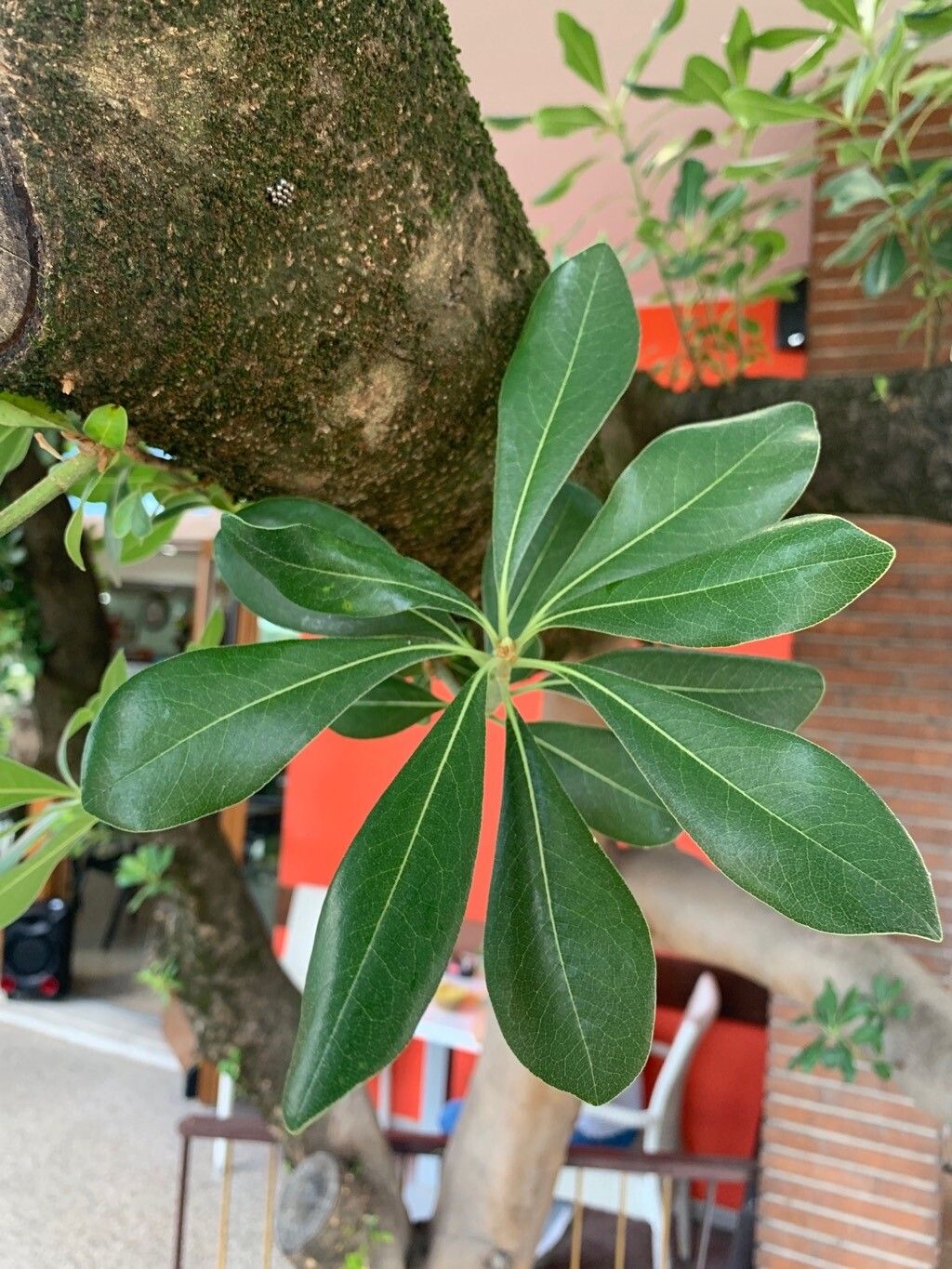
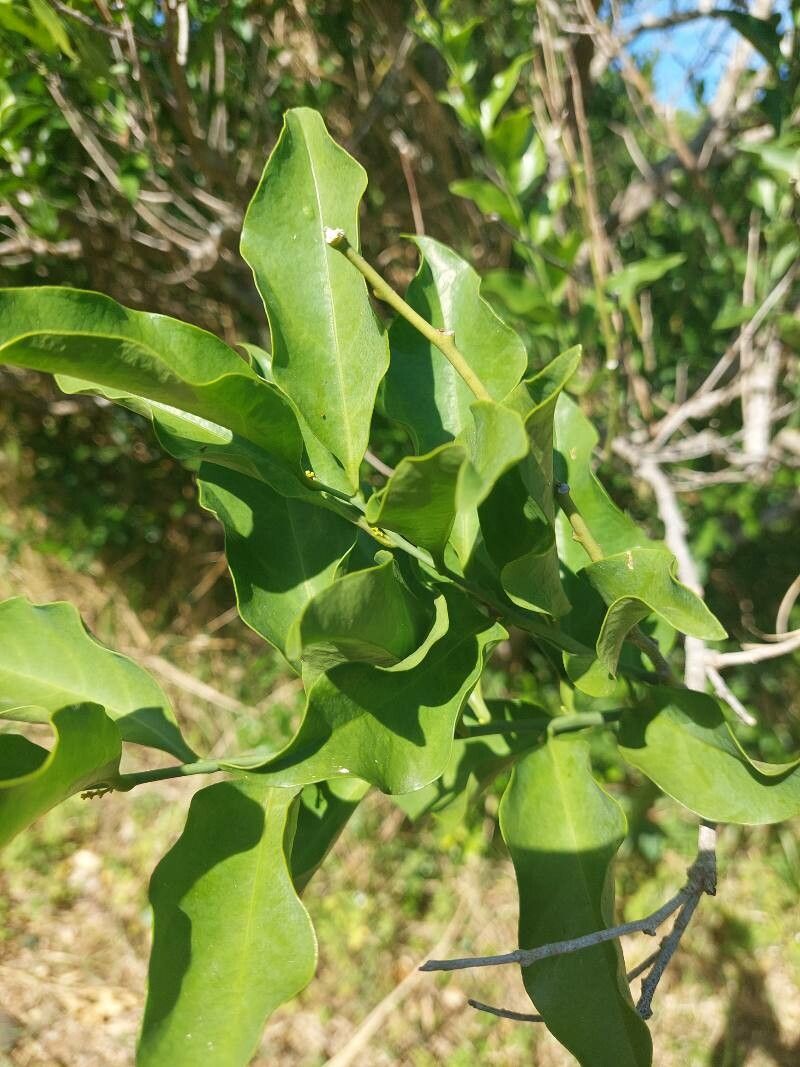
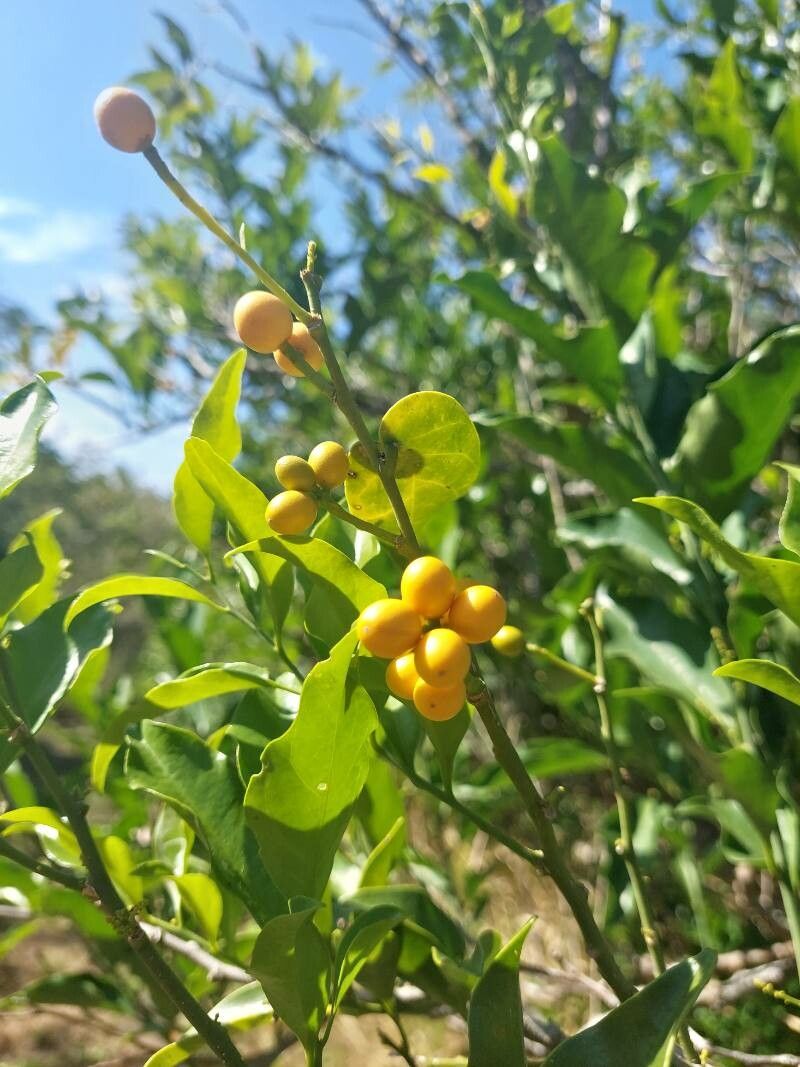
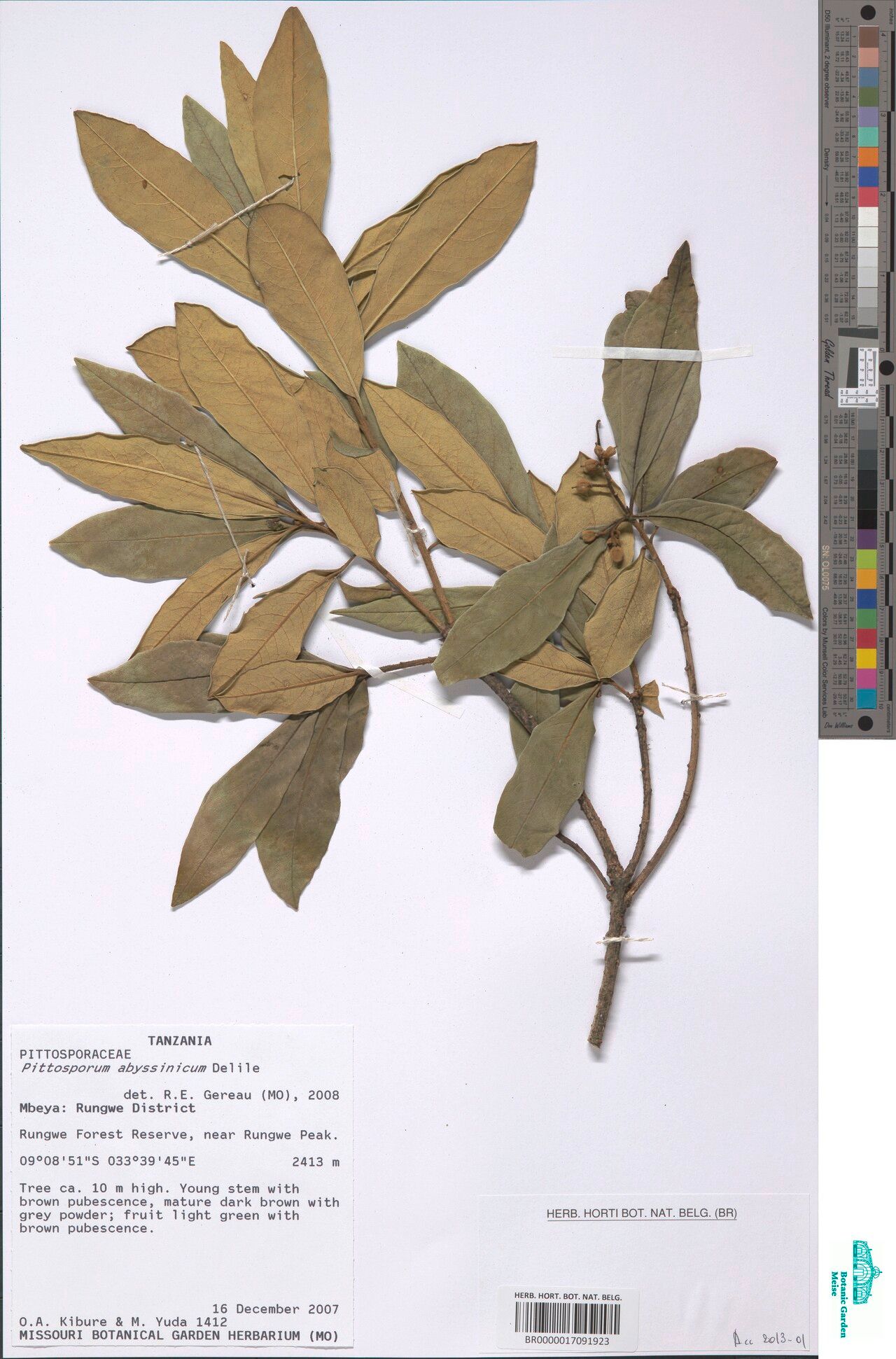
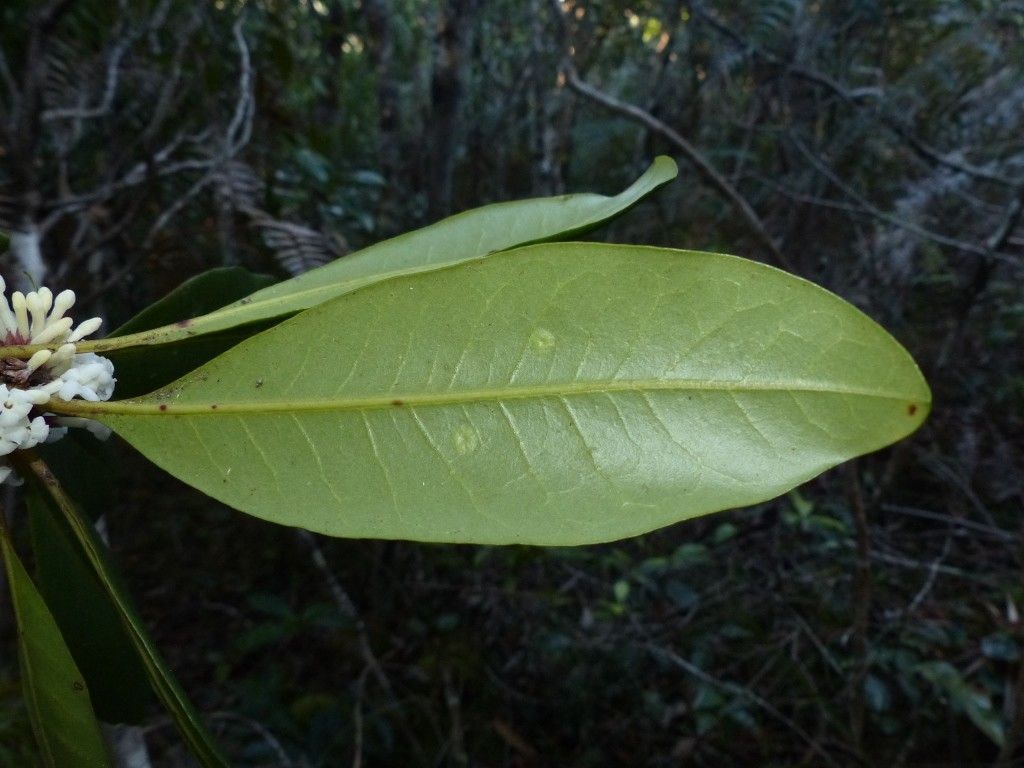
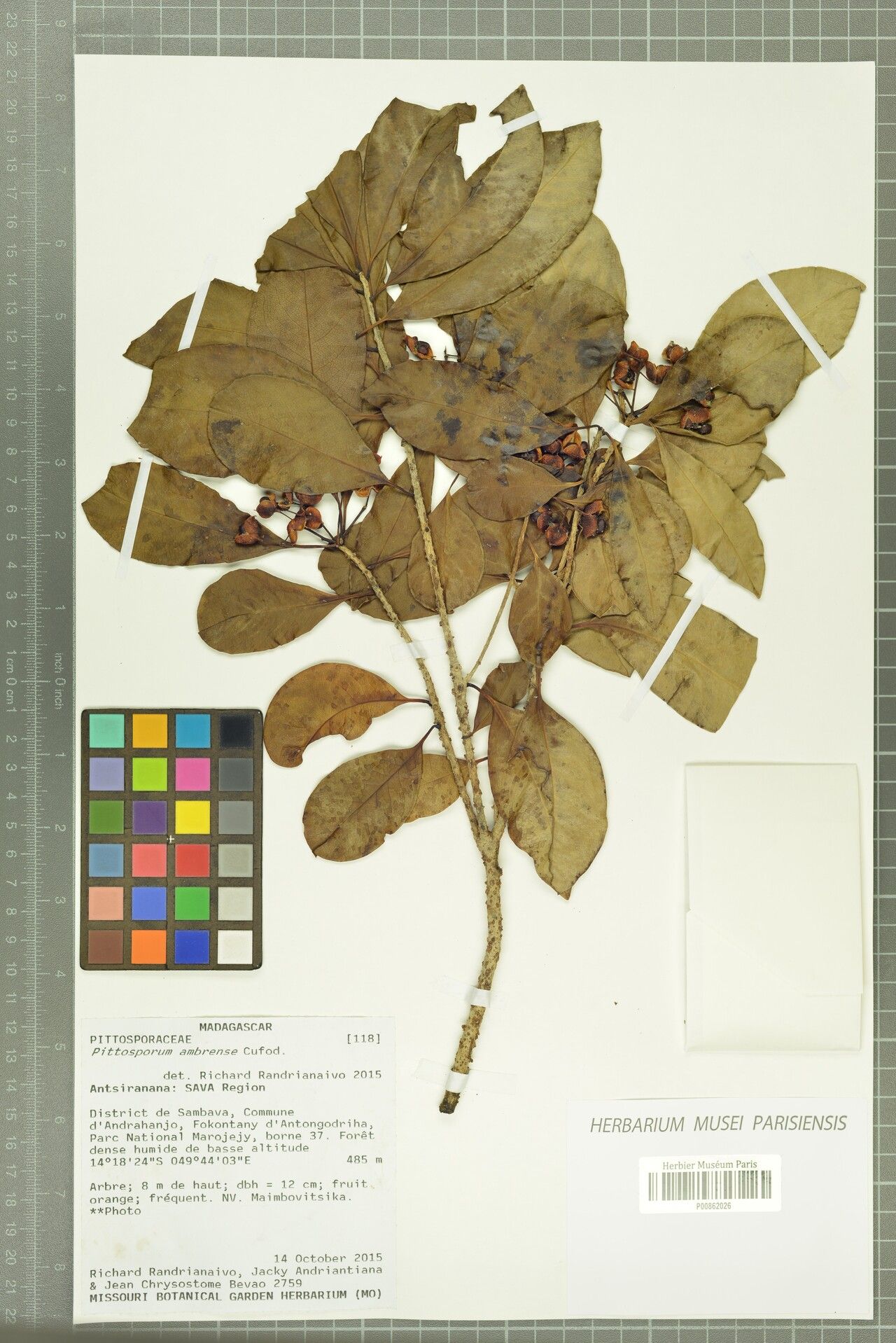
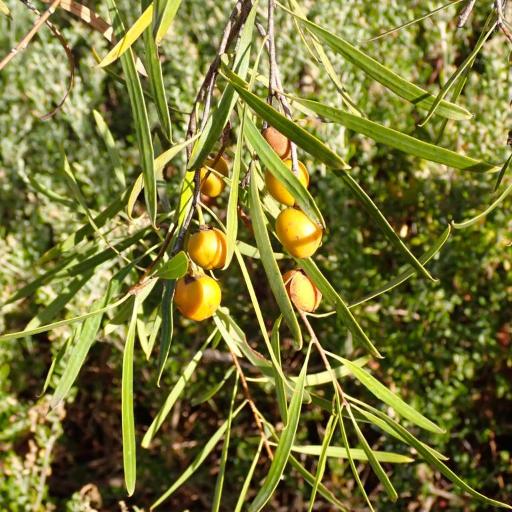
Pittosporum ( or ) is a genus of about 200 species of flowering plants in the family Pittosporaceae. The genus is probably Gondwanan in origin; its present range extends from Australasia, Oceania, eastern Asia and some parts of Africa. Citriobatus can be included here, but might be a distinct (though closely related) genus. They are commonly known as pittosporums or, more ambiguously, cheesewoods. The species are trees and shrubs growing to 2–30 m tall. The leaves are spirally arranged or whorled, simple, with an entire or waved (rarely lobed) margin. The flowers are produced singly or in umbels or corymbs, each flower with five sepals and five petals; they are often sweetly scented. The fruit is a woody seed capsule, which bursts on ripening to release the numerous seeds. The seeds are coated with a sticky resinous substance. The genus is named after their sticky seeds, from the Greek meaning "pitch-seed". Tarata (P. eugenioides) and kohuhu (P. tenuifolium) – both from New Zealand – and the Japanese cheesewood (P. tobira) from southern Japan are widely cultivated as ornamental plants in subtropical regions; pittosporums can also be grown indoors as bonsai. The petroleum nut (P. resiniferum) yields petroleum nut oil, which is sometimes proposed as biofuel; due to its excessive n-heptane content and consequent low octane rating, it is better suited as a source of n-heptane, which is otherwise produced from crude oil. Many herbivores detest the resinous pittosporums, in particular their seeds, which will stick anywhere. But some animals eat them with relish, for example the kea (Nestor notabilis), which likes P. anomalum fruit and seeds. The cottony cushion scale (Icerya purchasi) is a common pest on ornamental pittosporums (in particular the New Zealand species); the sac fungus Nectriella pironii often infects Japanese cheesewood.
How to keep Pittosporum Pentandrum.
Water
Taiwanese cheesewood thrives in well-draining soil and requires moderate watering, ideally every 2-3 weeks. It's important to let the soil dry out between waterings. This plant can tolerate short periods of drought and benefits from seasonal rain, which means you can reduce supplemental watering during the wetter months.
Pruning
Taiwanese cheesewood benefits greatly from regular pruning, which helps maintain its shape and encourages healthy growth. Key techniques include removing dead branches and thinning areas to improve airflow. The best time to prune is from early to late winter, as this reduces stress on the plant and promotes vigorous growth in the spring. Pruning during this period also enhances the plant's appearance and helps prevent disease.
Botanical profile.
- Plant Type
- Tree, Shrub
- Genus
- Pittosporum
- Family
- Pittosporaceae
- Mature Height
- 12 m
Other names.