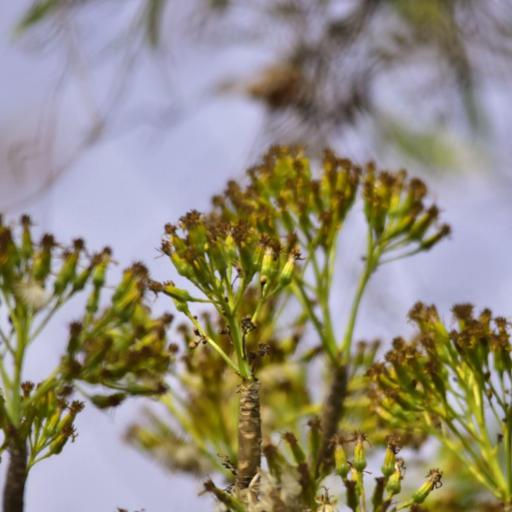
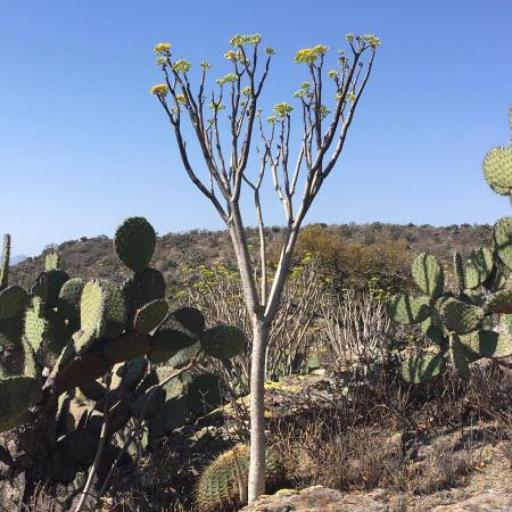
Pittocaulon praecox is the type species for the genus Pittocaulon and family Asteraceae. This species also has the widest range of the genus.
Broomstick tree is resistant to disease and is generally not susceptible to illnesses. In terms of care, this plant is fairly low-maintenance. When grown outdoors it needs minimal watering, and larger plants typically do not require pruning. Smaller plants, however, should be trimmed after they finish blooming. Broomstick tree is suitable for anyone with an outdoor area, such as a garden or deck, and does not demand much care experience.
How to keep Pittocaulon Praecox.
Light
The broomstick tree generally does best in locations that receive plentiful sunlight for most of the day. This abundant light promotes its healthy growth and supports its various developmental stages. Originating from sun-rich habitats, the plant can decline if it gets too little light, while excessive sunlight may also cause harm.
Temperature
Native to temperate regions, the broomstick tree prospers at temperatures of 68 to 95 °F (20 to 35 ℃). It is important to replicate these conditions throughout every season wherever it is cultivated.
Fertilizer
The best time to fertilize a Broomstick tree is in early spring, as it breaks dormancy. This encourages overall growth and flower development. Fertilization improves the foliage, stems, and branches, and promotes flowers that are large, vivid, and long-lasting. It assists in moving nutrients from the roots to the flowers and enhances the plant’s health and resistance to disease.
Botanical profile.
- Plant Type
- Shrub
- Life Cycle
- Perennial
- Genus
- Pittocaulon
- Family
- Asteraceae
- Hardiness Zone
- 10
- Mature Height
- 3.05 m to 4.88 m
- Mature Spread
- 1.22 m to 1.83 m
- Leaf Color
- Light Green
- Leaf Type
- Deciduous
- Flower Color
- Yellow
- Flower Size
- 1.02 cm to 1.52 cm
- Bloom Time
- Winter
- Planting Time
- Spring, Summer
- Harvest Time
- Late winter, Early spring, Mid spring
- Native Area
- Mexico