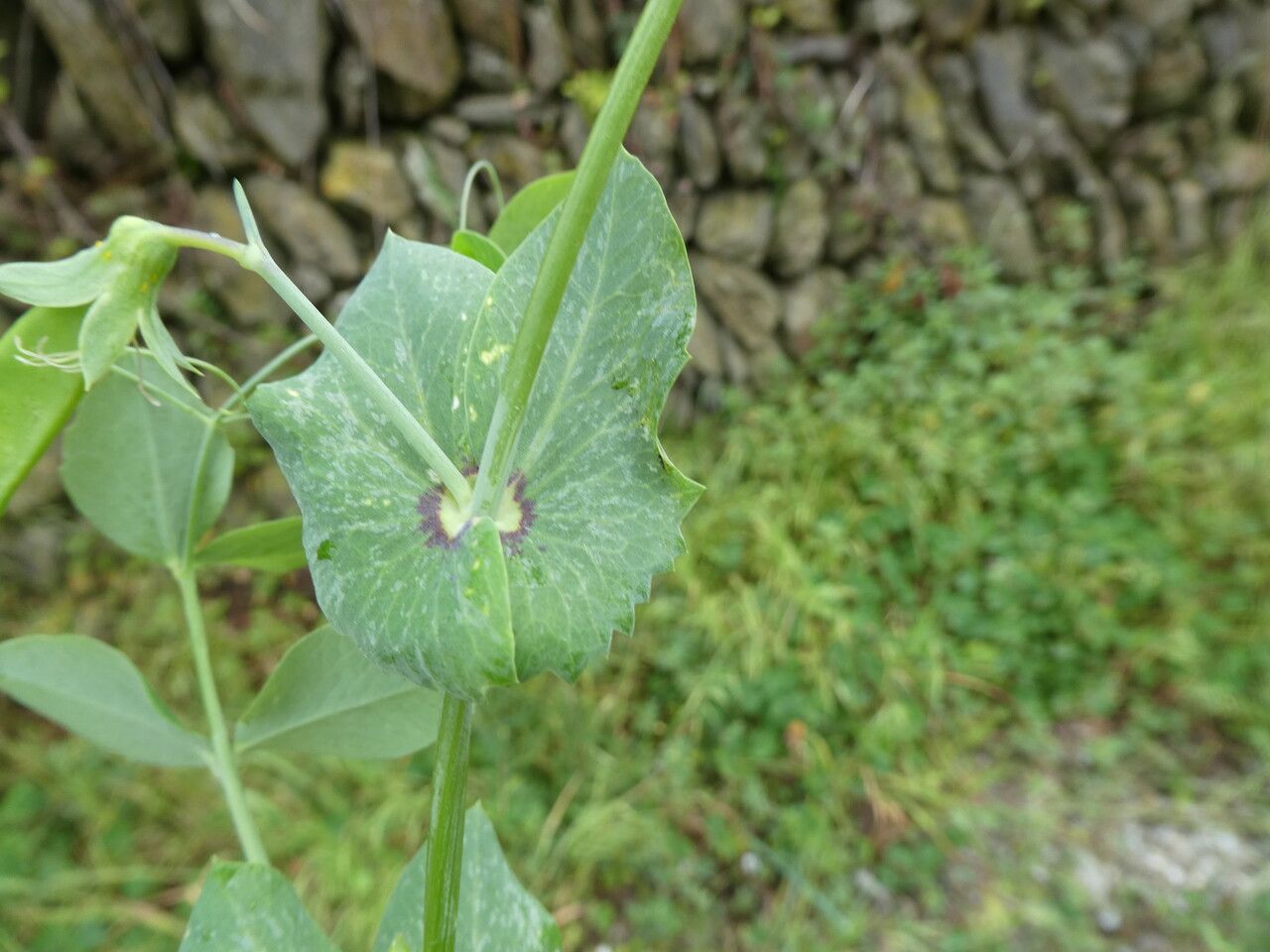
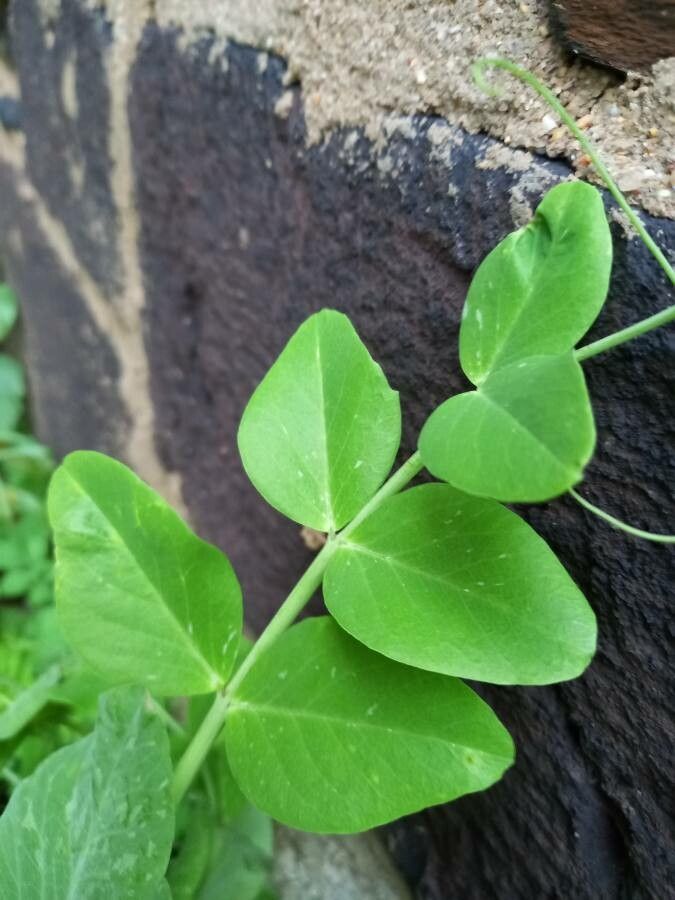
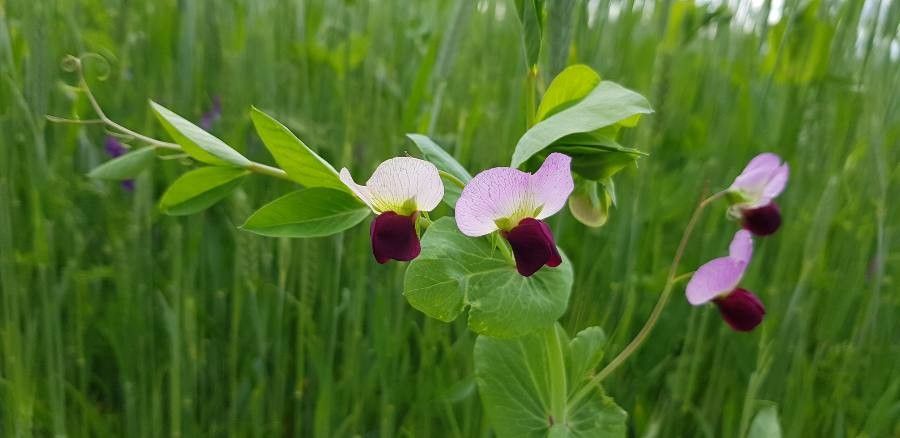
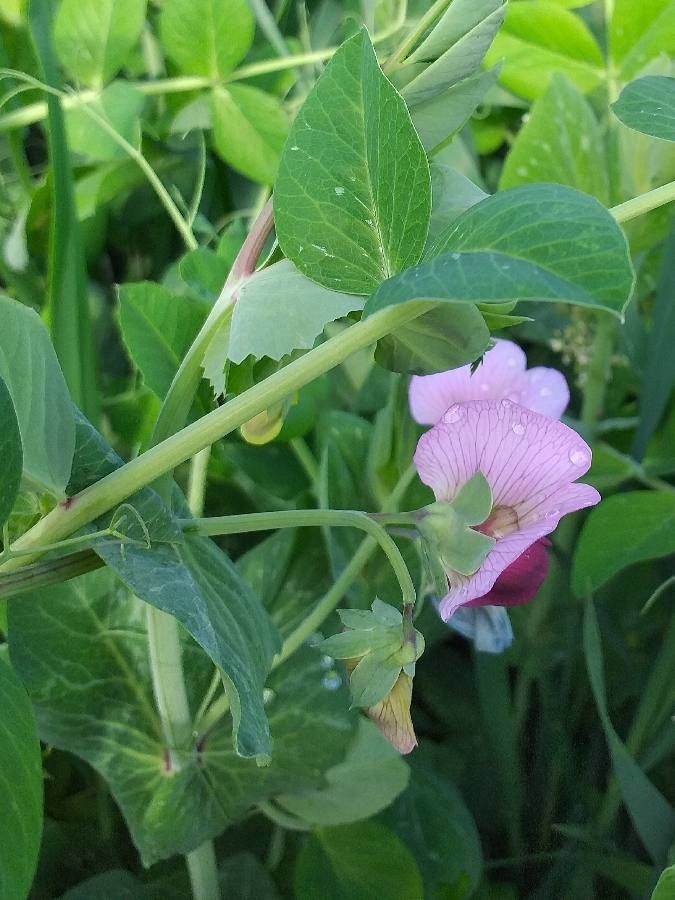
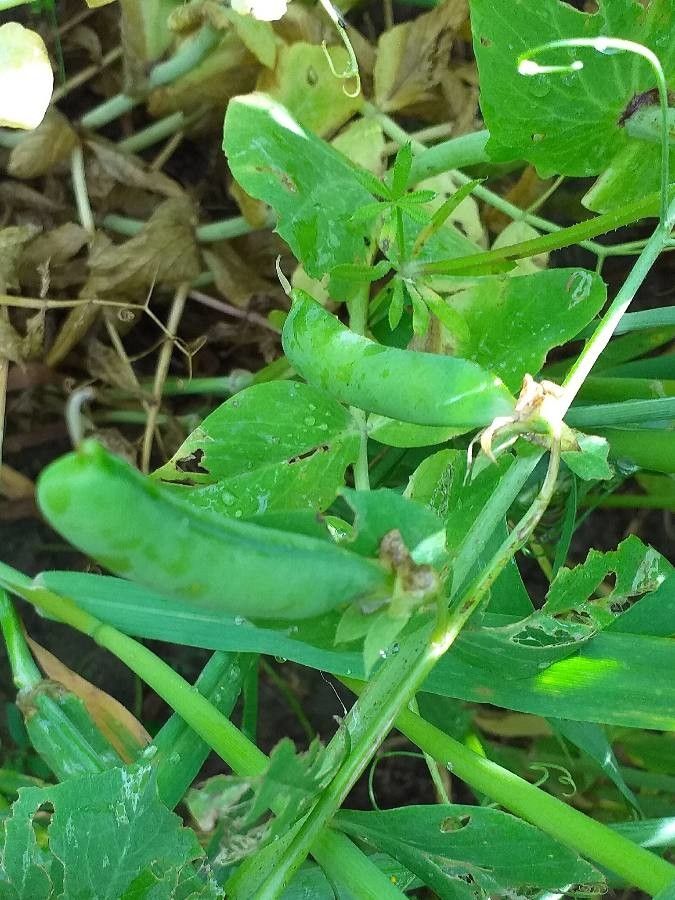
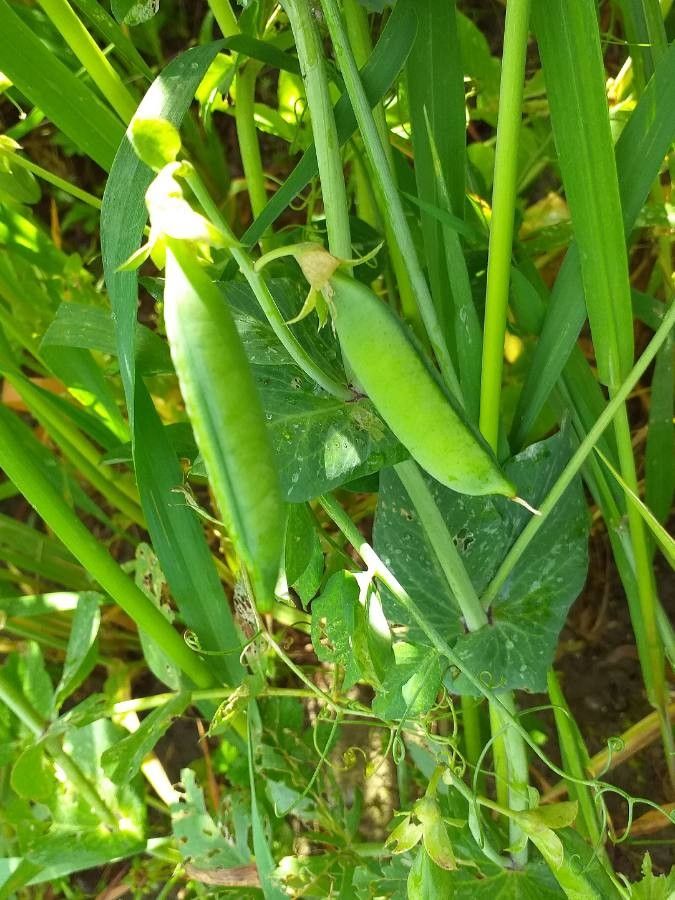
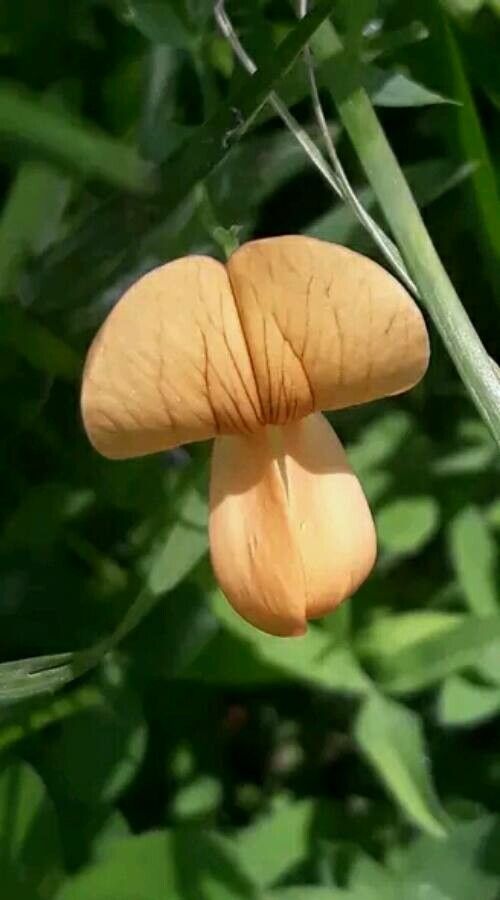
The pea is most commonly the small spherical seed or the seed-pod of the pod fruit Pisum sativum. Each pod contains several peas, which can be green or yellow. Botanically, pea pods are fruit, since they contain seeds and develop from the ovary of a (pea) flower. The name is also used to describe other edible seeds from the Fabaceae such as the pigeon pea (Cajanus cajan), the cowpea (Vigna unguiculata), and the seeds from several species of Lathyrus. Peas are annual plants, with a life cycle of one year. They are a cool-season crop grown in many parts of the world; planting can take place from winter to early summer depending on location. The average pea weighs between 0.1 and 0.36 gram. The immature peas (and in snow peas the tender pod as well) are used as a vegetable, fresh, frozen or canned; varieties of the species typically called field peas are grown to produce dry peas like the split pea shelled from a matured pod. These are the basis of pease porridge and pea soup, staples of medieval cuisine; in Europe, consuming fresh immature green peas was an innovation of early modern cuisine.
Pea: The term "pea" comes from the Latin word "pisum," which is derived from the Greek word "pison," a neuter form of "pisos." The common name for this plant follows its genus name, hence it is called "pea."
Pea has moderate resistance to disease and can be prone to ailments like leaf spot. Its vulnerability to insect pests varies by variety, but most varieties offer relatively low resistance to pests. Regarding care, Pea requires regular watering and fertilization, along with frequent removal of yellow leaves. It is essential to manage pests and diseases when they appear and to harvest the plant promptly. Pea is appropriate for people who can invest some time and energy in routine care.
How to keep Pisum Sativum.
Light
The pea grows best with plenty of sunlight during the day, which supports its healthy development. It can tolerate lower light, although that may limit optimal growth. Too much shade can produce frail plants, while excessive sun exposure may potentially damage the plant. Its native habitat has a comparable light profile.
Water
Originating from moderate climates, garden peas prefer consistent moisture and thrive in soil that is evenly moist but not waterlogged. Watering them twice a week is ideal. Primarily grown outdoors, garden peas need well-draining soil to make efficient use of water during irrigation.
Humidity
This plant will thrive in moderate humidity, which is probably the level in your home. However, misting it a few times a week can be very beneficial. Make sure the room has good ventilation.
Temperature
Native to temperate regions, pea favors temperatures between 68 and 100 °F (20 to 38 ℃). During hotter seasons, take care to keep it cool. In cooler winters, temperatures should not fall drastically below its preferred range.
Fertilizer
Pea produces nitrogen naturally through its root system, reducing the need for extra fertilizers. It thrives in well-draining soils, and depending on the soil composition, additional fertilization may not be required. However, low potassium or phosphorus levels can impede successful growth, while nitrogen deficiency is not a problem.
Pruning
The garden pea flourishes with proper pruning from early to late spring, which promotes healthy growth and abundant pod production. To achieve this, remove dead stems and thin out overcrowded areas to improve air circulation, reduce the risk of disease, and enhance blooming. Be sure to use clean, sharp tools for precise cuts to prevent infection.
Pot & Repot
When repotting Pea, choose a pot that's 1-2 inches (2.5–5.1 cm) larger in diameter and that has good drainage. Use a well-draining potting mix and consider adding perlite for extra drainage. Repot in spring or early summer, water thoroughly, and place it in a shady location at first.
Toxicity
Pea plants are safe to grow and eat, even for your pets.
Further reading →
The toxicity and danger assessments provided are for reference only. We do not assure their accuracy, so it's crucial not to depend on them. Seek professional advice when necessary for accurate guidance.
Botanical profile.
- Plant Type
- Vine, Herb
- Life Cycle
- Annual, Biennial
- Genus
- Pisum
- Family
- Leguminosae
- Hardiness Zone
- 2-11
- Mature Height
- 0.91 m to 1.83 m
- Mature Spread
- 15 cm to 30 cm
- Leaf Color
- Green
- Leaf Type
- Deciduous
- Flower Color
- White
- Flower Size
- 1.02 cm to 2.54 cm
- Bloom Time
- Mid spring, Late spring, Early summer
- Planting Time
- Spring, Autumn
- Harvest Time
- Early summer, Mid summer
- Native Area
- Europe
Other names.
Reader questions.
How should I water my Garden pea plant in the best way?
The Garden pea has specific preferences for both the amount of water it receives and the method of watering. To avoid damaging your tomatoes, it is important to use the correct watering technique. The best approach is to apply the water directly to the soil, in a slow and gentle manner. It is not advisable to pour all of the water into the soil at once or practice overhead watering for your Garden pea. While watering slowly, make sure to also water deeply, ensuring adequate moisture throughout the soil where your Garden pea is growing.
Why is it important to put fertilizer on my garden peas?
Garden pea can be grown in various types of soil as long as they have good drainage. Depending on the soil content, fertilization may not be necessary. If the soil lacks potassium or phosphorus, it may not support successful growth of Garden pea. However, if the soil is only deficient in nitrogen, this crop should thrive without fertilizer.
What are the sunlight requirements for garden peas?
Garden peas require above 6 hours of sunlight (full sun) for optimum growth, but they can also manage in about 3-6 hours of sunlight (partial sun). It's important to observe the movement of sunlight through your garden to find spots that provide the right balance of light and shade for your plants. Insufficient sunlight could hinder a pea plant's development, leading to frail, weak growth, while too much sun exposure may harm the plant. The native habitat of garden peas supports this light profile, indicating its preference for abundant sunlight throughout the day.
What is the preferred temperature range for Garden peas?
Garden peas, known botanically as Pisum sativum, thrive best in temperate regions with preferred temperatures ranging from 68 to 100°F (20 to 38°C). These plants adapt well to relatively warm temperatures, making it crucial to maintain conditions above 20°C, especially during winter cultivation to encourage growth. It's important to keep the minimum temperature above the freezing point to avoid freezing damage. In colder winter conditions when the temperature approaches -5°C (25°F), it's advisable to shelter the Garden pea either by moving it indoors or by using protective measures such as setting up a temporary greenhouse or wrapping the plant with materials like plastic film or fabric.
What do I do if I give my Garden pea too much or too little water?
If you have overwatered your Garden pea and are worried about the risk of disease, take immediate action. The best way to deal with an overwatered Garden pea is to remove it from its current spot. Let the roots dry a bit before replanting it in a new location with well-draining soil. If you are growing in pots, consider moving the plant to a pot with better drainage. On the other hand, if you have underwatered your plant, simply water it more frequently.
When should I put fertilizer on my Garden pea?
When planting Garden pea, it is recommended to include compost or manure. If you prefer liquid fertilizer, a small amount can be added once the seedlings start to appear. It is generally advised to only fertilize Garden pea once throughout its growth cycle. In order to improve the soil, fertilizers that are high in phosphorus and potassium can be added the year before planting Garden pea.
How does artificial lighting support plant growth indoors?
Indoor plants, including garden peas, require adequate lighting for optimal growth, especially when natural sunlight is insufficient, such as during winter or in less sunny spaces. Artificial lighting, like LED lights, can offer a vital solution by providing customizable wavelengths of light that mimic natural sunlight conditions. For full sun plants, 30-50W/sq ft of artificial light is recommended, 20-30W/sq ft for partial sun plants, and 10-20W/sq ft for full shade plants. The light source should be placed 12-36 inches above the plant to mimic natural sunlight, and most plants need 8-12 hours of light per day.
How do Garden peas react to low temperatures, and what should be done?
Garden peas have a moderate tolerance to low temperatures, thriving optimally between 20°C and 38°C. During winter, it's crucial to maintain the temperature above 0°C to prevent the plant from freezing. If temperatures drop below -40°C, the leaves may darken, and symptoms such as water-soaked necrosis, wilting, drooping, and a gradual browning of the leaves may occur. To address these issues, trim the frost-damaged parts and immediately move the plant to a warmer environment indoors or set up a makeshift greenhouse for protection. Ensure the plant is near a south-facing window for ample sunlight when indoors, and consider supplemental lighting if natural light is insufficient.
How much should I water my garden pea?
Garden pea needs a lot of water during its growing season. To meet this need, water it frequently from spring to summer. At the beginning of the season, water once or twice a week. As the season progresses, increase watering frequency, potentially watering twice a day in summer. Once the major growth phases have passed, you can water it once a week until the end of the growing season.
When is it better for me not to put fertilizer on my Garden pea?
To prevent harm to the environment and avoid introducing excessive nitrogen into the soil, it is advisable to refrain from overfertilizing Garden pea. It is generally best to use a gentle approach when fertilizing this plant, and ideally, you can skip fertilizing altogether. By doing so, you not only save time and effort in the growing process, but also increase the chances of a successful harvest.
What are the symptoms of light deficiency in garden peas?
When garden peas are grown indoors with limited light, they may show symptoms of light deficiency such as lighter-colored new leaves, indicating a lack of chlorophyll and essential nutrients, and leggy or sparse growth, where the plant becomes thin and stretched. Additionally, slower or no new growth may occur, leading to a halt in leaf production. While insufficient sunlight can have adverse effects on flowering and fruiting, excessive sunlight can cause chlorosis (leaves turning yellow), sunscald (damage from intense sunlight exposure), leaf curling (to minimize water loss), wilting (due to increased water loss), and leaf scorching (brown, dry edges on leaves).
What are the effects of high temperatures on Garden peas, and how can they be mitigated?
Garden peas should ideally be kept below 38°C during the summer months. Temperatures exceeding 43°C can stunt the plant's growth, lighten the color of its leaves, and increase susceptibility to sunburn. To mitigate these effects, trim away any sunburned and dried-up parts. Relocate the plant to a shaded spot, particularly away from the harsh afternoon sun. Watering the plant in the morning and evening helps keep the soil adequately moist and supports the plant's health under high temperature stress.