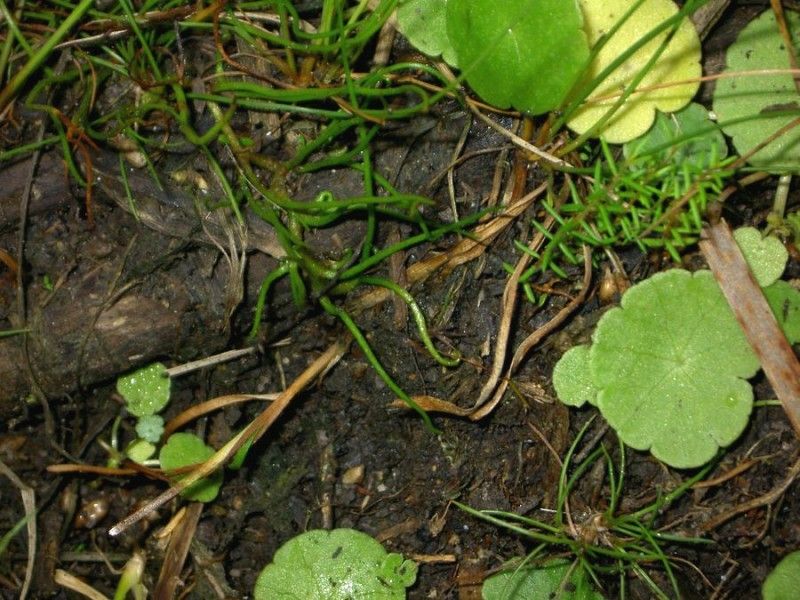
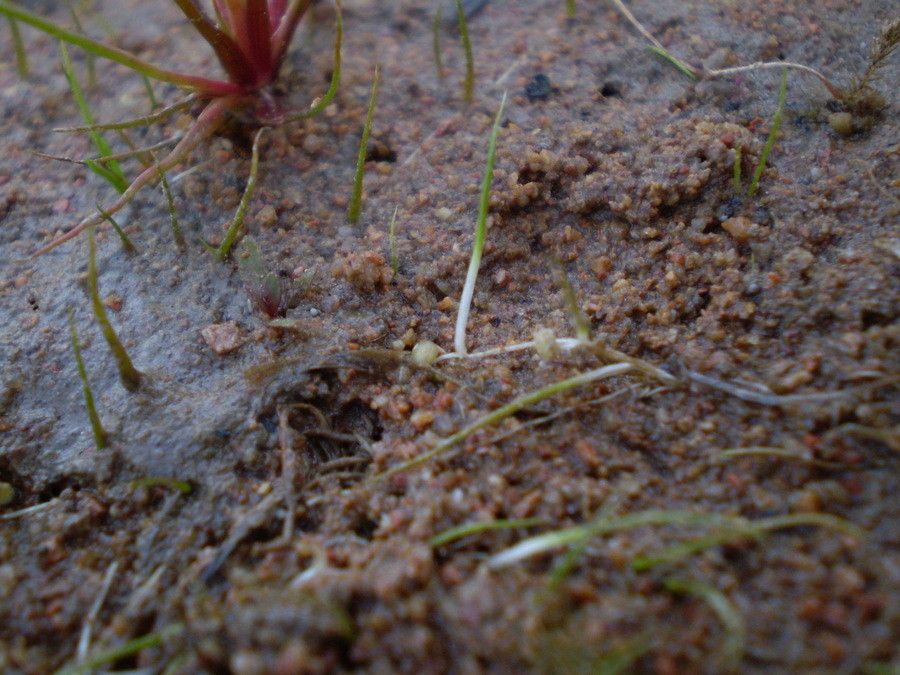
Pilularia globulifera, commonly known as pillwort, is a small aquatic fern in the Marsileaceae family. Native to Europe and North America, it thrives in shallow freshwater habitats like ponds, lakes, and slow-moving streams.
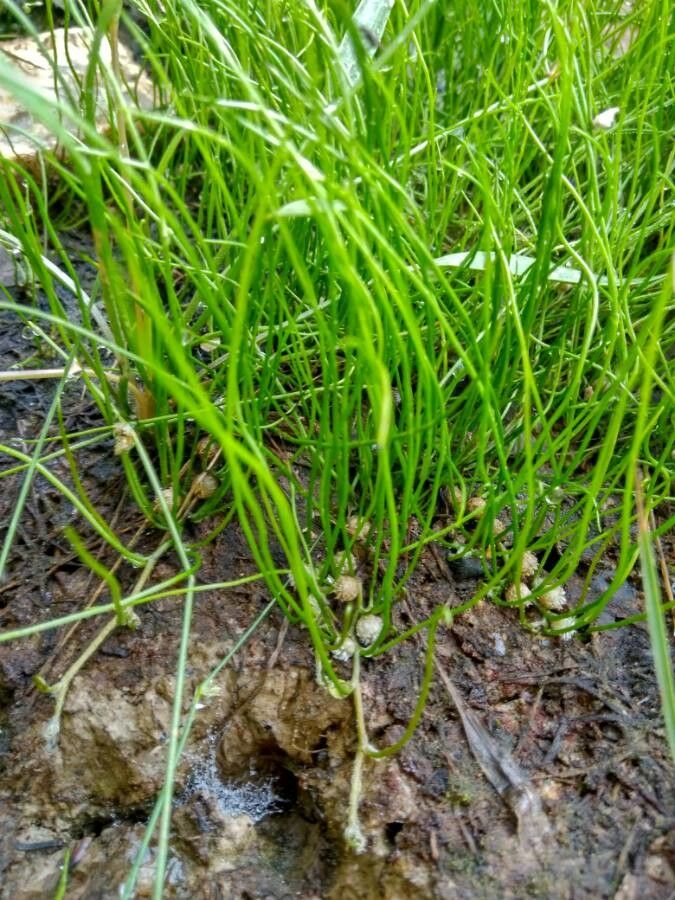
The plant is easily recognizable by its small, spherical sporocarps, which resemble tiny pills or beads. These sporocarps contain the plant's reproductive structures and often float on the water's surface.
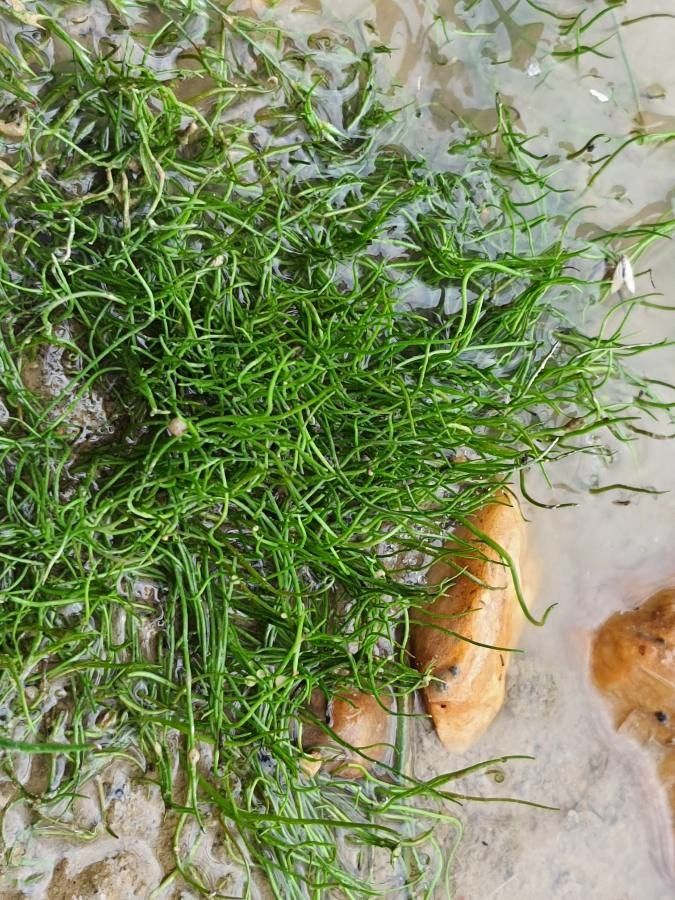
Pilularia globulifera features simple fronds with narrow leaflets arranged in pairs along a central stem. While fronds can grow up to 20 cm in length, they are typically much shorter.
This plant plays a crucial role in aquatic ecosystems by providing habitat for various organisms, including insects, snails, and fish, and by stabilizing sediments on the bottom of water bodies.
Despite its ecological significance, Pilularia globulifera is considered rare or endangered in some regions due to habitat loss from human activities such as agriculture and urbanization.
In summary, Pilularia globulifera is an intriguing fern species vital to freshwater ecosystems. However, its rarity necessitates conservation efforts to ensure its continued survival.
Pillwort typically shows strong disease resistance and attracts relatively few insect pests. Its care is considered demanding because it needs a consistently moist environment and frequent watering. At the same time, the roots are susceptible to rot if overwatered or if the surroundings lack adequate ventilation. Pillwort is best suited to people with some growing experience, as most can keep it alive for a period. Even so, it may struggle to thrive and its leaves can dry out and become less healthy over time.
How to keep Pilularia Globulifera.
Light
The pillwort does best when it receives abundant sunlight throughout the day. A shortage of such light can weaken its growth and vigor. Coming from habitats where sunlight is plentiful, it has adapted to use sun exposure for optimal growth at every stage, showing very little tolerance for shaded conditions. Neither excessive nor insufficient light prevents its survival, preserving its health and development.
Water
Pillwort thrives in moist, high-humidity environments and requires consistent moisture to survive. To mimic its natural habitat, it's essential to water it twice a week. As an aquatic fern, regular watering is vital for its growth cycles and is crucial for maintaining the health and vitality of its delicate fronds.
Temperature
Pillwort is native to habitats with temperate temperatures between 59 and 89.6 °F (15 to 32 ℃). It does best in these conditions and may require adjustments to seasonal temperature fluctuations to maintain optimal growth.
Fertilizer
To promote the optimal growth of pillwort, apply a high-nitrogen fertilizer twice a month during the growing season and once every three months during dormancy. Use diluted amounts to boost leaf production while minimizing nutrient runoff. Adjust the frequency of application according to the plant's growth stages to maintain its resilience and vitality.
Pruning
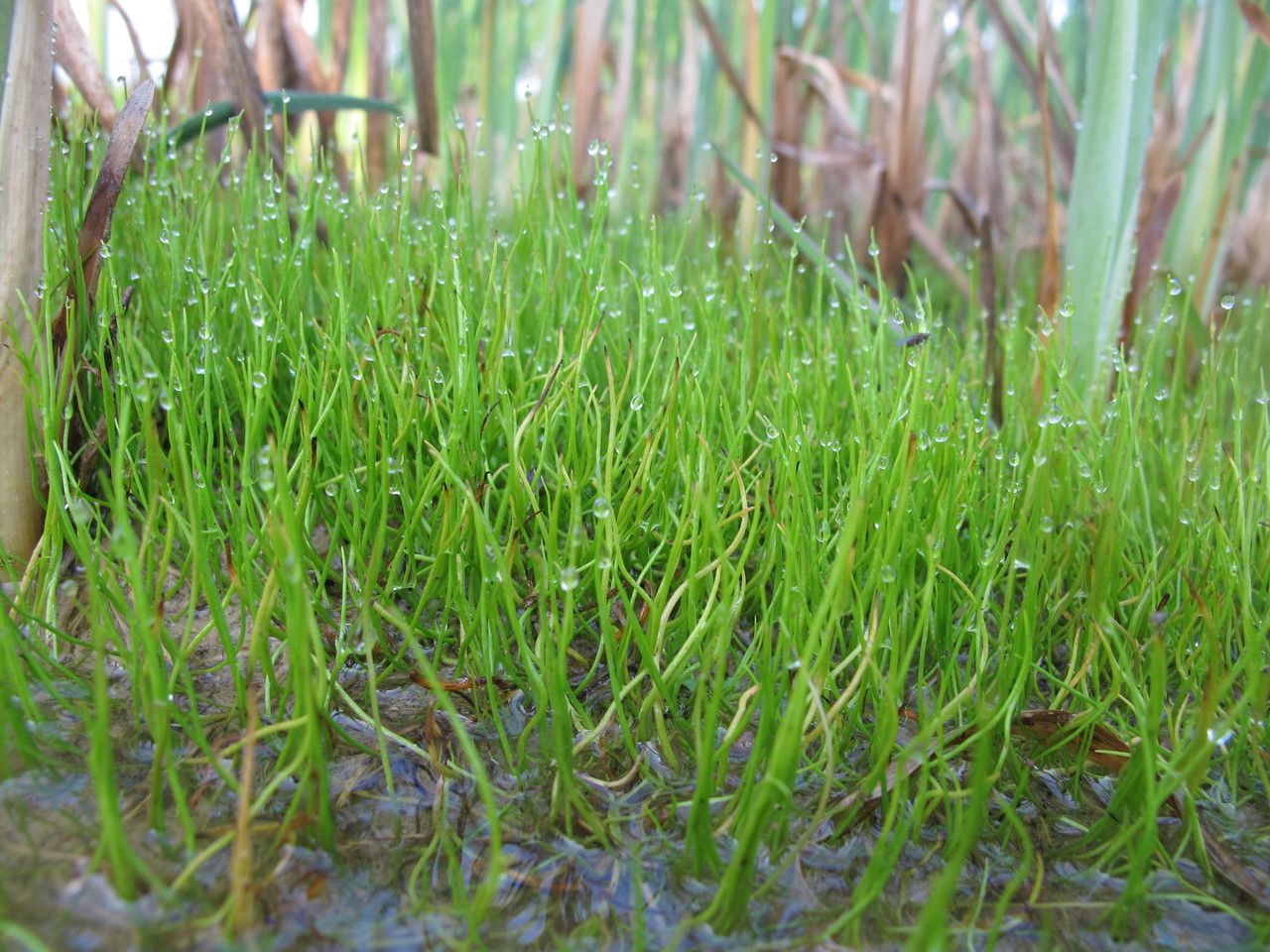
Pillwort has a grass-like appearance with small spores and requires minimal pruning. The best time to prune is in early spring. This process involves removing dead fronds, which helps promote healthy growth, prevent overcrowding, improve air circulation, and reduce the risk of disease. These steps support the plant's overall vitality.
Botanical profile.
- Plant Type
- Fern
- Life Cycle
- Perennial
- Genus
- Pilularia
- Family
- Marsileaceae
- Hardiness Zone
- 8
- Mature Height
- 20 cm
- Mature Spread
- 20 cm
- Leaf Color
- Green
- Leaf Type
- Semi-evergreen
- Planting Time
- Spring, Autumn
- Native Area
- Sweden, Czech Republic, Poland, Croatia, Slovenia, Serbia, Russia, Norway, Germany, Portugal, Italy, Kazakhstan, Spain, Switzerland, Denmark, Estonia, Finland, France, Ireland, United Kingdom, Belgium, Netherlands
Other names.
Reader questions.
What are the sunlight requirements for Pillwort (Pilularia globulifera)?
Pillwort, known botanically as Pilularia globulifera, thrives best when exposed to full sun, which means it requires above 6 hours of sunlight daily to grow optimally. Originating from environments with abundant sunlight, it has adapted to utilize sunlight efficiently for growth at all its stages. Although it can survive some variations in light exposure, to ensure its health and growth, providing a location where it can receive ample sunlight is crucial. Indoor plants may require artificial lighting to meet their light needs, especially in conditions where natural sunlight is insufficient.
What is the ideal temperature range for growing Pillwort?
Pillwort, or Pilularia globulifera, thrives in temperate environments with temperatures ranging between 59 to 89.6 °F (15 to 32 °C). It is adapted to these conditions for optimal growth, indicating the necessity for seasonal temperature adjustments to maintain its health. Despite its strong cold resistance, ensuring it is not exposed to temperatures below -10°C without protection is crucial. To shield Pillwort from extreme cold, employ protective measures such as covering it with soil or straw. Additionally, watering the plant abundantly before the first freeze in autumn helps keep the soil moist, preventing drought and water scarcity during the winter and early spring months.
How can artificial lighting be used for Pillwort if natural sunlight is insufficient?
When natural sunlight is not sufficient for Pillwort, especially for indoor settings or during less sunny seasons, artificial lighting serves as a vital solution to ensure optimal growth. Optimal artificial lighting involves choosing the right type of light, such as LED lights, which can be customized to provide specific wavelengths needed by the plant. Full sun plants generally require 30-50W/sq ft, partial sun plants need 20-30W/sq ft, and full shade plants require 10-20W/sq ft of artificial light. The light source should be placed 12-36 inches above the plant, mimicking natural sunlight conditions and should be kept on for 8-12 hours per day depending on the plant species needs.
How does low temperature affect Pillwort and what should be done?
Pillwort is cold-tolerant, favoring temperatures above 15°C. During the winter, it is crucial to keep it above -5°C to avoid any detrimental effects. When temperatures drop below -10°C, Pillwort may not exhibit any noticeable changes immediately; however, the impact may manifest in spring with decreased sprouting or complete absence thereof. To mitigate this, it's advisable to remove any parts that failed to sprout in the spring, ensuring the plant maintains its vitality for the coming season.
What are common symptoms of inadequate sunlight for Pillwort?
Inadequate sunlight can lead to several symptoms in Pillwort, including small or lighter-colored new leaves, leggy or sparse growth, faster leaf drop, and in severe cases, slower or halted new growth. Chlorosis, or the yellowing of leaves due to a lack of chlorophyll, can also occur, along with sunscald, which results from intense sunlight exposure causing damage to leaves. Leaf curling, wilting, and leaf scorching are additional symptoms indicating that the light conditions are either too excessive or insufficient for the Pillwort's needs.
What impact does high temperature have on Pillwort, and how can it be managed?
During the summer months, it is essential to keep Pillwort's temperature below 32°C. Exceeding 35°C can cause its leaves to lighten in color and become susceptible to curling and sunburn. Managing these symptoms involves trimming away sunburned and dried parts of the plant and relocating it to a shaded area or employing a shade cloth to protect it from the harsh midday and afternoon sun. Additionally, watering the plant in the morning and evening is crucial to maintain soil moisture and protect the plant from heat stress.
What are the recommended solutions for Pillwort facing inadequate sunlight?
For Pillwort facing inadequate sunlight, gradual relocation to sunnier spots is recommended to allow the plant to adapt without experiencing shock. For indoor plants, this could mean moving the plant closer to a south-facing window or using artificial lights such as desk, ceiling lamps, or professional plant grow lights for at least 8 hours daily. Outdoors, gradually introducing the plant to sunnier locations weekly is advised. Minimizing obstructions to sunlight, such as by pruning tree branches, and for smaller plants, considering transplanting during their dormant period to a spot with better light and drainage can greatly improve their sunlight intake and overall health.