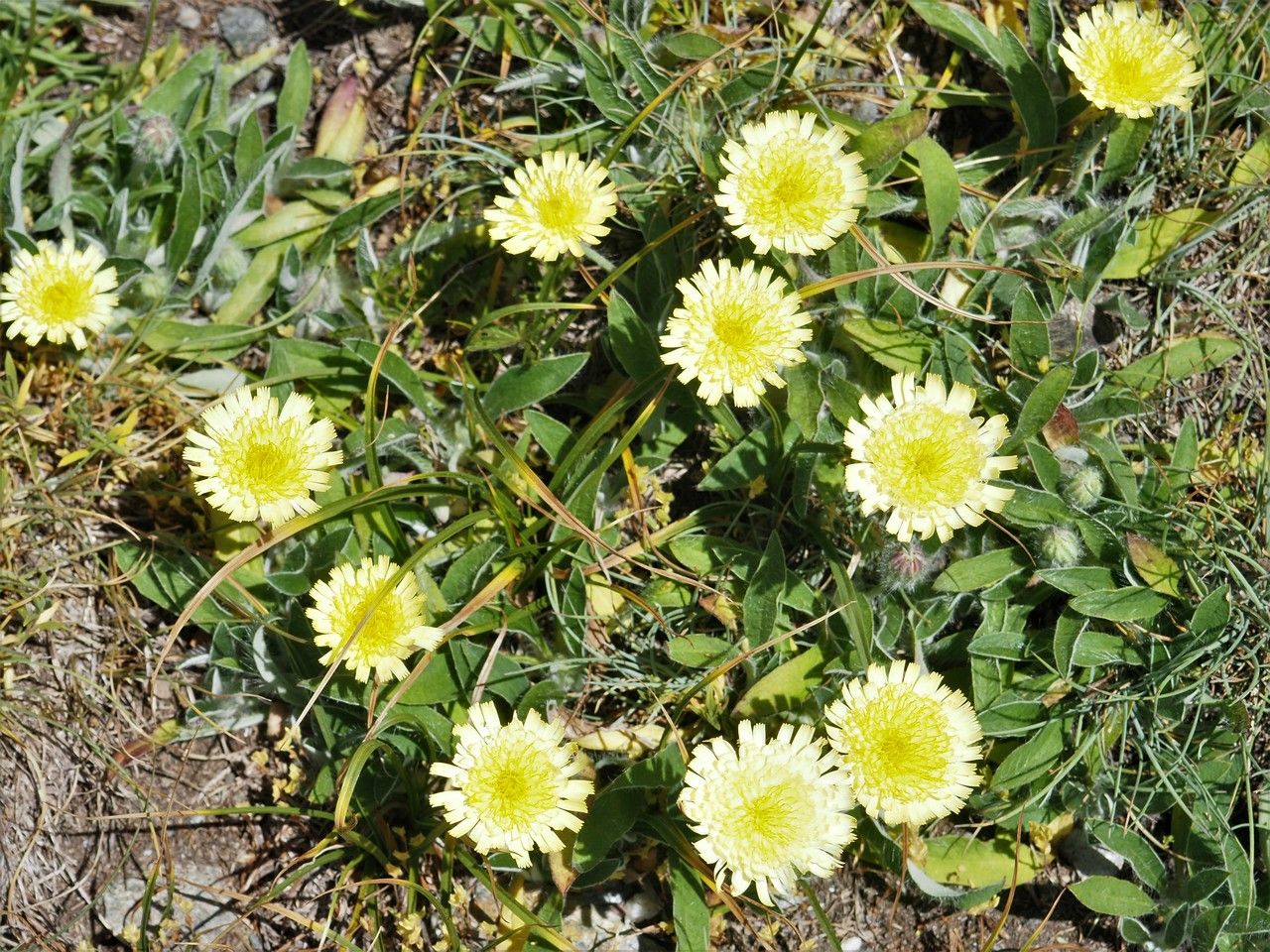
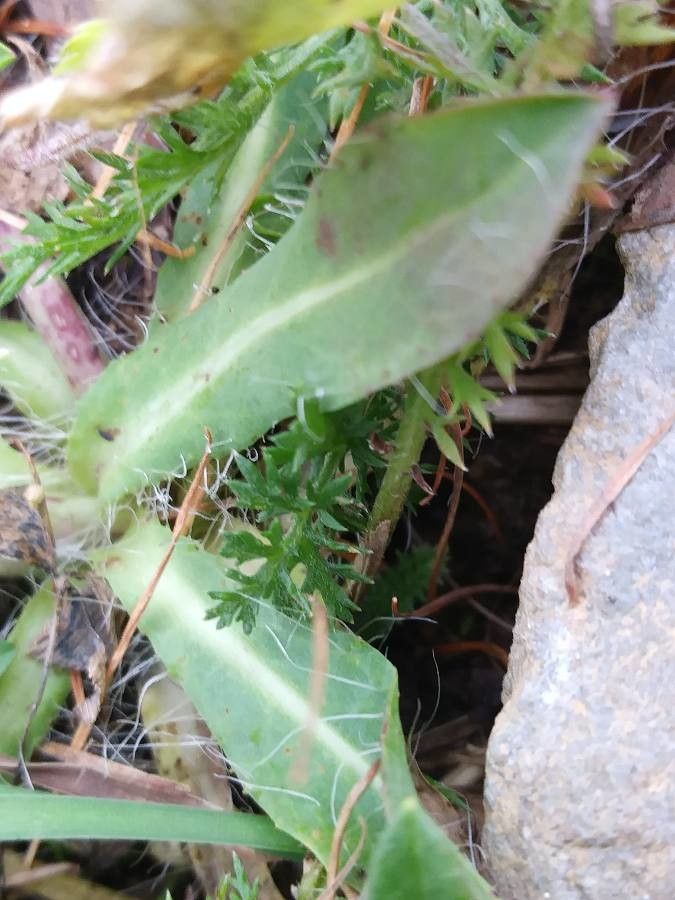
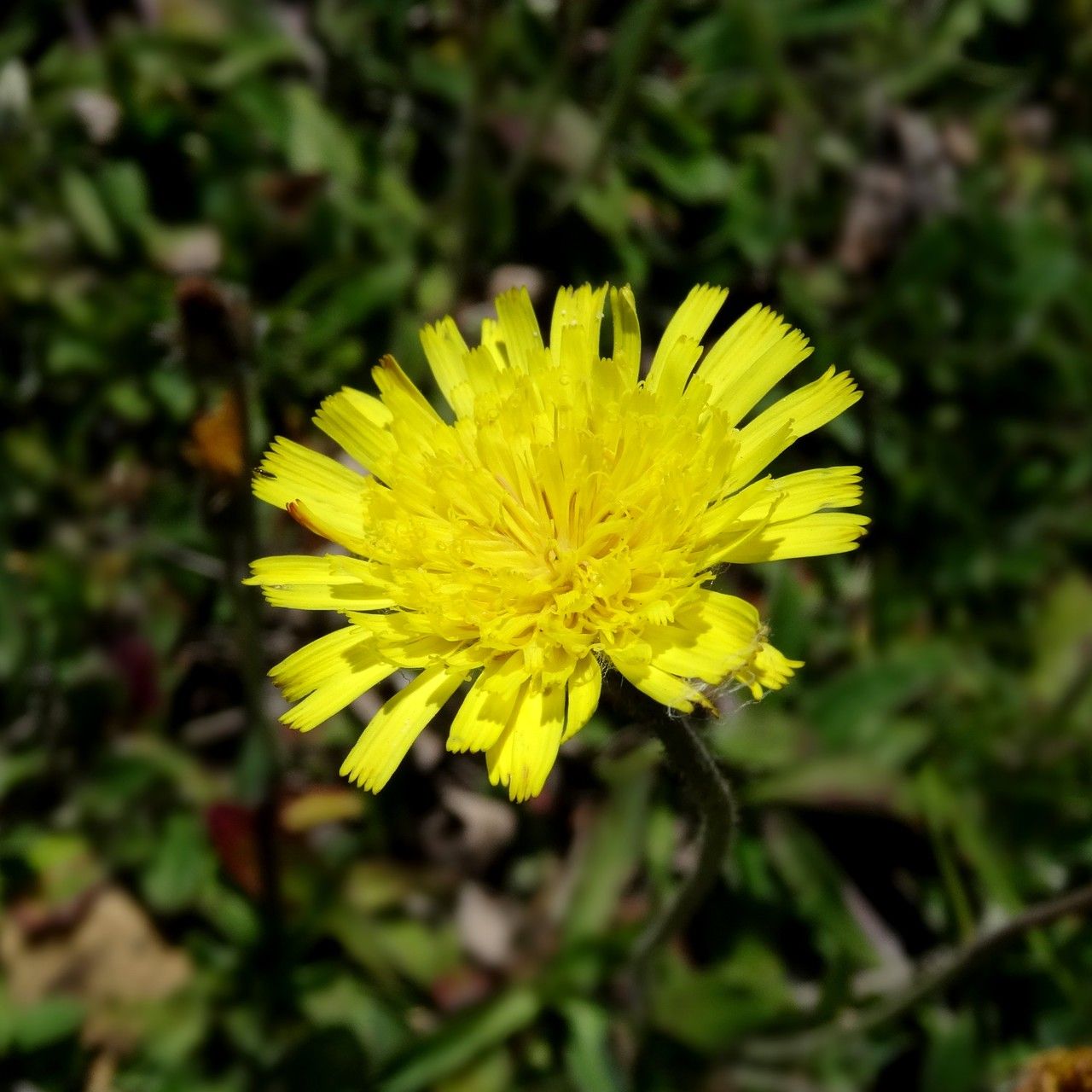
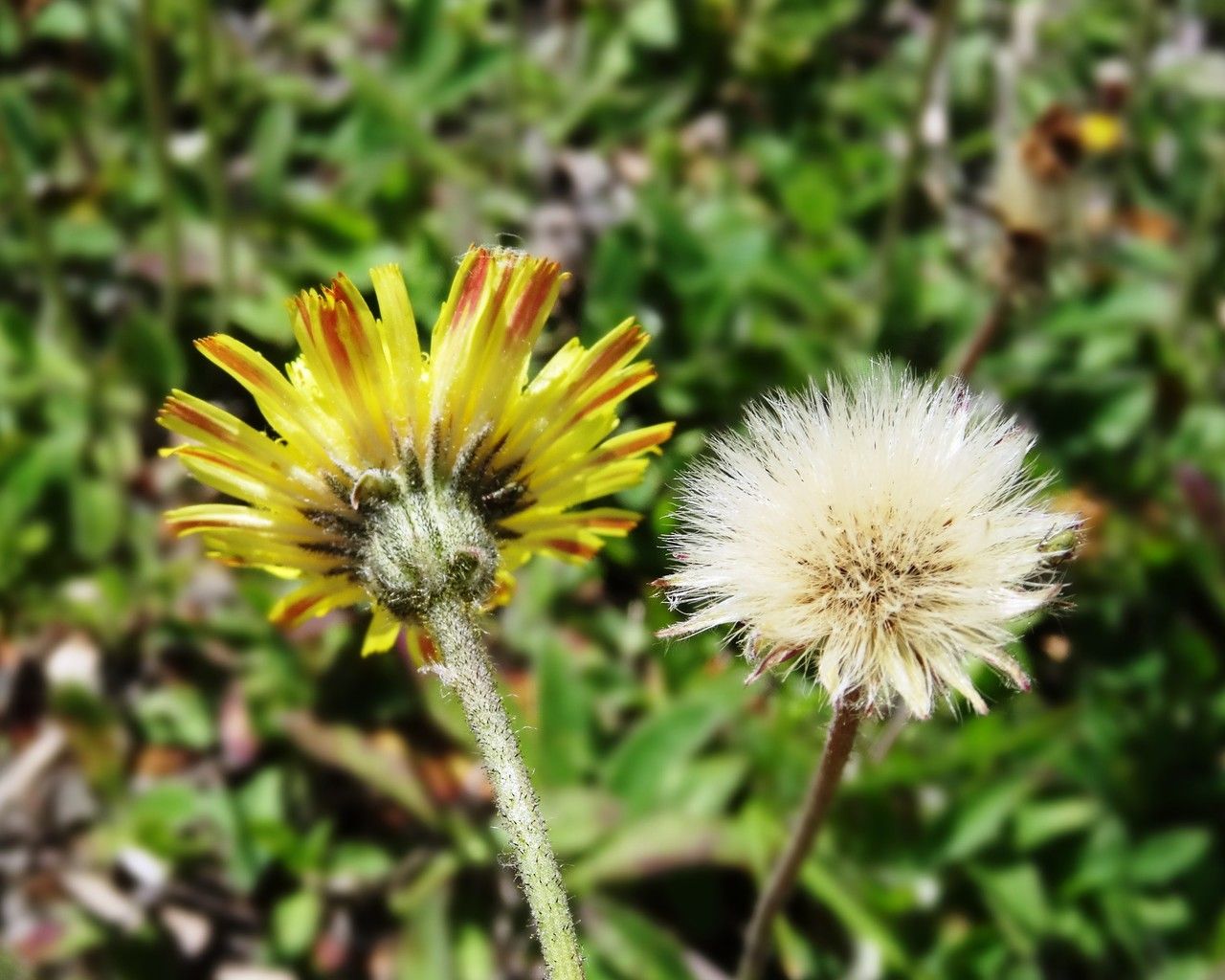
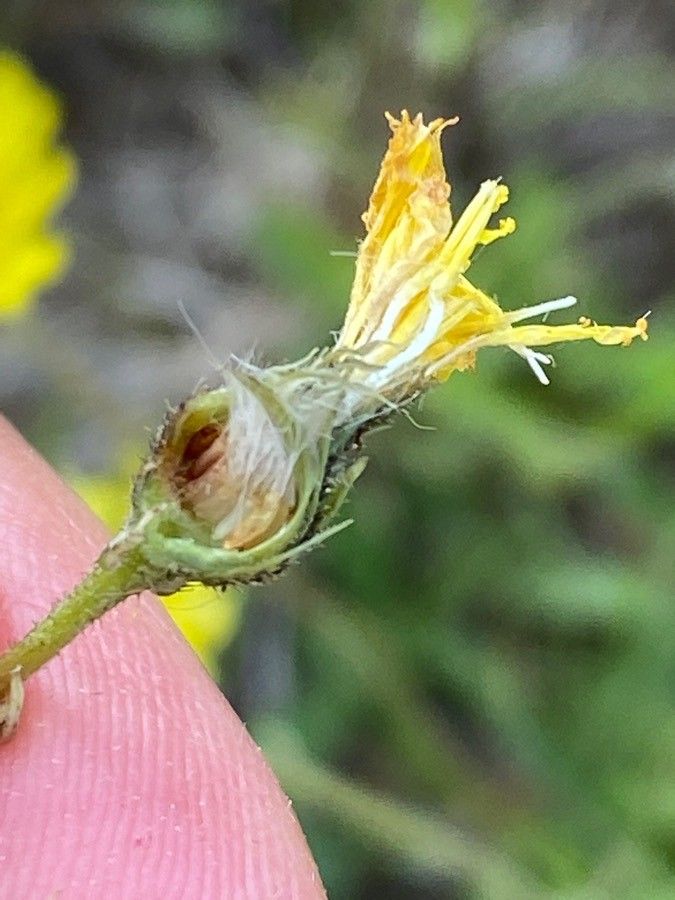
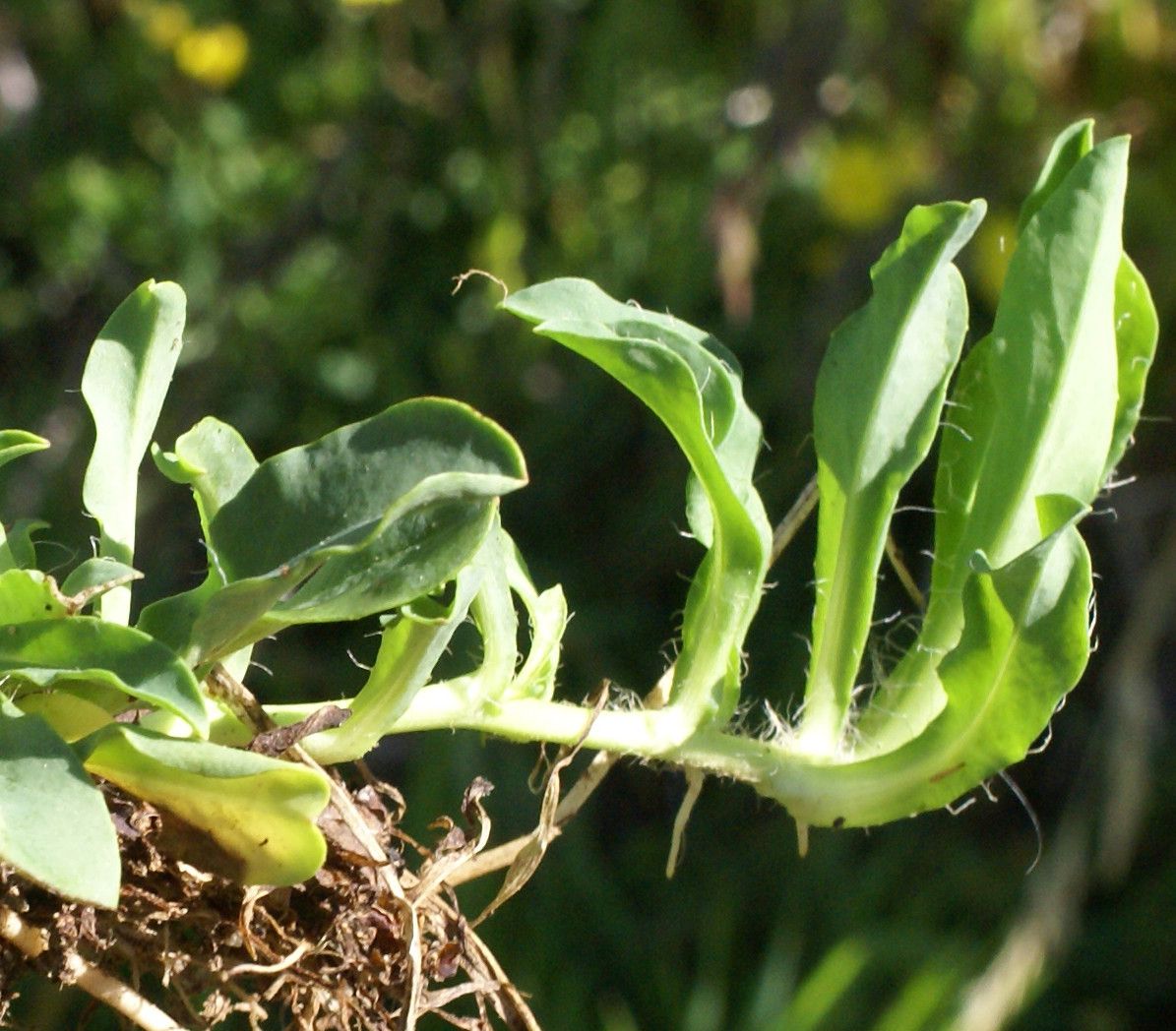
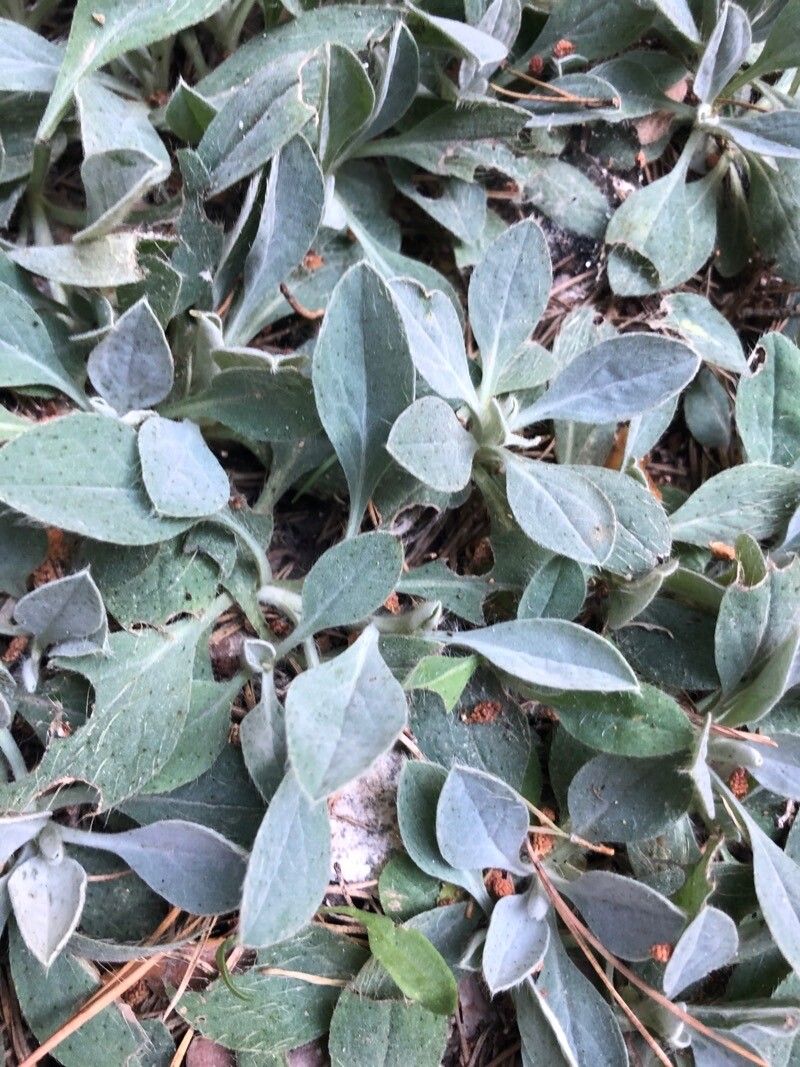
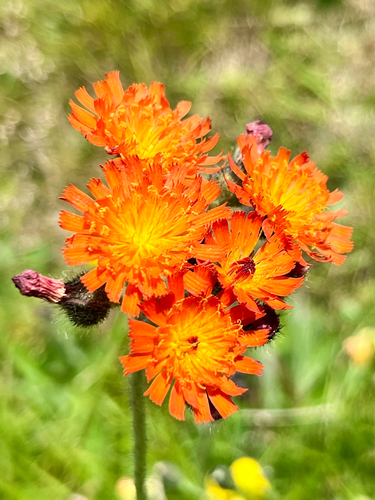
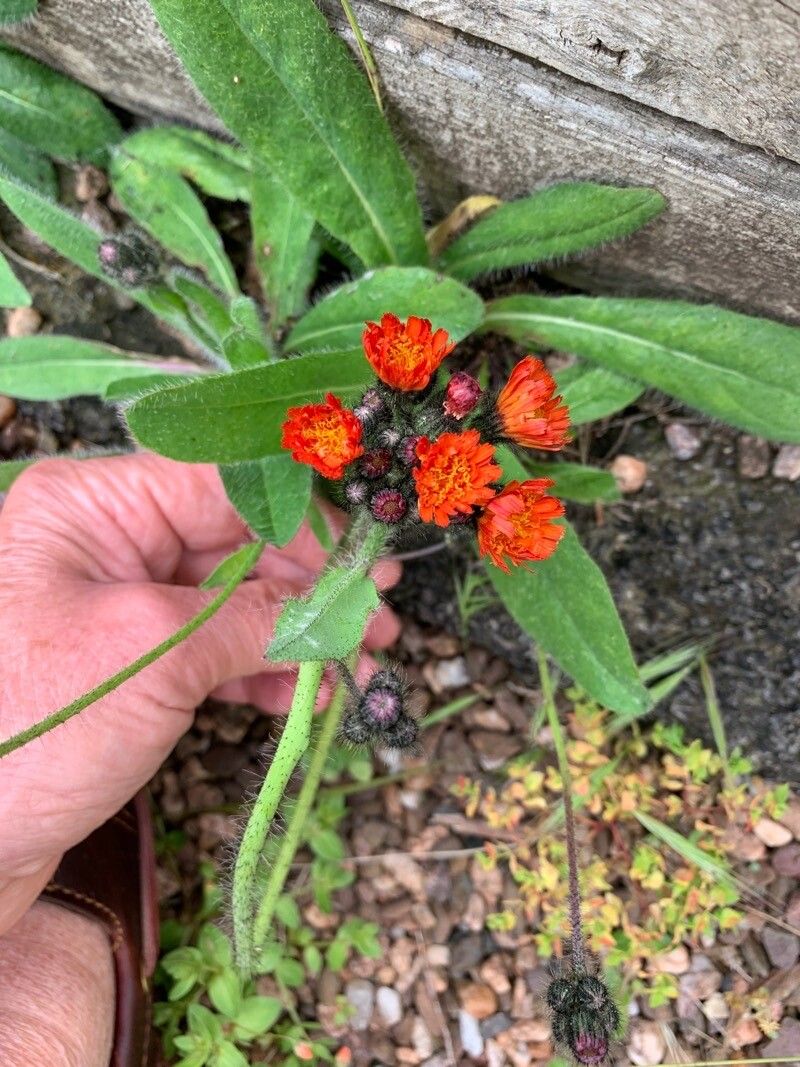
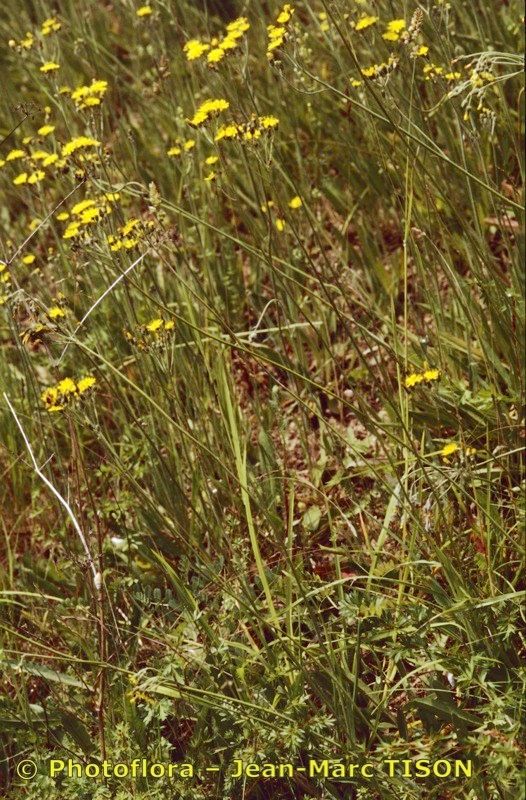
Pilosella lactucella (synonym Hieracium lactucella, also called European hawkweed) is a species of perennial plant from the family Asteraceae, found in Europe, New York (United States) and Nova Scotia (Canada). It is 9–20 centimetres (3.5–7.9 in) in height, with stems from 1–2 millimetres (0.039–0.079 in) wide. The leaves are spatula shaped and 5–8 centimetres (2.0–3.1 in) wide. The flowers bloom from May to July, the heads of which are 2–5 centimetres (0.79–1.97 in) tall. It was once described by Carl Linnaeus as Hieracium auricula and Pilosella auricula, but was recategorized by A. E. Roland and M. Zinck in 1998.
European hawkweed has strong disease resistance and is generally not highly susceptible to illnesses. Nonetheless, it can be affected by pests and diseases present in its surroundings. Such infections are typically mild. Regarding care, the plant requires moderate maintenance. It should be pruned regularly to preserve a neat appearance and healthy growth. Applying fertilizer can also help encourage flowering. European hawkweed is appropriate for anyone with outdoor space, like a garden or patio, and does not demand extensive care experience. It may need more attention when cultivated indoors.
How to keep Pilosella Lactucella.
Light
European hawkweed is a sun-loving herbaceous perennial that comes from open habitats and often grows in meadows and grasslands. It prefers full sun but can also tolerate partial sun.
Water
European hawkweed thrives in meadows and grasslands, preferring soil that is consistently moist but not waterlogged. For optimal growth, it should be watered weekly, aligning with natural rainfall patterns. It shows peak vitality during wetter seasons.
Temperature
European hawkweed can tolerate a broad range of temperatures, but its occurrence may still be constrained by particular combinations of moisture and heat. It does best in warm summer conditions when rainfall or irrigation is sufficient. Extended stretches of overcast, rainy weather or prolonged high heat raise the risk of the plant dying. During winter, shielding it from severe cold can increase its chances of survival.
Fertilizer
The best time to fertilize a European hawkweed is in early spring, as it emerges from dormancy and starts active growth. Fertilization supplies essential nutrients for healthy development. Although European hawkweed has relatively low fertilizer requirements, feeding it annually can improve its survival and encourage better, longer-lasting blooms.
Pruning
To ensure healthy growth and flowering, European hawkweed should be pruned regularly from early to late spring. Start by removing any dead or diseased stems and cutting back old flower stalks. Additionally, thin out overcrowded areas to improve air circulation and reduce the risk of disease. Always use clean and sharp tools for best results.
Botanical profile.
- Plant Type
- Herb
- Life Cycle
- Perennial
- Genus
- Pilosella
- Family
- Asteraceae
- Hardiness Zone
- 4-8
- Mature Height
- 5 cm to 15 cm
- Mature Spread
- 10 cm to 20 cm
- Leaf Color
- Light Green
- Leaf Type
- Semi-evergreen
- Flower Color
- Yellow
- Flower Size
- 1.02 cm to 1.52 cm
- Bloom Time
- Late spring, Early summer, Mid summer
- Planting Time
- Spring, Autumn
- Harvest Time
- Summer
Other names.
Reader questions.
How should I water my European hawkweed?
When watering the European hawkweed, it's important to use filtered water at room temperature or slightly warmer. Avoid using tap water, as it may contain harmful particles. The plant prefers warmer water because it originates from a warm environment and cold water can be shocking to it. Instead of overhead watering, gently soak the soil with filtered room temperature water until it is completely moistened. This helps the plant's roots spread through the soil and collect nutrients.
What are the sunlight requirements for European hawkweed?
European hawkweed thrives best in full sunlight, requiring above 6 hours of sunlight daily, but it can also grow well under partial sun conditions, which means about 3-6 hours of sunlight. It's essential to watch how sunlight moves through your garden to ensure that you plant the European hawkweed in spots with the perfect balance of light and shade for optimal growth. Keep in mind that too much deviation from these conditions can affect the plant's health adversely.
What should I do if I give my European hawkweed too much or too little water?
Overwatering is a common problem for European hawkweed and can lead to wilting, yellowing of stems and leaves, and diseases like root rot, mold, and mildew. It is important to notice the signs of overwatering early to prevent irreversible damage. If overwatering is suspected, reduce watering immediately and ensure the soil has good drainage. Underwatering is less common but can cause brittle, brown leaves. To address underwatering, simply increase watering until the signs improve.
How can artificial lighting be used for European hawkweed grown indoors?
When natural sunlight is insufficient, especially during winter or in less sunny spaces, artificial lighting serves as an excellent alternative for growing European hawkweed indoors. Use LED lights, as they can be customized to provide specific wavelengths needed by your plants. For full sun plants, aim for 30-50W/sq ft, for partial sun plants 20-30W/sq ft, and for full shade plants 10-20W/sq ft of artificial light. The light source should be placed 12-36 inches above the plant to mimic natural sunlight, and most plants will need 8-12 hours of light per day.
How frequently should I give water to my European hawkweed?
If your European hawkweed is in a pot, the best way to determine if it needs water is to check the soil. Stick your finger into the soil and if the top two to three inches are dry, it's time to water. If your European hawkweed is grown outdoors in the ground, you can use the same method to test the soil. Once the first few inches of soil have dried out, it's time to water. Usually, during spring and early fall, you'll need to water this plant about once a week. During extremely hot weather, you may need to water it twice or more per week. However, mature and well-established European hawkweed plants can handle drought well.
What are the symptoms of insufficient light in European hawkweed?
When European hawkweed is grown in inadequately lit conditions, it exhibits symptoms such as smaller new leaves, leggy or sparse growth, faster leaf drop, slower or no growth, and lighter-colored new leaves. Other signs include chlorosis (where leaves turn yellow), sunscald (damage from intense sunlight), leaf curling (as a defense mechanism), wilting (loss of turgor pressure), and leaf scorching (brown, dry edges on leaves). These symptoms highlight the plant's struggle to perform photosynthesis efficiently under suboptimal lighting conditions.
How much water does my European hawkweed plant need?
To properly water your European hawkweed, it's important to be generous with the amount of water you provide. Make sure the first two to three inches of soil are dry before watering. Give the plant a thorough soaking, ensuring that the water reaches every part of the soil. You'll know you've added enough water when excess water starts to flow out of the drainage holes at the bottom of the pot. If you don't see any excess water draining, it means you haven't watered enough. However, be careful not to let water accumulate in the soil, as this can harm the plant. On the other hand, if water doesn't drain through the pot, it may indicate that the soil isn't draining well, which isn't good for the plant's health. If the plant is outdoors, it will only need about 1 inch of rain per week.
How can you address light deficiency in European hawkweed?
To overcome light deficiency in European hawkweed, gradually increase sunlight exposure by moving the plant to a sunnier spot each week until it gets at least 6 hours of direct sunlight daily. For indoor plants, open curtains and use south-facing windows or supplement with artificial light for at least 8 hours daily. For outdoor plants, ensure gradual transition to avoid sunburn. If sunlight is obstructed by objects like trees, consider pruning to improve sunlight penetration. For smaller plants needing transplantation for better light, do so during their dormant period with careful attention to their roots and soil.
How do I water my European hawkweed as it grows?
The water needs of the European hawkweed can vary depending on its growth stages. In the first few years or when you transplant it, you'll need to water it more than usual. During these stages, the plant focuses on developing new roots that will support future growth, so they require more moisture. As the plant matures, it will require less water. Additionally, during the bloom period, the plant requires additional water as flower development consumes a significant amount of moisture.
How do I water my European hawkweed throughout the year?
The European hawkweed's water needs vary throughout the year. During the hottest months, especially in summer, you may need to water the plant more than once a week to prevent the soil from drying out too quickly. In contrast, during winter, the plant goes into a dormant phase and requires significantly less water. In fact, you may not need to water the plant at all during the winter months. However, if you do choose to water, make sure to do so sparingly, no more than once a month. Overwatering during this time could increase the plant's susceptibility to disease.
What's the difference between watering my European hawkweed inside and outside?
For gardeners living outside temperate and tropical regions, growing the European hawkweed indoors is most common. However, they should keep in mind that soil in containers tends to dry out faster than ground soil. Additionally, if there are drying elements like air conditioning units present, the European hawkweed will require more frequent watering compared to if it were planted outdoors. In outdoor settings, the need for watering is likely to be minimal, especially if rainfall occurs regularly. On the other hand, indoor growers will need to water the plant more frequently since relying on rainwater to soak the soil is not possible.