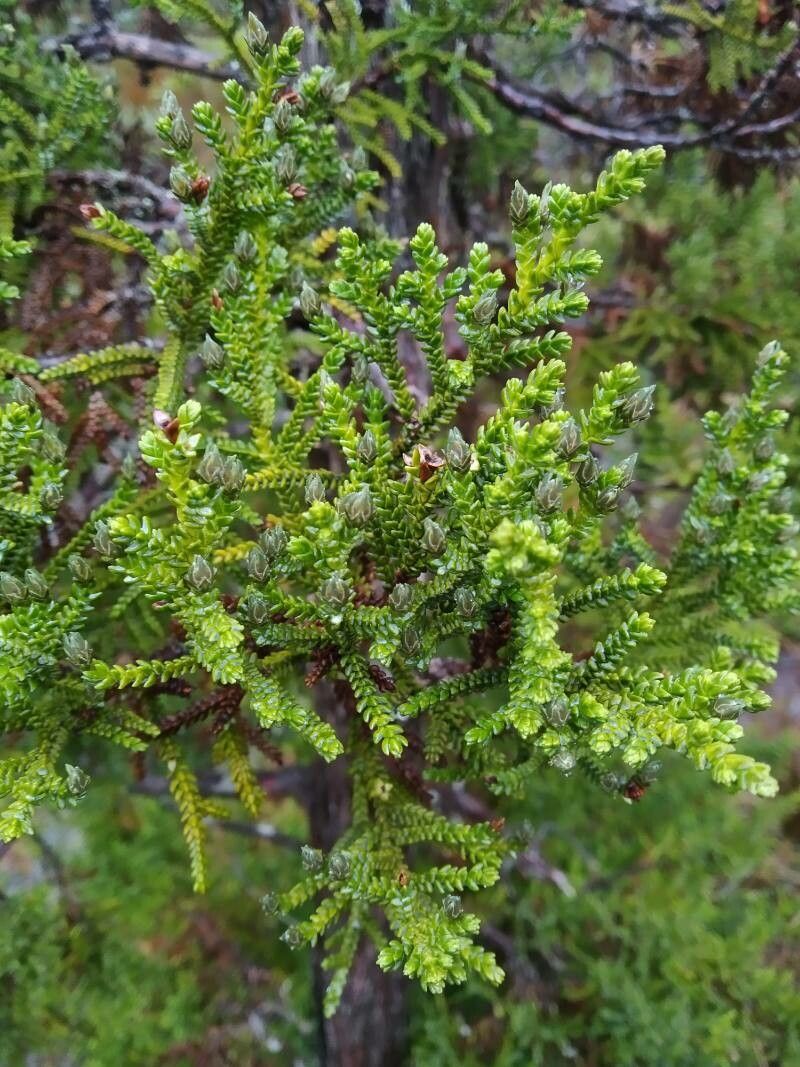
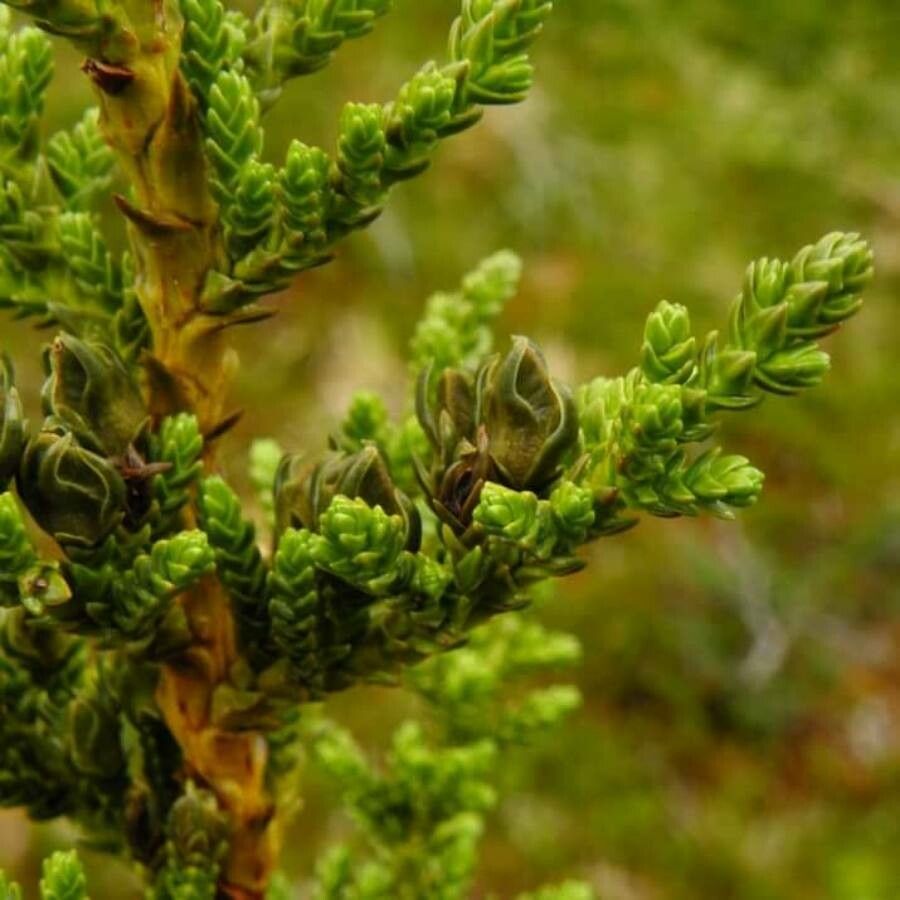
Pilgerodendron uviferum, commonly known as the Ciprés de las Guaitecas or Guaitecas cypress, is a slow-growing evergreen tree native to the southern regions of Chile and Argentina. This tree belongs to the Cupressaceae family and can reach heights of up to 20 meters, with trunk diameters measuring up to 1 meter.
The tree has a conical shape and dense foliage composed of small, scale-like leaves arranged in opposite pairs along its branches. The leaves are dark green on top and feature white stripes on their undersides.
Pilgerodendron uviferum is renowned for its durability and resistance to harsh weather conditions, such as strong winds, heavy snowfall, and extreme cold temperatures. Its high natural oil content also gives it significant resistance to decay.
The wood from this tree is highly valued for its durability and strength, making it ideal for construction purposes such as roofing shingles and fence posts. Additionally, the bark has traditionally been used by indigenous people for medicinal purposes.
Although it grows slowly, Pilgerodendron uviferum plays a crucial role in maintaining ecological balance by providing habitats for various species, including birds like the Magellanic woodpecker, which nests in cavities within the tree's trunk.
However, overexploitation, coupled with habitat loss due to human activities such as logging and land conversion for agriculture, has led to this species being classified as "Vulnerable" on the IUCN Red List. Conservation efforts are underway to protect the remaining populations through reforestation programs and to promote sustainable use practices among local communities where the tree grows naturally.
Botanical profile.
- Genus
- Pilgerodendron
- Family
- Cupressaceae
Other names.